Alliance of Native Seedkeepers · Roots before 2018 · Still growing
This was never just a seed company.
It is the story of Native seedkeepers trying to build the land, tools, relationships, and freedom our seeds
and communities deserved. It is a love story, a survival story, and a story that is still being written.
Frank J. Cain and Elizabeth “Beth” Roach Cain, co-founders of Alliance of Native Seedkeepers.
Before there was a store
The story begins with responsibility, not a business plan.
Alliance of Native Seedkeepers did not begin as an online store. It began with relatives, gardens, memory,
land and water defense, and the older responsibility of keeping seeds alive across our homelands. Before
there were order numbers, packet printers, shipping bins, or a storefront, there were Native seedkeepers
visiting one another, talking story, planting where they could, and trying to repair relationships that
colonization had worked hard to sever.
Beth came to the work through Nottoway tribal governance and public service across tribal, state, and federal
policy systems. She advised two Virginia governors on environmental justice while working across clean-water
protection, climate resilience, public policy, and coalitions. She had learned that a seed cannot be
protected apart from the water, land, laws, community decisions, and cultural knowledge surrounding it.
Frank, a Tuscarora seedkeeper, came through farming, emergency medicine, dialysis care, and biomedical
engineering. In clinics he saw food access, clean water, chronic illness, and environmental injustice meet
inside real bodies. A Monacan patient spoke with him about seeds every day during her treatment. Before she
lost her battle, those conversations became part of what he carried home. He still carries them in AONSK’s
mission.
Their paths met in the same question: what would it take for Native communities to build food security and
cultural continuity on their own terms?
Years before the Alliance had a name
The work began on any land that would hold it.
Years before AONSK became a company, Frank was growing on any land he could use across North Carolina.
Those gardens were a way to help reconnect our people with land, language, the seasonal calendar, and
foodways that colonization had worked to break apart. Every planting carried more than a crop. It carried
names, timing, relationships, and memory.
In 2017, the main garden holding ancestral seeds was firebombed. The attack destroyed more than plants. It
sent a clear message that the return of those seeds, and the relationships gathering around them, was not
welcome there. The work did not stop, but it had to move.
By 2018, Frank had relocated to Richmond, Virginia, to build a life with Beth. The North Carolina gardens,
relationships, and responsibilities came with him. In Virginia, the work continued across whatever pieces
of land people made available until the Alliance gave that long-running work a public name.
Before there was a store, ancestral seeds were grown on whatever North Carolina land could hold them.Foodways, language, memory, and the seasonal calendar returned to the same ground.
2016 and the early Washington years
Before there was a company, the work was already finding its voice.
Frank and Beth first stood together in Washington with red corn between them. Later, at a separate
gathering, Beth was invited to speak before the Lincoln Memorial. Different days, the same current:
seeds, land, and Native responsibility moving into public view.
Frank speaking in front of the White House in 2016, with Beth beside him and red corn in hand. Their first date, and their first photograph together.Beth speaking before the Lincoln Memorial at a separate Washington gathering where she had been invited to address the crowd.
2017 · North Carolina
The garden was alive before someone tried to burn it away.
These are among the last photographs of the garden before the firebombing: amaranth, corn, beans,
furrows, and the long work of making a place for ancestral seeds. The attack destroyed a season,
not the responsibility.
Amaranth and other food crops in the garden before the attack.The rows and furrows that had been worked by hand.The wider growing space before it was firebombed.
“A seed is never alone. It carries the water, the land, the hands that tended it, the ancestors who remembered it, and the children it may yet feed.”
The alliance takes a name
The work existed before the company
An alliance formed across communities, gardens, and homelands.
By 2018, a network of Indigenous seedkeepers was already working to protect endangered seeds, strengthen
community seed banks, share skills, and reconnect Native people with ancestral foodways. Alliance of Native
Seedkeepers gave that growing network a name and a shared container. It emerged from the same relationships
that were addressing pipelines, sacred places, water protection, coastal resilience, and tribal
environmental justice. Saving a variety made little sense if the land and water required to grow it were
still being lost.
At Natural Bridge, we carried seeds down the long Cedar Creek trail to the Monacan Living History Village,
then back up the mountain after days of visiting and exchange. In the gardens maintained by Victoria
“Vicky” Ferguson, other Monacan people, and volunteers, we planted Native plants and foodways alongside the
knowledge held there. Vicky is a deep well of living knowledge, the kind no label or exhibit can replace.
The staffed village has since closed. Older Virginia State Parks materials named the Monacan village along
the trail; the park’s current description names the same trail without it. To us, that disappearance feels
like a quieter repetition of removal: the landscape remains public while Monacan people interpreting their
own living culture become less visible. The seeds, gardens, and relationships carried there remain. Around
Capron, planting corn on Nottoway land also helped rekindle ceremony, gathering, and responsibility. Frank’s
growing continued across Tuscarora homelands in eastern and central North Carolina.
The Alliance was not invented by two people alone. Frank J. Cain, Elizabeth “Beth” Roach Cain, Dwayne Painter,
and Victoria “Vicky” Ferguson were its co-founders, each carrying different relationships, knowledge, and
responsibilities into the work. Elders, growers, relatives, organizers, and seedkeepers across many tribal
communities shaped what the Alliance became, but Dwayne and Vicky were not background influences or later
collaborators. They helped found it.
Elizabeth Roach Cain, Victoria “Vicky” Ferguson, and Frank J. Cain at the Monacan Living History Village at Natural Bridge State Park, Virginia.
Co-founders Victoria “Vicky” Ferguson and Dwayne Painter.
Dwayne Painter, Vicky Ferguson, and the return of ancestral corn
Dwayne Painter of the Monacan Nation was among the earliest seedkeepers to work closely with Frank.
Alongside Vicky Ferguson, he helped form the relationships that became foundational to the Alliance.
Together, seedkeepers reintroduced ancestral corn to parts of Virginia and North Carolina where it had
been absent for generations. Some communities now remember those corns simply as their own again. We do
not mind who receives the credit. What matters is that the seeds are alive, growing, and being carried forward.
Vicky Ferguson and Dwayne Painter helped found AONSK. Vicky also played a leading role in the Monacan Nation’s effort to protect Rassawek.
Ancestral land, extreme heat, and the first season of the store
We were growing everywhere because we had nowhere secure to grow.
People sometimes call those first gardens “borrowed land,” but that phrase is too gentle. We were Native
people inside our own homelands, asking permission to plant a few feet of our ancestors’ seeds on property
controlled by someone else. Around Richmond we planted wherever anyone offered room: North Side, South
Side, Varina, Jackson Ward, Bon Air, a yard corner, a community-garden row, a small opening beside someone
else’s plans.
Corn planting outside Richmond in 2019, on ground made available through community relationships.
Then the heat came. The summer of 2019 nearly wiped out dozens of varieties, including seeds that had come
to us as the last known samples. We could not build permanent irrigation, shade, or soil systems on land we
did not control. The grief was not only losing plants. It was knowing those seed lines had already survived
removals, boarding schools, dispossession, migration, and generations of pressure, only to reach us without
the infrastructure we needed to protect them.
That loss forced the work to change shape. On April 1, AONSK became the first seed company to register as a
benefit corporation, so public benefit and environmental responsibility could be built into the company
itself. We chose a business
because we needed a way to fund the work directly, without waiting for a grant cycle or reshaping the
mission to fit someone else’s priorities. The public store would sell common, already-commercialized
heirloom varieties. Culturally sensitive and community-held seeds would remain outside retail.
Landless did not mean disconnected. Corn, beans, squash, and other foods grew on the small Richmond balcony.
The work also traveled through relationships. Beth worked with Ashley Senegal, an enrolled Chickahominy
citizen, in Ashley’s home garden on traditional Chickahominy land. Beth and Frank also carried seedkeeping,
food sovereignty, and Native public storytelling into Richmond and other public spaces.
Community seedkeeping in 2019
At the 2019 Nottoway pow-wow, seeding okra became an accidental tradition because of the season. We often
kept our tent open for people escaping the heat. While we talked story, relatives and visitors sometimes sat
down and helped seed. Terry Price and his granddaughter examined Cherokee white flour corn we had helped
plant, and Beth carried harvests from the growing spaces that kept the work rooted in land and relationship.
Terry Price and his granddaughter examining Cherokee white flour corn in 2019.Frank with his mother and aunt seeding okra at the 2019 Nottoway pow-wow.Beth holding peppers in one of the growing spaces in 2019.
Our kitchen counter in the tiny Richmond apartment where the public seed company began.
A company counted by hand after work
The first store was a purple-and-white Wix site with roughly 111 varieties. Packets were counted by
hand, glued shut, written on, or covered with Avery labels. A cheap inkjet printer made beautiful packets
when it worked and jammed constantly when it did not.
There was no warehouse or fulfillment team. After their day jobs, Frank and Beth counted seeds by hand.
Pegboard walls with labeled bins became the first inventory system. A tiny mesh desk organizer beside
the outbound envelopes carried a joking “shipping department” sign, but it was never the seed-room
storage. On August 11, Frank placed a test order. On August 12, the first real customer, Virginia B.,
trusted the new store with an order. By the end of the year, one hundred customer orders had moved
through those rooms.
Our first customer order ever shipped, held up because the moment felt almost impossible.
It looked like glue on our fingers, seeds counted by hand after work, and a pegboard of labeled bins becoming a revolution one packet at a time.
The year seeds became lifelines
Pandemic, panic, return, and the year the world turned toward food
The store entered a crisis before it had learned how to be a store.
Frank saw the warning signs through dialysis and biomedical engineering work. Long before much of the public understood
the new illness, he was watching machines clot, clinics scramble, and vulnerable patients carry the danger
in their bodies. Some days stretched eighteen or twenty hours. Then he came home and tried to help catch up
with seeds.
Beth’s work moved online, which made it possible for AONSK to survive. She worked from the apartment
countertop, assembled orders, and helped send seed-care packages to tribal communities between meetings.
Free seeds continued to move even as customer demand surged. Those packages were not a campaign. They were
an answer to fear, food insecurity, and the possibility that the loss of an elder could also mean the loss
of a gardener, language speaker, cook, story keeper, or person who remembered where something used to grow.
We resisted the language of “victory gardens.” Our question was not only, “How do I feed myself?” It was,
“How do we keep each other alive?” We called that sovereignty gardening: a way of growing that restores
responsibility and feeds all of our neighbors.
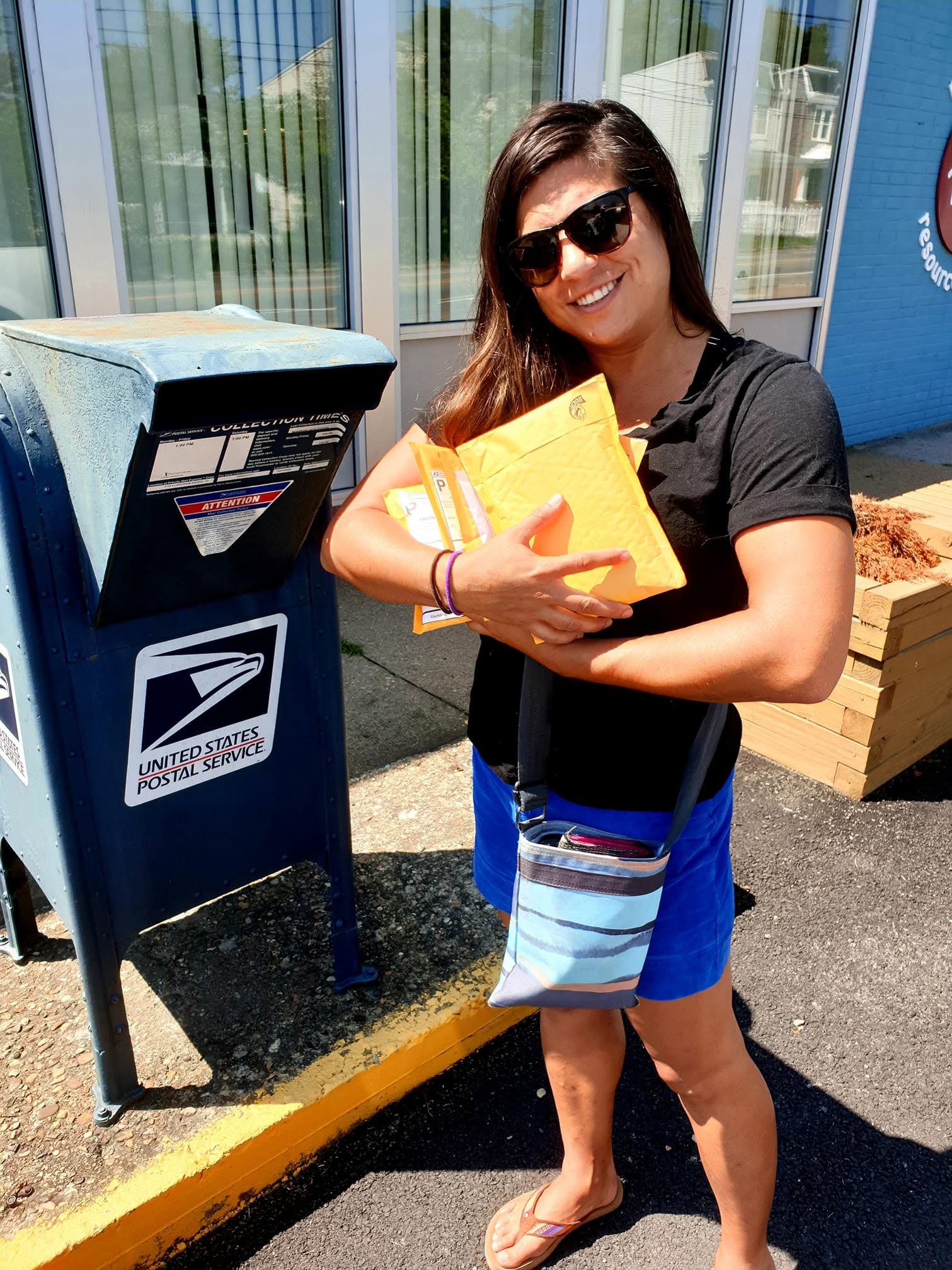
Elizabeth mailing seed-care packages during the pandemic. The free seeds were not extra work. They were the work.Some of our customer orders being dropped off by NRC as demand surged.
The move home
In the middle of the pandemic, we found a small house near Windsor, North Carolina, on 3.14 mostly wooded
acres. We moved to Bertie County for more than acreage. This is Tuscarora country, close to Indian Woods and
the Cashie River, and just downriver from Beth’s Nottoway homelands where the Nottoway and Blackwater meet to
form the Chowan. The move placed the work inside land and water relationships that already shaped us.
Supply shortages and exhaustion turned the move into repeated trips in a small Ford Ranger between Richmond
and Bertie County. The store had to pause. Most customers understood. One frightened and angry customer
escalated a delayed-order exchange by threatening police involvement. It was unsettling, and it showed how
little room a tiny, exhausted operation had to make a mistake. We were afraid too, and still trying to help.
The little Ford Ranger carried the company home one load at a time.
A large storm came through the day we closed on the house and tore down treetops. For a little while the land
felt wild and unsettled. Then the storm passed. We looked at each other and said the words we have repeated
almost every day since, especially when something beautiful appears: “We live here.”
We did not plant a large production crop that year. We walked. We watched where water moved and how the light
changed. We learned what grew on its own, what needed clearing, and what deserved protection. The pandemic
taught us that a seed store could become emergency infrastructure. The move taught us that infrastructure
also needed a home.
The year survival became unsustainable
Growth, exploitation, collapse, and a hard boundary
A mission has to protect the people carrying it.
We had finally reached land of our own, but Frank was rarely there. A nearby community venture promised
cultural work, economic development, food work, and community support. He believed in that vision and gave
almost everything to it. In practice, employment, volunteering, contracting, cultural responsibility, and
personal sacrifice blurred into one endless demand.
The more problems he solved, the more problems arrived. Pay and reimbursements did not match what had been
promised. There were no real days off. The AONSK store moved into one small corner because it was the only
way to keep orders alive while Frank was expected elsewhere every day. Beth kept AONSK’s accounts, customer
communication, and mission from collapsing around the edges, often after her own workday. She sometimes
brought food to the site because it was one of the only ways she could see Frank.
Then his body started saying no. Long hours on concrete, poor workstations, stress, and exhaustion became
nerve pain, skeletal pain, stiffness, trouble walking, and the return of seizures he had not experienced in
years. We had land, but he could not plant it. We had moved home, but the work kept him from being home.
The most painful lesson was that “for the people” can become a weapon when it is used to make boundaries
sound selfish. Service is not the same as extraction. Culture is not permission to use someone until their
body breaks. The work itself mattered. The way it was being carried did not.
Leaving was not betrayal. Protecting the people carrying the work was part of protecting the work.
AONSK kept proving it was alive whenever it was given attention. Customers returned. Seeds still moved. A
used Colordyne packet printer became one of our first major equipment investments and a practical step away
from handwritten packets. By the end of the year, pain had become clarity: the Alliance could no longer be
squeezed into the margins of someone else’s dream. The work had to come home.
The year the work came home
Recovery, rebuilding, and the first building of our own
Leaving what harmed us was only the beginning. We still had to build what could hold us.
An unrestricted grant gave us enough room to stabilize and bring Frank into the seed work full time. The
break from that venture was painful, but the land began returning him to himself. He noticed the trees,
shrubs, birds, insects, mushrooms, animal tracks, water, and changes in light he had missed the year before.
On three acres, he eventually recorded more than thirty species of trees and shrubs. The land had been
waiting while he learned how to live there again.
Beth and Frank began reclaiming their life together too. They could talk, take small day trips, and work
beside one another again. Healing did not mean less work. It meant the work belonged to them again.
The work returned to the hands.
Back home, rebuilding looked less like a grand declaration than a handful of corn, a watchful cat,
and packets finding their way onto a wall. The company was still small enough to fit inside ordinary life,
but it was beginning to take a shape the public could recognize.
Nottoway corn under selection at home, with Nesta keeping watch.A wall of AONSK seed packets inside another store in 2022, before the Main Street storefront.
By 2022, one small bedroom held the seed room, print shop, office, inventory wall, packing station, and fulfillment department.
An entire company inside one small bedroom
The house was about 800 square feet. More than 300 bins covered the walls of one small room, creating
space for over 400 varieties if every inch behaved. The room became seed room, office, print shop,
inventory wall, communications center, packing station, and fulfillment department.
The used packet printer sat near the window. It had alignment problems, sensor problems, feeding
problems, and moods Frank had to learn by trial and repair. It was still a threshold. The handwritten
packets had felt like mail from a friend. The printer told customers that the friend was becoming an
institution.
The beautiful plan that disappeared
A possible downtown Edenton building seemed to offer everything at once: a storefront and offices below,
four apartments above, family housing, a place for relatives returning home, and a public home for the seed
work. The arrangement was already tilted strongly in the investor's favor, but we were willing to consider
it because the building seemed to promise room for the work to grow. Contracts were prepared. Legal fees
were paid. Then the investor behind the plan withdrew before signing, without a real explanation.
The loss hurt because it was more than real estate. It was a future woven from business, family, housing,
and belonging. In hindsight, it may have been a blessing. We had been ready to accept a deal that leaned
heavily away from us because we needed space so badly. But the seed store still needed room. So we financed
a prefabricated building and placed it on our land late that fall. It was slightly smaller than what we
thought we had purchased, unwired, uninsulated, and unfinished. Compared with the bedroom, it felt like a
cathedral. Frank yelled “echo” simply because he finally could.
A huge extension cord brought temporary power. Shelves went in before the building was ready. Seed inventory,
printers, counters, and tools followed. The Edenton dream had depended on another person’s signature. The
prefab was a door we could build ourselves.
The year growth outran the system
The underdog became visible before the infrastructure was ready
The store was not too small because people did not care. It was too small because they did.
The prefab gave us breathing room for a moment, then filled almost immediately. Shelves, carts, seed
counters, printers, work lamps, laptops, dehumidifiers, and hundreds of varieties crowded into a building
that was still unfinished. In winter, people worked in freezing conditions with auxiliary heaters and
headlamps. The building was both a breakthrough and already too small.
Beth counting seed into packets in the shed.The shed had so little light that headlamps, and sometimes gloves with lights, became working equipment.
A catalog approaching five hundred varieties could no longer be managed by memory and alphabetical bins.
The company needed SKUs, barcodes, flexible locations, batch picking, inventory control, and software that
understood a real warehouse. The first Wix site had carried us through the apartment, the pandemic, and the
move home, but the operation had outgrown it. Late in the year we rebuilt everything on Shopify.
Rahib, a friend Beth knew from an earlier class, became a crucial technical bridge. He helped translate the
lived reality of packets, bins, orders, and bottlenecks into the language of platforms and APIs. The new
website looked more professional, which created a new problem: customers increasingly assumed the small
team behind it was a large seed company.
The first warehouse system promised relief, but important features were incomplete. Batches mixed orders,
postage workflows failed, and holiday support disappeared when we needed it most. December became a war
room. Real orders were arriving while we trained people, corrected inventory, printed packets, fixed
software, and tried to speak honestly with customers.
The seed room had become an operation, and the operation had already outgrown the room.
A seed company cannot run on vibes alone. Beauty and purpose still need training, systems, accuracy, and people who can depend on one another.
The chaos gave us the shape of what had to come next: more space, a professional team, better software,
deeper inventory before peak season, faster packet production, and a facility larger than the building we
had only just occupied. Colerain did not appear from nowhere. The freezing prefab and the December war room
pointed directly toward it.
The year Colerain became our castle
Doors, walls, and a Main Street still willing to live
A tired building asked us to imagine more.
Through friends Heather and Mitch at the Colerain Farmers Market, we learned about buildings nearby. The
first option had too many structural problems. Then we looked next door at 124 South Main Street. It had
sat abandoned since 2014. The roof leaked. The ceiling was falling. Windows were broken. Weather, animals,
and time had entered through the back door.
But the bones were good. The place felt like a town that had been written off and had not agreed to die. It
felt like walls rising around the work. It felt like Colerain still had teeth.
Inside 124 South Main Street before restoration. The open room showed the scale of what had to be repaired far better than any single damaged detail.
It became a castle because, after years of asking permission to plant, pack, store, and grow, the door could finally lock from our side.
Colerain is Tuscarora country, river country, working people’s country. Native, Black, and white families,
fishermen, mill hands, farm workers, shopkeepers, elders, and children have all carried parts of this place.
We were not coming to rescue it. We came because the town still had life and because our work needed walls.
If we were going to build there, we had to build like kin, not callers.
We closed on the building in August. Frank carried much of the daily construction. Beth balanced tribal, state, and
federal policy responsibilities with financing, planning, accounts, communications, and hands-on work at the
building whenever she could be there. Josh and Stephen Hardy, brothers and members of the Nottoway Tribe,
helped. Donnell White became a steady hand in the building’s hardest corners. Together they patched roof
problems, pulled down damaged material, measured odd spaces, repaired, painted, cleaned, and kept moving
while the electrical work stalled.
Not everyone knew what to make of Native people buying an old Main Street building. Some reactions carried
familiar stereotypes about Native ownership and intentions. We do not need to repeat every word to name what
it meant. Then something else began. Neighbors stopped in. New council members showed support. People asked
questions and started to see the future we saw. Suspicion did not vanish at once, but warmth began to grow.
Beth working inside the building. Governance, finance, story, and construction all met here.The old Colerain Appliance storefront before Bertie County Seeds opened its doors.
Not rescueReturn
Not permissionResponsibility
Not a polished dreamA real door
The plan held more than a warehouse: a seed room, shipping hub, public store, coffee and community space,
and a visible Main Street statement. The Edenton dream had been beautiful and ready on paper. Colerain came
rougher, without shine or easy promises. Unlike Edenton, it was real. It was ours to finish.
The year the lights came on and the machine went dark
The building became real. The promised shortcut did not.
Infrastructure is only real when it works.
The electrical work finally finished in the spring. After years of apartments, spare rooms, extension
cords, underpowered buildings, and improvised stations, the lights came on in Colerain. A working office,
stable packing stations, heating and cooling, and a path out of the house suddenly felt possible.
The bathroom became a symbol of the whole restoration. It had been frightening. Frank rebuilt it until it
was beautiful. A bathroom is not glamorous, but every repaired piece said the same thing: this place is not
abandoned anymore. Someone cares for it again.
Moving the company to Colerain slowly gave our house back to us. For years it had been home, warehouse,
office, print shop, communications center, and seed room all at once. The work finally had walls. The house
could begin remembering itself.
Scene 01
The machine in the road
The SeedPak arrived at the wrong address, then came to Colerain without the forklift we had said was
required. Austin called Colerain Peanuts. Donnell and Big Otis used a pickup truck and a 2×4 to steady
the crate while the liftgate dropped inch by inch. Even the driver celebrated when it reached the ground.
Scene 02
The future spilling seeds
The machine had looked ready during training, but it had never been tested there with actual seeds. In
Colerain it arrived missing a gate in the funnel, with disconnected parts and packet-feeding problems.
Seeds fell to the floor. Cardboard became a temporary guide inside the largest equipment investment we
had ever made.
Scene 03
The town came in
A soft opening brought hundreds of people into a building that had once been left to weather. News
media arrived. Council members stopped by. People told us to buy more of the town. Colerain began to feel
less like an address and more like a relationship.
The work kept moving between growing, recovery, and better tools. Josh Hardy of the Nottoway Tribe works on a seed-cleaning machine in the seed shed.
Local engineers, Stephen, Josh, Frank, and others spent months trying to make the SeedPak production-ready.
The machine that was supposed to release human hands became another demand on them. The lesson was larger
than one vendor: a machine is not infrastructure when it is promised, purchased, delivered, or praised. It
becomes infrastructure when it works.
Colerain worked. The lights worked. The people began coming. The machine did not. The year held pride and
disappointment in the same hands, but beneath the pressure the company was building the systems that would
carry the next chapter.
The year the castle opened its doors
A year still unfolding
The doors opened, and people came.
Bertie County Seeds officially opened full time on March 21, 2026. More than 400 people came through the
doors. Some said Colerain had not seen that many people together in decades. PBS North Carolina recorded a
segment. Regional magazines, tourism partners, and the local newspaper helped tell the story. The attention
mattered, but the people inside the building mattered more.
Locals thanked us for choosing Colerain. Some told stories about growing up there. Some returned with friends
and family because they wanted to show the place off. People wanted to be seen inside the store. That is a
different kind of success from an online order. It means a building has entered local identity.
The store is still young. The online shop still carries most of the business, while Main Street does work a
sales report cannot fully show. It brings people downtown. It gives tourists a reason to stop and locals
something to point toward. It lets online customers see that AONSK is not only a website, and lets Colerain
see that Main Street is not only memory.
Beth beside the Chowan River. The public store is tied to the same waters, homelands, and relationships as the wider mission.
Inside, a more local and serious team is taking shape. The culture is simple to say and difficult to build:
cross-train, communicate, ask questions, do not guess, share knowledge, and respect the work and one another.
Donations are moving at scale again with Deborah Bischlar helping organize requests. The land at home is
being prepared for a larger return to growing when the people and systems can support it properly.
The SeedPak question is not completely resolved. Capacity still has to catch up with demand. The story has
not reached a clean ending, and we do not want to pretend it has. But the lights are on. The town is coming
in. Customers are returning. The team is forming. The donations are moving. The land is preparing.
That is not the end of the story. It is proof that the next story is possible.
What remains
The company grew. The line at the center did not move.
The public store exists to build practical infrastructure around seedkeeping, not to turn every seed into a
product. Community-held and culturally sensitive ancestral seeds in the AONSK sanctuary are not retail
inventory. They remain tied to responsibilities and relationships with their communities of origin.
We do not mind who gets the credit. What matters is that the seeds are being grown.
01
Seeds are relationships
They carry memory, food, language, ceremony, adaptation, and the work of generations.
02
Commerce can build capacity
The store helps create jobs, equipment, space, donations, and independence from outside permission.
03
Care needs structure
Good intentions cannot replace fair work, healthy boundaries, reliable systems, and accountability.
04
Place matters
Richmond, Capron, Natural Bridge, Indian Woods, the Cashie River, and Colerain all live inside this story.
The living archive
A story this large cannot fit in one straight line.
Open a photograph to meet another place, person, or turning point that carried the work.
Who is telling this story
Four co-founders, and a much larger circle.
Frank J. Cain, Elizabeth “Beth” Roach Cain, Dwayne Painter, and Victoria “Vicky” Ferguson founded the
Alliance together. A page can name them, but it still cannot hold every elder, grower, relative, volunteer,
neighbor, customer, child, and staff member who carried a box, shared seed, repaired a wall, taught a lesson,
brought food, or told the truth when the work needed it.
Co-founder · Nottoway leader and policy strategist
Elizabeth “Beth” Roach Cain
Beth brings Nottoway tribal leadership, experience across tribal, state, and federal policy, and service as an environmental justice advisor to two Virginia governors. She joins water protection, climate resilience, policy, coalitions, finance, and story into structures that keep AONSK accountable.
Co-founder · Tuscarora seedkeeper
Frank J. Cain
Frank joins Tuscarora seedkeeping, growing, health, biomedical engineering, machinery, technology, and daily operations. He builds the practical systems that move seeds into people’s hands without losing the relationships that give the work meaning.
Co-founder · Monacan seedkeeper
Dwayne Painter
Dwayne was among the earliest seedkeepers working closely with Frank and helped establish the relationships, grow-outs, and practical seed work from which the Alliance formed.
Co-founder · Monacan knowledge holder and land defender
Victoria “Vicky” Ferguson
Vicky helped found AONSK and has long carried leadership in Monacan cultural work, ancestral agriculture, Natural Bridge, and the Monacan Nation’s effort to protect Rassawek.
Dwayne Painter, Victoria “Vicky” Ferguson, Ashley Senegal, Josh and Stephen Hardy, Donnell White and Big
Otis, Susan, Joseph, Wanda, Ryan, Rahib, Deborah Bischlar, and many others belong in this history. Their
contributions are not footnotes. They are part of how the Alliance became real.
Need something else? Write to us. A real person will read it.
What is Alliance of Native Seedkeepers?
Alliance of Native Seedkeepers (AONSK) is a Native-led benefit corporation founded in 2018 by Frank J. Cain, Elizabeth “Beth” Roach Cain, Dwayne Painter, and Victoria “Vicky” Ferguson. Its work connects Indigenous seedkeeping, ancestral foodways, seed and food sovereignty, education, seed donations, and a public seed business based in Colerain, North Carolina.
Is AONSK a nonprofit?
No. AONSK is a benefit corporation, a business structure that allows public benefit, community responsibility, and environmental commitments to be part of how the company is governed. It is different from nonprofit status and from third-party B Corp certification.
How are AONSK and Bertie County Seeds related?
AONSK is the company and wider mission. Bertie County Seeds is its public-facing store and retail identity at 124 S Main Street in Colerain. Buying from the store helps support the people and practical infrastructure behind the wider work.
Does AONSK sell community-held ancestral seeds?
No. Culturally sensitive and community-held seeds in the AONSK seed sanctuary are not retail inventory. The public catalog focuses on already-commercialized garden varieties, while sanctuary seeds remain rooted in responsibilities to their communities of origin.
What kinds of seeds are in the public catalog?
Bertie County Seeds offers vegetables, herbs, flowers, grains, and other garden crops, with a strong focus on heirloom and open-pollinated varieties. Product pages provide the specific growing and seed-lot information available for each variety.
Where can I visit?
Visit Bertie County Seeds at 124 S Main Street, Colerain, NC 27924, our “World’s Biggest Little Seed Store.” Please check the contact page for current hours before making a long trip.
Your cart
Start with a garden goal.Browse seed packets, seasonal picks, pantry goods, or starter garden ideas.