Seeds: When properly stored, planted, and cared for, we guarantee reasonable germination and true-to-type growth for one year from purchase.
Non-seed products: Free from defects in materials and workmanship for 30 days from shipment.
Excludes factors outside our control (extreme weather, pests, gardener error). If something’s off, contact us—we’ll make it right with a replacement, repair, or refund.
USDA “bioengineered (BE)” foods are those with detectable genetic material that was modified using in vitro recombinant DNA (rDNA) techniques, in ways
not obtainable through conventional breeding or found in nature. The USDA’s National Bioengineered Food Disclosure Standard uses “bioengineered” as the nationwide labeling term.
Detectable modified genetic material in the final food
Created via in vitro rDNA techniques (e.g., gene transfer)
Modifications not achievable through conventional breeding or nature
—seeds / pkt
( ~ g )
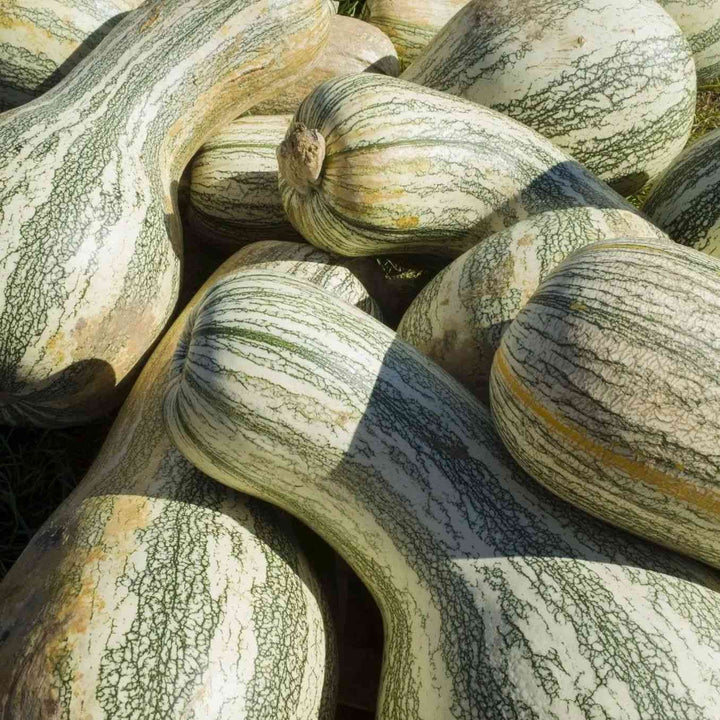
The Appalachian heirloom of warmth and sweetness. ‘Cherokee Candy Roaster’ produces elongated, pink-orange fruits with blue-green tips and dense, golden flesh that’s exceptionally sweet and flavorful. The texture is creamy and fine-grained, perfect for pies and roasting.
Vines are vigorous and high-yielding, with fruits ranging 10–20 pounds and long storage potential. The flavor continues to develop over time, deepening in sweetness.
A traditional variety maintained by Cherokee seedkeepers for generations, this squash carries both cultural heritage and culinary excellence—deeply rooted, enduring, and delicious.
Cherokee Candy Roaster Squash is best direct sown after all danger of frost has passed and the soil is fully warm, because cold wet ground can delay sprouting, weaken seedlings, or cause seed to rot before emergence. This is a long-season winter squash that needs a strong warm start, so do not rush planting into spring soil that has not settled into dependable warmth. Choose a full sun location with fertile, well-drained soil and plenty of room for vines to spread. Because this variety is vigorous and large-fruited, site selection matters from the beginning. Give it an area where it can run freely without crowding nearby crops, or where its growth can be intentionally managed from the start.
Before sowing, prepare the planting area deeply and thoroughly. Loosen the soil well and mix in finished compost or other rich organic matter so young plants begin with strong fertility and good drainage. Squash grows best in loose, moisture-retentive soil that still drains well, and Cherokee Candy Roaster especially benefits from soil that can support vigorous vines through a long growing season. Remove weeds before planting so seedlings do not have to compete early for water, nutrients, and light. If growing on hills or mounds, form broad low mounds that warm quickly and shed excess water well while still providing enough root space for the plants to establish strongly.
Sow seeds about 1 in deep in warm soil. Space plants about 36 in apart, with generous room between planting areas so vines can spread, leaf out, and receive good airflow as they mature. In most gardens, direct sowing is preferred because squash roots are sensitive to disturbance and plants often establish more strongly when seeded in place. After sowing, water gently but thoroughly so the soil is moist around the seed without becoming waterlogged. Keep the bed evenly moist during germination, since drying out at this stage can slow or interrupt emergence. Seeds usually sprout in 7–10 Days when soil temperatures are in the 75-90 °F range.
If a longer season is needed or spring warmth comes late, Cherokee Candy Roaster Squash can be started indoors with care, but this method should be used thoughtfully because squash does not like transplant shock. Start seeds in individual biodegradable pots or other containers that allow minimal root disturbance at planting time. Sow one seed per pot in a warm bright environment and avoid holding seedlings indoors too long, since oversized squash transplants often suffer setbacks once moved outside. Keep seedlings warm, evenly moist, and in strong light so they grow sturdy rather than weak or stretched.
Before transplanting, harden seedlings off gradually by exposing them to outdoor conditions over several days. Move them outside only after frost danger has fully passed, the soil is warm, and nighttime temperatures are reliably mild. Transplant carefully so roots are disturbed as little as possible. Set plants at the same depth they were growing in their pots and water them in well. If using biodegradable pots, make sure the entire pot is fully buried and not left exposed above the soil line, since exposed pot edges can wick moisture away from the root zone.
In the first stage after emergence or transplanting, protect young plants from early stress. Seedlings are especially vulnerable to cucumber beetles, cutworms, cool weather setbacks, and weed competition. Floating row cover can help protect young plants until flowering begins, especially where cucumber beetle pressure is high, but covers must be removed or opened once pollination is needed. Keep the soil evenly moist, but do not overwater, since soggy conditions can slow growth and invite disease.
As seedlings establish, thin if needed so only the strongest plants remain with enough room to develop. Once the soil has fully warmed, mulch around the planting to help suppress weeds, retain moisture, and reduce soil splash. Early mulch also helps create a cleaner growing area for the developing fruit later in the season. At this stage, the goal is to help the plants root deeply, leaf out strongly, and begin running without interruption.
For growers using transplants, it is especially important not to let plants become root-bound before setting them out. Squash that sits too long in containers often struggles to resume normal growth after transplanting. Smaller, younger transplants usually adapt better than large overgrown ones. Whether direct sown or transplanted, Cherokee Candy Roaster needs a smooth early transition into warm fertile ground so it can build the strong vine system required for large mature fruit.
Because this is a winter squash grown for mature harvest, the sowing and establishment stage has long-term consequences. A weak start can delay flowering, reduce fruit set, and push maturity too late in the season. A strong start in warm soil with full sun, steady moisture, and rich fertility gives the plant the best chance to produce large sweet squash that can fully ripen and cure well for storage.
Once Cherokee Candy Roaster Squash is established, the main goal is to keep the vines vigorous, the fruit developing evenly, and the planting healthy long enough to mature large sweet squash. This is a strong vining winter squash, so after establishment it benefits most from steady moisture, fertile soil, low weed pressure, and enough room to spread without heavy crowding. Healthy plants should continue extending vines, producing large leaves, and setting fruit while maintaining enough energy to size and ripen the crop fully. At this stage, interruptions from drought, heavy insect pressure, disease, or poor fertility can reduce fruit size, sweetness, storage quality, and overall yield.
Watering becomes especially important once vines are running and fruit begins to enlarge. Deep consistent watering supports strong vine growth and helps the fruit fill properly. Long dry periods followed by sudden heavy watering can stress the plants and may contribute to fruit cracking or uneven growth. Mulch is especially helpful for this variety because it reduces weed pressure, holds moisture in the soil, and helps keep the root zone cooler and more stable through hot weather. As the fruit develops, steady moisture is one of the most important factors in producing smooth, well-filled squash with good flavor.
Because Cherokee Candy Roaster is a heavy-feeding vine crop, established plants benefit from fertile soil and continued nutrient availability. If the vines begin to pale, stall, or lose vigor too early, a side-dressing of compost or balanced organic fertilizer can help maintain healthy growth. Strong leaf cover matters because the plant needs that foliage to support fruit fill and ripening. Avoid pushing excessive lush growth late in the season at the expense of mature fruit, but do not let the vines become starved while the squash is still sizing up.
Pollination and fruit set are also important during this stage. Large healthy vines may produce many blossoms before they settle into good fruit production, and uneven moisture, heat stress, or low pollinator activity can reduce successful set. Once fruits are formed, it helps to protect them from sitting directly on wet soil for long periods. Straw, mulch, or another clean dry barrier beneath the fruit can reduce rot and keep the squash cleaner as it matures. If vines are especially vigorous, avoid unnecessary disturbance, since broken stems and rough handling can set the plants back.
Regular observation matters after establishment because problems can spread quickly through a squash planting. Cucumber beetles, squash bugs, vine borers, mildew, and stress-related decline are all easier to manage when noticed early. Good airflow, mulch, crop rotation, and steady plant vigor all help reduce trouble. If disease pressure increases late in the season, protecting the remaining healthy foliage becomes especially important, since the leaves are still feeding the fruit as it finishes maturing.
Cherokee Candy Roaster Squash is usually grown for mature harvest rather than young use, so patience is important. The fruit develops best when left on the vine long enough to fully size, color, and harden. As harvest approaches, reduce rough watering swings and watch for full maturity. Mature squash should be harvested before hard frost, with stems left attached if possible, then cured in a warm dry place to improve storage quality and sweetness. Once cured, the squash can be used over time for roasting, soups, pies, baking, mashing, and other rich winter dishes.
This variety is especially rewarding for growers who want a flavorful storage squash with strong cultural value and striking appearance. After establishment, success comes from keeping the vines healthy and active long enough to mature the fruit fully. When given warmth, room, moisture, and rich soil, Cherokee Candy Roaster produces large sweet squash that combine heirloom value, kitchen versatility, and long-season garden beauty.
Cherokee Candy Roaster Squash is especially valuable for growers who want a crop that combines beauty, storage value, and rich kitchen use in one planting. Its long pink fruits and sweet orange flesh make it stand out not only in the field, but also in the kitchen and at harvest time. This is a variety that rewards patience, space, and intention, and it is especially well suited to growers who appreciate crops with both culinary depth and cultural presence. Rather than being a quick summer squash for frequent picking, Cherokee Candy Roaster is a long-season winter squash meant to mature fully, cure well, and provide use far beyond the harvest window.
One of the most useful ways to think about this variety is as a storage crop with multiple roles. It can serve as a staple winter squash for roasting, baking, soups, mashes, casseroles, and pies, but it also works as a heritage display squash, a market specialty crop, and a seed-saving variety with strong story value. For growers who want their garden to produce food that lasts into the colder months, Cherokee Candy Roaster is especially rewarding because the harvest continues to matter well after the vines are gone. A well-grown crop can move from field to curing space to kitchen over an extended period, making it more than just a seasonal vegetable.
Because this is a vigorous vining squash, one of the best practical tips is to grow it where it can truly spread and perform without constant crowding. It is not a small-space crop unless the grower is prepared to manage it carefully. Giving the vines room helps improve airflow, reduce disease pressure, and support healthy leaf area for fruit fill. In larger gardens, this squash is especially effective in dedicated winter squash spaces, edge plantings, or broad mounded rows where its long vines and large fruits can develop without being forced into competition with nearby crops. If grown in tighter quarters, the grower should be prepared for more active management and closer monitoring.
This variety is especially useful for gardeners who value deep seasonal planning. Cherokee Candy Roaster is not just grown for what it produces in summer, but for what it becomes after harvest. That means success includes not only growing the fruit well, but also harvesting at the right time, curing properly, and storing carefully. A crop like this asks the grower to think beyond the garden bed and into the pantry, cellar, or kitchen shelf. For that reason, it fits beautifully into gardens built around self-reliance, food preservation, and seasonal eating.
In the kitchen, Cherokee Candy Roaster Squash is especially prized for its sweet, smooth flesh. It is excellent roasted in wedges, baked and mashed, pureed for soups, folded into casseroles, or used in pies and desserts where sweetness and texture matter. Its flesh is often appreciated for being rich and versatile enough to move between savory and sweet preparations with ease. It pairs well with butter, sage, warm spices, onions, cream, smoked meats, beans, and autumn herbs. For households that cook seasonally, this variety can become one of the most useful squashes in the pantry because it supports so many styles of meal preparation.
Another important tip is to protect the fruit as it matures. Because Cherokee Candy Roaster often produces large heavy squash, fruits benefit from a clean dry resting surface such as straw or mulch if the ground tends to stay damp. This reduces the chance of rot, keeps the fruit cleaner, and helps maintain better harvest quality. Avoid rough shifting or lifting of maturing fruits while they are still attached, since stressed stems and damaged vines can reduce the plant’s ability to finish ripening the crop properly.
This variety is also highly valuable for growers interested in cultural and regional food traditions. Its long association with Cherokee and Southern Appalachian growing history gives it meaning beyond yield alone. It works especially well in heritage gardens, educational plantings, seed stewardship projects, and gardens where crop story matters as much as production. For growers who want varieties that carry memory, place, and continuity, Cherokee Candy Roaster offers a much deeper experience than simply growing another winter squash.
For home gardeners, one of the best uses of Cherokee Candy Roaster is as a centerpiece crop in the late-season garden. Its dramatic form and color make it attractive in the field, while its storage ability and culinary quality make it practical long after harvest. For market growers, it can serve as a standout specialty squash with both visual appeal and strong eating quality, especially for customers interested in heirlooms, regional varieties, and storage crops with a story behind them.
Because this is an Open-Pollinated (OP) heirloom, it also appeals strongly to seed savers and growers who care about preserving traditional crop diversity. A squash like this is not valuable only for what it yields in one season, but for the way it can be carried forward, replanted, and shared. That makes it a strong variety for growers who want their garden work to include stewardship as well as harvest.
A final practical tip is to let this squash reach its full purpose. Harvested too early, it will not show its best sweetness or storage quality. Grown with patience and finished properly, it becomes a deeply satisfying crop that bridges summer labor and winter food. Cherokee Candy Roaster Squash is at its best when it is grown with the understanding that it is not simply a vine in the field, but a long-season heirloom meant to nourish, keep, and be remembered.
Poor Germination
Seeds may rot or sprout unevenly in cold, compacted, or overly wet soil, especially if planted before the ground is fully warm.
Organic management:
Direct sow only into warm soil, avoid waterlogged beds, use loose well-drained soil, and keep moisture even but not excessive during sprouting.
Damping Off
Young seedlings may collapse at the soil line in overly wet or crowded conditions.
Organic management:
Provide good spacing, avoid overwatering, use well-drained soil, and keep airflow moving around young plants.
Cucumber Beetles
These beetles chew leaves, stems, and blossoms and can weaken plants early in the season.
Organic management:
Use row cover until flowering, handpick beetles when possible, reduce nearby weeds, and encourage beneficial insects.
Bacterial Wilt
Plants may suddenly wilt and collapse after cucumber beetle feeding spreads disease.
Organic management:
Control cucumber beetles early, remove infected plants promptly, rotate crops, and keep vines vigorous to reduce stress.
Squash Bugs
Squash bugs suck sap from leaves and vines, causing wilting, yellowing, and decline.
Organic management:
Inspect leaf undersides for eggs, crush egg clusters, handpick adults, keep the bed clean, and destroy infested debris after harvest.
Squash Vine Borers
Larvae can tunnel into stems and cause sudden vine collapse, especially in warm regions.
Organic management:
Monitor stems for frass and entry holes, cover lower stems with soil to encourage extra rooting, rotate crops, and destroy infested vines after the season.
Aphids
Aphids may cluster on new growth and weaken plants while leaving sticky residue on leaves.
Organic management:
Spray off with water, encourage lady beetles and lacewings, avoid excess nitrogen, and use insecticidal soap if needed.
Spider Mites
Hot dry weather can encourage mites that stipple and yellow leaves.
Organic management:
Keep plants evenly watered, spray leaf undersides with water, reduce drought stress, and remove badly infested foliage.
Whiteflies
Whiteflies may gather on leaf undersides and reduce plant vigor, especially in protected growing spaces.
Organic management:
Use sticky traps, improve airflow, encourage beneficial insects, and wash foliage or use insecticidal soap when needed.
Powdery Mildew
Leaves may develop a white powdery coating late in the season, reducing plant vigor and fruit ripening.
Organic management:
Improve airflow, avoid crowding, water at the soil line, remove badly affected leaves, and keep plants healthy with steady moisture.
Downy Mildew
Leaves may develop yellow angular patches and decline rapidly in humid weather.
Organic management:
Increase spacing and airflow, avoid overhead watering late in the day, remove infected foliage, and rotate crops.
Anthracnose
Brown lesions may form on leaves, stems, and fruit in wet conditions.
Organic management:
Rotate crops, avoid working among wet plants, remove infected debris, and reduce leaf wetness.
Blossom Drop or Poor Fruit Set
Plants may flower heavily but set poorly during stress, low pollinator activity, or weather swings.
Organic management:
Support pollinators, avoid pesticide exposure to blooms, keep moisture even, and reduce plant stress during flowering.
Misshapen or Aborted Fruit
Fruit may fail to size properly from weak pollination or uneven growing conditions.
Organic management:
Encourage pollinators, keep vines watered evenly, maintain soil fertility, and avoid overcrowding.
Fruit Rot
Large fruits resting on wet soil may rot before harvest.
Organic management:
Use straw or mulch under fruit, improve drainage, and rotate fruit position carefully if needed without breaking stems.
Sunscald and Heat Stress
Extreme heat can stress vines, reduce fruit quality, and cause leaf wilt.
Organic management:
Mulch the root zone, water deeply and consistently, maintain healthy leaf cover, and reduce drought stress during fruit fill.
Cracked Fruit
Irregular moisture can lead to splitting or cracking as fruit enlarges.
Organic management:
Keep moisture steady, mulch the soil, and avoid long dry periods followed by heavy irrigation.
Weed Competition
Weeds can steal moisture and nutrients and reduce airflow around vines.
Organic management:
Weed early, mulch heavily once the soil is warm, and avoid disturbing roots once vines spread.
Slow Ripening
Cool weather, poor fertility, or excessive fruit load can delay maturity.
Organic management:
Grow in full sun, maintain fertile soil, and limit severe plant stress so vines can finish fruit properly.
General Prevention
Cherokee Candy Roaster Squash performs best with warmth, fertile soil, low weed pressure, and regular observation.
Organic management:
Rotate crops, mulch well, support pollinators, water deeply, inspect vines often, and harvest mature fruit before frost or heavy disease pressure.
What is Cherokee Candy Roaster Squash?
Cherokee Candy Roaster Squash is a traditional long-fruited winter squash known for its pink skin, sweet orange flesh, and strong cultural connection to the Southern Appalachian region.
Is Cherokee Candy Roaster a pumpkin or a squash?
It is a winter squash, though some growers casually refer to it as a pumpkin because of its size and use.
What does Cherokee Candy Roaster taste like?
It is known for sweet, smooth, richly flavored flesh that is excellent for baking, roasting, soups, pies, and purees.
Is it a winter squash?
Yes. It is harvested mature and cured for storage like other winter squash.
Why is it called Candy Roaster?
The name reflects its sweet flesh and its traditional use as a roasting squash with dessert-like flavor.
Is Cherokee Candy Roaster an heirloom?
Yes. It is widely regarded as an heirloom Appalachian squash with long-standing regional significance.
Is it open-pollinated?
Yes. Cherokee Candy Roaster Squash is an Open-Pollinated (OP) variety.
How long does it take to mature?
It generally matures in about 100-109 Days, depending on weather and growing conditions.
How long does it take to sprout?
Seed usually sprouts in about 7–10 Days in warm soil.
What temperature is best for germination?
It germinates best in warm soil, around 75–90 °F.
What temperature is best for growing?
It grows best in warm weather, generally around 70–95°F.
How big do the vines get?
This is a vigorous vining squash that can spread widely and is often managed in the 97–120 in range or more depending on space and support.
How far apart should plants be spaced?
Plants need generous space, typically about 36 in apart, so vines can spread well and airflow stays strong.
Can it be grown in raised beds?
Yes, but it needs room to run or strong support if space is limited.
Can it be grown in containers?
Only in very large containers with rich soil, steady moisture, and support, since it is a vigorous vining squash.
Does it need full sun?
Yes. Full sun is important for strong vine growth, flowering, and fruit ripening.
What kind of soil does it like?
It prefers fertile, loose, well-drained soil rich in organic matter.
What soil pH is best?
A soil pH of 6.0–6.5 is a good range for healthy growth.
How much water does it need?
It needs consistent deep watering, especially once vines are running and fruit is developing.
Can I eat it fresh off the vine?
It is best used as a mature winter squash after harvest and curing, when the flesh has reached full sweetness and texture.
How is it used in the kitchen?
It is excellent for roasting, baking, soups, pies, mashes, casseroles, and sweet or savory winter squash dishes.
Does it store well?
Yes. When harvested mature and cured properly, it can store well for an extended period.
When should I harvest it?
Harvest when the rind is firm, the color is well developed, and the fruit is mature before hard frost.
Why are my vines making flowers but no squash?
Poor pollination, heat stress, young plant age, or uneven moisture can reduce fruit set.
What are the most common problems?
Common issues include cucumber beetles, squash bugs, vine borers, mildew, fruit rot, poor fruit set, and drought stress.
Is it good for home gardeners?
Yes, especially for gardeners with enough space who want a flavorful heirloom storage squash.
Is it good for market growers?
Yes. Its unusual shape, cultural significance, and sweet flesh make it attractive for specialty and heritage markets.
Can I save seed from it?
Yes, with proper isolation from other squash of the same species and fully mature fruit selected for seed.
Cherokee Candy Roaster Squash is a treasured heirloom winter squash closely associated with the Cherokee people and the Southern Appalachian region, where it has long been grown, shared, and valued for its large fruits, sweet flesh, and dependable keeping quality. It is one of those varieties whose importance extends far beyond simple garden performance, because it carries with it a strong sense of regional identity, cultural continuity, and seed stewardship. Its long pink fruits and rich orange flesh have helped make it one of the most recognizable heritage squashes of the southern mountains, and its continued cultivation reflects the enduring role of Indigenous and local agricultural knowledge in preserving distinctive food crops over time.
Like other members of Cucurbita maxima, Cherokee Candy Roaster belongs to a species with origins in South America, especially in regions tied to early squash domestication and long farmer selection. Over time, squash of this broader species moved northward through exchange, cultivation, and adaptation, eventually becoming part of agricultural life in many different communities. Cherokee Candy Roaster reflects both that deep species history and a more local story of regional selection and cultural care. Its current identity is tied not only to the ancient domestication history of squash, but also to the ways it was maintained, appreciated, and passed forward in Appalachian growing traditions.
Culturally, this squash is deeply significant because it is often cited as a traditional Appalachian and Cherokee-associated heirloom, valued for both flavor and usefulness. Varieties like this were important in food systems where storage mattered, sweetness was prized, and large productive fruits could feed households through the colder months. Its name and reputation reflect the close relationship between seed, place, and people, and for many growers it stands as a living example of how regional crops carry memory as well as food value. Rather than being preserved merely as a novelty, Cherokee Candy Roaster has remained important because it is genuinely useful in the kitchen and meaningful in the garden.
Its culinary value is a major part of its history and culture. Cherokee Candy Roaster has long been appreciated for sweet smooth flesh that works beautifully in roasting, baking, soups, pies, and other dishes where winter squash serves as both staple and comfort food. In that sense, it belongs to a tradition of storage crops that supported households beyond the main harvest season. A squash that kept well, tasted rich, and could be prepared in many ways had lasting value, and varieties with that combination were more likely to be carried forward from season to season.
As an Open-Pollinated (OP) heirloom, Cherokee Candy Roaster also represents the ongoing importance of seed saving and community preservation. Its survival into the present depends on growers continuing to plant it, select it, protect its seed, and share its story. That makes it more than a regional squash variety. It is part of a living agricultural tradition that connects Indigenous heritage, Appalachian growing culture, home foodways, and modern efforts to protect heirloom diversity. For many growers today, planting Cherokee Candy Roaster is a way of participating in that continuity and helping ensure that this distinctive and culturally meaningful squash remains in active cultivation.
Saving seeds from Cherokee Candy Roaster Squash (Cucurbita maxima):
1. Selecting Plants for Seed Saving:
Choose healthy plants with vigorous growth and well-formed fruits.
Avoid plants showing signs of disease or poor growth.
2. Harvesting Seeds:
Timing: Allow the squashes to mature fully on the vine until the skin is hard.
Collection: Harvest the ripe squashes and cut them open to remove the seeds.
3. Cleaning Seeds:
Separation: Rinse the seeds to remove any remaining squash flesh.
Inspection: Ensure seeds are clean and free from mold or pests.
4. Drying Seeds:
Place the seeds on a paper towel or screen in a well-ventilated, dry area. Allow them to dry completely for one to two weeks.
5. Storing Seeds:
Containers: Store seeds in labeled paper envelopes or airtight containers.
Storage Conditions: Keep in a cool, dry, and dark place.
Viability: Use seeds within three to five years for best results.
6. Testing Seed Viability:
Test by placing seeds on a damp paper towel in a plastic bag in a warm place and check for germination.
Tips for Successful Seed Saving:
Isolation: Maintain distance between different squash varieties to prevent cross-pollination.
Pollinators: Encourage pollinators for better seed production.
Record Keeping: Keep detailed records of the process.
Uses and Benefits:
Cherokee Candy Roaster Squash (Cucurbita maxima) is known for its sweet, orange flesh and elongated shape. It is often used in baking, soups, and roasted dishes.
Squash provides vitamins, minerals, and fiber, supporting overall health. Cherokee Candy Roaster Squash is versatile in culinary applications, adding nutrition and flavor to dishes.
Shipped from U.S.A.
Our seeds are grown and sourced from the US. They're then packed and shipped from Colerain NC.
Triple tested
We regularly test the quality and germination rate of our seeds. We're so confident that our seeds are backed by a 1 year warranty!
Payment & Security
Payment methods
Your payment information is processed securely. We do not store credit card details nor have access to your credit card information.
Join Our Newsletter for Exclusive Savings!
Sign up for our newsletter to get a 30% discount code sent straight to your inbox. If it doesn’t appear right away, please check your inbox settings, and if you still need help, we’re here to assist!
The Appalachian heirloom of warmth and sweetness. ‘Cherokee Candy Roaster’ produces elongated, pink-orange fruits with blue-green tips and dense, golden flesh that’s exceptionally sweet and flavorful. The texture is creamy and fine-grained, perfect for pies and roasting.
Vines are vigorous and high-yielding, with fruits ranging 10–20 pounds and long storage potential. The flavor continues to develop over time, deepening in sweetness.
A traditional variety maintained by Cherokee seedkeepers for generations, this squash carries both cultural heritage and culinary excellence—deeply rooted, enduring, and delicious.
Todas mis semillas germinaron y mis plantas se van desarrollando bien. Pronto podré disfrutar de deliciosos platillos
¡Qué alegría saber que tus semillas germinaron y que tus plantas crecen bien, Hector! Esperamos que disfrutes mucho de tus deliciosos platillos con nuestras semillas. Gracias por compartir tu experiencia.