Seeds: When properly stored, planted, and cared for, we guarantee reasonable germination and true-to-type growth for one year from purchase.
Non-seed products: Free from defects in materials and workmanship for 30 days from shipment.
Excludes factors outside our control (extreme weather, pests, gardener error). If something’s off, contact us—we’ll make it right with a replacement, repair, or refund.
USDA “bioengineered (BE)” foods are those with detectable genetic material that was modified using in vitro recombinant DNA (rDNA) techniques, in ways
not obtainable through conventional breeding or found in nature. The USDA’s National Bioengineered Food Disclosure Standard uses “bioengineered” as the nationwide labeling term.
Detectable modified genetic material in the final food
Created via in vitro rDNA techniques (e.g., gene transfer)
Modifications not achievable through conventional breeding or nature
—seeds / pkt
( ~ g )
Description
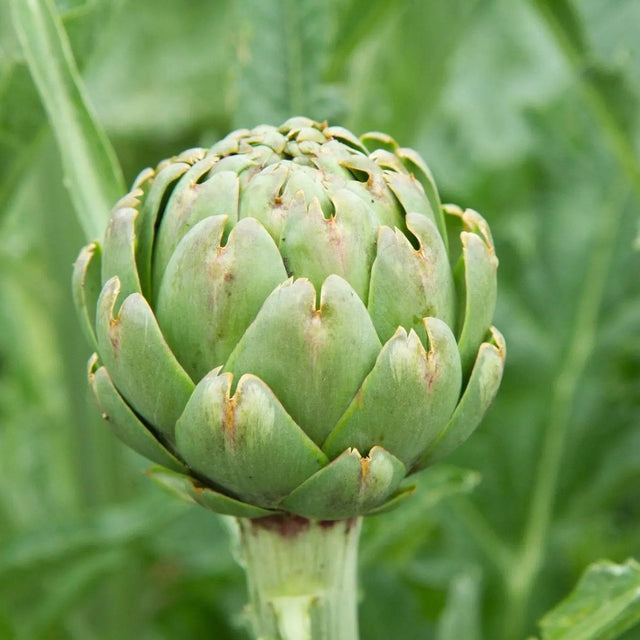
Green Globe Artichoke is a classic artichoke variety grown for its large, round flower buds and bold, architectural foliage. Plants form sturdy clumps of silvery-green, deeply cut leaves and send up thick stems that produce sizeable buds, followed by smaller side buds that extend the harvest. In mild climates it can be grown as a perennial, returning year after year with increasing production, while in colder regions it is commonly grown as an annual for a single-season crop.
The edible buds are harvested tight and immature, before the bracts begin to open. Green Globe is prized for its tender heart and the meaty bases of the bracts, with a rich, savory flavor that becomes buttery when cooked. It performs well steamed, boiled, grilled, or roasted, and pairs naturally with lemon, garlic, herbs, butter, or olive oil.
If allowed to flower, the buds open into dramatic purple thistle-like blooms that draw pollinators and make the plant as ornamental as it is productive. With its strong garden presence, high-quality edible buds, and reliable performance, Green Globe remains one of the most widely respected artichokes for home gardeners and market growers.
PLANTING (HOW TO SOW AND PLANT) - CHAMPION COLLARDS (Brassica oleracea L., Acephala Group)
Champion Collards are a cool-season brassica that prefers steady growth in mild weather. The goal is simple: get strong seedlings established in cool to moderate temperatures, then space plants wide enough for thick, tender leaves. This section covers seed starting, sowing, and transplanting only. Your other section covers the full-season growing rhythm after plants are established.
====================
PLANTING GOAL (SET THE PLANT UP FOR SUCCESS)
Plant for cool weather. Collards grow best when days are mild and nights are cool.
Aim for a steady start, not a stressed start. Heat spikes or drought right after planting can stunt growth and invite pests.
Plan spacing before you plant. Collards need airflow to reduce disease and to size up properly.
====================
WHEN TO PLANT (TEMPERATURE RULE)
Spring crop: sow or transplant as soon as soil can be worked and hard freezes are mostly past.
Fall crop (best flavor): plant so the crop matures into cool weather. Light frosts improve eating quality.
Collards tolerate cold once established, but tiny seedlings still benefit from protection during hard cold snaps.
====================
DIRECT SOWING (SIMPLE AND RELIABLE)
Bed prep
Choose a sunny site with good drainage.
Work in compost or well-aged manure before planting.
Seed depth
Plant 1/4 in deep.
How many seeds
Sow 2 to 3 seeds per spot.
Thinning
Once seedlings have their first true leaves, thin to the strongest plant.
Spacing
Plant-to-plant: 18 in is a strong, reliable spacing for big plants.
Row spacing: 30 to 36 in keeps airflow good and makes harvesting easier.
Succession tip
For steady harvests, sow a short row every 2 to 3 weeks during your planting window.
====================
STARTING SEEDS INDOORS (BEST FOR EARLY OR FALL CONTROL)
Starting indoors gives you cleaner starts and helps you dodge early pest pressure.
When to start
Start seeds 4 to 6 weeks before your planned transplant date.
Containers
Use cell packs or small pots with good drainage. Collards transplant easily.
Seed depth
Sow 1/4 in deep.
Temperature for germination
55 to 70 °F is ideal, warmer is fine as long as seedlings get strong light.
Light
Give strong light immediately after emergence to prevent tall, weak seedlings.
Watering
Keep evenly moist, not soaked. Good airflow prevents damping off.
====================
HARDENING OFF (DO NOT SKIP)
7 to 10 days before transplanting, gradually introduce seedlings to outdoor sun and wind.
Protect young plants from sudden heat and drying winds, especially in spring.
====================
TRANSPLANTING (HOW TO DO IT WITHOUT STALLING)
When to transplant
Transplant when seedlings have 3 to 4 true leaves and a sturdy stem.
Planting depth
Set the root ball level with the soil surface. Firm soil gently around roots.
Watering in
Water deeply right after transplanting. Keep moisture steady for the first week.
Cold protection
If a hard freeze threatens right after transplanting, use row cover overnight.
====================
EARLY SEASON PROTECTION (BIG PAYOFF)
Row cover early can block flea beetles and cabbage worm egg-laying.
Remove covers when plants start crowding the fabric, or anytime temperatures spike.
Cutworm watch
If seedlings get cut off at soil level overnight, check at the base of plants after dark and use collars if needed.
Seedlings stall and stay small
Usually heat stress, dry soil, or poor fertility. Keep moisture steady and feed with compost.
Holes in young leaves
Often flea beetles. Use row cover early and keep weeds down.
Seedlings collapse at soil line
Often damping off from soggy soil and low airflow. Improve drainage, reduce watering, restart if needed.
HOW TO GROW - CHAMPION COLLARDS (Brassica oleracea var. viridis)
Champion Collards are a dependable Southern staple that reward cool weather, fertile soil, and steady moisture. The goal is to build a strong leaf plant early, keep growth consistent through harvest, and manage insects so the leaves stay clean and tender.
====================
SITE AND SUNLIGHT
Full sun is best for fastest growth and thick leaves.
Partial sun works, especially in warm climates, but expect slower growth.
Good airflow helps reduce disease and keeps leaves drier after rain or dew.
====================
SOIL HEALTH AND BED PREP
Ideal soil: loose, well-drained, compost-rich.
Target soil pH: about 6.0 to 7.5.
Work in compost before planting. Collards love steady fertility.
Avoid pushing heavy nitrogen in short bursts. Consistent feeding makes better texture and steadier growth.
====================
WHEN TO PLANT
Collards are a cool-season crop.
Spring crop: sow as soon as soil can be worked and hard freezes are mostly past.
Fall crop: sow in late summer into early fall so plants size up before hard winter weather.
Best flavor comes after cool nights and light frosts.
====================
WATERING AND MOISTURE RHYTHM
Keep soil evenly moist, not soggy.
Aim for deep watering rather than frequent light watering.
Mulch helps prevent stress swings that cause tough leaves or bitter flavor.
Common mistake
Letting plants dry out hard, then soaking. That can slow growth and make leaves coarse.
====================
FEEDING AND MIDSEASON CARE
Collards are leafy feeders and respond well to steady nutrients.
After thinning or transplanting, top-dress with compost around the plant.
If leaves pale or growth stalls, a gentle balanced feed can help, then return to compost-based maintenance.
Do not overdo nitrogen late. It can make leaves softer and more pest-prone.
====================
WEED, PEST, AND DISEASE MANAGEMENT
Weeds
Keep weeds down early. Collards hate competition when small.
Mulch once plants are established to reduce weeds and stabilize moisture.
Weekly inspection routine
Check leaf undersides for cabbage worms and eggs.
Watch for flea beetle pinholes on young leaves.
Look for aphids in the crown and along leaf ribs.
Remove damaged leaves early and keep plants growing steadily.
====================
HARVEST RHYTHM
Harvest outer leaves first and keep the center growing.
Pick leaves when they are full size but still tender.
Regular picking encourages new growth and keeps leaves sweet.
Cold weather bonus
Flavor improves after cool nights and light frost.
====================
END OF SEASON NOTES
Collards can handle cold well, and established plants often keep producing through winter in mild climates.
In the second year, plants can bolt and flower. Once bolting starts, leaf quality drops. Harvest what you can and plan succession plantings for continuous supply.
ADDITIONAL TIPS - GREEN GLOBE ARTICHOKE (Cynara cardunculus var. scolymus)
====================
HARVEST TIMING (GET IT RIGHT)
Harvest buds when they are full-sized but still tight, before the scales start opening and separating.
The best eating stage is firm, heavy buds with compact bracts.
Cut the main bud first. That signals the plant to push side buds.
How to cut
Use a clean knife or pruners.
Cut the bud with 2 to 4 inches of stem attached for easier handling and trimming.
Quick harvest checks
Bud feels dense and heavy for its size.
Scales are tight and overlapping, not flaring open.
Color is rich green and the bud looks “sealed.”
====================
POST-HARVEST HANDLING (KEEP THEM TENDER)
Artichokes lose quality fast in heat.
Cool them quickly after picking.
If you are harvesting for the kitchen, rinse lightly, shake dry, and refrigerate.
Trim before cooking
Snip sharp tips from outer scales.
Trim stem end clean and peel tough outer stem skin if needed.
====================
STORAGE (SHORT WINDOW, BEST WHEN FRESH)
Artichokes store best cold and slightly humid.
Refrigerator method
Place unwashed buds in a perforated bag or loosely wrapped paper towel inside a bag.
Keep in the crisper.
Typical keeping window
Best quality is within 3 to 7 days.
If buds feel light, they are drying out and will be tougher.
====================
FLAVOR AND KITCHEN NOTES (MAKE IT EARN ITS SPACE)
Green Globe has a classic artichoke flavor: nutty, slightly sweet, and rich when steamed or braised.
Best cooking methods
Steaming whole buds until a leaf pulls easily.
Braising with olive oil, garlic, herbs, and a splash of broth.
Grilling halves after steaming for a smoky finish.
Kitchen tip
Rub cut surfaces with lemon to reduce browning while you prep.
====================
PLANT MANAGEMENT (BIGGER BUDS, MORE BUDS)
Central bud strategy
Harvest the main bud early and at peak tightness.
Then harvest side buds as they size up, they come in a wave.
Size control tip
If you want fewer, larger buds, remove some side shoots early.
If you want more total buds, let the plant keep multiple shoots.
End of season reset
After the harvest flush, cut back old stalks.
Feed and water to rebuild the plant for the next cycle if it is perennial in your area.
====================
WATERING RHYTHM (STEADY MOISTURE MAKES TENDER BUDS)
Keep soil evenly moist, especially as buds are forming and sizing.
Avoid drought stress. Dry spells can make buds smaller and tougher.
Deep water at the base and mulch to hold moisture.
Heat wave adjustment
During hot stretches, water more consistently and keep mulch thick.
Heat can stall bud production and push plants toward stress.
====================
MULCH AND CROWN PROTECTION (KEEP THE BASE HAPPY)
Mulch helps in two ways
Stabilizes moisture during bud development.
Protects the crown in winter if you are overwintering.
Keep mulch pulled slightly back from the crown in wet weather to prevent rot.
====================
PEST WATCH LIST (WHAT TO CHECK WEEKLY)
APHIDS
Look for clusters on tender new growth and under leaves.
Spray off with water, or use insecticidal soap if pressure is high.
SLUGS AND SNAILS
Common on seedlings and in damp mulch.
Hand-pick at dusk and reduce hiding spots.
CATERPILLARS
Chewed leaves and frass.
Hand-pick and check leaf undersides.
ARTICHOKE PLUME MOTH (REGIONAL)
Signs: Small holes in buds, frass, deformed buds, larvae tucked in bracts.
Action: Remove and destroy badly affected buds, keep the patch clean, inspect buds early and often.
Good airflow prevents leaf spotting and mold issues.
Do not crowd plants, and remove the worst damaged lower leaves.
Water at soil level when possible, wet foliage overnight invites problems.
If the crown stays wet and soft, pull mulch back and improve drainage.
====================
FLOWERING NOTE (WHEN TO LET THEM BLOOM)
If you let a bud open, it becomes a dramatic purple thistle-like flower.
Blooming is great for pollinators and looks incredible, but it ends that bud for eating.
If your goal is food, harvest before opening.
If your goal is pollinator habitat or seed saving, let one or two stalks flower.
====================
OVERWINTERING (IF YOUR CLIMATE ALLOWS)
In mild winter areas, Green Globe can act like a perennial.
After frost, cut back stalks and mulch heavily over the crown.
In colder areas, treat it as an annual, or dig and store crowns where that method is used.
Spring wake-up
Pull mulch back as weather warms so the crown does not stay soggy.
Top-dress with compost to power new shoots.
====================
GARDEN PLACEMENT AND COMPANIONS
Give it space and sun. A mature plant is big and architectural.
Best neighbors are low, non-competitive plants and pollinator flowers.
Avoid placing it where tall plants will shade it, bud formation suffers in shade.
COMMON PESTS AND PROBLEMS (GREEN GLOBE ARTICHOKE)
====================
INSECT PESTS
APHIDS (various species)
Signs: Clusters on new growth and undersides of leaves, sticky honeydew, curling leaves, sooty mold.
Prevention: Avoid excess nitrogen, encourage beneficial insects, keep weeds down.
Actions: Strong water spray, insecticidal soap, neem. Remove heavily infested leaves if needed.
ARTICHOKE PLUME MOTH (Platyptilia carduidactyla)
Signs: Tiny larvae tunneling in buds and stems, frass, distorted buds, buds that rot or fail to open cleanly.
Prevention: Remove and destroy infested buds, clean up old stalks, avoid leaving crop residue standing.
Actions: Cut out and discard damaged buds and stems. Treat young larvae early with Bt (kurstaki) or spinosad if pressure is high.
LEAFMINERS
Signs: Winding white tunnels in leaves, stippling, reduced vigor.
Prevention: Remove mined leaves early, keep beds clean, encourage parasitic wasps.
Actions: Pick off mined leaves, spinosad can help when infestations are heavy.
THRIPS
Signs: Silvery streaking, leaf distortion, scarring on tender growth, stress during hot and dry weather.
Prevention: Keep plants evenly watered, reduce dust, avoid weedy edges.
Actions: Insecticidal soap or neem, repeat applications as needed and target leaf undersides.
CUTWORMS
Signs: Seedlings or young transplants cut off at soil level, sudden overnight collapse.
Prevention: Collars around transplants, weed control, avoid planting into weedy beds.
Actions: Hand-pick at dusk, use Bt (for caterpillars) or spinosad if active feeding is seen.
SLUGS AND SNAILS
Signs: Ragged holes, slime trails, damage to young plants and tender leaves.
Prevention: Reduce hiding spots, water in morning, keep mulch pulled back from crowns.
Actions: Iron phosphate bait, beer traps, hand-pick at dusk.
====================
DISEASES
BOTRYTIS (GRAY MOLD)
Signs: Gray fuzzy mold on buds or leaf bases, soft rot in cool, damp conditions.
Prevention: Strong airflow, avoid overhead watering, remove dead leaves near the crown.
Actions: Remove infected buds and leaves promptly, keep the crown dry, improve spacing and airflow.
POWDERY MILDEW
Signs: White powdery coating on leaves, yellowing, slowed growth.
Prevention: Full sun, airflow, avoid wetting foliage late in the day.
Actions: Spray sulfur or potassium bicarbonate early, neem can help if applied consistently.
DOWNY MILDEW
Signs: Yellow patches, gray-purple fuzz on leaf undersides, rapid decline in humid weather.
Prevention: Space plants well, water at soil line, avoid wet foliage at night.
Actions: Remove infected leaves, copper sprays can help prevent spread when used early.
ROOT AND CROWN ROT (often Phytophthora and other fungi)
Signs: Wilting despite moist soil, crown softening, blackened roots, sudden collapse.
Prevention: Excellent drainage, avoid soggy sites, do not bury the crown, raised beds help.
Actions: Remove and discard badly affected plants, improve drainage before replanting.
VERTICILLIUM WILT
Signs: One-sided yellowing, stunting, gradual wilt, brown discoloration inside stems.
Prevention: Rotate out of susceptible crops, avoid planting in known infected soil.
Actions: Remove affected plants, do not compost, focus on rotation and soil health.
====================
PHYSIOLOGICAL AND GROWING ISSUES
POOR BUD FORMATION OR SMALL BUDS
Signs: Few buds, undersized buds, weak stalks.
Causes: Drought stress, low fertility, heat stress, too much competition, planting too late.
Fix: Consistent deep watering, compost top-dress, balanced feeding, keep weeds down.
BUD ROT OR “FUZZY” BUDS
Signs: Buds blacken or rot from the inside, mold in tight bracts.
Causes: Cool, wet weather, poor airflow, botrytis pressure.
Fix: Increase airflow, avoid overhead watering, harvest promptly, remove damaged buds.
BOLTING OR TOUGHENING
Signs: Plants push flower stalks fast, buds open quickly, texture gets tougher.
Causes: Heat spikes, drought swings, plant stress.
Fix: Keep moisture steady, mulch, harvest buds earlier during hot stretches.
NUTRIENT IMBALANCE
Signs: Pale leaves (low nitrogen), weak growth, bitter or tough leaves.
Fix: Use compost as the base fertility, add a balanced feed if plants stall, avoid pushing heavy nitrogen late.
====================
GENERAL PREVENTION CHECKLIST
Plant in full sun with good airflow.
Use raised beds or excellent drainage, artichokes hate wet crowns.
Water deeply and consistently, mulch to stabilize moisture.
Remove old leaves and dead plant material around the crown.
Inspect buds and leaf undersides weekly for aphids, larvae, and early mold.
Rotate problem beds and do not compost diseased crowns or badly infected buds.
Frequently Asked Questions (FAQs) - Green Globe Artichoke (Cynara cardunculus var. scolymus)
Q: What is Green Globe Artichoke?
A: Green Globe is a classic globe artichoke variety grown for large, rounded edible buds with thick, tender hearts and fleshy leaves, prized for steaming, roasting, grilling, and preserving.
Q: Is Green Globe artichoke a perennial or an annual?
A: In mild climates it is a perennial that can produce for multiple years, but in colder regions it is often grown as an annual unless it is heavily protected or overwintered.
Q: How long does Green Globe take to produce?
A: From seed, it commonly takes about 120–179 days to reach first harvest, depending on warmth and growing conditions. Transplants or vernalized plants can produce earlier.
Q: Does Green Globe need cold to form buds?
A: Bud production is encouraged by a cool period (vernalization). Many growers get best results when plants experience cool temperatures while establishing, followed by steady spring warmth.
Q: What is the ideal temperature range for growing artichokes?
A: Artichokes prefer cool to mild conditions, generally thriving around 60–75 °F, and they can slow down in prolonged heat. Light frost can be tolerated by established plants, but hard freezes can damage crowns.
Q: Can I start artichokes indoors and transplant them?
A: Yes. Start seeds indoors and transplant after hardening off. Use larger cells or pots so roots are not cramped, and transplant gently to avoid stalling growth.
Q: How do I know when to harvest an artichoke?
A: Harvest when buds are full-sized, tight, and firm, before the scales begin to open. Cut the bud with several inches of stem for easier handling and better quality.
Q: Will the plant keep producing after the first bud?
A: Yes. After the main central bud is harvested, side shoots usually produce smaller secondary buds, extending harvest.
Q: Can Green Globe artichokes flower?
A: Yes. If buds are left unharvested, they open into large, purple thistle-like blooms that are striking and highly attractive to pollinators.
Q: Do artichokes cross-pollinate if I want to save seed?
A: Yes. Artichokes are insect-pollinated and can cross with other Cynara cardunculus types, including cardoons and other artichoke varieties, so isolation is needed for true seed.
Q: Why are my artichokes small or not forming buds?
A: Common causes are too much heat, inconsistent moisture, low fertility, crowded plants, or not getting the cool period that encourages bud initiation.
Q: Are artichokes the same as Jerusalem artichokes?
A: No. Globe artichoke is Cynara cardunculus var. scolymus. Jerusalem artichoke is a sunflower (Helianthus tuberosus) grown for tubers, not buds.
HISTORY AND CULTURE - CHAMPION COLLARDS (Brassica oleracea var. viridis)
Champion Collards are a classic Southern-style collard known for producing broad, tender leaves with a steady, dependable harvest window. Collards have long been valued in kitchen gardens because they deliver real food value in a small footprint and keep producing through cool weather when many crops slow down. That reliability is part of why collards became a staple green across the South, especially in home plots where “something you can count on” matters more than novelty.
At the species level, collards are part of the Brassica oleracea group, a lineage of old European cabbage relatives that humans shaped over generations into many forms, including kale, cabbage, broccoli, and collards. Collards represent the leaf-focused path of that long selection story: instead of forming a tight head, they put their energy into large, nutritious foliage that can be harvested again and again.
In the garden, Champion fits the tradition of cool-season resilience. It handles light frosts well, often sweetening after cold weather, and it thrives as a dependable fall and winter green when properly spaced and kept growing. In the kitchen, it continues the cultural rhythm collards are known for: a hearty, versatile leaf that can be cooked down slow, added to soups, or sautéed for a quick side. It is not just a vegetable crop, it is a food-security green that has fed families for generations and still earns its place today.
SEED SAVING - GREEN GLOBE ARTICHOKE (Cynara cardunculus var. scolymus)
Artichokes are insect-pollinated and can cross with other artichokes and cardoons. To keep Green Globe true, your main job is selecting the right plants, controlling pollination when possible, and letting seed fully mature and dry before harvest.
====================
PICKING PLANTS TO SAVE FROM
Goal: Save seed only from plants that show the traits you want to keep.
Choose plants that are
Vigorous and healthy through the season
Strong, uniform plants with thick stems and good leaf health
Producing true Green Globe traits (large, rounded buds, good bud shape, solid production)
Free of heavy aphid pressure, leaf spot, and crown rot issues
Avoid saving seed from
Weak plants that stayed small or struggled early
Plants that bolted too fast or produced poor-quality buds
Plants with severe disease, rot at the crown, or heavy pest damage
====================
2. KEEPING THE VARIETY TRUE (ISOLATION AND POLLINATION CONTROL)
Important: Green Globe is Cynara cardunculus var. scolymus. It can cross with other artichokes and cardoons (same species complex) if they flower at the same time.
It can cross with
Other artichoke varieties
Cardoon (Cynara cardunculus var. altilis)
It will not cross with
Common garden vegetables outside the Cynara group (brassicas, cucurbits, etc.)
Two realistic ways to keep it true
OPTION A: DISTANCE ISOLATION
If you are only flowering one artichoke variety and no cardoons are flowering nearby, your seed is more likely to stay true.
If other artichokes or cardoons are close by, assume crossing is possible.
OPTION B: BAGGING AND HAND-POLLINATION (BEST FOR TRUE SEED)
Because artichoke flower heads are big and highly attractive to pollinators, controlling pollen flow is difficult, but possible.
Before the head fully opens, cover a selected flower head with a breathable bag (fine mesh or organza) to exclude insects.
To hand-pollinate, wait until the purple florets are opening and shedding pollen, then use a small brush to move pollen within the same flower head or between flower heads from the same selected plant(s).
Re-bag after pollinating and keep covered until seed begins to set and the head starts drying.
Mark the seed head clearly so it is not harvested for eating.
How many seed plants to keep
For strong genetics, aim to save seed from multiple plants, not just one. If you can, keep seed from 3 or more good plants and mix it.
Do not harvest the chosen buds for eating. Let them fully flower.
Once flowering finishes, the head will dry down and form seed.
Leave the seed heads on the plant until the head is mostly dry and the seeds are firm and developed.
Harvest before extended wet weather if possible, because damp heads can mold.
Optional after-harvest dry-down
If conditions are humid, cut the seed head with a length of stem and dry it further indoors in a warm, airy place until fully crisp.
====================
4. HARVESTING THE SEEDS
When the head is dry, break it apart over a clean tray or bucket.
Pull apart the dried flower material and fluff to expose seeds.
Mature seeds are typically dark and firm.
Discard pale, flat, or obviously immature seed.
====================
5. CLEANING THE SEEDS
Basic dry cleaning method (best for artichoke)
Rub and crumble the dry head material gently to free seeds.
Use your hands to separate the larger chaff.
Winnow by pouring seeds and chaff slowly between two containers in a light breeze or in front of a fan (low setting). Chaff blows away, seed drops.
Final check
Seeds should be dry, hard, and mostly free of fluff.
If any seed feels soft, keep drying with airflow before storage.
====================
6. DRYING THE SEEDS (MOST IMPORTANT STEP)
Spread seeds in a single layer on a screen or paper in a warm, dry room with good airflow, out of direct sun.
Stir once daily so they dry evenly.
Drying time
Usually 7 to 14 days depending on humidity.
How to tell they are fully dry
Seeds feel hard and do not dent with a fingernail.
They should not feel cool or “damp” in the center when cracked.
====================
7. STORING AND LABELING
Label includes
Green Globe Artichoke
Cynara cardunculus var. scolymus
Year harvested
Any notes (bagged/isolated, best plants, earliest or biggest buds, etc.)
Best containers
Paper envelope for breathing, stored inside a jar for protection
Or a jar with a little desiccant packet if your space is humid
Best conditions
Cool, dark, and dry
Avoid heat swings and sunlight
Typical viability
Often 3 to 5 years with good storage, longer if kept very dry and cool.
====================
8. QUICK VIABILITY TEST
Place 10 seeds on a damp paper towel.
Fold, place in a plastic bag or sealed container, and keep warm.
Check daily for sprouting.
Interpreting results
8 to 10 sprouted: great seed
6 to 7 sprouted: usable, sow a bit thicker
Under 6 sprouted: consider replacing or sow heavily
====================
EXTRA TIPS FOR BETTER SEED
Save seed from the plants that produced the best buds and stayed healthiest, not just the earliest flower.
If you want to keep Green Globe “Globe” shaped, avoid saving seed from plants that make narrow, pointed heads.
In wet climates, harvest seed heads a little earlier and finish drying indoors to prevent mold and loss.
Uses and Benefits:
Green Globe Artichoke (Cynara scolymus) is a perennial thistle known for its edible flower buds. The buds are harvested before they bloom and are commonly used in Mediterranean cuisine. Artichokes are rich in antioxidants, fiber, and essential vitamins and minerals, including vitamin C, vitamin K, and folate.
Artichokes are believed to support liver health, improve digestion, and lower cholesterol levels. The leaves of the plant are also used in herbal teas and extracts for their potential detoxifying properties. Artichokes are often steamed, boiled, or grilled and served with dips or as part of salads and other dishes.
Shipped from U.S.A.
Our seeds are grown and sourced from the US. They're then packed and shipped from Colerain NC.
Triple tested
We regularly test the quality and germination rate of our seeds. We're so confident that our seeds are backed by a 1 year warranty!
Payment & Security
Payment methods
Your payment information is processed securely. We do not store credit card details nor have access to your credit card information.
Join Our Newsletter for Exclusive Savings!
Sign up for our newsletter to get a 30% discount code sent straight to your inbox. If it doesn’t appear right away, please check your inbox settings, and if you still need help, we’re here to assist!
Alliance Of Native Seedkeepers
Artichoke Seeds - Green Globe Artichoke
$200 USD
Unit price /
Unavailable
Description
Green Globe Artichoke is a classic artichoke variety grown for its large, round flower buds and bold, architectural foliage. Plants form sturdy clumps of silvery-green, deeply cut leaves and send up thick stems that produce sizeable buds, followed by smaller side buds that extend the harvest. In mild climates it can be grown as a perennial, returning year after year with increasing production, while in colder regions it is commonly grown as an annual for a single-season crop.
The edible buds are harvested tight and immature, before the bracts begin to open. Green Globe is prized for its tender heart and the meaty bases of the bracts, with a rich, savory flavor that becomes buttery when cooked. It performs well steamed, boiled, grilled, or roasted, and pairs naturally with lemon, garlic, herbs, butter, or olive oil.
If allowed to flower, the buds open into dramatic purple thistle-like blooms that draw pollinators and make the plant as ornamental as it is productive. With its strong garden presence, high-quality edible buds, and reliable performance, Green Globe remains one of the most widely respected artichokes for home gardeners and market growers.