Welcome to our store. Learn more

Free U.S. seed shipping $25+. Seeds ship free at the threshold.

Current Processing Times Before Shipping Are 1-2 Business Days

25% OFF Heirloom seed packets are $1.50, regularly $2.00. Seed packets only · sale price already applied · carries into checkout · coupon codes do not combine. Shop the sale →

Bear Paw Runner Bean

Scientific name Phaseolus coccineus L.

About this variety

Bear Paw Runner Bean seeds grow into plants with a vining/climbing habit, valued for flowering trellises, young cooked pods, shell beans, dry beans, pollinator gardens, and seed saving. The crop produces long pods and large runner-bean seed; harvest stage determines use. Meaty and nutty after thorough cooking; young pods are best before fibers develop. This page brings together...

Continue with the complete description
$150 USD $200
25% OFF
Heirloom seed packet sale

$1.50, regularly $2.00. The sale price is already applied and carries into checkout. No code is needed. Coupon codes do not combine with this offer.

At a glance

The facts most gardeners need first

View the full variety record
10 minimum seeds per packet
Gardener experience

Easy to moderate

Germination difficulty

Easy

Germination time

7–14 Days at 60–75 °F seed-zone soil temperature

  • Germination
    7–14 Daysa seed-zone soil temperature of 60–75 °F
  • Maturity
    70-79 DaysCounted from direct sowing to the primary harvest stage named for this product; the same range is used throughout the page.
  • Sun
    Full sun
  • Support and spacing
    Trellis recommended · space 6 in · rows 36 in
  • Growth habit
    Vining or climbing · Annual · 97–120 in tall
  • Best use
    Flowering trellises, young cooked pods, shell beans, dry beans, pollinator gardens, and seed saving
Secure checkout Details
Generic
Triple-tested seed qualityRegular quality and germination checks support every packet.

We regularly test seed quality and germination as lots move through storage and packing. We stand behind the seed we send and want customers to contact us when a packet does not perform as reasonably expected.

1-year seed warrantyCoverage begins on the date of purchase.

When properly stored, planted, and cared for, we guarantee reasonable germination and true-to-type growth for one year from the date of purchase. Conditions outside our control—including extreme weather, pests, unsuitable storage, and gardener error—are excluded. Contact us when something is not right so we can review the situation and work toward a replacement, refund, or another fair resolution.

Non-GMO / BE seed policyWe do not buy or sell genetically engineered or bioengineered seed.

Every seed variety we sell is non-GMO.

USDA’s National Bioengineered Food Disclosure Standard defines bioengineered foods as containing detectable genetic material modified through in vitro recombinant DNA methods in ways not achievable through conventional breeding or found in nature.

  • Hybrid means parent lines were conventionally crossed; hybrid does not mean GMO.
  • Heirloom and open-pollinated describe how a variety is maintained and reproduced.
  • Organic certification is separate and is shown only when verified for the individual product.
Packed in Colerain, North CarolinaPrepared in our seed room for gardens across the country.

Seeds are packed and shipped from Colerain, North Carolina. Our packets use forestry-certified paper, and we use recyclable paper mailers where appropriate. AONSK is also a 1% for the Planet partner while continuing to reduce waste in packing and fulfillment.

Garden tools

Need a plan for your space?

Use the garden-fit planner and soil calculator to turn the recorded growing facts into a practical plan.

Open garden tools Uses this product’s recorded growing information. Local weather and garden conditions may vary.

Variety field guide

What to expect from Bear Paw Runner Bean

Bear Paw Runner Bean: Vining/Climbing, 97–120 in, 70-79 Days; best for flowering trellises, young cooked pods, shell beans, dry beans, pollinator gardens, and seed saving.

Read the complete product descriptionTraits, flavor, garden use, variety notes, and the full catalog record

Bear Paw Runner Bean seeds grow into plants with a vining/climbing habit, valued for flowering trellises, young cooked pods, shell beans, dry beans, pollinator gardens, and seed saving. The crop produces long pods and large runner-bean seed; harvest stage determines use. Meaty and nutty after thorough cooking; young pods are best before fibers develop. This page brings together its documented history, planting needs, harvest stages, kitchen uses, and seed-saving guidance.

About Bear Paw Runner Bean

Bear Paw Runner Bean has a vining/climbing habit. Its principal color is mixed, and its pod or seed form is Long pods and large runner-bean seed; harvest stage determines use. Flavor: Meaty and nutty after thorough cooking; young pods are best before fibers develop. Best for flowering trellises, young cooked pods, shell beans, dry beans, pollinator gardens, and seed saving. Maturity: 70-79 Days. Plant height: 97–120 in. Support: Trellis.

Botanically, Bear Paw Runner Bean belongs toPhaseolus coccineus L.Common terms such as bean, pea, butterbean, cowpea, snap, shell, snow, dry, and edible-pod describe crop relationships or harvest uses; they are not interchangeable cultivar names.

History and provenance

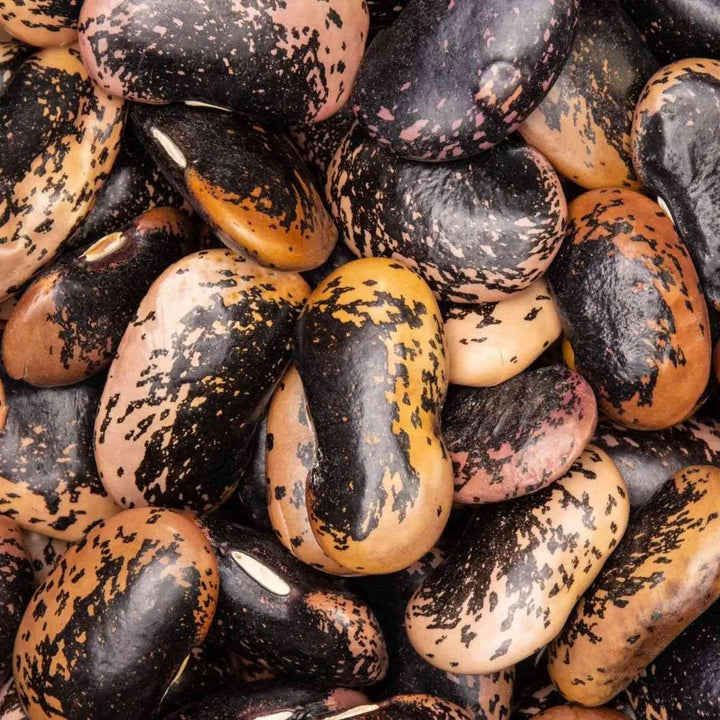
Bear Paw is selected for its large, dramatic seed pattern and ornamental edible value. var. coccineus. A scientific name does not replace the variety story, but it prevents unrelated crops from being folded together under a familiar common name.

Runner bean is a separate species from common bean and is known for vigorous vines, showy flowers, and large edible seed. It may behave as a short-lived perennial in frost-free climates but is treated as an annual crop in this catalog.

Where the surviving record is incomplete, the origin is described as uncertain rather than filled with repeated catalog folklore. A variety name, community association, or regional food use is not used to assign a tribal, ethnic, or national identity to a person connected with the present seed lot.

Pod, seed, flavor, and kitchen use

Bear Paw Runner Bean is selected for flowering trellises, young cooked pods, shell beans, dry beans, pollinator gardens, and seed saving. Meaty and nutty after thorough cooking; young pods are best before fibers develop. The relevant pod or seed form is Long pods and large runner-bean seed; harvest stage determines use. Harvest stage determines texture and use: snap and edible-pod crops are picked young; shell beans and peas are harvested with full-size soft seed; dry beans and peas remain until the seed is mature and dry. Cook mature dry beans or peas thoroughly before eating. Use food-safe procedures for any seed intended for sprouting. Culinary quality varies with harvest stage, weather, irrigation, and storage, so the description states a cultivar tendency rather than a guaranteed flavor result.

Growing facts

  • Growth habit:Vining/Climbing
  • Plant height:97–120 in
  • Maturity:70-79 Days from direct sowing to the primary harvest stage
  • Germination:7–14 Days at 60–75 °F
  • Seed depth:1 in
  • Plant spacing:6 in
  • Row spacing:36 in
  • Support:Trellis
  • Sun and water:Full sun; Moderate water
  • Soil:Loamy, well-drained soil at pH 6.0–6.5
  • Minimum seed count:10 seeds

Sowing and establishment

Direct sow Bear Paw Runner seed 1 in deep when the soil and season match this crop. Maintain a seed-zone temperature of 60–75 °F; expect emergence in 7–14 Days. Space plants 6 in apart with 36 in between rows. Install a sturdy trellis before sowing so roots are not disturbed later; guide young tendrils or vines to the support. Grow in full sun in loamy, well-drained soil near pH 6.0–6.5. Keep moisture moderate and especially steady during flowering and pod fill, but avoid waterlogged soil. Direct sowing is preferred because large legume seed and young roots can be damaged by rough handling. Apply nitrogen only according to a soil test; excessive nitrogen can produce lush vines at the expense of flowers and pods. Do not cultivate or harvest among wet foliage because bacterial and fungal diseases can be spread mechanically. Cook mature dry beans or peas thoroughly before eating. Use food-safe procedures for any seed intended for sprouting.

Season-long care

Grow Bear Paw Runner Bean in late spring. The crop has a vining/climbing habit. Plant height: 97–120 in. Support: Trellis. Seed germinates in 7–14 Days at 60–75 °F; sow 1 in deep, space plants 6 in apart, and leave 36 in between rows. Provide full sun, moderate water, and loamy soil at pH 6.0–6.5. Frost response: Tender. Primary-harvest timing: 70-79 Days. Mulch after seedlings establish to moderate soil moisture and reduce splash. Scout weekly for chewing insects, aphids, distorted growth, spots, wilt, and pod damage. Rotate away from legumes when disease pressure has built, remove seriously diseased plants, and preserve source and lot information when replanting.

Harvest, food use, and storage

Harvest green-shell beans when seed is fully sized but soft, or allow pods to dry completely for pantry and seed use. Plan on 70-79 Days from direct sowing to the primary harvest stage. Use Bear Paw Runner Bean for flowering trellises, young cooked pods, shell beans, dry beans, pollinator gardens, and seed saving. Meaty and nutty after thorough cooking; young pods are best before fibers develop. Cook mature dry beans or peas thoroughly before eating. Use food-safe procedures for any seed intended for sprouting. Cool fresh peas and green pods promptly after harvest. For dry beans or peas, reduce irrigation as seed matures, harvest before shattering or prolonged wet weather, finish curing under cover, shell or thresh gently, and store only fully dry seed. For canning, use a current tested pressure-canning process appropriate to the food; do not substitute an untested method.

Saving seed

Seed Saving
====================
Picking plants
Bear Paw Runner is recorded as Open-Pollinated (OP). Select healthy, true-to-type plants that represent the maintained population rather than saving from one unusually early or large plant.

Isolation/Pollination control
This crop can receive substantial insect-carried pollen. Use greater isolation, caging, or controlled pollination than for ordinary self-pollinating bush beans, and record the method.

Full maturity
Allow seed pods to pass beyond eating maturity and become fully mature for the species. Harvest before brittle pods shatter, finish curing under cover with airflow, then thresh or shell gently.

Harvesting seeds
Harvest in dry weather when possible. Keep plants or pods from different varieties and selections separate from the moment they leave the row.

Cleaning
Shell or thresh gently, remove chaff, split seed, insect-damaged seed, moldy seed, and obvious off-types. Large legume seed is easily damaged by rough handling.

Drying
Spread cleaned seed in a thin layer with airflow until it is fully dry before sealing. Do not trap field moisture in a jar or plastic bag.

Storing/Labeling
Label crop, cultivar or market class, source, lot, year, grower, location, isolation method, selection notes, harvest stage, and cleaning date. Store cool, dry, dark, and protected from pests.

Viability test
Before an important planting or distribution, test a representative sample and record normal seedlings, abnormal seedlings, hard seed where relevant, and dead seed.

Extra tips
Keep the original packet or photograph it. Compare the next grow-out with this variety description, and document any stable difference before changing the published traits.

Common problems and field diagnosis

Poor emergence usually follows soil that is too cold, saturated, crusted, or compacted, or seed damaged during handling. Recheck the listed germination temperature and seed depth before reseeding. Flower or pod abortion can follow heat, drought, waterlogging, excess nitrogen, or poor pollinator conditions in crops that depend more heavily on insects. Stringy pods often reflect overmaturity or water stress. Yellowing can indicate root stress, nutrient imbalance, disease, or normal late-season dry-down. Avoid diagnosing by one symptom alone. Use local Cooperative Extension guidance and preserve photographs, dates, weather, irrigation, and plant-location notes.

Frequently asked questions

How long does Bear Paw Runner Bean take to germinate?

7–14 Days at 60–75 °F.

When should I harvest it?

70-79 Days.

How tall is the plant?

97–120 in.

What support should I install?

Trellis.

Can I save seed?

Yes, while maintaining selection, isolation, lot identity, and full seed maturity.
Minimum Seed Count:10 seeds

Garden toolsOpen the garden-fit planner, planting-window questions, or soil calculator only when useful

Uses this product’s recorded growing information. Local weather, soil, and garden conditions may vary.

Garden-fit planning for this variety

Will Bear Paw Runner Bean fit your garden?

Check support, direct-sowing conditions, harvest use, succession timing, and available space.

Questions for this bean or pea seed
Seed-starting fit and patience
Recorded product profileIntermediateEasyRead why
Soil test, pH, drainage, and amendment calculator Have a laboratory soil report? Enter pH, nutrients, texture, bed size, and site observations here. Open soil tools
Recorded soil typeLoamy
Recorded pH range6.0–6.5
Water needsModerate
LightFull sun

Use a current laboratory soil test

Soil-test interpreter

Compare your report with this product's listed pH target: 6.0–6.5.

This tool interprets values you enter; it does not replace laboratory or Cooperative Extension amendment rates. Soil test methods and nutrient recommendations vary by region.

Full growing record

Complete growing and seedkeeping record

Starting and plantingSeed preparation, sowing, germination, transplanting, spacing, and early establishment
Grow Bear Paw Runner Bean in late spring. The crop has a vining/climbing habit. Plant height: 97–120 in. Support: Trellis. Seed germinates in 7–14 Days at 60–75 °F; sow 1 in deep, space plants 6 in apart, and leave 36 in between rows. Provide full sun, moderate water, and loamy soil at pH 6.0–6.5. Frost response: Tender. Primary-harvest timing: 70-79 Days. Mulch after seedlings establish to moderate soil moisture and reduce splash. Scout weekly for chewing insects, aphids, distorted growth, spots, wilt, and pod damage. Rotate away from legumes when disease pressure has built, remove seriously diseased plants, and preserve source and lot information when replanting.
Season-long growing guideWater, fertility, support, weather response, pollination, containers, and care through maturity
Direct sow Bear Paw Runner seed 1 in deep when the soil and season match this crop. Maintain a seed-zone temperature of 60–75 °F; expect emergence in 7–14 Days. Space plants 6 in apart with 36 in between rows. Install a sturdy trellis before sowing so roots are not disturbed later; guide young tendrils or vines to the support. Grow in full sun in loamy, well-drained soil near pH 6.0–6.5. Keep moisture moderate and especially steady during flowering and pod fill, but avoid waterlogged soil. Direct sowing is preferred because large legume seed and young roots can be damaged by rough handling. Apply nitrogen only according to a soil test; excessive nitrogen can produce lush vines at the expense of flowers and pods. Do not cultivate or harvest among wet foliage because bacterial and fungal diseases can be spread mechanically. Cook mature dry beans or peas thoroughly before eating. Use food-safe procedures for any seed intended for sprouting.
Harvest, storage, and usesRecognizing maturity, harvesting cleanly, handling and storage, kitchen uses, and garden roles

Harvest and storage

Harvest green-shell beans when seed is fully sized but soft, or allow pods to dry completely for pantry and seed use. Plan on 70-79 Days from direct sowing to the primary harvest stage. Use Bear Paw Runner Bean for flowering trellises, young cooked pods, shell beans, dry beans, pollinator gardens, and seed saving. Meaty and nutty after thorough cooking; young pods are best before fibers develop. Cook mature dry beans or peas thoroughly before eating. Use food-safe procedures for any seed intended for sprouting. Cool fresh peas and green pods promptly after harvest. For dry beans or peas, reduce irrigation as seed matures, harvest before shattering or prolonged wet weather, finish curing under cover, shell or thresh gently, and store only fully dry seed. For canning, use a current tested pressure-canning process appropriate to the food; do not substitute an untested method.

Seed Saving
====================
Picking plants
Bear Paw Runner is recorded as Open-Pollinated (OP). Select healthy, true-to-type plants that represent the maintained population rather than saving from one unusually early or large plant.

Isolation/Pollination control
This crop can receive substantial insect-carried pollen. Use greater isolation, caging, or controlled pollination than for ordinary self-pollinating bush beans, and record the method.

Full maturity
Allow seed pods to pass beyond eating maturity and become fully mature for the species. Harvest before brittle pods shatter, finish curing under cover with airflow, then thresh or shell gently.

Harvesting seeds
Harvest in dry weather when possible. Keep plants or pods from different varieties and selections separate from the moment they leave the row.

Cleaning
Shell or thresh gently, remove chaff, split seed, insect-damaged seed, moldy seed, and obvious off-types. Large legume seed is easily damaged by rough handling.

Drying
Spread cleaned seed in a thin layer with airflow until it is fully dry before sealing. Do not trap field moisture in a jar or plastic bag.

Storing/Labeling
Label crop, cultivar or market class, source, lot, year, grower, location, isolation method, selection notes, harvest stage, and cleaning date. Store cool, dry, dark, and protected from pests.

Viability test
Before an important planting or distribution, test a representative sample and record normal seedlings, abnormal seedlings, hard seed where relevant, and dead seed.

Extra tips
Keep the original packet or photograph it. Compare the next grow-out with this variety description, and document any stable difference before changing the published traits.

Uses and garden roles

Bear Paw Runner Bean is selected for flowering trellises, young cooked pods, shell beans, dry beans, pollinator gardens, and seed saving. Meaty and nutty after thorough cooking; young pods are best before fibers develop. The relevant pod or seed form is Long pods and large runner-bean seed; harvest stage determines use. Harvest stage determines texture and use: snap and edible-pod crops are picked young; shell beans and peas are harvested with full-size soft seed; dry beans and peas remain until the seed is mature and dry. Cook mature dry beans or peas thoroughly before eating. Use food-safe procedures for any seed intended for sprouting. Culinary quality varies with harvest stage, weather, irrigation, and storage, so the description states a cultivar tendency rather than a guaranteed flavor result.
Seed savingSelection, pollination, isolation, full maturity, cleaning, drying, labeling, and storage
Seed Saving
====================
Picking plants
Bear Paw Runner is recorded as Open-Pollinated (OP). Select healthy, true-to-type plants that represent the maintained population rather than saving from one unusually early or large plant.

Isolation/Pollination control
This crop can receive substantial insect-carried pollen. Use greater isolation, caging, or controlled pollination than for ordinary self-pollinating bush beans, and record the method.

Full maturity
Allow seed pods to pass beyond eating maturity and become fully mature for the species. Harvest before brittle pods shatter, finish curing under cover with airflow, then thresh or shell gently.

Harvesting seeds
Harvest in dry weather when possible. Keep plants or pods from different varieties and selections separate from the moment they leave the row.

Cleaning
Shell or thresh gently, remove chaff, split seed, insect-damaged seed, moldy seed, and obvious off-types. Large legume seed is easily damaged by rough handling.

Drying
Spread cleaned seed in a thin layer with airflow until it is fully dry before sealing. Do not trap field moisture in a jar or plastic bag.

Storing/Labeling
Label crop, cultivar or market class, source, lot, year, grower, location, isolation method, selection notes, harvest stage, and cleaning date. Store cool, dry, dark, and protected from pests.

Viability test
Before an important planting or distribution, test a representative sample and record normal seedlings, abnormal seedlings, hard seed where relevant, and dead seed.

Extra tips
Keep the original packet or photograph it. Compare the next grow-out with this variety description, and document any stable difference before changing the published traits.
Pests, diseases, and troubleshootingPrevention, diagnosis, environmental disorders, common damage, and first-response checks
Poor emergence usually follows soil that is too cold, saturated, crusted, or compacted, or seed damaged during handling. Recheck the listed germination temperature and seed depth before reseeding. Flower or pod abortion can follow heat, drought, waterlogging, excess nitrogen, or poor pollinator conditions in crops that depend more heavily on insects. Stringy pods often reflect overmaturity or water stress. Yellowing can indicate root stress, nutrient imbalance, disease, or normal late-season dry-down. Avoid diagnosing by one symptom alone. Use local Cooperative Extension guidance and preserve photographs, dates, weather, irrigation, and plant-location notes.
Frequently asked questionsDecision-focused answers that supplement the detailed guides above
How long does Bear Paw Runner Bean take to germinate? 7–14 Days at 60–75 °F.
When should I harvest it? 70-79 Days.
How tall does it grow? 97–120 in.
What support does it need? Trellis.
Can I save seed? Yes, while maintaining selection, isolation, lot identity, and full seed maturity.
History and provenanceBotanical identity, cultivar history, regional or cultural context, uncertainty, and source records

Scientific name: Phaseolus coccineus L.

Common name: Runner Bean

Cultivar or variety: Bear Paw Runner

Bear Paw is selected for its large, dramatic seed pattern and ornamental edible value. var. coccineus. A scientific name does not replace the variety story, but it prevents unrelated crops from being folded together under a familiar common name.

Runner bean is a separate species from common bean and is known for vigorous vines, showy flowers, and large edible seed. It may behave as a short-lived perennial in frost-free climates but is treated as an annual crop in this catalog.

Where the surviving record is incomplete, the origin is described as uncertain rather than filled with repeated catalog folklore. A variety name, community association, or regional food use is not used to assign a tribal, ethnic, or national identity to a person connected with the present seed lot.

Continue planning

Related products, collections, and growing guides

Explore the full collection
Runner Bean SeedsExplore the full collection →
Painted Lady Runner Bean

Painted Lady Runner Bean

Painted Lady Runner Bean seed with documented history, consistent growing facts, mixed pod or seed traits, and detailed harvest and seed-savin...

Customer experience

Reviews for Bear Paw Runner Bean

Customer Reviews

Based on 4 reviews
100%
(4)
0%
(0)
0%
(0)
0%
(0)
0%
(0)
K
Kathy Dawn Embrey (United States)

I planted 4 seeds about 1 month ago, thinking that the temps were going to be as always, HOT & HUMID. Well, I lost 2 plants ( my fault) but the other 2 are just now flourishing. I think because the temps have just warmed up above 95. I haven't gotten any beans yet but the flowers are pretty.
Central Texas, Zone 8B

Hi Kathy, thank you for sharing your experience! It’s great to hear your beans are starting to flourish. I hope the flowers turn into a wonderful harvest soon. Happy gardening!

T
Tammy Lockhart (United States)

Absolutely loving the growth of these beans!!
Although no harvest yet the flowers just keep multiplying.

Hi Tammy! We're thrilled to hear about your bean plants thriving. Can't wait to hear about your harvest! Thanks for sharing your joy with us.