Variety field guide
What to expect from Cape Gooseberry Seeds
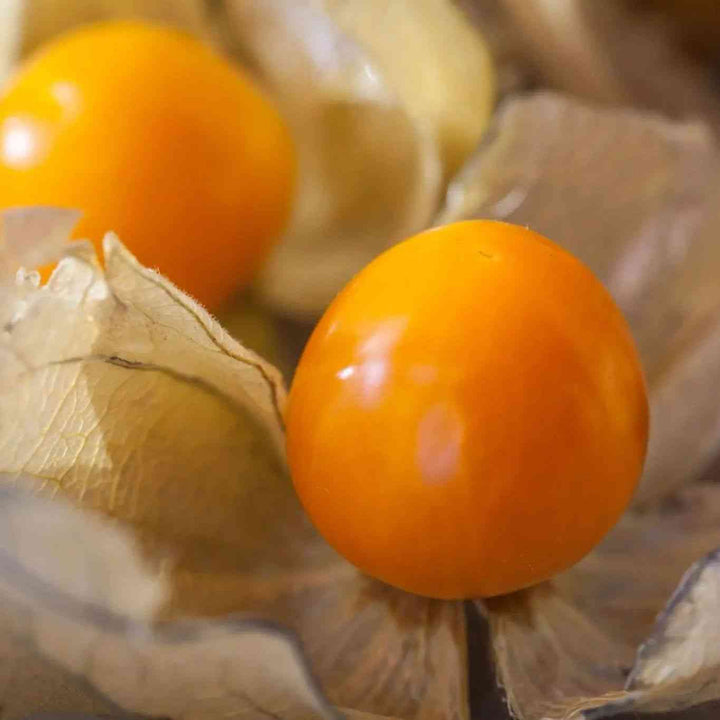
Golden-orange husked berries with a sweet-tart flavor; a tender perennial usually grown as an annual.
Read the complete product descriptionTraits, flavor, garden use, variety notes, and the full catalog record
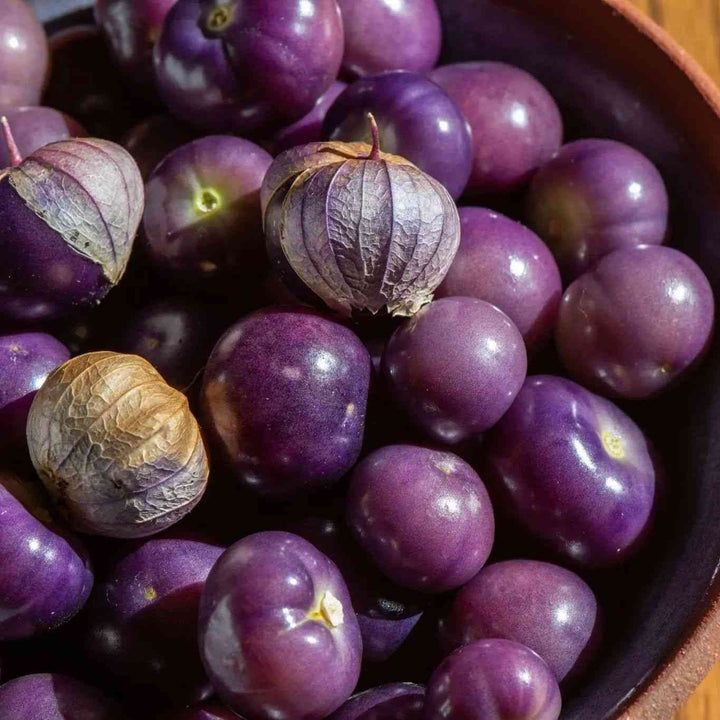
Cape Gooseberry produces golden-orange berries inside a delicate, papery husk. Fully ripe fruit has a sweet-tart flavor that works equally well eaten fresh, cooked into preserves, or added to desserts. The branching plant appreciates a warm, sunny site and a long growing season, so an early indoor start is useful in cooler regions. This is Physalis peruviana: the goldenberry or Cape gooseberry, a different species from the green tomatillos used for salsa verde.
History and identity
Physalis peruviana comes from the Andean region of South America. Cape gooseberry and goldenberry are common names for the same species. It is a member of the nightshade family, not a true gooseberry of the genus Ribes, and should not be confused with green tomatillo (Physalis ixocarpa). The common name alone does not establish the origin of our particular seed lot.
Sowing and establishment
Start indoors about 6–8 weeks before the last frost. Sow 1/4 inch deep in a clean, moist seed-starting mix and maintain soil around 70–85°F. Germination commonly takes 1–3 weeks. Give seedlings strong light, pot on as needed, and harden gradually. Transplant after frost when nights are reliably above about 50–55°F. Space plants about 24 inches apart with roughly 36 inches between rows.
Growing and care
Grow in full sun and fertile, well-drained soil. Keep moisture even during establishment and fruiting without leaving roots waterlogged. A stake or cage helps manage branching growth and keeps fruit accessible. Avoid excessive nitrogen, which can favor leaves over ripening fruit. It is a frost-tender perennial, usually treated as an annual where winters freeze.
Harvest and use
Wait until berries turn golden-orange and their husks are dry and papery. Taste a fully ripe berry before picking a large batch; unripe green fruit is not the harvest stage. Remove husks and rinse fruit before eating. Enjoy fresh, in fruit salads, or cooked into jam and sauces. Refrigerate sound ripe berries and use promptly. Do not eat the green fruit or foliage.
Saving seed
Take seed from fully ripe, healthy berries on several typical plants. Mash in water, separate seeds from pulp, rinse, and dry thoroughly on a fine screen before storing cool and dry. Physalis peruviana can self-pollinate, but insect crossing is possible; separate other varieties of the same species if preserving a particular strain.
Minimum Seed Count: 50 seeds