Complete growing guide
Once Dragon Carrot is established, the main goal is to maintain steady, uninterrupted growth so the roots develop strong color, crisp texture, and smooth, even form. Carrots respond best when conditions stay consistent, and much of their final quality depends on what happens after early establishment. At this stage, healthy plants should continue building strong tops while the roots slowly enlarge below the soil surface. Sudden stress from drought, crowding, weeds, or uneven fertility can reduce sweetness, affect texture, and lead to cracking, splitting, or poor root shape. For that reason, the established phase of growth is less about dramatic intervention and more about maintaining balance.
Watering After Establishment
Dragon Carrot performs best when soil moisture remains even. Once the plants are established, avoid long dry spells followed by heavy soaking, because sudden swings in moisture can cause roots to crack or enlarge unevenly. Consistent deep watering helps support smooth development and good eating quality, while shallow erratic watering often leads to stress closer to the soil surface. During warm weather, watch for slowed growth, wilting tops, or roots that seem to stall in development, since these can be signs that the planting is not receiving enough steady moisture. Mulch can help reduce evaporation, moderate soil temperature, and keep the root zone more stable through changing conditions.
Protecting Root Quality
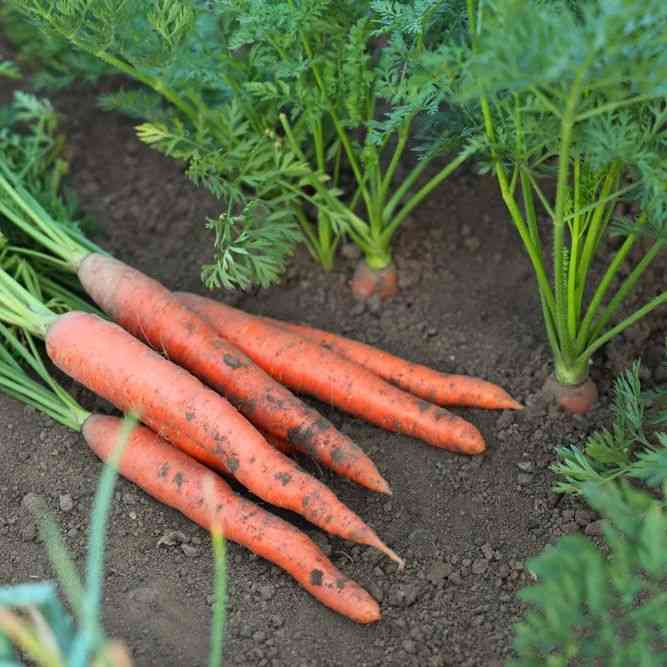
As Dragon Carrot grows, root quality depends heavily on low stress and minimal disturbance. The roots should be allowed to size up in loose, well-managed soil without being crowded, compacted, or repeatedly disturbed. Once the roots begin forming well, avoid rough cultivation near the row, since damaged roots may split, branch, or become less uniform. The most attractive carrots usually come from plantings that stay evenly moist, relatively weed-free, and free of sudden interruptions in growth. If the shoulders begin to rise above the soil surface, cover them lightly with loose soil or mulch to protect their finish and prevent exposure from affecting appearance or quality.
Managing Foliage and Top Growth
Strong healthy tops are important because they support the root below. Dragon Carrot should maintain vigorous foliage without becoming weak, yellowed, or overgrown. If tops begin to look pale, stunted, or damaged, the roots may also be losing quality even if that is not yet visible above ground. Good foliage health supports better color development and sugar accumulation in the root. Remove weeds carefully around the tops so the crop keeps access to light, water, and nutrients without unnecessary competition. At the same time, avoid damaging crowns or disturbing the root zone with aggressive hoeing once the carrots are well underway.
Weed Control Around Established Plants
Carrots remain sensitive to weed pressure even after they are past the seedling stage. Weeds compete for moisture, nutrients, and airflow, and they can reduce both root size and harvest quality if allowed to take over. Weed gently and consistently so the planting stays clean without disturbing the roots. Shallow hand weeding is often better than deep cultivation once roots are enlarging. Clean rows also make it easier to inspect the crop, maintain even airflow, and harvest at the right stage without fighting through excess growth.
Nutrient Balance During Root Development
Dragon Carrot benefits from fertile soil, but established plants do best with balanced nutrition rather than heavy feeding. Excess nitrogen during active root development can produce lush tops at the expense of root quality, and may also contribute to rough or hairy roots. If the planting looks weak, a light touch with balanced organic fertility may help, but this crop generally performs best when the soil was prepared well in advance and then maintained rather than pushed. Strong root crops usually come from steady moderate fertility, not from repeated heavy correction after the plants are already growing.
Temperature and Seasonal Performance
Dragon Carrot often performs best when growing conditions remain mild. Moderate weather supports better sweetness, stronger color, and more refined texture. In hot spells, roots may become coarser, color may be less vivid, and growth may turn uneven if the crop is stressed. This is why many growers find the best quality comes from spring and fall timing, even after the crop is established. In warm periods, mulching and steady watering become especially important, since cooler soil helps preserve tenderness and reduce stress-related defects.
Watching for Signs of Stress
Established carrots often reveal problems through the foliage before root quality is visibly affected. Yellowing, slowed growth, weak tops, pest damage, or signs of leaf disease can all reduce the plant’s ability to size and finish its root properly. If the planting begins looking uneven, it is worth checking moisture, weed competition, and overall plant health rather than waiting until harvest to discover poor root development. Carrots are often more sensitive than they appear, and their best quality comes when nothing interrupts growth for long.
Pest and Disease Monitoring
Once established, Dragon Carrot should still be checked regularly for pests and foliage problems that can weaken the crop over time. Aphids, chewing insects, and leaf-feeding pests can reduce top health, while foliar disease can limit the plant’s ability to support root growth. Root problems may also develop quietly below the soil if the crop is stressed or grown in poor conditions. Keeping the bed clean, maintaining airflow, rotating crops, and observing the planting regularly all help prevent small problems from becoming quality losses at harvest. Healthy tops are essential because every setback above ground affects what is happening below it.
Using the Crop Through the Season
Dragon Carrot can be managed for different harvest goals depending on timing and size. Some growers harvest earlier for slender bunching roots with vivid color and tender texture, while others allow the crop to continue sizing for more substantial kitchen use. Because its appearance is part of its value, many growers time harvests so the roots are colorful, smooth, and fresh-looking rather than waiting for maximum size alone. This makes it especially useful for home gardens, fresh market bunches, and mixed-color root harvests where beauty matters as much as yield.
Harvest Timing for Best Quality
Dragon Carrot is usually best when harvested at a good usable size while still tender and crisp. Leaving roots too long in stressful conditions can reduce sweetness and produce coarser texture. The ideal harvest often comes when the carrots are well colored, firm, and evenly formed, rather than oversized. Harvesting promptly also helps protect quality when warm weather, pests, or irregular moisture might begin affecting the planting. If grown for bunching or market use, pulling while tops still look healthy and fresh improves both appearance and shelf appeal.
Kitchen and Post-Harvest Use
Once harvested, Dragon Carrot offers excellent versatility. Its roots are especially attractive for fresh eating, roasting, bunching, juicing, and colorful presentations. The purple exterior and orange interior make it useful not only as a staple crop, but also as a variety that adds visual interest to meals and market displays. Gentle handling after harvest helps preserve appearance, and prompt washing and cooling support the best storage quality and crispness.
Growing Summary After Establishment
After establishment, Dragon Carrot needs steady moisture, low weed pressure, balanced fertility, and minimal disturbance so the roots can finish smoothly and evenly. The most important principle is to avoid interruption. When the crop grows under stable conditions, it develops the crisp texture, vivid color, and sweet flavor that make this variety so valued. Careful maintenance after establishment is what turns a promising carrot row into a beautiful and high-quality harvest.
Practical field and garden tips
Dragon Carrot is especially valuable for growers who want a crop that combines strong kitchen use with vivid visual appeal, because its purple exterior and orange interior make it stand out both in the garden and after harvest. It is an excellent choice for fresh eating, colorful market bunches, roasting mixes, juicing, and home gardens where unusual heirloom vegetables are part of the appeal. Many growers choose Dragon Carrot not only for flavor and texture, but also because it brings diversity and beauty to the harvest table in a way standard orange carrots do not. Its unusual coloration also makes it a strong educational crop for gardeners teaching about crop diversity, heirloom preservation, and the long history of carrots beyond the modern supermarket standard.
One of the best ways to use Dragon Carrot is to think of it as both a specialty carrot and an everyday carrot. It is attractive enough for display bunches, salad plates, and market sales, but it is also practical enough for routine kitchen use. The roots are excellent raw, especially sliced or served whole as snack carrots, because their sweet flavor and crisp texture make them appealing fresh. They are also excellent roasted, steamed, glazed, sautéed, juiced, or added to mixed root vegetable dishes. In the kitchen, Dragon Carrot pairs especially well with beets, onions, winter squash, citrus, ginger, cumin, honey, yogurt sauces, and fresh herbs. Its dramatic color also gives it value in raw preparations where appearance matters, though some of the purple pigmentation may soften or shift during cooking.
For growers focused on root quality, one of the most important tips is to protect the crop from interruption. Dragon Carrot performs best when growth stays steady from emergence through harvest. Irregular watering, heavy weed competition, or rough soil conditions can reduce both beauty and eating quality. Smooth roots come from deep, loose, stone-free soil that allows the taproot to develop without obstruction. If the bed contains rocks, clods, or fresh undecomposed organic matter, roots are more likely to fork, split, or grow unevenly. This makes bed preparation especially important, since many carrot problems begin below the surface long before they are visible above ground.
Dragon Carrot is also a strong choice for growers who want to stagger harvests. Early sowings can be used for baby carrots and fresh bunching roots, while later sowings can be grown for fuller roots in cooler weather. In many gardens, this variety performs especially well when grown in spring and fall, when moderate temperatures support sweetness, crispness, and better color retention. In hotter weather, roots may still grow, but flavor and texture are often best when the crop matures without prolonged heat stress. Succession sowing can therefore be especially useful for keeping quality high and extending the harvest season.
This variety is highly suitable for gardeners working with raised beds, deeply prepared garden plots, and market-style rows where root uniformity matters. It can also do well in containers, provided the growing space is deep enough and filled with loose, root-friendly soil. Gardeners with compact or rocky native ground often get better results growing specialty carrots like Dragon in raised beds or improved soils rather than forcing them into difficult conditions. Because color and shape are part of the appeal, giving the roots an ideal environment is especially worthwhile.
Dragon Carrot is also a very good crop for gardeners who enjoy using the whole harvest intentionally. While the roots are the main product, the tops can be used more selectively as garnish, stock material, or compost inputs, depending on household use. In harvest displays, the foliage can help show freshness, but roots should be handled gently and not left too long after pulling if the goal is best storage or crispness. Washing and trimming soon after harvest helps preserve quality, especially for bunching or market presentation.
Another useful tip is to protect the crown area as roots enlarge. If the shoulders begin to rise above the soil, exposure to direct light can affect appearance and eating quality. A light covering of loose soil or mulch can help protect exposed shoulders and maintain a better finish. This is particularly useful in neatly managed beds where roots swell visibly as they mature.
Dragon Carrot is especially rewarding for growers who appreciate crops with fresh-market appeal. Its coloration makes it visually memorable in CSA shares, farmstand bunches, chefs’ mixes, and mixed-color carrot harvests. It can be marketed as a premium carrot for color, sweetness, and heirloom character, and it adds value when sold alongside standard orange, yellow, or white carrots. For home gardeners, that same quality makes it especially enjoyable to harvest with children, share with neighbors, or feature in meals where appearance is part of the experience.
Because this is an Open-Pollinated (OP) variety, Dragon Carrot also has value for growers interested in preservation and seed stewardship. It is not just a colorful crop for one season, but part of the broader history of carrot diversity, especially the older purple-rooted lineages that connect modern growers to earlier forms of the crop. Gardeners who value heirlooms often appreciate Dragon Carrot because it keeps that wider carrot story visible in the garden rather than narrowing the crop to one expected color or form.
A practical harvest tip is to pull roots when they are well-sized but still tender, rather than leaving them too long in stressful conditions. Overgrown carrots can become coarser, especially if heat, drought, or irregular moisture affects the planting. Medium to full-sized roots often give the best balance of sweetness, texture, and visual appeal. If the goal is bunching, harvest when roots are colorful, straight, and fresh-looking with healthy tops still attached. If the goal is storage or cooking, trim and handle the roots carefully to maintain quality after harvest.
Dragon Carrot is an excellent example of a crop that rewards thoughtful growing and intentional use. It offers beauty in the soil, color on the plate, sweetness in the kitchen, and strong value for gardeners who enjoy heirloom diversity. For growers who want more than a standard carrot, it provides flavor, visual character, versatility, and a meaningful connection to the older color range of cultivated carrots.