Variety field guide
What to expect from Gold Medal Tomato
Gold Medal tomato seeds produce mixed beefsteak tomato fruit about 1 to 2 lb on indeterminate plants reaching 73–96 in; maturity is 80-89 Days.
Open the complete descriptionHide the complete descriptionVariety traits, flavor, garden use, and the complete description
Gold Medal tomato seeds grow into indeterminate plants reaching 73–96 in, bearing mixed fruit about 1 to 2 lb. This beefsteak tomato is especially suited to fresh slicing, sandwiches, salads, and bicolor displays. Maturity is 80-89 Days from transplanting.
Minimum seeds per packet: 25 seeds.
About Gold Medal
Gold Medal is a beefsteak tomato grown as Solanum lycopersicum L. Plants have an indeterminate habit and reach 73–96 in; support is listed as stake. The principal mature or market color is Mixed, with fruit described as about 1 to 2 lb. Reproductive classification: Open-Pollinated (OP). Maturity: 80-89 Days. Names associated with this variety include Tomato, Tomato Seeds - Indeterminate - Gold Medal Beefsteak.
- Scientific name:Solanum lycopersicum L.
- Life cycle:Annual
- Planting season:Spring
- Growth habit:Indeterminate
- Plant height:73–96 in
- Sunlight:Full sun
- Seed depth:1/8 in
- Germination:6–12 Days at 75–90 °F
- Spacing:30 in between plants; 36 in between rows
- Soil:Loamy; pH 6.0–6.5
- Water:Moderate
- Support:Stake
- Reproductive type:Open-Pollinated (OP)
- Fruit:Mixed; About 1 to 2 lb
History and seedkeeping context
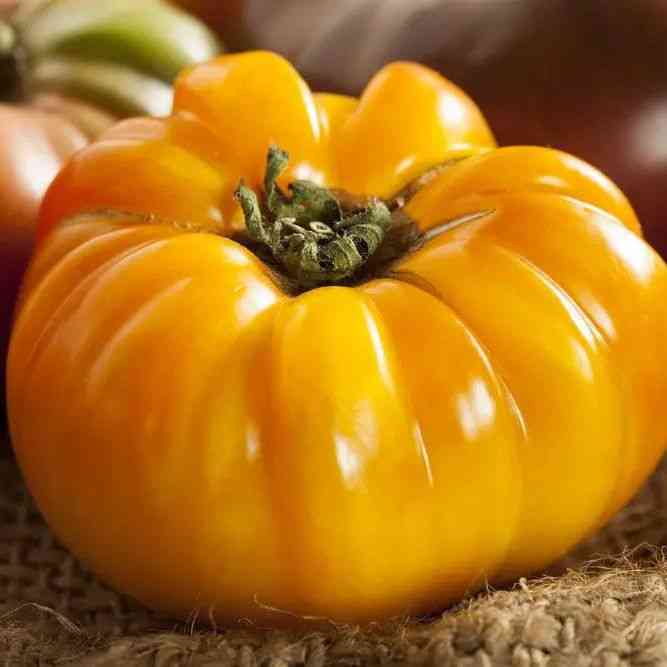
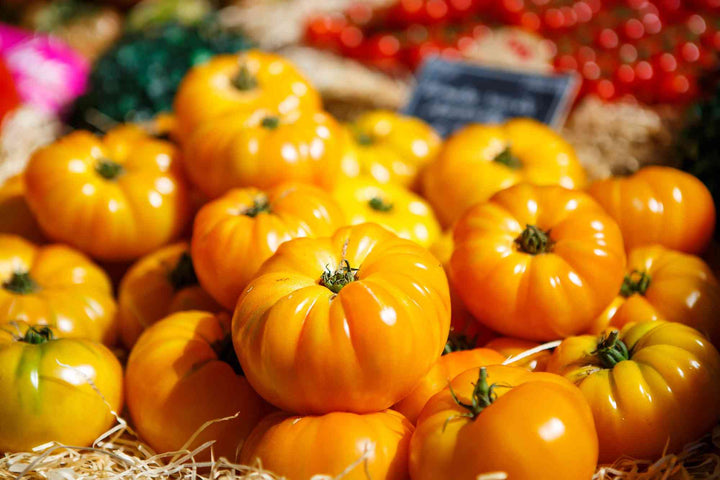
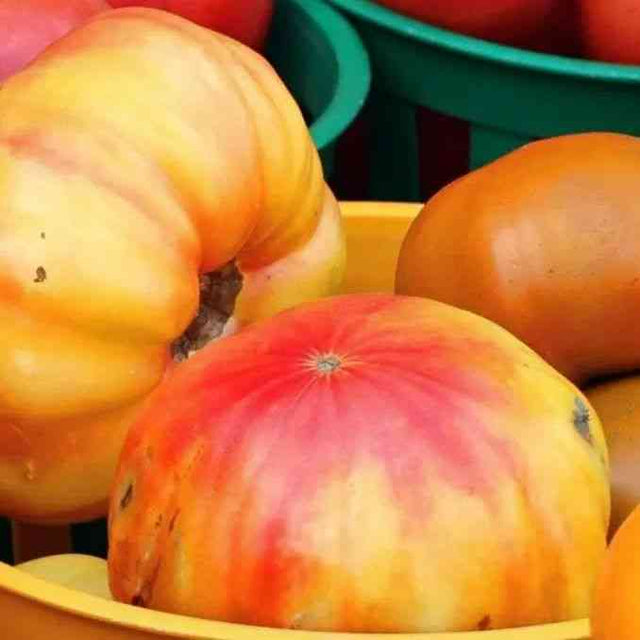
Gold Medal is an indeterminate beefsteak tomato producing large yellow fruit with red streaking. Gold Medal Beefsteak Tomato Seeds belongs to the long record of tomato selection that began with domestication in the Americas and continued through farmers, gardeners, public breeders, market growers, and seedkeepers. Where a precise breeder or family chain is not supported by a primary record, this page does not invent one.
The variety is described through observable fruit, plant habit, use, and the records kept by people who continue to grow it. Gold Medal is maintained in this catalog as an open-pollinated (op) beefsteak tomato. Published records support the cultivar name and the observable fruit and plant traits used on this page.
Where the available documentation does not preserve a complete breeder, family, or community chain, Species-level tomato domestication in Andean South America is kept separate from the later history of this named cultivar, which may involve farmers, public breeders, gardeners, market growers, and seedkeepers in other regions. The listed heritage classification is Heirloom; it describes the catalog classification and does not prove an undocumented origin story.
Fruit, flavor, and kitchen use
Gold Medal is best for fresh slicing, sandwiches, salads, and bicolor displays. The expected flavor is flavor varies by component cultivar, from bright and sweet to rich and savory. Fruit is described as mixed and about 1 to 2 lb. Use a tested current recipe for home canning; cultivar name alone does not establish safe acidity. Gold Medal is especially useful for fresh slicing, sandwiches, salads, and bicolor displays. Flavor and eating quality are described as flavor varies by component cultivar, from bright and sweet to rich and savory. For home canning, use a tested current recipe; cultivar name, color, or perceived sweetness does not establish safe acidity.
How to grow Gold Medal
Start Gold Medal indoors about 6 to 8 weeks before the last expected frost. Sow 1/8 in deep in a warm, evenly moist seed-starting mix; expect 6–12 Days near 75–90 °F. Give seedlings strong light, move them into larger cells before they become root-bound, and harden them gradually before planting outside after frost danger.
Plant in full sun with loamy soil near pH 6.0–6.5. Space plants 30 in apart and rows 36 in apart. Maintain moderate moisture, mulch after the soil warms, and keep foliage off wet soil where possible. Set up stake at transplanting. The indeterminate plant reaches 73–96 in.
Season care
• Give Gold Medal strong light from emergence so seedlings remain stocky rather than stretched. • Install stake when transplanting; adding support after vines are large can damage roots and stems. • Water at the soil line and maintain even moisture to reduce cracking, blossom-end rot risk, and stress-related fruit problems. • Harvest when the fruit has reached its cultivar-specific color and gives slightly to gentle pressure; color alone can be misleading on green, purple, or striped varieties. • Use 80-89 Days as a planning range rather than a guaranteed calendar date; weather and transplant stress can shift first harvest.
Harvest and maturity
80-89 Days from transplanting under suitable conditions. Harvest when the cultivar-specific color has developed and the fruit gives slightly to gentle pressure; green-ripe, striped, purple, and dark cultivars require more than a simple red-color test.
Saving seed
Tomatoes are primarily self-pollinating, but occasional crossing can occur. To maintain Gold Medal, save seed from several healthy true-to-type plants and bag unopened flower clusters when extra isolation is needed. Allow labeled fruit to ripen fully, squeeze the seed and gel into a container, ferment briefly until the gel releases, rinse clean, and dry the seed in a thin labeled layer. Store the finished lot cool and dry with the year, source, plant count, and isolation notes.
Common questions
When is Gold Medal ready?
Plan around 80-89 Days. The listed range is a planning guide, and weather, transplant stress, and harvest stage can shift the actual date.
How long does germination take?
Expect 6–12 Days near 75–90 °F. Cooler media, excess water, old seed, or uneven moisture can delay emergence.
How large does it grow?
Expect about 73–96 in. Growth habit: Indeterminate. Support: Stake.
How is it used?
Fresh slicing, sandwiches, salads, and bicolor displays
Can I save seed?
Tomatoes are primarily self-pollinating, but occasional crossing can occur.