Free U.S. seed shipping $25+. Seeds ship free at the threshold. Storefront goods, pantry finds, books & local goods are being added.

New seeds, Main Street specials, and storefront finds update as the market grows.

Turk's Turban Squash Gourd Seeds

Scientific name Cucurbita maxima

Seed packet & garden essentials

What to know before you plant

View complete growing & care facts
25 minimum seeds per packet
  • Maturity90-99 Days · 90-99 Days
  • Growth habitVining/Climbing · Annual · 49–60 in tall
  • Best useproductive warm-season beds, trellises or sprawling vines, kitchen use, and seed saving
  • Flavor & characterThe flesh is mildly sweet and edible when young, though it’s best known for its decorative beauty.
  • Germination7-14 Days days · 75–90 °F
  • Seed preparationUse clean seed-starting conditions, the listed sowing depth and temperature, and steady moisture without saturation
  • SunFull sun
  • Support & spacingTrellis · space 24 in · rows 72 in
  • Container fitPossible in a properly sized container with reliable drainage, moisture, and room for the mature plant
  • Water needsModerate
  • SoilLoamy · pH 6.5–7.0
  • Planting seasonLate Spring · blooms Summer · Tender
$200 USD

Pickup available at Bertie County Seeds

Usually ready in 2-4 days

Secure checkout Details
Generic
Triple-tested seed qualityRegular quality and germination checks support every packet.

We regularly test seed quality and germination as lots move through storage and packing. We stand behind the seed we send and want customers to contact us when a packet does not perform as reasonably expected.

1-year seed warrantyCoverage begins on the date of purchase.

When properly stored, planted, and cared for, we guarantee reasonable germination and true-to-type growth for one year from the date of purchase. Conditions outside our control—including extreme weather, pests, unsuitable storage, and gardener error—are excluded. Contact us when something is not right so we can review the situation and work toward a replacement, refund, or another fair resolution.

Non-GMO / BE seed policyWe do not buy or sell genetically engineered or bioengineered seed.

Every seed variety we sell is non-GMO.

USDA’s National Bioengineered Food Disclosure Standard defines bioengineered foods as containing detectable genetic material modified through in vitro recombinant DNA methods in ways not achievable through conventional breeding or found in nature.

  • Hybrid means parent lines were conventionally crossed; hybrid does not mean GMO.
  • Heirloom and open-pollinated describe how a variety is maintained and reproduced.
  • Organic certification is separate and is shown only when verified for the individual product.
Packed in Colerain, North CarolinaPrepared in our seed room for gardens across the country.

Seeds are packed and shipped from Colerain, North Carolina. Our packets use forestry-certified paper, and we use recyclable paper mailers where appropriate. AONSK is also a 1% for the Planet partner while continuing to reduce waste in packing and fulfillment.

Seed success profile

Rules-based · no AI
Gardener experience Some experience is helpful
Germination difficulty Straightforward
Preparation before sowing
Use clean seed-starting conditions, the listed sowing depth and temperature, and steady moisture without saturation
Germination speed
Typical — usually 7–21 days
Growing complexity
Warm-season vine or bush requiring root room, pollination, and protection from crown and vine pests
Patience and timing
90-99 Days
Is this seed a good match for your experience?
Expected germination
7-14 Days
Germination temperature
75–90 °F
Stratification
Not normally required by the current record
Scarification
Not normally required by the current record
Pre-soaking
Not normally required by the current record
Light during germination
Surface sow or press into the mix; light is part of the germination requirement
Germination pattern
Usually reliable when seed is stored well and temperature, depth, moisture, and preparation match the recorded requirements
Transplant sensitivity
Often sensitive to root disturbance; direct sow or transplant young
Starting method
Cataloged as suitable for direct sowing; follow the product-specific timing and depth.
Best chance of success
For Turk's Turban Squash Gourd Seeds, control temperature and moisture at sowing, label the start date, and compare emergence with the complete recorded germination window before reseeding.
What to expect

Preparation: Use clean seed-starting conditions, the listed sowing depth and temperature, and steady moisture without saturation. Germination light: Surface sow or press into the mix; light is part of the germination requirement. Expected emergence: 7-14 Days. Temperature: 75-90 °F.

Slow germination is not automatically failed germination.

Maintain the listed temperature, moisture, light, and treatment conditions for the full expected window. Some seed lots emerge gradually rather than all at once.

1 Beginner-friendly 2 One extra step 3 Some experience helpful 4 Patient growers 5 Advanced propagation

This deterministic profile uses recorded product facts; it is not Artificial Intelligence and is not a guarantee. Seed age, storage, sowing depth, moisture, temperature, light, local conditions, and aftercare can all affect results. Last reviewed July 2026.

Build a garden-fit plan

Check this seed against your real growing conditions

Compare timing, germination preparation, sunlight, soil, water, space, support, intended use, and your preferred level of seed-starting complexity.

Open the detailed garden-fit planner Deterministic rules · no Artificial Intelligence · no live weather service

Complete product description

Turk's Turban Squash Gourd Seeds

Description

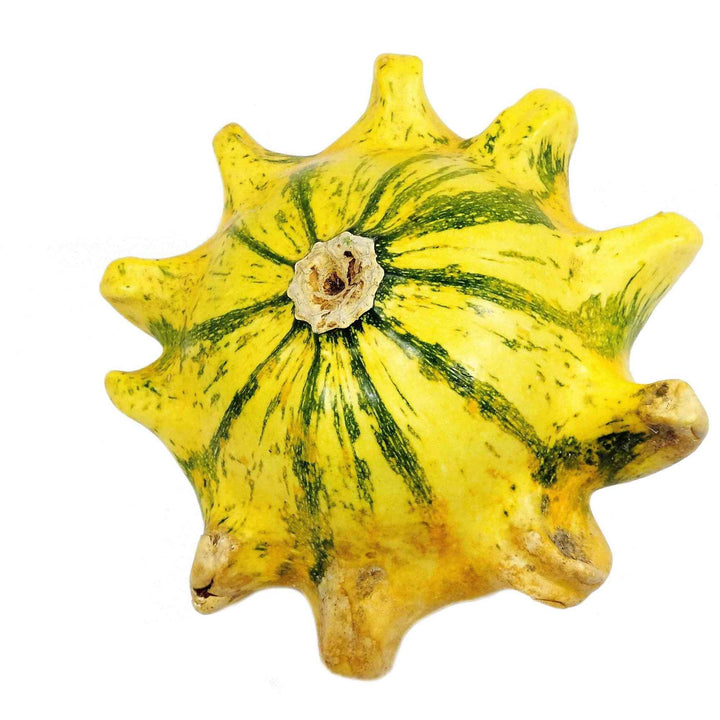
The showpiece squash with a flair for drama. ‘Turk’s Turban’ produces uniquely shaped fruits featuring a colorful “cap” atop a rounded base, painted in red, orange, green, and cream. The flesh is mildly sweet and edible when young, though it’s best known for its decorative beauty.

Vigorous vines yield 3–5 pound fruits that keep well for display long after harvest. Each one is an individual masterpiece of color and form.

Originating in the 1800s and cherished for its ornamental charm, ‘Turk’s Turban’ bridges the worlds of squash and art—a bold, traditional centerpiece for autumn harvests.

Minimum Seed Count: 25 seeds

Every recorded growing detail

Complete growing & care facts

Continue to the garden-fit planner

Plant identity

Minimum seed count 25 seeds
Seed product profile Cucurbit
Scientific name Cucurbita maxima
Also known as Squash, Gourd Seeds - Turk's Turban Squash
Life cycle Annual
Botanical family Cucurbitaceae
Reproductive type Open-Pollinated (OP)
Heritage qualifiers Non-GMO
Native to the United States Domesticated Plant
Domestication note Mesoamerica (Mexico–Central America)

Seed success and gardener experience

Gardener experience Some experience is helpfulLevel 3 of 5
Germination difficulty StraightforwardLevel 2 of 5
Preparation before sowing Use clean seed-starting conditions, the listed sowing depth and temperature, and steady moisture without saturation
Stratification Not normally required by the current record
Scarification Not normally required by the current record
Pre-soaking Not normally required by the current record
Light during germination Surface sow or press into the mix; light is part of the germination requirement
Germination pattern Usually reliable when seed is stored well and temperature, depth, moisture, and preparation match the recorded requirements
Growing complexity Warm-season vine or bush requiring root room, pollination, and protection from crown and vine pests
Transplant sensitivity Often sensitive to root disturbance; direct sow or transplant young
First harvest or bloom 90-99 Days
Best chance of success For Turk's Turban Squash Gourd Seeds, control temperature and moisture at sowing, label the start date, and compare emergence with the complete recorded germination window before reseeding.

Timing and climate

Days to maturity 90-99 Days
Germination 7-14 Days
Germination temperature 75–90 °F
Planting season Late Spring
Bloom season Summer
Frost tolerance Tender
Sunlight Full sun
Water needs Moderate

Site, soil, and space

Soil type Loamy
Preferred soil pH 6.5–7.0
Seed depth 1 in
Plant spacing 24 in
Row spacing 72 in
Mature height 49–60 in
Growth habit Vining/Climbing
Support needed Trellis
Suitable growing locations In-ground bed, Raised bed, High Tunnel, Greenhouse, Community garden, Vertical

Crop-specific details

Fruit size 3-5 pound
Flavor profile The flesh is mildly sweet and edible when young, though it’s best known for its decorative beauty.

Garden-fit planning for this variety

Will Turk's Turban Squash Gourd Seeds fit your garden?

Check vine space, warmth, pollination, water, support, and harvest use.

Rules-based · no AI
Questions for this vining crop seed
Seed-starting fit and patience
Recorded product profileSome experience is helpfulStraightforwardRead why
Soil test, pH, drainage, and amendment calculator Have a laboratory soil report? Enter pH, nutrients, texture, bed size, and site observations here. Open soil tools
Recorded soil typeLoamy
Recorded pH range6.5–7.0
Water needsModerate
LightFull sun

Soil Readiness

for Cucumber (Cucumis sativus)

Where to get a soil test

Best option: your state’s Cooperative Extension soil testing lab.

Tip: Arid or alkaline regions often use Olsen for phosphorus interpretation.
Adjusts P ppm target and interpretation.
Target 6.2-7.0
Ideal 4-8%
Target 30-60 ppm (Mehlich-3)
Target 150-250 ppm
Ok ≥ 1000 ppm
Ok ≥ 120 ppm
Used for pH adjustment size
For shopping list amounts
Interprets P by extractant, assumes ppm. Results are approximate.
Enter at least one value above, then Calculate.

The full variety record

Sowing, care, harvest, troubleshooting, and history

How to start Turk's Turban Squash Gourd Seeds from seedPreparation, timing, depth, germination, transplanting, spacing, and early care

Variety-specific germination notes

Preparation: Use clean seed-starting conditions, the listed sowing depth and temperature, and steady moisture without saturation. Germination light: Surface sow or press into the mix; light is part of the germination requirement. Expected emergence: 7-14 Days. Temperature: 75-90 °F.

Complete sowing and planting guidance

Planting Instructions:

Location Selection: Choose a location with full sun for optimal growth.
Soil Preparation: Ensure the soil is well-drained and rich in organic matter. Turk's Turban Squash prefers slightly acidic to neutral soil with a pH between 6.0 and 7.0.
Sowing Seeds:

Direct Sowing: Sow seeds directly outdoors after the danger of frost has passed. Plant seeds 1 inch deep and 12 inches apart in rows spaced 4-6 feet apart.
Indoor Starting: For an earlier start, sow seeds indoors 4-6 weeks before the last frost date. Use seed-starting trays filled with a seed-starting mix. Lightly press the seeds into the surface and keep the soil moist.
Germination: Seeds typically germinate within 7-14 days. Maintain consistent moisture levels in the soil during this period.
Transplanting: If starting indoors, transplant seedlings outdoors after the danger of frost has passed. Space seedlings 4-6 feet apart to allow for adequate air circulation and growth.

Care Instructions:

Watering: Water regularly to keep the soil evenly moist but not waterlogged. Turk's Turban Squash requires consistent moisture for optimal growth.
Fertilizing: Apply compost or a balanced organic fertilizer every 4-6 weeks during the growing season to promote healthy growth and fruit production.
Mulching: Apply a thin layer of mulch around the base of the plants to help retain moisture and suppress weeds.
Special Considerations:

Supporting: Provide support for the plants to keep them upright, especially as they start to bear fruit.
Pests and Diseases: Turk's Turban Squash can be affected by pests such as cucumber beetles and squash bugs. Use organic methods like neem oil or insecticidal soap if necessary.
How to grow this specific varietyLight, water, fertility, support, spacing, airflow, crop behavior, and season-long care

Complete growing guide

How to grow Gourd: choose a site with the listed sunlight and soil requirements. Water consistently, avoid overcrowding, and monitor plants for pests, disease, and nutrient stress. Harvest at the proper stage for best flavor and seed quality.
Practical field and garden tipsExtra techniques, timing adjustments, and observations that improve success
Additional tips for Gourd: succession plant when appropriate, label varieties clearly, and keep good garden notes on germination, vigor, flavor, and harvest timing so you can compare varieties season to season.
Harvest, storage, uses, and benefitsWhen and how to harvest, ways to use the crop, storage, culinary value, habitat value, and garden roles

Uses and benefits

Uses and Benefits:
Turk's Turban Squash (Cucurbita maxima) is known for its unique, turban-shaped fruits. It is often used for ornamental purposes and in cooking.

Squash provides vitamins, minerals, and fiber, supporting overall health. Turk's Turban Squash is versatile in culinary applications, adding a unique visual appeal to dishes.
Seed saving and carrying the variety forwardPollination, isolation, selection, harvest, cleaning, drying, and storage
Saving seeds from Turk's Turban Squash (Cucurbita maxima):

1. Selecting Plants for Seed Saving:

Choose healthy plants with vigorous growth and desirable squash shapes.
Avoid plants showing signs of disease or poor growth.
2. Harvesting Seeds:

Timing: Allow the squashes to mature fully on the plant until the skin hardens and turns brown.
Collection: Harvest the mature squashes and allow them to dry completely.
3. Cleaning Seeds:

Separation: Cut open the dry squashes and remove the seeds.
Inspection: Ensure seeds are clean and free from mold or pests.
4. Drying Seeds:

Place the cleaned seeds on a paper towel or screen in a well-ventilated, dry area. Allow them to dry completely for one to two weeks.
5. Storing Seeds:

Containers: Store seeds in labeled paper envelopes or airtight containers.
Storage Conditions: Keep in a cool, dry, and dark place.
Viability: Use seeds within one to two years for best results.
6. Testing Seed Viability:

Test by placing seeds on a damp paper towel in a plastic bag in a warm place and check for germination.
Tips for Successful Seed Saving:

Isolation: Maintain distance between different squash varieties to prevent cross-pollination.
Pollinators: Encourage pollinators for better seed production.
Record Keeping: Keep detailed records of the process.
Common pests, diseases, and growing problemsIdentification, prevention, crop-safe response, and when intervention is justified

Complete pest and problem guide

Common pests and problems for Gourd: monitor for chewing insects, sap-sucking insects, fungal leaf spots, damping off, poor germination from cold or dry soil, and stress from inconsistent watering. Use crop rotation, spacing, mulch, and good airflow to reduce pressure.
Questions gardeners ask about this seedProduct-specific answers for sowing, care, harvest, use, and seed saving
Frequently Asked Questions — Gourd

Q: When should I plant Gourd?
A: Follow the planting season listed on this product page and adjust for your local frost dates.

Q: How deep should I sow the seeds?
A: Use the seed depth listed in the growing facts.

Q: Can I save seed from this variety?
A: Open-pollinated varieties can generally be saved when properly isolated and selected; hybrids may not grow true to type.
History, provenance, and cultural contextWhat is documented, what is reported, what remains uncertain, and how the variety reached gardeners

Scientific name: Cucurbita maxima

Plant and variety history

Gourd Seeds - Turk's Turban Squash belongs to a crop lineage strongly associated with Mesoamerican agriculture and long traditions of seed selection. Growers preserved useful traits such as flavor, color, yield, field adaptation, and culinary value over many generations.

Continue planning

Related seeds, collections, and growing guides

Explore the full collection
Heirloom Gourd Seeds for Home GardensExplore the full collection →

Customer experience

Reviews for Turk's Turban Squash Gourd Seeds

Customer Reviews

Based on 1 review
100%
(1)
0%
(0)
0%
(0)
0%
(0)
0%
(0)
R
Regena Reynolds (United States)

Loved all the seeds great germination.