Cosmos rewards restraint. Give it sun, lean ground, and a clean cut. Then stand back and let the plant prove its point.
A warm-season flower with more backbone than it shows
Cosmos has the sort of beauty that makes people underestimate it. The foliage is fine as thread, the flowers ride on narrow stems, and the whole planting moves when the smallest wind passes through. It looks fragile. It is not.
I have grown enough seed crops to know that some plants want careful feeding and some want us to take our hands off them. Cosmos belongs to the second company. Put it in rich ground, water it as if it were lettuce, and feed it every time you pass with a bucket, and it may answer with a great green thicket and very few flowers. Give it full sun, drainage, and enough room to breathe, and it gets down to business.
That business can serve two gardens at once. Open flowers offer pollen and nectar to visiting insects. Long, branching stems keep the cutting bucket supplied. The work is not complicated, but the timing matters: warm soil, shallow seed, early weed control, measured water, and regular harvest.
A seed packet is not a demand for pampering. Cosmos carries its own ambition. Our job is to remove the obstacles—cold soil, deep planting, heavy nitrogen, and neglect after bloom—and not stand in the doorway pretending we are the reason it grew.
Know which cosmos you are growing
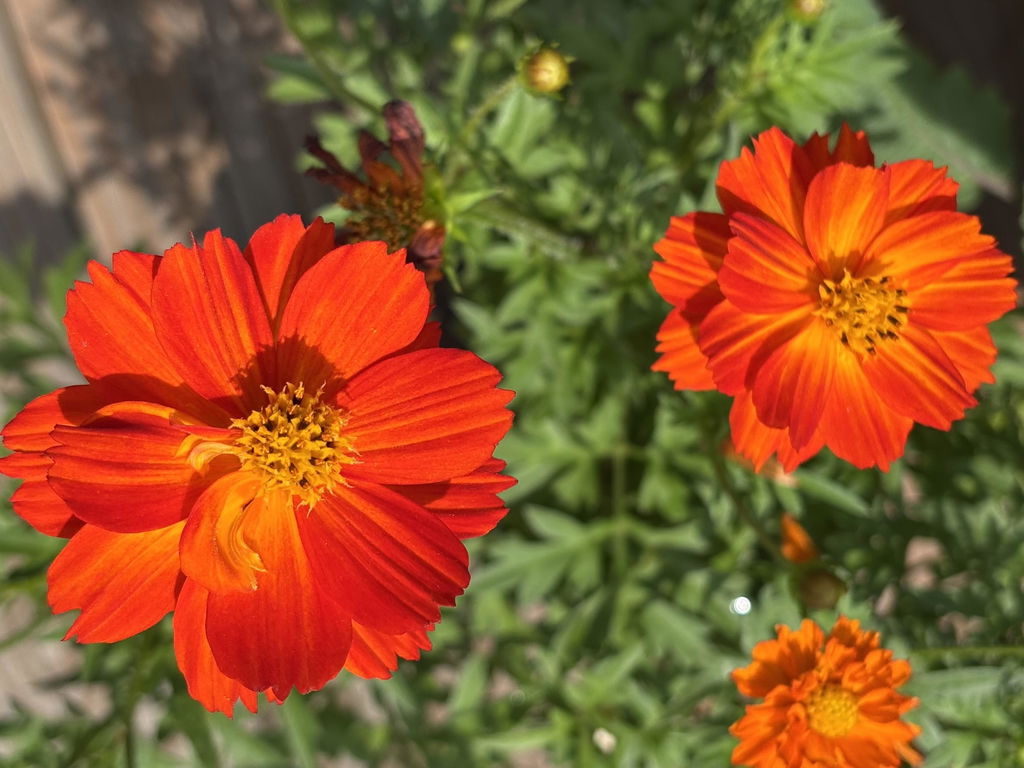
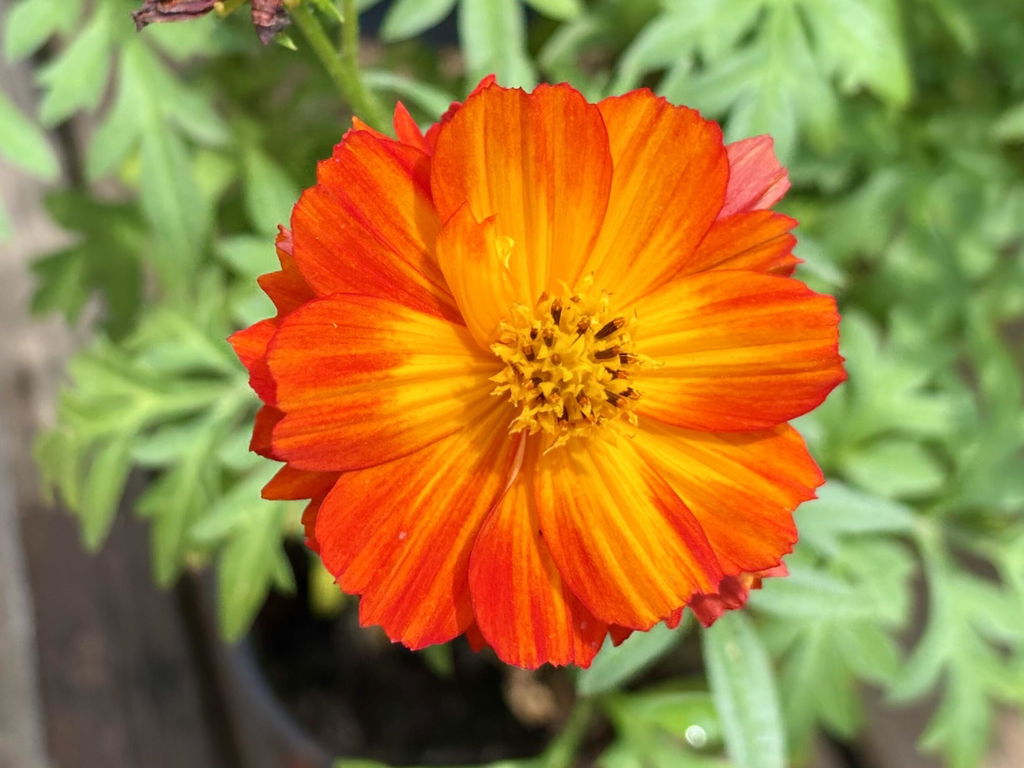
The word cosmos covers several species, but two annuals account for most seed packets and garden plantings. Cosmos bipinnatus carries the familiar pink, white, rose, and burgundy flowers over finely divided foliage. Cosmos sulphureus tends toward yellow, orange, and red, with foliage that is less finely cut.
Both are warm-season annuals. Both can draw bees and butterflies. They are not identical in the cutting garden.
| Question | Cosmos bipinnatus | Cosmos sulphureus |
|---|---|---|
| Common color range | White, blush, pink, rose, crimson, burgundy | Yellow, gold, orange, red-orange |
| Foliage | Very fine, lacy, and threadlike | Broader and less finely divided |
| Typical habit | Often tall, airy, and open; many cultivars reach 3 to 6 feet | Often branchy and heat tolerant; height varies widely by cultivar |
| Best-known use | Cut flowers, meadow plantings, pollinator beds | Warm color, pollinator beds, borders, and shorter informal cuts |
| Seed-saving expectation | Open-pollinated strains can cross with nearby compatible cosmos and show variation | The same rule applies: save from selected plants and expect some movement when varieties mix |
For tall bouquet stems, I usually begin with C. bipinnatus. For fierce orange color and a looser pollinator planting, C. sulphureus earns its ground. Cultivar height matters as much as species, so read the packet instead of trusting a common name.
Garden cosmos is native to Mexico and parts of tropical North America, but it is introduced in most United States gardens. It can provide seasonal forage for insects, yet it should complement—not replace—the regionally native plants that support local food webs across more of the year.
Choose the right sowing window
Cosmos is a tender annual. Frost settles the argument quickly, and cold soil can delay or reduce germination. I sow outdoors after the danger of frost has passed and the upper soil has warmed to about 65°F. Germination is strongest in warmer soil, roughly 70 to 75°F, provided the seedbed stays moist without becoming waterlogged.
| Situation | Best approach | What to avoid |
|---|---|---|
| Long warm season | Direct sow after frost; make a second sowing 2 to 3 weeks later if you want a steadier cutting window | Starting too early indoors and holding root-bound plants |
| Short summer or late spring | Start a modest batch indoors about 3 to 4 weeks before transplanting, then direct sow another batch when soil warms | Transplanting into cold, wet ground merely because the calendar says spring |
| Very hot summer climate | Sow after frost for early summer flowers and consider a later sowing timed to mature as the fiercest heat begins to ease | Trying to rescue an exhausted planting with heavy fertilizer |
| Containers | Use dwarf or compact cultivars and wait for dependable warmth | Putting a 5-foot cultivar into a small pot and blaming the plant for falling over |
The calendar gives a date. The soil gives permission. I trust the second one.
Plant cosmos seed shallowly

Cosmos seed is large enough to handle one at a time and narrow enough to disappear if you work the soil too deeply. Sow about 1/8 to 1/4 inch deep. In a fine seedbed, I press the seed into place and rake only a veil of soil over it.
- Clear young weeds and rake the surface level.
- Water dry soil before sowing so the seed is not washed into pockets later.
- Place seed at the intended spacing or sow a short drill and thin after emergence.
- Cover lightly and firm the surface with the back of the rake or your palm.
- Keep the upper layer evenly moist through germination, usually 7 to 14 days in warm conditions, though cooler sites may take longer.
Do not keep the bed swampy. Seed needs moisture, but it also needs oxygen. Once seedlings are standing, begin lengthening the interval between watering so the roots follow moisture downward.
Check depth, temperature, and surface moisture before blaming the seed. Cosmos planted too deeply, sown into cold soil, or allowed to crust dry during emergence will often produce an uneven row.
Direct sow or start indoors according to the job
Direct sowing is the cleanest method because cosmos grows quickly and dislikes being held in a tray long after it is ready. Indoor starting still has a place where spring is short, birds disturb fresh seedbeds, or a precise cutting block must be planted on schedule.
| Method | Choose it when | Main risk |
|---|---|---|
| Direct sow | Soil warms reliably and you can keep the seedbed watered and weeded | Seedlings compete with weeds or are lost to birds, slugs, or a dry surface |
| Cell-grown transplants | You need an early start, exact spacing, or protection during emergence | Low light, overwatering, and plants held too long before transplanting |
| Both methods | You want an early batch followed by a stronger field-sown succession | Forgetting that two sowings will also create two harvest peaks |

Start seedlings without making them soft
Sow one seed per cell in a free-draining seed-starting mix. Keep the tray warm until emergence, then move it immediately into strong light. Water thoroughly, drain well, and wait until the surface begins to lighten before watering again.
Harden plants outdoors for about a week before transplanting. Start with shelter from hard wind and full midday sun, then increase exposure. Set them into the garden after frost danger has passed. A small transplant that is actively growing is better than a tall specimen that has spent two weeks begging to leave its cell.
Prepare lean, sunny ground
Cosmos wants full sun and drainage. Six hours of direct light can grow a plant; eight or more usually builds stronger stems and more flowers. Average garden soil is enough. Poor soil is often better than rich soil, provided it drains.
| Condition | Working target | What happens when it is wrong |
|---|---|---|
| Light | Full sun, ideally 8 hours | Shade stretches stems and reduces flowering |
| Soil | Loose, well drained, average to low fertility | Rich soil produces lush growth, weak stems, and delayed flowers |
| Water | Consistent during germination; deep and less frequent after establishment | Constant wetness encourages soft growth and disease |
| Fertilizer | Usually none unless a soil test shows a real deficiency | Excess nitrogen gives leaves the victory over flowers |
| Airflow | Enough spacing for leaves to dry after rain or irrigation | Crowded, humid foliage favors powdery mildew and weak stems |
I do not dig a trench of compost for cosmos. If the bed is exhausted or compacted, I repair the soil, but I do not build a banquet. There is a difference.
Do not amend a bed merely because something is available. Match the amendment to a known need. Cosmos is one of the plants that will tell on an overgenerous gardener.
Space, pinch, and support plants according to purpose
Landscape plants generally perform well 12 to 18 inches apart. In a managed cutting row, about 12 inches on center is a sound starting point for tall branching types. Closer spacing can make plants support one another, but it also increases competition and humidity. Wider spacing makes larger individual plants and creates more room for branching.
Pinch for branches, not because it is fashionable
Once transplants or direct-sown plants are established and carrying several true leaf pairs, remove the soft growing tip just above a leaf node. That early pinch encourages side branches and a greater number of cuttable stems. It also delays the first flower slightly. That trade is worthwhile when the goal is repeated harvest; it is unnecessary when you want the earliest possible bloom or are growing a naturally compact cultivar.
Support tall varieties before they fall
Tall C. bipinnatus can lean in wind and heavy rain. Install horizontal flower netting, a low grid of twine, or discreet stakes while plants are still young. Support fitted after a storm is an apology, not a plan.
Grow cosmos for pollinators honestly

A cosmos flower is not one flower. The yellow center contains many small disk florets, and that open structure allows bees, hoverflies, butterflies, and other visitors to work across the bloom. A mass planting becomes a visible, repeated invitation.
To make that invitation useful:
- Grow a mix with open, accessible centers.
- Plant enough flowers to create a clear patch rather than one isolated stem.
- Keep part of the planting in bloom instead of cutting every open flower.
- Avoid spraying flowers while pollinators are active.
- Pair cosmos with native plants that flower before and after it.
- Leave selected seed heads for small birds and future seed.
Pollinator gardening is not a matter of buying one packet and declaring the work finished. It is a season-long provision: food, shelter, clean water, and fewer poisons. Cosmos can carry a useful summer shift, but it should not be asked to carry the whole year.
Manage cosmos as a cut-and-come-again flower

The first cut sets the character of the plant. Cut deeply enough to reach a strong side branch or leaf node instead of clipping only the flower head. A shallow snip leaves a forest of short stems. A purposeful cut tells the plant where the next stems should come from.
| Harvest question | Practical answer |
|---|---|
| When should I cut? | Choose flowers that have opened cleanly but are still fresh, before petals fade or bruise. Very tight buds are less dependable than blooms already beginning to open. |
| What time of day? | Early morning is dependable. Evening also works when plants are fully hydrated and temperatures have eased. |
| How deep should the cut be? | Cut above a strong node or side branch, taking a useful stem length while leaving growing points below. |
| What goes into the bucket? | Clean, cool water. Strip foliage that would sit below the waterline and move stems out of sun promptly. |
| How long will stems last? | Cosmos commonly has a relatively short vase life—around six days in cut-flower trials—so it is best for fresh local bouquets rather than long storage or shipping. |
Change vase water, recut the stems, and remove spent flowers before they foul the arrangement. Cosmos is not a rose bred for a freight truck. It is better than that in another way: fresh from the garden, light in the hand, and honest about its season.
Keep flowers coming through the season
Regular cutting and deadheading prevent the planting from putting all its strength into seed. When the row becomes tall, woody, or thin after its first heavy flush, cut plants back to roughly 12 to 18 inches, water them deeply, and give them time. Utah State Extension notes that plants can return to bloom in about a month after a hard trim.
Do not follow a cutback with a heavy nitrogen feed. If the plants were flowering before, they do not need to be bribed with fertilizer. They need light, water at the root, and enough time to branch again.
Use succession sowing for quality, not merely quantity
One sowing can flower for a long period, but a second and third sowing give you young stems while the first planting is becoming coarse. For a home cutting garden, two or three batches spaced about 2 to 3 weeks apart are usually enough. More than that can turn a simple flower into a scheduling department.
Save cosmos seed deliberately

Seed saving starts with selection, not with sweeping up whatever remains in October. Mark plants with the color, form, stem strength, flowering habit, and health you want to carry forward. Stop cutting those plants and let their heads mature.
- Choose several healthy plants rather than saving from one favorite.
- Allow selected flower heads to dry and turn brown on the plant.
- Collect on a dry day before the mature seed shatters into the bed.
- Rub or pull the long, dark seeds free of the head.
- Spread seed in a single layer indoors for additional drying.
- Store in a labeled paper packet or envelope inside a cool, dry, dark container.

Cosmos is insect pollinated, and compatible varieties growing near one another may cross. That does not make the saved seed worthless. It makes the outcome less uniform. Gardeners who want a named variety to stay close to type should isolate it from other flowering varieties of the same species or accept that the next generation may rearrange the colors.
Seed saving is not nostalgia. It is selection under local conditions. Keep records, keep enough plants to preserve breadth, and do not confuse a surprise with a failure. Sometimes the garden is showing you what it learned.
Common cosmos problems and what they usually mean
| Symptom | Likely cause | First response |
|---|---|---|
| Large plants with few flowers | Too much nitrogen, too much water, or insufficient sun | Stop feeding, reduce irrigation after establishment, and assess light |
| Seedlings are tall and pale | Weak indoor light or too much warmth after emergence | Increase light immediately and move air gently across the tray |
| Uneven germination | Seed planted too deeply, soil too cold, or surface dried during emergence | Resow shallowly when soil is warm and maintain even surface moisture |
| Plants lodge after storms | Tall cultivar, rich soil, wind exposure, or support installed too late | Stake or net young plants and avoid excess fertility next season |
| White powder on leaves | Powdery mildew favored by crowding and humid conditions | Improve airflow, water soil rather than foliage, and remove heavily affected material |
| Chewed flowers or foliage | Japanese beetles or other chewing insects | Confirm the pest and use the least disruptive targeted control |
| Sticky clusters on new growth | Aphids | Wash off small colonies, protect beneficial insects, and escalate only if damage continues |
| Bloom stops after seed heads form | The plant has shifted from flowering to reproduction | Deadhead or cut deeply, unless those heads are part of the seed crop |
Most cosmos problems begin with excess or timing: too much food, too much water, too little sun, a late support system, or deadheading postponed until the plant has already committed to seed.
The practical three-sowing cosmos plan I would use
| Timing | What I would do | Purpose |
|---|---|---|
| First sowing | Direct sow after frost when soil is at least about 65°F; use the strongest cut-flower variety in the main row | Establish the earliest dependable summer harvest |
| Second sowing, 2 to 3 weeks later | Sow a shorter row or fill gaps after the first stand is visible | Provide younger stems as the first planting reaches peak production |
| Third sowing, another 2 to 3 weeks later | Use only where the frost-free season is long enough for flowers to mature | Carry fresh stems and pollinator bloom toward autumn |
| Midseason | Cut or deadhead at least twice weekly; water deeply during drought; keep fertilizer in the shed | Maintain branches, prevent premature seed set, and reduce soft growth |
| Late season | Mark selected plants, stop cutting them, and collect dry heads before shattering | Save a broad, documented seed lot for the next year |
This is enough structure to keep the row useful without turning it into a factory. A garden should have discipline, but it should still know the wind.
Questions gardeners ask about growing cosmos from seed
Does cosmos need darkness to germinate?
No special darkness treatment is required. Cover the seed lightly—about 1/8 to 1/4 inch—so it stays moist without being buried deeply.
Should I soak cosmos seed before planting?
Soaking is usually unnecessary. Warm soil, shallow planting, and steady moisture are more important.
Can cosmos grow in poor soil?
Yes. Cosmos tolerates average to poor, well-drained soil and often flowers better there than in heavily fertilized ground.
Why is my cosmos tall but not flowering?
Excess nitrogen, excess water, or low light are common causes. Some cultivars also respond to day length, so timing and variety matter.
How far apart should cosmos be planted?
For most tall garden and cutting types, 12 inches is a useful minimum and 12 to 18 inches provides better airflow. Compact varieties can be spaced according to the packet.
Should cosmos be pinched?
Pinching an established young plant encourages branching and more cut stems, but delays the first bloom slightly. Skip it when earliest flowering matters more than stem count.
Is cosmos native to the United States?
Cosmos bipinnatus is native to Mexico and tropical parts of North America and is introduced through most U.S. gardens. It can feed visiting insects, but it is not a substitute for a diverse planting of locally native species.
Will saved cosmos seed come true?
Open-pollinated seed often resembles its parents, but nearby compatible varieties can cross. Expect variation unless varieties are isolated.
How long do cosmos cut flowers last?
About six days is a reasonable expectation from cut-flower trials, with results depending on harvest stage, cleanliness, temperature, and water care.
Sources and further reading
- NC State Extension Gardener Plant Toolbox: Cosmos bipinnatus
- University of Florida IFAS Extension: Cosmos bipinnatus ‘Sonata White’
- Utah State University Extension: Cosmos in the Garden
- Utah State University Extension: Cosmos for Cut Flower Production in Utah
- Illinois Extension: Cosmos
- NC State Extension: National Cut Flower Trials, Cosmos
- Penn State Extension: Seed Saving Basics