A monarch garden cannot live on nectar alone. Flowers may bring the butterfly into view; milkweed is what gives the next generation a place to begin.
People often begin a butterfly garden with the part that catches the eye: bright flowers, open wings, and orange moving through summer light. That is understandable. It is also incomplete.
Adult monarchs drink nectar from many kinds of flowers. Their caterpillars depend on milkweed. If there is no suitable milkweed, a monarch may visit the garden, feed for a while, and leave without laying the foundation for another generation. A real habitat planting serves the entire life cycle, not only the most beautiful moment in it.
What a complete monarch planting needs
Milkweed feeds the caterpillar stage. Nectar flowers sustain the adults. Careful management keeps both parts of the habitat alive and usable.
| Habitat element | What it provides | What good planning looks like |
|---|---|---|
| Native milkweed | Egg-laying sites and food for monarch caterpillars | Several plants or a small patch of a locally appropriate species, rather than one isolated stem |
| Nectar flowers | Energy for adult monarchs and other pollinators | Overlapping bloom from spring through fall, with special attention to local migration periods |
| Structure and shelter | Places to rest, orient, and move through the planting | Layered vegetation, some protection from hard wind, and enough open sun for the chosen milkweed |
| Safe management | Protection for eggs, caterpillars, chrysalises, and beneficial insects | Pesticide-free plants, careful observation, and a willingness to tolerate leaves that look used |
I have seen gardeners celebrate the first monarch, then become alarmed when the milkweed begins to look ragged. A host plant can be beautiful without being useful if nothing is allowed to feed on it. Perfect leaves are not the measure of success. Enough healthy milkweed to feed caterpillars and recover is.
That shift in perspective matters. Habitat is not a still life. It is a place where feeding, growth, damage, recovery, flowering, seed production, and migration all overlap.
Choose milkweed by region, soil, and growth habit
The word native is only the beginning of the decision. A species can be native somewhere in the United States and still be poorly suited to your county, your soil, or the small bed beside your porch. Begin with regional fit, then narrow the choice by drainage, moisture, sunlight, mature size, and spreading habit.
| Milkweed | Best garden fit | What to understand before planting |
|---|---|---|
|
Butterfly weed Asclepias tuberosa |
Sunny, well-drained beds; dry slopes; sandy or gravelly soils | It dislikes wet soil and often develops slowly while building a strong root system |
|
Swamp milkweed Asclepias incarnata |
Moist beds, rain gardens, pond edges, and heavier soils that do not stay stagnant | It needs more dependable moisture than dry-site species, especially during establishment |
|
Common milkweed Asclepias syriaca |
Meadows, field edges, naturalized areas, and larger habitat plantings | It spreads by underground rhizomes and can be too forceful for a small formal bed |
|
Whorled milkweed Asclepias verticillata |
Sunny sites with dry to average soil; naturalized and prairie-style plantings | Its fine young foliage is easy to overlook, so mark the planting well |
Explore our Butterfly Feed Milkweed when planning a host-plant patch for monarch caterpillars.
For a home garden, the right species is the one that can survive the site without being constantly rescued or restrained. For restoration, conservation, school gardens, or seed increase, the standard should be stricter: keep the species name, seed source, collection location when known, seed year, and treatment history with the lot.
Unknown milkweed seed should not enter a restoration project as though its identity and origin were documented. A seed packet can hold biological value, but it also holds information. Lose the information and some of the usefulness goes with it.
Why tropical milkweed is different
Tropical milkweed, Asclepias curassavica, is not native to the United States. It is attractive, easy to find, and readily used by monarchs, which is why it became common in gardens. The problem appears where warm winters allow it to remain green and support year-round breeding.
Persistent tropical milkweed can contribute to higher exposure to the monarch parasite Ophryocystis elektroscirrha, usually called OE, and may interfere with normal migratory behavior in some regions. For habitat planting in the United States, locally appropriate native milkweed is the safer long-term choice.
A plant can be easy to buy and still be the wrong tool for the work. Choose milkweed because it belongs in the region and fits the site, not because it was the only species on the nursery table.
How to prepare milkweed seed for germination
Milkweed seed is often described as difficult when it is really waiting for the right sequence. Many temperate species carry dormancy that is reduced by cold and moisture. Winter provides that sequence naturally. A refrigerator can imitate it when spring sowing is necessary.
Treatment varies among species and seed lots. Do not force every milkweed through one identical calendar. Use identified seed and follow guidance for that species whenever it is available.
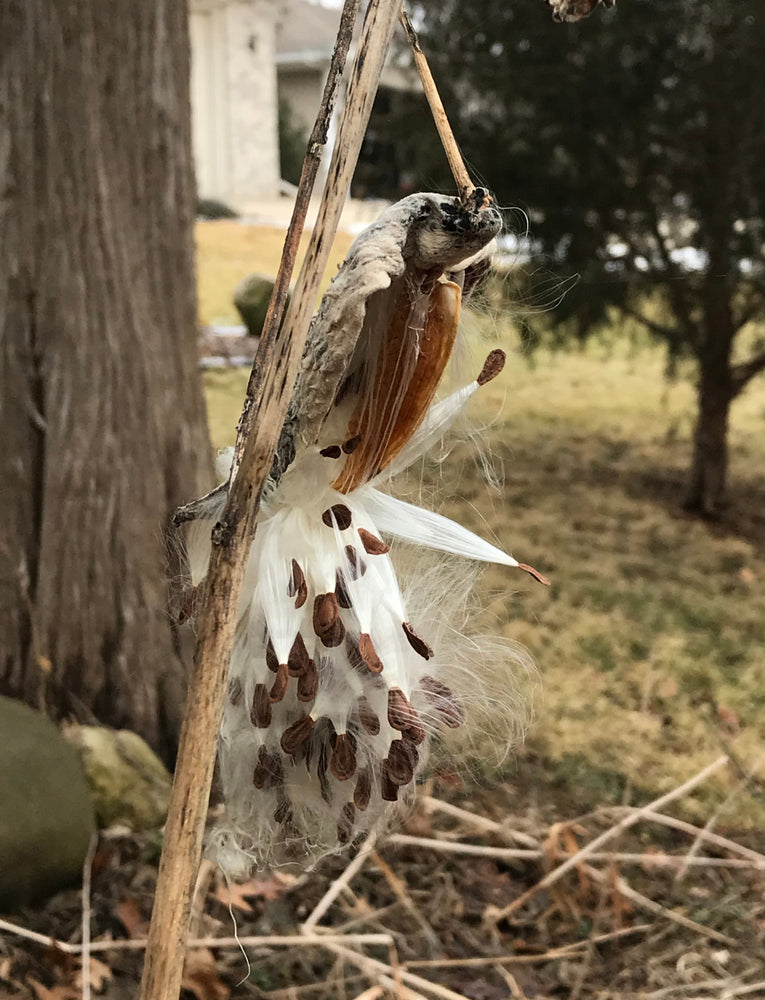
Option 1: Sow outdoors in fall
Fall sowing is the least complicated method for many native milkweeds. Sow after warm growing weather has ended but before the ground is frozen. Winter supplies the cold and moisture; germination follows when spring conditions become suitable.
- Prepare a weed-free patch or labeled container with good drainage.
- Press the seed into firm soil and cover it lightly.
- Mark the site with a durable label that will survive winter.
- Leave the seed outdoors through normal seasonal weather.
- Watch for uneven emergence in spring before disturbing the area.
Option 2: Cold-moist stratify for spring sowing
- Label the species and seed lot before adding moisture.
- Mix the seed with a small amount of barely damp medium, or place it in a damp folded paper towel.
- Seal it in a bag or container and refrigerate it for the period recommended for that species. Many sources use a minimum of several weeks for temperate milkweeds.
- Check periodically for drying, mold, or early germination.
- Sow promptly when the treatment is complete.
A clear bag full of cold, damp seed can look obvious on the day it enters the refrigerator. Six weeks later, it may look like every other bag in the drawer. Put the identification inside the container and repeat it on the outside. Memory is not a seed inventory system.
How to sow and establish first-year milkweed
Sow milkweed shallowly. For many commonly grown species, pressing the seed into the surface and covering it with roughly 1/8 to 1/4 inch of medium is enough. Follow species-specific directions when they differ. Keep the seedbed evenly moist during germination, but do not hold it saturated.
| Method | Advantages | Main risk | Best practice |
|---|---|---|---|
| Direct sowing | Roots develop in place; plants avoid transplant shock | Seedlings may be weeded, buried by mulch, or lost to competition | Prepare a clean seedbed, mark it clearly, and control nearby grass |
| Cells or pots | Moisture and identity are easier to manage; young plants can be monitored | Roots may become crowded or damaged if plants remain too long | Use deeper cells when possible and transplant while seedlings are young |
| Winter-sown containers | Natural cold exposure with more protection from disturbance | Containers can dry, overheat, or lose labels | Provide drainage, ventilation, and durable labeling |
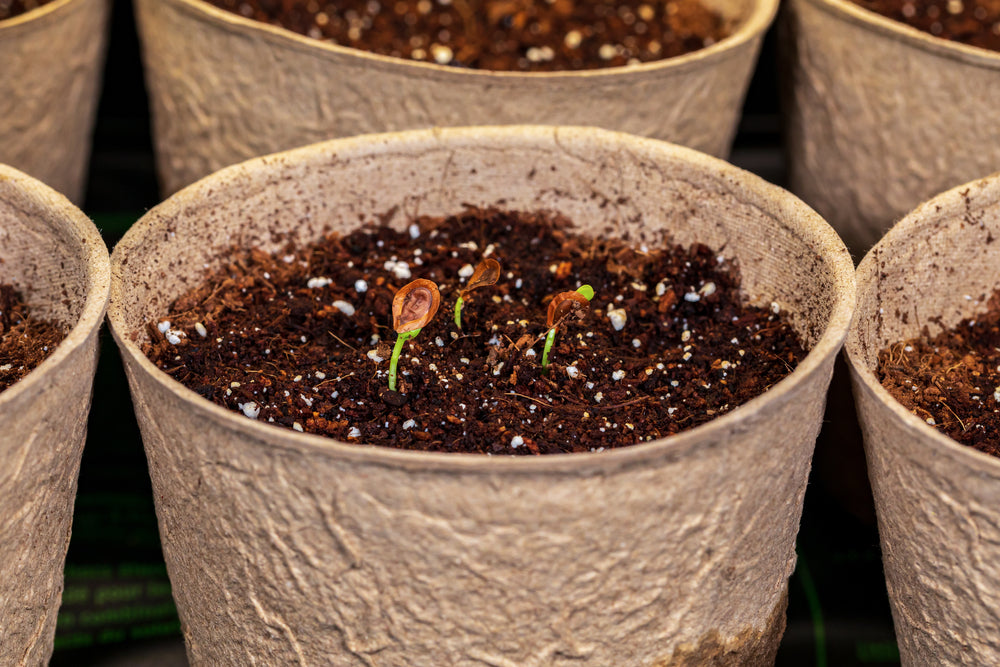
Expect a plant to build below ground first
First-year milkweed may look unimpressive above the soil. That does not mean nothing is happening. Many species spend considerable energy establishing roots before they produce the height, branching, and flowering gardeners imagine.
Keep weeds and thick mulch away from small crowns. Water consistently while roots establish, then adjust irrigation to the species. Butterfly weed should not be treated like swamp milkweed, and swamp milkweed should not be abandoned to a dry bank because both happen to carry the same common word.
I would plant more than one milkweed, mark every crown, and give the planting a full season before deciding it failed. I would also add nectar plants with overlapping bloom so adult monarchs have food before and after the milkweed itself flowers. One species should not be expected to carry the entire habitat.
How to read feeding, insects, and plant stress
Once milkweed is established, the gardener has to learn a different definition of damage. Chewed leaves can be evidence that the planting is doing exactly what it was planted to do. The task is to identify the visitor before deciding whether intervention is necessary.
| What you see | Possible explanation | Reasonable first response |
|---|---|---|
| Leaves eaten from the margins or large sections stripped | Monarch caterpillars or milkweed tussock moth larvae | Identify the caterpillar and allow established plants to function as host plants |
| Clusters of orange insects on stems and tender growth | Oleander aphids | Tolerate light populations; use a firm stream of water or careful hand removal if a young plant is stressed |
| Red-and-black insects gathered around pods | Milkweed bugs feeding mainly on developing seed | Decide whether seed production matters before taking action |
| Persistent wilt, yellowing, or crown collapse | Water stress, poor drainage, root injury, disease, or a species-site mismatch | Inspect soil moisture, drainage, and roots before adding fertilizer or pesticide |
| Small eggs or a chrysalis near the plant | Active monarch reproduction | Avoid spraying and reduce unnecessary handling around the plant |
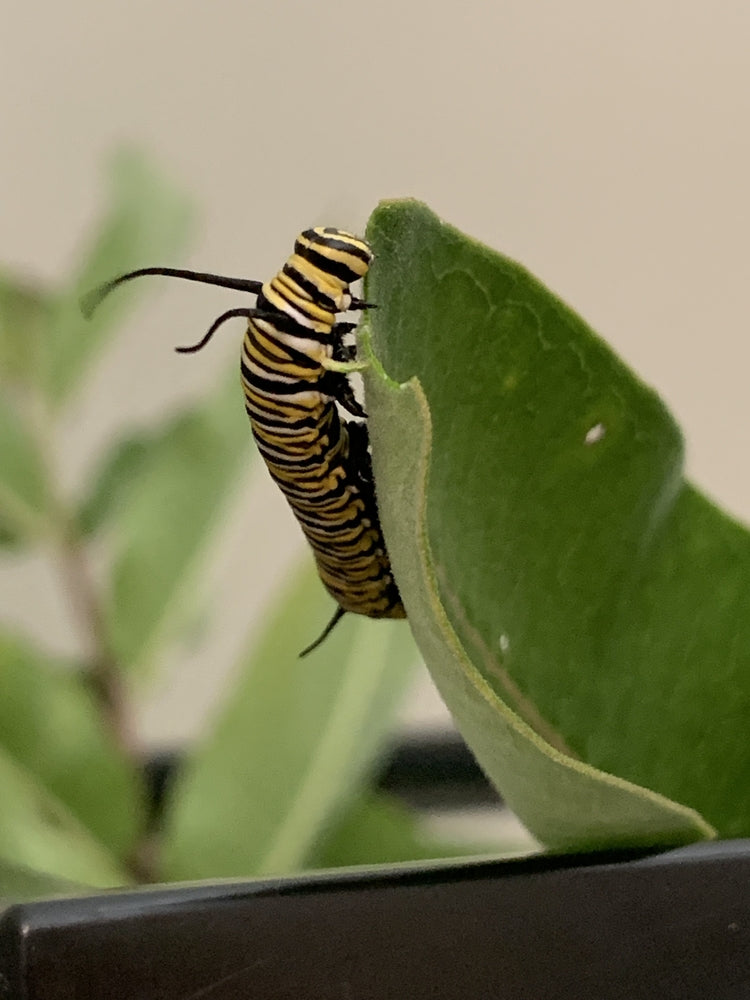
Broad-spectrum and systemic insecticides do not distinguish between a pest and the monarch egg, caterpillar, or beneficial insect occupying the same plant. Ask how nursery plants were treated. When a problem appears, use the least disruptive response that solves a verified problem.
Observation is not inaction. It is the discipline of knowing what is present before deciding what deserves to be removed.
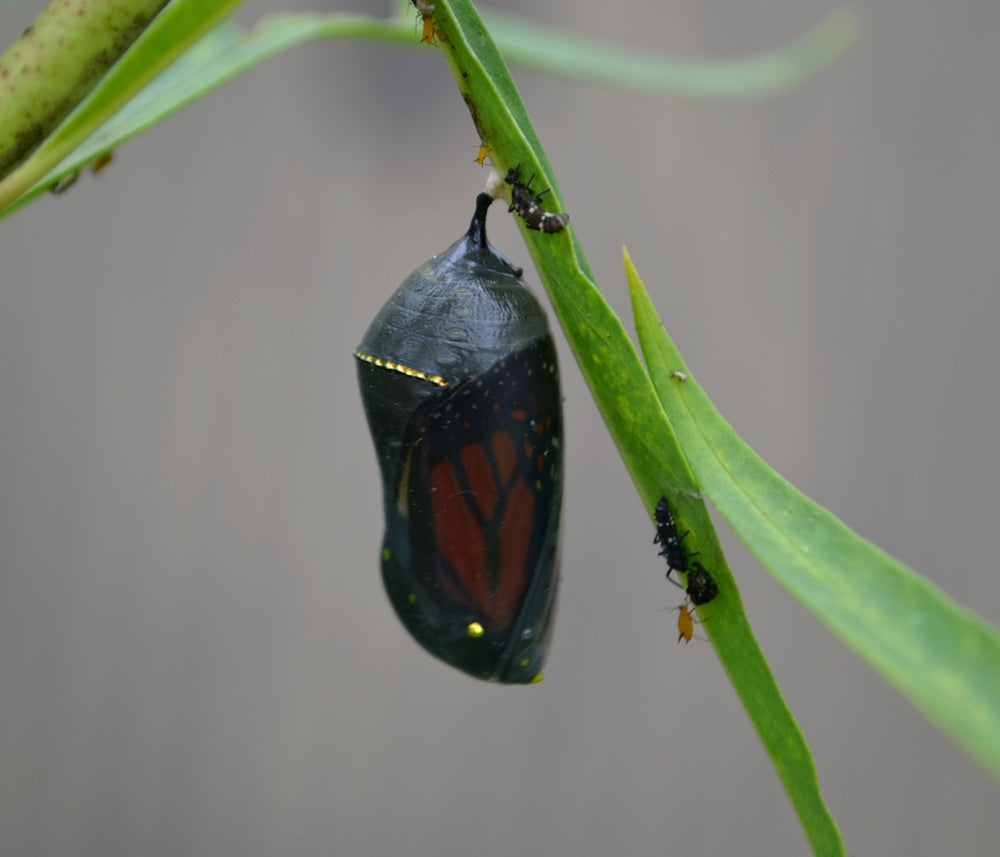
Keep a first-year milkweed record
A short record turns one season into guidance for the next. It also helps distinguish a poor seed lot from poor timing, weak establishment, or the wrong species for the site.
| Record | What it helps you understand |
|---|---|
| Species, source, seed year, and treatment | Which seed lot and preparation method produced the stand |
| Sowing date and first emergence | How long germination took under local conditions |
| Sun, drainage, soil texture, and summer moisture | Whether the site matched the species |
| Transplant date and survival | Whether timing or handling needs improvement |
| First and last bloom | Where nectar gaps remain elsewhere in the garden |
| Eggs, caterpillars, chrysalises, and mature seed | How the planting is functioning as habitat and as a future seed source |
Do not judge success only by the number of adult butterflies you notice. Returning crowns, eggs, caterpillars, chewed leaves, mature seed, and a longer season of bloom tell a fuller story.
Milkweed and monarch garden questions
How many milkweed plants should I grow?
There is no universal required number. A cluster or repeated patch is generally easier for monarchs to encounter and provides more food than one isolated stem. Match the planting size to the mature habit of the species and the room available.
Can milkweed grow in containers?
Some species can be grown in containers. Use a deep pot, excellent drainage, and a species whose mature root system and spreading habit can be managed. Container plants need more attentive watering and climate-appropriate winter protection.
Why did my milkweed seed fail to germinate?
Common reasons include missing or incomplete cold-moist treatment, seed planted too deeply, uneven moisture, old or poorly stored seed, warm conditions that do not suit the species, and simply giving up too early. Review the species requirements and keep labeled pots long enough to account for uneven emergence.
Why has my perennial milkweed not returned in spring?
Milkweed may emerge later than nearby perennials. Keep the crown marked and wait for consistently warm conditions before assuming it is dead. If no growth appears, examine winter injury, drainage, root rot, and whether the species was suited to the site.
Will planting milkweed guarantee monarchs?
No garden can guarantee a visit. It can create a safer and more useful steppingstone by providing native host plants, season-long nectar, shelter, and freedom from routine insecticide exposure.
Should I remove aphids from milkweed?
Not automatically. Light aphid populations often cause limited harm, and predators may arrive. Intervene when a young or stressed plant is being weakened, using water or careful hand removal before stronger measures.
Can I move wild milkweed into my garden?
Digging wild plants can damage natural populations and often fails because of deep or spreading roots. Obtain seed or nursery-grown plants from responsible regional sources unless you have permission and a legitimate conservation reason to collect.
When should I collect milkweed seed?
Collect from mature pods when they begin to split and the seeds are brown and fully developed. Confirm the species first, avoid taking all seed from a wild population, and keep collection information with the lot.
Let the planting be used
The strongest monarch garden is not the one with flawless leaves. It is the one where the right milkweed returns, caterpillars can feed, nectar is available when adults pass through, and the gardener knows when restraint is more useful than control.
The measure is simple: did the planting give the species room to complete its life cycle?