Variety field guide
What to expect from Glass Gem Flint corn Seeds
Glass Gem Flint corn seeds grow into upright/erect plants reaching 73–96 in and producing commonly 3–8 in ears.
Read the complete product descriptionTraits, flavor, garden use, variety notes, and the full catalog record
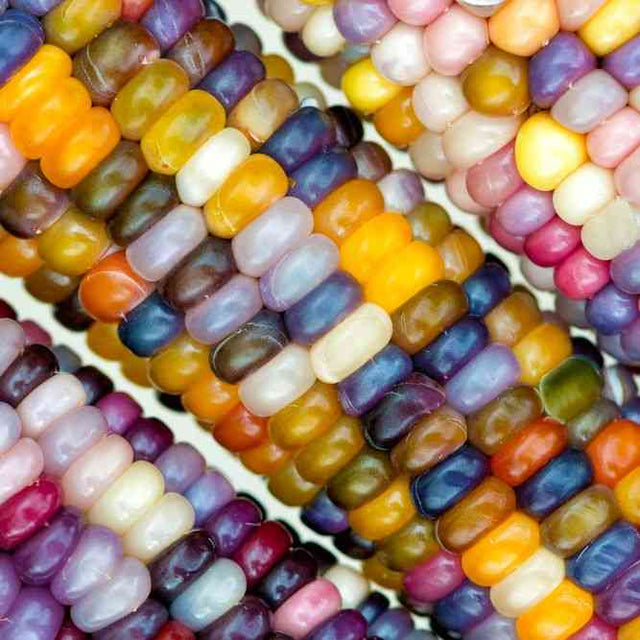
Glass Gem Flint corn seeds grow into upright/erect plants reaching 73–96 in and producing commonly 3–8 in ears. The mixed kernels are suited to dry grain, small popcorn, cornmeal, educational gardens, fall displays, seed saving, and growers who can plant a pollinating block. Glass Gem corn seeds produce multicolored flint ears with translucent kernels for popping, grinding, decorative harvests, and seed saving.
About Glass Gem
Glass Gem is an annual flint corn with mixed color, 73–96 in mature height or spread, and an upright/erect habit. Harvest form or size: Commonly 3–8 in ears. Botanically it is Zea mays L. Maturity or first bloom: 100-109 Days; germination: 7-10 Days at 70–85 °F. Best for dry grain, small popcorn, cornmeal, educational gardens, fall displays, seed saving, and growers who can plant a pollinating block. A firm, traditional corn flavor when popped, parched, or ground; not a tender sweet corn.
History and provenance
Glass Gem is a modern open-pollinated flint and popcorn-type population shaped through the selection work of Carl Barnes in Oklahoma. Native Seeds/SEARCH records that Barnes worked with several Native corn varieties and selected for the clear, jewel-like colors now associated with Glass Gem. Greg Schoen later continued the population, worked with José Lucero of Santa Clara Pueblo during additional grow-outs, used the name Glass Gem, and shared seed with educators and seedkeepers. Photographs of the translucent, multicolored ears spread widely in 2012 and brought the variety international attention. The documented record credits Barnes, Schoen, Lucero, and the Native corn populations involved in the breeding history; it does not establish or assign a tribal identity to Carl Barnes.
Growing facts
| Scientific name | Zea mays L. |
|---|---|
| Life cycle | Annual |
| Maturity / first bloom | 100-109 Days |
| Germination | 7-10 Days at 70–85 °F |
| Seed depth | 1 in |
| Plant height / spread | 73–96 in |
| Growth habit | Upright/Erect |
| Spacing | 6 in between plants; 30 in between rows |
| Sunlight | Full sun |
| Soil | Loamy; pH 6.0–6.5 |
| Water | Moderate |
| Support | No-Support |
Starting Glass Gem from seed
How to grow Glass Gem Flint corn
Botanical identity: Zea mays L. Life cycle: Annual.
Sow 1 in and use a seed-zone temperature near 70–85 °F. Expected emergence: 7-10 Days. Direct sow after frost when the seed zone is warm; do not soak seed in cold or waterlogged soil
Plant during Late Spring. Space plants 6 in apart with 30 in between rows or planting bands.
Provide Full sun, moderate water, and loamy near pH 6.0–6.5. Support: No-Support.
Garden performance and care
Plant Glass Gem in a block rather than one long row so wind-carried pollen reaches the silks. Keep the bed evenly watered from tasseling through ear fill, and protect mature ears from birds and mammals if seed saving. Expected emergence is 7-10 Days; the listed maturity or bloom timing is 100-109 Days.
Harvest, bloom, and uses
Glass Gem is best for dry grain, small popcorn, cornmeal, educational gardens, fall displays, seed saving, and growers who can plant a pollinating block. Harvest form or size: Commonly 3–8 in ears. Color at the principal harvest or mature stage: Mixed. A firm, traditional corn flavor when popped, parched, or ground; not a tender sweet corn.
Saving seed
Seed saving for Glass Gem Select several healthy, true-to-type plants so the saved lot represents the variety rather than one unusually early or large individual. Corn is wind-pollinated and highly outcrossing. Grow a substantial population in a block rather than one long row, and isolate the seed crop from other corn by distance, flowering time, or controlled pollination. Mark representative plants before pollen shed and remove clear off-types before they contribute pollen. For seed, leave ears until husks are brown and kernels are hard. Harvest before prolonged wet weather or animal loss, remove husks, and dry ears with strong air circulation until kernels cannot be dented with a fingernail. Shell, screen, and winnow only after full dry-down. Label the crop, cultivar, lot, year, field, population size, isolation method, selected plants, and any unusual ears. Store fully dry seed cool, dark, and protected from moisture and rodents. Test germination before an important planting.
Common problems
Glass Gem can be affected by poor pollination, corn earworm, armyworms, stalk lodging, smut, leaf diseases, birds, and rodents. Plant in a block, maintain even moisture at tasseling and silking, use balanced fertility, rotate crops, and inspect ears before storage. Uneven kernel fill usually points to pollen or silk stress rather than a seed-count problem.
Frequently asked questions
When is Glass Gem ready?
100-109 Days from direct sowing to dry seed or fully mature harvest
How long does germination take?
Expect 7-10 Days near 70–85 °F; actual emergence changes with moisture, seed condition, and soil temperature.
How large does it grow?
About 73–96 in with an upright/erect habit. Support: No-Support.
Can it grow in a container?
Best in an in-ground block large enough for dependable wind pollination; not recommended as a single container specimen.
How is it used?
Primary uses: Dry grain, small popcorn, cornmeal, educational gardens, fall displays, seed saving, and growers who can plant a pollinating block. A firm, traditional corn flavor when popped, parched, or ground; not a tender sweet corn.
Can I save seed?
Yes where the crop biology allows, but keep compatible varieties isolated, use several healthy plants, wait for full seed maturity, dry thoroughly, and label the lot.
Minimum Seed Count:20 seeds