
The best irrigation system is not the most complicated one. It is the one that puts enough water into the active root zone, at a rate the soil can absorb, while still being simple enough to inspect and maintain.
Drip lines, soaker hoses, and a watering wand can all succeed. Each fails in a different way, and the garden layout usually tells you which failure you can manage.
Do not judge a system by how wet the surface looks. Run it, wait, and dig a narrow inspection hole. A line can make a dark stripe while leaving most roots dry—or flood below the crop before the surface appears wet.
Understand what garden irrigation can and cannot do
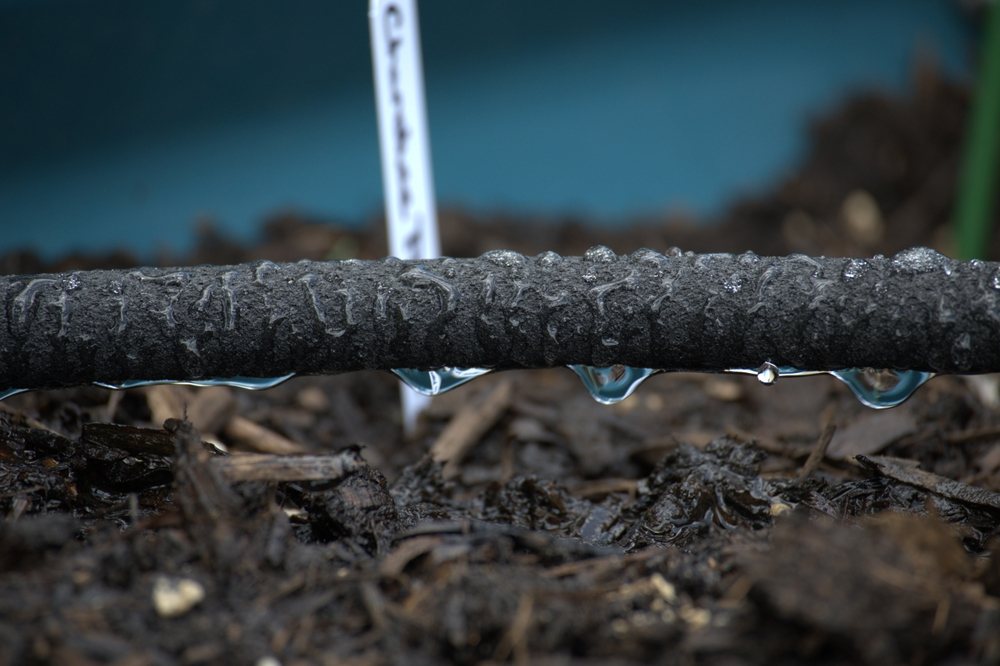
Drip emitters deliver water at defined points or intervals. Soaker hoses release water along a porous length. Hand watering offers immediate control but depends on time and attention.
All three need pressure, flow, placement, and duration matched to soil and crop. Automation does not remove the need to inspect.
- Filtration protects small emitters.
- Pressure regulation keeps output more even.
- Mulch reduces evaporation but can hide leaks.
Choose the method by the constraint that actually matters
Choose based on bed shape, crop spacing, water quality, elevation change, and whether plants move each season.
Closely spaced greens need a different wetting pattern from widely spaced tomatoes or containers.
| Situation | Best starting choice | Why |
|---|---|---|
| Long straight crop rows | Drip tape or inline dripline | Predictable spacing and efficient root-zone delivery |
| Raised bed with dense planting | Closely spaced dripline or carefully placed soaker hose | Broader, overlapping wetting pattern |
| Mixed containers | Individual emitters with separate flow rates | Different pot sizes and crops can be balanced |
| Small changing garden | Hand watering or modular soaker layout | Low setup cost and immediate adjustment |
Set the system up in the right order
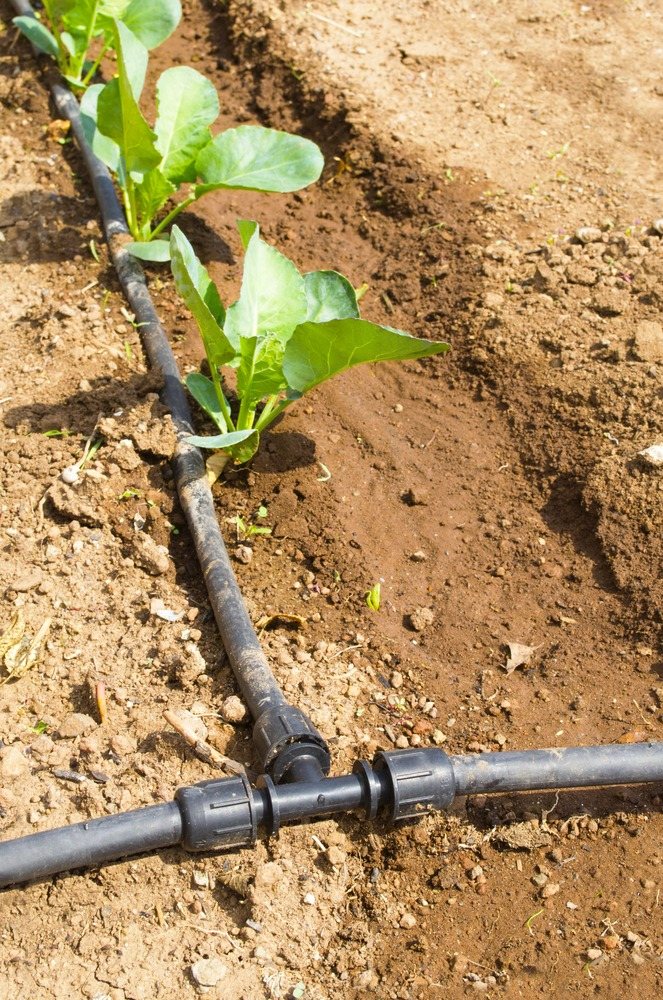
Sketch zones before buying parts.
- Measure available flow and pressure.
- Install filtration and regulation where the system requires it.
- Lay lines close enough to wet the intended root zone.
- Flush, run, and dig test holes before trusting the timer.
Watch for the failure points
Clogging, uneven pressure, rodent damage, sun-baked tubing, and hidden leaks are normal maintenance issues. A timer can faithfully repeat a bad setting every day.
Soaker hoses often water unevenly over long runs or on slopes. Hand watering often stops when the surface looks wet.
- Do not run several long zones from a weak source without testing.
- Do not bury lines so deeply that leaks disappear.
- Do not use one duration for sandy beds and clay beds.
Adjust for North Carolina, Virginia, and the Mid-Atlantic
High summer demand in the Coastal Plain makes reliability important, but humid weather also punishes wet foliage. Root-zone systems reduce leaf wetness when properly placed.
Clay soils need slower applications and pauses for infiltration. Sandy soils need shorter, more frequent applications. Freeze protection matters in mountain and Piedmont winters.
Keep records that make the next season easier
Record zone, run time, rainfall, soil depth reached, and emitter problems. Recheck when plants fill the canopy because mature roots and shade change the water pattern.
A small catch-can or measured emitter test can reveal declining flow.
Water systems are not installed once. They are tuned as the garden grows.
Put this guide to work in a real garden
Put Drip Irrigation, Soaker Hoses, or Hand Watering? Choosing the Right Garden System into a one-season plan before buying more inputs. Choose the variety or material, mark the bed or container, write the sowing or planting date, and decide what success will look like: first harvest, stem length, fruit set, bloom, survival, or control of spread.
Inspect on a schedule. Early problems are usually easier to correct because the crop has more season left and the cause has not been buried under secondary damage. Water, fertility, airflow, support, and harvest timing should be adjusted from the plant’s response rather than from a rigid weekly ritual.
At the end of the crop, keep the record honest. Note what performed, what merely survived, what required too much labor, and what deserves a larger planting next year. Experience becomes expertise only when it is remembered accurately.
- Choose the variety and define the intended use.
- Prepare soil, container, support, or irrigation before planting.
- Set a weekly inspection date.
- Harvest or prune at the stage described in the guide.
- Write a short end-of-season verdict.
Use a 30-day checkpoint instead of guesswork
Before planting
Choose the variety, site, support, soil preparation, and irrigation method while the bed is still easy to change.
First two weeks
Protect establishment. Watch moisture, light, wind, transplant shock, and early pest pressure.
At rapid growth
Adjust spacing, support, pruning, and fertility before the plant becomes difficult to handle.
At first harvest or bloom
Record quality, timing, labor, and the plant’s response. Use that evidence to guide the rest of the season.
A guide provides a sound starting system, not a guarantee. Cultivar, weather, soil history, and management interact, and the correct response may change as the plant moves from establishment to harvest.
Keep a one-season record
The record does not need to be elaborate. A notebook page, spreadsheet row, or labeled photograph is enough when it captures the variables that matter.
- Variety and source
- Planting date and location
- Water, fertility, and major weather events
- First harvest or bloom and total season length
- Problems, corrections, and next-year decision
Write enough that another grower—or you, one year later—could understand what was planted, what happened, and why the next decision changed.
Questions gardeners ask
Is drip irrigation always more efficient?
It can be, but leaks, clogged emitters, poor spacing, and overlong run times can waste water. Efficiency depends on design and maintenance.
Can I put a soaker hose under mulch?
Yes. Mulch can reduce evaporation, but mark the hose location and inspect for leaks or uneven output.
How long should I run drip irrigation?
Long enough to wet the active root zone without runoff or deep waste. Test by digging after a run; there is no universal number of minutes.
Do I need a filter?
Small drip emitters and drip tape usually benefit from filtration, especially with well, pond, or debris-prone water.
Is overhead watering bad?
Not automatically. It is useful for germination and cooling in some systems, but prolonged leaf wetness can increase disease risk and wind can reduce uniformity.
A good irrigation system disappears into the routine. The plants are steady, the soil is wet where roots live, and the gardener spends time growing instead of chasing hoses.


