A pointed cabbage looks as though it has already made up its mind. Early Jersey Wakefield builds upward into a compact cone instead of spreading into the broad flattened head many gardeners expect. That shape is not a novelty. It is the reason the variety became one of the defining early cabbages of American market gardens.
Early does not mean careless. The head still needs cool weather, steady growth, protected seedlings, and harvest before heat or heavy rain takes the decision away.
An early cabbage selected for compact pointed heads
Early Jersey Wakefield is Brassica oleracea var. capitata. It descends from the pointed Wakefield line and became a long-standing American market-garden cabbage. A 1934 United States Department of Agriculture publication included Early Jersey Wakefield among the principal American cabbage types.
The variety forms a compact conical or sugarloaf-shaped head. That upright form uses garden space differently from broad round or flat storage cabbages. It is especially useful when the goal is an early fresh cabbage rather than a massive head for long storage.
Choose spring or fall before you start the seed
Cabbage is a cool-season crop. In North Carolina, spring and fall are the main opportunities. Spring transplants need enough time to form heads before strong heat arrives. Fall plants must survive hot seedling weather and then mature as temperatures decline.
For spring, start seed indoors four to six weeks before the intended transplant date. Bright light and moderate temperatures produce stockier plants than excessive heat. Harden transplants gradually before setting them out.
For fall, count backward from the expected frost window using the days to maturity, then add time for transplant recovery and slower late-season growth. In the Coastal Plain, fall planting can often run later than the Piedmont, but heat and insect pressure make the first weeks more demanding.

Spacing decides head size and airflow
Early Jersey Wakefield is compact, but it is not a miniature. Space plants roughly 15 to 18 inches apart for full heads, with enough room to cultivate and inspect the undersides of leaves. Tighter spacing can produce smaller heads, but crowding also traps moisture and hides caterpillars.
Set transplants at the same depth they grew in the container, firm the soil around the roots, and water immediately. Do not bury the growing point.
Head formation requires uninterrupted growth
Cabbage performs best in fertile soil that drains well but holds moisture. Soil pH near 6.0 to 7.0 supports nutrient availability and reduces some disease risk. Use a soil test before adding phosphorus or lime by habit.
Steady water matters from transplanting through head formation. Drought can stop the plant, toughen leaves, and reduce head size. A sudden flood of water after drought can split mature heads. The crop remembers every interruption.
| Stage | Water and fertility priority | Common mistake |
|---|---|---|
| Transplant establishment | Keep the root ball and surrounding soil evenly moist | Letting the root ball dry while the bed appears damp |
| Leaf-building stage | Support steady vegetative growth with soil-test-based fertility | Adding heavy nitrogen late because the plant looks small |
| Head formation | Maintain consistent moisture and inspect firmness often | Alternating drought with heavy irrigation |
| Near harvest | Watch rain forecasts and mature-head splitting | Leaving firm heads in the field simply to gain more size |
Protect the growing point and inspect the undersides
Imported cabbageworms, cabbage loopers, diamondback moth larvae, flea beetles, and cabbage maggots can damage the crop. Young plants are especially vulnerable because injury to the central growing point can prevent a normal head from forming.
Use row cover immediately after transplanting when insect pressure is expected. Seal the edges and inspect underneath. Row cover is a barrier, not a substitute for looking.


Do not ask an early conehead to behave like a storage cabbage
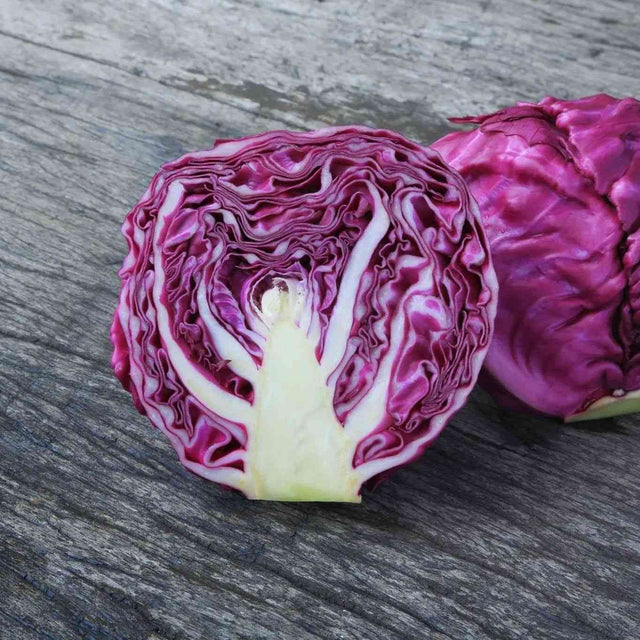
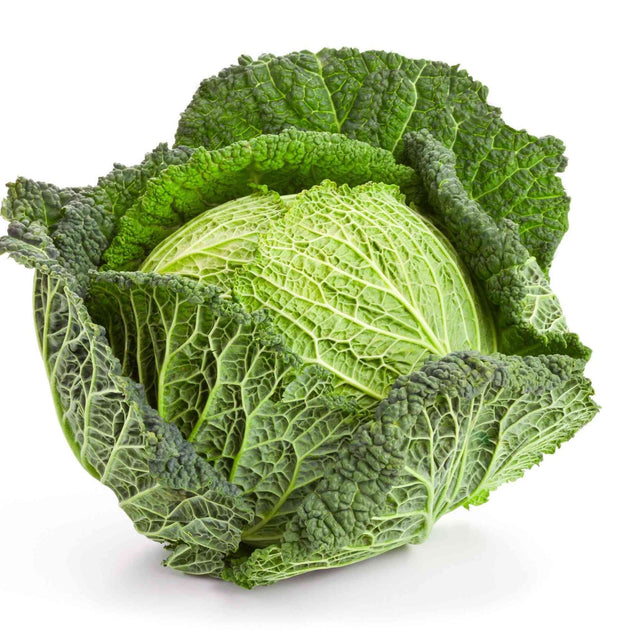
Variety choice changes the whole harvest plan. Early Jersey Wakefield is selected for a quick, compact pointed head and fresh eating. Red Acre, Savoy types, and Late Flat Dutch bring different colors, textures, head shapes, and storage behavior.


Harvest when the head is firm
Press the head gently. It should feel firm for its size. Cut it above the outer wrapper leaves with a clean knife. Do not wait for every head to match. Variation in soil, transplant size, and root establishment means a row often finishes in passes.
Once a head reaches mature size, splitting risk increases. Heavy rain can push water into a mature head faster than the leaves can accommodate it. If a head is ready, the safest storage place may be the kitchen.
What failure looks like
| Symptom | Likely cause | Best next move |
|---|---|---|
| Plant grows leaves but no head | Damaged growing point, heat, crowding, or severe stress | Inspect the center, review spacing, and protect young plants earlier next season |
| Small loose head | Late planting, nutrient or moisture stress, or root injury | Improve timing and maintain steady growth |
| Head splits | Mature head followed by heavy rain or irrigation | Harvest earlier; reduce water uptake if harvest must be delayed |
| Chewed leaves and frass | Cabbageworms, loopers, or diamondback larvae | Inspect leaf undersides and use a targeted control appropriate to the pest |
| Seedlings wilt or disappear | Root maggot, cutworm, drought, or transplant damage | Examine the stem and roots before replacing plants |
Seed saving is a second-year project
Cabbage is biennial. A head grown for eating does not produce mature seed in the same season. Seed saving requires overwintering selected plants or heads, allowing flowering the second year, and controlling cross-pollination with other flowering Brassica oleracea crops.
That makes cabbage seed saving an advanced project. Keep records, maintain a population rather than one plant, and plan isolation before the flower stalks open.