A radish can go from crisp to disappointing in the time it takes to forget the row through three hot afternoons. French Breakfast is quick, but speed is not permission to ignore it. The variety earns its mild flavor and clean texture only when growth stays cool, even, and uninterrupted.
French Breakfast is often treated as a decorative little market radish, but the root still answers to ordinary garden discipline. A clean white tip does not excuse crowding, drought, compacted soil, or late harvest. The crop is quick, and the quality window is narrow.
Know the shape you are growing
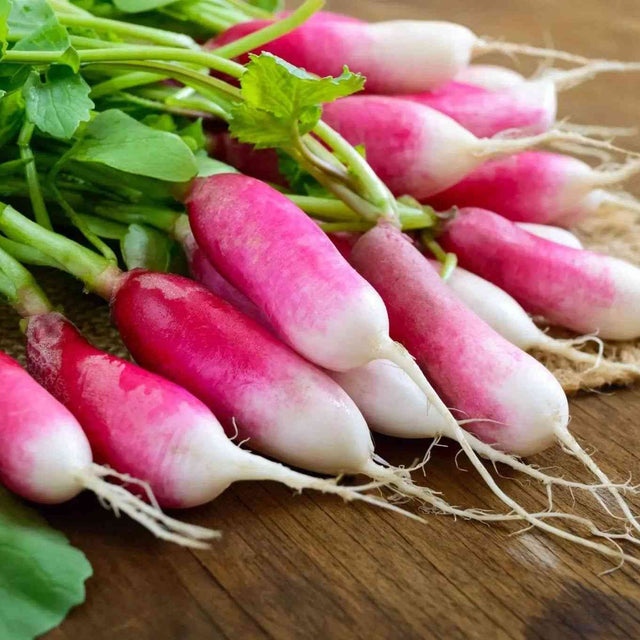
French Breakfast is an elongated garden radish with a red upper root and a white tip. The current botanical name is Raphanus raphanistrum subsp. sativus, though seed catalogs still commonly use Raphanus sativus.
French Breakfast has endured as a market-garden type because the elongated root is quick, easy to bunch, and visible at the soil line. When the red shoulder begins to rise, the gardener can check size without pulling the whole row.
Cool weather is the main ingredient
Radishes grow best in spring and fall. In eastern North Carolina, a practical spring window often runs from mid-February into early April, with another opportunity from August into mid-September. Local weather and soil condition still control the exact day.
The point is not to plant as early or as late as possible. The point is to let the crop finish before heat drives rapid flowering, strong flavor, and woody roots. A late spring sowing may germinate beautifully and still mature badly.
For a continuous harvest, sow a short section every seven to fourteen days rather than one large row. Stop when the next sowing would mature in serious heat. Resume when late-summer soil temperatures begin to ease.
Build the root before you plant the seed
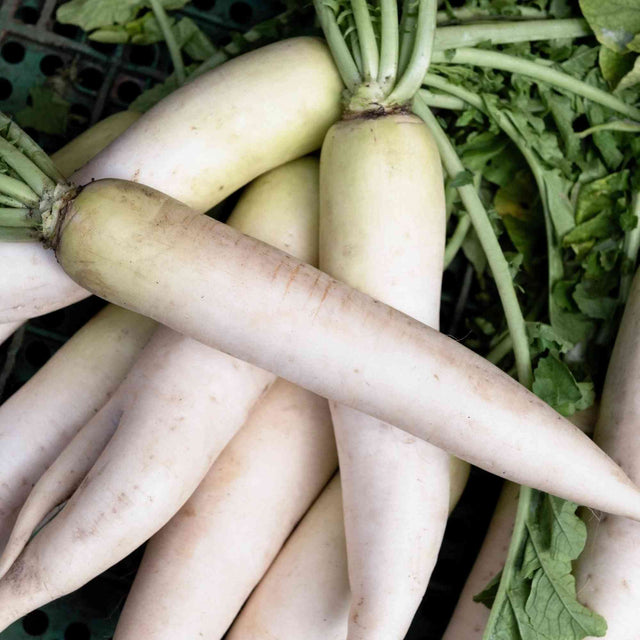
Loosen the seedbed at least six inches deep. French Breakfast is not as long as a daikon, but compacted soil, stones, and crusting can still bend, fork, or stunt the root. A fine surface helps small seed make good soil contact.
Sow about one-quarter to one-half inch deep. Keep the surface consistently moist through emergence. Once seedlings are established, thin them rather than hoping crowded plants will sort themselves out. Crowding produces leaves without useful roots.
| Decision | Better practice | What goes wrong otherwise |
|---|---|---|
| Depth | Sow shallowly in a prepared seedbed | Deep seed emerges slowly or unevenly |
| Spacing | Thin small radishes to roughly 1 to 3 inches | Crowding prevents root expansion |
| Moisture | Keep the root zone evenly moist | Slow growth increases heat and toughness; uneven moisture can split roots |
| Fertility | Use soil-test guidance and moderate nitrogen | Too much nitrogen favors tops over roots |
Do not judge every radish by the same size
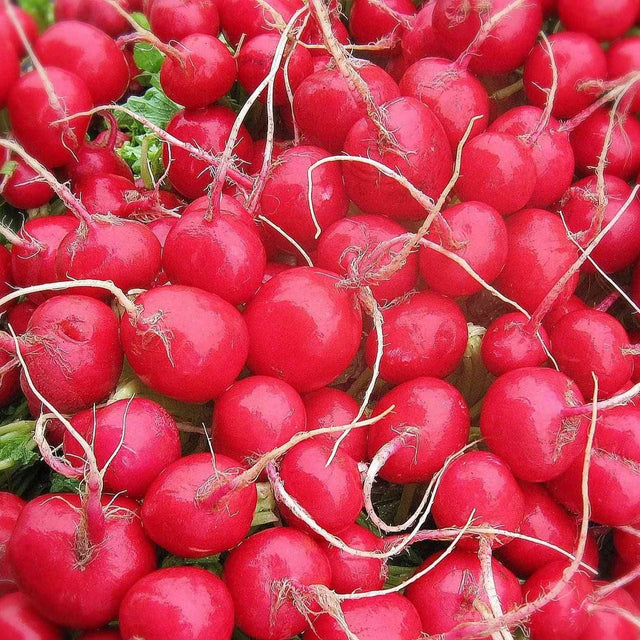
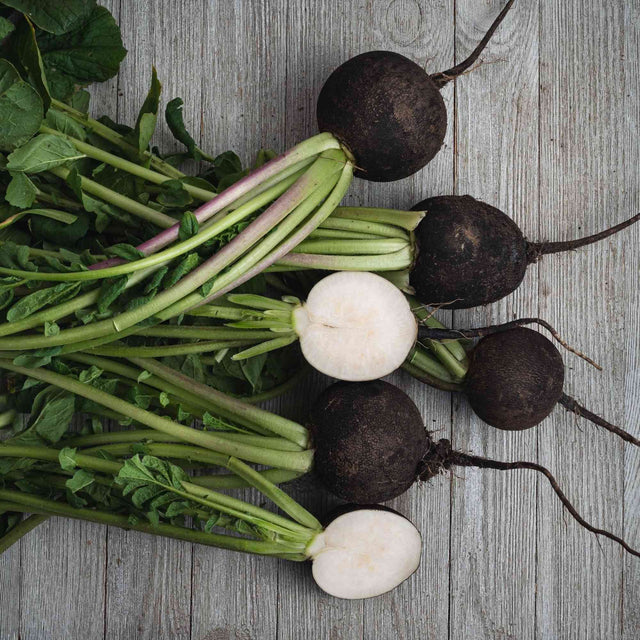
Round spring radishes, elongated table radishes, long white types, and winter storage radishes mature differently. French Breakfast should not be left in the ground until it looks like a daikon, nor should it be judged by the diameter of a round Cherry Belle.


Harvest the row in passes
Garden radishes are commonly ready three to five weeks after sowing. Pull one when the shoulder reaches a usable width. Cut it open. The interior should be crisp and solid, not spongy, hollow, or fibrous.
Harvest the largest roots first and leave smaller roots a few more days. That turns thinning into a final management tool and prevents the whole row from crossing the line at once.
Remove the tops after harvest to slow moisture loss. Wash, cool, and refrigerate promptly. A radish left warm with its leaves attached spends its remaining moisture fast.
Use succession sowing to protect quality
One heavy sowing creates one heavy harvest problem. French Breakfast is better planted in small runs that a household can thin, water, inspect, and pull on time. A second sowing can follow after a short interval while weather remains cool, but stop when the forecast says the crop will finish in persistent heat.
In eastern North Carolina, the spring window closes quickly. Fall can be more forgiving once nights begin to cool, although late-summer sowings need close moisture management until seedlings establish. The calendar is only a starting point. Soil temperature, rainfall, and the expected harvest window decide whether the sowing still makes sense.
Heat reveals every shortcut
Radishes grown slowly under heat or drought often become hotter, tougher, and woodier. Long days and heat also accelerate bolting. Once the plant commits to flowering, root quality declines.
Shade cloth may buy a little time, but it cannot turn summer into spring. When the row is already stressed, the better decision is often to harvest what remains and clear the bed for a warm-season crop.
Protect the leaf and the root
Flea beetles chew many small holes in young leaves. Cabbage maggots and wireworms can tunnel into the root. A lightweight row cover installed immediately after sowing can reduce early insect pressure, but the edges must be sealed and the cover must come off when heat builds.

Rotate away from other brassica-family crops when root and soilborne problems repeat. Remove damaged roots rather than leaving them to break down beside the next sowing.
Seed saving requires a separate plan
French Breakfast is an open-pollinated radish, but seed production is not the same job as root production. Radish is a biennial crop that normally flowers after winter exposure, and insects can move pollen among compatible radish varieties. Select several roots that match the variety, preserve them through the appropriate winter method for the climate, replant them with enough isolation, and let the seed pods mature fully before harvest.
Do not save seed merely from the largest root. Keep the shape, shoulder color, white tip, healthy foliage, timing, and eating quality in the selection. One root is a curiosity. A small population gives the next generation a better chance of remaining a variety.
What failure looks like
| Symptom | Likely cause | Correction |
|---|---|---|
| Large tops, tiny roots | Crowding, shade, or excess nitrogen | Thin earlier, improve light, and review fertility |
| Hot, tough roots | Slow growth, drought, or heat | Sow in cooler weather and maintain even moisture |
| Split roots | Uneven moisture after a dry period | Water steadily instead of alternating drought and saturation |
| Forked or distorted roots | Compaction, stones, fresh manure, or root injury | Prepare a finer seedbed and avoid damaging seedlings |
| Flower stalks before good roots | Bolting from heat, long days, or stress | End the planting and resow in the next cool window |