Variety field guide
What to expect from Blue Flax
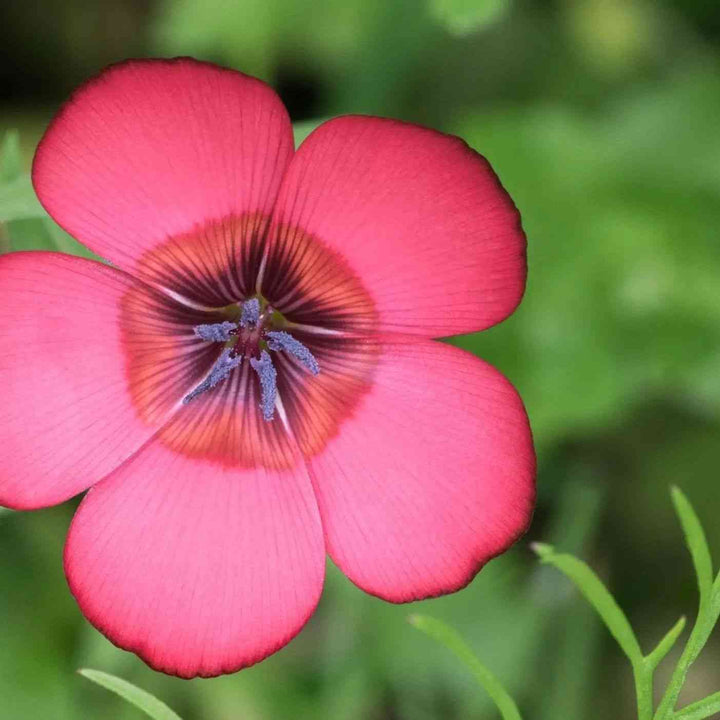
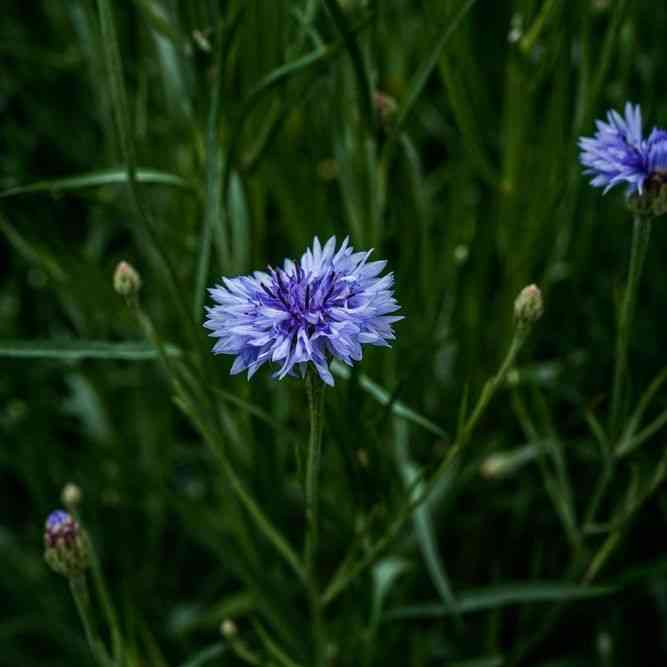
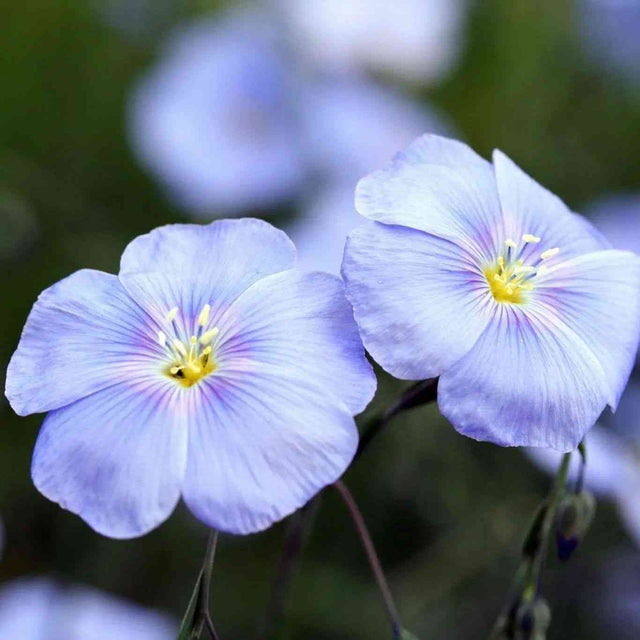
Blue Flax seeds produce blue bloom on 19–24 in clumping/tufted plants.
Open the complete descriptionHide the complete descriptionVariety traits, flavor, garden use, and the complete description
Blue Flax seeds produce blue bloom on 19–24 in clumping/tufted plants. Perennial growth and Spring/Summer bloom make it useful for native plantings, pollinator habitat, meadow edges, restoration-inspired gardens, and seed saving. It is native to parts of the United States; match the species to local range and habitat.
Minimum seeds per packet: 200 seeds.
About Blue Flax
Blue Flax is a perennial flowering plant with blue color, 19–24 in mature height or spread, and a clumping/tufted habit. Harvest form or size: Flower or head form characteristic of Blue Flax; mature plant 19–24 in. Botanically it is Linum lewisii. Maturity or first bloom: Stage-based; germination: 7-14 Days at 60–75 °F. Best for native plantings, pollinator habitat, meadow edges, restoration-inspired gardens, and seed saving. Grown for ornamental or habitat use rather than as a food crop.
History and provenance
Blue Flax, or Lewis flax (Linum lewisii), is a short-lived perennial native to North America, with much of its range in the west. Slender stems carry blue flowers that open in the morning and shed their petals later in the day, with new flowers continuing the display. It grows in open grasslands, shrublands and other well-drained habitats. The airy growth suits sunny borders and meadow-style gardens. It is a native wildflower species, distinct from flax grown as a food-seed or fiber crop.
Growing facts
| Scientific name | Linum lewisii |
|---|---|
| Life cycle | Perennial |
| Maturity / first bloom | Stage-based |
| Germination | 7-14 Days at 60–75 °F |
| Seed depth | 1/4 in |
| Plant height / spread | 19–24 in |
| Growth habit | Clumping/Tufted |
| Spacing | 8 in between plants; 15 in between rows |
| Sunlight | Full sun |
| Soil | Sandy loam; pH 6.5–7.0 |
| Water | Drought tolerant |
| Support | No-Support |
Starting Blue Flax from seed
How to grow Blue Flax
Botanical identity: Linum lewisii. Life cycle: Perennial.
Sow 1/4 in and use a seed-zone temperature near 60–75 °F. Expected emergence: 7-14 Days. Sow in late fall for natural chilling or try spring sowing. Some seed can emerge in 7–14 days under suitable conditions, but dormant seed may take much longer, sometimes until a later growing season. Keep the seedbed labeled and do not discard it after two weeks.
Plant during Spring/Fall. Space plants 8 in apart with 15 in between rows or planting bands.
Provide Full sun, drought tolerant water, and sandy loam near pH 6.5–7.0. Support: No-Support.
Garden performance and care
Blue Flax may invest in roots before making strong top growth. Mark the planting, control weeds gently, avoid rich fertilizer, and judge establishment over more than one season where the species is perennial. Expected emergence is 7-14 Days; the listed maturity or bloom timing is Stage-based.
Harvest, bloom, and uses
Blue Flax is suited to native plantings, pollinator habitat, meadow edges, restoration-inspired gardens, and seed saving. Its blue flowers and 19–24 in stature help determine whether it belongs in a border, cutting row, container, meadow edge, or restoration-style planting. Grown for ornamental or habitat use rather than as a food crop.
Saving seed
Choose several healthy, true-to-type plants rather than saving from one unusually early or large individual. Allow seed structures to mature fully beyond the ornamental stage, harvest in dry weather, and finish drying under cover. Clean out chaff and damaged seed, keep the lot labeled through every step, record isolation and selection, and store fully dry seed in a cool, dark, low-humidity place. Confirm the species pollination system before promising varietal purity.
Common problems
Common concerns: damping-off from saturated media; poor emergence from wrong temperature or depth; leggy seedlings from weak light; crowding and weak airflow; lodging in wind or rain; feeding damage from slugs, caterpillars, beetles, or mammals; foliar disease under prolonged leaf wetness. Management: use clean media, the sowing depth and temperature, strong light, appropriate thinning, and morning irrigation at soil level. Match support to plant height before wind becomes a problem. Inspect regularly and use the least disruptive control appropriate to the pest, plant, and pollinator setting. Remove diseased debris and rotate annual flower beds where recurring disease is severe.
Frequently asked questions
When is Blue Flax ready?
Stage-based establishment and flowering; no single numeric maturity is displayed because first bloom varies with dormancy treatment and season
How long does germination take?
Expect 7-14 Days near 60–75 °F; actual emergence changes with moisture, seed condition, and soil temperature.
How large does it grow?
About 19–24 in with a clumping/tufted habit. Support: No-Support.
Can it grow in a container?
Well suited to containers when drainage, spacing, light, and moisture are maintained
How is it used?
Primary role: Native plantings, pollinator habitat, meadow edges, restoration-inspired gardens, and seed saving. Grown for ornamental or habitat use rather than as a food crop.
Can I save seed?
Yes where the crop biology allows, but keep compatible varieties isolated, use several healthy plants, wait for full seed maturity, dry thoroughly, and label the lot.