Variety field guide
What to expect from Earthwalker Sunflower Seeds
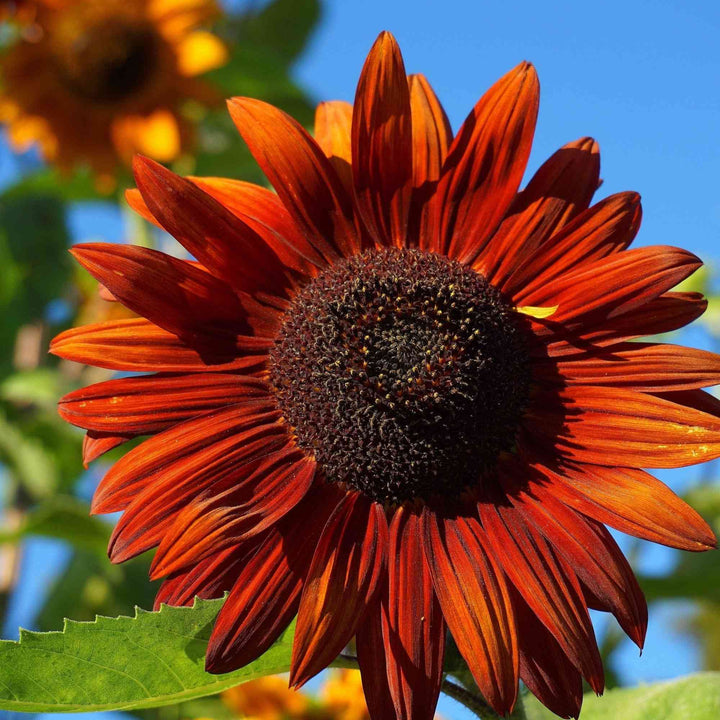
Earthwalker fills tall, branching stems with warm shades of copper, orange, mahogany and red around dark centers.
Read the complete product descriptionTraits, flavor, garden use, variety notes, and the full catalog record
Earthwalker fills tall, branching stems with warm shades of copper, orange, mahogany and red around dark centers. Several blooms develop on each plant, giving the border a changing display and providing stems for late-summer bouquets. Its earthy colors pair beautifully with gold flowers and autumn foliage. Give this open-pollinated sunflower a sunny place with room to branch, and leave some finished heads standing for birds and the next season's seed.
Warm autumn colors on tall, branching plants.
Growing facts
- Botanical name: Helianthus annuus
- Maturity or display: 75-85 days to flowering
- Mature size: 5-7.5 ft. tall; branching stems
- Spacing: 12 in between plants; rows 24 in
About the variety
Earthwalker is an open-pollinated selection of the annual sunflower, a species native to North America and domesticated by Indigenous peoples. Its branching habit produces a succession of flowers rather than a single giant head.
Starting seed
Sow 1/2 in. deep after frost in warm soil. Sprouts in 7-14 days. Thin to 12 in.; rows 24 in. Give full sun, drained soil and regular water; stake in wind.
Care through the season
Water deeply during establishment and dry weather, and leave enough space for the branches to develop. Tall plants may need staking in exposed sites. Removing spent blooms can extend the display; reserve several healthy heads if saving seed.
Harvest and use
Blooms in about 75-85 days. Cut newly opening flowers into clean water. For seed, let heads brown and dry; protect from birds. Isolate other sunflowers.
Saving seed
Annual sunflowers are insect-pollinated and readily cross with other Helianthus annuus varieties. For seed that resembles the parent population, isolate flowering varieties or use controlled pollination. Collect from several healthy plants after the heads turn brown and the seeds are full and firm. Dry thoroughly before storage.
Common problems
Birds and rodents may remove newly sown seed or ripening heads. Protect vulnerable stages with suitable mesh, keeping pollinators able to reach open flowers. Avoid saturated soil and crowded foliage; inspect for leaf spots and damaged stems.
Frequently asked questions
When will it flower?
75-85 days to flowering.
How can I keep the display healthy?
Water deeply during establishment and dry weather, and leave enough space for the branches to develop. Tall plants may need staking in exposed sites. Removing spent blooms can extend the display; reserve several healthy heads if saving seed.
Can I save seed?
Annual sunflowers are insect-pollinated and readily cross with other Helianthus annuus varieties. For seed that resembles the parent population, isolate flowering varieties or use controlled pollination. Collect from several healthy plants after the heads turn brown and the seeds are full and firm. Dry thoroughly before storage.