A soil test is not a report card with one grade. It is a set of measurements and recommendations tied to a sample, a laboratory method, and the crop information submitted with it.
Read it in order. pH can change nutrient availability. Lime recommendations take time. Phosphorus and potassium accumulate differently. Nitrogen is often recommended from crop need rather than measured directly in a routine test.
A precise laboratory cannot correct a poor sample. Mix many small cores from a uniform area, avoid unusual spots, and keep beds with different history separate.
Understand what a vegetable-garden soil test can and cannot do
Soil pH measures acidity or alkalinity. Buffer or reserve acidity may be used to calculate lime. Nutrient indices or categories reflect the laboratory’s extraction method and calibration.
Do not compare numbers from different laboratories as if the methods were identical.
- Lime changes pH slowly.
- Phosphorus can build to excessive levels.
- Organic matter is useful but not a license for unlimited compost.
Choose the method by the constraint that actually matters
Begin with the crop and sample area named on the report. Then read pH and lime before fertilizer recommendations.
Look for high or excessive nutrients as carefully as low ones. “More” is not automatically an improvement.
| Situation | Best starting choice | Why |
|---|---|---|
| Low pH with lime recommendation | Apply the specified lime material and rate | Do not substitute wood ash without accounting for its variability |
| High phosphorus | Stop routine phosphorus additions | Choose low-phosphorus fertilizers and compost carefully |
| Low potassium | Use the lab’s crop-based recommendation | Split applications on sandy soils if advised |
| High salts | Delay planting or leach where appropriate | Investigate fertilizer, manure, compost, or irrigation water sources |
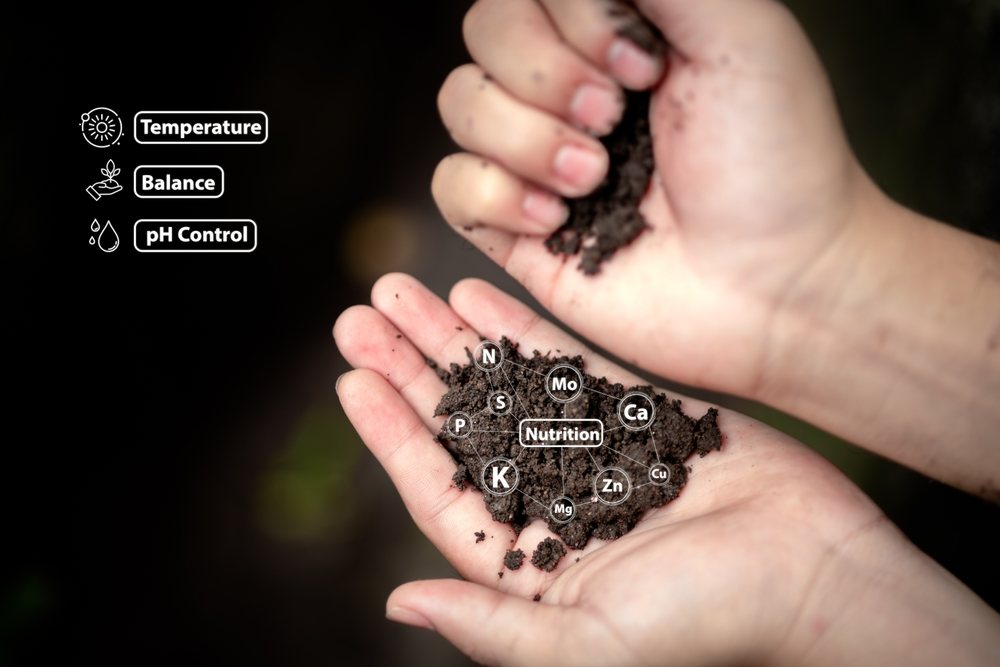
Set the system up in the right order
Confirm the sample ID and crop.
- Read pH and lime recommendation.
- Review phosphorus, potassium, calcium, magnesium, and micronutrient flags.
- Check organic matter and soluble salts if reported.
- Convert recommendations to the actual bed area before applying anything.
Watch for the failure points
The common mistake is translating pounds per acre incorrectly into a raised bed. Another is adding a complete fertilizer when only one nutrient is needed.
Repeated manure and compost applications can drive phosphorus and salts high while the gardener believes all organic inputs are automatically gentle.
- Do not lime without a test.
- Do not chase micronutrients unless the report and crop symptoms support it.
- Do not sample immediately after fertilizer or lime application.
Adjust for North Carolina, Virginia, and the Mid-Atlantic
Coastal Plain sands have low nutrient-holding capacity and may need split applications. Piedmont clay may hold nutrients well but suffer compaction and drainage issues a routine test does not diagnose.
Mountain soils can be acidic, but local history still matters. Test the bed, not the regional stereotype.
Keep records that make the next season easier
Keep the report, sample map, application dates, products, rates, and crop response. Retest on a sensible schedule rather than after every small amendment.
Use the same laboratory for trend comparison when possible.
The test is not an instruction to add everything. It is permission to stop guessing.
Put this guide to work in a real garden
Put How to Read a Soil Test for a Vegetable Garden into a one-season plan before buying more inputs. Choose the variety or material, mark the bed or container, write the sowing or planting date, and decide what success will look like: first harvest, stem length, fruit set, bloom, survival, or control of spread.
Inspect on a schedule. Early problems are usually easier to correct because the crop has more season left and the cause has not been buried under secondary damage. Water, fertility, airflow, support, and harvest timing should be adjusted from the plant’s response rather than from a rigid weekly ritual.
At the end of the crop, keep the record honest. Note what performed, what merely survived, what required too much labor, and what deserves a larger planting next year. Experience becomes expertise only when it is remembered accurately.
- Choose the variety and define the intended use.
- Prepare soil, container, support, or irrigation before planting.
- Set a weekly inspection date.
- Harvest or prune at the stage described in the guide.
- Write a short end-of-season verdict.
Use a 30-day checkpoint instead of guesswork
Before planting
Choose the variety, site, support, soil preparation, and irrigation method while the bed is still easy to change.
First two weeks
Protect establishment. Watch moisture, light, wind, transplant shock, and early pest pressure.
At rapid growth
Adjust spacing, support, pruning, and fertility before the plant becomes difficult to handle.
At first harvest or bloom
Record quality, timing, labor, and the plant’s response. Use that evidence to guide the rest of the season.
A guide provides a sound starting system, not a guarantee. Cultivar, weather, soil history, and management interact, and the correct response may change as the plant moves from establishment to harvest.
Keep a one-season record
The record does not need to be elaborate. A notebook page, spreadsheet row, or labeled photograph is enough when it captures the variables that matter.
- Variety and source
- Planting date and location
- Water, fertility, and major weather events
- First harvest or bloom and total season length
- Problems, corrections, and next-year decision
Write enough that another grower—or you, one year later—could understand what was planted, what happened, and why the next decision changed.
Questions gardeners ask
Why is nitrogen not always measured?
Routine tests often do not measure plant-available nitrogen because it changes rapidly. Recommendations are commonly based on crop need, soil type, and management.
What pH do vegetables prefer?
Many vegetables perform well around pH 6.0 to 6.8, but crop-specific recommendations and soil chemistry should guide adjustments.
Can I use wood ash instead of lime?
Wood ash raises pH and adds nutrients, but strength varies and overapplication can cause high pH and salts. Use only with a soil-test recommendation and known material.
How often should I test?
Every two to three years is common for established gardens, or sooner after major problems or amendments. Follow local laboratory guidance.
Does a soil test diagnose drainage?
Not usually. Texture, compaction, water movement, root health, and site grading require physical observation in addition to laboratory chemistry.
A soil test is most valuable for what it prevents: the extra bag, the unnecessary lime, the phosphorus added to a bed already full of it.