Growing corn in hot weather is not the same problem as growing corn in drought, and neither is the same as growing corn in high humidity. Corn can continue producing new leaves in intense summer heat when the root zone still holds water. The same temperature can become destructive when dry soil delays silks, shortens pollen life, rolls leaves for most of the day, or forces the plant to abort young kernels. Humidity changes the problem again by extending leaf wetness and increasing pressure from rusts, blights, stalk rots, and ear rots.
The practical goal is not to make a corn planting feel cool. It is to keep the crop supplied with water and nutrients during the stages that determine ear size, pollination, and grain fill, while keeping the canopy dry enough and open enough to limit disease. That requires stage-based irrigation, realistic spacing, early scouting, and a variety whose maturity fits the season.
This guide is written for home gardeners and small seed growers, especially in hot and humid regions. It explains what the plant is doing, what the visible symptoms mean, which losses can still be reduced, and which decisions must be made before planting.
Start with the stage, not the symptom
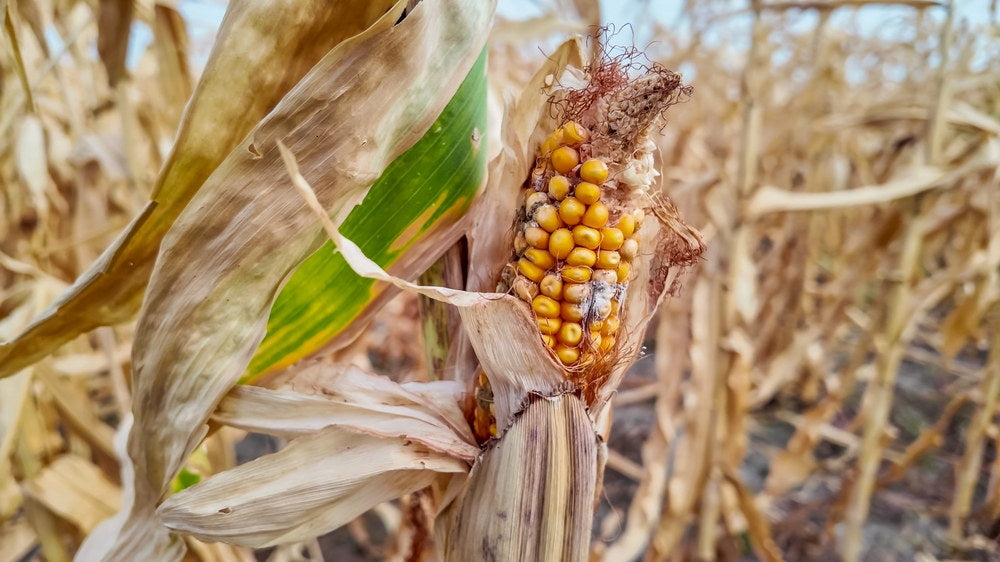
The same rolled leaf can mean a temporary afternoon response in one planting and serious pollination risk in another. The difference is the growth stage, duration, soil moisture, and whether the plant recovers overnight. Before naming a problem, record the date, variety, planting date, approximate stage, recent rainfall, irrigation, and how many plants show the symptom.
Walk the whole block. A dry corner beside a tree root, a low wet strip, a compacted path, and the center of the planting may behave differently. If every plant is affected evenly, weather, irrigation, fertility, or planting density rises on the list. If the pattern follows an edge, wheel track, low spot, or spray path, investigate that pattern before blaming the variety.
| Growth stage | What the plant is building | Primary weather risk | Best response |
|---|---|---|---|
| Emergence to 4 leaves | Stand, crown roots, early leaf area | Cold wet seedbed, crusting, shallow dry soil | Protect emergence, water lightly enough to maintain uniform moisture |
| Rapid vegetative growth | Leaf area, stalk, potential ear size | Nutrient shortage, prolonged drought, crowding | Deep irrigation, soil-test-based fertility, weed control |
| 1 to 2 weeks before tassel | Potential kernel number and reproductive timing | Drought that delays silk development | Do not let the root zone cycle from saturated to dry |
| Tassel and silk | Pollen shed, silk reception, fertilization | Heat plus drought, silk clipping, poor planting shape | Keep soil moist, preserve silks, verify pollen and silk overlap |
| Blister through milk | Kernel retention and early fill | Kernel abortion from water or nutrient stress | Maintain steady water and healthy ear leaves |
| Dough through dent or dry-down | Kernel weight and maturity | Premature leaf death, lodging, ear rot | Scout stalks and ears; harvest and dry at the right stage |
Corn has several different stress windows
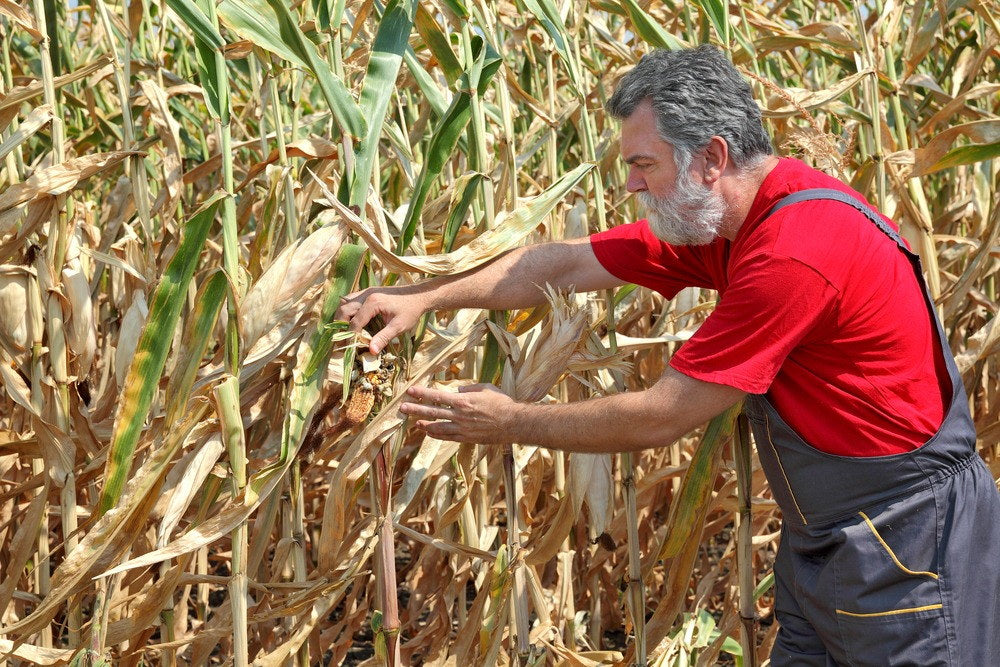
Corn does not respond to stress as one continuous season. Stress before pollination can reduce the number of potential kernels and delay reproductive development. Stress during tasseling and silking can prevent fertilization. Stress after pollination can abort kernels that initially started to develop. Later stress can shorten grain fill, reduce kernel weight, or weaken stalks.
The highest-priority window for a home garden is roughly two weeks before tasseling through two weeks after silking. University Extension guidance consistently treats this as the period when water stress can delay silks, disrupt pollen and silk overlap, and reduce kernel set. Once the ear has entered early grain fill, steady moisture still matters because recently fertilized kernels can abort, often beginning near the ear tip.
Do not wait for the tassel to appear before creating an irrigation plan. A plant that entered reproductive development already depleted cannot instantly rebuild its root system or synchronize its silks because water arrived one afternoon. The most reliable strategy is to begin monitoring root-zone moisture before tassels emerge and continue through milk stage.
- Before tassel: protect potential ear size and silk development.
- During pollen shed: protect silk emergence, pollen viability, and pollen movement through the block.
- After fertilization: protect young kernels from abortion and preserve the ear leaf area that feeds grain fill.
- During dry-down: reduce unnecessary irrigation, inspect for lodging and mold, and move toward harvest and drying.
Heat, drought, and humidity do different damage
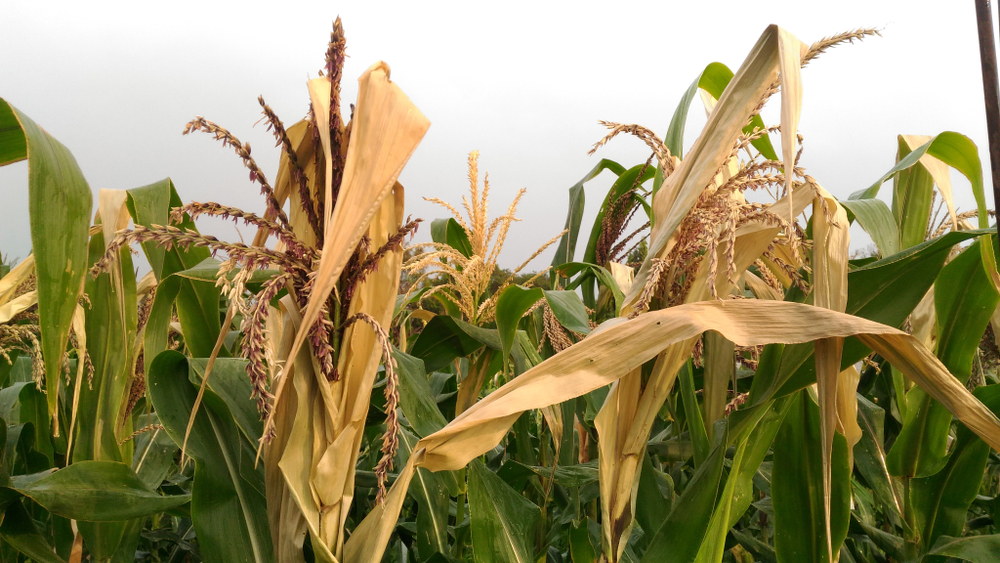
Corn is a warm-season grass. High air temperature by itself does not automatically mean pollination failure. The most serious combination is high temperature, low soil moisture, and dry air during tasseling and silking. Iowa State reports that temperatures above about 95°F with low humidity and low soil moisture can dry exposed silks and damage pollen, while temperatures above 100°F can kill pollen grains. Pollen normally sheds during cooler morning hours, which gives the crop some protection when the root zone is adequately moist.
Drought changes the timing. Water stress slows silk elongation but may accelerate or leave pollen shed unchanged. The result can be a poor anthesis-silking interval, with the tassel finishing before enough silk has emerged. A block may look tall and green from a distance yet still produce blank ears because the reproductive timing was lost.
Humidity rarely causes the same immediate silk desiccation, but it creates a different risk. Heavy dew, frequent rain, and long periods of wet foliage favor several leaf diseases. Humid nights also reduce the plant's opportunity to dry. The grower must therefore deliver enough water to the root zone without keeping leaves wet through the evening.
Flooded or saturated soil is not a cure for heat. Roots need oxygen. Waterlogged soil can reduce nutrient uptake, weaken plants, and intensify root and stalk problems. The target is a moist, aerated root zone, not a permanently wet bed.
| Condition | What it does to corn | Common visual clue |
|---|---|---|
| Hot with adequate soil moisture | Speeds development; may still support normal pollination | Leaves may droop briefly but recover |
| Hot, dry soil, low humidity | Delays silks, shortens pollen life, increases rolling | Rolled leaves, slow silks, patchy kernel set |
| Hot and humid with wet foliage | Raises foliar and stalk disease pressure | Spots, pustules, lesions, lower-canopy decline |
| Alternating saturation and drought | Damages roots and creates uneven nutrient supply | Uneven height, pale plants, weak stalks |
| Warm nights during grain fill | Increases respiration and can shorten effective fill | Earlier senescence and lighter kernels under stress |
Build a measured watering plan
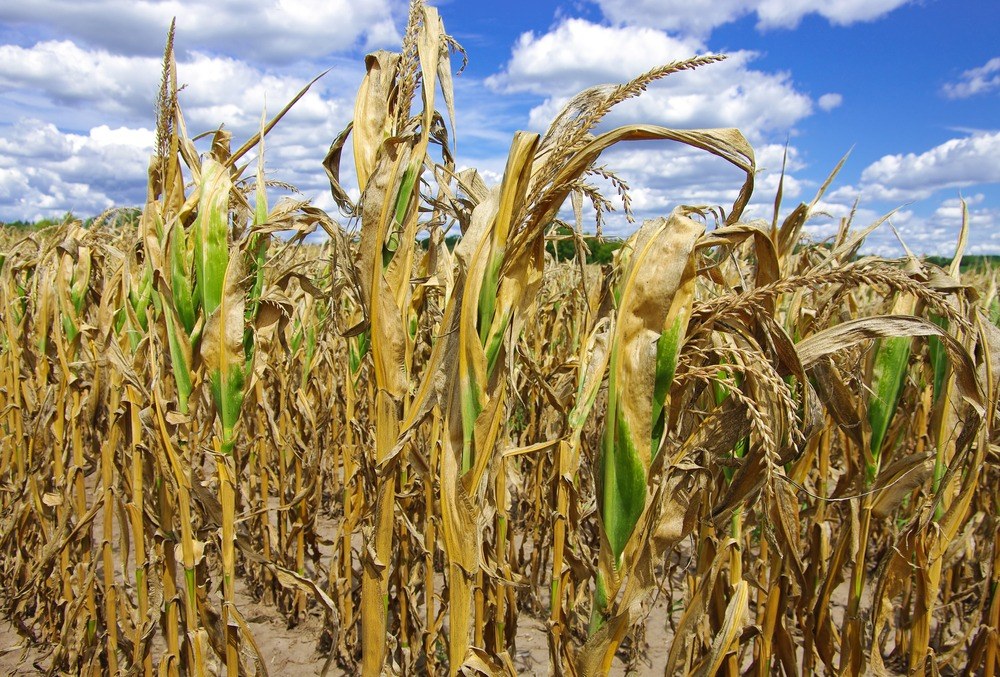
A useful home-garden baseline is about one inch of water per week from rain and irrigation, with adjustments for sandy soil, extreme heat, plant stage, and the water-holding capacity of the bed. University of Minnesota guidance notes that an inch of water can wet sandy soil roughly ten inches deep and heavy clay roughly six inches deep. The point is not the exact number in every soil. The point is to check how deeply the water actually moved.
One inch of water over 100 square feet is about 62 gallons. A ten-by-ten-foot corn block therefore needs roughly that much delivered water to equal one inch before accounting for runoff, wind loss, or poor distribution. This simple calculation exposes why a quick pass with a hose may darken the surface while leaving most roots dry.
Corn takes up water rapidly around pollination. Iowa State field-crop guidance notes uptake near 0.3 to 0.4 inch per day during that stage under demanding conditions. A home garden should not copy a field irrigation schedule blindly, but the figure explains why a block that seemed adequately watered during vegetative growth can fall behind suddenly at tasseling.
- Place several straight-sided cans through the planting when using a sprinkler. Measure the water collected rather than guessing by run time.
- After irrigation, use a trowel or soil probe in several locations. Check the wetting depth below the mulch, not only the surface color.
- Water early enough that leaves dry quickly. Drip or soaker lines reduce leaf wetness and wind loss.
- On sandy soil, divide the weekly amount into more frequent deep applications because water drains quickly. On heavy soil, apply slowly enough to prevent runoff.
- Prioritize the week before silking through early grain fill when water is limited. Do not abandon young plants, but understand which stage controls kernel set.
Protect the root zone and canopy
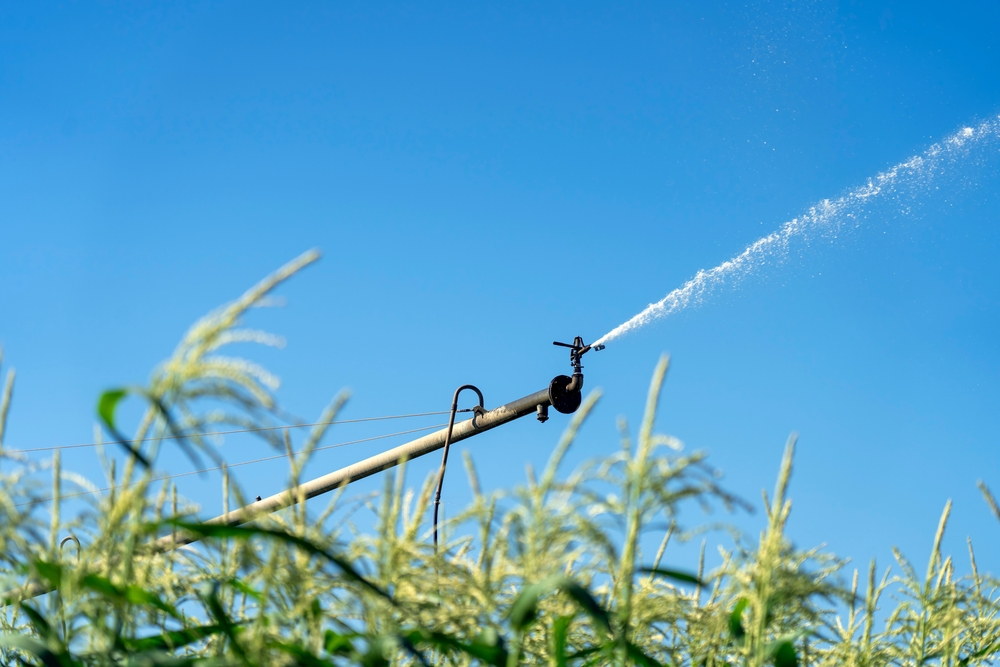
A heat-resilient planting begins before the heat arrives. Organic matter improves water-holding capacity and soil structure, but it is not an emergency treatment for a crop already tasseling. Build the bed with compost and cover crops well before planting, then use a soil test to guide lime, phosphorus, potassium, and nitrogen.
Corn is a heavy feeder, but more fertilizer is not always more resilience. Excess nitrogen can create lush growth that demands more water and may increase susceptibility to some diseases. Severe nitrogen shortage can reduce plant size and ear development. The goal is steady, balanced fertility, not a late rescue dose based on panic.
Mulch reduces evaporation, buffers soil temperature, and limits soil splash. Apply it after the soil has warmed and the plants are established. Keep dense mulch from pressing against the stalk base, especially in humid gardens. Where mice, voles, slugs, or stalk rots are common, leave a small open zone around each stalk and inspect beneath the mulch.
Spacing is part of water management. A dense stand captures light, but it also divides a fixed amount of water among more plants and traps humidity. Thin to the intended spacing rather than keeping every seedling. In a small block, four or more short rows usually pollinate better than one long row, but that does not mean plants should be crowded within those rows.
- Control weeds before they become a second crop competing for water and nitrogen.
- Avoid deep cultivation near established corn because roots spread broadly and close to the surface.
- Maintain mulch, but inspect for rodents and excess moisture at the stalk base.
- Do not remove healthy lower leaves or tillers merely because the canopy looks dense. Unnecessary injury creates wounds and reduces photosynthetic area.
- Support soil life and structure between seasons with rotation and cover crops rather than trying to repair every problem during tasseling.
Read leaf rolling correctly
Corn leaves roll inward to reduce exposed surface area and water loss. Temporary rolling during the hottest afternoon hours can be a protective response. Iowa State notes that afternoon rolling by itself does not prove yield loss, while rolling that continues for twelve or more consecutive hours is a stronger warning of damaging stress.
The morning check matters more than the 3 p.m. photograph. Walk the block shortly after sunrise. If leaves have opened and the soil remains moist at depth, continue monitoring. If leaves are still tightly rolled, lower leaves are firing, or silks are delayed, the plant did not recover overnight.
| Observation | Interpretation | Action |
|---|---|---|
| Rolls only on hot afternoons; open by dawn | Short-duration stress response | Check depth and keep schedule steady |
| Rolls before noon and remains rolled overnight | Root zone is not meeting demand | Irrigate deeply, inspect roots and stand density |
| Only plants beside trees or paths roll | Localized competition or compaction | Compare soil moisture and root competition |
| Rolled leaves plus twisted new growth | Possible herbicide drift or growth-regulator injury | Inspect pattern and nearby applications; document before treating |
| Rolled leaves plus lesions or discoloration | Disease, nutrient stress, or multiple problems | Use lesion pattern and whole-plant symptoms; seek diagnosis |
Do not treat every rolled leaf with fertilizer. If the root system cannot access water, salts from a strong soluble feed can increase osmotic stress. Correct water and drainage first, then evaluate fertility with the plant's full symptom pattern and a soil or tissue test when warranted.
Protect tassels, silks, and early grain fill
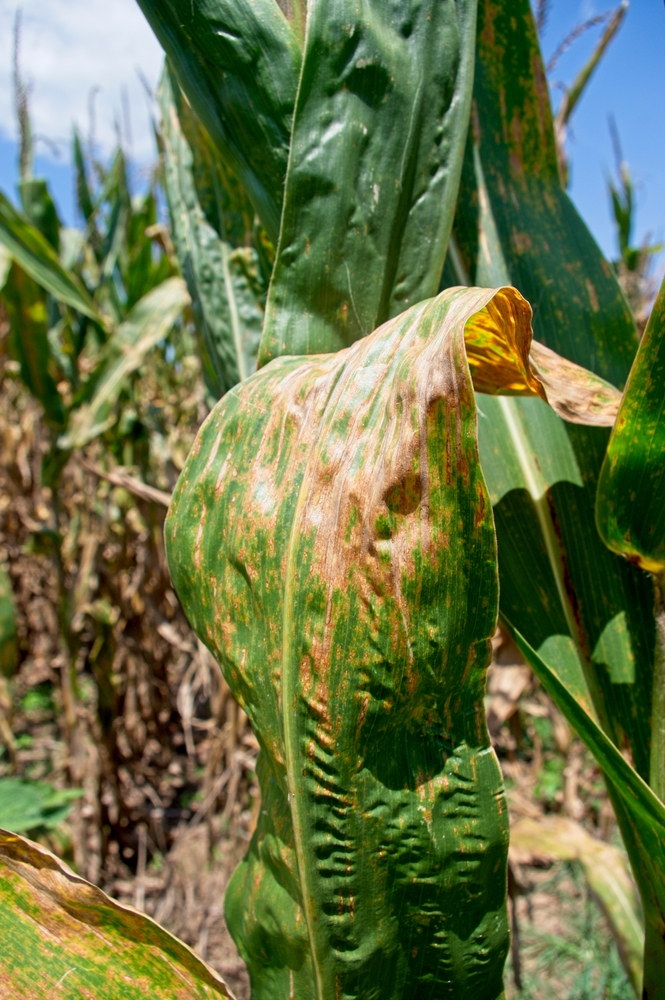
The tassel and silk are separate parts of one timing system. Each potential kernel has its own silk. Pollen must land on that silk while it is receptive, then grow down the silk to fertilize the ovule. Drought can slow silk emergence while pollen shed continues. High heat and dry air can reduce pollen viability and dry silks. Insects can clip silks before pollination is complete.
Begin checking the block when the first tassels open. Pollen shed usually starts on the main spike and moves through the branches over several days. Fresh silks should appear while pollen is still available. If tassels are nearly finished and ears show little or no silk, water stress, maturity mismatch within the population, nutrient stress, root injury, or severe crowding may be responsible.
After several days of pollination, carefully open one or two representative ears and perform a shake test. Fertilized silks detach from the ovules within a few days. Silks that remain attached indicate unfertilized ovules or very recent pollination. Do not strip dozens of ears. Sample enough to understand the block, then leave the rest protected by their husks.
Successful fertilization is not the end. Drought in the following two weeks can abort young kernels, especially near the tip. Maintain water through blister and milk stages. Once the crop reaches physiological maturity for dry grain, irrigation is no longer protecting yield and can be reduced to support dry-down.
| Pollination signal | What it suggests |
|---|---|
| Tassels shedding and fresh silks present across the block | Good overlap is possible |
| Tassels nearly finished; silks just emerging | High risk of missing the pollen window |
| Silks clipped below about half an inch while green | Beetle or insect injury can prevent fertilization |
| Silks brown and detach in a shake test | Ovules were fertilized |
| Kernels begin, then disappear at the tip | Post-pollination abortion from stress is likely |
Manage humidity without starving the crop
Hot humid regions can produce strong corn, but the canopy stays wet longer after rain and dew. Common rust, northern corn leaf blight, gray leaf spot, smut, stalk rots, and ear rots each have different biology, but several become more serious when susceptible plants, infected residue, and long leaf-wetness periods occur together.
Water at the soil line whenever possible. If overhead irrigation is the only option, run it early or near midday so foliage dries before night. Avoid small nightly sprinklings that repeatedly wet leaves without recharging the root zone. A single deep application at the right time is usually more useful than keeping the canopy damp every evening.
Airflow begins with spacing and weed control. It does not require stripping the plant bare. The ear leaf and surrounding green leaves supply the developing grain. Removing them to “open” the plant can reduce fill and create wounds. Instead, prevent the row middles from becoming a wet wall of weeds and choose a block shape that allows access for scouting.
- Rotate out of corn when leaf blights or stalk rots were severe, especially where residue remains.
- Remove badly diseased ears and stalks rather than leaving them mixed with seed or food grain.
- Do not work through wet leaves and then move directly into a clean seed increase block.
- Record whether lesions began low in the canopy, near wounds, along field edges, or after a specific weather event.
- Choose resistant or tolerant varieties when a disease repeats in the same region or garden.
Use maturity and planting date as climate tools
A variety cannot be climate-resilient in a useful sense if it misses the season. Days to maturity are estimates, not promises, but they help place tasseling, silking, and dry-down inside the weather window available to you. A long-season flour corn may thrive in one region and reach frost with wet grain in another. An early corn may escape late-summer disease but pollinate during an early heat wave if planted too soon.
In the Southeast, succession planting can spread risk, but several corn plantings also complicate isolation. If you are saving seed, separate varieties by distance, flowering time, or controlled pollination. A three-week planting gap does not guarantee a three-week flowering gap because heat and soil conditions change development rates. Watch tassels and silks, not only the calendar.
Choose one main goal for each planting. A fresh-eating sweet corn block needs a harvest window and uniform ears. A seed increase needs population size, isolation, records, and healthy representative plants. A dry flour or dent corn needs enough season to reach maturity and enough dry weather or sheltered airflow to finish safely.
| Climate challenge | Planning tool |
|---|---|
| Early summer drought | Plant after a moisture-recharging period; have irrigation ready before tassel |
| Late summer disease pressure | Use earlier maturity or earlier planting where frost and soil temperature allow |
| Very hot pollination window | Stagger small blocks so all seed is not exposed to one week |
| Short frost-free season | Choose earlier dry-grain varieties and avoid relying on field dry-down alone |
| Frequent tropical storms | Use strong-stalked varieties, drainage, and a harvest plan for lodging risk |
What can and cannot be rescued
Corn can recover visually after rain and still carry hidden yield loss. New leaves may open and green up, but ovules that were never fertilized will not become kernels later. Kernels aborted after pollination do not restart. Recovery therefore means protecting what remains, not pretending the lost stage can be repeated.
If the crop is still before or at early silk, recharge the root zone and verify that pollen is still shedding. Hand pollination may help a small high-value block when tassels and silks overlap. If pollination is complete, maintain water and leaf health through early grain fill. If ears are already poorly filled, shift the objective: harvest usable sweet ears, collect diagnostic records, or preserve healthy representative ears only if the seed population and isolation standards were met.
Avoid emergency overfertilization. A stressed root system does not instantly absorb a heavy nutrient dose, and excess salts can worsen water stress. Avoid removing rolled leaves, cutting tillers, or cultivating deeply. These actions reduce the plant's remaining capacity and may damage roots.
- Confirm the stage and whether silks and pollen still overlap.
- Check actual soil moisture depth in several areas.
- Apply a deep, measured irrigation if drainage is adequate.
- Recheck leaf recovery the next morning.
- Sample pollination success with a small number of ears.
- Protect the ear leaves and continue scouting for insects and disease.
- Document the loss pattern so the next planting changes timing, spacing, or infrastructure.
Run a useful heat and drought trial
A useful variety trial needs more than a final ear photograph. Record the conditions that created the ear. For each variety, mark planting date, emergence date, first tassel, first silk, peak pollen shed, first harvest or physiological maturity, plant height, lodging, disease pressure, irrigation, and the number of ears with acceptable fill.
Compare varieties in adjacent blocks managed the same way. If one block receives shade from trees, a different irrigation zone, or richer soil, that is not a fair variety comparison. Use at least several plants and report the sample size. One unusually perfect or damaged ear should not define the line.
| Record | Why it matters |
|---|---|
| Days from planting to 50% tassel | Shows maturity under your actual weather |
| Days from 50% tassel to 50% silk | Reveals stress-related reproductive delay |
| Morning leaf recovery after hot days | Separates temporary rolling from sustained stress |
| Water applied and rainfall | Connects symptoms to actual water supply |
| Percent of ears with full kernel set | Measures pollination success |
| Tip abortion and kernel weight | Shows post-pollination stress |
| Lodging and stalk strength | Matters for storm-prone and long-season regions |
| Disease onset and lesion pattern | Supports future variety and rotation decisions |
For seed stewardship, add source, lot, population size, isolation method, and which plants contributed seed. Heat tolerance should never become an excuse to save from only one surviving ear. Preserve diversity by selecting across many healthy, representative plants that completed the season.
Notes for hot, humid southeastern gardens
In eastern North Carolina and similar climates, the challenge is often not a lack of total annual rainfall. It is rainfall arriving at the wrong time, intense storms that run off, sandy areas that dry quickly, humid nights, and long disease-friendly periods. The irrigation system must bridge dry gaps rather than assume average rainfall will protect pollination.
A well-drained site matters because tropical downpours can saturate heavy ground. Raised beds are not automatically better for corn because they dry faster and may not support a large block efficiently. Evaluate the actual site: drainage after a storm, available irrigation, wind exposure, root competition from trees, and access for harvesting and scouting.
Planting earlier can move pollination ahead of the most oppressive heat, but cold wet soil can rot seed and slow establishment. NC State notes that most sweet corn germinates best when soil is roughly 55 to 65°F, with some sweet-corn genetic classes needing warmer soil. Use a soil thermometer and the variety instructions rather than planting by a single calendar date.
Late plantings can produce excellent fall corn when insect and disease pressure cooperate, but tropical systems, armyworms, earworms, and shortened day length may change the result. A small succession trial is safer than committing the entire seed supply to an unfamiliar window.
What our own heat losses taught us
In 2019, heat and insecure access to land nearly cost us varieties. The problem was not simply a hot week. It was heat without dependable irrigation, heat without permanent infrastructure, and heat spread across plantings that required travel and permission to tend. That season taught us that devotion cannot substitute for water systems, secure land, labor, records, and the ability to respond when the crop reaches a critical stage.
When corn grew again on our own land in 2022, much of it had to be hand-pollinated. That made the reproductive window impossible to ignore. A tall plant is not proof of a successful seed crop. The tassels, silks, ear fill, plant population, and harvest records all have to line up.
We carry those lessons into public growing guidance carefully. Corn can be resilient, but resilience is not a reason to under-resource the crop. The better question is whether the planting has the structure to make use of that resilience.
Frequently asked questions
How often should corn be watered in hot weather?
Use soil moisture and growth stage rather than a fixed daily schedule. A common baseline is about one inch per week, but sandy soil and tasseling corn may need more frequent deep watering. Check six to eight inches below the surface.
Does corn like humidity?
Corn can grow in humid climates, but long leaf-wetness periods raise disease pressure. Supply water at the root zone, control weeds, and let foliage dry before night.
At what temperature does corn pollen die?
Extension sources report declining viability in the mid-90s under dry conditions and pollen death above about 100°F. Soil moisture and morning pollen shed can reduce the impact of a short heat event.
Can rolled corn leaves recover?
Leaves can reopen after temporary water stress, especially overnight. Continued rolling into the next morning signals more serious stress. Recovered leaves do not restore ovules or kernels already lost.
Should I shade corn during a heat wave?
Large corn blocks are rarely practical to shade. Protect the root zone with deep irrigation and mulch, and plan planting dates so pollination does not depend on one extreme week. Temporary shade may help very small research or seed-increase plots, but it can also interfere with wind pollination.
Will extra nitrogen fix drought-stressed corn?
Not by itself. Correct water and drainage first. Excess soluble fertilizer can worsen salt stress, and kernels lost to failed pollination cannot be restored.
Why did rain arrive but my ears still have missing kernels?
The crop may have missed the pollen and silk overlap before the rain, or kernels may have aborted after fertilization. Read the pattern on the ear and review the weather during the two weeks around silking.
Can I save seed from drought-stressed corn?
Only if the population, isolation, health, maturity, and selection standards were met. Do not save from a single survivor and call it drought-adapted. Select across many representative plants and record the conditions honestly.
Sources and further reading
- University of Minnesota Extension: Growing Sweet Corn in Home Gardens
- University of Minnesota Extension: Growing Popcorn in Home Gardens
- University of Minnesota Extension: Dry Conditions During Corn Pollination
- Iowa State University Extension: Corn Pollination, High Temperature, and Stress
- Iowa State University Extension: Influence of Drought on Corn and Soybean
- Iowa State University Extension: Flash Drought and Crop Stress Concerns
- NC State Extension: Organic Sweet Corn Production
- University of Minnesota Extension: Managing Plant Diseases in the Home Garden