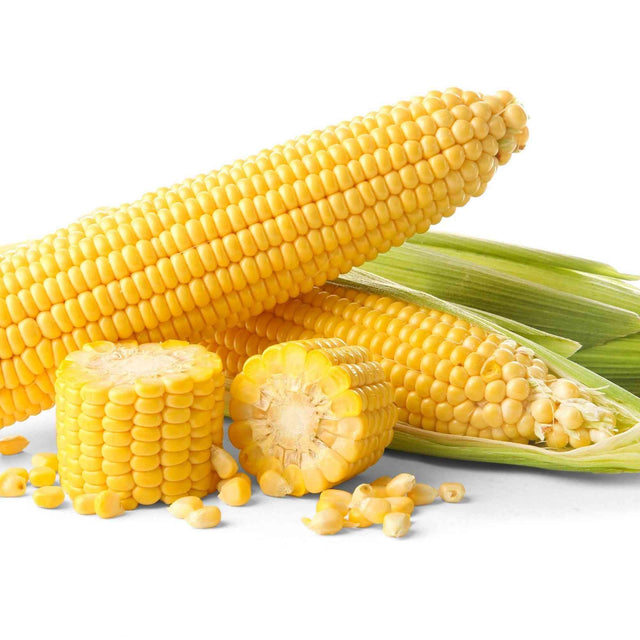
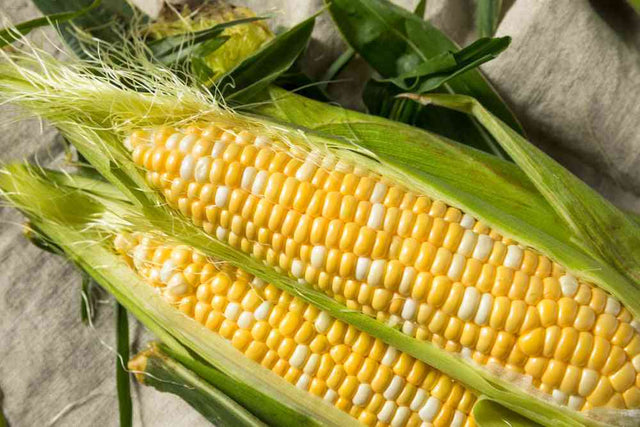
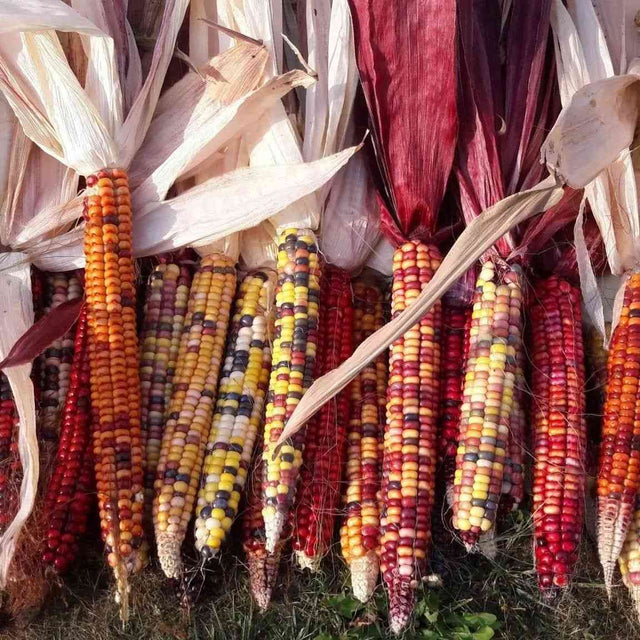
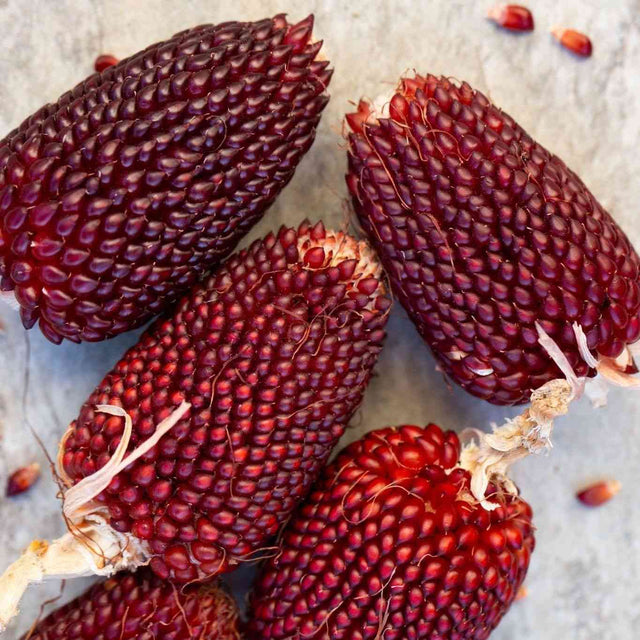
Plant corn after the soil is warm, in a compact block, at a depth that keeps the seed moist without burying it in cold ground. Most home-garden corn succeeds with seeds 1 to 2 inches deep, plants 8 to 12 inches apart, and at least three to four short rows side by side. Supersweet corn needs warmer soil than standard sweet corn, and dry-grain corn needs enough season to mature and cure.
The calendar is only part of the decision. Corn planting starts with the use, the genetic type, the days to maturity, the expected plant height, the water supply, and what other corn will be flowering nearby.
Our hardest corn seasons taught us that a seed packet cannot compensate for missing water, insecure land, or a planting design that sends most of the pollen into an empty walkway. This guide turns those lessons into measurements a gardener can use.
Choose the corn before choosing the planting date
Start with the crop’s intended harvest. Sweet corn is picked young at the milk stage. Popcorn, dent, flint, and flour corn remain in the field until the grain hardens. That difference changes the season length you need.
A 65-day sweet corn can fit into a much shorter window than a 110-day flour or flint corn, and the printed maturity number is not a promise. Cool soil, drought, nutrient stress, transplant shock, and short autumn days can all delay the crop. For dry grain, add time after physiological maturity for field drying or indoor curing.
| Question | Why it changes the planting plan |
|---|---|
| Is the corn sweet, dent, flint, flour, popcorn, or waxy? | Genetic type affects soil temperature, isolation, harvest stage, and food use. |
| How many days to maturity? | Long-season grain corn may not dry before frost in short-season regions. |
| How tall and vigorous is it? | Tall late corn needs wider spacing, stronger fertility, and protection from wind. |
| Will you save seed? | Seed stewardship requires more plants, better isolation, recordkeeping, and selection. |
| What corn grows nearby? | A neighboring field can release far more pollen than a small garden block. |
| Can you irrigate? | Uniform moisture is most important at establishment, tasseling, silking, and ear development. |
If the answer to these questions is unknown, delay the order rather than forcing the seed into a generic plan.
Give corn full sun, deep roots, and drainage
Corn is a high-light crop. Give it at least 8 hours of direct sun when possible. Six hours may keep plants alive, but shade can delay maturity, weaken stalks, and reduce ear development. Do not place tall corn where it will shade smaller crops unless that shade is deliberate.
Choose soil that drains after heavy rain but holds enough moisture to carry the crop through hot weather. Corn grows best in soil with organic matter and a pH roughly between 5.8 and 7.0. A soil test is more useful than a generic fertilizer schedule because it reveals pH, phosphorus, potassium, and sometimes micronutrient needs.
Avoid working wet soil into hard clods. The seedbed should be firm enough for good seed contact but not compacted. If you press a handful of moist soil and it smears instead of crumbling, wait before tilling.
On sandy coastal-plain soils, compost and mulch can improve water holding, but nitrogen and potassium may still move quickly below the root zone. Split fertilizer applications and irrigate deeply rather than feeding heavily all at once.
Measure soil temperature, not just air temperature
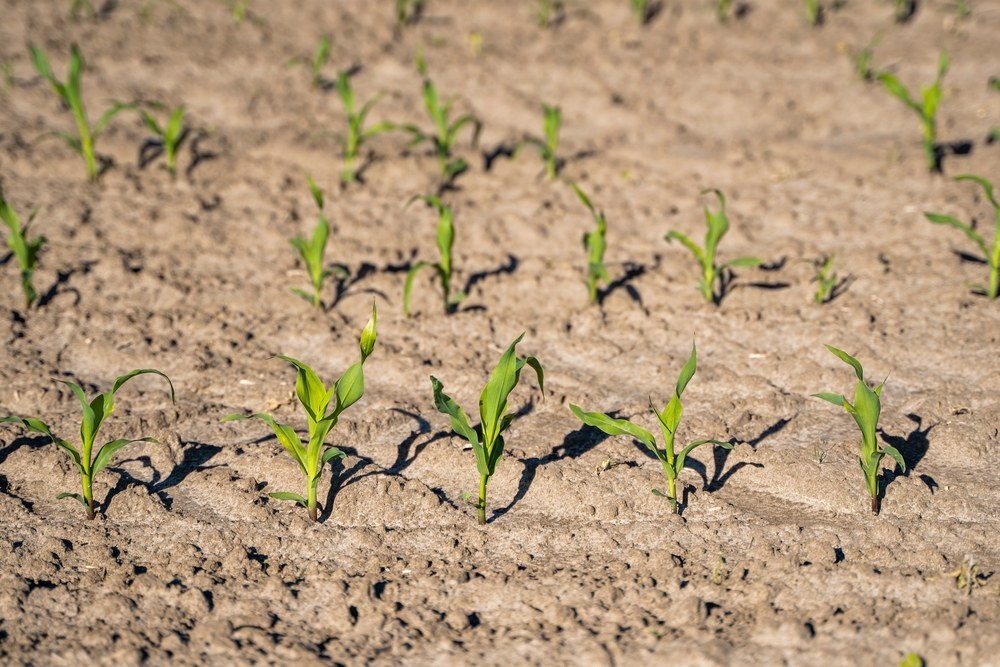
Take soil temperature 2 inches deep in the morning for several days. A warm afternoon can hide a cold seed zone. Corn seed absorbs water quickly after planting, and cold, saturated conditions can cause uneven emergence, rotting, or chilling injury.
| Corn class | Minimum working threshold | Safer home-garden target | Reason |
|---|---|---|---|
| Standard sugary sweet corn, su | About 50°F | Close to 60°F | Can germinate cooler than other sweet classes, but warm soil gives faster, more uniform emergence. |
| Sugary-enhanced, se | About 60°F | 60 to 65°F | Lighter seed and cool wet soil increase stand failure. |
| Supersweet, sh2, and many synergistic types | About 60°F | About 65°F | Shrunken seed absorbs more water and is especially vulnerable in cold soil. |
| Popcorn | About 60°F | 60 to 65°F | Uniform emergence helps the stand flower together. |
| Dent, flint, and flour corn | About 55 to 60°F for most home plantings | 60°F or warmer | Warmer soil shortens exposure to seed rot and early pests. |
These are practical thresholds, not guarantees. Treated commercial field-corn seed can be planted under colder conditions than many untreated heirloom packets. For untreated seed, wait for the warmer end of the range.
Do not soak corn seed overnight as a routine. Rapid water uptake can injure seed, especially in cold conditions. Good soil temperature and moisture are safer than trying to force germination in a cup.
Planting depth should follow soil texture and moisture
Plant most corn about 1 inch deep in cool, heavy, or reliably moist soil. In warm sandy soil that dries quickly, 1.5 to 2 inches can place the seed in steadier moisture. Supersweet seed should usually remain near 3/4 to 1 inch deep because it is less vigorous.
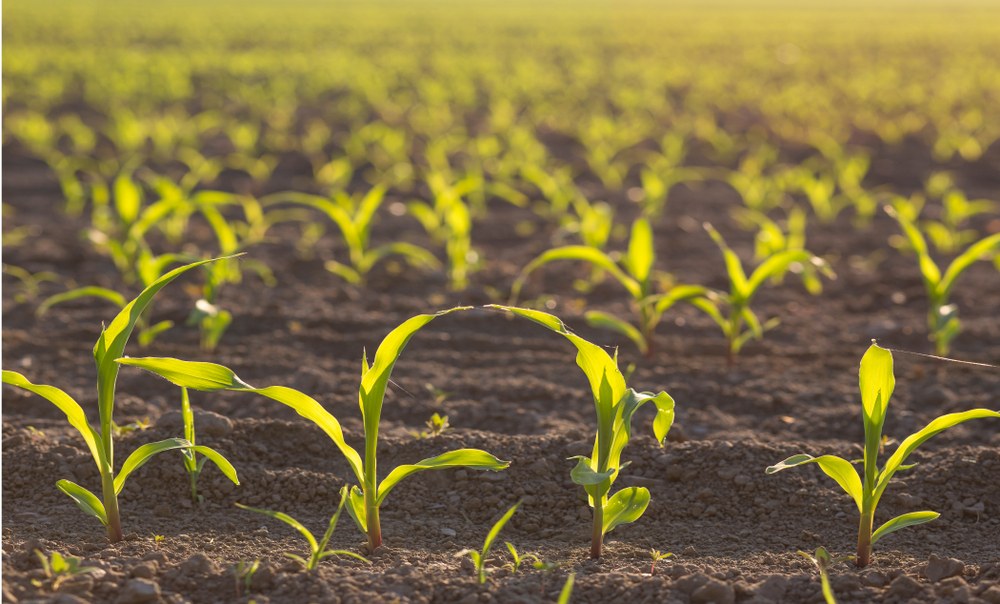
The goal is uniform depth across the block. One seed at 1 inch and the next at 3 inches may emerge days apart, creating uneven plants that tassel and silk at different times. Uneven emergence also produces small late plants that receive shade but contribute little pollen.
Close the furrow firmly enough to remove large air pockets. Seed must contact moist soil. Do not pack wet clay into a crust. In a hand-planted garden, cover the seed, press gently with the palm or the back of a hoe, and water the row deeply.
Plant two seeds per station when seed is old or germination is uncertain, then thin to the strongest single plant after emergence. Do not leave crowded pairs as a substitute for an even stand. Two plants inches apart compete for light, water, and nitrogen.
Corn spacing and block planting
Most home-garden corn performs well at 8 to 12 inches between plants and 24 to 36 inches between rows. Tight spacing increases competition and can produce smaller ears. Wide spacing reduces plant population and may weaken pollination in a small patch.
| Crop type | In-row spacing | Row spacing | Notes |
|---|---|---|---|
| Early compact sweet corn | 8 to 9 inches | 24 to 30 inches | Use fertile soil and steady water. Compact plants can stand closer. |
| Medium or tall sweet corn | 10 to 12 inches | 30 to 36 inches | Wider spacing supports larger stalks and ears. |
| Popcorn | About 8 inches | 18 to 24 inches | UMN guidance uses tighter rows, but home access may require more space. |
| Dent, flint, and flour corn | 8 to 12 inches | 30 to 36 inches | Use the wider end for tall, late, multi-eared, or lodging-prone varieties. |
| Three Sisters or hill systems | Varies by corn, bean, squash, mound, and tradition | Do not copy row spacing blindly | Choose a sturdy corn and wait until stalks are established before adding climbing beans. |
Useful block examples
| Layout | Plant count at one plant per station | What it is good for | Limitation |
|---|---|---|---|
| 4 rows by 4 plants | 16 | Very small fresh-eating experiment | Minimal pollen and far too few plants for strong seed maintenance |
| 4 rows by 8 plants | 32 | Small household sweet-corn block | Can fill ears if flowering is even, but still narrow genetically |
| 6 rows by 8 plants | 48 | Better pollination and a more useful harvest | Still small for long-term open-pollinated seed stewardship |
| 8 rows by 8 plants | 64 | Strong home block and meaningful selection opportunity | Below the ideal population for maintaining a highly diverse variety |
| 10 rows by 10 plants | 100 | Practical starting point for home seed saving | More plants are preferable for broad, diverse populations |
Arrange the long dimension across the prevailing wind when possible so pollen moves through multiple rows. In a square bed, this matters less than simply avoiding one isolated row.
Succession planting can extend harvest or separate pollen
For repeated sweet-corn harvests, sow the same variety every two weeks or when the previous planting has three to four leaves. Another option is planting early-, mid-, and late-season varieties at the same time.
Succession planting becomes more complicated when types must remain separate. A two-week difference in the printed days to maturity does not guarantee a two-week difference in flowering. Weather can compress or stretch development. The real goal is no overlap between pollen shed in one block and fresh silks in the other.
Record the first tassel, first pollen, first silk, peak pollen, and last fresh silk for every planting. After one season, you will have local flowering data that is more useful than catalog maturity numbers alone.
If you are surrounded by field corn, use its flowering stage as part of the planting decision. A few garden rows cannot overpower pollen from acres of corn upwind.
Water matters most before and during pollination
Keep the seed zone evenly moist until emergence. After plants establish, water deeply enough to wet the active root zone rather than sprinkling the surface every day. A common starting target is about 1 inch of water per week from rain and irrigation, increasing in hot, windy weather or sandy soil.
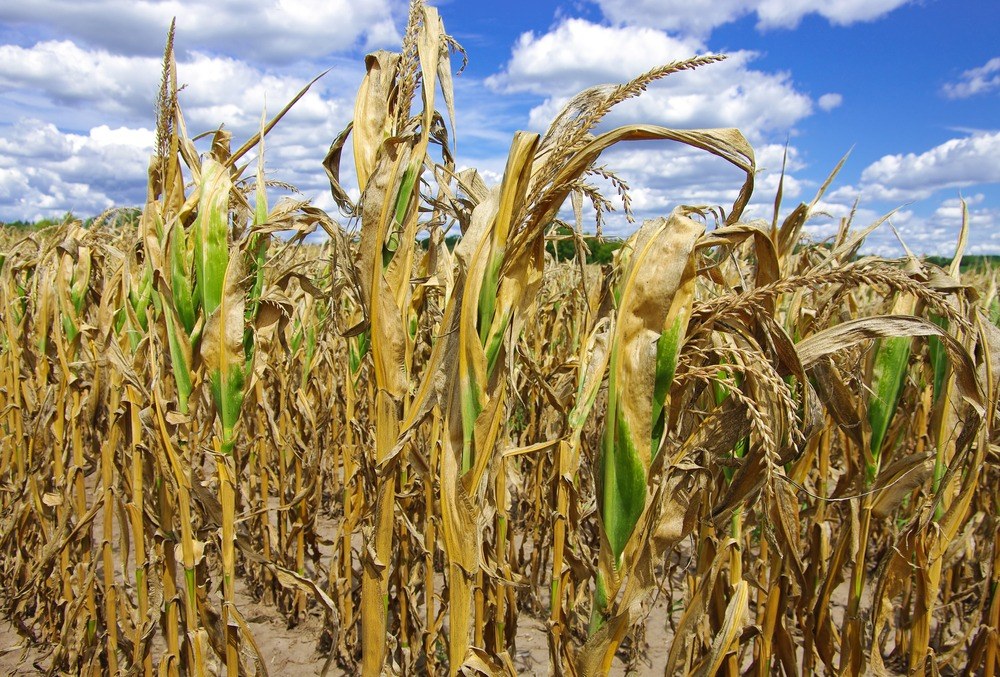
The critical window begins before tasseling. Ear size and potential kernel number are developing well before silks appear. Drought around the six-leaf stage, tasseling, silking, and early ear fill can reduce ear length, delay silks, and leave blank kernels.
Apply water at the soil line. Drip irrigation or a soaker hose reduces evaporation and keeps foliage dry, but place lines so the entire block receives water. A single line beside one edge row does not supply the interior.
Mulch after the soil is warm. Straw, shredded leaves, or clean plant residue can reduce evaporation and weeds. Do not pile wet mulch against young stalks where slugs and rot can develop.
Field check: Dig a narrow hole 6 inches deep after irrigation. Moisture should extend through the root zone, not stop in the top inch. Adjust duration before adjusting frequency.
Use a soil test and side-dress before the crop is hungry
Corn uses substantial nitrogen, but nitrogen alone is not a complete fertility plan. Correct pH first, then apply phosphorus and potassium according to a soil test. Excess phosphorus can build up in garden soil, and excess nitrogen can produce tall weak plants, delayed maturity, and lodging.
Incorporate finished compost before planting when the soil needs organic matter. Do not use fresh manure near food crops. Side-dress nitrogen when plants are about 12 inches tall or near the six-leaf stage, placing it 4 to 6 inches from the row and watering it in.
A technical reference point from university guidance is about 0.15 pound of actual nitrogen per 100 feet of row at side-dress for popcorn. Convert the fertilizer analysis rather than applying the same volume of every product. For example, 1.5 pounds of a 10 percent nitrogen fertilizer supplies 0.15 pound actual nitrogen. Local soil tests and previous manure or legume crops may justify less.
Do not pour fertilizer into the planting furrow or against the stalk. Salt and ammonia can injure seed and roots. Keep granular side-dress fertilizer away from the plant base.
Cultivate shallowly and leave healthy tillers alone
Corn develops important brace roots near the surface. Deep hoeing after the plants are established can cut roots and increase drought stress. Control weeds early with shallow cultivation, hand pulling, or mulch.
Side shoots at the base of a corn plant are called tillers. They are not the same as tomato suckers. Do not remove them as a routine. In fertile conditions they can contribute photosynthesis and sometimes ears. Cutting them can create wounds without improving the main stalk.
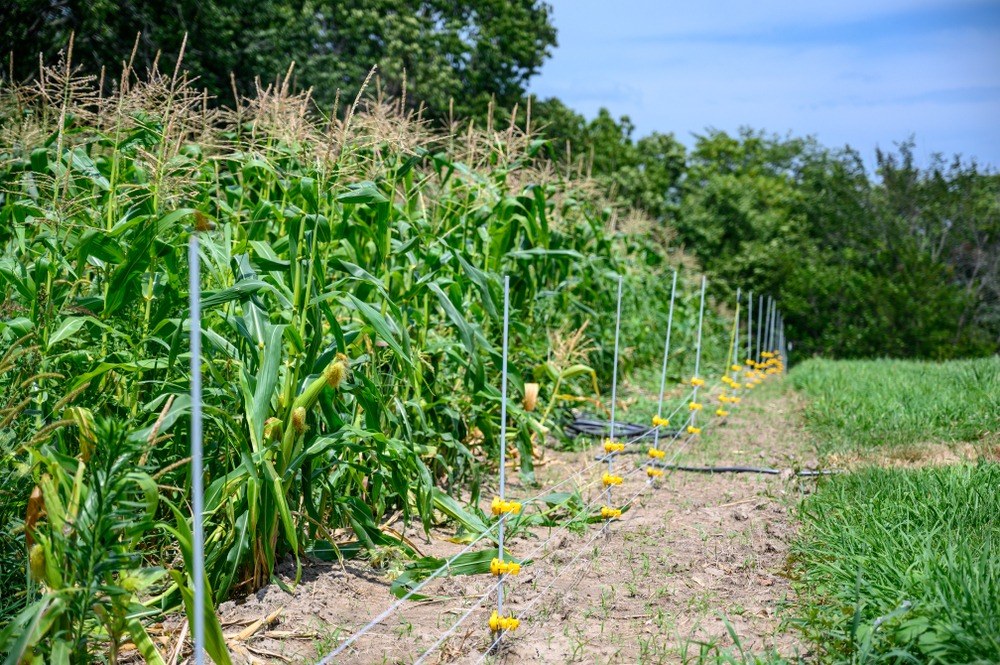
Wind lodging is more likely in overfertilized, shallow-rooted, waterlogged, or very exposed stands. Hill a small amount of soil around established stalks, maintain even moisture, and use perimeter string support for a small garden block if thunderstorms are common.
Three Sisters planting is not one universal companion-planting recipe
Corn, beans, and squash are central crops in many Indigenous food systems, including Haudenosaunee agriculture, but the way they are planted varies by nation, community, soil, climate, field scale, and variety. A short social-media diagram cannot carry all of that knowledge.
For a practical home trial, start with a sturdy, full-season open-pollinated corn. Plant enough corn together for pollination. Wait until stalks are 6 to 12 inches tall and firmly rooted before sowing a moderate climbing bean. Choose a squash with enough space to spread without smothering the young corn. Keep a separate control area so you can compare performance.
Modern supersweet corn, aggressive commercial pole beans, and giant vining squash may not cooperate in the same mound. The bean can pull down the corn, the squash can block cultivation, and close competition can reduce all three yields. Treat the planting as a managed polyculture, not a guaranteed trick.
Most importantly, do not present the Three Sisters as an anonymous gardening invention. Name the specific public source and community context when known, and do not claim private teachings.

Troubleshoot poor emergence and weak corn stands
| Symptom | Likely causes | What to check | Next action |
|---|---|---|---|
| No emergence | Cold wet soil, rotten seed, seedcorn maggot, birds, rodents, poor seed contact | Dig carefully for the seed and inspect the kernel and shoot | Wait for warmer soil, improve drainage, replant missing stations, protect from pests |
| Uneven emergence | Uneven depth, crusted soil, variable moisture, old seed, cold pockets | Compare seed depth and soil condition across the row | Replant large gaps quickly; do not leave late weak doubles |
| Pale green plants | Nitrogen shortage, waterlogging, cold roots, root damage | Soil moisture, pH, root color, fertilizer history | Correct drainage first, then side-dress according to soil test |
| Purple young leaves | Cold-limited phosphorus uptake, genetic color, root stress, true phosphorus deficiency | Temperature and whether color disappears as soil warms | Avoid automatic phosphorus application without a soil test |
| Plants cut at soil line | Cutworms | Search soil around damaged plants at dusk | Hand remove larvae, protect replacements, control weeds before planting |
| Ragged leaves and missing centers | Birds, slugs, armyworms, mechanical injury | Look for tracks, slime, frass, larvae, or torn whorl tissue | Identify the pest before treating |
| Plants fall after storms | Root lodging, wind, saturated soil, excess nitrogen, shallow roots | Whether stalks are broken or roots pulled sideways | Stand plants gently if roots remain attached; improve future spacing and drainage |
A practical 30-day corn planting calendar
| Timing | Task | Record |
|---|---|---|
| 2 to 4 weeks before planting | Choose type, maturity, block size, isolation plan, and water source. Test soil if needed. | Variety, lot, germination date, soil pH, nearby corn |
| 7 days before planting | Measure morning soil temperature at 2 inches for several days. Prepare a firm, weed-free seedbed. | Daily soil temperature and rainfall |
| Planting day | Sow uniformly at the correct depth, label the block, water thoroughly, and map rows. | Date, depth, spacing, seed count, weather |
| Days 5 to 10 | Check emergence and dig one missing station to diagnose before replanting. | Emergence percentage and cause of gaps |
| Days 10 to 18 | Thin doubles, replant only large gaps, and begin shallow weed control. | Final stand count |
| Days 18 to 30 | Water deeply, mulch after soil is warm, inspect for cutworms and root stress. | Water amount, pest notes, plant height |
| At 12 inches or six leaves | Side-dress nitrogen when soil test and crop condition support it. | Product, rate, placement, irrigation |
For seed crops, continue the record through tasseling, silking, selection, harvest, drying, shelling, storage, and germination testing.
Frequently asked questions
How deep should corn be planted?
Plant about 1 inch deep in heavy or moist soil and 1.5 to 2 inches deep in warm sandy soil. Keep supersweet seed near 3/4 to 1 inch deep.
How far apart should corn plants be?
Most home-garden corn should finish 8 to 12 inches apart, with rows 24 to 36 inches apart. Use closer spacing for compact early sweet corn and wider spacing for tall or late grain corn.
Can I plant corn in one row?
A single row often produces poorly filled ears because wind carries much of the pollen away. Plant at least three to four short rows side by side, with four or more preferable.
What soil temperature is best for planting corn?
Standard sweet corn can germinate near 50°F, but 60°F gives more reliable emergence. Sugary-enhanced, popcorn, and dry grain corn generally need about 60°F. Supersweet corn is safer near 65°F.
Should I soak corn seed before planting?
Not routinely. Corn absorbs water rapidly, and soaking can increase injury when soil is cold. Plant fresh seed into warm, moist soil instead.
Can I transplant corn?
Corn can be transplanted when started in deep cells and moved very young, but direct seeding usually produces a less disturbed root system. Transplants are most useful for short seasons or filling small gaps, not large blocks.
How often should I plant corn for a continuous harvest?
Sow the same sweet corn about every two weeks or when the previous planting has three to four leaves. Watch flowering overlap if different corn types must remain isolated.
Should I remove corn suckers?
No. Corn tillers are normal and can contribute energy or ears. Removing them creates wounds and does not reliably improve yield.
How much water does corn need?
About 1 inch per week is a common starting point, adjusted for heat, wind, soil, and rainfall. Uniform moisture is especially important before tasseling, during silking, and through early ear fill.
Can I plant corn, beans, and squash together?
Yes, but it requires compatible varieties, adequate spacing, fertility, and timing. Establish the corn first, use a moderate climbing bean, and give squash enough room. Do not assume one generic mound design works everywhere.
Sources and further reading
The horticultural measurements and cultural background in this guide were checked against the following public institutional sources. Cultural material is paraphrased and limited to information these institutions make public.