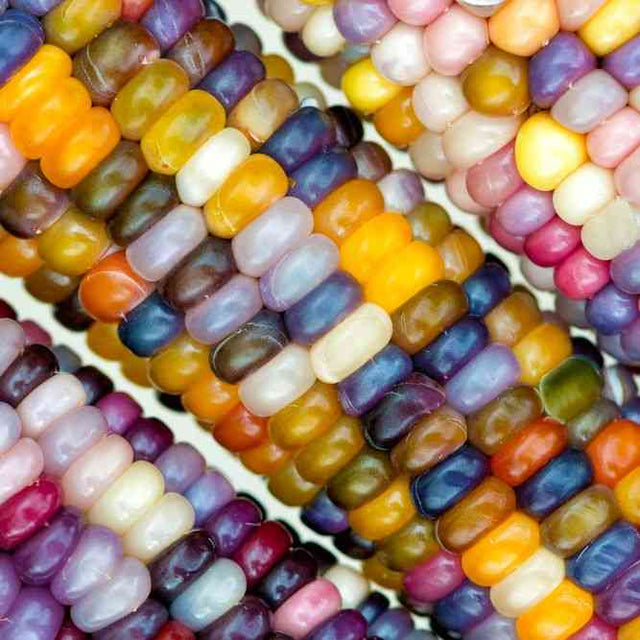
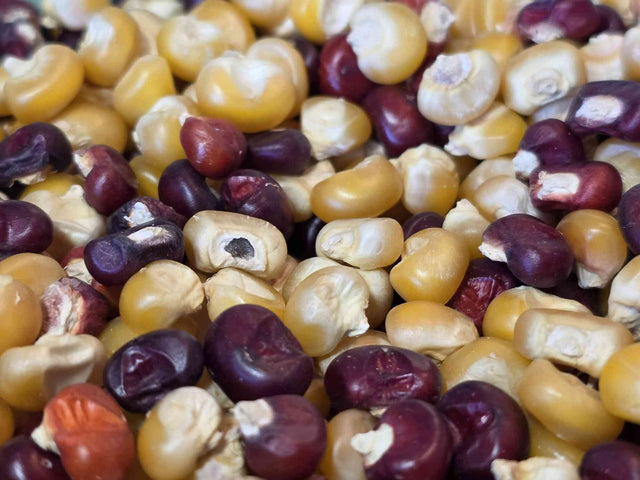
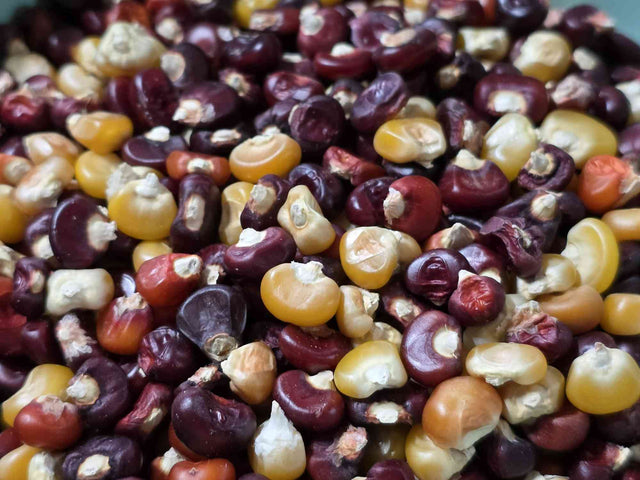
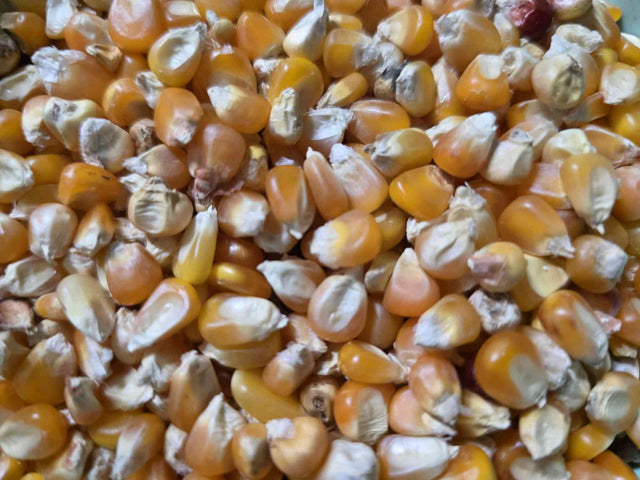
Glass Gem corn is an open-pollinated flint and popcorn-type corn grown to full dry maturity, not a sweet corn meant for boiling at the milk stage. Its translucent-looking kernels can carry blue, violet, rose, red, amber, gold, green, pearl, and nearly clear tones, often in combinations that change from ear to ear. The color is the first thing people notice, but the crop succeeds or fails on the same practical points as every other open-pollinated corn: enough plants, a useful pollination block, water during tasseling and silking, full dry-down, and disciplined seed selection.
Glass Gem became internationally recognizable after a photograph circulated widely online in 2012. That visibility brought thousands of gardeners into seed saving, but it also produced simplified origin stories, inflated claims, and a habit of treating one spectacular ear as if it represented the whole population. A reliable field guide has to separate the documented modern history from repeated internet lore and separate a decorative photograph from the work of maintaining a living corn population.
This guide covers the crop from seed to storage. It explains what Glass Gem is, what the historical record supports, how to plant it for complete ears, why neighboring corn can change the current harvest, how to evaluate popping and meal quality, and how to save seed without narrowing the population to one fashionable color pattern.

What Glass Gem is and is not
Glass Gem belongs with dry-grain corn. Its hard outer endosperm gives the mature kernel a flinty character, and some stocks pop when their moisture is balanced correctly. It is not a modern supersweet corn, and the dry ear should not be judged by the tenderness standard used for fresh sweet corn. If an ear is picked green and cooked like sweet corn, the result may be starchy or tough because the variety was selected for a different harvest stage.
The name describes a recognizable open-pollinated population, but seed sold under that name is not genetically identical from every supplier. Different growers may select for larger ears, deeper translucence, particular color families, stronger stalks, earlier maturity, or better popping. That is normal for an open-pollinated population, but it makes records important. A seed lot should be evaluated by its own plants and ears rather than by a viral photograph.
| Question | Practical answer |
|---|---|
| Kernel class | Flint/popcorn-type dry corn; individual seed stocks can vary in hardness and popping performance. |
| Fresh eating | Not the best choice when the goal is tender sweet corn on the cob. |
| Dry uses | Display, seed, parching, small popcorn, and cornmeal after the grain is fully mature and dry. |
| Plant habit | Tall warm-season annual grass; height, ear size, and maturity vary with stock and growing conditions. |
| Pollination | Wind-pollinated and highly outcrossing; plant in a block and isolate from other flowering corn when purity matters. |
| Seed saving | Save broadly from many plants and ears, with records for color, maturity, health, and field position. |
Documented history and what remains uncertain
The documented modern Glass Gem story centers on Oklahoma corn collector Carl Barnes and grower Greg Schoen. Public-radio reporting and Greg Schoen’s own account describe Barnes sharing a small quantity of rainbow-colored corn with Schoen in the mid-1990s. Schoen continued growing and selecting it, later increasing it in New Mexico and allowing it to cross with larger Pueblo and Spanish flour corns. The name Glass Gem became attached to a blue-green and pink-purple selection, and the seed moved through educational and seed-stewardship networks.
Native Seeds/SEARCH records that Schoen distributed seed from a 2008 crop to growers in several countries and that Bill McDorman used the corn in seed education. A photograph then went viral in 2012, creating extraordinary public interest. The modern commercial population therefore has a documented chain of selection and distribution rather than an unbroken single-variety history stretching unchanged into the distant past.
The more difficult part is provenance. Popular articles often repeat exact claims about Barnes’s ancestry, the tribal identity of every parent corn, or the age of the finished variety as if those details were settled. The public record is not that simple. Corns from Indigenous communities contributed to the breeding and selection history described by later stewards, but a modern retail name does not convert every story, seed, or community relationship into a public claim that any seller can repeat without qualification.
The responsible wording is specific: Glass Gem is a modern open-pollinated rainbow flint/popcorn population associated with Barnes, Schoen, later New Mexico grow-outs, and seed-stewardship networks. Its history is connected to Indigenous corn diversity, but the exact ancestry of a present commercial packet should not be overstated beyond the documentation attached to that seed lot.
Why the kernels look glasslike
The glasslike effect comes from the way light moves through the hard, smooth, mature kernel and its pigmented tissues. The colors are not paint on the surface. Pigments can be expressed in the pericarp, aleurone, and other kernel tissues, while the hard endosperm influences translucence and shine. Because different tissues have different genetic origins, the appearance of one kernel can reflect both the mother plant and the pollen that fertilized that ovule.
That is why one ear can carry many colors and why a cross can sometimes be visible in the current harvest rather than only in the next generation. The term xenia is often used for pollen effects visible in the endosperm. Gardeners do not need to memorize every genetic layer, but they do need to understand the consequence: pollen from a neighboring yellow field corn, white sweet corn, flour corn, or popcorn may change kernel appearance or eating quality on the ear that is forming now.

Color alone is not enough for selection. A brilliant ear from a weak, late, diseased, or poorly rooted plant may not be the best parent for the next generation. Keep color records, but also record emergence, stalk strength, tassel-silk timing, ear placement, dry-down, disease, and whether the grain performs in the kitchen.
Choose a site and a season long enough to finish
Glass Gem needs full sun, fertile soil, and enough frost-free time to reach dry-grain maturity. Days-to-maturity listings are estimates. Cool soil, drought, crowding, nutrient stress, and late planting can delay tasseling and drying. A seed packet that lists roughly 100 to 120 days should be treated as a planning range, not a guarantee that the ear will be storage-dry on that date.
Count backward from the first likely hard frost and leave time for field dry-down or protected indoor drying. In short-season climates, start with the earliest reliable lot available, plant as soon as the soil is warm enough for even emergence, and avoid placing the crop in a low, cold, poorly drained pocket. In humid regions, earlier planting can help the crop reach dry-down before prolonged autumn rain and tropical weather.
Do not place a seed-saving block beside a large commercial cornfield without understanding pollen movement. Large fields release far more pollen than a garden plot. Even when the nearest corn looks distant, prevailing wind, elevation, and the size of the pollen source matter.
Plant a pollinating population, not a display row
Corn is wind-pollinated. A long single row may grow tall and green but still set incomplete ears because much of its pollen blows away from receptive silks. Plant at least four short adjacent rows, and use a near-square block when possible. For a small home planting, about 8 to 12 inches between plants and 24 to 36 inches between rows is a practical starting range, adjusted for soil fertility, irrigation, and the vigor of the seed lot.

Plant extra seed, then thin to an even final stand after emergence. Uneven plants become uneven tassels and silks. If half the planting emerges a week late, the later plants may miss the strongest pollen shed. Mark weak areas and investigate crusting, cold soil, birds, rodents, seed decay, compaction, or inconsistent planting depth.
A population grown for display can be smaller than a population grown to maintain seed. Those are different goals. A dozen plants may produce a few beautiful ears, but repeated seed saving from very few parents increases drift and inbreeding. When serious maintenance is the goal, use a much broader stand and a pollination plan rather than assuming every planted kernel contributes equally.
Feed and water the crop by growth stage
Start with a soil test. Corn needs available nitrogen, but excessive nitrogen without enough potassium, water, and root volume can produce tall plants that lodge. Incorporate mature compost before planting when soil structure needs improvement, then side-dress nitrogen according to the soil test and the growth of the crop. Keep fertilizer several inches from young stalks and water it into the root zone.
The most important water window begins before tasseling and continues through silking and early grain fill. Drought can delay silks while pollen shed continues, leaving silks receptive after the pollen supply has faded. Water deeply enough to moisten the active root zone rather than sprinkling only the soil surface. Mulch after the soil has warmed, but keep heavy mulch away from the stalk base in wet climates.
Afternoon leaf rolling can be a temporary response. Leaves that remain rolled the next morning, delayed silks, firing lower leaves, or ears that stop expanding indicate more serious stress. Once an ovule misses pollen or a young kernel aborts, later rain cannot restore it. Protect the crop before the damage appears on the finished ear.
Understand current-ear crossing and isolation
Each potential kernel has its own silk. A pollen grain must land on that silk while it is receptive and grow down to fertilize the ovule. Iowa State notes that silks remain viable for roughly ten days under favorable conditions, while drought can delay emergence and shorten the useful overlap with pollen shed. Fresh green silks should be present while anthers are releasing pollen.

Isolation protects both the next generation and, in some cases, the current ear’s visible or culinary traits. Home-garden guidance often recommends hundreds of feet between different corn types, while seed production may require substantially more distance depending on purity standard, field size, wind, and surrounding acreage. Time isolation can work only when the tassel and silk windows truly do not overlap, not merely when planting dates differ by a week.
Controlled pollination is the safer option when the block is small, nearby corn is unavoidable, or a particular family must be preserved. Cover ear shoots before silks emerge, collect pollen from selected tassels, apply a mixed pollen sample to fresh silks, and re-cover the ear. Use pollen from many parents rather than repeatedly crossing a handful of favorite plants.
| Situation | Main risk | Better response |
|---|---|---|
| One long row | Pollen blows away from many silks | Reconfigure into at least four short adjacent rows. |
| Another corn tassels at the same time | Current-ear quality and saved-seed genetics can change | Use greater distance, true time isolation, or controlled pollination. |
| Fresh silks appear after pollen shed | Blank kernels or bare tips | Prevent drought and crowding; hand-pollinate while viable pollen remains. |
| Only a few spectacular plants are saved | Genetic narrowing and drift | Select many sound ears from many representative plants. |
Harvest and dry Glass Gem correctly
Leave Glass Gem on the stalk until the husks are brown and papery and the kernels are hard. If autumn rain, hurricanes, rodents, birds, or ear rots threaten the crop, harvest mature ears and finish drying under cover. Pull the husks back or remove them, spread ears in a single layer or hang them with space between, and move air through the room. A closed tote, plastic bag, or deep pile traps moisture.

Do not shell immediately just because the husk looks dry. Test kernels near the tip, middle, and base. A fully dry kernel is hard and should not dent under a thumbnail. The cob also holds moisture. If shelled grain feels cool, soft, or damp in a closed jar after several hours, return it to open-air drying.
For seed, dry gently. High heat can reduce germination even when the kernel looks normal. Label the ears while they are still connected to the field record. Once a pile of colorful ears is mixed, family, row, and selection information cannot be recreated from appearance.
Evaluate popping, parching, and meal quality
Glass Gem is edible, but the kitchen result varies by seed lot and selection history. Some lots pop into small, crisp pieces; some produce more unpopped kernels; some are more useful for parching or grinding. The same ear that wins a color contest may not be the best food ear. Keep a separate culinary score.
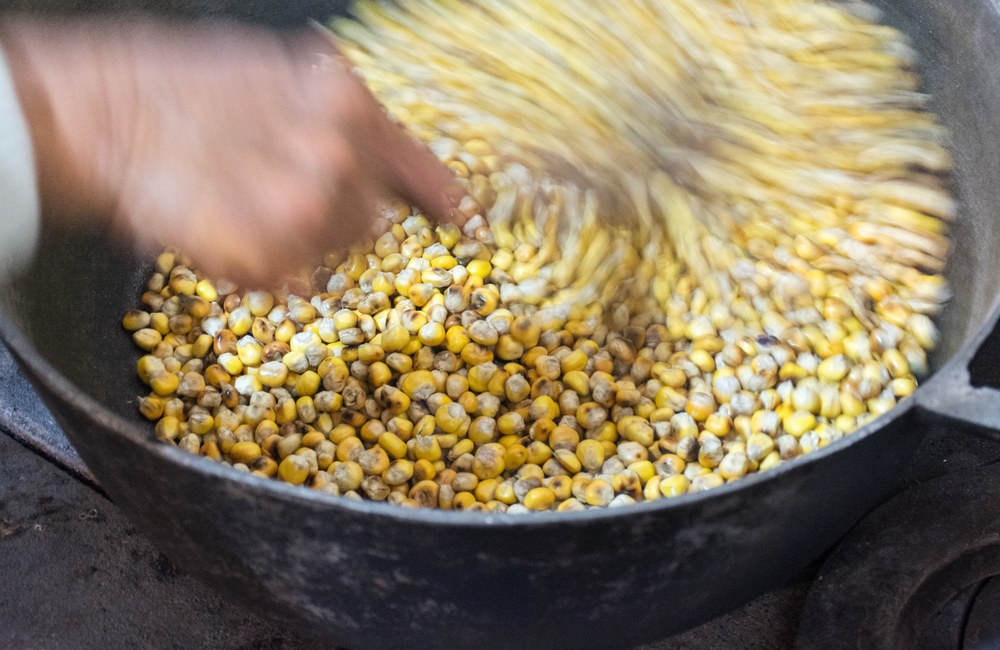
For popping, shell a representative sample and condition it in an airtight jar. University of Minnesota Extension gives about 13 to 14 percent moisture as the ideal range for popcorn. Without a moisture meter, pop twenty kernels once a week. Tough or chewy popped kernels are often still too moist; many unpopped kernels may be too dry, too wet, damaged, or genetically poor at popping.
For meal, mill a clean sample at two settings. Record aroma, particle size, bran texture, cooking time, and flavor. Glass Gem can produce a visually interesting meal, but mixed kernel colors may yield a muted or variable finished color. If a consistent meal color matters, select and mill color families separately while preserving a broad seed population elsewhere.
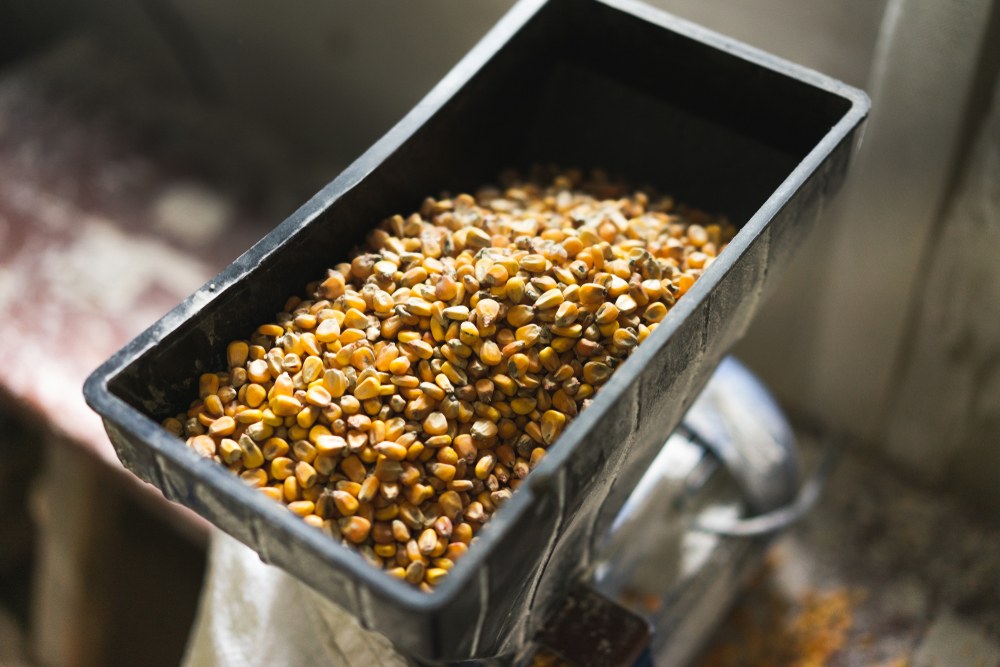
Do not use moldy, musty, insect-contaminated, or questionably stored grain for food. Bright color does not make damaged grain safe. When corn will be nixtamalized, milled, or fed to others, start with a clean, dry, traceable lot.
Save seed without shrinking the population
The first rule is population. Organic Seed Alliance’s sweet-corn seed production reference recommends at least 200 plants to maintain a highly outcrossing corn population. A home gardener may not be able to reach that number every year, but the biological problem does not disappear because the garden is small. Use as many healthy parents as possible, avoid saving from a few neighboring plants, and consider alternating seed increase with a larger trusted grower when long-term maintenance matters.
Select plants before opening the ears. Mark strong, timely, healthy plants with good root anchorage and useful ear placement. Remove severely off-type, diseased, or very late plants before they shed pollen when the goal is to maintain a defined stock. At harvest, evaluate ear health, fill, maturity, kernel hardness, color range, and the proportion of ears that match the population.

Shell seed ears separately at first. Count how many plants and ears contributed. Then combine balanced quantities from many families rather than dumping every kernel from the largest ear into the seed lot. A family with a small ear may carry early maturity, stalk strength, or a rare color pattern worth retaining.
Store a reference sample from each generation. Record the source, year, location, plant count, isolation method, weather, selection goals, germination result, and any deliberate change in the population. If you select only for blue-green kernels for several years, say so. Selection creates a new trajectory; honest records are part of responsible stewardship.
Run a useful color and performance trial
A useful trial separates visual traits from agronomic and culinary traits. Number at least twenty representative ears and score them before shelling. Photograph both sides of each ear in the same light with a label in the frame. Then connect that ear to the plant record and a kitchen sample.
| Trait | Simple score | What the score tells you |
|---|---|---|
| Emergence | Days to 50 percent emergence and final stand count | Cold tolerance, vigor, and planting uniformity. |
| Flowering | First tassel, first silk, and days of overlap | Pollination risk and maturity consistency. |
| Plant strength | Lodged, leaning, or upright after storms | Root anchorage and stalk strength. |
| Ear fill | Percent filled and tip blank length | Pollination and early grain-fill performance. |
| Color range | Count dominant and secondary color families | Whether selection is maintaining or narrowing diversity. |
| Popping | Popped kernels out of twenty and texture score | Food performance at a standardized moisture. |
| Meal | Grind effort, aroma, cooked texture, and flavor | Whether the lot deserves culinary selection. |
Do not compare one seed lot planted on poor ground with another lot planted in a richer bed and call the difference genetic. Randomize or alternate rows, keep planting depth and spacing consistent, and record soil and water differences. A field record is useful only when it explains the conditions that produced the result.
Troubleshoot common failures
| Symptom | Likely causes to investigate | Next-season correction |
|---|---|---|
| Sparse stand | Cold soil, birds, rodents, crusting, seed decay, uneven depth | Wait for warm soil, protect seed, plant evenly, and run a germination test. |
| Blank ear tips | Late silks, drought after pollination, crowding, weak pollen coverage | Use a block, water before and after silking, and reduce competition. |
| One side of ear blank | Lodging, buried silks, uneven pollen interception | Improve plant support and block shape; inspect storm damage. |
| Ears mold while drying | Harvested too wet, poor airflow, deep piles, humid room | Sort, space, ventilate, and discard moldy grain. |
| Poor popping | Wrong moisture, damaged kernels, cross-pollination, weak popping selection | Condition grain, isolate the crop, and select using measured pop tests. |
| Color becomes less diverse | Saving from too few ears or selecting one pattern too aggressively | Increase population and rebalance seed contributions. |
Use the related guides on ear fill, heat and drought, corn diseases, drying, and seed saving for a full diagnosis. The finished ear is evidence, but the cause often occurred weeks earlier.
Regional notes for humid and short-season gardens
In the humid Southeast, the crop often has enough heat but faces heavy rain, leaf disease, earworms, hurricanes, and slow autumn drying. Plant early enough to move dry-down out of the wettest late-season window, keep rows open enough for airflow, scout ear tips, and move mature ears under cover before a prolonged wet period. Do not confuse high annual rainfall with reliable water during pollination. Sandy soils can dry quickly between storms.
In short-season northern gardens, maturity is the main limit. Use the earliest known stock, choose the warmest well-drained site, plant when soil is near 60°F, and be prepared to finish drying indoors. A late, beautiful ear that never reaches hard-kernel maturity is not useful seed.
In dry western gardens, irrigation and wind exposure determine success. Glass Gem can tolerate heat when roots have water, but it is not automatically adapted to every dryland system. Do not copy Hopi deep-hole planting or another place-specific Indigenous method without the soil, rainfall pattern, seed, and knowledge that make that system work.
What our own corn work changed for us
In 2019, severe heat and insecure access to land nearly cost us corn and other ancestral crops. The lesson was not that the seed lacked resilience. The lesson was that seed cannot be separated from water, time, land access, and infrastructure. A rare line still fails when the people caring for it cannot reach the field or build what the crop needs.
When we were able to plant corn on land we could tend directly in 2022, much of it still required hand pollination. That changed the way we write corn guidance. We do not treat pollination as a sentence near the bottom of a planting chart. We treat it as the center of the crop, because every ear records whether the planting, weather, population, and care actually worked.
Glass Gem draws people in through beauty. The deeper responsibility begins after the photograph: grow enough plants, document the crop, protect the pollen, test the food, and pass forward a population rather than a handful of isolated colors.
Frequently asked questions
Can Glass Gem corn be eaten fresh?
It can be tasted at the milk stage, but it is not a sweet-corn variety and usually becomes starchy and firm. Its strongest uses begin after full dry maturity.
Is Glass Gem a popcorn?
It is commonly described as a flint and popcorn-type corn. Many lots pop, but expansion and texture vary. Run a measured pop test and select from the best-performing families if popping matters.
Why are my ears not as colorful as the famous photograph?
Seed lots differ, and color is affected by the parents, pollen, selection history, and sample size. One viral ear is not the average ear of every population.
Will nearby corn change the colors this year?
It can. Because kernel tissues include products of fertilization, pollen may affect visible or culinary traits on the current ear, and it will affect the genetics of saved seed.
How many plants do I need to save seed?
Use as many as possible. Serious maintenance of highly outcrossing corn is commonly based on populations of at least about 200 plants. Very small home populations require controlled pollination, careful balancing, or periodic increase with a larger trusted population.
How far should Glass Gem be from other corn?
The correct distance depends on the purity goal, size of nearby fields, wind, terrain, and whether flowering overlaps. Home-garden recommendations often begin around 300 feet, while seed-quality maintenance may require much more or controlled pollination.
When is Glass Gem ready to harvest?
Harvest when the husks are dry and brown and the kernels are hard. If weather threatens, harvest mature ears and finish drying with strong airflow under cover.
Why does my Glass Gem not pop well?
Check moisture first. Popcorn generally performs best near 13 to 14 percent moisture. Cross-pollination, kernel damage, weak popping genetics, and overly soft or overly hard grain can also reduce expansion.
Should I save only the brightest kernels?
No. Select whole plants and ears first, then preserve broad contributions across many sound families. Saving only bright kernels from one or two ears can rapidly narrow the population.
Can I call every rainbow corn Glass Gem?
No. Many multicolored corns exist. Glass Gem is a named open-pollinated population with a documented modern selection and distribution history.
Sources and further reading
- KPBS Public Media: Glass Gem Corn, Poster Child for the Return to Heirloom Seeds
- Native Seeds/SEARCH: Glass Gem Corn history and cultivation notes
- University of Minnesota Extension: Growing Popcorn in Home Gardens
- University of Minnesota Extension: Growing Sweet Corn in Home Gardens
- Iowa State University Extension: The Birds and Bees of Corn Pollination
- Organic Seed Alliance: Sweet Corn Seed Production Quick Reference
- Organic Seed Alliance: A Seed Saving Guide for Gardeners and Farmers
- Organic Seed Alliance: Seed Crop Record