Every potential corn kernel has its own silk. Pollen leaves the tassel, moves on the wind, lands on a receptive silk, and grows a pollen tube to one ovule on the cob. When that chain fails, the ear shows the record: scattered blank spaces, an unfilled tip, crooked rows, or a small nubbin.
Good corn pollination is therefore not one event. It depends on plant population, block shape, flowering overlap, pollen supply, fresh silks, water, temperature, wind, insect injury, and the absence of incompatible corn pollen.
This guide explains block planting, tassels and silks, hand pollination, isolation by distance and time, poor kernel set, and how to keep open-pollinated varieties genetically healthier.
Tassels produce pollen and silks receive it
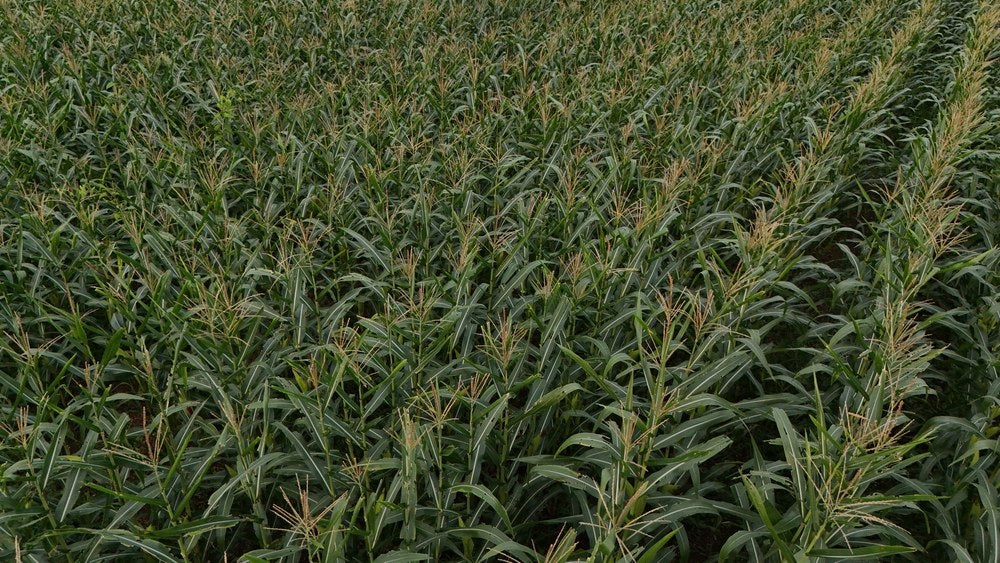
The tassel at the top of the plant is the male inflorescence. Its anthers release millions of pollen grains over several days. The ear shoot lower on the stalk is the female inflorescence. The silk bundle is made of elongated stigmas, one connected to each potential kernel.
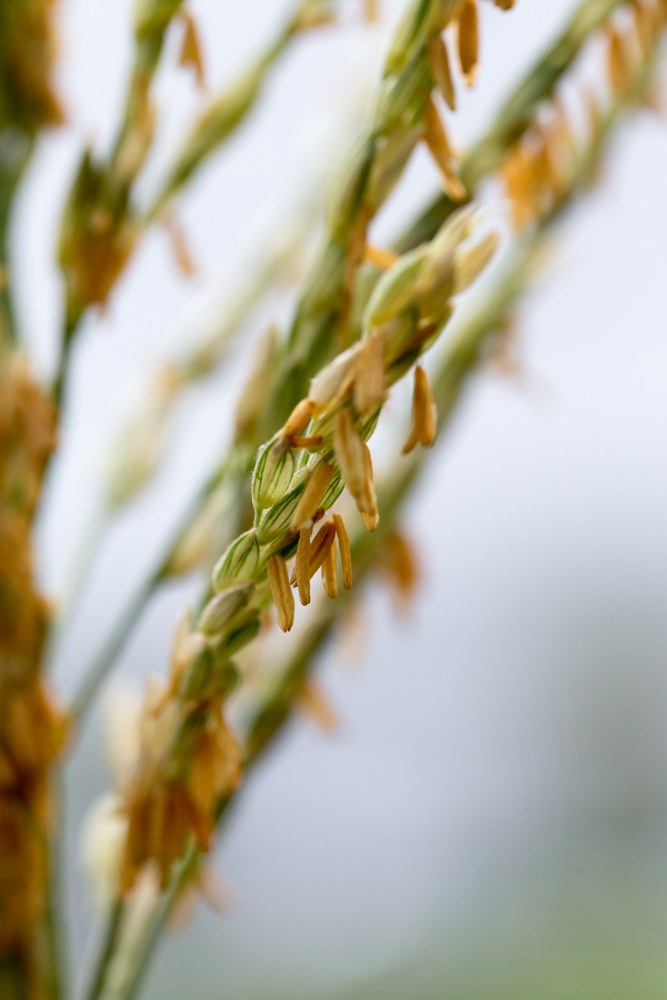
A pollen grain that lands on a receptive silk germinates and grows a tube down the silk to the ovule. Fertilization creates one kernel. If a silk is not pollinated, that kernel position remains blank.
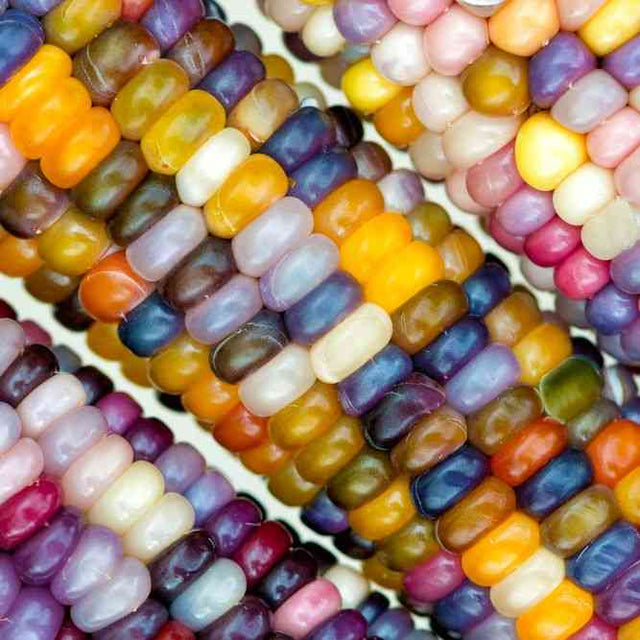
This is why a corn ear is a pollination map. A well-filled ear records many successful pollen events. Random gaps can reflect incomplete pollen capture, insect-damaged silks, or stress. A blank tip often means the last silks emerged after the strongest pollen shed had passed.
Pollen comes from many plants in the block. Corn is not mainly self-pollinated by its own tassel. The wind moves pollen among neighboring plants, which is one reason a genetically diverse open-pollinated variety needs a substantial population.
Pollen shed and silk emergence must overlap
A corn plant usually begins shedding pollen around the time silks emerge, but the two processes do not always stay synchronized. Pollen shed often lasts 5 to 8 days for an individual plant, while a whole block may release pollen for 10 to 14 days because plants differ slightly in development.
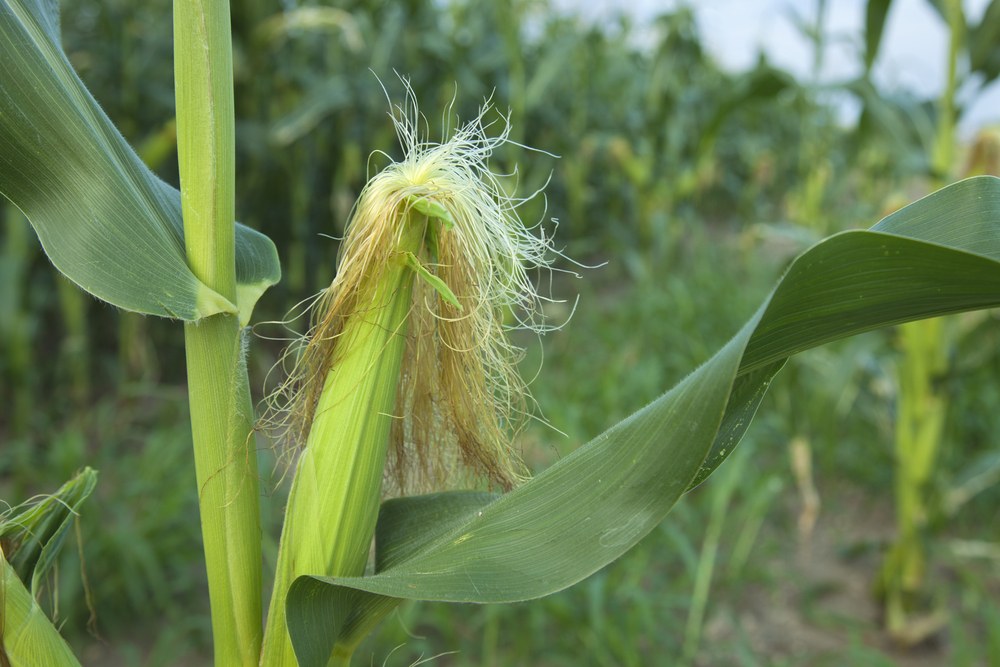
Fresh silks are moist and receptive. As they age and dry, receptivity declines. Most silks can receive pollen for several days, but the strongest kernel set occurs when fresh silks meet abundant pollen.
Drought commonly delays silk emergence more than tasseling. The tassel may release pollen while the ear shoot is still waiting for water. By the time silks emerge, the block’s best pollen window is over. This interval is called the anthesis-silking interval, and a long interval is a clear sign of stress.
| Field stage | What to look for | Management |
|---|---|---|
| Tassel visible but closed | Branches emerging, no loose anthers or dusting pollen | Confirm irrigation before the reproductive window begins |
| First pollen | Anthers extended and yellow dust released when tassel is tapped | Begin daily flowering records |
| First silk | Fresh moist strands emerging from ear tips | Check the whole block, not one plant |
| Peak overlap | Most plants shedding and most ears carrying fresh silks | Protect water supply; this is the best hand-pollination window |
| Late silk | New silks continue after pollen has sharply declined | Expect blank tips or incomplete set unless another pollen source remains |
| Brown dry silk | Silks have completed pollination or aged out | Do not use silk color alone to judge harvest maturity |
Why block planting fills ears better than one long row
Corn pollen is relatively heavy and falls quickly, but wind can carry it away from a narrow row. In a compact block, plants surround one another, so pollen falling in different wind directions is more likely to reach silks.
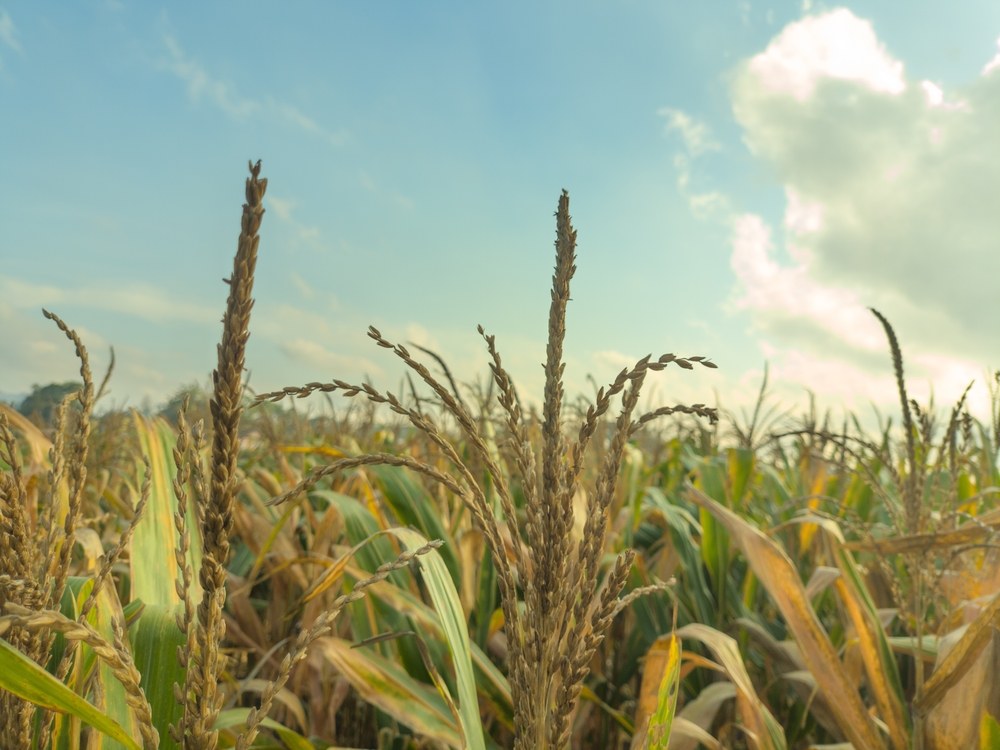
Plant at least three to four short rows side by side. Four or more rows are better. A 4-by-8 block has 32 plants and generally pollinates more reliably than one row of 32 plants. A 6-by-8 block is stronger still.
Even spacing matters. A dense clump followed by a large gap creates competition inside the clump and weak pollen coverage at the gap. Thin to one plant every 8 to 12 inches and replant only large gaps early enough for replacements to flower with the main stand.
Edge plants can receive less pollen and more wind. If saving seed, do not use only the most visually perfect central ears. Include many healthy plants across the block while avoiding obvious off-types and disease.
Layout test: Draw the block on paper and mark the direction of prevailing summer wind. If most pollen can leave the planting after crossing one row, the block is too narrow.
Heat, drought, waterlogging, and nutrition can interrupt pollination
Pollination failure is often blamed entirely on wind, but plant stress is just as important. Corn begins determining ear size and potential kernel number before silks appear. Drought, severe heat, root injury, or nitrogen shortage can reduce the ear before the pollen window begins.
Drought
Drought slows silk growth, rolls leaves, reduces photosynthesis, and can shorten pollen shed. Water deeply during the two weeks before tasseling, through silking, and during early kernel development.
Heat
Extreme heat can dry silks quickly and reduce pollen viability, especially when combined with low humidity and drought. The crop may recover from a hot afternoon if roots have water, but repeated hot nights and dry soil compound the stress.
Waterlogging
Saturated soil excludes oxygen and damages roots. Plants may look drought-stressed even though the soil is wet because injured roots cannot supply the canopy. Improve drainage rather than adding more water.
Excess nitrogen or crowding
Very dense, overfed plants can grow tall and weak, lodge, and compete for moisture. The goal is a uniform stand, not the maximum number of stalks a bed can hold.
Herbicide or root injury
Twisted growth, shortened ears, or delayed silks can follow herbicide drift or cultivation damage. Record what happened before tasseling instead of diagnosing only from the harvested ear.
Read missing kernels as evidence
| Ear pattern | Most likely explanation | Other possibilities | What to change next season |
|---|---|---|---|
| Scattered blank kernels throughout ear | Incomplete pollen capture | Silk feeding, uneven flowering, severe weather | Wider block, more plants, hand pollination, steady water |
| Blank ear tip | Tip silks emerged late after peak pollen | Drought, heat, nutrient stress, variety tendency | Water before silking, improve stand uniformity, select better synchronized plants |
| Only one side filled | Localized silk damage or uneven pollen exposure | Earworm feeding, mechanical injury, tight husk problem | Inspect silks during flowering and improve block shape |
| Very small nubbin ear | Early stress reduced ear size | Crowding, root injury, low fertility, shade | Correct spacing, fertility, water, and sunlight |
| Kernels begin then abort | Stress after fertilization | Severe drought, disease, leaf loss, poor carbohydrate supply | Protect water and leaf area during early grain fill |
| Mixed color or texture in sweet corn | Cross-pollination by another corn type | Seed mixture or mislabeled seed | Increase isolation and verify nearby flowering corn |
| Popcorn pops poorly | Crossing or wrong kernel moisture | Variety selected more for appearance than expansion | Isolate, cure evenly, test moisture, and save from the best popping ears |
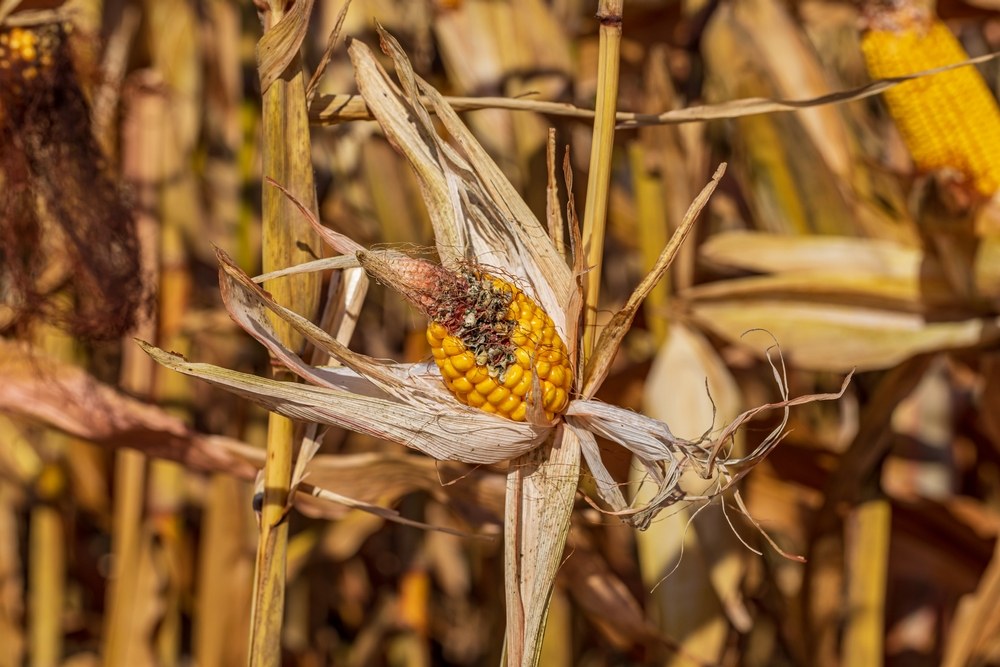
Do not use one ear to diagnose an entire planting. Open several ears from different parts of the block. A problem concentrated on one edge suggests wind, shade, or external pollen. A problem across the whole block suggests weather, timing, nutrition, or stand design.
How to hand-pollinate corn in a home garden
Hand pollination can improve kernel set in a small block and can help keep selected ears within a known pollen population. It is not a substitute for planting enough corn, but it is useful when weather is poor, the block is small, or a rare seed increase needs close attention.
- Watch for fresh anthers and fresh silks. Begin when tassels release visible pollen and ear shoots carry moist new silks.
- Work after dew dries. Late morning is often best, before heat and wind become strong. Wet pollen clumps and does not move well.
- Collect from many tassels. Bend tassels from multiple healthy plants over a clean paper bag and tap gently. Do not collect from one plant if maintaining a population.
- Apply immediately. Dust a small amount of mixed pollen onto fresh silks. Pollen loses viability quickly, especially in heat.
- Repeat for two or three mornings. New silks continue to emerge. Repeating covers more kernel positions.
- Label selected ears. Record date, pollen source block, ear row, and plant number when identity matters.
Use paper, not sealed plastic, for fresh pollen. Moisture and heat build quickly in plastic and can destroy viability. Never store collected pollen in a hot vehicle or direct sun.
For simple supplemental pollination, gently shaking the stalks during pollen shed can help in a small protected garden, but it does not control which plant supplied the pollen.
Bagging tassels and ear shoots for controlled crosses
Controlled corn pollination requires preventing unknown pollen from reaching the silks. Seed growers use specialized shoot bags over the developing ear before silks emerge and tassel bags to collect pollen.
- Identify an ear shoot before silks emerge and cover it with a breathable shoot bag.
- Cover the chosen pollen parent tassel before the morning collection, after the tassel has begun shedding.
- The next morning, tap pollen into the tassel bag after dew dries.
- Remove the shoot bag, trim overlong silks if the protocol calls for it, apply pollen, and immediately cover the ear with the labeled tassel bag.
- Write the female plant, male population, date, row, and plant number on the bag and field map.
- Leave the bag until silks are no longer receptive, then protect the ear from birds and insects as needed.
Controlled crosses are a breeding tool. They should not be used to make public claims about protected community lines without permission and documentation. A clean cross record does not transfer cultural authority.
Isolation by distance: there is no single magic number
University home-garden guidance often recommends about 300 feet from a nearby cornfield and greater distances between incompatible sweet corn classes. Other extension recommendations use 500 feet or 400 yards. Professional seed production may require much more.
These numbers differ because pollen risk depends on the size of the contaminating source, wind direction, terrain, tree lines, flowering overlap, and the purity standard. Ten plants 300 feet away are not the same as 100 acres upwind.
| Goal | Practical isolation approach | Limit |
|---|---|---|
| Fresh sweet corn quality | Grow one compatible sweet class, or separate incompatible corn by several hundred feet and flowering time | Nearby field corn can overwhelm a small garden block |
| Home popcorn quality | Keep 300 feet or more from other corn when possible and avoid flowering overlap | Crossing may reduce popping even when ear appearance looks normal |
| Casual home seed saving | Use the greatest distance available, barriers, prevailing-wind placement, and time isolation | Seed may still contain some crossing; label it honestly |
| Variety maintenance | Use larger distances, border rows, controlled hand pollination, or one variety per season | Requires field records and a population large enough to preserve diversity |
| Foundation or community stewardship | Follow the agreed protocol of the community or seed program, which may exceed garden guidance | Do not substitute a generic internet distance for a relationship-based stewardship plan |
Barriers such as dense woods, buildings, and tall hedges can reduce pollen movement but do not guarantee purity. Corn pollen can move over and around them.
Isolation by flowering time works only when the flowers do not overlap
Catalog days to maturity refer to harvest, not necessarily pollen shed. Two varieties listed 14 days apart can still tassel together. Weather may also speed one planting and slow another.
A practical method is to plant the longer-season corn first, then delay the shorter-season corn by two to three weeks. For popcorn and sweet corn, UMN recommends planting popcorn first and waiting about three weeks before sweet corn. The goal is for the popcorn to finish tasseling and silking before the sweet corn begins.
Do not assume the schedule worked. Record actual first and last pollen and silk dates. If fresh silks in one block overlap any pollen in the other, crossing is possible.
Time isolation is strongest when combined with distance. It is weakest in a season with uneven emergence, drought-delayed silks, or a second tiller crop that flowers later than expected.
Population size protects genetic diversity
Corn is one of the easiest crops to save badly. A few ears may germinate next year and still represent a narrow slice of the original population. Repeated small grow-outs can cause inbreeding, loss of rare traits, uneven vigor, and drift toward whatever happened to pollinate in that garden.
For a household experiment, save from every healthy plant in a small block and label the seed as a small-population increase. For stronger variety maintenance, aim for at least 100 plants, with 200 or more preferable for a broad open-pollinated corn. Large, highly variable landraces may deserve even larger populations.
Plant 20 to 50 percent more than the final population so you can remove weak, diseased, badly lodged, or clear off-type plants before pollen shed. Do not remove so many that only a narrow ideal remains. Diversity within the documented range is part of the variety.
Mix equal quantities from many selected ears rather than allowing the largest ear to dominate the seed lot. Keep a backup sample from the previous generation until the new grow-out is harvested, dried, tested, and accepted.
Select for the whole plant, not only the prettiest ear
Begin selection before the ear is harvested. Mark plants that emerge on time, resist lodging, remain healthy, match the expected height, flower with the population, and produce ears at a practical height.
At harvest, evaluate ear fill, kernel type, color range, row pattern, tip cover, insect damage, and drying. Keep multiple ears that represent the documented variety. If the population is intentionally diverse, do not narrow it to one color because that color sells best in photographs.
For popcorn, run a small popping test after curing and save seed from ears that combine plant health with good expansion. For meal corn, grind and cook samples from families or sublots. Seed selection should reconnect the field to the kitchen.
Do not save from diseased plants merely because the ear is attractive. Some pathogens can move with seed or debris. When a serious disease is suspected, get a diagnosis before returning the seed to circulation.
Use a pollination field record
| Record field | Example | Why it matters |
|---|---|---|
| Variety and lot | Named variety, supplier or steward, lot code | Prevents mixing and preserves provenance |
| Block map | 10 rows by 12 plants, north edge beside woods | Explains pollen flow, edge effects, and selected-plant location |
| Emergence | 108 of 120 stations emerged by day 8 | Shows stand uniformity and effective population |
| Nearby corn | Field corn 600 feet southwest; first tassel date recorded | Defines contamination risk |
| First and peak pollen | First July 2, peak July 5 to 8 | Supports time-isolation decisions |
| First and peak silk | First July 4, peak July 6 to 10 | Shows anthesis-silking overlap |
| Weather | 95°F, dry wind, irrigation July 3 and 6 | Connects stress to kernel-set patterns |
| Hand pollination | Mixed pollen from 30 plants applied July 6 to 8 | Documents intervention |
| Selection | 85 plants retained before pollen; 62 ears selected after harvest | Shows population bottlenecks |
| Drying and storage | Husked, screened rack, shelled at target dryness, sealed and labeled | Protects seed quality after the field work |
Field records make the next season better. They also prevent a seed seller from turning memory into a stronger claim than the evidence supports.
Frequently asked questions
How does corn pollinate?
Wind carries pollen from tassels to silks. Each silk connects to one potential kernel, so every filled kernel represents a successful pollination event.
Why should corn be planted in blocks?
A compact block keeps more windblown pollen inside the planting. One long row loses pollen to open space and often produces ears with blank kernels.
How many rows of corn are needed for pollination?
Plant at least three to four short rows side by side, with four or more preferable. Plant count and even flowering also matter.
Why are the tips of my corn ears empty?
Tip silks often emerge last. Drought, heat, uneven emergence, or a short pollen window can leave them unpollinated.
Can I hand-pollinate corn?
Yes. Collect fresh pollen from many tassels after dew dries and dust it onto fresh silks. Repeat for two or three mornings.
How far apart should corn varieties be?
Home-garden guidance ranges from about 300 feet to 500 feet or more, while some sweet corn classes are separated by 400 yards. Nearby acreage, wind, flowering overlap, and the purity goal determine the real risk.
Can corn cross-pollinate in the same year?
Yes. Corn pollen affects the kernels forming on the current ear. Sweet corn can become starchy, kernel color can change, and popcorn can lose popping quality.
Will a fence stop corn pollen?
No. A solid barrier or dense trees may reduce movement but cannot guarantee isolation. Combine barriers with distance and non-overlapping flowering.
How many plants should I grow to save corn seed?
A few plants can produce seed for an experiment, but at least 100 plants is a practical starting point for variety maintenance, with 200 or more preferable for diverse open-pollinated corn.
Should I save seed from the biggest ear?
Not by itself. Select many healthy, typical plants and ears. The biggest ear may come from unusual spacing or a narrow family and can distort the population if it dominates the next seed lot.
Sources and further reading
The horticultural measurements and cultural background in this guide were checked against the following public institutional sources. Cultural material is paraphrased and limited to information these institutions make public.
- University of Minnesota Extension: Growing Sweet Corn
- University of Minnesota Extension: Growing Popcorn
- University of Maryland Extension: Growing Sweet Corn in a Home Garden
- Cornell Cooperative Extension: Saving the Future, One Seed at a Time
- Organic Seed Alliance: A Seed Saving Guide for Gardeners and Farmers
- USDA Agricultural Research Service: Corn Diversity