Heirloom corn is not one crop with many colors. A sweet corn eaten at the milk stage, a soft flour corn ground into fine meal, a hard flint corn cooked as hominy, a dent corn milled into grits, and a popcorn dried for expansion are different garden projects. The best variety is the one whose kernel structure, maturity, population needs, and intended food use fit the way you actually plan to grow and process it.
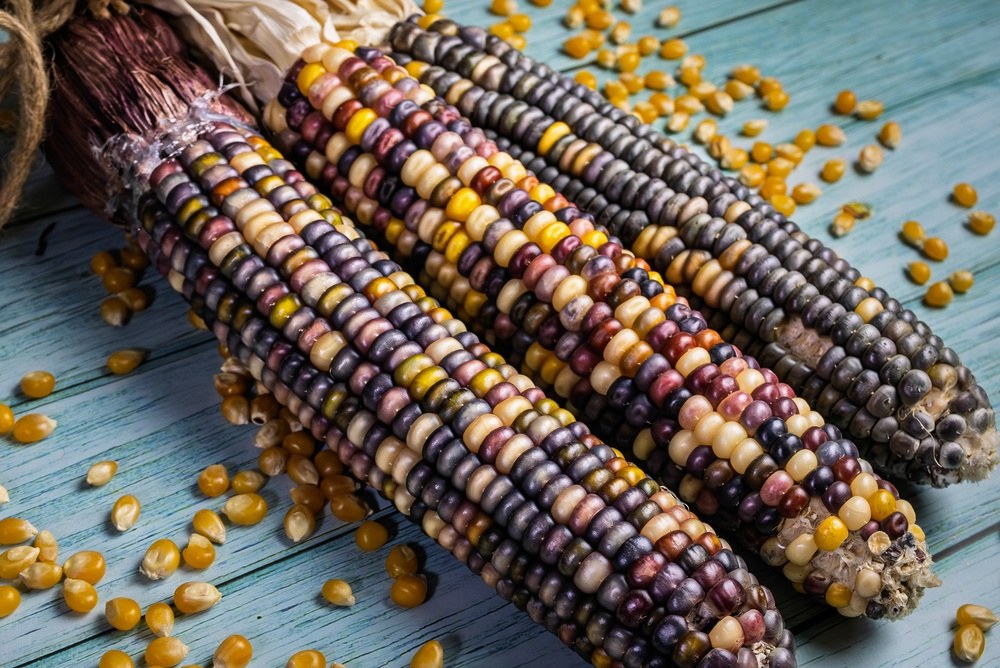
Color can help identify a mature variety, but color does not tell you whether a kernel is floury, flinty, sugary, or suited to popping. A blue ear may be flour corn, flint corn, dent corn, or popcorn. A white ear may be sweet corn, dent corn, or flour corn. Before buying seed, decide whether you want fresh ears, cornmeal, grits, hominy, masa, popcorn, parched corn, seed stock, or an ornamental harvest.
At Alliance of Native Seedkeepers, corn sits at the meeting point of food, culture, genetics, labor, land, and responsibility. Our catalog has grown from a few headline varieties into sweet, flour, flint, dent, popcorn, and culturally significant lines. That depth is useful only when the differences are explained honestly. This guide is meant to help you choose a variety by purpose rather than by a photograph alone.
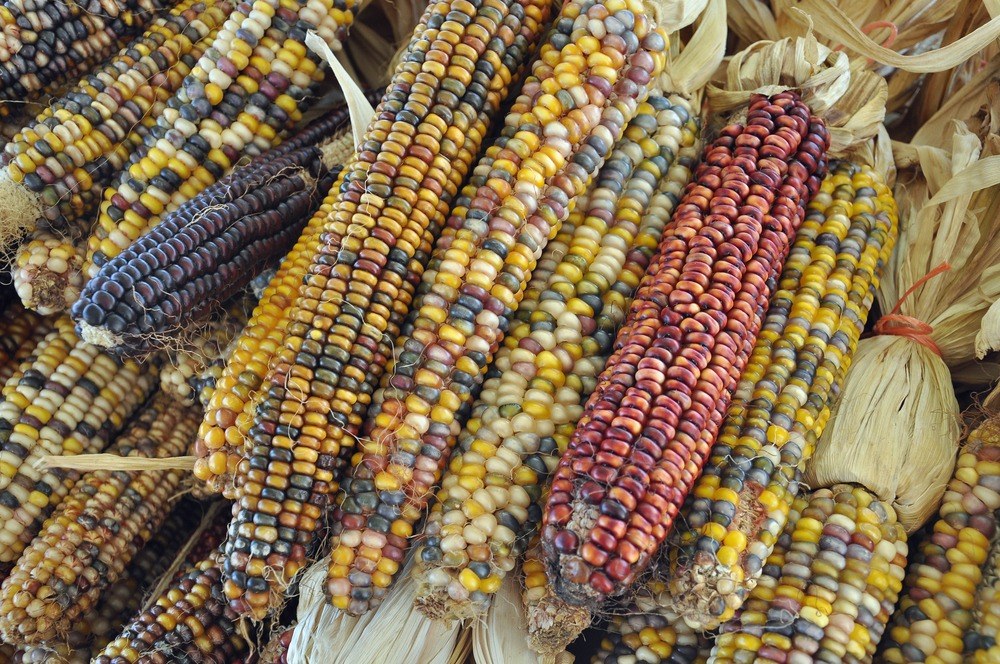
Choose heirloom corn by use, not color
The fastest way to narrow a large corn catalog is to work backward from the kitchen, pantry, or seed room. The intended use determines the harvest stage, the kernel texture you need, the equipment required after harvest, and the amount of space the crop deserves.
| What you want | Best place to begin | Why | What to verify before buying |
|---|---|---|---|
| Fresh corn on the cob | Sweet corn | Sweet types hold more sugar at the eating stage and are bred for tenderness | Days to maturity, sweetness type, isolation needs, ear size, and disease notes |
| Fine whole-grain corn flour | Flour corn | Soft endosperm breaks down easily and produces a fine meal with less mechanical effort | Maturity, lodging, ear dry-down, kernel color, and whether the variety is described for food use |
| Cornmeal with body | Dent, flint, or flour corn | Each class produces a different balance of tenderness, texture, and flavor | Mill capacity, desired particle size, germ content, and small-batch cooking results |
| Grits | Food-quality dent or flint corn | Coarser particles remain distinct during cooking | Kernel hardness, clean flavor, milling screen, and whether the grain is intended for people rather than feed |
| Hominy or masa | A documented culinary dent or flint corn; some flour corns also work | Alkaline processing depends on whole-kernel quality, pericarp behavior, and starch properties | Use a food-grade variety and test a small batch before committing the whole harvest |
| Popcorn | True popcorn | The hard hull and dense endosperm are built to hold steam until the kernel ruptures | Popping type, maturity, isolation, ear dry-down, and final popping moisture |
| Dry ears for display | A stable ornamental or colorful flint-type variety | Mature color and ear form remain visible after drying | Do not assume ornamental labeling means good eating quality |
| Seed stewardship | Open-pollinated corn with known identity | Corn is wind-pollinated and population-based, so seed saving requires more than one attractive ear | Population target, isolation, flowering window, source history, and storage plan |
A variety can have more than one use, but the words on a seed listing should not be stretched beyond what has been tested. A flour corn might make excellent mush and acceptable parched corn but poor grits. A flint corn might make beautiful hominy and require more work to grind finely. A dent corn may be versatile, yet one dent variety can taste and mill very differently from another.
Heirloom, landrace, open-pollinated, and Indigenous are not synonyms
These words are often stacked together in marketing, but they describe different things.
- Open-pollinated means a population can reproduce through natural pollination while retaining its general identity when enough plants are grown and crossing is controlled. It does not mean every ear will be identical.
- Heirloom usually signals a variety with a history of being maintained over time, but there is no single legal age requirement that makes a corn heirloom.
- Landrace describes a genetically diverse population shaped through repeated farmer selection in a place, community, and production system. A landrace is not simply an old catalog variety.
- Indigenous corn should refer to corn connected to particular Indigenous peoples, communities, or agricultural histories. It is not a decorative category and should not be used as a blanket synonym for colorful corn.
- Traditional is meaningful only when the tradition, people, and context are known. The word should not be used to make an uncertain commercial story sound complete.
A commercial seed packet can contain a variety with a long history, but the packet does not automatically give the buyer ownership over every story, teaching, name, or community relationship associated with that corn. Public growing information belongs in a garden guide. Private or community-held cultural knowledge does not become public simply because seed is commercially available.
Kernel class is only the first layer
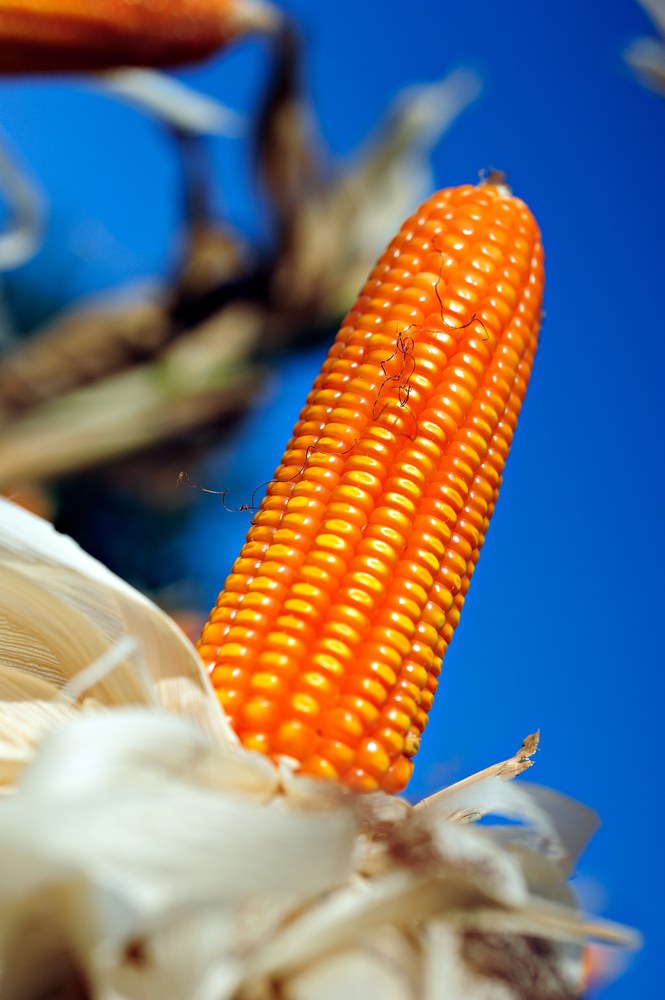
Oklahoma State University Extension groups many North American landraces and heirlooms into popcorn, flint, flour, dent, and sweet categories based largely on the structure of the kernel, especially the pericarp and endosperm. That classification is practical because kernel structure affects grinding, cooking, storage, and harvest.
It is not the whole identity of a variety. Two flour corns can differ in maturity by weeks. Two flints can differ in ear size, plant height, color, flavor, disease response, and adaptation. Two dent corns can behave differently in a hand mill. A classification tells you what kind of kernel you are starting with; the variety record tells you how that particular population behaves.
| Layer | Question it answers | What it does not answer |
|---|---|---|
| Kernel class | Is the mature kernel sweet, floury, flinty, dented, or built to pop? | Exact flavor, maturity, cultural history, or regional adaptation |
| Named variety | What population is being offered? | Whether the current seed lot has been maintained well |
| Seed source | Who produced or supplied this lot? | The entire history of the variety |
| Grower record | How did this population perform in this field and season? | How it will perform in every region |
| Community history | What relationships, foodways, and responsibilities are publicly documented? | Knowledge that a community has not chosen to publish |
This layered approach protects gardeners from two opposite mistakes: treating every ear of the same class as interchangeable, and treating a beautiful name or color as proof of a history that has not been documented.
Sweet corn varieties
Sweet corn is harvested immature, while kernels are tender and sugars have not fully converted to starch. The dried seed is often wrinkled because the mature kernel contains less starch than grain corn. Sweet corn varieties also differ genetically. Standard sugary types, sugar-enhanced types, and supersweet types have different germination temperatures, tenderness, holding quality, and isolation concerns.
Choose sweet corn by the conditions under which you will actually harvest it. A variety that tastes excellent for two days but matures all at once may be perfect for a family canning day and frustrating for a household that wants one meal at a time. A longer holding window can matter more than the highest possible sugar reading. In hot climates, the speed from field to shade and refrigeration also matters because sugars begin shifting after harvest.
Questions to ask before choosing sweet corn
- Will you plant one block or several successions?
- Do you want an early, main-season, or late crop?
- Will you eat it fresh, freeze it, can it with a tested process, or sell it locally?
- Can you isolate incompatible sweetness types or stagger flowering?
- Does the variety germinate reliably at your expected soil temperature?
- Do you need strong husk cover because of insects or birds?
Examples in our current catalog include Stowell's Evergreen, Ambrosia, and Silver Queen. These names should lead you to the product record for maturity and growing notes rather than serve as shortcuts for every white or bicolor sweet corn.
Flour corn varieties
Flour corn has a soft, fine-grained starchy endosperm and generally a thinner outer kernel layer than flint corn. The mature grain is easier to grind into a fine flour. That is the main reason to choose it. The word flour describes the kernel class, not a guarantee that the finished meal will behave like wheat flour or that every flour corn is interchangeable.
Flour corn can be valuable for fine meal, mush, breads, cookies, beverages, parching, and community-specific preparations. The exact use depends on the variety and processing method. Soft kernels can also be more vulnerable to cracking, insects, and moisture if drying and storage are careless.
Hopi Blue, Painted Mountain, Magic Manna, and Montana Morado are examples of flour-corn listings in our catalog. Their names and colors do not erase the need to read the individual product record. They may differ in maturity, plant habit, adaptation, and culinary behavior. A blue or purple kernel is a color trait, not a universal cooking instruction.
Flour corn is a strong choice when
- You want to mill small batches without fighting an extremely hard kernel.
- Fine meal or flour is a primary goal.
- You have protected drying space and can store the softer grain well.
- You are willing to test flavor, hydration, and grind size in your own recipes.
- You understand that ordinary corn flour is not the same as masa harina.
Flint corn varieties
Flint corn has a hard outer endosperm that can look glassy or translucent. The hard structure helps explain the word flint. It also helps many flint corns hold well in storage once fully dry. Flint grain can be used for hominy, meal, grits, parching, and other foods, but the harder kernel may require a stronger mill or a different processing sequence than flour corn.
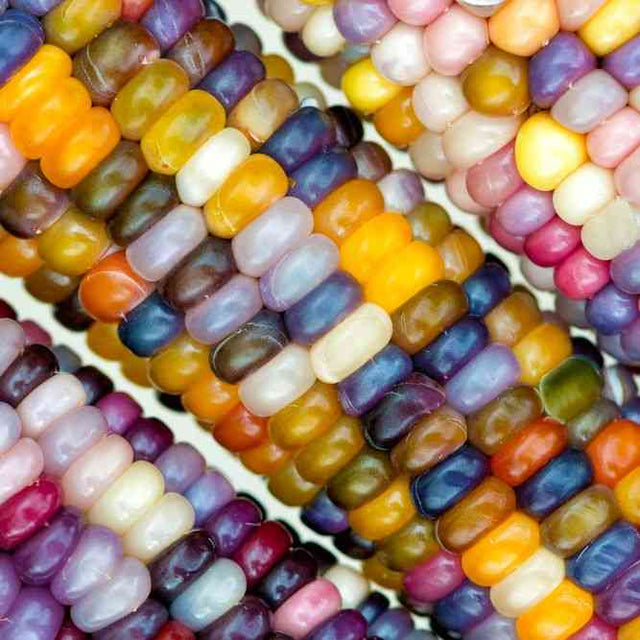
Glass Gem is often approached first as a visual corn. Its mature kernels are genuinely striking, but the useful question is not whether it is pretty. The question is what your seed lot is labeled to do, how it performs in your field, and whether you have the equipment and patience to process a hard flint grain. Abenaki Calais, Cascade Ruby-Gold, and Argentina Orange Creole are other flint listings in our catalog. Each should be treated as a distinct population rather than as a color variation of the same corn.
Flint corn is a strong choice when
- You want a hard dry grain with good storage potential.
- Hominy, coarse meal, or a firm cooked texture is part of the plan.
- You can allow full field maturity and finish drying under cover.
- You have a mill capable of handling hard grain.
- You want to evaluate both culinary quality and field adaptation over several seasons.
Dent corn varieties
Dent corn contains a combination of hard starch along the sides of the kernel and softer starch toward the center. As the kernel dries, the softer center contracts and often creates the familiar dent at the crown. The dent may be deep, shallow, irregular, or less obvious in some ears, so a single visual trait should not replace a variety record.
Dent corn is broad and versatile. Much of the commodity field corn grown in the United States is dent corn, but that does not mean every dent corn belongs only in feed or industrial systems. Food-quality open-pollinated dents can be selected for cornmeal, grits, hominy, roasting, and regional food traditions. Jimmy Red and Hickory King White are two active dent-corn listings in our catalog.
When buying dent corn for people, look for a seed listing that actually describes human food use. A generic field-corn label does not tell you flavor, milling behavior, test weight, pericarp toughness, or whether the lot has been handled as food-grade grain. You are buying seed, not finished food, so the future crop still needs clean cultivation, harvest, drying, shelling, and storage.
Popcorn varieties
Popcorn is a specialized flint-type corn with a hard hull and dense endosperm. A small amount of water remains inside a properly conditioned kernel. When heated, steam pressure builds until the hull ruptures and the cooked starch expands. Other corn can crack, toast, or partially expand, but it will not reliably produce the same flake.
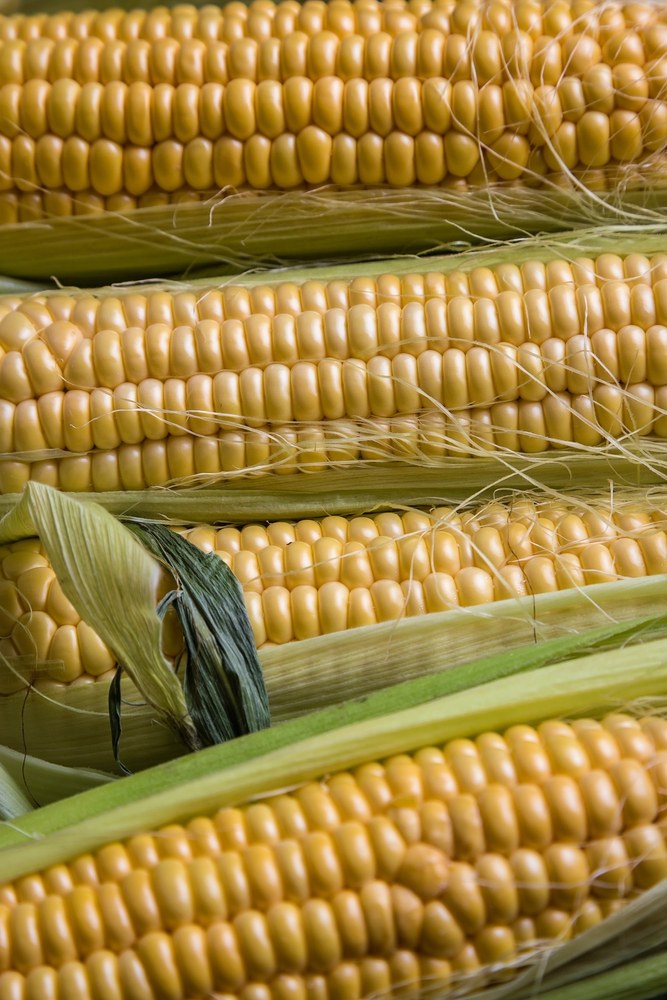
Popcorn should be chosen as popcorn from the beginning. Do not assume a small flint ear will pop well because the kernels look hard. Popping performance depends on hull integrity, endosperm structure, kernel damage, and final moisture. Pearl popcorn has rounder kernels; rice popcorn has more elongated kernels. Color does not tell you expansion ratio.
Red Strawberry and Japanese Hulless are examples of popcorn listings in our catalog. The word hulless does not mean the seed lacks a hull while growing. It usually describes a tender eating experience with fewer noticeable hull fragments after popping.
Blue, red, white, yellow, and multicolored corn
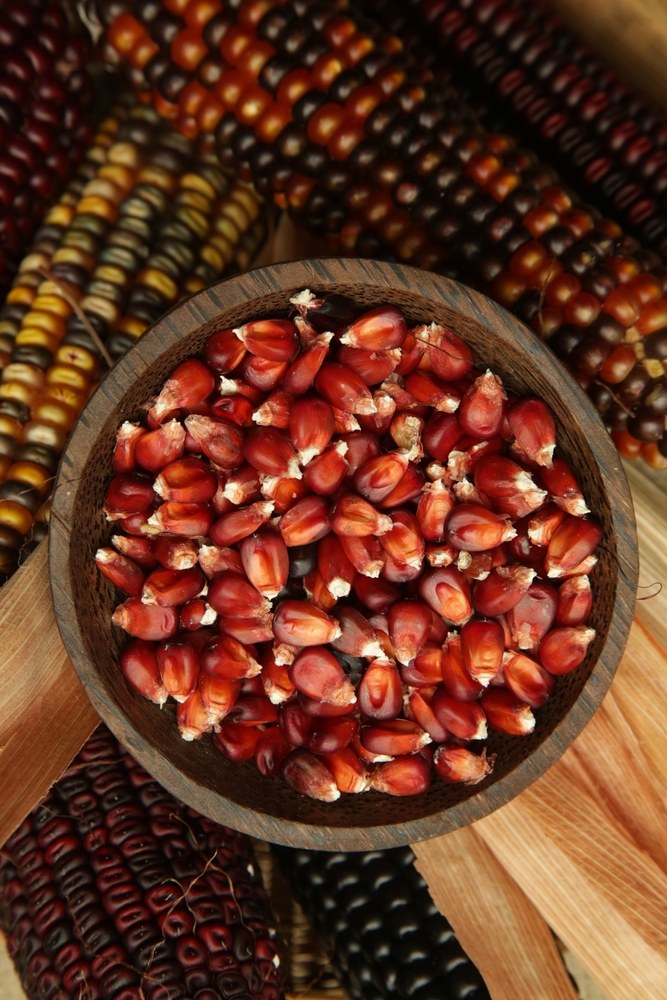
Color is one of the first things people notice, and one of the easiest traits to misunderstand. Iowa State's food-grade corn glossary notes that blue and red corns may carry pigment in the aleurone layer over a lighter starchy endosperm, while yellow corn color is associated with pigments in the endosperm. Actual kernel genetics are more complex than a shopping filter, but the practical lesson is simple: the outside color does not tell you the whole inside structure.
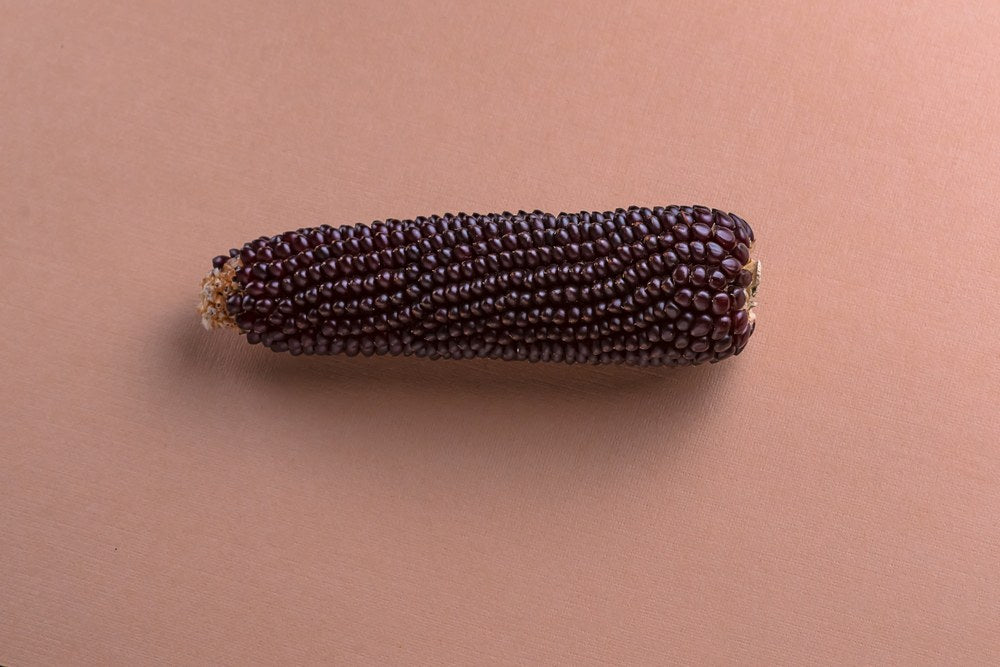
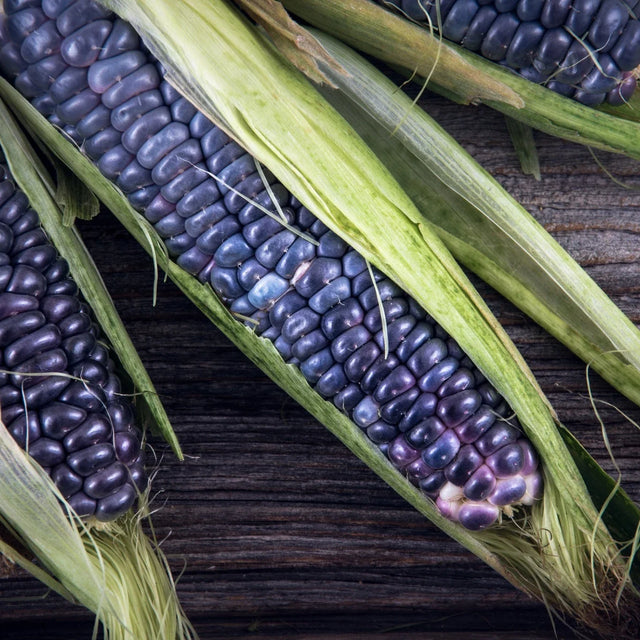
- Blue or purple corn can be flour, flint, dent, or popcorn. It can mill into strongly colored meal, but processing, pH, and cooking may change the visible color.
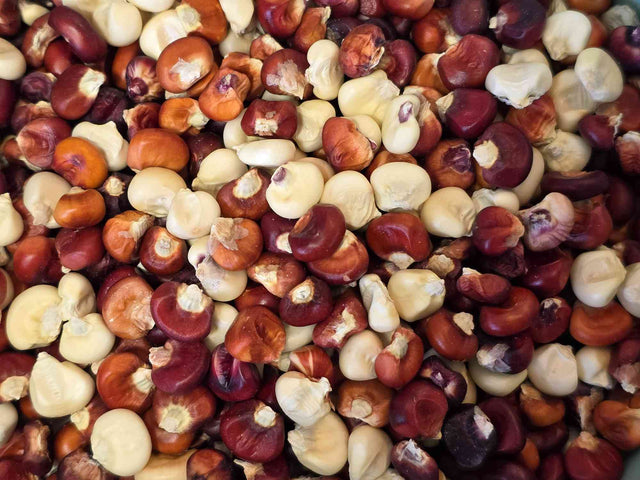
- Red corn may have a colored outer layer over pale starch, or color may extend differently through the kernel depending on genetics.
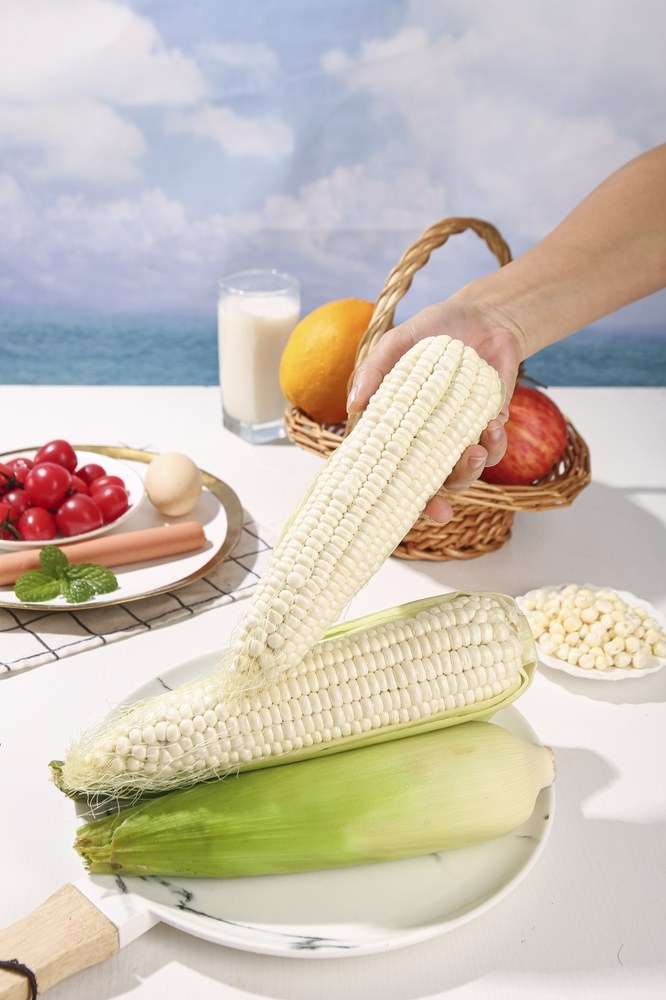
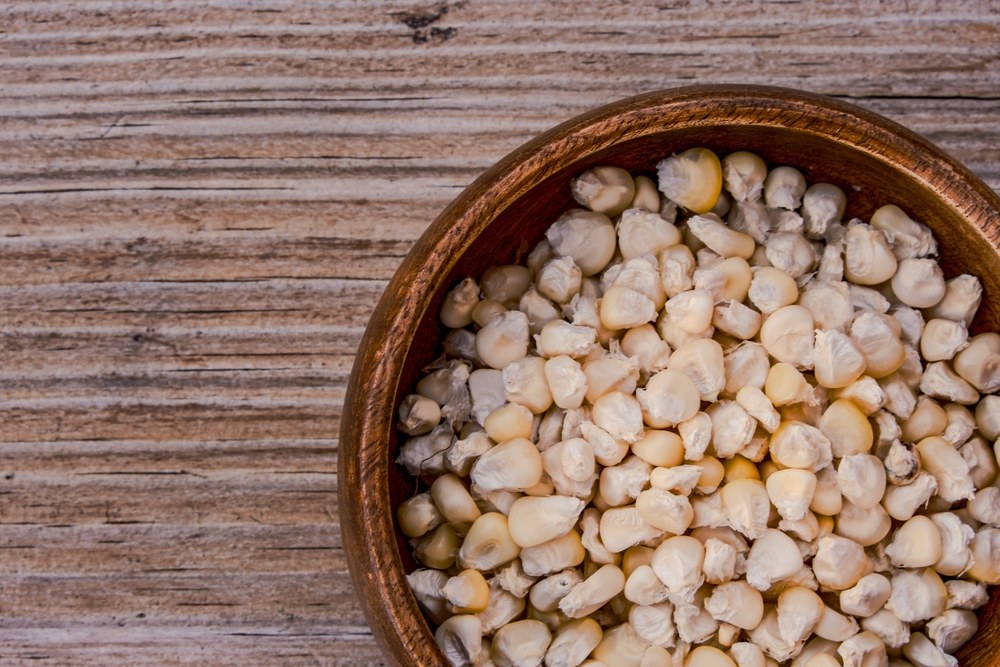
- White corn may be sweet, dent, flour, flint, or popcorn. White is not a single cultural or culinary category.
- Yellow corn occurs in sweet and grain types and does not automatically mean commodity field corn.
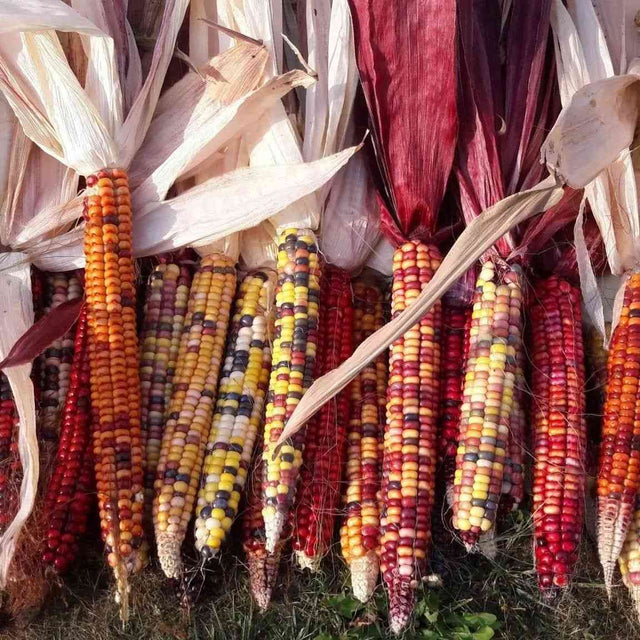
- Multicolored corn may be flint, flour, dent, or popcorn. A mixed-color ear does not automatically mean the population is unstable.
Buy color because it supports your food, teaching, selection, or market goal. Do not buy color as a substitute for knowing what the grain is supposed to become.
What people mean by Indian corn
Indian corn remains a common search phrase and an old retail label, but it is too broad to identify a kernel class, a Native nation, a food use, or a documented history. In some garden writing, it means multicolored flint corn. In seasonal retail, it may mean any dried ear sold for decoration. In older records, it can simply mean maize rather than another grain.
We use the phrase here so gardeners can understand the search term, not because it is the best label. Whenever possible, identify the actual class and variety: flint corn, flour corn, dent corn, popcorn, sweet corn, Glass Gem, Abenaki Calais, Hopi Blue, or another documented name. If a corn has a specific community connection that is publicly documented, name that connection carefully rather than reducing many nations to one generic word.
Named varieties and practical garden use
The table below is a starting map based on how these products are currently classified in our catalog. It is not a replacement for the full product page, current seed-lot notes, or your own kitchen trial.
| Variety | Current catalog class | Best reason to compare it | Do not assume |
|---|---|---|---|
| Glass Gem | Flint | Color diversity, hard dry grain, seed-selection teaching, and ornamental harvest | That every ear will match a photograph or that visual beauty proves a single culinary use |
| Hopi Blue | Flour | Blue flour corn for gardeners seeking a soft milling grain | That all blue corn cooks the same or that the commercial packet carries every community teaching |
| Painted Mountain | Flour | Short-season flour-corn comparison and color diversity | That short maturity removes the need for isolation or full dry-down |
| Magic Manna | Flour | Soft grain for meal and flour trials | That one grind setting will suit every recipe |
| Montana Morado | Flour | Purple flour-corn color and dry-grain use | That purple color alone identifies flavor or processing method |
| Jimmy Red | Dent | Food-quality dent comparison for meal and grits | That every dent corn is feed corn, or that every dent is ideal for grits |
| Hickory King White | Dent | Large white dent kernels and versatile dry-grain comparison | That white color makes it flour corn |
| Abenaki Calais | Flint | Northern flint comparison, hard grain, and dry storage | That a named regional history guarantees performance in every climate |
| Cascade Ruby-Gold | Flint | Color, flint texture, and regional trialing | That color pattern will remain unchanged without isolation |
| Argentina Orange Creole | Flint | Orange flint grain and hard-kernel comparison | That all orange corn is sweet or soft |
| Red Strawberry | Popcorn | Small red ears and popping use | That the red kernel will produce red popped flakes |
| Stowell's Evergreen | Sweet | Fresh-eating sweet corn with a long catalog history | That sweet corn should be left to dry for meal unless that secondary use has been tested |
Product availability changes. If a variety is archived or out of stock, use the classification and intended-use questions to compare a substitute rather than treating the name as the only path to the result.
Maturity, heat, humidity, and regional fit
A corn can be historically important, visually remarkable, and completely wrong for the season you can give it. Start with the frost-free window, but do not stop there. Dry grain needs enough time after pollination to reach physiological maturity, then additional weather or protected space for drying. A 100-day listing does not mean dry grain will be shelf-ready on day 100.
In humid eastern conditions, ear coverage, disease pressure, storm timing, and drying infrastructure can matter as much as maturity. In arid regions, a variety may face water limitations, hot pollen shed, wind, and wildlife. Oregon State's culinary corn work is a useful example of selecting diverse open-pollinated populations for both culinary quality and performance under regional dry-farming conditions. Adaptation is active work, not a label frozen in time.
Use this regional-fit checklist
- Count realistic frost-free days from warm-soil planting to the first likely damaging frost.
- Add time for grain fill and dry-down if the crop is for meal, hominy, popcorn, or seed.
- Ask whether tasseling will land in your hottest or driest part of summer.
- Plan irrigation or soil-moisture protection for tasseling, silking, and early grain fill.
- Evaluate hurricane, thunderstorm, and lodging risk before choosing very tall or late corn.
- Know where wet ears can finish drying if fall weather turns.
- Choose a variety you can protect from raccoons, deer, birds, and rodents.
Match the variety to your space and pollination plan
Corn is wind-pollinated. One plant is not a seed-saving population, and a single narrow row is not the best shape for kernel fill. The space requirement is not only the footprint of stalks. It includes block shape, access paths, room for tassels and leaves, isolation from other corn, and a place to dry the harvest.
If your garden can hold only a small block, choose one corn project for the season. A small sweet-corn block harvested for eating is easier than trying to maintain three open-pollinated grain varieties at once. If you need several varieties, use flowering-time separation, distance, physical barriers where appropriate, or controlled hand pollination. Read our corn pollination and isolation guide before planning seed production.
| Garden capacity | Practical corn plan | Main limitation |
|---|---|---|
| Very small garden | One compact sweet corn or one small popcorn trial, planted in a block | Few plants for seed saving and limited pollen density |
| Medium garden | One open-pollinated variety with enough rows for good pollination | Isolation from neighboring corn |
| Large garden or field | Separate food and seed blocks, multiple successions, or controlled pollination work | Labor, records, drying space, and maintaining enough plants |
| Community grow-out | Shared population target, written selection rules, lot identity, and coordinated harvest | Communication and preventing unrecorded mixing |
For seed stewardship, population size deserves its own plan. Saving seed from too few plants narrows the population and can shift the variety even when no outside pollen enters the field.
Run a useful home-garden corn trial
A trial should answer a question. “Which ear is prettiest?” is a valid observation, but it is not enough to choose a staple food corn or a seed-maintenance population.
- Name the decision. Are you comparing maturity, lodging, earworm damage, meal texture, popping percentage, or drought response?
- Plant enough. A few plants can show whether a seed lot grows, but they cannot represent a genetically diverse population well.
- Keep entries separate. Label rows and maps before emergence. Do not rely on memory after the canopy closes.
- Record flowering. Note first tassel, first silk, peak pollen, and the end of pollen shed.
- Record the whole plant. Height, stalk strength, disease, root lodging, ear placement, husk cover, and maturity all matter.
- Harvest by entry. Never pile trial ears together and try to reconstruct identity later.
- Dry and process separately. Compare shelling, kernel damage, mill behavior, hydration, cooking time, texture, and flavor.
- Repeat. One season is weather. Several seasons begin to show adaptation.
We learned this distinction directly. In 2022, much of the corn we grew had to be hand-pollinated. That work made it impossible to think of a variety as one attractive ear. Corn is a population moving through a season. The record has to begin before pollen flies.
Cultural specificity and seed stewardship
Corn has been developed, maintained, cooked, stored, named, and related to in distinct ways across the Americas. A Haudenosaunee White Corn project, a Pueblo dryland flour corn, a Southern food-quality dent corn, and a Mexican nixtamal corn should not be flattened into one generic “Native corn” story.
Ganondagan publicly identifies its White Corn Project with Haudenosaunee food sovereignty and notes that White Corn is also known as Tuscarora White. The Haudenosaunee Confederacy describes corn as part of a larger food system that includes beans, squash, grinding, soups, stews, and community agricultural skill. Those public sources support specific statements. They do not give a seed seller permission to publish every teaching, ceremony, family history, or community rule.
Responsible public writing does four things:
- Names a nation or community when the connection is documented.
- Separates public agricultural information from private cultural knowledge.
- Does not claim that every colorful commercial ear is culturally equivalent.
- Does not use Indigenous identity as decoration around an otherwise generic product.
For us, corn is not a marketing theme added after the fact. Our early corn work was tied to land access, Nottoway community, hand pollination, heat loss, drying, and the practical challenge of keeping seed alive. The public lesson is simple: stewardship requires infrastructure, records, people, and enough humility to say what is known and what is not.
What our own corn seasons taught us
In 2019, heat and insecure access to land nearly cost us varieties. The failure was not a lack of care. It was the absence of the complete structure around the crop: secure land, irrigation, shade, labor, travel time, drying space, and the ability to respond when the season changed quickly.
When corn returned strongly on our own land in 2022, much of it required hand pollination. That season brought a different lesson. Growing an ear and maintaining a population are not the same job. The more seriously we took pollination, labels, selection, and documentation, the more clearly we understood that the store, the field, the seed room, and the kitchen had to speak to one another.
That is why this guide begins with intended use. A corn variety is not complete on the product page. Its meaning becomes practical when it is planted well, pollinated responsibly, harvested at the right stage, processed for the right food, and either eaten or carried forward with clear records.
Frequently asked questions
What is the best heirloom corn for a beginner?
For fresh eating, begin with one well-documented sweet corn and plant a block. For dry grain, choose one flour or dent corn with a maturity that fits your season, then commit to drying and processing a small batch. Avoid planting several open-pollinated varieties until you understand flowering and isolation.
Is Glass Gem corn edible?
Glass Gem is generally classified as a flint corn and can be treated as a dry-grain corn, but eating quality depends on the seed lot, maturity, drying, and processing method. Do not prepare it like sweet corn simply because the ears are colorful.
Is blue corn always flour corn?
No. Blue color can occur in flour, flint, dent, and popcorn types. Read the variety classification and intended use.
Can I grind any dry corn into cornmeal?
A capable mill may break many dry corns, but the result may be coarse, hard, bland, or difficult to cook. Food quality, kernel class, dryness, cleanliness, and mill design all matter.
Does open-pollinated mean the seed will stay true without isolation?
No. Open-pollinated corn still crosses readily with other corn flowering nearby. Maintain distance, flowering-time separation, or controlled pollination, and save from enough plants.
Are heirloom corn and Indigenous corn the same thing?
No. Some heirloom corns have documented Indigenous histories; others do not. Indigenous corn should be connected to specific peoples and public records rather than used as a broad marketing label.
What is the difference between ornamental corn and food corn?
Ornamental describes the way ears are marketed or displayed, not necessarily the kernel class. Some colorful flint corns are edible dry grains, while other decorative selections have not been evaluated for flavor or processing. Read the actual variety record.
Sources and further reading
- Oklahoma State University Extension: Growing North American Indigenous Corn
- Ganondagan: White Corn Project
- Haudenosaunee Confederacy: Food and Hunting
- Iowa State University Extension: Food-Grade Corn Glossary
- Oregon State University: Dry-Farmed Culinary Corn Project
- University of Wisconsin Horticulture: Flint, Dent, Flour, and Popcorn
- West Virginia University Extension: Growing Sweet Corn
- West Virginia University Extension: Growing Popcorn
- National Park Service: Heritage Garden and Ancestral Puebloan Agriculture