A corn ear with missing kernels is a record of what happened during pollination and early grain fill. Every potential kernel develops its own silk. A pollen grain must reach that silk while it is receptive, fertilize the ovule, and then the young kernel must receive enough water and photosynthate to continue growing. Blank spaces can therefore come from failed pollination, damaged silks, heat and drought, crowding, root injury, insect feeding, or kernel abortion after fertilization.
The pattern matters. Random gaps across the cob suggest a different sequence from a bare tip, one blank side, a tiny nubbin, or kernels that started and then shriveled. Read the whole planting before treating the problem. The ear is evidence, but it is only one part of the evidence.
This guide helps home gardeners diagnose poorly filled sweet corn, popcorn, flour corn, flint corn, and dent corn. It also explains what can still be done during pollination and how to prevent the same pattern next season.
Read the ear as a timeline
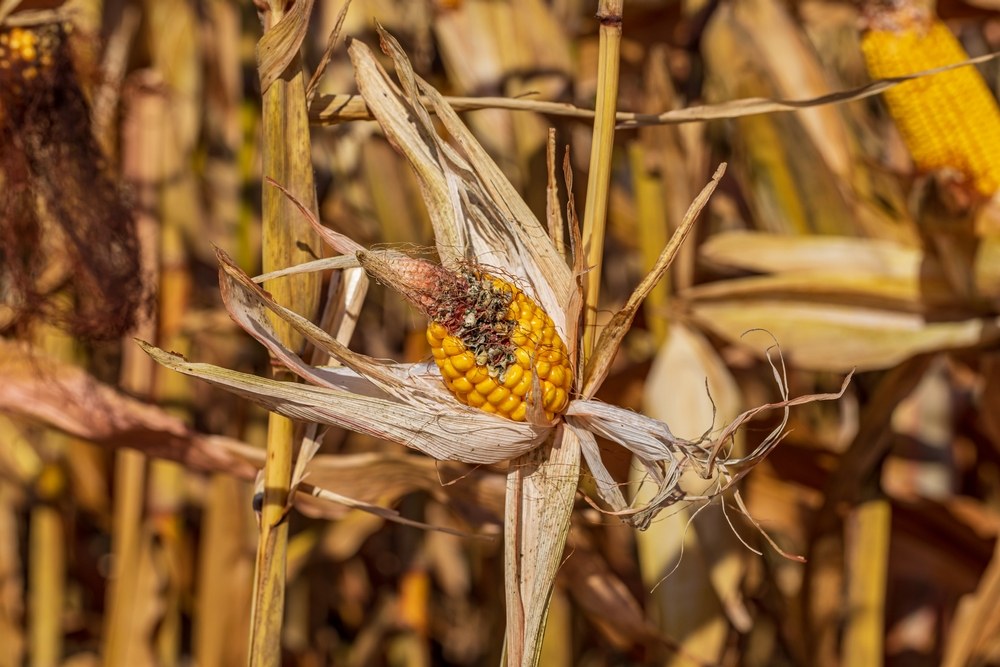
Do not begin by asking whether the variety is “bad.” Begin by locating the missing kernels and deciding whether a kernel never formed, formed and aborted, or formed and was eaten or rotted. An empty, smooth ovule site with an attached silk points toward failed fertilization. A small translucent or collapsed kernel points toward abortion. A torn kernel with frass or decay points toward insect or disease damage.
Compare the upper and lower ears on several plants. Secondary ears often fill less completely than the primary upper ear. Compare the center of the block with the outside rows. Edge ears may intercept less pollen, experience more drying wind, or receive different water. Compare early-silking and late-silking plants. A wide flowering spread within a small population can leave the late plants without enough pollen.
The ear tip requires context. Some unfilled tip is common because tip silks often emerge later and tip kernels are the first to abort when resources are limited. A long bare tip across most ears is a management signal. A few missing tip kernels on otherwise full, heavy ears may not justify intervention.
| What to record | Useful detail |
|---|---|
| Position on ear | Tip, base, one side, random, entire ear |
| Condition of missing sites | Smooth ovules, shriveled kernels, chewed kernels, mold |
| Silk condition | Green, brown, clipped, attached, detached |
| Plant position | Center, edge, low spot, dry corner, lodged area |
| Flowering timing | Pollen still shedding, finished, or never observed |
| Weather window | Heat, drought, rain, wind, or flooding around silking |
One silk, one potential kernel
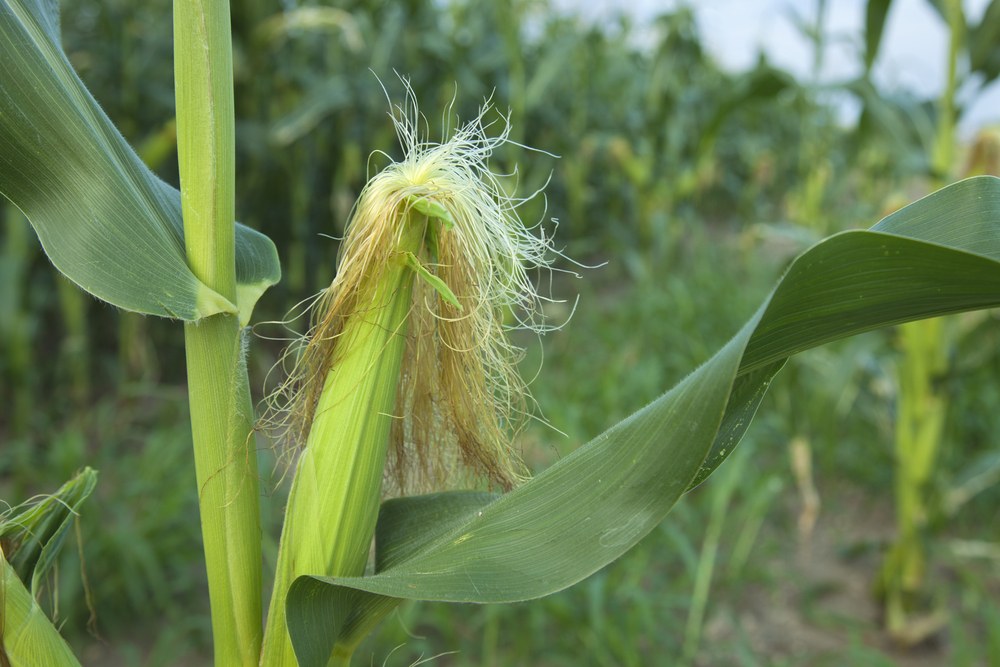
An ear is made of rows of ovules. Each ovule produces a silk that extends through the husk. Iowa State describes the system plainly: every potential kernel has its own silk, and each silk must receive pollen for that kernel to develop. After a pollen grain lands on a receptive silk, fertilization occurs within roughly twenty-four hours.
Silks are receptive along their length and can remain viable for about ten days, but their performance declines with age and stress. Silks with high water content are particularly sensitive to drought before and during emergence. Once an ovule is fertilized, its silk stops elongating, turns brown, and detaches within a few days.
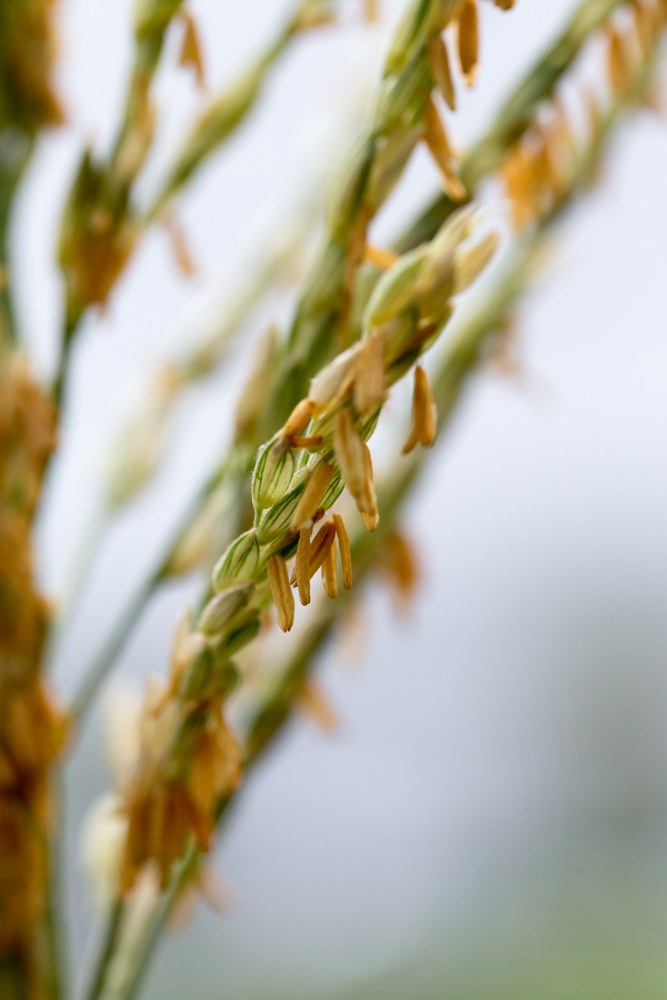
Pollen shed lasts several days and often up to roughly two weeks across a block. A single tassel releases a very large amount of pollen, so the problem is usually not that every plant needs its own tassel directly above its own ear. The problem is whether enough viable pollen is moving through the block while silks are exposed and receptive.
This is why block shape matters. In a long single row, much of the pollen blows beyond the planting. In a square or rectangular block, pollen from multiple directions falls across more silks. The plant population also creates overlap. When one tassel pauses or one plant is late, neighboring plants can supply pollen.
Planting shape and pollen supply
University Extension recommendations consistently advise at least four short rows rather than one or two long rows. The exact dimensions can change with available space, but the principle is a block that is not excessively narrow. A ten-by-ten-foot area planted as four or five short rows will generally capture pollen better than the same number of plants stretched into one long line.
Plant spacing still matters inside the block. Overcrowded plants compete for water, light, and nitrogen, which can delay silks and reduce ear size. Widely spaced plants may tiller heavily and leave too few tassels in the block. Follow the variety packet, then thin to a uniform stand. A common home-garden range is roughly eight to twelve inches between plants and thirty to thirty-six inches between rows for sweet corn, though some popcorn and small-statured varieties are managed differently.
Wind direction can explain edge patterns but should not be treated as a reliable isolation system. Pollen swirls, drops, and moves with changing air. Build the block so it can pollinate from within. If nearby field corn or another corn type is flowering, its pollen may reach the block. Cross-pollination usually changes kernel color, starch, sweetness, or popping quality rather than creating blank ovules, so it should not be blamed for missing kernels without other evidence.
- Plant at least four short rows whenever possible.
- Thin the stand uniformly instead of leaving dense clumps and empty gaps.
- Avoid placing the entire block in the root zone of large trees.
- Do not rely on one tassel or one plant when saving seed.
- For seed purity, use distance, flowering-time separation, or controlled pollination in addition to good block shape.
Heat, drought, and tassel-silk mismatch
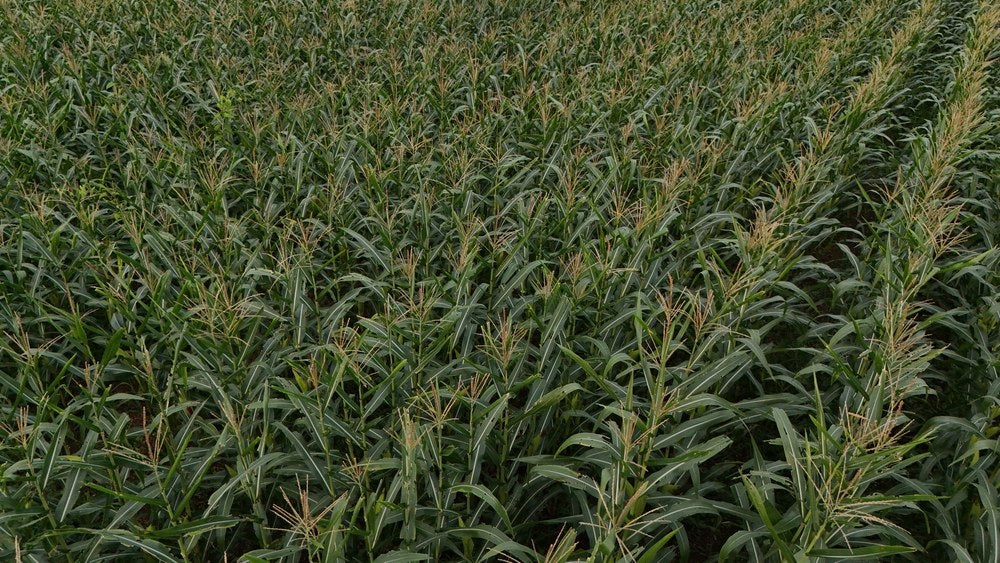
Drought before silking can reduce potential kernel number and delay silk emergence. Heat speeds crop development and can shorten the useful overlap between tassels and silks. When dry soil slows silk elongation while pollen shed continues, the late silks may emerge after much of the pollen is gone.
Iowa State reports that temperatures above about 95°F with low humidity and low soil moisture can desiccate exposed silks and damage pollen, and temperatures above 100°F can kill pollen grains. These thresholds are not a guarantee of total failure. Pollen often sheds during the cooler morning, and moist soil helps the plant continue silk growth. The damaging pattern is heat combined with root-zone drought and poor reproductive timing.
Drought after fertilization creates a different ear. Pollination may have been successful, but young kernels are later aborted, commonly at the tip. Under severe stress, abortion can occur elsewhere. The plant reallocates limited resources to kernels with the strongest sink and shortest transport path.
| Timing of stress | Typical ear result |
|---|---|
| Before ear initiation | Smaller ear and fewer potential ovules |
| 7 to 10 days before silking | Delayed silks and poor pollen-silk overlap |
| During tassel and silk | Random blank kernels or nearly blank ears |
| First 2 weeks after pollination | Tip-back and aborted young kernels |
| Milk through dough | Smaller, lighter kernels and shortened fill |
Watering after the pollen is gone cannot fertilize missed ovules. It can still protect fertilized kernels and the remaining crop. That distinction helps set realistic expectations after a heat wave.
Silk clipping and insect injury
Fresh silks are exposed and attractive to several insects. Japanese beetles can feed in groups and clip silks before pollination is complete. Iowa State notes that noticeable incomplete fill generally requires clipping to less than about half an inch while silks are still green. Once silks are brown and pollen shed has nearly finished, clipping is less likely to change kernel set.
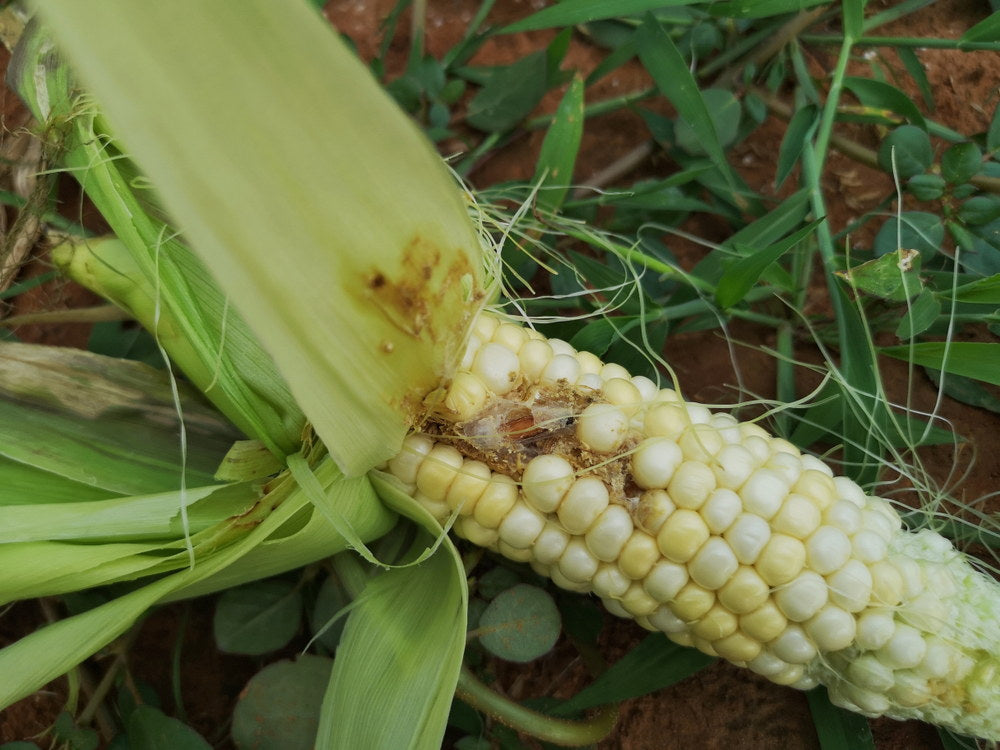
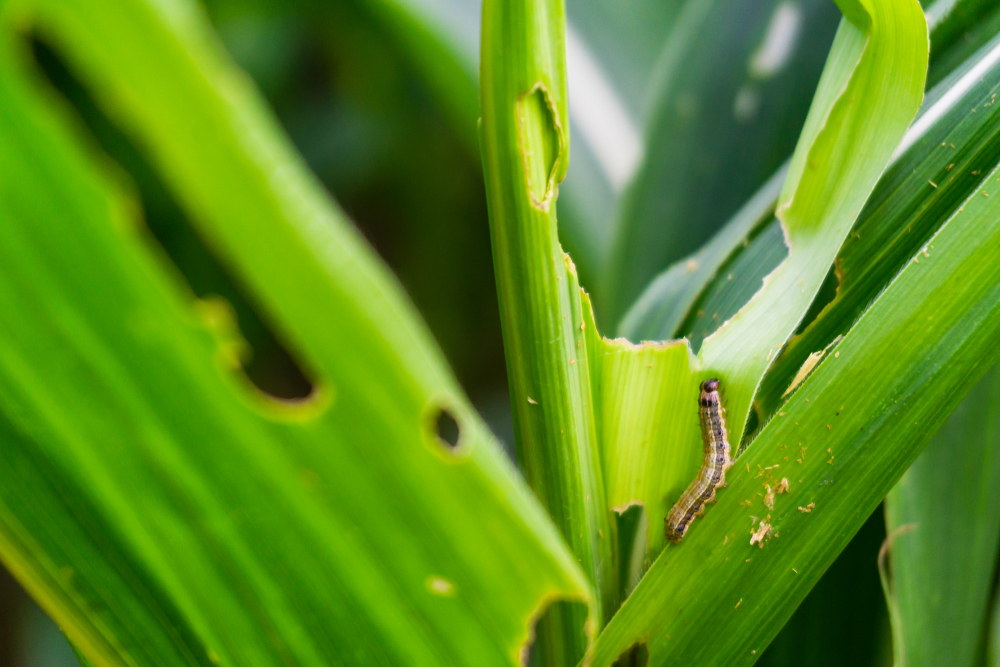
Corn earworm and fall armyworm can also damage silks, husks, leaves, and kernels. Feeding damage after kernels form is not the same as pollination failure. Look for holes, frass, chewed tissue, larvae, and decay that begins at a wound. Sap beetles often arrive after an ear is already damaged and can spread decay through the opening.
Handpicking Japanese beetles into soapy water is practical in a small garden and should begin before clusters build. Traps placed near the corn can attract additional beetles. Any pesticide used on edible corn must be labeled for the crop and pest, applied at the correct stage, and timed to protect pollinators and meet the preharvest interval. A spray applied after the useful pollination window will not restore missing kernels.
| Damage clue | Likely process |
|---|---|
| Silks cut short with beetles present | Pollination interrupted by silk feeding |
| Holes and frass in the ear tip | Earworm or armyworm feeding |
| Ragged whorl leaves with frass | Armyworm feeding before ear development |
| Irregular holes and sour decay on damaged ears | Secondary sap beetle activity |
| Smooth empty kernel sites with no chewing | Failed pollination rather than feeding |
Crowding, fertility, and root limits
Poor pollination is common, but not every small ear begins at pollination. A plant that was crowded, shaded, flooded, root-pruned, nutrient-deficient, or repeatedly droughted may initiate a smaller ear with fewer ovules. If the entire plant is short and pale, the ear is one symptom of a season-long limitation.
Nitrogen deficiency often appears as pale plants and V-shaped yellowing that begins at leaf tips and moves down the midrib. NC State notes that older nitrogen-stressed plants may show shriveling of tip kernels. Potassium deficiency can weaken stalks and affect water regulation. Phosphorus shortage, cold soil, compaction, or root damage can delay growth. Use a soil test rather than diagnosing fertility from one ear alone.
Too many plants can produce thin stalks, delayed silks, and small ears. Too few plants can reduce pollen density. The goal is a uniform stand, not maximum seedlings. Thin early enough that remaining plants do not suffer long competition.
Trees and perennial roots are easy to overlook. Corn planted near a hedgerow may receive the same irrigation at the surface while tree roots remove water below. Compacted paths and construction fill can restrict roots and create one-sided stress patterns through the block.
What different blank patterns suggest
| Pattern on ear | Likely causes | Evidence to seek |
|---|---|---|
| Scattered missing kernels | Uneven pollen capture, silk age, light silk injury | Attached silks, block shape, pollen timing |
| Long bare tip | Late tip silks or post-pollination abortion | Weather 1 to 2 weeks after silk, kernel remnants |
| Blank on one side | Ear position, lodging, covered silks, localized injury | Plant orientation, flattened canopy, insect damage |
| Few kernels near base only | Severe pollen-silk mismatch | Tassels finished before most silks emerged |
| Short nubbin ear | Early stress, late secondary ear, crowding, root limitation | Whole-plant size, ear position, stand density |
| Kernels vary in color but fill is complete | Cross-pollination or genetic segregation | Nearby corn flowering at same time |
| Filled ear with chewed tip | Insect feeding after fertilization | Larva, frass, torn kernels |
| Mold patches around damaged kernels | Ear rot following insect or weather injury | Mold color, husk damage, field pattern |
These patterns narrow the possibilities; they do not prove a diagnosis by themselves. More than one cause can occur on the same ear. Drought may delay silks, beetles may clip what emerges, and earworms may later damage the kernels that formed. Keep the timeline separate so next year's prevention addresses the actual sequence.
Check pollination before harvest
The shake test lets a grower check fertilization before the ear looks fully filled. Wait until pollination has been underway for several days. Choose a representative ear, gently open the husk without tearing all the silks away, hold the ear horizontally, and shake or roll it carefully. Silks detach from ovules that were fertilized within the previous few days. Silks that remain attached indicate unfertilized ovules or very recent pollination.
Use the test as a sample, not a ritual on every ear. Open ears are more vulnerable to insects, weather, and disease. Sample from different parts of the block and mark the plants. If pollen is still shedding and many silks remain attached, hand pollination and steady irrigation may still help. If tassels are finished, the test becomes a diagnostic record rather than a rescue opportunity.
- Check whether tassels are actively shedding pollen in the morning.
- Select ears from the center, edge, dry spot, and normal area.
- Open only enough husk to see the silk attachment points.
- Shake gently and record how many silks remain attached.
- Reclose the husk as well as possible and tag the sampled plant.
- Compare the result with irrigation, weather, and flowering records.
Hand pollination for a small block
Hand pollination can improve kernel set in a small block when fresh silks and viable pollen still overlap. It is not a substitute for population size or isolation in long-term seed stewardship, but it can help a high-value increase, a small teaching plot, or a block affected by uneven pollen movement.
Work on a dry morning after dew has lifted and tassels are releasing pollen. Shake pollen from several tassels into a clean dry paper bag, mix it gently, and apply it immediately over fresh silks. Pollen loses viability quickly, especially in heat and moisture, so do not collect it for later storage. Repeat on another morning if the flowering window remains open.
For controlled seed production, bagging and pedigreed pollination require a stricter protocol than simply dusting open silks. Label the maternal plant, pollen source or bulk, date, and ear. Follow the detailed isolation and seed-saving guides rather than assuming a hand-pollinated ear is automatically genetically representative.
- Use pollen from multiple healthy, representative plants.
- Do not collect wet pollen or leave it in a hot vehicle.
- Apply to fresh silks, not brown dry silks after pollen shed.
- Avoid crossing varieties unless that is the documented breeding objective.
- Record every controlled ear separately from open-pollinated ears.
Sample the block instead of choosing one ear
A single dramatic ear is not a diagnosis. Sample at least ten representative primary ears across a home-garden block when the planting is large enough. Include edge and center plants, but do not let the worst corner dominate the average. For a very small block, examine every plant and state the total population.
Score the percentage of filled kernel sites, the length of tip-back, ear length, row count, insect damage, disease, plant height, and lodging. Record whether the ear was the primary upper ear or a secondary ear. A secondary ear with poor fill may be normal for that variety and environment even when the primary ear is excellent.
| Simple score | How to record it |
|---|---|
| Kernel set | Estimated percent of potential sites filled |
| Tip-back | Bare length in inches or centimeters |
| Ear class | Primary upper ear or secondary ear |
| Damage | None, silk clipping, chewing, rot, bird or mammal |
| Plant context | Height, vigor, lodging, leaf color |
| Block position | Center, edge, dry corner, low wet area |
For seed selection, do not save only the fullest ear without checking the plant. Choose across many healthy, true-to-type plants with sound stalks, appropriate maturity, and complete records. Ear beauty alone can narrow a population in ways that reduce long-term resilience.
Prevention for the next planting
- Choose a variety whose maturity fits the frost-free season and intended use.
- Plant a block of at least four short rows rather than one long row.
- Thin to a uniform stand and keep weeds from competing for water.
- Install or test irrigation before the reproductive window.
- Begin recording tassels, silks, and morning leaf recovery before stress peaks.
- Scout fresh silks daily for beetle clipping and earworm activity.
- Keep the root zone steadily moist from before tassel through early grain fill.
- Use a shake test while pollen is still available if the planting looks uneven.
- Separate other corn types by distance, flowering time, or controlled pollination.
- At harvest, compare patterns across the block and change one management variable at a time.
Do not solve every problem by planting more seed. A larger overcrowded planting can make water, fertility, and airflow worse. Improve block shape, uniformity, irrigation, and timing first. Then increase the population when the infrastructure can support it.
What hand pollination taught us
When we grew corn again on our own land in 2022, much of it had to be hand-pollinated. That work made every missing kernel legible. An ear was not simply full or empty. It recorded whether tassels and silks met, whether the plant had enough water, whether the block held enough pollen, and whether we were paying attention at the right hour.
It also taught us to separate a garden harvest from a seed population. A few full ears can feed a table. They do not automatically preserve the breadth of an open-pollinated variety. Seed stewardship requires enough plants, representative selection, isolation, and records even when hand pollination improves individual ears.
That is why we do not blame a variety from one poorly filled cob or praise a line from one perfect ear. We read the whole block and the whole season.
Frequently asked questions
Why are there gaps between kernels on my corn?
Most gaps come from ovules that were not fertilized. Poor block shape, drought-delayed silks, hot dry weather, or silk feeding can interrupt pollination.
Why is only the tip of my corn ear empty?
Tip silks often emerge last, and tip kernels are the first to abort under stress. A small bare tip can be normal. Long tip-back across many ears points to late pollination or stress after fertilization.
Can corn fill in after the silks turn brown?
No new kernels form after an ovule misses its pollination window. Brown silks usually indicate pollination is complete or the silk is no longer receptive.
Does each kernel need a separate pollen grain?
Yes. Each potential kernel has its own silk, and that silk must receive viable pollen for the ovule to be fertilized.
Will hand pollination fix a poorly planted single row?
It can improve some ears while pollen and silks overlap, but the better long-term fix is a block-shaped planting with enough plants and a reliable water supply.
Do Japanese beetles cause missing kernels?
They can when they clip fresh green silks very short before pollination is complete. Damage after silks brown is less likely to change kernel set.
Did cross-pollination cause the blank spaces?
Cross-pollination usually changes kernel color, sweetness, starch, or popping quality rather than leaving empty ovules. Missing kernels more often point to failed pollination or abortion.
Should I save seed from a poorly filled ear?
Usually not as a primary seed ear unless the poor fill was clearly caused by a documented external event and the plant is otherwise representative. Select across many well-filled, healthy plants.
Sources and further reading
- Iowa State University Extension: The Birds and Bees of Corn Pollination
- Iowa State University Extension: Long Silks and the Shake Test
- Iowa State University Extension: Poorly Filled Sweet Corn Ears
- Iowa State University Extension: Weather-Related Problems in the Vegetable Garden
- Iowa State University Extension: Japanese Beetles on Sweet Corn
- University of Minnesota Extension: Dry Conditions During Corn Pollination
- University of Minnesota Extension: Growing Sweet Corn in Home Gardens
- Iowa State University Extension: Corn Pollination, High Temperature, and Stress
- NC State Extension: Organic Sweet Corn Production