About this variety
What to expect from Silver Queen Corn Seeds
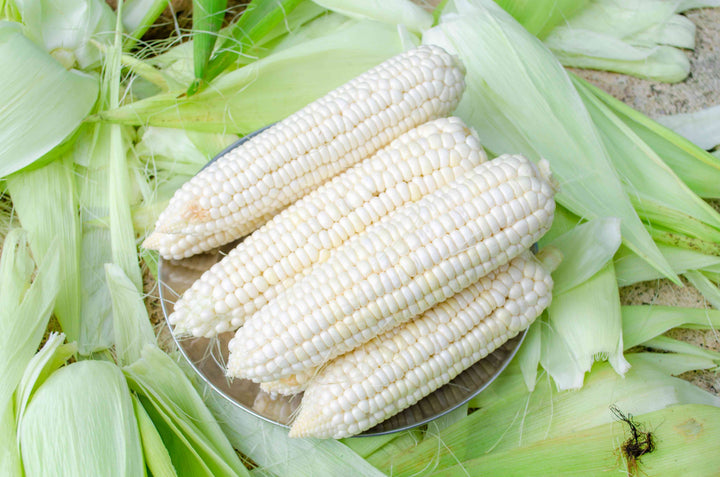
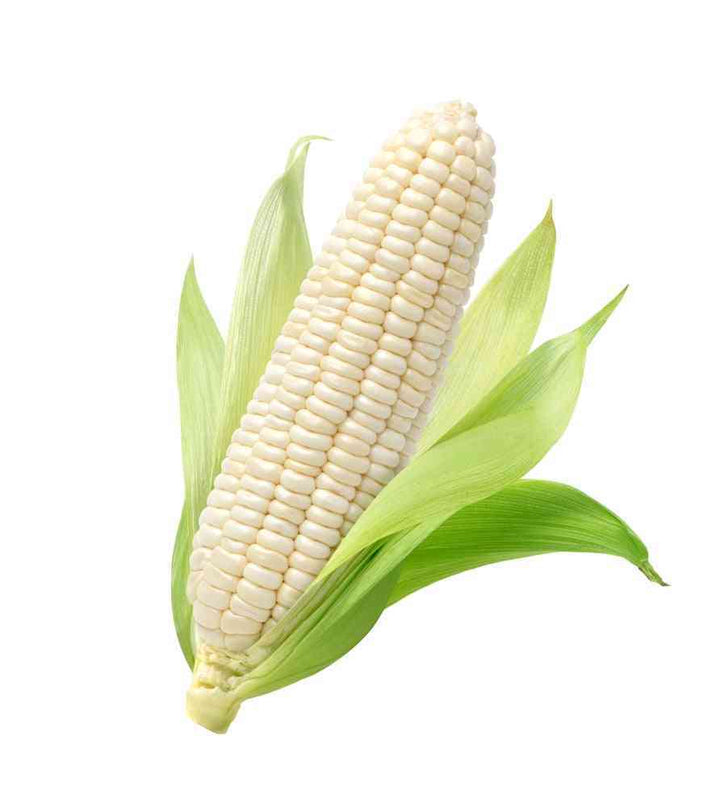
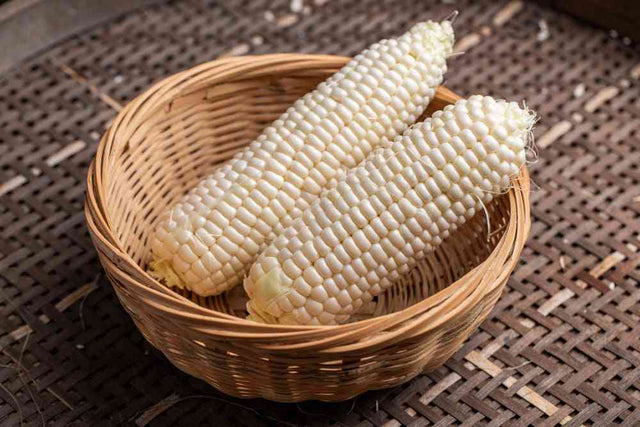
Late hybrid white sugar-enhanced sweet corn with tightly wrapped eight-inch ears.
Read the complete product descriptionTraits, flavor, garden use, variety notes, and the full catalog record
Silver Queen: Late hybrid white sugar-enhanced sweet corn with tightly wrapped eight-inch ears.
About this variety
Silver Queen is a late hybrid white sugar-enhanced sweet corn. Cornell documents slightly tapered 8 inch ears with 14 to 16 rows, tall plants, warm-soil germination, and maturity around 91 to 96 days.
Growing
Direct sow in late spring after frost danger has passed and the soil at planting depth has warmed to about 60 to 65°F. Sow about 1 in deep, space plants about 10 in apart, and allow about 30 in between rows. Plant in a block of at least four short rows rather than one long row so wind-borne pollen can reach the silks. Grow in full sun in well-drained loam near pH 6.0–6.5. Use soil-test recommendations and compost or other appropriate fertility inputs because corn is a heavy feeder. Provide about 1 inch of water per week when rainfall is limited, with special attention during tasseling, silking, and ear fill. Cultivate shallowly to avoid damaging roots. This late cultivar needs reliably warm soil for good emergence.
Harvest and use
Harvest at the milk stage when silks are brown and a pressed kernel releases milky juice. Cool or process quickly for fresh eating, freezing, or canning.
Saving seed
This is a hybrid cultivar. Saved seed will segregate and will not reproduce the purchased variety uniformly. For maintaining a stable named corn, start with a verified open-pollinated variety. Seed may still be saved for breeding or observation if the planting is isolated and clearly labeled as segregating material. Corn is wind-pollinated and crosses readily. Grow one flowering variety at a time, isolate by adequate distance, or use a documented flowering-time plan. Sweet-corn genetic classes also require separation from incompatible endosperm types; formal seed production may require 650 feet between the same type and about 1,300 feet between different types. Allow seed ears to remain until husks are brown and kernels are very hard. Harvest before prolonged wet weather, cure ears with strong airflow, shell only when fully dry, remove damaged or off-type seed, and label the cultivar, year, field, and lot. Store cool, dark, and dry.