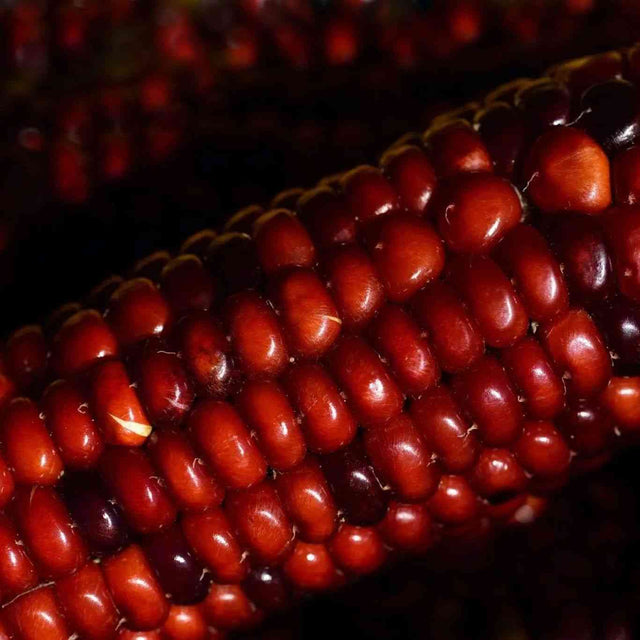
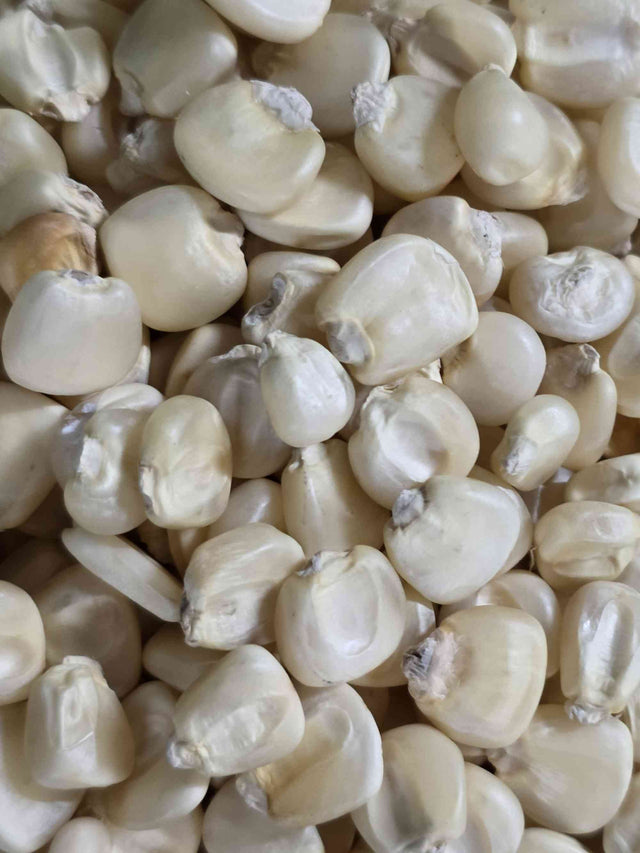
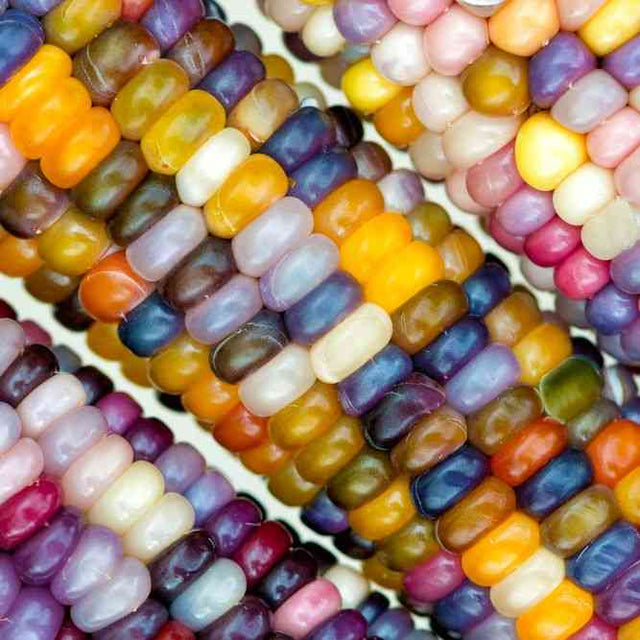
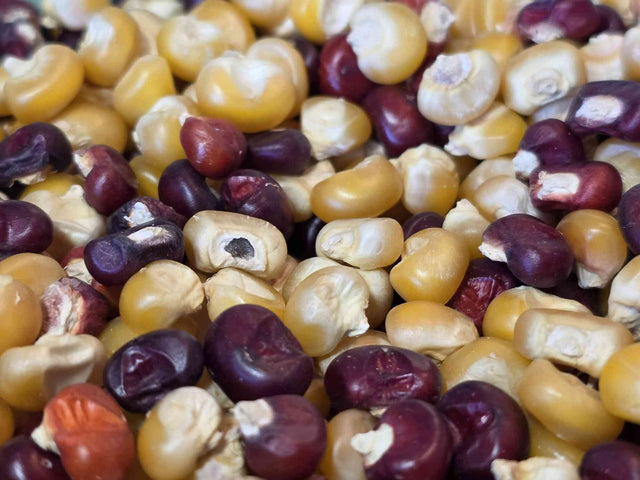
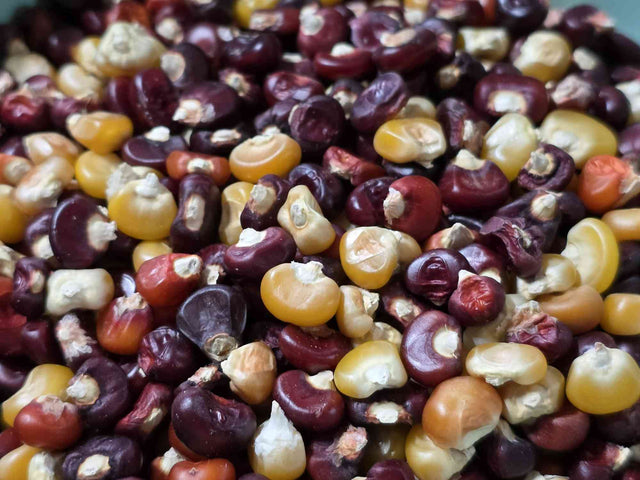
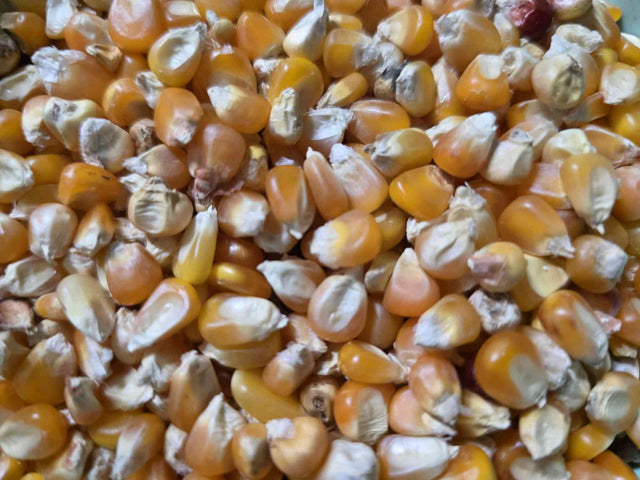
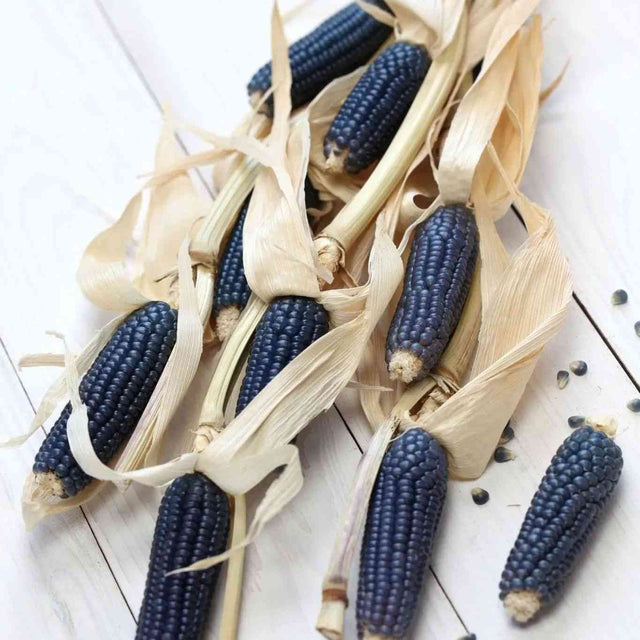
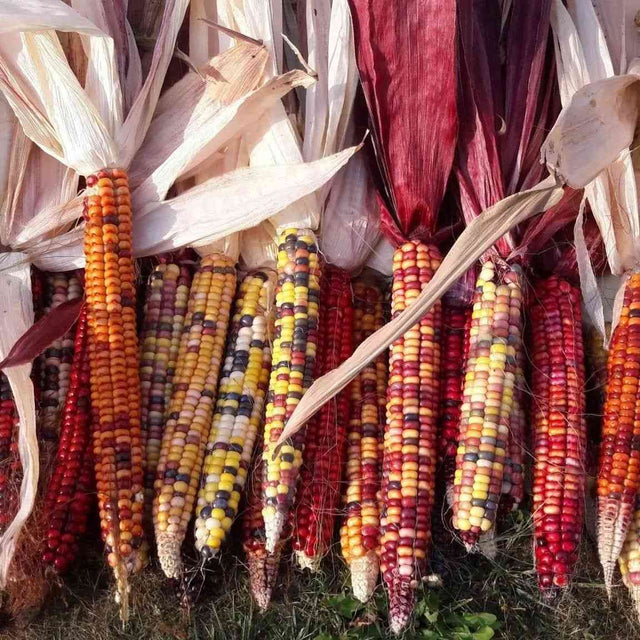
Dent, flint, and flour corn are all dry-grain corns, but their kernels are built differently. Dent corn combines harder starch along the sides with a softer center that often collapses into a dent as the grain dries. Flint corn has a larger proportion of hard, glassy endosperm around the kernel. Flour corn has a softer, fine-grained starchy endosperm that is easier to grind.
Those differences affect milling effort, particle texture, cooking time, storage behavior, and the kind of food each variety makes best. They do not create absolute rules. A food-quality dent can make excellent grits and meal. A flint can make firm hominy and flavorful coarse meal. A flour corn can make a fine meal with less grinding. The named variety still matters as much as the class.
This comparison is for gardeners choosing seed, not commodity buyers choosing anonymous grain. We are looking at open-pollinated varieties as living populations, with maturity, plant health, pollination, drying, and seed stewardship included in the decision.
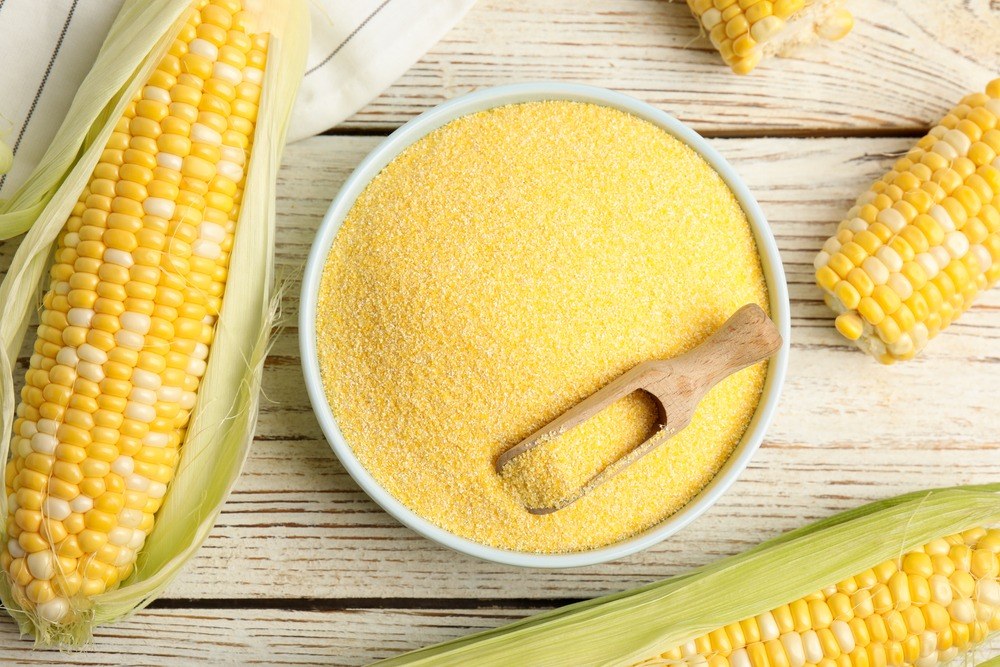
Dent vs. flint vs. flour at a glance
| Trait | Dent corn | Flint corn | Flour corn |
|---|---|---|---|
| Mature kernel structure | Hard starch on the sides with a softer center | Hard, dense, often glassy endosperm around much of the kernel | Soft, fine-grained starchy endosperm |
| Common visual clue | A dent may form at the crown as the soft center shrinks | Smooth, rounded or pointed hard kernel; no classic dent | Often opaque, soft-looking kernel that may scratch or break more easily |
| Grinding effort | Moderate; varies by variety and moisture | Highest of the three in many home mills | Usually easiest |
| Typical texture potential | Versatile meal, grits, cracked corn, hominy | Firm hominy, coarse meal, grits, parching, storage | Fine meal, flour, mush, breads, parching |
| Storage concern | Must be thoroughly dry; cracks can admit insects or moisture | Hard kernels often store well when fully dry | Soft kernels require careful insect and moisture protection |
| Best first question | Is this a food-quality dent selected for the dish I want? | Can my equipment handle the kernel, and what is its documented food use? | Does its maturity fit my season, and how will I protect the softer grain? |
This is a structural comparison. It does not mean every dent is harder than every flour corn, or every flint is better for hominy. Kernel size, pericarp, germ, endosperm distribution, harvest moisture, damage, and processing all affect the result.
The kernel anatomy behind the names
A corn kernel is a seed and a grain. The outer pericarp protects the kernel. The endosperm stores most of the starch. The germ contains the living embryo and a greater share of oils and nutrients. The tip cap is where the kernel connected to the cob.
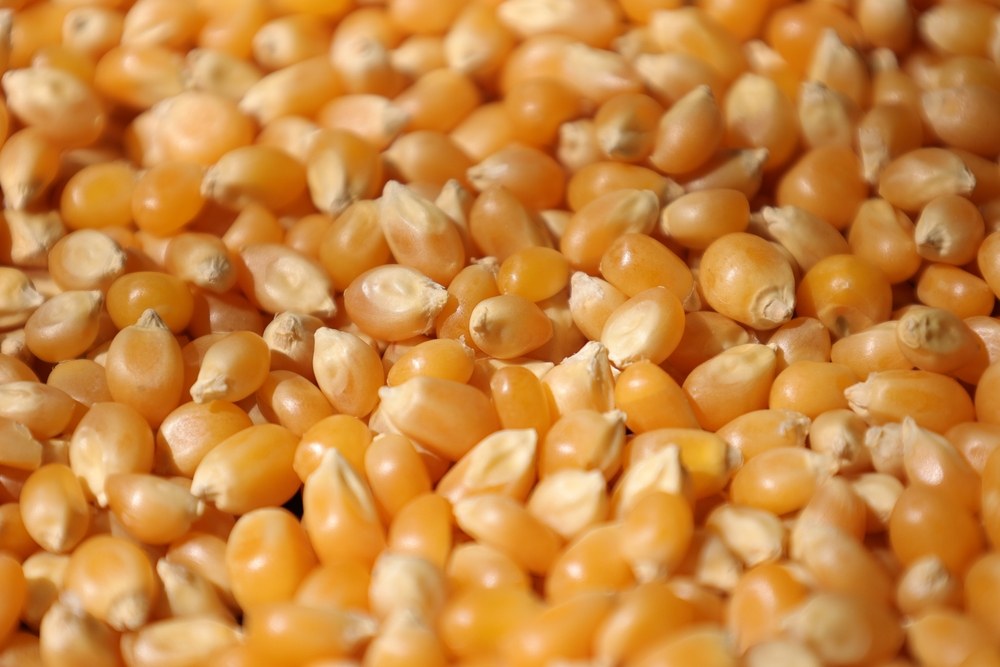
Inside the endosperm, starch and protein can be arranged in harder, more vitreous regions or softer, floury regions. That distribution creates much of the difference among dent, flint, and flour corn.
- Hard or vitreous endosperm is dense and translucent-looking. It resists crushing and helps a kernel hold its shape.
- Soft or floury endosperm contains loosely packed starch that breaks down more readily.
- Pericarp thickness affects chewing, hulling, popping, and how the kernel responds during alkaline processing.
- Germ size and oil affect flavor and storage. Whole-grain meal with the germ included can become rancid faster than degerminated meal.
The visible ear gives clues, but the cooking test finishes the identification. An unknown kernel may look flinty and still mill differently from a documented food flint. Use appearance to form a hypothesis, not to invent a variety name.
Dent corn
Oklahoma State University Extension describes dent corn as a kernel with hard, flinty endosperm along the sides and a softer center. During dry-down, the softer center shrinks and can pull the crown inward. That creates the dent.
Dent corn is often called field corn, but the phrase covers an enormous range. Commodity hybrids may be bred for feed, starch, ethanol, or industrial markets. Open-pollinated food dents may be selected for flavor, large kernels, milling, hominy, grits, roasting, or local adaptation. “Dent” does not mean “not for people.” It means you need to know which dent you are buying.
Strengths of food-quality dent corn
- A useful balance between hard and soft starch.
- Good potential for grits, meal, cracked corn, hominy, and other dry-grain foods.
- Many large-kernel varieties are easy to handle and evaluate.
- A broad range of colors, maturities, plant heights, and regional histories.
- Often more forgiving in a general-purpose grain plan than a very soft flour corn or very hard flint.
Limitations to plan for
- Not every dent is food quality.
- The visible dent can be inconsistent when moisture or genetics vary.
- Large, late plants may require a long season and strong lodging management.
- Cracked kernels and damaged crowns invite storage problems.
- A versatile dent still may not be the best variety for every dish.
Jimmy Red and Hickory King White are examples of dent listings in our catalog. Compare their actual product records, not merely kernel color.
Flint corn
Flint corn is named for its hard kernel. A larger share of the endosperm is dense and vitreous. Wisconsin Horticulture notes that flint corn has a hard outer layer and that larger-kernel flints may be used for hominy, grits, flour, or cornmeal. Oklahoma State describes flint as similar to popcorn but larger, with a hard endosperm that may look glassy.
That hardness can be an advantage. Fully dry flint grain can store well, hold shape in cooking, and produce a firm, distinct texture. It can also be demanding. A light-duty mill may struggle, and a grind that is too aggressive can heat the meal or wear equipment.
Strengths of flint corn
- Hard kernels that can store well when clean and fully dry.
- Firm texture for hominy and some grits.
- Strong potential for coarse meal, parching, and culturally specific foods.
- Many colorful open-pollinated varieties with visible diversity.
- Some northern flints mature in shorter seasons than large southern dents.
Limitations to plan for
- More milling effort.
- Hard pericarp or endosperm may require hulling, soaking, alkaline processing, or repeated grinding depending on the food.
- Visual beauty can cause a variety to be sold decoratively without useful culinary notes.
- Very hard grain may chip rather than mill cleanly if moisture is wrong.
Glass Gem, Abenaki Calais, Cascade Ruby-Gold, and Argentina Orange Creole are catalog examples of flint corn. They are not interchangeable simply because they share a class.
Flour corn
Flour corn contains soft, fine-grained starchy endosperm and generally a thin pericarp. It breaks down more easily than flint corn and can produce a fine meal with less milling effort. Flour corn has been important in many Indigenous agricultural and food systems, but the phrase names a kernel class, not a single region or culture.
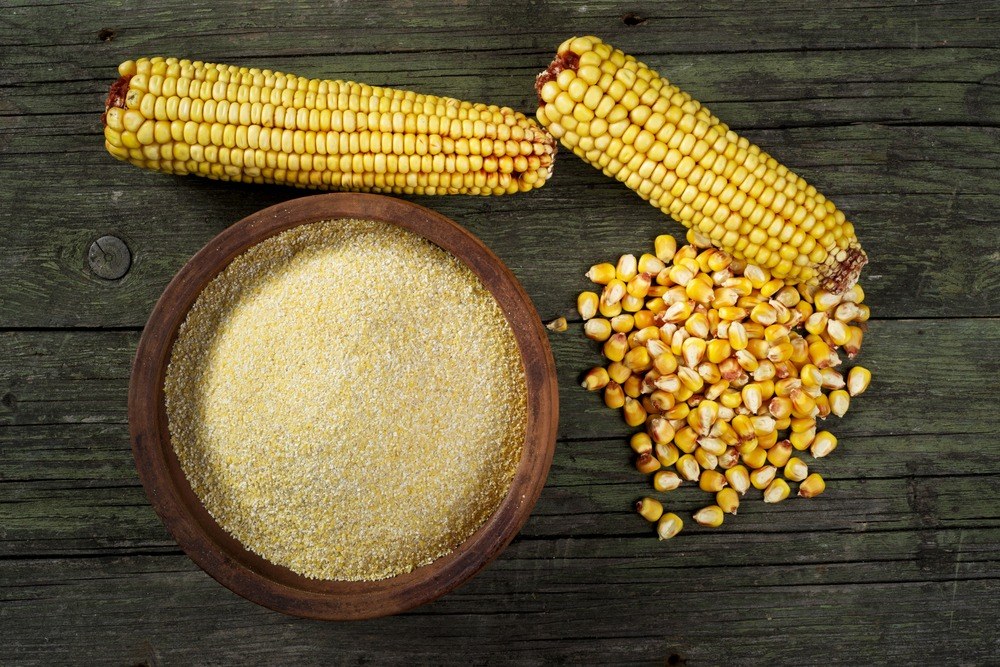
A soft kernel is helpful when fine meal is the goal. It can be less forgiving during harvest and storage. Insects, broken kernels, high humidity, and poor drying can damage a lot quickly. The grain must be fully mature and carefully handled.
Strengths of flour corn
- Easy grinding for fine meal and flour.
- Smooth texture in mush, breads, and many other preparations.
- Useful in small-scale hand processing where extremely hard grain would be burdensome.
- Wide color and maturity range.
- Strong potential for parching and roasted flour in varieties documented for those uses.
Limitations to plan for
- Soft grain can crack and attract storage insects.
- Fine flour absorbs water differently from coarse meal, so recipes need adjustment.
- It may not produce distinct, firm grits as easily as a harder grain.
- Some flour corns are long-season and may not finish in a short climate.
Hopi Blue, Painted Mountain, Magic Manna, and Montana Morado are flour-corn listings in our catalog. Use the product page and your own trial to decide which one fits your season and food goal.
Side-by-side comparison
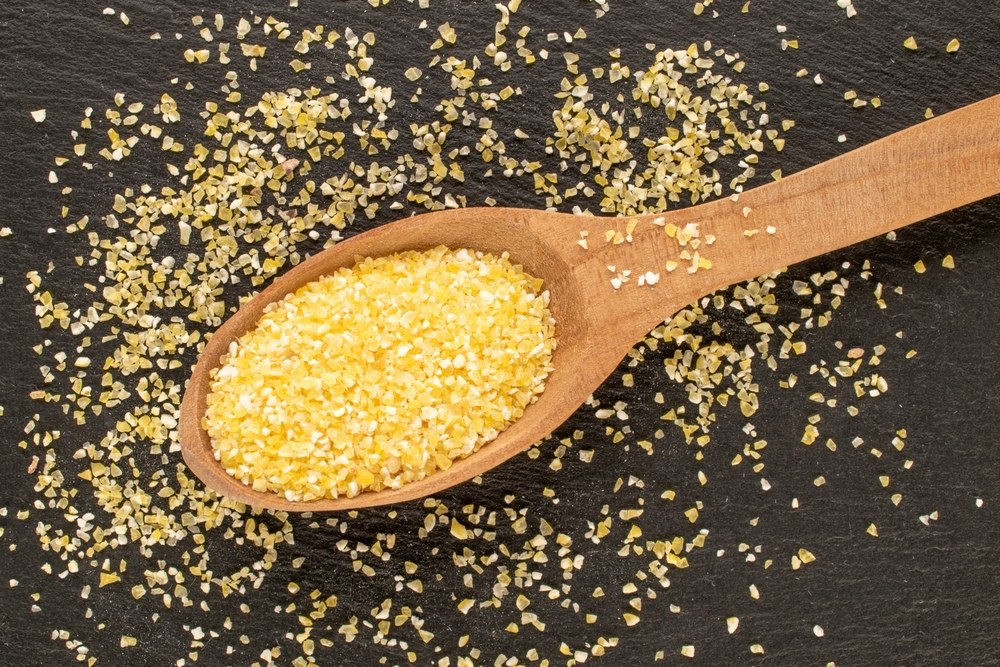
The table below focuses on home-scale growing and processing. “Often” is intentional. Named varieties can depart from the broad class pattern.
| Decision | Dent | Flint | Flour |
|---|---|---|---|
| You want coarse grits | Often a strong starting point | Can be excellent but may be harder to mill | May produce softer, less distinct particles |
| You want fine meal | Good with a capable mill and fine screen | Possible, but requires more milling | Usually the easiest choice |
| You want whole-kernel hominy | Many food dents work well | Many flints hold a firm texture | Variety-specific; soft kernels may break down more |
| You want masa | Choose a food-grade variety documented or tested for nixtamalization | Some culinary flints perform well | Some flour corns work, but do not assume softness alone makes good masa |
| You have a small hand mill | Moderate demand | Potentially difficult | Usually easiest |
| You need long storage | Good if dry and unbroken | Often strong | Requires close insect and moisture control |
| You need a short season | Variety-specific | Some northern flints are useful | Several short-season flour corns exist |
| You want striking color | Available in many colors | Especially common in colorful dry ears | Available in blue, purple, white, yellow, red, and mixed populations |
The most reliable method is to buy seed from a listing that names both class and intended use, then grow enough grain to run a controlled kitchen test. A label cannot account for your soil, harvest weather, drying system, mill, water chemistry, or recipe.
Can people eat dent, flint, and flour corn?
Yes, when the variety is intended for human food and the crop is grown, harvested, dried, cleaned, stored, and prepared safely. The question “Can you eat dent corn?” is usually really asking whether field corn is only livestock feed. It is not. Many important food corns are dent, flint, or flour types.
However, do not take anonymous feed grain, treated seed, moldy corn, or a decorative ear and assume it belongs in the kitchen. Seed corn may be treated with pesticides and is not food. Feed grain may not be handled to food-grade standards. Decorative ears may have been sprayed, stored, or displayed in ways that make them inappropriate for eating. Corn with visible mold, musty odor, insect contamination, or unknown chemical history should not become food.
For a garden crop, begin with food-intended seed, use untreated seed for planting, avoid prohibited chemicals, harvest sound ears, and keep grain off damp floors. If you plan to sell finished meal or food products, follow applicable food-processing and labeling requirements.
How each class behaves in a mill
Milling is controlled fracture. You are asking a dry kernel to break into particles of a chosen size without overheating the grain, damaging the mill, or producing a mixture that is impossible to sift consistently.
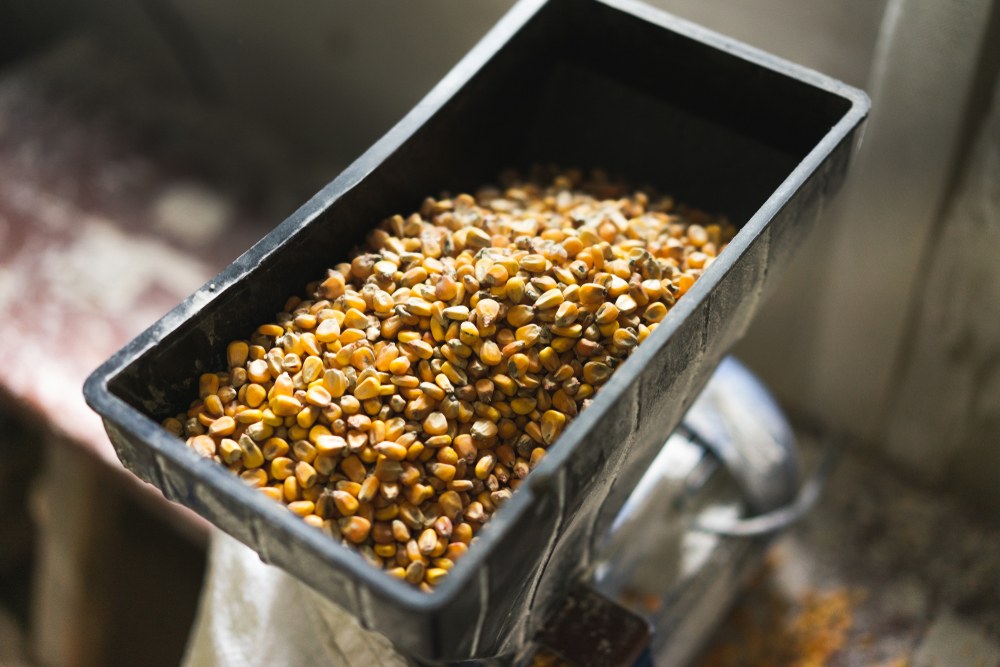
Dent corn in the mill
The softer center and harder sides can create a useful mixture of particles. A coarse pass can produce cracked corn and grits. Finer passes can produce meal and flour. The balance varies by variety.
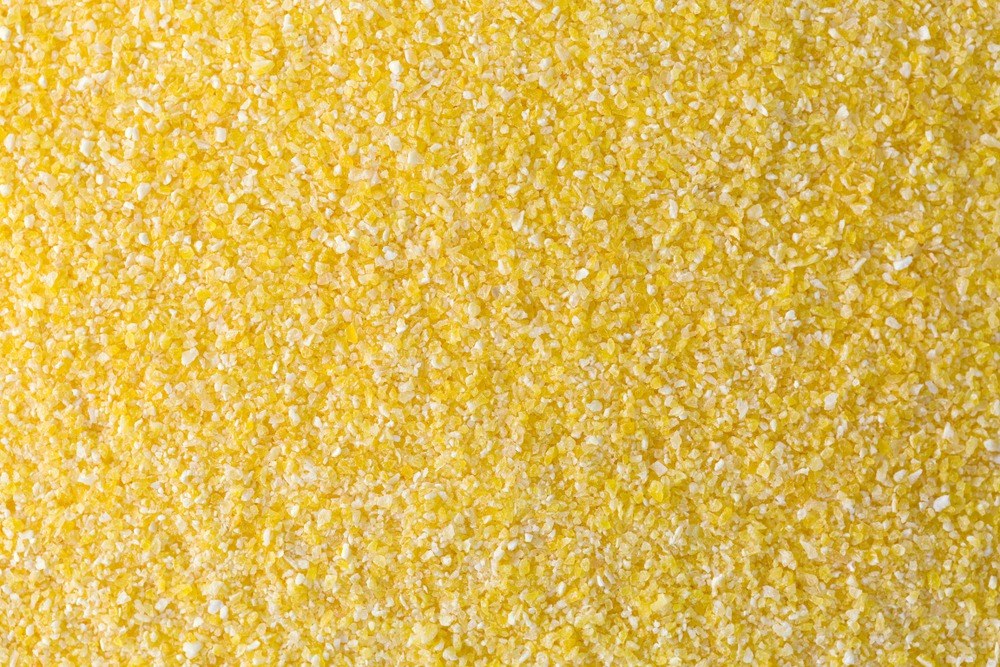
Flint corn in the mill
Flint may need a strong burr mill, smaller feed rate, or multiple passes. Avoid forcing hard kernels through equipment not rated for corn. Excess heat can damage flavor and oils.
Flour corn in the mill
Flour corn breaks readily and can produce a fine powder quickly. That does not eliminate the need to sift. The germ, bran, and flour fractions influence texture and storage.
This turns “good for cornmeal” into data you can repeat. It also shows whether the grain makes the product you actually want.
Hominy and masa suitability
Hominy and masa depend on more than softness. Nixtamalization cooks and steeps dry corn in an alkaline solution, loosening the hull and changing flavor, texture, nutrition, and dough behavior. Iowa State describes masa as the dough made after alkaline cooking, steeping, washing, and grinding. Oregon State's culinary corn project evaluates heirloom varieties for nixtamalization as a specific quality goal.
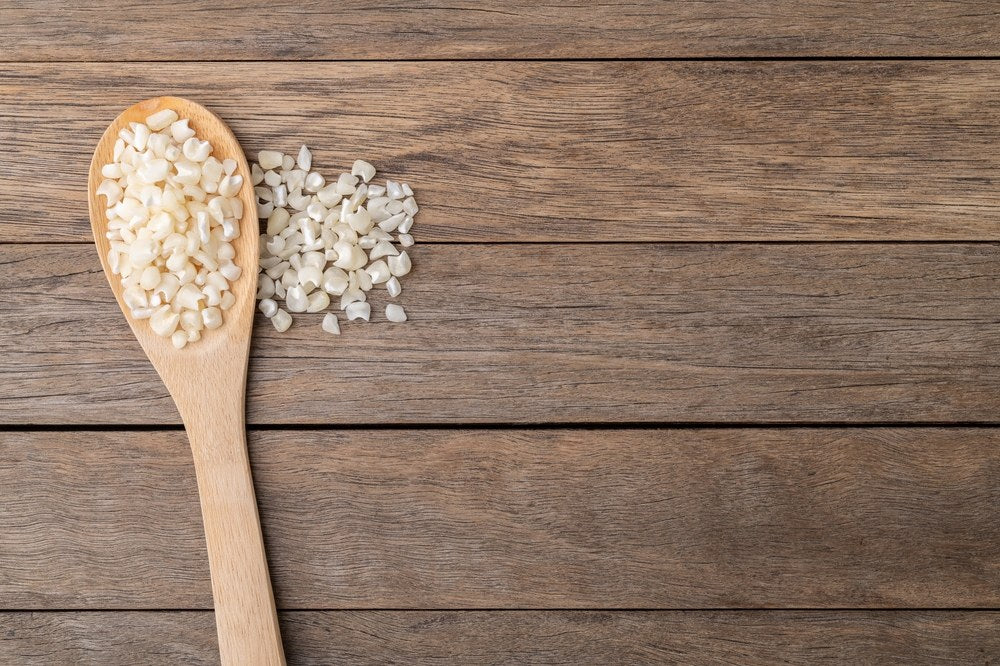
Large dent and flint kernels are common starting points because they can remain substantial through processing. Some flour corns can also work. The deciding factors include pericarp behavior, kernel integrity, hydration, starch properties, flavor, and the final food.
Do not assume that:
- Every dent corn makes good masa.
- Every flint corn makes tender hominy.
- Every flour corn dissolves into a good dough.
- Every blue or white corn has the same processing needs.
- A variety used for one community's hulled-corn practice should be described as identical to Mesoamerican nixtamalization.
Use food-grade calcium hydroxide or another method specified by a reliable recipe, follow handling precautions, and keep canning separate from ordinary cooking. Home-canned hominy should follow a tested preservation recipe rather than an improvised process.
How the classes differ in the garden
Kernel class does not create a single plant habit. Tall southern dents, compact early flints, short-season flour corns, and vigorous mixed populations all exist. Compare the named variety on these points:
- Days to maturity: Dry grain needs enough time to reach physiological maturity and continue drying.
- Plant height and ear height: These affect lodging, harvest labor, and wind exposure.
- Tassel and silk timing: Poor synchronization reduces kernel fill.
- Husk cover: Tight cover can help with insects and rain but may slow dry-down.
- Stalk strength: Heavy ears and late storms can expose weak stalks.
- Disease response: Humidity, leaf disease, ear rot, and stalk rot vary by environment.
- Rooting and drought response: Water stress around tasseling and silking can reduce pollination before kernel structure ever matters.
Class can influence your expectations, but adaptation is observed in the field. Record performance over multiple seasons before calling a variety locally adapted.
How to identify an unknown dry ear
An unknown ear can sometimes be placed in a broad class, but it should not be assigned a named variety from appearance alone.
- Confirm full maturity. Immature kernels can appear soft or shrunken in misleading ways.
- Look at the crown. A consistent dent suggests dent corn, but absence of a deep dent does not rule it out.
- Look at the break. A cut or broken kernel can reveal glassy hard endosperm versus opaque soft starch.
- Test hardness. Compare resistance to scratching and crushing. Wear eye protection if cutting kernels.
- Mill a small sample. Record force, fracture pattern, and particle texture.
- Cook a small sample. Observe hydration, hull tenderness, flavor, and structure.
- Keep it unknown. If identity is not documented, label it as an unknown population with date and source rather than borrowing a famous name.
A responsible seed record can say “unknown red flint-type corn received from…” without pretending the population is a specific historic variety.
How to choose between them
Choose by constraint as well as desire.
| Your priority | First choice to investigate | Second choice | Main caution |
|---|---|---|---|
| Fine flour with low milling effort | Flour corn | Soft food dent | Protect soft grain in storage |
| Coarse grits with distinct texture | Food dent | Flint | Test pericarp and cooking time |
| Firm whole hominy | Flint or large food dent | Documented flour corn | Use a tested process and a small batch |
| Versatile household grain | Food dent | Flour corn | One variety may still not excel at every product |
| Short northern season | Early flint or early flour corn | Early dent | Verify days to dry-grain maturity, not sweet-corn harvest |
| Hard storage grain | Flint | Dent | Dry completely before sealing |
| Small hand-powered mill | Flour corn | Dent | Hard flint may exceed the mill's comfortable capacity |
| Color-centered teaching garden | Any documented class with stable color | Mixed population | Do not let color replace intended use and seed records |
When in doubt, grow one variety from each class in separate or controlled-pollinated blocks and compare the finished food. A decision based on your mill and kitchen is more useful than a universal ranking.
A three-class kitchen and field trial
A practical trial can compare dent, flint, and flour corn without pretending one season settles the question.
Field measurements
- Emergence percentage and early vigor.
- Days to 50 percent tassel and 50 percent silk.
- Tassel-silk interval.
- Plant and ear height.
- Root lodging and stalk lodging after storms.
- Ear number, filled kernel percentage, and disease.
- Harvest moisture or days required to dry safely.
- Sound grain weight after shelling and cleaning.
Kitchen measurements
- Minutes required to mill a known weight.
- Percentage retained on coarse, medium, and fine screens.
- Cooking water required for each fraction.
- Time to tenderness.
- Texture when hot and after cooling.
- Aroma, sweetness, bitterness, nuttiness, and aftertaste.
- Hominy kernel integrity or masa dough cohesion when that process is tested.
Keep seed from the trial separate from grain used in food tests. Mark which ears were selected as seed before the rest are shelled.
Seed saving and population maintenance
Dent, flint, and flour corn are all wind-pollinated populations. The seed-saving problem is the same even when the kernel class differs: maintain enough plants, control outside pollen, select through the whole season, and keep balanced maternal contributions.
Do not save only the most photogenic ears. A brilliant ear can come from a weak stalk, late plant, diseased leaf canopy, or poorly rooted plant. Mark potential seed plants during the season. Reject plants that fail the traits important to your stewardship goal. At harvest, keep seed ears separate, dry them well, and shell a balanced quantity from many selected ears.
Read our corn seed-saving guide for population size, controlled pollination, drying, storage, and germination testing.
Common comparison mistakes
- Calling every multicolored ear flint. Color does not prove endosperm structure.
- Calling every white dry ear flour corn. White dent and white flint exist.
- Using the dent as the only identification feature. Drying conditions and genetics affect crown shape.
- Assuming soft means weak. Soft endosperm can be exactly the trait desired for fine meal.
- Assuming hard means better storage without measuring moisture. Wet flint corn can mold just as surely as wet flour corn.
- Buying feed corn for a food project. Food quality and handling must be documented.
- Using one recipe to rank every class. Each class may need a different grind, soak, or cooking time.
- Saving seed after all ears are mixed. Selection records disappear when seed and food grain are handled as one lot.
What whole-season selection changes
When we hand-pollinated much of our corn in 2022, the ear could no longer be separated from the plant that produced it. We had to see when the tassel shed, when the silks emerged, which plants held themselves up, which ears filled, and which plants reached maturity under the actual conditions of the field.
That experience is why we resist reducing corn to a color chart. Kernel class matters. Food use matters. But the field record decides whether a variety can keep carrying that use in a place. A soft flour kernel from a plant that never finishes is not a practical flour crop. A hard flint that matures, stores, and cooks well may be worth the extra milling. The whole system makes the choice.
Frequently asked questions
Which is better, flint corn or dent corn?
Neither is universally better. Flint is harder and often useful for firm hominy, coarse meal, and storage. Food-quality dent is versatile for grits, meal, hominy, and cracked grain. Choose the named variety and food goal.
Is flour corn the same as corn flour?
No. Flour corn is a kernel class with soft starchy endosperm. Corn flour is a milled product. Corn flour may be made from several corn classes, and the phrase can mean different products in different countries.
Can I make grits from flint corn?
Yes, some flint corns make excellent firm grits, but the hard kernels may require a strong mill and longer cooking. Test a small batch.
Can dent corn be eaten fresh?
Some dent corn can be eaten at an immature roasting stage, but it is not the same as modern sweet corn. The window, texture, and flavor are variety-specific.
Why does dent corn dent?
The softer starch in the center contracts more during drying than the hard starch along the sides, pulling the crown inward.
Which class stores longest?
Fully dry, sound flint corn often stores very well because of its hard structure, but moisture, insects, temperature, kernel damage, and container quality matter more than the class name alone.
Can a corn be part dent and part flint?
Yes. Modern and open-pollinated populations can show intermediate endosperm patterns. Class names are useful categories, not walls that every kernel respects perfectly.
Sources and further reading
- Oklahoma State University Extension: Growing North American Indigenous Corn
- University of Wisconsin Horticulture: Flint, Dent, Flour, and Popcorn
- Iowa State University Extension: Food-Grade Corn Glossary
- Oregon State University: Dry-Farmed Culinary Corn Project
- Ganondagan: White Corn Project
- West Virginia University Extension: Growing Popcorn
- Utah State University Extension: Storing Grain