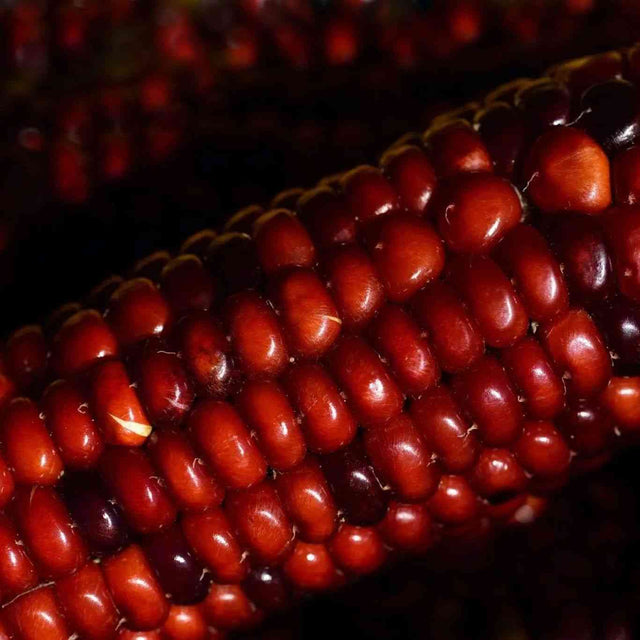
Bloody Butcher is a tall, open-pollinated red dent corn grown to dry maturity for cornmeal, grits, hominy trials, animal feed, seed, and other dry-grain uses. It is not a sweet corn and should not be marketed as a dependable popcorn. Its best-known feature is the deep red to burgundy grain, but the crop also demands a long season, a strong pollination block, enough root support for tall stalks, and careful dry-down.
The variety is strongly associated with Appalachian farming and family seed saving. West Virginia University Extension dates Bloody Butcher to the early 1800s and describes it as a historic field corn used for food and feed. The exact original cross, family, and place are less certain. Repeated stories about red and white parent corns may reflect real seed-saver memory, but they do not form one universally documented pedigree.
This guide keeps the useful history and removes the exaggeration. It explains how Bloody Butcher differs from sweet corn and popcorn, how to manage its height and maturity, why red color alone cannot identify it, how to grind and cook a trial batch, and how to save seed from a broad population rather than a few dramatic ears.

What Bloody Butcher is and is not
Bloody Butcher is a dent-type field corn. Dent kernels contain hard starch along the sides and softer starch toward the center. As the grain dries, the softer center contracts and many kernels develop a visible dent. That structure makes food-quality dent corn useful for meal and grits and suitable for hominy or nixtamalization trials, depending on the seed lot.
The variety is harvested dry. It is not selected for the tenderness and sugar of sweet corn. It is also not a reliable popcorn. A dry kernel may crack or partially expand under heat, but that does not make the population a true popcorn with consistent pressure, hull strength, and expansion.
| Trait | Expected character | What still needs field verification |
|---|---|---|
| Kernel class | Red dent field corn | Degree of denting and hard-to-soft starch balance in the current lot |
| Maturity | Long-season, often around 100 days or more | Actual time to hard dry grain in the local season |
| Plant height | Often very tall, sometimes reported near 10 to 12 feet | Height, root anchorage, and lodging in the local soil |
| Food use | Meal, grits, hominy trials, and other dry-grain foods | Flavor, grind, cooking time, and texture of the current lot |
| Popping | Not a dependable primary use | A novelty pop test should not replace choosing a true popcorn |
Documented Appalachian history and uncertain origin stories
West Virginia University Extension describes Bloody Butcher as a West Virginia-associated heirloom that dates to the early 1800s. The name is commonly explained through a red-and-white kernel pattern compared with blood on a butcher’s apron. Many present seed lots are much more uniformly red or burgundy than that description, which shows how open-pollinated populations and seed-saver selections change over time.
Family and regional accounts sometimes describe the corn as a cross between red and white corns. Some accounts also place Native corn in the background of Appalachian field-corn development. Corn itself is an Indigenous crop of the Americas, and Appalachian foodways developed through Native, African, and European histories. Those broad truths do not prove one exact tribal origin for Bloody Butcher.
The responsible history is therefore layered. We can document the early nineteenth-century Appalachian association and the variety’s long use for meal, hominy, feed, and distilling. We can record the seed-saver stories as stories. We should not present an unverified parentage, family, county, or Native nation as settled fact.
That distinction matters commercially. A dramatic name and red ear make Bloody Butcher easy to market. Good records make it possible to steward. When a current lot differs in ear size, row count, maturity, or color, note the difference instead of forcing every observation into the oldest catalog description.
Plan for tall stalks, long maturity, and lodging
Bloody Butcher can produce tall plants, and tall plants amplify every weakness in the stand. Shallow roots, excess nitrogen, crowded spacing, saturated soil, corn rootworm injury, and strong storms can all cause lodging. The plants may bend at the root, break below the ear, or lean into neighboring rows and reduce pollen interception.
Do not respond by starving the crop. Tall field corn still needs fertility and water. The goal is balance: a deep, well-drained root zone; soil-test-based nitrogen; adequate potassium; even spacing; and water that reaches the roots rather than keeping the stalk base wet.

Place the block where it will not shade short crops. Orient rows so prevailing wind moves pollen through the stand rather than along one exposed edge. In hurricane and thunderstorm country, avoid the most wind-tunneled corner of the property and harvest mature ears before a forecast storm when field dry-down is already complete enough.
Choose the right field and season
This is not the corn for a tiny shaded bed or a frost-prone pocket. Use full sun, deep soil, and a long frost-free window. Count backward from first hard frost and leave time beyond the stated maturity for husks and grain to dry. A crop can reach physiological maturity and still be too wet for safe storage.
In the Southeast, early planting helps move flowering out of the most severe late-summer heat and allows dry-down before autumn tropical weather. In northern gardens, use the warmest site and expect to finish drying indoors. In high-wind areas, a shorter dent or flour corn may be the more practical choice if the goal is dependable grain rather than preserving Bloody Butcher specifically.
Avoid planting in the same ground year after year. Rotation reduces residue-borne disease and breaks some insect cycles. If the plot has a history of stalk rot, ear rot, or severe rootworm damage, move the crop and improve drainage before investing a rare seed lot there.
Build a complete pollination block
Plant after the soil has warmed to about 60°F. Use a block of at least four short rows, with final plants roughly 8 to 12 inches apart and rows about 30 to 36 inches apart. Rich irrigated soil may support a somewhat tighter stand; drought-prone soil and very tall plants benefit from more root room.
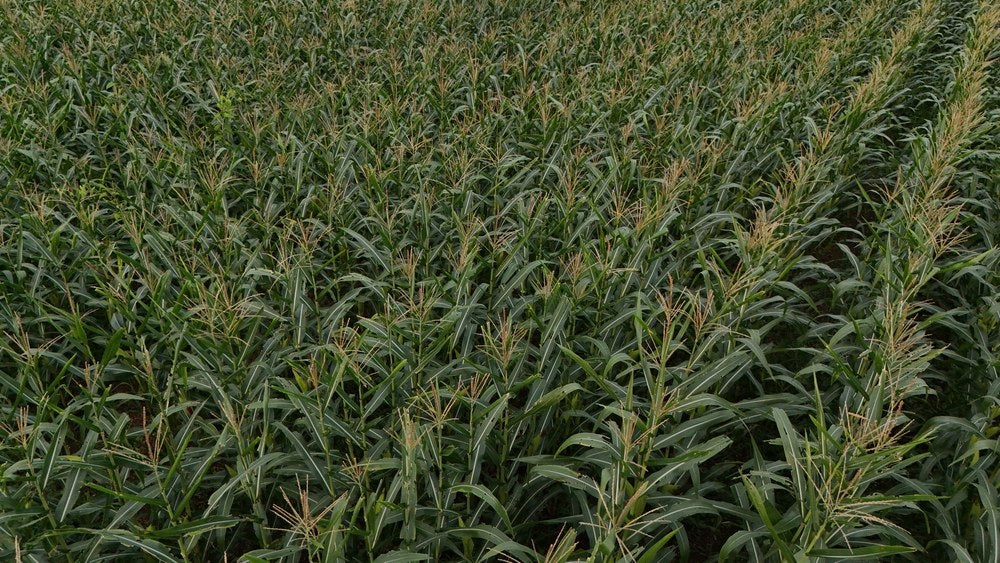
Plant extra seed, then thin to a uniform stand. Do not leave doubles because the red ears look valuable. Crowded plants compete for water and nitrogen, delay silks, produce smaller ears, and lodge more easily. Replace missing plants only very early. Late replacements rarely flower with the main block.
A seed increase needs more plants than an eating-grain patch. If the goal is long-term maintenance, design the block around the population requirement first and the expected yield second.
Manage fertility and water without making weak stalks
Use a soil test. Corn requires nitrogen, but tall corn grown with high nitrogen and low potassium can produce lush plants with weak stalks. Apply lime, phosphorus, and potassium according to the test. Side-dress nitrogen before rapid growth, placing it away from the stalk and watering it in.
Water is most critical from about two weeks before tasseling through two weeks after silking. Drought before flowering can reduce ear size and delay silks. Drought during pollen shed leaves blank kernels. Drought after fertilization aborts tip kernels and reduces grain weight. Apply water deeply enough to reach the active root zone.
Stop cultivating deeply once brace roots and feeder roots spread between rows. Root pruning during hot weather creates the same symptoms as drought because the plant cannot reach water. Use shallow cultivation or mulch after soil warms.
Protect kernel set and seed identity
Every kernel has its own silk. Bloody Butcher needs pollen shed to overlap with fresh silks across the block. Tall plants do not guarantee complete ears. Drought, crowding, silk-feeding insects, lodging, or a thin stand can still leave bare tips and random gaps.
Isolation matters because pollen from yellow field corn, sweet corn, popcorn, or another dent can change current-ear traits and the genetics of the saved seed. A neighboring commercial field is a much larger pollen source than another garden row. Use substantial distance, verified time isolation, or controlled pollination when purity matters.
If the stand is small, hand-pollinate. Collect pollen from many selected tassels in the morning after dew dries, mix it, and apply it to fresh silks. Repeat while silks remain receptive. When maintaining the variety, avoid using one dramatic red plant as the male parent for most ears.
Understand red grain without identifying by color alone
Red pigmentation can occur in multiple corn classes and named varieties. Bloody Butcher is identified through the combination of seed record, dent-kernel character, plant and ear traits, and provenance, not through red color alone. A red flint, red popcorn, or red flour corn may look similar in a photograph and behave very differently in the mill.
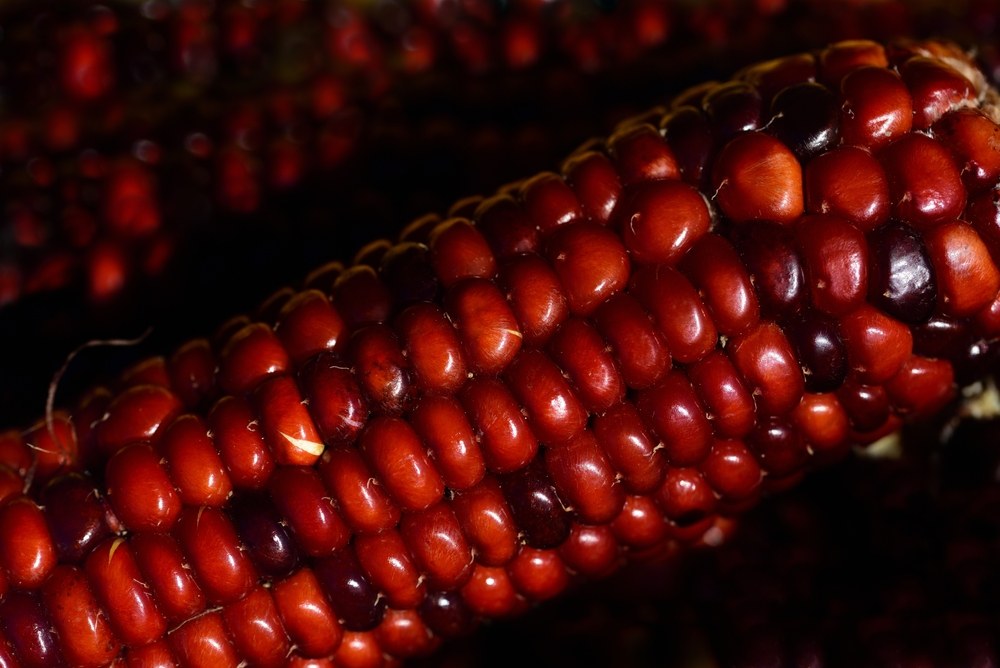
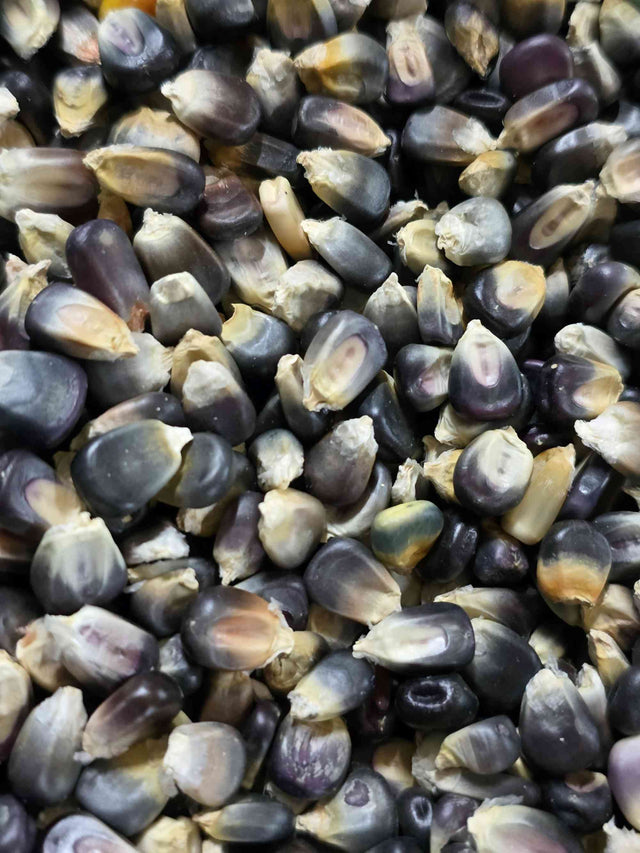
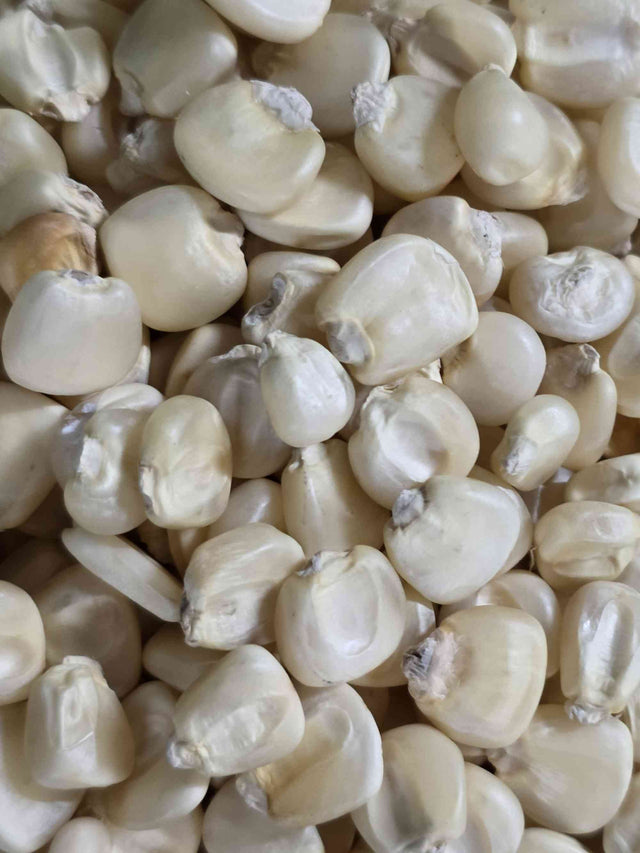
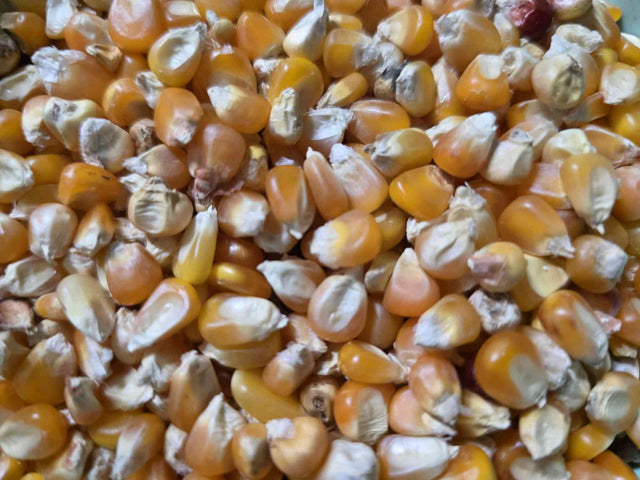
Cross-pollination can also introduce yellow, white, orange, purple, or mixed kernels into the current ear. Decide how much variation belongs in the stock before selection. Some family strains carry mottling or shade differences. Do not discard useful early or sturdy families merely because their red is less uniform, unless uniform color is an explicit documented selection goal.
Harvest and dry red dent corn
Leave ears until the husks are brown and the kernels are hard. Denting should be visible on many kernels, but the depth of the dent varies. When wet weather threatens, harvest after physiological maturity and finish drying under cover. Remove or pull back husks and keep ears in a single ventilated layer or hang them with space between.
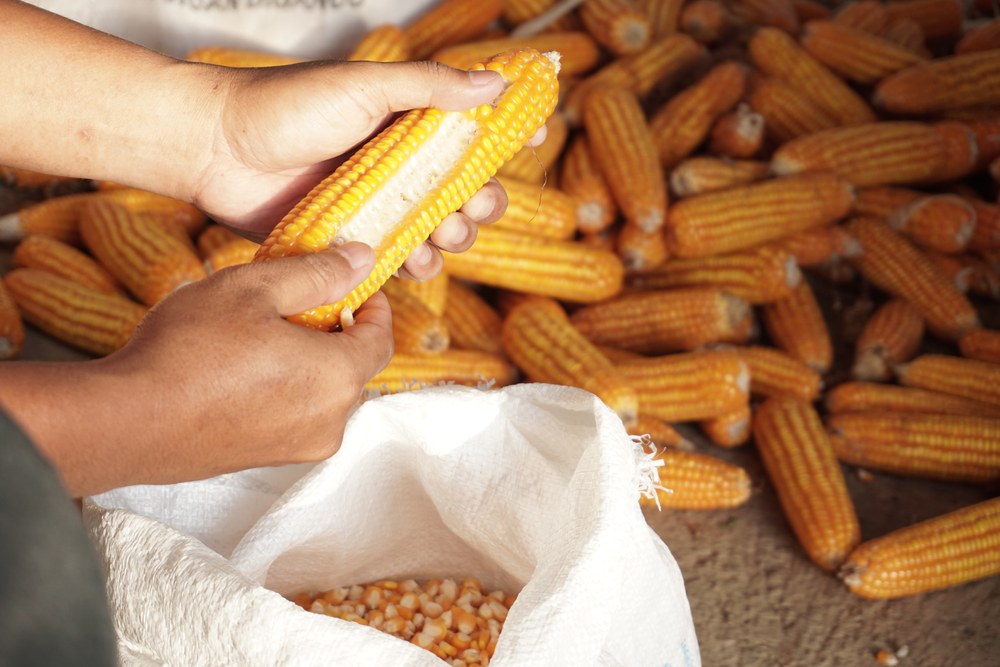
Inspect ears for earworm feeding, mold, sprouting, discoloration, and soft kernels. Do not grind or save moldy grain. Dry seed ears gently and separately. Once the kernels are shelled into one red pile, family and field-position information is gone unless it was recorded earlier.
For household storage, stabilize moisture before sealing. A grain moisture meter that supports corn is useful; otherwise use repeated hardness checks, jar checks, and careful observation. Corn that fogs a jar, smells musty, or feels cool and damp needs more drying or disposal.
Evaluate cornmeal, grits, hominy, and other food uses
Bloody Butcher is widely valued for cornmeal, but one sentence cannot describe every family’s kitchen result. Red pigments, bran, kernel hardness, milling equipment, grind size, and cooking method all affect flavor and texture. Grind a small clean sample before committing the whole harvest.
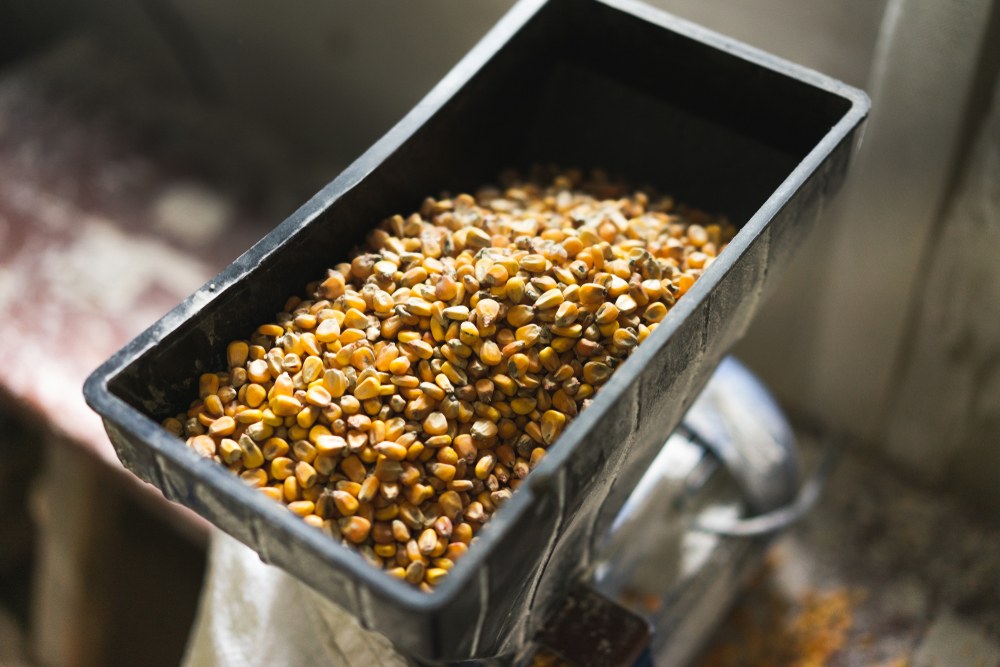
For meal, compare fine and medium grinds. Record aroma, bran texture, bitterness, cooking time, water absorption, and the color of the cooked food. Red grain may yield meal that is pink, tan, red-speckled, purple-brown, or much less vivid than the raw kernel.
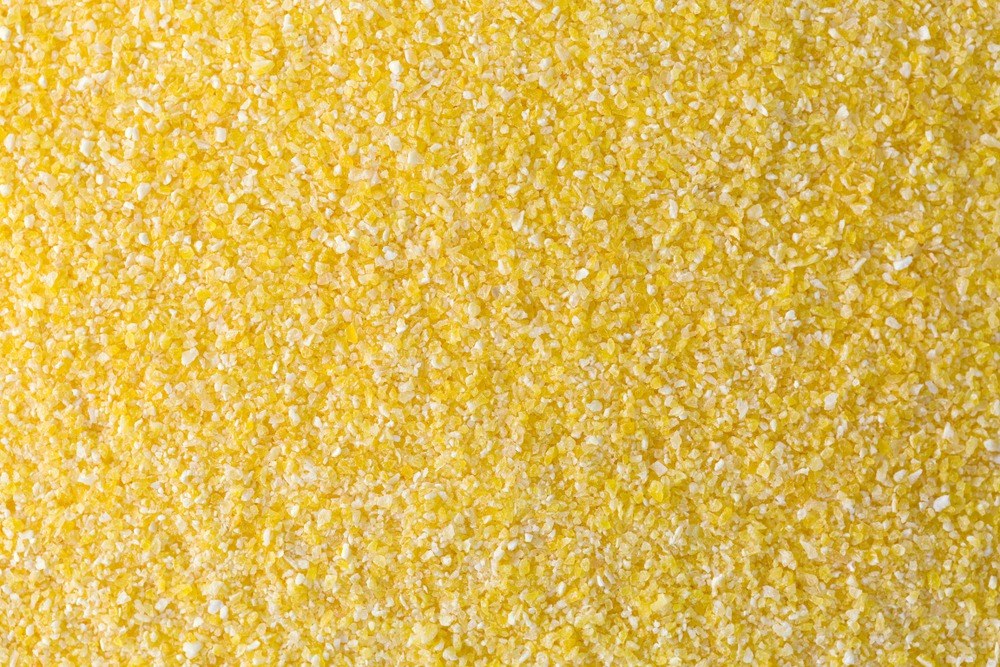
For grits, screen the cracked grain into a consistent particle size and separate excess flour. For hominy or masa, test a small nixtamalized batch using a food-safe, measured process. Kernel size and hardness influence cooking time. Do not assume that any dent corn automatically produces cohesive masa.
For parching, test a few kernels at a time. A dent kernel may become hard rather than crisp. If popping is the goal, plant a documented popcorn. Calling Bloody Butcher “good for popping” because a few kernels split creates the wrong expectation and competes with the uses the variety performs better.
Select plants before the ears are opened
The easiest time to make a poor seed decision is after every ear has been carried indoors and detached from the plant that produced it. A red ear can be beautiful while the parent stalk was late, weak-rooted, diseased, badly lodged, or unable to hold the ear above wet soil. Mark potential seed plants in the field before harvest so the ear stays connected to information about emergence, maturity, root strength, stalk strength, leaf health, ear placement, husk cover, and recovery after storms.
Begin by removing obvious off-purpose plants from the seed pool, not automatically from food harvest. A plant that tassels far earlier or later than the main population can widen the flowering window and may reflect useful diversity, but it can also indicate admixture or an undesired maturity shift. Record it before deciding. Likewise, an unusually short plant may be a valuable earlier family or simply a stunted plant growing over compaction. Selection without field context confuses stress with genetics.
| Field trait | What to observe | How to use the record |
|---|---|---|
| Emergence and early vigor | Date emerged, leaf color, stand position, and early damage | Avoid making seed parents from plants that only survived because gaps removed competition unless that trait is intentional. |
| Root anchorage | Leaning after wind, root lodging, brace roots, saturated areas, and root injury | Favor plants that remained anchored under the actual field conditions. |
| Stalk integrity | Breakage below or above the ear, soft lower internodes, insect entry, and pinch-test weakness | Exclude plants with serious stalk weakness from seed unless the cause is clearly external. |
| Flowering time | First pollen, peak pollen, first silk, and silk-pollen overlap | Keep enough maturity range for resilience without allowing extreme off-types to dominate. |
| Ear position and cover | Ear height, shank strength, husk extension, tip exposure, and whether the ear touched soil | Favor ears held securely and protected from insects, rain, and birds. |
| Dry-down and health | Husk color, kernel hardness, leaf disease, stalk senescence, and ear rot | Select plants that finish within the local season and deliver sound grain. |
Use simple tags that survive weather. Number the row and plant, then match that number to the harvested ear. Photograph the whole plant from the side and the ear in place. At harvest, record ear weight, length, row count, fill, red color range, denting, mold, and insect injury. These measurements make it possible to compare a dramatic ear from a weak plant with a slightly less dramatic ear from a strong, timely, healthy plant.
Avoid selecting only from border plants. Edge plants receive more light, water, and root space and may produce larger ears than the same family would inside a full stand. Choose seed across the block and across many ear families. If lodging or disease was concentrated in one wet corner, record the environmental pattern rather than assuming every affected plant carries the same inherited weakness.
This field-first approach also protects provenance. If a new strain emerges through repeated selection for earlier maturity, shorter height, deeper red, or a particular milling quality, the notes show when the population began to diverge. A steward can then describe the change honestly instead of continuing to sell a substantially altered population under an unchanged story.
Compare the red grain with a repeatable kitchen protocol
Bloody Butcher is often praised for red cornmeal, but a useful field guide should explain how to evaluate that claim in the grain actually harvested. Begin with fully dry, clean, food-quality ears. Shell several representative ears rather than choosing only the darkest one. Mix the kernels, remove damaged grain, and divide the sample into equal labeled portions so fine meal, coarse meal or grits, hominy, and parching trials can be compared without changing the starting population.
For milling, weigh the grain and record the mill, screen, and number of passes. A dent corn contains both hard and soft starch, so one pass may produce a mixture of fine meal, larger grits, bran, and germ. Sieve the output if you want separate fractions, then weigh each fraction. Record meal color immediately and again after cooking. Deep red kernels may produce rosy, brick-red, purple-brown, or speckled meal depending on pigment location and the proportion of bran retained.
Cook a measured meal sample with a fixed water ratio. Note aroma, thickening, sweetness, bitterness, texture, aftertaste, and the amount of water needed to reach the desired consistency. Repeat with a second grind if the first result is gritty. A kitchen conclusion should name the process: “coarse stone-ground meal produced a full-bodied porridge” is more useful than “great for everything.”
For grits, retain a larger particle size and remove as much loose flour as practical before cooking. Measure the dry grits, water, salt, cooking time, final yield, and percentage of hard fragments that remain. Some lots will produce excellent grits; others may be more satisfying as meal. Kernel class suggests possibilities, but the mill and seed lot determine the finished texture.
For hominy or masa, use a tested food-safe alkaline process. Record the dry grain weight, food-grade calcium hydroxide amount, water, simmer, steep, rinse, hull release, kernel swelling, flavor, and final yield. Never use agricultural or construction lime. Because dent kernels can vary in hardness, test a small amount first and adjust only within a safe, documented process. Do not assume that the deepest red kernels require the same cook as a yellow dent corn.
A parching trial uses fully dry kernels heated in a heavy pan until aromatic and lightly browned without burning. Work in a small batch and record how many kernels crack, scorch, remain tooth-hard, or develop a pleasant roasted texture. Parching is not the same as popping. Bloody Butcher should not be marketed as a popcorn simply because a few kernels split under heat.
The four trial results should guide both marketing and seed selection. Keep food claims tied to measured performance, and retain seed from many field-worthy plants rather than selecting only the ear that produced the darkest flour. Flavor, maturity, health, yield, and population breadth matter alongside color.
Save a broad Appalachian field-corn population
Maintain as many parents as the space allows. Organic Seed Alliance recommends at least 200 plants for maintaining open-pollinated corn. The more the population falls below that level, the more carefully the grower must manage pollen contributions, avoid related clusters dominating the seed, and recover diversity through a larger documented increase.
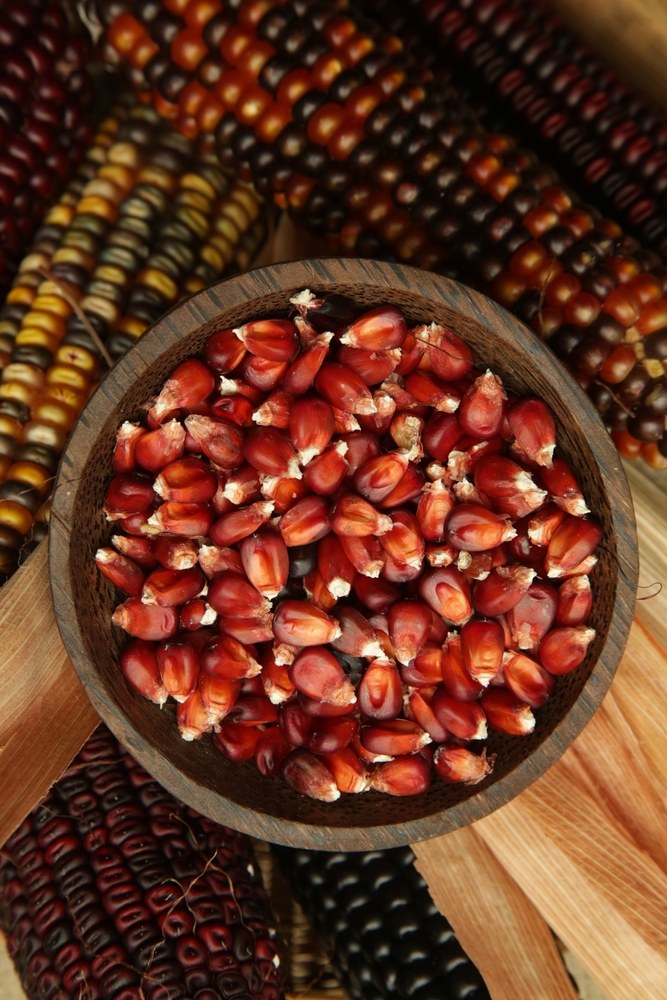
Select in the field for emergence, maturity, stalk strength, root anchorage, disease, ear coverage, and plant type. Remove severe off-types before pollen shed when maintaining a defined stock. At harvest, choose sound ears across many plants, not only the largest ears at the easy-to-reach field edge.
Shell ears separately, then combine balanced amounts from many families. Keep a reference sample. Record source, year, location, plant count, isolation, tassel and silk dates, lodging, disease, selection, harvest moisture, dry-down, and germination.
If selection creates a shorter, earlier, darker, or more lodging-resistant strain, document the change. A named heirloom stays useful through accurate records and sufficiently broad stewardship, not through pretending it never changes.
Troubleshoot lodging, ear fill, insects, and mold
| Problem | What to inspect | Prevention |
|---|---|---|
| Root lodging | Shallow roots, saturated soil, rootworm injury, wind direction | Rotate, improve drainage, avoid overwatering, and maintain balanced fertility. |
| Stalk breakage | Stalk rot, excessive nitrogen, late drought, ear height | Scout stalks, balance nutrients, and harvest mature ears before storms. |
| Bare ear tips | Drought after silking, delayed silks, crowding | Water through early grain fill and use a uniform block. |
| Chewed ear tips | Earworms, birds, rodents | Scout during silking and protect the harvest promptly. |
| Mold during dry-down | Husk damage, wet weather, poor airflow | Harvest mature ears before prolonged rain and dry in a ventilated space. |
| Color drift | Cross-pollination or narrow selection | Improve isolation and save broadly from documented families. |
Do not save seed from an ear with active rot merely because the color is rare. Food quality, germination, and seed health come before appearance.
Regional fit and maturity planning
Bloody Butcher fits best where a long warm season can finish tall dry-grain corn. Appalachia, the Mid-Atlantic, and much of the Southeast can provide enough heat, but storms, humidity, and ear rot require active management. Earlier planting and protected drying are often more important than adding more days in the field.
Northern growers should verify the maturity of the actual seed lot and use a warm site. Western growers should plan irrigation at tasseling and silking and protect the stand from hot dry wind. Small-space gardeners should be honest about scale: a tall dent corn can shade the entire plot and still provide too few parents for responsible seed maintenance.
If the primary goal is one pan of red cornmeal, a small block may be worthwhile. If the goal is to maintain Bloody Butcher as a population, plan the field, pollen isolation, and number of parents before ordering seed.
Why we separate cultural importance from invented provenance
Corn is Indigenous to the Americas, and every Appalachian corn history exists downstream of Indigenous domestication and stewardship. That does not make every Appalachian named variety a documented tribal variety. Respect requires more precision than that.
Bloody Butcher matters as a regional heirloom with a long record in family farming, milling, hominy, feed, and distilling. We can honor that history without inventing a Native pedigree. When the record is uncertain, uncertainty belongs in the record.
For us, seed sovereignty includes the right to keep stories attached to the people who carry them. It also includes the responsibility not to borrow a Native identity merely to make an already meaningful corn sound more marketable.
Frequently asked questions
Is Bloody Butcher sweet corn?
No. It is a dry dent field corn. Harvest it after full maturity for meal, grits, hominy trials, seed, and other dry-grain uses.
Can Bloody Butcher be popped?
It is not a dependable popcorn. Some kernels may split or partially expand, but choose a true popcorn when expansion is the goal.
How tall does it grow?
Many sources describe plants around 10 to 12 feet under favorable conditions, but height varies with seed lot, soil, water, and spacing.
How long does it take to mature?
Plan on a long season, commonly about 100 days or more, plus additional time for dry-down. Verify the current seed lot and local frost window.
Why are some kernels not deep red?
Open-pollinated seed lots vary, and pollen can change current-ear traits. Pale or mixed kernels may reflect the stock, cross-pollination, or selection history.
Is Bloody Butcher a Native corn?
Corn is an Indigenous crop, but the exact origin of this named Appalachian variety is not sufficiently documented to assign it to a specific Native nation.
What is the best use for it?
Food-quality red cornmeal is the best-known use. It can also be tested for grits, hominy, masa, and parching, but the current lot should be evaluated in the kitchen.
How do I keep the stalks from falling over?
Use deep well-drained soil, balanced fertility, enough spacing, crop rotation, and water during critical stages. Scout for root and stalk injury and harvest mature ears before severe storms.
How many plants are needed to save seed?
A serious open-pollinated corn maintenance population is commonly at least about 200 plants. Smaller stands need controlled pollination and a plan to reduce genetic loss.
Why is the variety sometimes described as red and white?
Older name explanations and family strains may include mottled or mixed kernels, while many modern seed lots are predominantly red. Record the lot you actually grow.
Sources and further reading
- West Virginia University Extension: Cultivating Rich and Unique Bloody Butcher Corn
- West Virginia University Extension: Heritage Corn
- University of Minnesota Extension: Growing Sweet Corn in Home Gardens
- Iowa State University Extension: The Birds and Bees of Corn Pollination
- Iowa State University Extension: Corn Pollination, High Temperature, and Stress
- Organic Seed Alliance: Sweet Corn Seed Production Quick Reference
- Organic Seed Alliance: A Seed Saving Guide for Gardeners and Farmers
- Organic Seed Alliance: Seed Crop Record