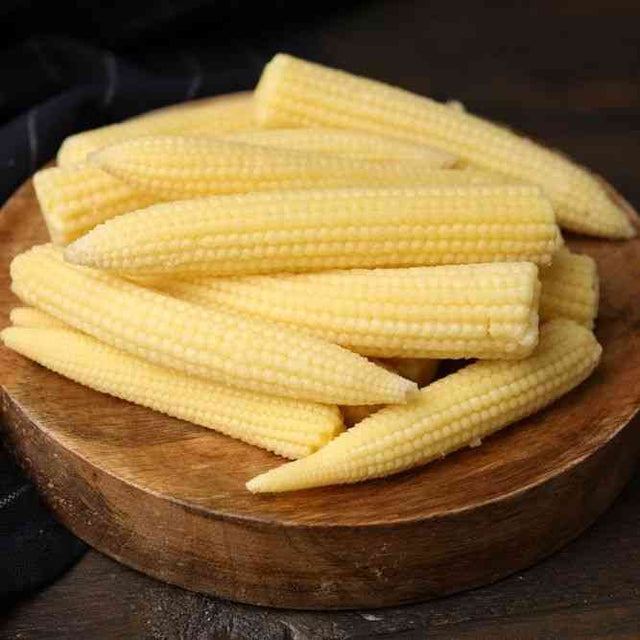
Japanese Hulless is an open-pollinated white popcorn with small, pointed rice-type kernels that produce a tender popped flake. The name does not mean the kernel has no outer hull. Every popcorn kernel needs an intact pericarp to hold steam pressure. “Hulless” refers to the eating quality: the popped corn tends to leave smaller, less troublesome hull fragments than many large yellow pearl types.
This is a crop that rewards precision. The garden must produce a well-pollinated ear, the ear must mature completely, and the dry kernel must retain the right amount of internal moisture. A beautiful ear can still pop poorly when it was harvested immature, dried too quickly, stored too dry, or damaged by insects and mold.
The practical answer
Plant Japanese Hulless in a compact block after the soil is warm, isolate it from other corn you do not want crossing into the seed crop, and let the ears mature as long as weather safely allows. Cure the ears under cover, shell only when dry, and test-pop small samples weekly. Store the kernels airtight when most pop crisp and fully expanded.
In this guide
- What hulless popcorn means and why the name is misunderstood
- How pointed rice popcorn differs from modern yellow pearl popcorn
- Planting, fertility, watering, pollination, and isolation
- Harvest timing, curing, shelling, test popping, and moisture correction
- Seed saving, germination testing, and maintaining an open-pollinated population
- Common reasons homegrown popcorn stays hard, chewy, or unpopped

Hulless does not mean hull-free
The hard outer layer of a popcorn kernel is what allows it to pop. As the kernel heats, water inside becomes steam. Pressure builds until the pericarp ruptures and the softened starch turns outward into the white flake. Without a sound pericarp, steam leaks before enough pressure develops.
Japanese Hulless belongs to the pointed rice-popcorn group. The kernels are generally smaller and more pointed than the rounded pearl kernels common in modern commercial popcorn. The popped flakes may be smaller, but many gardeners value their tenderness. Evaluate a variety by eating quality and popping percentage together rather than assuming the largest flake is always the best popcorn.
A popcorn with an important breeding history
USDA and crop-science histories place Japanese Hulless within the rice-popcorn group that contributed to early American popcorn breeding. Selections of Japanese Hulless were used in the development of the first hybrid popcorn grown commercially in the United States. That history does not make every packet genetically identical to the historical breeding stocks, but it shows why the name appears repeatedly in popcorn literature.
The safest public description is specific and limited: Japanese Hulless is an old open-pollinated white rice-type popcorn maintained for pointed kernels and tender eating quality. Claims about an exact introduction year or a single route from Japan to North America should be tied to documentation rather than repeated because one catalog copied another.
Choose the planting date by the maturity of dry grain
Popcorn needs more time than sweet corn because the crop is not finished at the milk stage. The kernels must pass through dough stage, harden, reach physiological maturity, and lose substantial moisture before storage. Choose a variety that can finish before repeated freezes and prolonged fall rain.
Direct sow after the soil is warm enough for quick, even germination. Small popcorn kernels should not be buried as deeply in heavy, cool soil as large dent-corn kernels. Planting depth should place seed in consistent moisture without trapping it beneath a crust. Replanting a few gaps is possible early, but late replants may flower outside the main pollen window.
Build a uniform stand
A uniform stand matters because flowering time and ear maturity are easier to manage when plants emerge together. Plant two seeds in questionable spots and thin promptly, or seed at a reliable rate after checking germination. Keep rows free of weeds during the first month, when corn roots and leaves are establishing the crop’s yield potential.
Space plants about 8 to 12 inches apart, with 30 to 36 inches between rows, unless the seed record or local conditions call for something different. Dense planting may produce smaller ears and increase drought stress. Excessively wide spacing wastes pollen and encourages weeds.

Plant a block, not a decorative line
Popcorn is wind-pollinated. Pollen falls and drifts from tassels while silks remain receptive. Several short rows in a compact rectangle create a much more useful pollen cloud than one long row. Edge plants always face greater risk because pollen can blow away from the planting.
For a food crop, four or more short rows are a practical minimum. For seed saving, a larger block is better because more plants contribute genetically. If garden space is limited, reduce the number of varieties rather than planting several tiny corn patches that cannot pollinate or maintain themselves well.

Protect tasseling and silking from drought
Corn may survive a dry spell and still lose most of its yield if the stress falls during flowering. Drought can delay silk emergence while the tassels continue shedding pollen. Hot, dry wind can shorten silk receptivity and pollen life. The mature ear then carries empty spaces, especially near the tip.
Check soil moisture several inches below the surface before tassels appear. Water deeply when needed. Continue protecting moisture through early grain fill, then reduce irrigation after the kernels are mature and the plant begins natural dry-down.

Isolate popcorn for seed and eating quality
Cross-pollination affects the kernels forming on the ear this season because the endosperm contains genetic contribution from the pollen parent. Popcorn crossed by sweet corn or field corn may show reduced popping quality. The seed embryo also carries the cross into the next generation.
Use distance, flowering-time separation, or controlled pollination. Extension recommendations for garden separation vary with terrain, prevailing wind, block size, and purpose. A few hundred feet may reduce contamination in a home garden but is not a universal purity guarantee. Temporal isolation works only when pollen-shed windows truly do not overlap.
Let the kernels reach full maturity
Mature popcorn ears have dry husks and hard, glossy kernels. When possible, leave the ears on the plant to dry after physiological maturity. Do not leave them so long that repeated rain, lodging, rodents, or ear molds destroy the crop.
When wet weather threatens, harvest mature ears and continue drying under cover. Remove loose husks and arrange ears in a single layer or mesh bag with strong airflow. Do not seal freshly harvested ears in plastic.

Use test popping as your home moisture meter
The ideal moisture range for popcorn is commonly about 13 to 14 percent. Most home growers do not own a grain moisture meter, so popping performance becomes the practical test. Shell a small sample and pop the same number of kernels under the same heat each week.
Corn that is too wet may produce tough, chewy flakes and many partially opened kernels. Corn that is too dry may split, scorch, or remain unpopped because there is not enough internal water to create pressure. Improvement across weekly tests tells you the crop is approaching storage condition.

Correct moisture slowly
| Test result | Likely condition | Correction |
|---|---|---|
| Many kernels split or barely open | Often too dry or physically damaged | Add a very small measured amount of water to a sealed jar, shake, rest several days, then retest |
| Flakes are chewy with hard centers | Often too moist | Spread kernels in a shallow layer for additional air drying, then retest |
| Some ears pop well and others do not | Uneven maturity or mixed curing lots | Keep ears separated and test each lot before combining |
| Good expansion but many scorched kernels | Heat or pot management problem | Adjust the popping method before changing kernel moisture |
Never pour water directly over the grain. A common small-batch correction is to add only a teaspoon-scale amount to a quart of kernels, distribute it thoroughly, and allow time for moisture to equalize. Retest before adding more.
Shell and store without damaging the seed
Shell by hand with gloves or a small sheller adjusted for small kernels. Cracked pericarps reduce popping and can invite storage problems. Winnow out cob fragments, silks, insect-damaged kernels, and any moldy grain.
Once popping quality is right, store the kernels in clean airtight containers so they do not continue drying. Keep containers cool and dark. Label variety, harvest year, field or block, and whether the lot is intended for food, seed, or both.
Save seed from many healthy ears
Japanese Hulless is open-pollinated, so seed can be saved when the crop is isolated and a sufficient population is maintained. Mark healthy plants before harvest. Select for timely maturity, good standability, complete ears, sound kernels, and the tender popping quality you value.
Avoid saving only the largest ear or the whitest kernel. Corn populations narrow quickly when only a few seed parents are used. Bulk an approximately equal quantity from many selected ears. If your block was too small or crossed by another corn, treat the seed as an experiment rather than quietly labeling it true-to-type Japanese Hulless.

Run a germination test before planting
Popcorn intended for seed must remain alive as well as edible. Count at least 25 kernels, and preferably 50 or 100, place them in a moist test, and record normal seedlings. A counted test reveals whether storage conditions damaged the seed and helps you adjust the planting rate.
Do not discard a valuable lot after one careless test. Control temperature, moisture, and mold. Repeat the test if conditions were poor. Very low germination may justify planting thicker, but weak, abnormal seedlings can indicate deeper deterioration.
Popping method changes the result
Use a heavy pot with a lid, a measured amount of oil if desired, and enough heat to build steam without scorching. Test the same way each time when evaluating moisture. Overcrowding the pot traps steam and makes flakes seem chewy. A weak burner may dry kernels before they reach popping pressure.
Air poppers are convenient but can eject very small kernels before they pop. If Japanese Hulless performs poorly in one machine, test a covered stovetop batch before blaming the variety. Record unpopped kernels and texture, not just the visual volume.
Understand what actually makes a popcorn kernel pop
A popcorn kernel is a pressure vessel. The outer pericarp must remain intact, and a small amount of water must remain trapped inside the hard endosperm. As the kernel heats, that water becomes steam. Pressure rises until the pericarp ruptures and the softened starch expands and cools into the white flake.
This is why maturity, handling, and moisture all matter. An immature kernel may not have the right internal structure. A cracked kernel leaks pressure. A kernel that is too wet can open poorly and produce a tough flake. A kernel that is too dry may scorch or remain hard because it cannot build enough steam. The variety cannot compensate for damage caused during harvest and shelling.
The term hulless describes the eating experience, not the absence of a pericarp. Japanese Hulless is valued because the remaining hull fragments can feel more tender than those of many larger popcorns. Preserve that eating quality by selecting from sound ears and evaluating the popped result, not only the raw kernel.
Keep ears in separate curing lots until their behavior is known
Drying is rarely uniform across a home planting. Ears from the edge of the block may mature differently from ears in the center. A late secondary ear may carry more moisture than the primary ear on the same stalk. Storm-damaged or insect-opened husks can also change how quickly an ear dries.
Harvest into labeled mesh bags, racks, or trays by date and field area. Record whether the husks were dry, whether kernels resisted a thumbnail, and whether the ear came from a marked seed plant. Good airflow matters more than high heat. Forced heat can overdry the outside of the kernel while moisture remains uneven inside.
Test-pop each lot before combining it. When one lot pops crisp and another remains chewy, keep drying the second lot rather than averaging both into a confusing mixture. Once the lots perform similarly, shell and combine food grain if desired. Seed ears should remain traceable until final selection and germination testing are complete.
Use a repeatable twenty-kernel test instead of guessing
A useful test needs the same conditions every time. Count twenty sound kernels from the lot. Use the same pot or popper, the same amount of oil when oil is used, the same burner setting, and the same warm-up method. Record how many kernels fully pop, how many split without expanding, how many remain hard, and whether the flakes are crisp or chewy after cooling.
One test is not enough to diagnose everything. Chewy flakes usually point toward excess moisture, but crowding a pot or trapping steam under the lid can create a similar result. Scorching may come from dry kernels, weak expansion, or heat that is too high. Change one variable at a time so the moisture decision is based on evidence.
When reconditioning grain that seems too dry, make very small adjustments. Add a measured amount of water to the container, distribute it thoroughly, allow several days for equalization, and retest. Large additions create wet pockets and mold risk. Record every correction so a successful batch can be repeated.
Protect stored popcorn from both drying and insects
Once the popping quality is right, the goal changes from drying to stability. Airtight food-grade containers slow further moisture loss and exclude many pantry pests. Store them in a cool, dark place away from temperature swings. Clear jars are convenient for inspection but should not sit in sunlight.
Do not seal grain that is still warm from a hot drying room or freshly popped test. Temperature differences can create condensation inside the container. Check the container after the first day and again after a week for fogging, off odors, insects, or soft kernels. Any sign of moisture requires immediate re-evaluation.
For longer storage, divide the harvest into several smaller containers rather than opening one large container repeatedly. Label each with variety, harvest year, field block, cure date, and whether it is food or seed. A seed portion should be kept under the coolest stable conditions available and tested before the next planting season.
Plan a small popcorn patch around dry harvest, not summer appearance
Popcorn occupies garden space longer than sweet corn because the ears must mature as grain. A bed that looks finished when the stalks brown may still need several weeks of field drying or indoor curing. Do not place the block where an autumn crop must be planted immediately after midsummer sweet-corn harvest.
Calculate the block from the number of plants you can bring to full maturity. Four or more short rows improve pollination, while a wider population gives better seed-selection choices. Thin promptly so plants do not compete through the flowering window. If the season is marginal, choose the warmest well-drained site and avoid late replanting that will not have time to finish.
In humid climates, prepare the indoor drying area before harvest. Mesh bags, wire racks, fans, labels, and rodent protection should be ready before a storm forces the ears inside. Good popcorn is often lost after the field work is finished because the curing plan began too late.
Common problems
| Problem | Likely cause | Response |
|---|---|---|
| Ears have blank tips | Poor pollination, drought, or silk injury | Improve block shape and protect water during flowering |
| Kernels mold during curing | Harvested too wet or airflow is poor | Separate affected ears and dry mature ears in a single layer |
| Popcorn is chewy | Kernel moisture is high or steam is trapped after popping | Dry slightly more and vent the popped corn |
| Many hard unpopped kernels | Too dry, cracked pericarps, immature grain, or weak heat | Test moisture and popping method separately |
| Next generation changes noticeably | Cross-pollination or too few seed parents | Improve isolation and population size |
Frequently asked questions
Is Japanese Hulless really hull-free?
No. A popcorn kernel must have a sound outer pericarp to pop. The name refers to the relatively tender hull fragments after popping.
Can it be eaten like sweet corn?
It is bred as popcorn, not sweet corn. Immature ears may be edible, but that is not the crop’s strongest use.
Why will my kernels not pop?
The most common reasons are incorrect moisture, incomplete maturity, cracked kernels, mold damage, or a poor popping method.
Can I store it on the cob?
Yes, if the ears are fully dry and protected from rodents, insects, and humidity. Most gardeners shell and store kernels airtight once popping quality is correct.
Can I save seed?
Yes. It is open-pollinated, but the block must be isolated and large enough to avoid a severe genetic bottleneck.
Sources and further reading
- University of Minnesota Extension — Growing Popcorn
- Iowa State University Extension — Growing and Harvesting Popcorn
- USDA National Agricultural Library — Popcorn Exhibition
- USDA National Agricultural Library — Popcorn: From the Field to the Table
- USDA National Agricultural Library — How Does Popcorn Pop?
- Crop Science — Popcorn Research Article
- Iowa State University Extension — Planting Sweet Corn in the Home Garden