
Raised-bed soil guide
Raised beds solve access, drainage, and soil-quality problems only when the fill is built as a functioning root zone. A bed filled with pure compost, potting mix, woody debris, or random bagged products can look rich and still fail after one season.
A durable mix contains mineral soil for stability, organic matter for biological activity and water handling, and enough pore space for drainage. The exact proportions depend on local soil, bed depth, crop, climate, and the materials available.
Rebuilding an old bed begins with diagnosis. Settling, compaction, nutrient excess, poor drainage, root invasion, and simple crop removal require different corrections.
The bed is not finished when it is full. It is finished when roots can move through it, water can leave it, and the level does not sink every time the organic matter decomposes.
Design the bed before buying fill
- Confirm the bed drains into suitable ground.
- Choose a depth that matches crops and accessibility.
- Calculate volume in cubic feet or cubic yards.
- Identify clean mineral topsoil and mature compost sources.
- Plan irrigation before the bed is full.
- Leave a modest settling allowance below the rim.
A deep bed does not need to be filled with expensive potting mix. It needs a continuous root zone. Large buried logs and sharply layered materials can settle unevenly and change water movement.
Build a stable blend rather than a stack of ingredients
| Component | Main role | Common mistake |
|---|---|---|
| Clean mineral topsoil | Weight, nutrient buffering, long-term structure | Using subsoil, rubble, or contaminated fill |
| Mature compost | Organic matter, biological activity, nutrient contribution | Making it the entire bed |
| Coarse stable amendment where needed | Air space and drainage | Adding too much lightweight material that dries rapidly |
| Mulch at the surface | Moisture protection and weed suppression | Mixing undecomposed mulch throughout the root zone |
Blend materials so roots do not hit a hard boundary. Keep coarse woody mulch at the surface unless a specific engineered system calls for it.
Topsoil can arrive with high clay, weeds, salts, construction debris, or poor pH. Compost can be immature or nutrient-heavy. Inspect before the truck leaves.
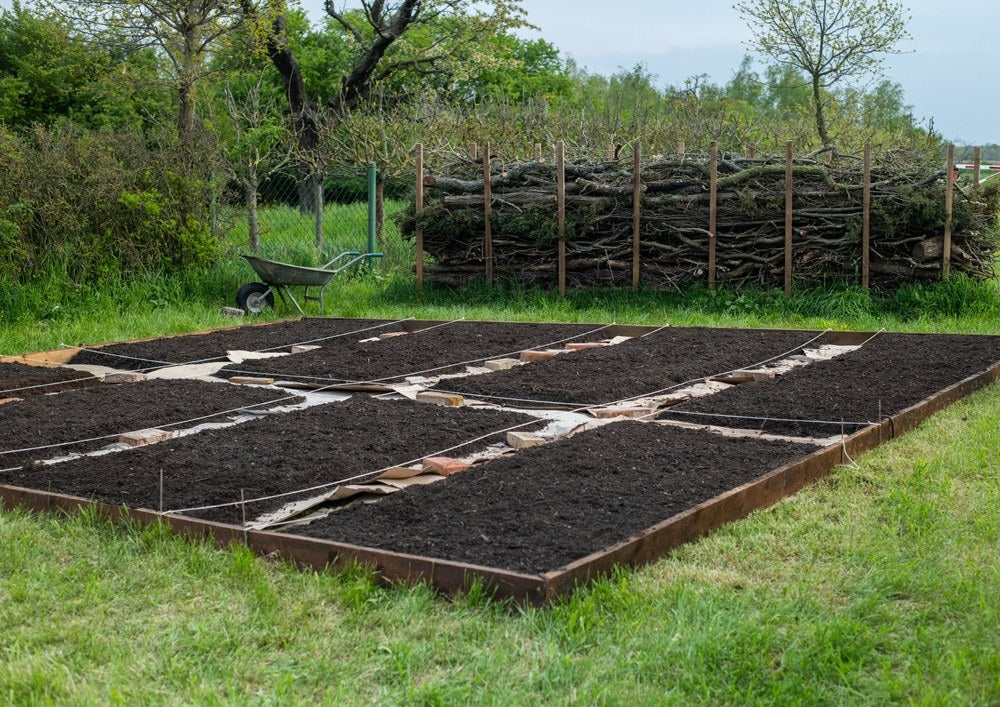
Fill the bed in lifts and water it into place
Add the mix in manageable layers, blending and watering lightly as you go. Do not compact it with machinery or repeated stomping. The goal is to settle large voids without crushing the pore space roots need.
Level the surface and wait through a watering or rain before final planting. Top up modestly where the mix settles. Install irrigation lines so water reaches the whole bed rather than only the center.
Rebuild a tired bed from the symptom
| Symptom | Likely cause | Correction |
|---|---|---|
| Bed level has dropped | Organic matter decomposition or erosion | Add stable mineral mix and mature compost |
| Water stands after rain | Compaction, fine texture, blocked outlet | Loosen, improve outlet, and rebalance texture |
| Plants are lush but unproductive | Excess nitrogen or high fertility | Soil test and stop blind feeding |
| Plants wilt quickly | Shallow fill, root restriction, or hydrophobic mix | Inspect depth, roots, and irrigation coverage |
| Roots enter from outside | Tree or shrub invasion | Relocate, barrier, or rebuild with root management |
Do not solve every tired bed with more manure or compost. High phosphorus and salts can persist for years.
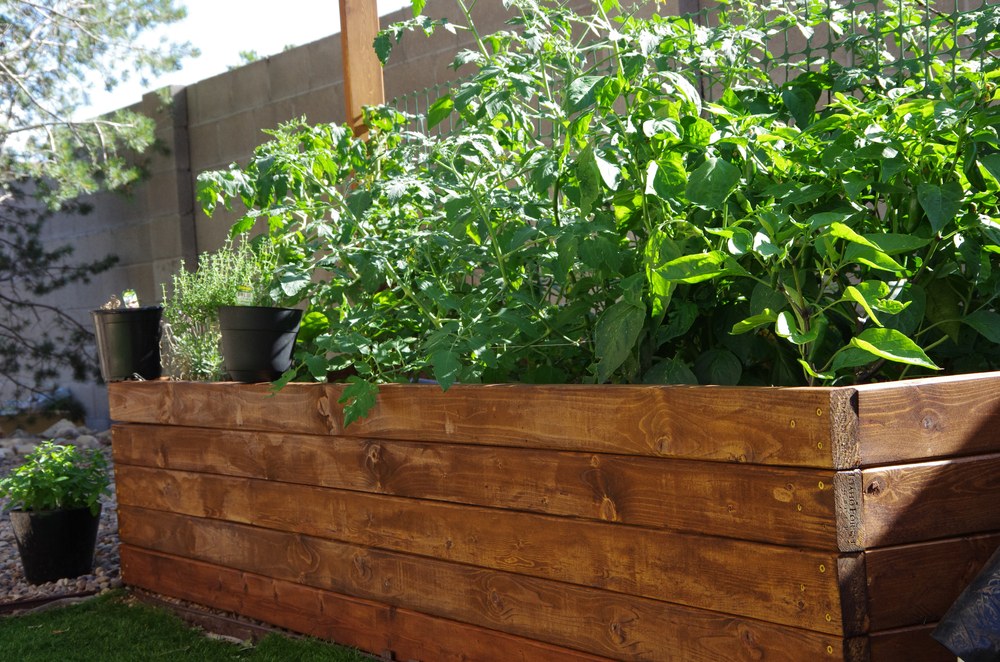
Maintain fertility with tests and crop history
Test pH and nutrients periodically. Raised beds can accumulate phosphorus, potassium, soluble salts, and lime because amendments are added repeatedly to a small volume.
Topdress according to crop demand and the test, not the color of the bag. Legumes, leafy greens, tomatoes, flowers, and root crops remove nutrients differently. Remove diseased residues and return clean organic matter through mature compost or appropriate cover crops.
Protect structure through the season
Keep the surface covered with living crop, light mulch, or a cover crop when practical. Avoid working saturated soil. Use permanent paths so the bed is not compacted by feet.
After harvest, inspect root depth and soil smell. Healthy soil should show roots throughout the profile, drain after heavy rain, and resist both brick-hard drying and prolonged saturation.
Adapt the mix to regional soil and weather
Coastal sands may need more stable organic matter and careful nutrient management because water and fertility move quickly. Piedmont clay can supply useful mineral structure but should not be used as dense unbroken chunks. Mountain sites need drainage plus protection from erosion and winter saturation.
A bed exposed to full Southern sun may require more irrigation capacity than the same mix under a cooler climate. Design for the weather that actually reaches the bed.
Questions gardeners ask
Can I fill a raised bed with compost only?
It is not a durable general recommendation. Compost settles and may create nutrient or salt problems. Blend it with stable mineral soil.
Should I put rocks in the bottom?
A rock layer does not automatically improve drainage and can create a perched water boundary. Drainage should work through the whole profile and out of the site.
How much will a new bed settle?
Some settling is normal. The amount depends on organic content, particle size, moisture, and how the material was placed.
Why is my raised bed soil hard?
Fine texture, compaction, low organic matter, repeated drying, or poor aggregation may be involved. Inspect moisture and roots before amending.
Do raised beds need soil tests?
Yes. Repeated additions in a small volume make testing especially useful.


