Variety field guide
What to expect from Lancaster Sure Crop Dent Corn Seeds
Lancaster Sure Crop is a yellow dent corn developed through years of careful selection by the Hershey family in Pennsylvania.
Read the complete product descriptionTraits, flavor, garden use, variety notes, and the full catalog record
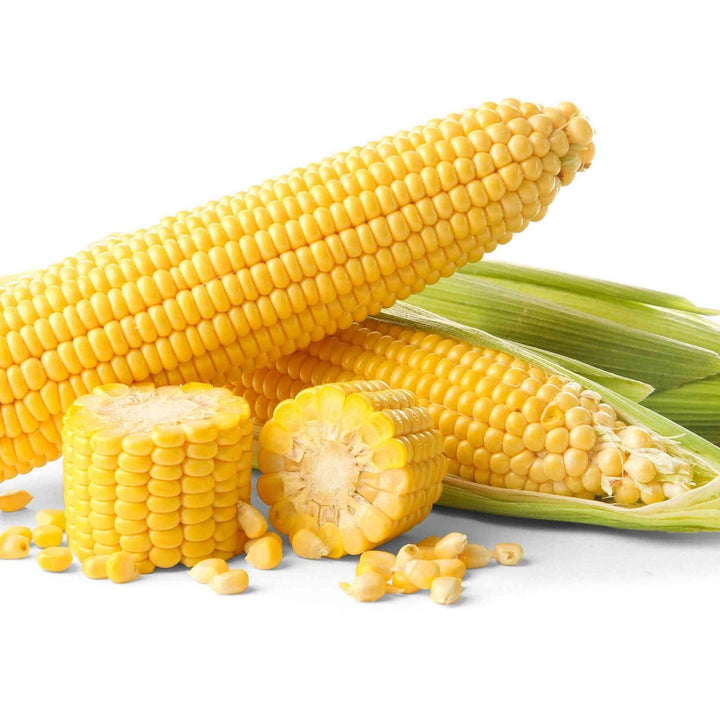
Lancaster Sure Crop is a yellow dent corn developed through years of careful selection by the Hershey family in Pennsylvania. Its large ears and dependable grain production helped make it an influential part of American corn breeding. This is a crop for gardeners who can give it a full warm season and space for a well-pollinated block. Let the kernels mature and dry, then shell them for meal, flour or a carefully maintained seed harvest.
A historic Pennsylvania dent corn for homegrown grain.
Growing facts
- Botanical name: Zea mays
- Maturity or display: About 115 days to mature grain; drying may take longer
- Mature size: Plants about 6-7 ft tall; large yellow dent-corn ears
- Spacing: 12 in between plants; rows 36 in
About the variety
Isaac Hershey and his family developed Lancaster Sure Crop in Lancaster County, Pennsylvania. By about 1910, their work emphasized selection within the population for earliness, sound plants, large ears and consistency. Lancaster germplasm later contributed to many Corn Belt hybrids.
Starting seed
Sow 1.5 in. deep after frost in soil at least 65 F. Sprouts in 7-10 days. Thin to 12 in.; rows 36 in. Plant four or more short rows; water well through silking.
Care through the season
Choose fertile, well-drained soil in full sun. Plant several adjacent short rows to keep windblown pollen within the crop. Control weeds while plants are young and maintain moisture through tasseling, silking and kernel fill. Feed according to a soil test; do not remove healthy side shoots simply because they appear.
Harvest and use
Harvest when husks brown and kernels harden, then dry thoroughly before shelling. Store dry grain cool and protected. Isolate other corn and save seed from many plants.
Saving seed
Corn readily crosses through windblown pollen. Separate varieties by adequate distance or by flowering periods that do not overlap; nearby large fields can overwhelm a small planting. Keep seed from many healthy, representative plants rather than one favorite ear to maintain diversity. Let seed ears become fully mature and dry, finish drying under cover, and label the cleaned seed with variety and year.
Common problems
Poor pollination or moisture stress can leave gaps in the ears. Watch for cutworms, corn earworms and stalk damage, and protect ripening ears from birds and wildlife. Rotate planting sites, keep the crop evenly watered, and dry harvested ears with good airflow to prevent mold.
Frequently asked questions
When is it ready?
About 115 days to mature grain; drying may take longer.
Why plant in a block?
Wind carries pollen from tassels to the silks. Several short rows together give more complete kernel set than an isolated long row.
Can I save seed?
Corn readily crosses through windblown pollen. Separate varieties by adequate distance or by flowering periods that do not overlap; nearby large fields can overwhelm a small planting. Keep seed from many healthy, representative plants rather than one favorite ear to maintain diversity. Let seed ears become fully mature and dry, finish drying under cover, and label the cleaned seed with variety and year.