Variety field guide
What to expect from Carousel Ornamental Corn Seeds
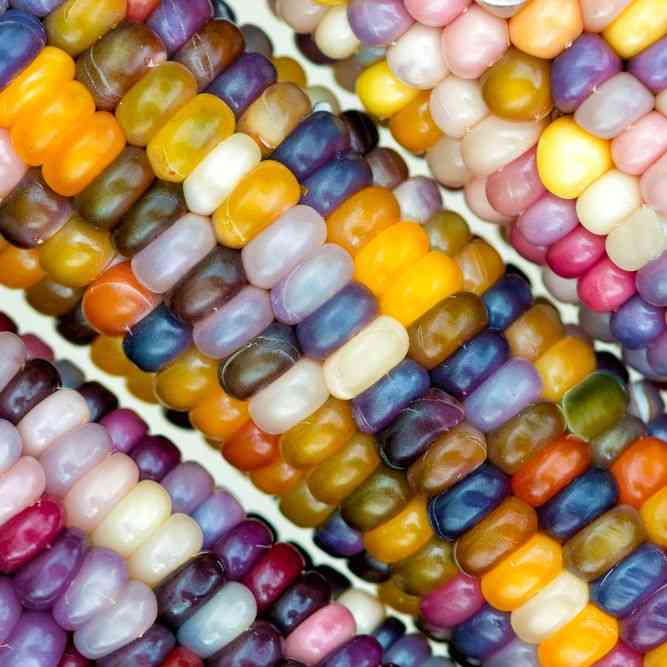
Carousel produces small, four- to five-inch ears filled with a lively mix of yellow, white, red, purple and dark kernels.
Read the complete product descriptionTraits, flavor, garden use, variety notes, and the full catalog record
Carousel produces small, four- to five-inch ears filled with a lively mix of yellow, white, red, purple and dark kernels. Their compact size makes them easy to gather into autumn arrangements, wreaths and table decorations. This ornamental popcorn also offers a second harvest in the kitchen once the kernels have dried to popping condition. Plant in a sunny block rather than a single row, and give the ears time to harden before harvesting their full color.
Small multicolored ears for fall displays and popping.
Growing facts
- Botanical name: Zea mays
- Maturity or display: 100-110 days to mature ears; additional drying for popping
- Mature size: Plants about 6-7 ft tall; ears 4-5 in long
- Spacing: 12 in between plants; rows 36 in
About the variety
Carousel is an open-pollinated ornamental popcorn, combining small decorative ears with kernels that can pop when properly dried. It belongs to the popcorn group of maize, whose hard kernel exterior traps moisture as steam during heating.
Starting seed
Sow 1.5 in. deep after frost in soil at least 65 F. Sprouts in 7-10 days. Thin to 12 in.; rows 36 in. Plant four or more short rows; water well through silking.
Care through the season
Choose fertile, well-drained soil in full sun. Plant several adjacent short rows to keep windblown pollen within the crop. Control weeds while plants are young and maintain moisture through tasseling, silking and kernel fill. Feed according to a soil test; do not remove healthy side shoots simply because they appear.
Harvest and use
Pick when husks brown and kernels are hard. Dry ears with good airflow; test a few kernels before popping. Isolate other corn for seed and keep many seed parents.
Saving seed
Corn readily crosses through windblown pollen. Separate varieties by adequate distance or by flowering periods that do not overlap; nearby large fields can overwhelm a small planting. Keep seed from many healthy, representative plants rather than one favorite ear to maintain diversity. Let seed ears become fully mature and dry, finish drying under cover, and label the cleaned seed with variety and year.
Common problems
Poor pollination or moisture stress can leave gaps in the ears. Watch for cutworms, corn earworms and stalk damage, and protect ripening ears from birds and wildlife. Rotate planting sites, keep the crop evenly watered, and dry harvested ears with good airflow to prevent mold.
Frequently asked questions
When is it ready?
100-110 days to mature ears; additional drying for popping.
Why plant in a block?
Wind carries pollen from tassels to the silks. Several short rows together give more complete kernel set than an isolated long row.
Can I save seed?
Corn readily crosses through windblown pollen. Separate varieties by adequate distance or by flowering periods that do not overlap; nearby large fields can overwhelm a small planting. Keep seed from many healthy, representative plants rather than one favorite ear to maintain diversity. Let seed ears become fully mature and dry, finish drying under cover, and label the cleaned seed with variety and year.