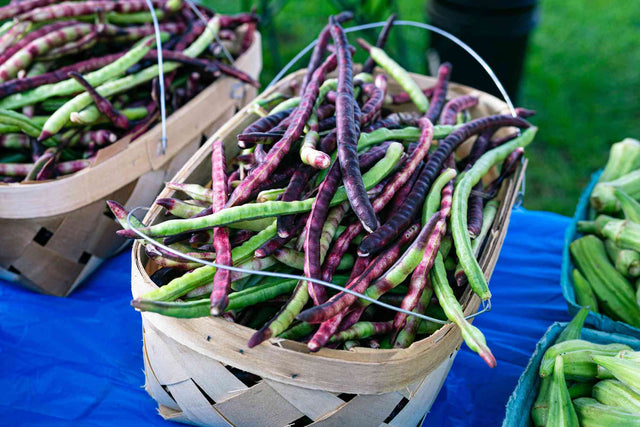
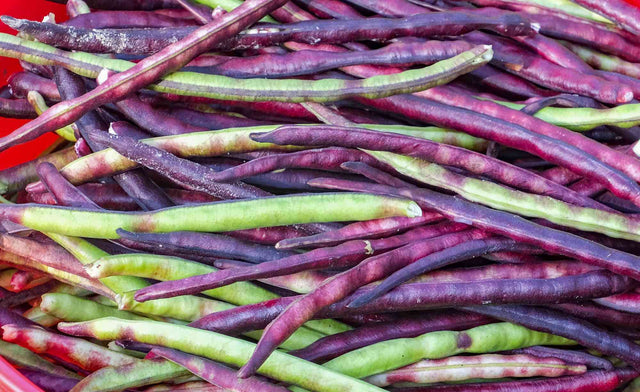
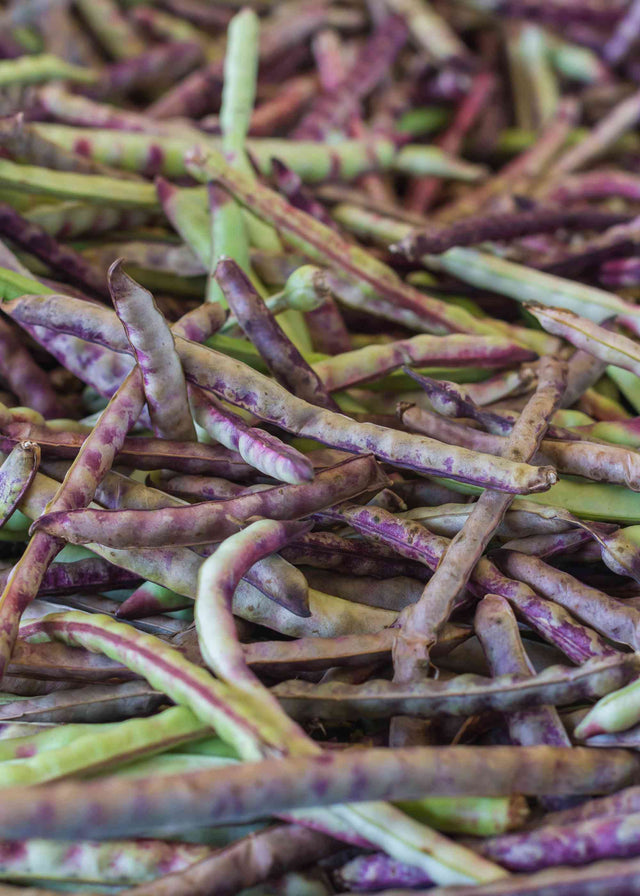
Cowpeas, black-eyed peas, pinkeyes, purple hulls, and many Southern peas are warm-season forms of Vigna unguiculata. They thrive after the soil is warm, tolerate heat better than common beans, and can be harvested as fresh shell peas or dry pantry peas.
When common beans begin complaining about summer, cowpeas are often just getting serious. They were built for heat, leaner ground, and a season that has stopped being polite. In eastern North Carolina, that matters. A crop earns its place by standing when the weather turns hard.
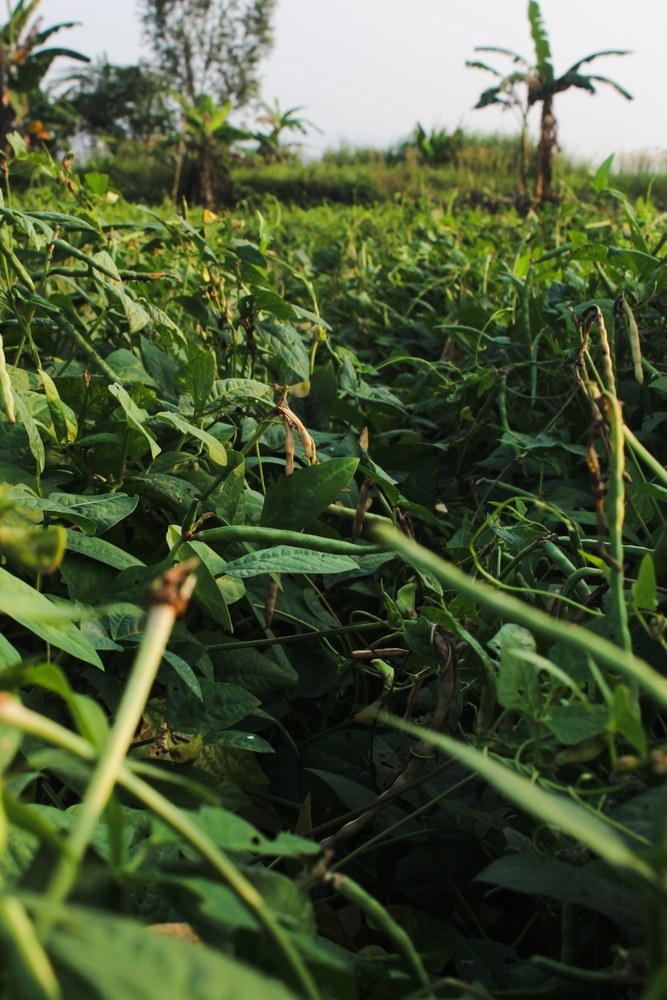
Cowpea, Southern pea, black-eyed pea, and field pea
Cowpeas are Vigna unguiculata. The species includes Southern peas, black-eyed peas, cream peas, crowder peas, purple-hull types, and yardlong beans selected for very long pods. They are not the cool-season garden pea, Pisum sativum, and not the common bean, Phaseolus vulgaris.
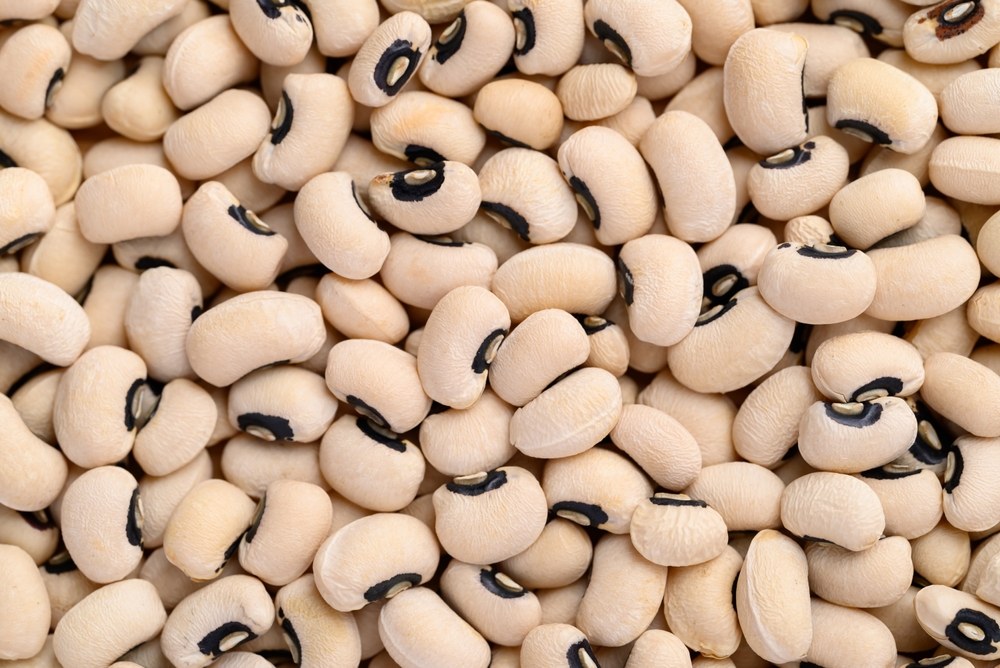
Names often describe the seed or pod: blackeye and pinkeye refer to markings around the hilum; purple hull describes the mature pod; crowder refers to peas packed tightly in the pod. These categories overlap. A purple-hull variety may also be a pinkeye.
The distinction matters for search, planting, and seed saving. A gardener looking for “peas” in July may need cowpeas, while a gardener planting Green Arrow in July may be arranging a disappointment.
Plant cowpeas after the soil is warm
Direct sow after frost when the soil is thoroughly warm. Plant about 1 inch deep and roughly 4 to 6 inches apart for bush types, adjusting for the variety and production system. Vining or semi-vining types need more room or support.
Cowpeas germinate quickly in warm conditions. Cold, saturated ground can still rot seed. Do not overwater the row because the crop is described as drought tolerant. Drought tolerance belongs to established plants, not seed trapped in airless mud.
Use moderate fertility. Excess nitrogen can create leaves and delay peas. Inoculation may help where cowpeas have not been grown and a compatible inoculant is appropriate.
Growing through heat, drought, and heavy weather
Give full sun and well-drained soil. Cowpeas handle heat better than common beans and can produce in relatively lean ground, but steady moisture improves flowering and seed fill. Water deeply during prolonged drought.
Bush types simplify harvest. Semi-vining varieties may spread through adjacent rows. Purple hulls make the fresh-shell stage easier to see because pod color changes as peas fill. Pick regularly for fresh shelling, or let selected pods dry for pantry peas and seed.
After establishment, the canopy shades soil and competes with weeds. That vigor is useful, but dense foliage in humid weather still needs airflow and scouting.
How Southern pea names describe the crop
| Name | What it usually describes | Garden implication |
|---|---|---|
| Blackeye | Dark eye around the seed scar | Common fresh-shell and dry-pea type |
| Pinkeye | Pink or reddish eye marking | Often paired with purple hulls |
| Purple hull | Pod turns purple as peas mature | Easy fresh-shell harvest signal |
| Crowder | Seeds pressed tightly together in the pod | Substantial peas and full pods |
| Cream pea | Small pale seed and delicate texture | Tender fresh-shell quality |
| Yardlong bean | Same species selected for very long edible pods | Requires very warm weather and trellis support |
Choosing varieties for the garden and table
Quickpick Pinkeye is selected for a compact, concentrated harvest. Pinkeye Purple Hull BVR combines the familiar fresh-shell type with resistance to blackeye cowpea mosaic virus. Mississippi Purple Hull is a Southern garden standard valued for purple pods and creamy peas.
Resistance letters are not a force field. They describe resistance to a particular disease or strain under particular conditions. Rotate, use clean seed, control vectors, and remove diseased plants even when a variety carries a resistance claim.
Fresh shell, dry pea, and storage
For fresh shell peas, harvest when pods have colored or dried slightly and peas are full but still moist. Shell promptly and refrigerate, cook, or blanch and freeze. For dry peas, allow pods to become papery and seeds hard.
Harvest dry pods before long rain. Shell, clean, and continue drying before sealing. Inspect for cowpea weevil or other storage insects. Properly dried peas can be frozen under a tested protocol to control hidden insects.
Cook dry cowpeas thoroughly. The pot liquor is part of the crop’s value, carrying flavor and soluble nutrients into the meal.
Cowpea pests and disease
Cowpea curculio can damage pods and seed in regions where it is present. Aphids, stink bugs, leafhoppers, mites, caterpillars, and bean beetles may also feed on the crop. Scout flowering and pod fill closely.
Mosaic viruses, bacterial blights, root rots, and root-knot nematodes can reduce yield. Use rotation, resistant varieties where appropriate, sanitation, healthy seed, and vector management. Do not save seed from plants showing systemic virus symptoms.
Heat tolerance does not prevent flower loss during extreme drought or saturated storm periods. The crop is resilient, not invulnerable.
Saving cowpea seed
Cowpeas are mostly self-pollinating, but crossing can occur. Separate varieties when purity matters and save from many healthy plants. Mark seed rows before fresh-shell harvest consumes the best pods.
Let pods dry, harvest, shell, remove off-types and insect-damaged seed, and dry again. Record plant habit, hull color, eye color, seed crowding, maturity, and disease response.
Seed saving is not only keeping what survived. It is deciding what the variety is supposed to remain.
Food crop, seed crop, or cover crop: decide before sowing
Cowpeas can feed a household, produce dry seed, cover bare soil, support beneficial insects, and contribute biomass. One planting can do several of those things, but not all at maximum strength. A dense cover-crop rate is not the same plan as a spaced row grown for clean purple-hull peas.
For fresh shelling and dry seed, use rows or blocks wide enough to scout, pick, and keep varieties separate. For cover, a denser stand may close quickly and suppress weeds, but pod harvest becomes difficult. For seed increase, plant enough individuals to maintain the variety and remove off-types before flowering.
Do not assume a legume leaves the soil “full of nitrogen” after a heavy seed harvest. Much of the plant’s nitrogen leaves in the harvested peas. Root nodules and residue still contribute, but the balance depends on biomass, harvest, nodulation, and what remains in the bed.
The crop should have a job. Otherwise the gardener will discover in August that a beautiful green field cannot be walked, picked, or kept true.
What makes a cowpea seed lot worth carrying forward
Save from numerous healthy plants and more when genetic preservation is the goal. Cowpeas are largely self-pollinating, but insects can cause crossing. Separate varieties according to the purity required and keep flowering dates in the record.
Select the traits the name promises: plant habit, pod position, pod color, eye pattern, pea shape, maturity, shelling quality, and performance under heat. Remove plants showing systemic virus symptoms or serious off-types before they contribute pollen or seed.
Because pods can shatter, visit the seed row often. A seedkeeper who waits for one ceremonial harvest may leave the earliest and best seed on the ground. Label species, variety, source, year, plant count, isolation, harvest dates, and germination. Southern peas survived because people kept both the seed and the distinctions.
Mid-Atlantic and Upper South field notes
This is prime cowpea country. Sow after the soil warms, use succession plantings where the season allows, and choose bush or semi-vining habit according to harvest labor. Purple-hull types are especially useful for visible picking.
Heavy summer storms make drainage important. Root-knot nematodes can be serious in sandy coastal soils. Rotate, use resistant selections where available, and avoid moving contaminated soil between beds.
Cowpeas are not cool-season garden peas
Cowpeas are Vigna unguiculata, a warm-season African crop with deep agricultural histories across the continent and later across the American South. Garden peas are Pisum sativum, a cool-season crop. The shared word "pea" does not make their planting calendar, heat tolerance, flower biology, or seed-saving relationships the same.
Southern pea, field pea, black-eyed pea, crowder, cream pea, and purple-hull pea describe overlapping market and culinary groups within cowpeas. Some names refer to seed color, some to pod color, some to the way seeds crowd together, and some to regional use. Read the variety record rather than assuming one common name explains the whole crop.
Cowpeas can tolerate poorer soil and greater heat than many vegetables, but tolerance is not a request for neglect. They still need drainage, enough moisture to establish and flower, and a harvest plan. A crop that can survive a hard summer can still yield poorly under compaction, standing water, or unchecked insects.
Fertility, nodulation, and the danger of feeding leaves
Like other legumes, cowpeas can form nodules with compatible bacteria and contribute nitrogen to the cropping system. In new ground, a cowpea-compatible inoculant may help establish that relationship. The presence of a legume does not guarantee effective nodulation, and nodulation does not mean the plant needs no phosphorus, potassium, sulfur, or organic matter.
Avoid heavy soluble nitrogen. It can encourage vine and leaf growth at the expense of flowering and pod set. Base amendments on a soil test, crop history, and visible response. Where growth is pale, check wet roots, soil pH, compaction, and nodulation before assuming the answer is more fertilizer.
Residue can be returned to the soil after harvest, but remove badly diseased material. When cowpeas are used as both food and soil-building crop, remember that removing the seed also removes nutrients. A cover crop and a harvested grain crop are not identical in what they leave behind.
Three useful harvests: snaps, fresh peas, and dry seed
Some cowpea varieties can be picked young as snap pods. Most are better known for fresh-shell peas or dry peas. For fresh shelling, harvest when seeds have filled the pod but remain moist. For dry storage, wait until pods are tan and crisp, then harvest before repeated rain causes staining, mold, or sprouting.
Pick dry pods in several passes because maturity is rarely perfectly uniform. Finish drying under cover with airflow. Shell, clean, and inspect for weevil damage. Freezing fully dried seed for an appropriate period can help manage storage insects, but seed must be dry and protected from condensation when returned to room temperature.
Save from numerous healthy plants and maintain the variety's expected pod color, seed eye, seed coat, plant habit, and maturity. Cowpeas can experience insect-mediated crossing, so use isolation suited to the purity required. The best seed lot is not the one with the prettiest handful. It is the one backed by a healthy, recognizable field.
What to record in a Southern pea trial
Begin with plant habit. Some cowpeas remain relatively compact, some sprawl, and some climb readily into neighboring crops. Record the space they occupy, not only the height printed in a catalog. Note days to first flower, pod color at edible stage, fresh-shell maturity, dry-down, seed eye, seed coat, and whether pods hold above or inside the foliage.
Heat tolerance should be observed alongside water. A variety that continues flowering in high temperatures but receives reliable irrigation is not proving the same thing as a variety that sets through heat and drought. Record rainfall or watering during bloom. Note insect pressure, especially cowpea curculio or stink-bug injury where present, and do not save damaged seed simply because it survived.
Kitchen notes matter. Compare fresh-shell flavor, dry-bean texture, skin tenderness, broth color, and cooking uniformity. A purple hull can be visually striking while the seed inside carries the eating quality. For market sales, record how quickly pods discolor and how well fresh peas hold after shelling.
Finally, mark the plants selected for seed before the last harvest. A seed crop should represent the field, not the forgotten pods at the bottom of the vines. Save enough plants to protect vigor and the range of traits that belongs inside the variety.
Frequently asked questions
Are cowpeas the same as black-eyed peas?
Black-eyed peas are one cowpea type. Cowpea is the species; blackeye describes a seed marking.
Are Southern peas garden peas?
No. Southern peas are warm-season cowpeas, Vigna unguiculata. Garden peas are cool-season Pisum sativum.
When should cowpeas be planted?
After frost when soil is thoroughly warm. They are a summer crop.
Do cowpeas need fertilizer?
They need balanced soil but usually do not benefit from heavy nitrogen. Use soil-test evidence and consider appropriate inoculant where recommended.
When are purple hull peas ready?
When pods turn purple and peas are full but still moist for fresh shelling. Leave pods longer for dry peas.
What does BVR mean?
It indicates a selection bred for resistance to blackeye cowpea mosaic virus. Resistance reduces risk; it is not immunity.
Can I save cowpea seed?
Yes. Save from several healthy true-to-type plants, separate varieties when purity matters, and dry seed completely.
For more information and guidance
Explore the cited resources below for additional technical detail and background.