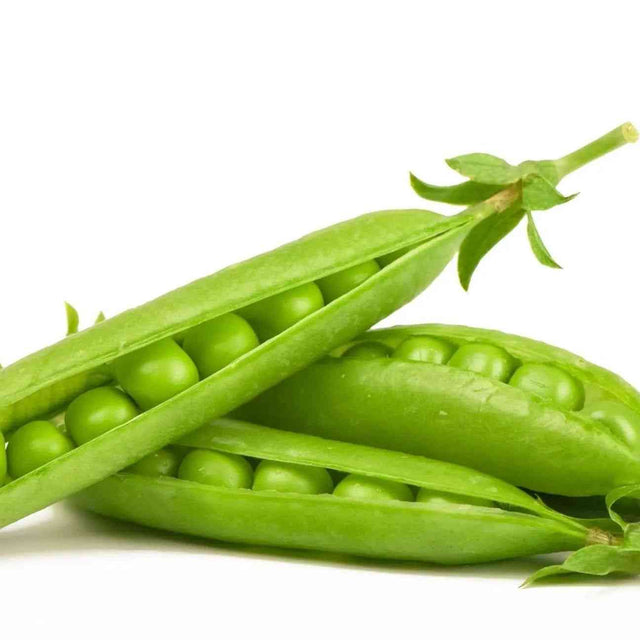
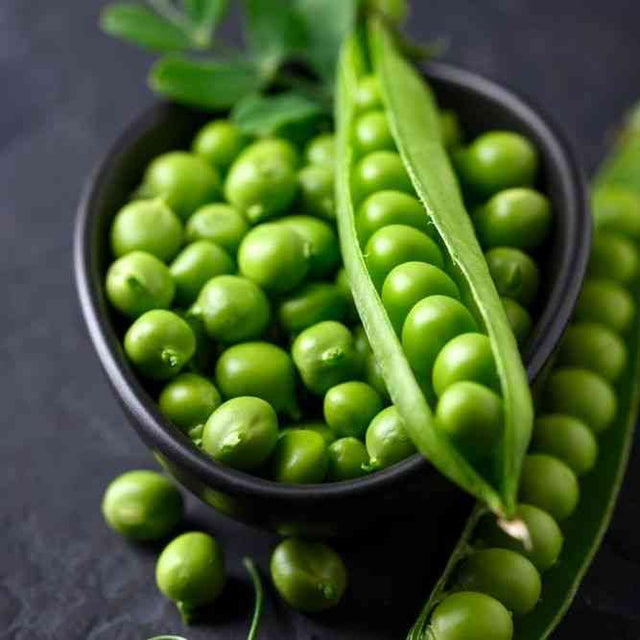
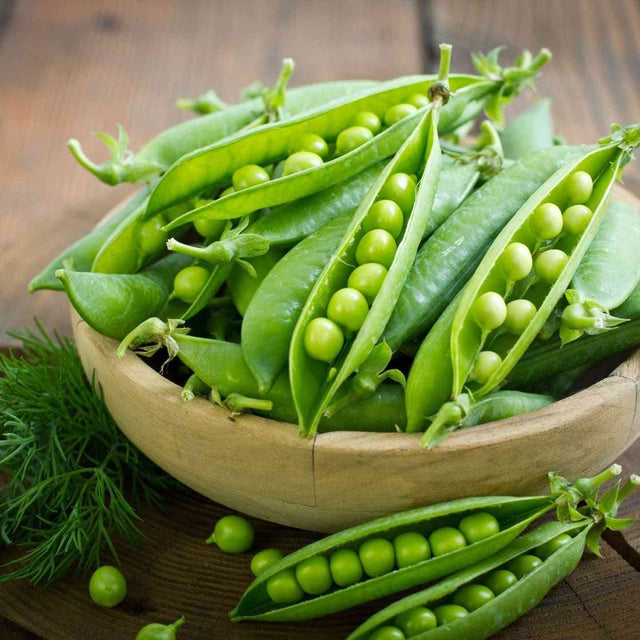
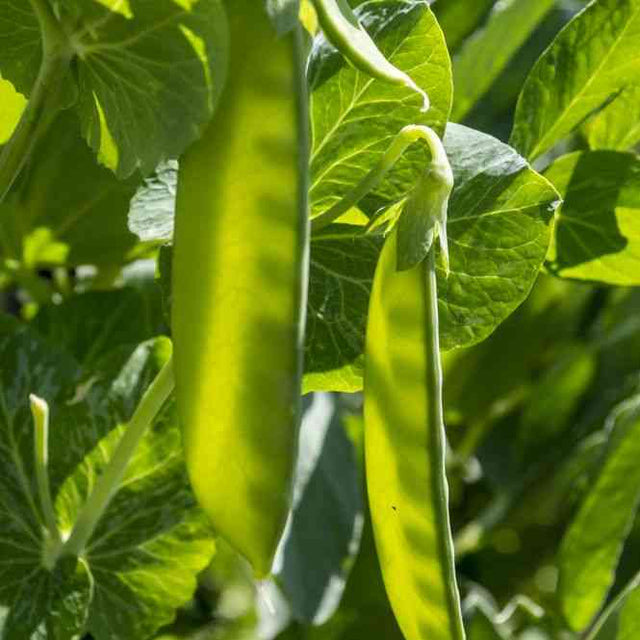
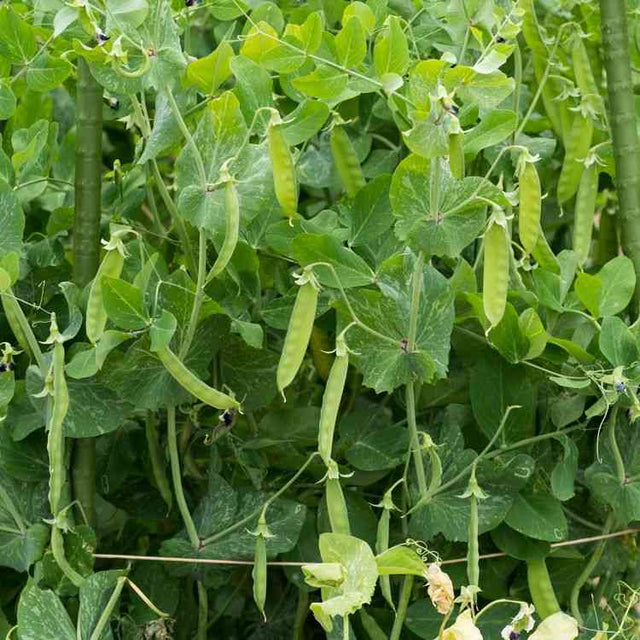
Shelling peas are grown for the peas inside. Snow peas are harvested while pods are flat. Sugar snap peas are eaten pod and all after the peas begin to swell. All are cool-season forms of Pisum sativum and should be planted early enough to flower and fill pods before sustained heat.
Peas are a spring crop with no interest in your optimism. They want cool soil, a trellis waiting, and a gardener who understands the difference between flat, full, and finished. Miss the harvest by a few days and sugar becomes starch. The vine does not apologize. It simply moves on.
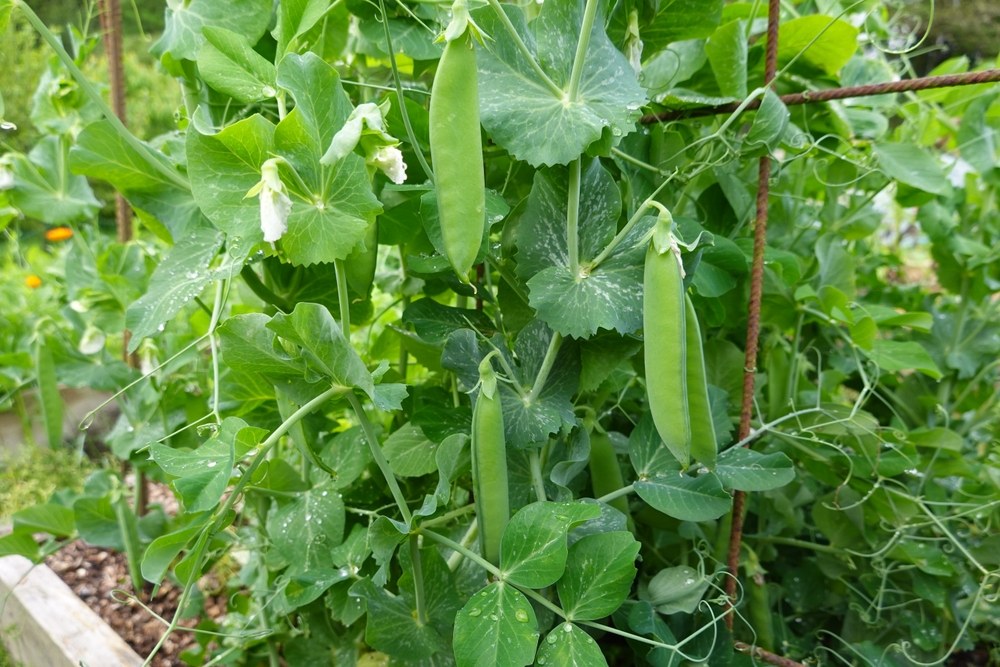
Shelling, snow, and sugar snap peas
| Type | Harvest clue | What is eaten | Representative varieties |
|---|---|---|---|
| Shelling or garden pea | Pods plump; peas full but still tender | The peas, not the fibrous pod | Green Arrow, Alaska |
| Snow pea | Pod broad and flat before peas swell | Tender pod and immature peas | Oregon Giant, Mammoth Melting Sugar |
| Sugar snap pea | Pod rounded and crisp as peas swell | Sweet pod and peas together | Original Sugar Snap, Sugar Ann |
| Field pea or Southern pea | Warm-season shell or dry stage | Seeds; pods usually not used like garden peas | Cowpeas are Vigna unguiculata, not Pisum sativum |
Plant peas early enough to finish before heat
Direct sow as soon as the soil can be worked and severe waterlogging is unlikely. Peas tolerate cool soil better than beans, but seed still needs oxygen. Cold mud is not an early start.
Plant about 1 inch deep and roughly 2 to 3 inches apart, adjusting for variety and support. A fall crop is possible where the season remains cool long enough, but sowing too early into summer heat can produce weak germination and stressed seedlings.
In the Mid-Atlantic, spring often moves quickly. A planting delayed by two weeks can lose more than two weeks at harvest because flowering collides with heat. The first task is not predicting the perfect spring. It is being ready when the soil gives permission.
Trellis height, spacing, and airflow
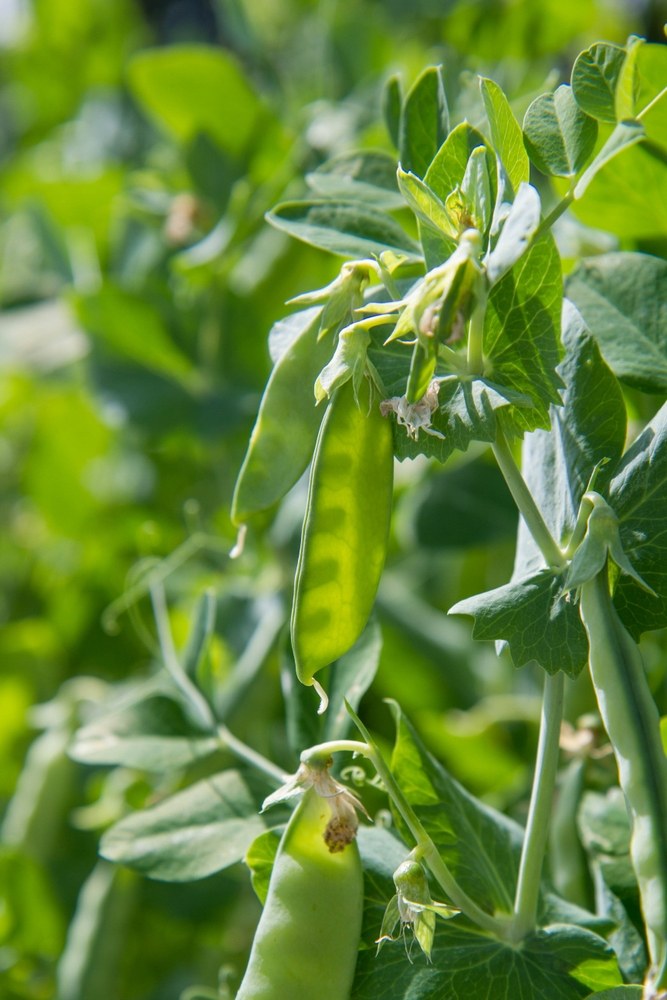
Even compact peas benefit from a short support. Tall varieties need netting, twiggy brush, wire, or panels. Install support at sowing so tendrils find it before vines fall together.
Keep rows narrow enough to reach from both sides. Dense pea walls can trap humidity and powdery mildew. A trellis should make the crop easier to inspect, not create a green tunnel where pods disappear.
Peas fix nitrogen through compatible bacteria, but they still need balanced soil. Excess nitrogen can produce vines at the expense of pods. Inoculation may help where peas have not been grown and local recommendations support it.
Water, flowering, and keeping sweetness in the crop
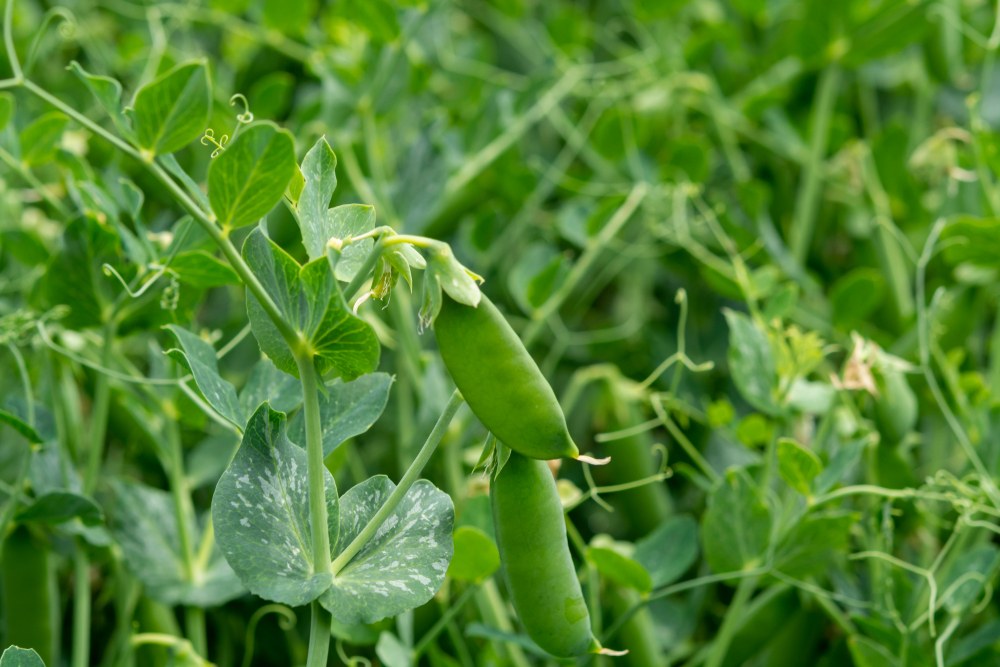
Keep moisture steady through flowering and pod fill. Drought shortens the crop and toughens pods. Saturated soil damages roots and invites disease. Water the root zone and let foliage dry.
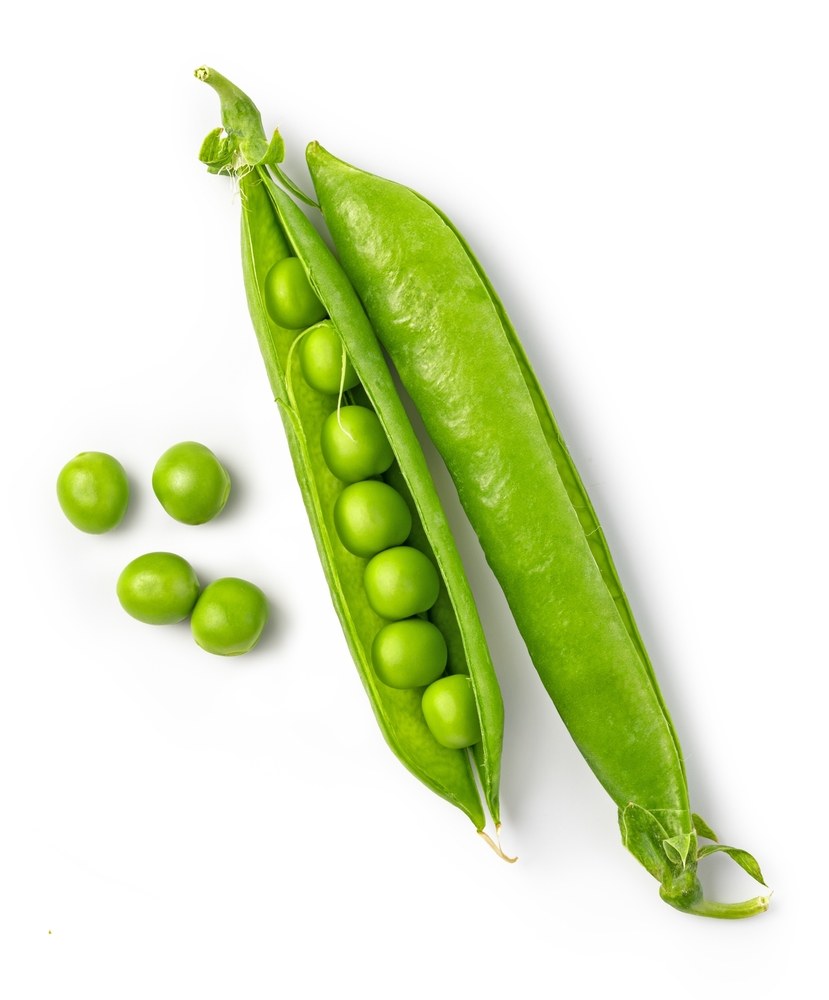
Harvest frequently. Shell peas should be full but not hard. Snow peas should remain flat and flexible. Snap peas should be rounded, juicy, and crisp before the pod becomes fibrous.
Heat converts the season quickly. When pods become starchy and vines decline, the answer is not more fertilizer. Finish the harvest, reserve healthy pods for seed if desired, and clear diseased residue.
Pea shoots and tendrils
Young pea shoots and tendrils are edible when harvested from food-grade garden peas that have not been treated with products inconsistent with edible greens. Cut lightly from vigorous plantings rather than stripping the vine before it has built enough leaf area.
Do not confuse edible garden-pea shoots with ornamental sweet pea, Lathyrus odoratus, which is not an edible crop. Common names can be charming until they become dangerous; scientific names keep the plate honest.
Common pea problems
Aphids cluster on tender growth and can transmit viruses. Slugs and cutworms damage seedlings. Pea weevils may scar seed. Powdery mildew often appears as weather warms or airflow declines. Fusarium wilt, root rots, and downy mildew can persist in poorly rotated ground.
Rotate away from peas and related legumes, avoid saturated soil, remove diseased residue, and choose resistant varieties where a known disease is chronic. Do not work wet vines or save seed from systemically sick plants.
Blank pods can result from heat, moisture stress, flower damage, or poor plant vigor. Inspect the pattern across the row rather than blaming a single flower.
Saving pea seed
Peas are primarily self-pollinating, but crossing can occur. Separate varieties by distance and save from several healthy plants. Mark seed plants before the sweet pods are eaten.
Let pods become dry and brittle. Harvest before long rain, finish drying under cover, shell, clean, and dry seed again. Store only when hard and dry. Record type as well as variety: shell, snow, or snap.
A seed packet labeled only “pea” loses information the next gardener needs. The harvest stage is part of the variety’s identity.
Garden peas are not Southern peas
Shelling peas, snow peas, and sugar snap peas are Pisum sativum. Southern peas, black-eyed peas, purple hulls, and many field peas are cowpeas, Vigna unguiculata. The shared word “pea” does not make their planting calendar, heat tolerance, flower biology, or seed-saving relationships the same.
Garden peas want cool soil and cool air. Cowpeas wait for summer. Edible-pod peas belong to the cool-season garden-pea group: snow peas are harvested flat before seed expansion, while sugar snaps are harvested after the peas swell and the pod remains crisp. Shelling peas are grown for the seed inside.
One word can hide two seasons. Good catalog structure opens the word back up, with the scientific name and crop group near the top.
Sowing peas into real spring soil
Plant as soon as the ground is workable and the seedbed is not waterlogged. Cool does not mean saturated. A seed pressed into sticky, airless soil can rot before the shoot reaches daylight. Prepare a loose bed, plant roughly 1/2 to 1 inch deep according to soil texture, and keep the surface from crusting.
Pre-soaking is optional and can be risky in cold wet conditions because swollen seed becomes more vulnerable to damage. Where soaking is used, keep it brief and plant immediately into suitable soil. Do not soak seed simply because a list treats every large seed alike.
A pea-specific Rhizobium inoculant may help where peas and their compatible bacteria have not been present. The inoculant used for common beans is not automatically the correct one for peas. Install support at sowing for climbing varieties, and protect newly planted rows from birds and rodents where losses are common.
For seed saving, mark the row before every tender pod is harvested. Save from several true-to-type plants, allow pods to dry brown, and finish drying under cover when frost or wet weather threatens. The future should not depend on whichever pods the kitchen forgot.
Mid-Atlantic and Upper South field notes
Plant spring peas early, but not into waterlogged ground. In eastern North Carolina, heat can arrive fast enough to shorten the harvest. Earlier shelling varieties and compact snap peas are useful where spring is brief. Taller snow peas can thrive when sown promptly and trellised for airflow.
Fall peas are possible in many areas, but count backward from both frost and declining day length. Protection from early cold may extend harvest, yet flowering must occur before deep winter slows growth.
The harvest window changes the crop
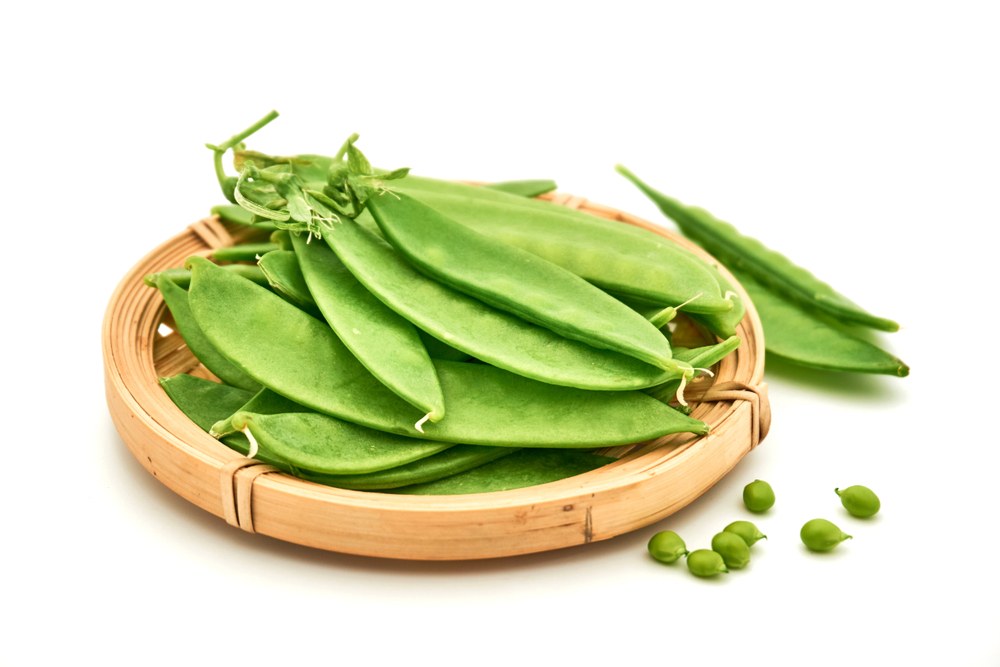
Snow peas are harvested while the pods are flat and the peas inside are barely formed. Sugar snap peas are allowed to swell, then eaten pod and all while the walls remain crisp. Shelling peas stay on the vine until the peas fill the pod, but not so long that sugars turn heavily to starch. Pea shoots are cut much earlier, before the planting ever becomes a pod crop.
Those stages change labor and flavor. Snow peas need frequent picking because a flat pod can become stringy quickly. Snap peas tolerate a slightly wider window but still reward close attention. Shelling peas require time at the table as well as in the garden. Shoots offer the earliest harvest but remove growing points and can reduce later pod production if cut heavily.
Write the intended harvest beside the variety name before sowing. A gardener who plants a shelling pea and waits for an edible flat pod may think the variety is poor. A gardener who lets a snow pea become fully seeded may blame the pod for becoming tough. The crop did not fail. The harvest definition did.
Succession sowing before the heat closes the door
Peas can be sown as soon as the soil is workable and drained, but one early planting is not the only strategy. A second sowing one to three weeks later can extend harvest and protect against a cold, wet first attempt. In long springs, a third sowing may be useful. In the warmer Upper South, late succession can run directly into heat and produce vines without a worthwhile pod set.
Count backward from the usual arrival of hot nights, not only forward from the frost date. Add germination time, vegetative growth, flowering, and harvest. A variety listed at sixty days still needs suitable weather around those days. Shade cloth can soften afternoon heat, and mulch can steady roots, but neither turns peas into a summer crop.
Fall peas are possible where autumn remains long and cool. They are less forgiving because shortening days slow growth and an early freeze can arrive before harvest. Choose faster varieties, sow into warm but moist soil, and protect seedlings from late-summer pests.
Seed saving, off-types, and keeping pea use clear
Garden peas are primarily self-pollinating, so modest separation can be effective, but insects can still cause occasional crossing. Mark plants that match the variety's vine height, flower color, pod form, seed color, maturity, and intended harvest type. Do not save from weak, diseased, or obviously mixed plants simply because their pods dried first.
Let seed pods mature fully and dry. Harvest before prolonged wet weather and finish drying under cover. Shell, clean, and label the seed with variety, harvest type, year, population, and nearby pea varieties. A name such as Sugar Snap carries a specific promise about edible pod walls. The next generation should be tested against that promise.
Before the dry pods are mixed, compare seed shape, color, surface, and size among the selected plants. Keep any obvious off-type separate. Then perform a small germination test before the next planting season. A seed lot can look perfect and still have lost vigor through weather, insects, or incomplete drying. The test does not replace field observation; it closes the record.
Peas are easy to romanticize because they arrive with spring. The discipline comes later, when the vines turn yellow and the dry pods are no longer beautiful. That is when the food crop becomes seed again, and when careful gardeners decide whether the name deserves another year.
Build the pea row around the harvest you want
For fresh shelling peas, plan enough row length to justify the shelling work and pick while sugars are high. For snow peas, place the trellis where both sides can be reached because flat pods hide behind foliage quickly. For sugar snaps, sturdy support and frequent picking matter because filled edible pods become heavy. For shoots, sow more densely in a separate bed rather than repeatedly cutting the same plants expected to carry a pod crop.
Mixing types in one row can be attractive, but it complicates harvest and seed saving. White flowers, purple flowers, tall vines, dwarf vines, flat pods, and swollen pods can overlap until the row becomes difficult to read. Keep distinct blocks or clear labels, and leave enough space to follow each variety from emergence to dry seed.
| Pea type | Pick when | Best planning question |
|---|---|---|
| Snow pea | Pod is full-sized but still flat | Can I pick every day or two? |
| Sugar snap | Peas swell while pod remains crisp | Is the trellis strong and reachable? |
| Shelling pea | Peas fill the pod before starchiness | Do I want enough volume to shell and preserve? |
| Pea shoots | Tender tips before flowering | Is this a dedicated shoot planting? |
The simple act of naming the harvest prevents most confusion. The seed packet can say “pea.” The garden needs a more precise instruction.
Frequently asked questions
What is the difference between snow peas and snap peas?
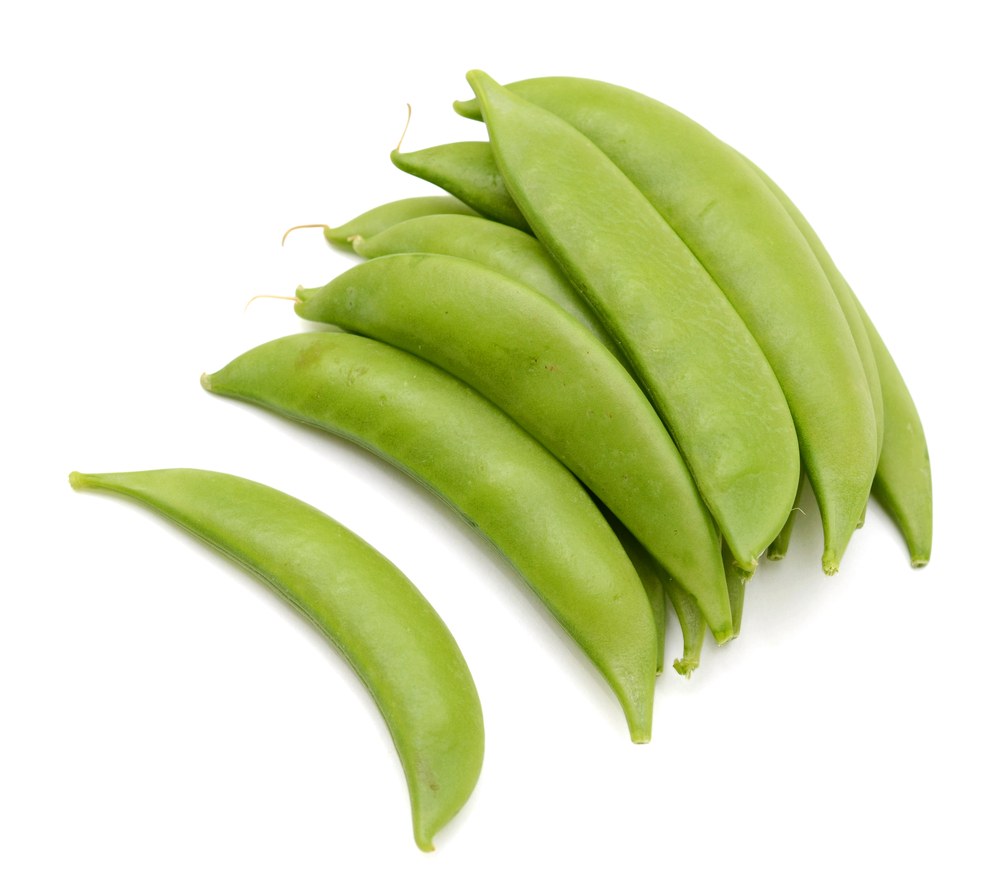
Snow peas are harvested while pods remain flat. Snap peas are harvested after peas swell inside a crisp edible pod.
Are shelling-pea pods edible?
They are usually fibrous and not eaten like snow or snap pea pods.
Do peas need a trellis?
Most benefit from support. Compact varieties may use a short fence; tall varieties need a stronger, higher system.
How early can peas be planted?
As soon as soil can be worked and is not waterlogged. Local soil conditions matter more than a fixed calendar date.
Why did my peas stop producing?
Sustained heat, drought, root disease, overmature pods, and aging vines can end the crop.
Are pea shoots edible?
Shoots of edible garden peas are eaten, but ornamental sweet peas are not food. Use correctly identified, untreated edible pea varieties.
Will pea seed grow true?
Usually, because peas are primarily self-pollinating. Use separation and save from several true-to-type plants for greater confidence.
For more information and guidance
Explore the cited resources below for additional technical detail and background.