Gardeners use the word blight for almost any tomato leaf that turns brown. That understandable shortcut can lead to the wrong response.
Early blight and late blight are different diseases caused by different organisms, favored by different weather, moving at different speeds. Early blight is common and often manageable. Late blight is less routine but can become a regional emergency.
The first job is not spraying. The first job is looking closely enough to decide what pattern is actually present.
The word blight is not a diagnosis. Pattern, weather, plant location, speed, and fruit symptoms have to agree.
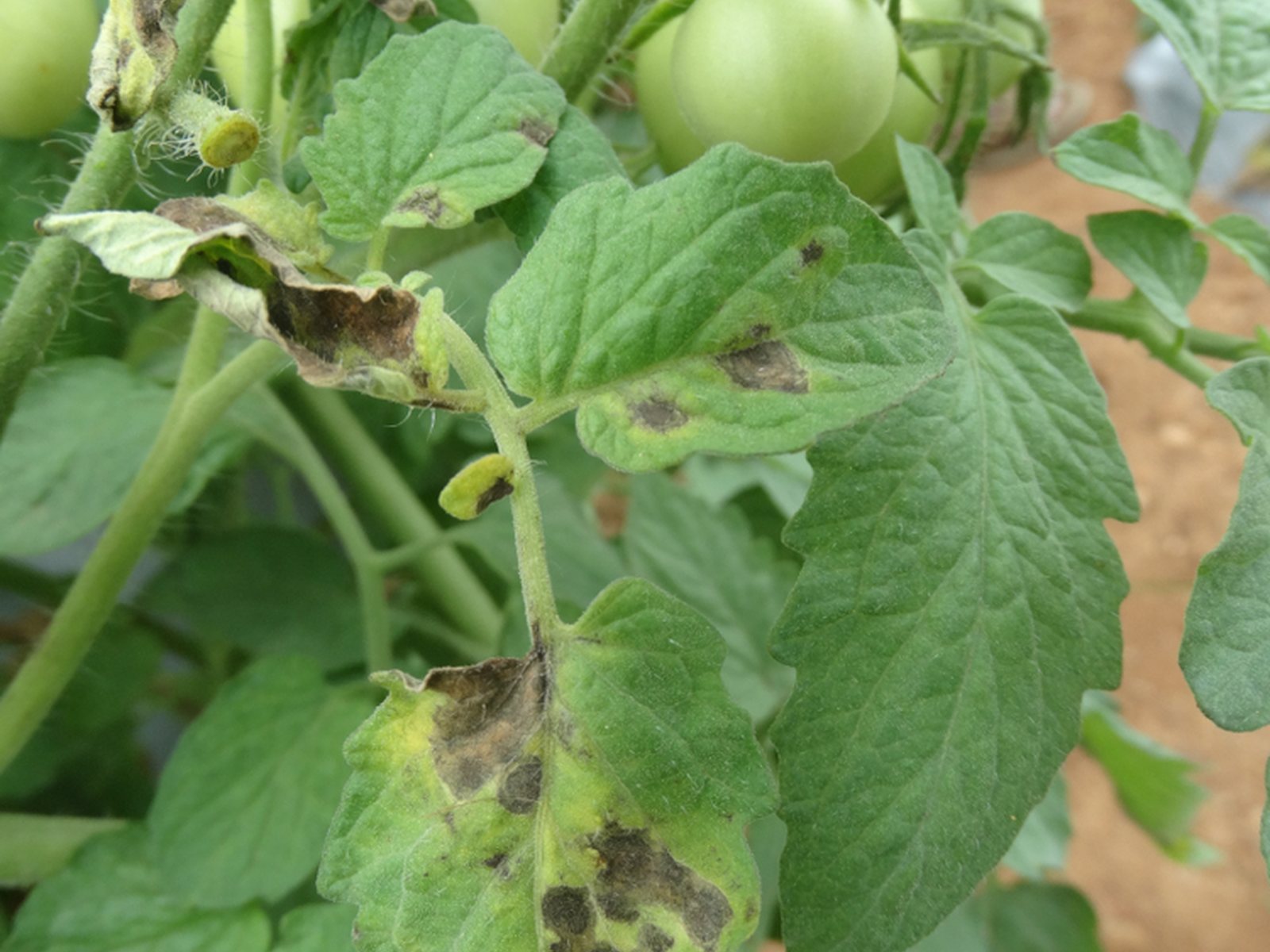
Early blight and late blight compared by pattern
The name blight is used loosely in gardens. Diagnosis should combine lesion shape, leaf age, stem and fruit symptoms, weather, speed of spread, and laboratory or Extension support when the result changes the response.
| Field measure | Practical starting point | How to use it |
|---|---|---|
| Early blight organism | Alternaria solani and related Alternaria species | Often begins on older lower foliage and progresses upward under favorable conditions. |
| Early blight lesion | Brown spots that may show concentric target-like rings with surrounding yellowing | Target rings are useful evidence, but not every lesion displays them clearly. |
| Early blight weather | Warm, humid, or frequently wet foliage | Disease can build gradually through the season, especially on stressed plants. |
| Late blight organism | Phytophthora infestans | A water mold capable of rapid epidemic spread on tomato and potato. |
| Late blight lesion | Irregular water-soaked or greasy-looking areas that darken quickly | Under humid conditions, pale or white sporulation may appear near lesion margins on the leaf underside. |
| Late blight weather | Cool, wet, cloudy, or persistently humid conditions | Spread can be rapid. Whole plants may collapse in days when weather is favorable. |
| Response speed | Early blight: same-day sanitation and management; possible late blight: urgent escalation | Contact local Extension or a plant diagnostic clinic promptly when late blight is possible. |
| Fungicide role | Preventive or protective, not a cure for dead tissue | Product choice and timing depend on diagnosis, local recommendations, label, and crop stage. |
Septoria leaf spot, bacterial spot, bacterial speck, nutrient stress, herbicide injury, sunscald, mites, and root problems can all be called blight by mistake. Inspect both leaf surfaces, stems, petioles, fruit, and the pattern across the planting.
Take photographs before removing tissue. Photograph the entire plant, the oldest and newest affected leaves, lesion close-ups, leaf undersides, stems, fruit, and neighboring plants. Record rain, irrigation, temperature, and how quickly symptoms changed.
Do not compost material suspected of late blight unless local guidance specifically supports the method. Remove affected plants and volunteers according to local Extension instructions, and inspect nearby tomato and potato plants.
Evidence to collect before treating
- Which leaves were affected first: old, new, or all ages.
- Whether lesions have rings, yellow halos, water-soaked margins, or white growth underneath.
- Whether stems and fruit are affected.
- How many plants are involved and how quickly the pattern spreads.
- The previous 7 to 10 days of rain, irrigation, temperature, and humidity.
- Recent sprays, fertilizers, herbicide use, or drift exposure.
Important: Do not diagnose late blight from one internet photograph. The consequence is large enough to justify rapid confirmation.
Early blight and late blight at a glance
| Feature | Early blight | Late blight |
|---|---|---|
| Cause | Alternaria fungi | Phytophthora infestans water mold |
| Typical weather | Moderate to warm, wet or heavy dew | Cool, wet, humid |
| First location | Often older lower leaves | Can appear anywhere and move rapidly |
| Leaf spots | Brown, often round, target-like concentric rings, yellowing | Large irregular water-soaked or olive-brown blotches, green-gray edge |
| Stem lesions | Dry, brown, may have rings | Firm dark brown lesions |
| Fruit | Dark leathery lesions, often near stem | Firm brown or olive rot, can cover large areas |
| Speed | Usually progressive over time | Can spread explosively |
| Garden frequency | Common in many regions | Sporadic, outbreak-dependent |
Use this table as a screen, not a final laboratory diagnosis.
How early blight usually appears
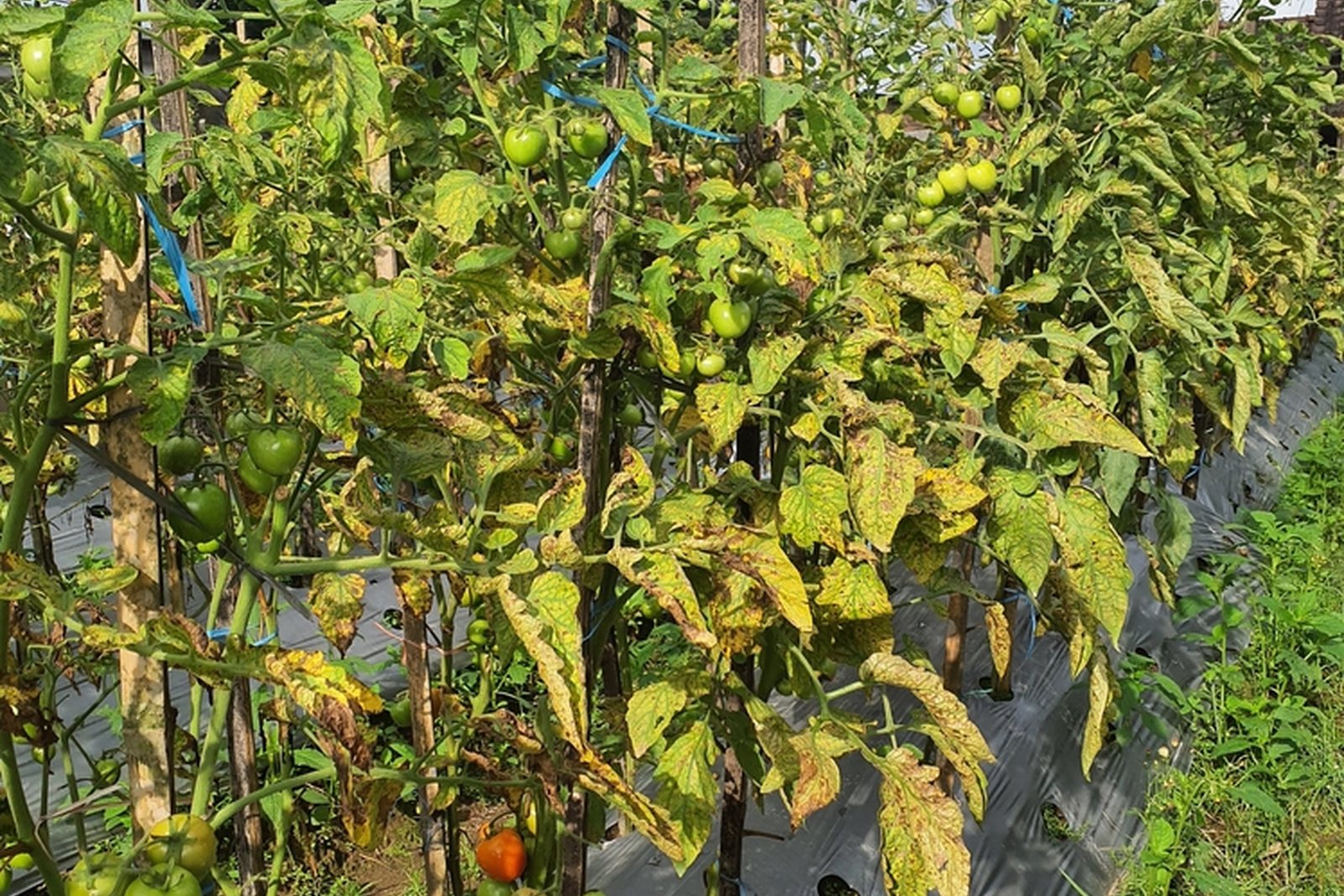
Early blight often begins on older foliage near the soil. Spots enlarge and develop target-like concentric rings. Yellow tissue may surround the lesion, and lower leaves eventually die.
The pathogen can survive in infected debris and soil and spread through splash, equipment, hands, and wind. Warm wet weather, heavy dew, and dense canopies support repeated infection.
Early blight can also infect stems and fruit. Fruit lesions are dark, leathery, and frequently near the stem end.
How late blight usually appears
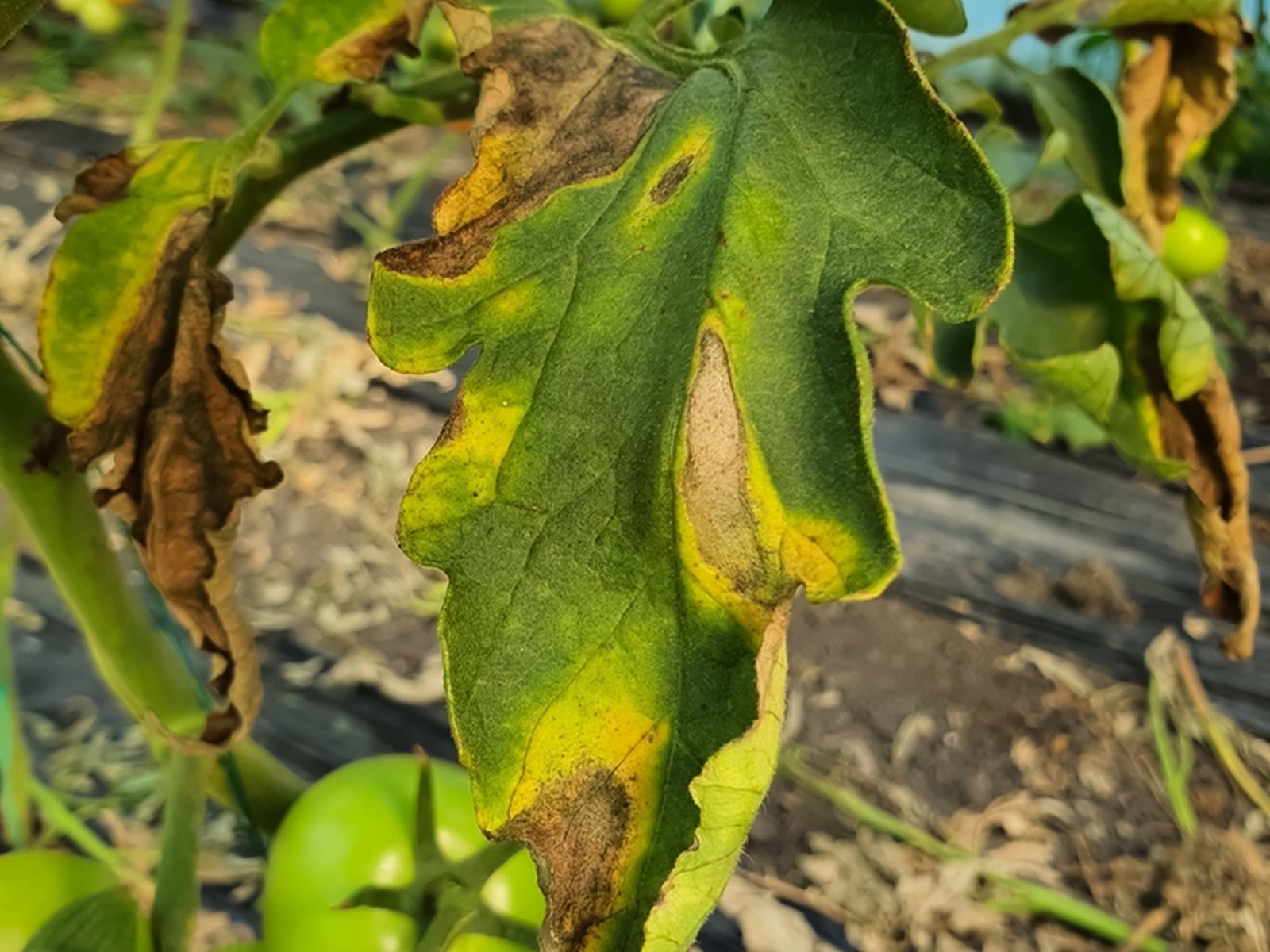
Late blight lesions are more irregular and water-soaked, becoming olive-brown or dark brown. In humid weather, a pale or white growth may appear around lesion edges or on the underside of infected tissue.
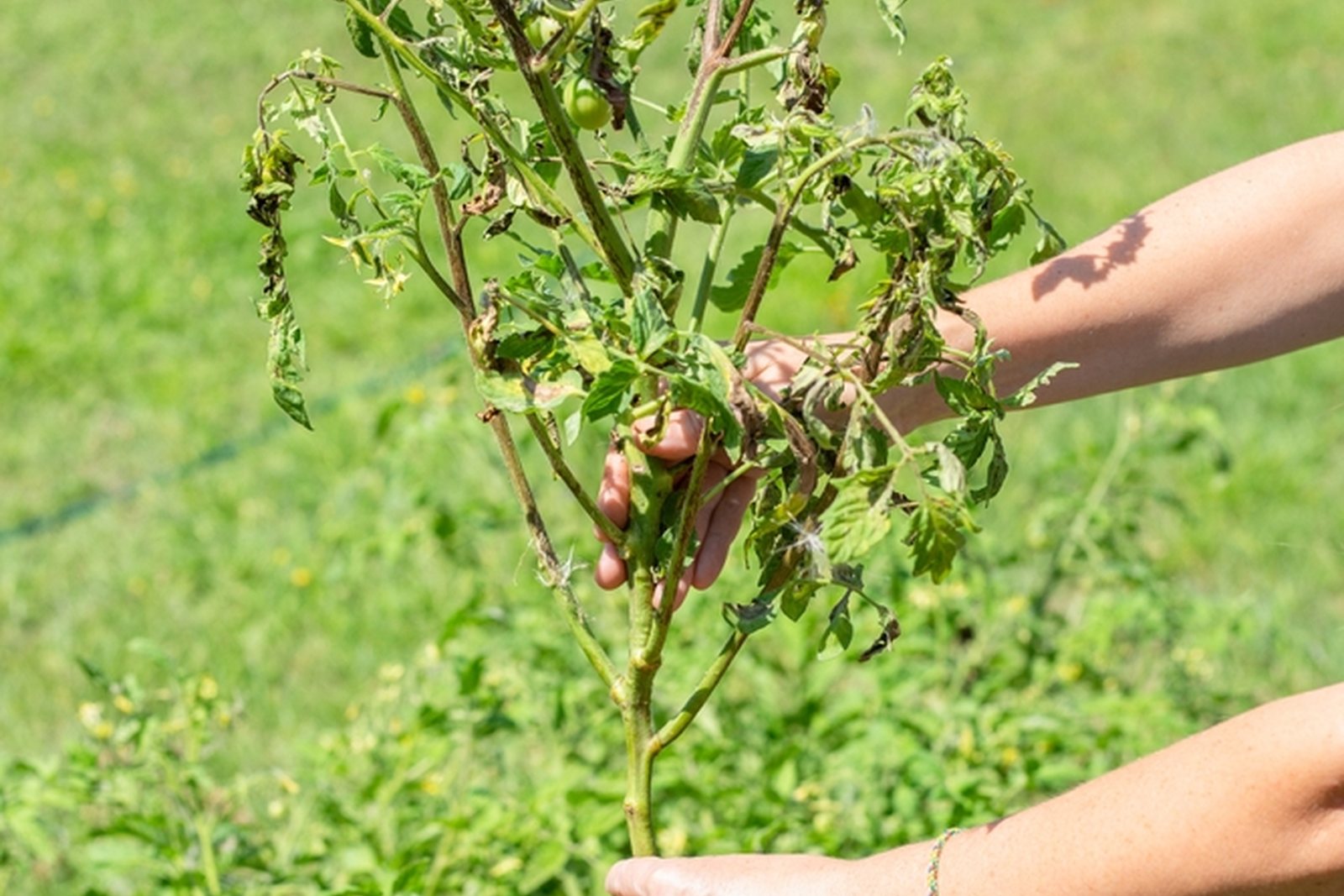
Late blight can move across leaves, stems, and fruit rapidly in cool wet weather. Entire plantings can collapse as if frost-burned. Because it can spread regionally on windborne spores and infected transplants or potato tubers, suspected late blight deserves prompt local Extension or diagnostic-lab attention.
What is often mistaken for blight
- Septoria leaf spot: many small spots with pale centers and dark margins.
- Bacterial spot or speck: small dark lesions, sometimes with yellow halos and fruit spotting.
- Physiological leaf roll: thick rolled leaves without infectious lesions.
- Drought or nutrient stress: generalized yellowing or edge burn.
- Herbicide injury: twisted, cupped, or distorted new growth.
- Sunscald: pale exposed fruit tissue after leaf loss.
- Normal lower-leaf aging.
Do not diagnose from one photograph of one leaf if the whole-plant pattern tells a different story.
Use weather as evidence, not proof
Early blight develops in moderate to warm temperatures with moisture or high humidity. Late blight favors cool, damp periods around 60-70°F.
Weather can strengthen or weaken a diagnosis, but a wet week does not make every spot late blight. Look for the matching lesion pattern and speed.
What to do when early blight is likely
- Remove heavily infected lower leaves while plants are dry.
- Sanitize hands and tools between plants.
- Mulch soil to reduce splash.
- Water at soil level.
- Improve spacing and support.
- Remove weeds and volunteer nightshades.
- Rotate away from tomatoes, potatoes, and related crops.
- Choose resistant or tolerant varieties where useful.
- Do not remove more foliage than the plant can spare.
Many home gardens tolerate some early blight and still produce a crop.
What to do when late blight is possible
Treat suspected late blight as urgent. Photograph the whole plant and close lesions, isolate tools, and contact local Extension or a diagnostic clinic. Do not carry infected tissue through the garden.
Local recommendations may include destruction and disposal of infected plants to protect nearby tomatoes and potatoes. Composting may not be appropriate. Follow current regional alerts and label instructions for any pesticide.
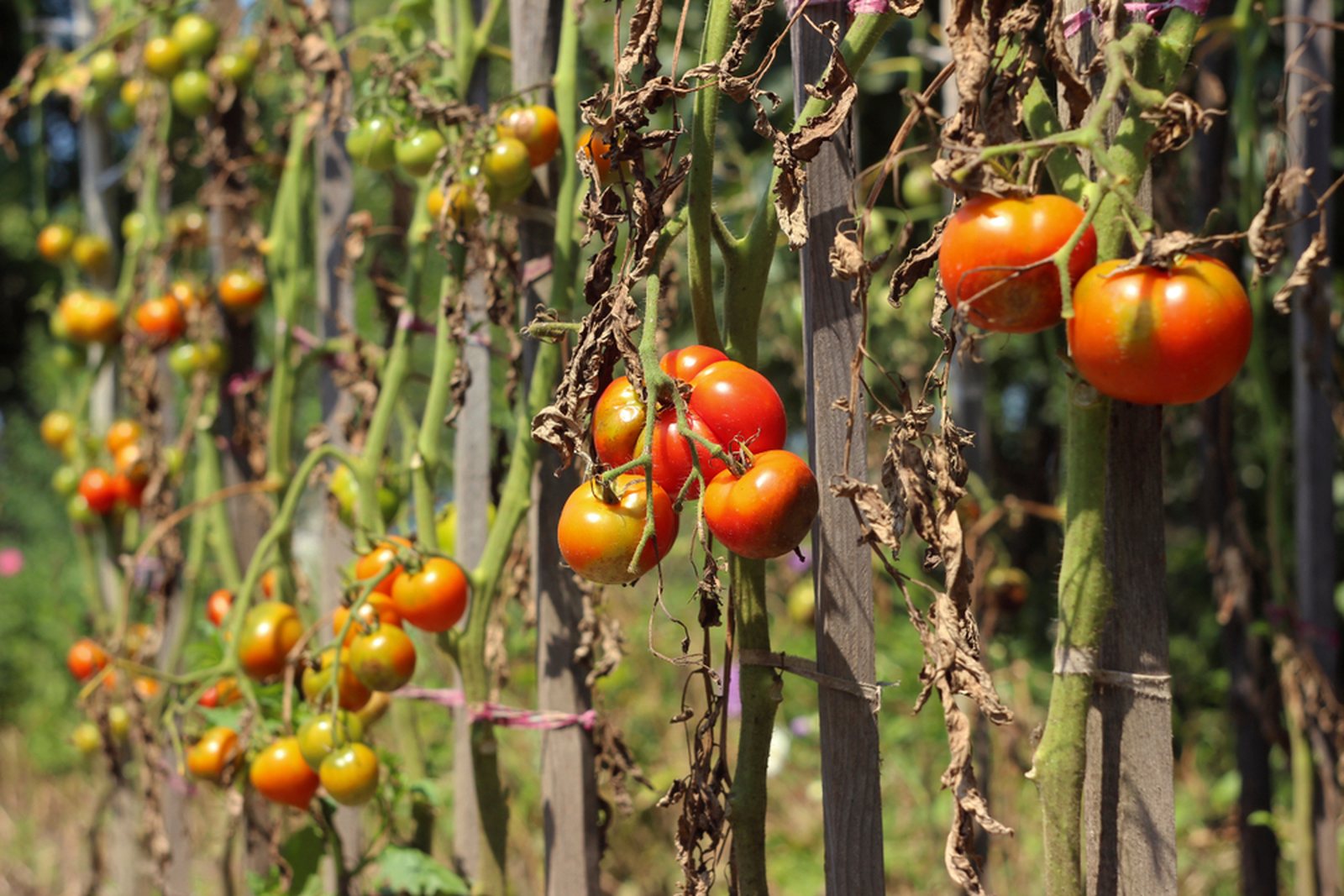
What resistance can and cannot do
A resistant variety may slow infection or reduce damage. It is not necessarily immune. Resistance also may apply to one pathogen strain or one disease, not every leaf spot.
Catalog codes should be read specifically. "Disease resistant" without naming the disease is not useful enough for planning.
Build prevention before symptoms appear
- Start with healthy seed and transplants.
- Space and support plants for airflow.
- Mulch before soil splash becomes routine.
- Use drip or careful soil-level watering.
- Rotate crops and manage volunteers.
- Scout lower leaves weekly.
- Avoid working in wet foliage.
- Clean stakes and cages.
- Track local late blight reports.
Prevention is a system. One fungicide spray cannot repair a wet crowded planting with infected debris and no airflow.
Early blight and late blight side by side
| Question | Early blight | Late blight |
|---|---|---|
| Cause | Alternaria fungi | Phytophthora infestans, an oomycete |
| Typical starting point | Often lower, older leaves | Any level; may appear suddenly across foliage |
| Leaf pattern | Brown target-like spots with concentric rings | Water-soaked, irregular lesions that enlarge rapidly |
| Weather favored | Warm, humid, leaf-wet conditions | Cool to mild, very humid or wet conditions |
| Stem/fruit signs | Dark lesions; sunken spots near fruit stem | Dark greasy lesions on stems and firm brown fruit lesions |
| Speed | Usually gradual | Can destroy foliage rapidly |
| Garden response | Sanitation, rotation, mulch, airflow, protectant timing | Treat as urgent; confirm, remove, report if locally requested |
A single leaf may not show the textbook pattern. Use the whole plant, weather, progression speed, and neighboring potatoes or tomatoes.
A season-long prevention calendar
Before planting: rotate away from tomato and potato debris, choose healthy transplants, review resistance traits, and clean supports.
At transplanting: mulch the soil, space for airflow, stake or cage early, and water at the root zone.
During growth: scout lower leaves twice a week, remove soil-contact leaves when appropriate, avoid working wet plants, and keep irrigation consistent.
After storms or regional alerts: inspect the whole canopy and check local Extension late-blight alerts. A sudden regional outbreak changes the level of concern.
At season end: remove diseased residue, clean stakes and cages, control volunteer tomatoes and potatoes, and record which varieties and beds were affected.
How to photograph or submit a useful sample
For a diagnostic clinic or Extension office, collect evidence that shows the pattern:
- The entire plant and its position in the row
- Upper and lower leaf surfaces
- The boundary between healthy and diseased tissue
- Stem lesions
- Fruit symptoms
- Nearby potatoes, tomatoes, or nightshade weeds
- The date symptoms began and how quickly they spread
- Recent rain, irrigation, and fungicide use
Place physical samples in dry paper rather than a sealed wet plastic bag unless the lab gives different instructions. Confirm local submission requirements before shipping.
Photograph, sample, and escalate an uncertain diagnosis
When a symptom is moving quickly, take photographs before removing tissue. Photograph the whole plant, the upper and lower leaf surfaces, the stem, nearby plants, and the bed. Add the date, recent rainfall, irrigation method, first location of symptoms, and whether potatoes are growing nearby. Those details are often more diagnostic than a close-up alone.
Early blight, Septoria leaf spot, bacterial spot, herbicide injury, nutrient stress, and natural lower-leaf decline can overlap in photographs. Late blight is especially important to confirm because it can progress rapidly under favorable weather. Contact the local Cooperative Extension office or plant disease clinic when lesions spread quickly, stems are affected, white growth appears around lesion margins in humid conditions, or the garden history does not fit the first guess.
| Observation | What it can suggest | What it does not prove |
|---|---|---|
| Lower leaves affected first | Soil-splashed leaf spot or early blight | The exact pathogen |
| Rapid water-soaked lesions | Late blight or bacterial disease may need consideration | That a fungicide will solve the problem |
| Concentric rings in larger lesions | A classic early blight clue | That every ringed lesion is early blight |
| White growth at lesion edge in humid weather | Possible late blight sporulation | A final diagnosis without context or lab support |
| Uniform symptoms on many plants after spraying | Possible chemical or herbicide injury | That infectious disease is absent |
Remove badly affected tissue only when leaves are dry, bag it, and clean tools between plants. Do not compost material from a suspected late blight outbreak unless local guidance specifically says the composting system will destroy the pathogen. At the end of the season, remove crop debris, rotate when space allows, and keep volunteer tomatoes and potatoes from carrying problems forward.
A response path that matches the risk
Early blight is usually managed as a season-long disease pressure. Late blight is treated as a possible outbreak. The difference in urgency is why careful observation matters.
| What you observe | Most useful next check | Action that follows the evidence |
|---|---|---|
| Older lower leaves show target-like spots and yellowing | Check for gradual upward progression and confirm with Extension resources | Remove heavily affected lower leaves, keep foliage dry, mulch, support plants, and follow local preventive guidance. |
| Irregular water-soaked lesions spread rapidly in cool wet weather | Inspect leaf undersides for pale sporulation and contact Extension | Isolate the problem, avoid moving wet plant material, and follow urgent local instructions. |
| Only one side or one plant is scorched | Review chemical exposure, root injury, irrigation, and sun | Do not apply a disease treatment until the pattern supports disease. |
| Fruit is sound but foliage is badly diseased | Identify the disease and determine whether fruit has lesions or decay | Harvest sound fruit when appropriate; discard diseased or rotting fruit and follow food-safety guidance. |
Early blight vs. late blight: diagnose pattern, speed, and weather together
A reliable early blight vs late blight tomatoes comparison uses pattern, speed, weather, and tissue together. This guide compares tomato blight symptoms, early blight target spots, late blight water soaked lesions, tomato leaf spots, tomato disease diagnosis, and late blight weather risk.
The word blight is often used for any brown tomato leaf. That can lead to the wrong response. Early blight is caused by Alternaria fungi and commonly begins on older lower leaves with brown lesions that may show target-like concentric rings. Late blight is caused by the water mold Phytophthora infestans and can produce rapidly enlarging, water-soaked or oily brown lesions on leaves, stems, and fruit during cool, wet, humid weather.
| Feature | Early blight | Late blight |
|---|---|---|
| Usual starting point | Older lower foliage | Any canopy level where inoculum lands |
| Lesion pattern | Brown to black spots, often with concentric target rings and yellow halo | Irregular water-soaked or oily blotches that enlarge rapidly |
| Stem symptoms | Dry dark lesions, sometimes with rings | Dark brown firm lesions that can spread quickly |
| Fruit symptoms | Sunken dry lesions, often near stem end, sometimes ringed | Firm brown or olive lesions, often beginning on shoulders |
| Weather | Moisture plus a broad temperature range; common as plants age | Prolonged high humidity with mild, cool-to-moderate temperatures |
| Speed | Often progresses upward over time | Can move through plants or fields very quickly |
| Urgency | Manage and slow; plants can tolerate some infection | Seek rapid confirmation and act promptly |
UC IPM reports late blight infection can occur when humidity exceeds 90 percent and average temperature is about 60 to 78 F for a sufficient period. Weather supports a diagnosis, but symptoms and laboratory confirmation matter.
How early blight usually develops
- Small dark spots appear on older leaves near the ground.
- Lesions enlarge, often to 1/4 to 1/2 inch.
- Concentric rings create a target-like appearance.
- Tissue around lesions turns yellow.
- Severely affected leaves brown and fall or cling to stems.
- Dry sunken lesions can occur on stems and fruit.
Early blight spores require moisture to germinate and can spread by wind, splash, people, and equipment. The pathogen survives in infected tomato and potato debris and related weeds. The disease name does not mean it appears only early in the season.
A tomato can retain useful yield with limited early blight. Do not remove so much foliage that fruit is exposed. University of Minnesota guidance cautions against removing more than about one-third of leaves.
How late blight usually develops
- Small pale or dark green water-soaked areas appear.
- Lesions enlarge into purple-brown or oily-looking blotches.
- In humid conditions, gray-white sporulation may appear around lesion edges, especially underneath leaves.
- Petioles and young stems develop dark lesions.
- Sections of canopy collapse rapidly, sometimes appearing frost-killed.
- Fruit develop firm brown or olive lesions, often on shoulders.
Late blight does not occur every year in every region. It requires the pathogen plus favorable weather. When the pattern and weather fit, do not wait several weeks for certainty while moving through the garden with contaminated hands and tools. Contact Extension or a plant diagnostic laboratory promptly.
Common problems mistaken for tomato blight
| Problem | Distinguishing clue |
|---|---|
| Septoria leaf spot | Many small circular spots with pale centers and dark margins, usually lower foliage |
| Bacterial spot or speck | Very small dark lesions, often with yellow halos; fruit may have corky spots |
| Powdery mildew | Yellow blotches and possible white powder; no typical late-blight stem and fruit lesions |
| Verticillium or Fusarium wilt | One-sided yellowing or wilt and internal vascular discoloration |
| Southern blight | Stem lesion at soil line with white growth and small tan-brown sclerotia |
| Nutrient or root stress | More uniform yellowing without discrete infectious lesions |
| Herbicide injury | Distorted, twisted, or shoestring new growth rather than target lesions |
| Sunscald | Damage only on exposed fruit or tissue facing intense sun |
Do not name a disease from one distant photograph. Inspect upper and lower leaf surfaces, stems, fruit, roots, and the pattern across plants.
How to photograph and submit a useful tomato disease sample
- Photograph the entire plant and neighboring plants.
- Photograph the upper and lower surfaces of a newly affected leaf.
- Include a ruler or coin for lesion size.
- Photograph stems, fruit, and the soil line.
- Record when symptoms began and how quickly they spread.
- Record recent rain, irrigation method, temperature, and humidity.
- Submit tissue showing the transition from healthy to diseased, not only dead leaves.
- Follow the diagnostic laboratory's packaging directions.
Keep suspect late-blight material contained. Do not mail wet decomposing tissue in an unapproved package.
Management plan when early blight is the leading diagnosis
- Confirm that lesions begin on older leaves and show the expected pattern.
- Remove severely affected lower leaves while foliage is dry.
- Do not remove more than the plant can tolerate.
- Mulch to reduce soil splash.
- Water at the root zone.
- Improve support and access without stripping the canopy.
- Remove tomato and potato debris at season end.
- Rotate away from solanaceous crops where possible.
- Choose varieties with documented early-blight tolerance or resistance for future plantings.
Fungicide labels and registrations change. Consult current local Extension recommendations and follow the product label exactly if a treatment is justified.
Rapid response when late blight is plausible
- Stop moving from suspect plants to healthy plants.
- Photograph and contact local Extension or a plant diagnostic service.
- Avoid overhead irrigation and unnecessary handling.
- Follow local guidance for removal, destruction, and treatment.
- Do not compost infected material unless local guidance specifically supports the composting method.
- Inspect potatoes and volunteer nightshades nearby.
- Clean tools, footwear, stakes, and containers.
Late blight can spread too quickly for a casual wait-and-see approach under favorable weather. Regional alerts matter because windblown inoculum can arrive from outside the garden.
A season-long tomato blight prevention calendar
| Stage | Prevention work |
|---|---|
| Before sowing | Use clean seed, sanitize trays, and avoid carrying old debris into the seedling area |
| Transplant selection | Reject plants with spots, stem lesions, or unexplained wilt |
| Planting | Install support, space for mature canopy, and plan root-zone irrigation |
| Early growth | Mulch, remove leaves touching soil, and begin weekly scouting |
| After rain | Inspect lower and interior foliage when leaves have dried |
| First symptom | Photograph, compare patterns, and seek diagnosis before broad treatment |
| Peak season | Maintain ties and harvest regularly so diseased fruit is not left in canopy |
| End of season | Remove debris, control volunteers, clean supports, and update disease map |
Use resistance codes accurately
Early blight and late blight are separate diseases. A code for Verticillium, Fusarium, nematodes, or tomato mosaic virus does not imply either blight resistance. Rutgers lists EB for early blight in variety descriptions. Late-blight resistance must be stated specifically and may be race-dependent.
Resistance reduces risk or severity; it does not create immunity. Weather, pathogen pressure, plant age, and management still matter. Use resistance as one layer with rotation, sanitation, spacing, support, root-zone watering, and scouting.
A field decision tree for brown tomato leaves
- Is the damage discrete lesions or uniform yellowing? Uniform yellowing points first toward roots, water, nutrients, or natural aging.
- Where did it begin? Lower old leaves fit early blight and several splash-dispersed diseases. Random upper lesions can fit windblown problems.
- Are there target rings? Concentric rings support early blight but are not exclusive.
- Are lesions water-soaked and expanding rapidly? With cool wet weather, escalate concern for late blight.
- Are stems and fruit affected? Photograph them; they often separate diagnoses.
- What happened to neighboring plants? One plant suggests a root or local exposure problem; rapid row spread suggests an infectious or shared environmental cause.
- Can you confirm? Use Extension and diagnostic laboratories before making a high-impact decision.
A careful diagnosis protects more than the current crop. It determines rotation, variety choice, sanitation, and whether saved seed should be used.
Early blight vs. Septoria vs. bacterial spot
These diseases can occur together, which is why one leaf may not tell the whole story.
| Feature | Early blight | Septoria leaf spot | Bacterial spot or speck |
|---|---|---|---|
| Typical lesion size | Often larger, up to about 1/2 inch | Many smaller circular spots | Very small dark lesions |
| Center | Brown with concentric rings | Pale gray or tan center with dark border and tiny black structures | Dark center, often with yellow halo |
| Fruit | Sunken dry lesions near stem end | Fruit usually not affected | Small black or corky fruit spots can occur |
| Weather | Moist conditions over a broad range | Warm humid weather and splash | Cool wet for speck; warmer wet for spot |
| Confirmation | Pattern plus diagnostic support | Hand lens may reveal black fruiting bodies | Laboratory testing often needed |
Do not combine them under the label "fungus" and apply one response. Bacterial diseases and fungal diseases require different prevention and treatment decisions.
A tomato disease sanitation protocol
- Work healthy plants before suspect plants.
- Prune only when foliage is dry.
- Use a clean bag or bucket for diseased tissue.
- Disinfect tools between suspect plants when the pathogen can spread mechanically.
- Wash hands and clean gloves after handling lesions.
- Avoid moving wet soil from diseased beds on footwear and carts.
- Keep harvest containers separate from disease-removal containers.
- At season end, remove crop debris and volunteer tomatoes.
Clean is not the same as sterile. Remove soil and organic matter before applying a sanitizer. Follow the sanitizer label for concentration and contact time.
Use a garden disease map to plan rotation
Draw the beds and mark confirmed diseases, not just "bad tomatoes." Early blight survives in infected tomato and potato debris and related weeds. A three-year rotation away from solanaceous crops is a useful goal where space allows. In a small garden, combine rotation with fresh container mix, raised beds, resistant varieties, debris removal, and preventing soil movement.
| Map field | Example | Next-year use |
|---|---|---|
| Bed and plant number | Bed B, plants 4-8 | Avoid repeating susceptible tomatoes there |
| Confirmed diagnosis | Early blight | Select EB-tolerant entry |
| First symptom date | June 28 | Compare maturity before pressure |
| Weather trigger | Three wet days | Increase scouting after similar events |
| Severity and yield | Score 3; 18 usable pounds | Compare resistance and management |
When is a fungicide decision justified?
Use four questions:
- Is the disease accurately identified?
- Is the crop still capable of producing enough value to protect?
- Are weather conditions favorable for continued infection?
- Is a labeled product available and appropriate for the site, crop, disease, and harvest interval?
Protectant products generally work best before severe disease. They do not restore dead leaves. Organic and conventional labels both require exact use. Follow current local Extension recommendations because registrations, resistance management, and product availability change.
Harvest and seed decisions from diseased plants
Sound fruit from a plant with limited foliar early blight may still be used fresh after normal washing and trimming. Do not can damaged fruit, fruit from dead or frost-killed vines, or fruit with disease lesions. Follow National Center for Home Food Preservation quality and acidification guidance.
Do not save seed from plants with unexplained systemic disease, bacterial fruit symptoms, or suspected seedborne infection. Fermentation is not a universal disease treatment. When a rare lot must be preserved, consult a seed pathologist or Extension specialist before processing.
Detailed questions about early blight and late blight
Does early blight always have target rings?
Concentric rings are a strong clue, especially in larger lesions on older leaves, stems, or fruit. Young lesions may not show clear rings, and other disorders can produce ringed tissue. Use the full pattern and seek confirmation when uncertain.
How fast does late blight spread?
Under cool, wet, humid conditions it can progress rapidly through leaves, stems, and fruit. UC IPM reports infection can occur in about ten hours when humidity is above 90 percent and average temperature is around 60 to 78 F.
Can early blight and late blight occur together?
Yes, and either can occur with Septoria or bacterial diseases. Inspect multiple fresh lesions and submit a sample rather than assuming every spot has one cause.
Should all spotted tomato leaves be removed?
No. Remove confirmed diseased lower leaves selectively while foliage is dry. Severe defoliation can expose fruit to sunscald. Do not remove more than about one-third of the canopy at once.
Can tomato blight stay in the soil?
Early-blight fungi can survive in infected tomato and potato debris and related weeds. Late blight usually survives in living host tissue such as infected potato tubers and plants. Debris removal and rotation remain important.
Are blight-resistant tomatoes immune?
No. Resistance reduces disease development or damage to a named pathogen. Early-blight resistance does not imply late-blight resistance. Continue spacing, mulch, sanitation, root-zone watering, and scouting.
Can tomatoes with blight be eaten?
Sound fruit from plants with limited foliar disease may be used fresh after normal cleaning. Reject fruit with lesions, decay, or damage. Do not can damaged fruit or fruit from dead or frost-killed vines.
Should seed be saved from a blighted plant?
Do not save from plants with uncertain identity, systemic disease, bacterial fruit symptoms, or suspected seedborne infection. For a rare lot, obtain diagnostic guidance before deciding.
A weekly tomato disease scouting route
- Begin with the healthiest bed and clean shoes and tools.
- Inspect three lower leaves, three middle leaves, and three upper leaves per plant.
- Look under leaves and at petiole junctions.
- Check stems from soil line to first cluster.
- Turn fruit to inspect shoulders and stem ends.
- Mark the first new lesion with date and plant number.
- Photograph the same lesion two days later to measure speed.
- Finish at suspect plants and sanitize before leaving.
Record the percentage of plants affected and canopy level. Disease incidence is the number of affected plants divided by plants inspected. Severity is how much of each plant is affected. Both matter.
Use weather to set scouting priority
| Weather | Scouting priority |
|---|---|
| Several cool wet days | Late blight and other water-soaked lesions; inspect daily |
| Warm humid weather with splash | Early blight, Septoria, and bacterial leaf spots |
| Hot dry weather | Heat injury, mites, and drought; do not call scorch blight |
| Storm with wind | Wounds, broken stems, and windblown inoculum |
| Long leaf-wetness overnight | Interior canopy and lower leaves |
Weather increases or lowers probability. It does not replace lesion examination or laboratory confirmation.
Three tomato blight case comparisons
Slow lower-canopy target spots
Older leaves develop ringed brown lesions over two weeks after repeated splash. Early blight is plausible. Photograph, remove selected lower leaves when dry, mulch, and confirm.
Rapid oily lesions after cool wet weather
Water-soaked blotches enlarge across leaves and stems within days. Late blight is a concern. Stop handling, contact Extension, and follow regional guidance promptly.
Many tiny spots but no target rings
Septoria or bacterial leaf spot may fit better. Inspect lesion centers, fruit, and weather and submit a sample. Do not force every case into early blight.
Frequently asked questions
Does early blight always occur early in the season?
No. The name does not describe the calendar. It often becomes noticeable later as plants age and weather favors disease.
Does late blight always occur late?
No. It can occur whenever the pathogen arrives and cool wet conditions favor spread.
Can tomatoes recover from early blight?
They can continue producing if enough healthy foliage remains and management slows new infections.
Can a plant recover from late blight?
Late blight can move too rapidly for recovery. Seek local diagnostic guidance immediately.
Are target rings always early blight?
They are a strong clue, but other lesions can look similar. Confirm the whole pattern.
Should infected leaves be composted?
For early blight, hot well-managed compost may be used in some guidance; for suspected late blight, follow local disposal recommendations rather than assuming compost is safe.
Do copper sprays cure blight?
No. Protectant fungicides may reduce new infection when timed correctly but do not restore dead tissue. Follow labels and local recommendations.
Is late blight the same disease that caused the Irish potato famine?
Yes. The pathogen Phytophthora infestans caused the historic potato late blight disaster and also infects tomatoes.
Editorial note: Plant disease identification from photographs is imperfect. Encourage diagnostic confirmation for rapidly spreading or unusual symptoms.
Control hierarchy
- Confirm the affected plant, growth stage, and damaged tissue.
- Remove the immediate stress when possible: water correctly, improve airflow, exclude the pest, or remove badly infected material.
- Use physical and cultural controls before broad treatments.
- Protect beneficial insects and follow every pesticide label exactly when a labeled treatment is justified.
- Record the outcome and change next season’s timing, rotation, sanitation, or variety choice.