Gardeners often ask for a disease-resistant heirloom as if those words describe one stable category. They do not.
Some heirlooms have field tolerance that gardeners value even without formal resistance codes. Some modern hybrids are bred to resemble heirlooms in flavor, color, or shape while carrying resistance genes. Some catalog descriptions use the word resistant loosely. Some list precise codes for Verticillium, Fusarium, nematodes, viruses, or leaf diseases.
The useful question is not, "Is this tomato disease resistant?" It is, "Resistant to what, at what level, under which conditions, and what will I still need to do?"
Resistance is specific. A tomato resistant to one Fusarium race is not protected from every wilt, blight, leaf spot, virus, or weather disorder.
How to read resistance without overpromising
Codes vary among catalogs, so always read the seller's legend. The same letter can be presented differently, and a code applies only to the named pathogen or race.
| Field measure | Practical starting point | How to use it |
|---|---|---|
| V | Verticillium wilt resistance | Confirm the code definition and whether the local problem was actually Verticillium. |
| F, FF, FFF | Resistance to specified races of Fusarium wilt | More letters generally indicate additional races in that catalog's legend, not stronger resistance to every disease. |
| N | Root-knot nematode resistance | Resistance can weaken under extreme heat and does not remove nematodes from the soil. |
| T or TMV/ToMV | Resistance to specified tobacco or tomato mosaic virus strains | The exact virus and strain matter. |
| A or ASC | Alternaria stem canker resistance in some legends | Do not assume this means early blight resistance unless the catalog states it. |
| St | Stemphylium gray leaf spot resistance | This does not cover Septoria, bacterial spot, early blight, or late blight. |
| TSWV | Tomato spotted wilt virus resistance | Vector management and local strain pressure still matter. |
| TYLCV | Tomato yellow leaf curl virus resistance | Resistance is not immunity, and whitefly pressure can still affect the crop. |
| Rotation | Prefer 3 to 4 years away from tomato-family crops when feasible | Rotation helps with several soil and residue-borne problems, but not every airborne or vector-borne disease. |
Heirloom describes a history or continuity claim, and open-pollinated describes reproduction. Neither word establishes disease resistance. Some open-pollinated lines show useful field tolerance, while many modern hybrids carry tested resistance genes. An heirloom-type hybrid may resemble an heirloom in fruit and flavor while carrying a resistance package, but its saved seed will segregate.
Start with the actual disease history. A garden that repeatedly loses plants to Fusarium should not select only for early blight. A garden with late blight risk should not assume a generic VFFN code solves it. Confirm symptoms through Extension or a diagnostic lab when the decision affects the whole planting.
Genetics works best as one layer in a system. Use clean transplants, crop rotation, mulch, support, spacing, root-zone irrigation, sanitation, prompt removal of confirmed disease, and field records. Resistance lowers risk or slows disease. It does not make poor conditions irrelevant.
A fair resistance trial
- Grow the resistant entry and comparison entry in the same soil and planting window.
- Use at least three plants per entry when space permits.
- Do not deliberately spread disease.
- Photograph symptoms weekly and record the first date, leaf position, and rate of progression.
- Measure usable harvest, not only whether the plant remained alive.
- Repeat for more than one season before making a strong claim.
Important: A healthy-looking photograph is not proof of genetic resistance. Resistance must come from the documented cultivar and resistance code, then be evaluated in the field.
Heirloom, open-pollinated, hybrid, and heirloom-type
Heirloom generally refers to an older open-pollinated variety maintained through generations, though exact age definitions vary.
Open-pollinated means the variety can reproduce relatively true from seed when properly isolated and selected.
Hybrid is the first-generation cross between selected parent lines. Saved seed will segregate rather than reproduce the same hybrid consistently.
Heirloom-type hybrid describes a modern hybrid bred for heirloom-like qualities such as flavor, color, or shape while adding uniformity or resistance. It is not an heirloom and should be labeled honestly.
Resistance, tolerance, and immunity
- Resistance: the plant limits infection or damage relative to a susceptible variety.
- Intermediate resistance: useful reduction in disease development, but less complete.
- Tolerance: the plant becomes infected but maintains growth or yield better.
- Immunity: the pathogen cannot infect; this is uncommon and should not be assumed.
A resistant variety can still show symptoms. Disease pressure, pathogen race, plant stress, and environment affect performance.
How to read tomato resistance codes
Common catalog codes may include:
| Code | Disease or pest |
|---|---|
| V | Verticillium wilt |
| F / Fol | Fusarium wilt, often with race numbers |
| N | Root-knot nematodes |
| TMV / ToMV | Tobacco or tomato mosaic virus |
| TSWV | Tomato spotted wilt virus |
| LB | Late blight |
| EB | Early blight |
| S / St | Stemphylium gray leaf spot, depending on catalog notation |
| ASC | Alternaria stem canker |
Always use the seed company's legend. Codes are not perfectly standardized across every catalog.
Why many beloved heirlooms have few resistance codes
Heirlooms were selected for local adaptation, flavor, appearance, productivity, and survival in particular communities. They were not necessarily screened against modern named pathogen races or bred for a package of resistance genes.
That does not make them weak. It means their strengths may be different and less easily compressed into codes.
Growing heirlooms successfully often depends on rotation, support, spacing, mulch, irrigation, sanitation, and local timing.
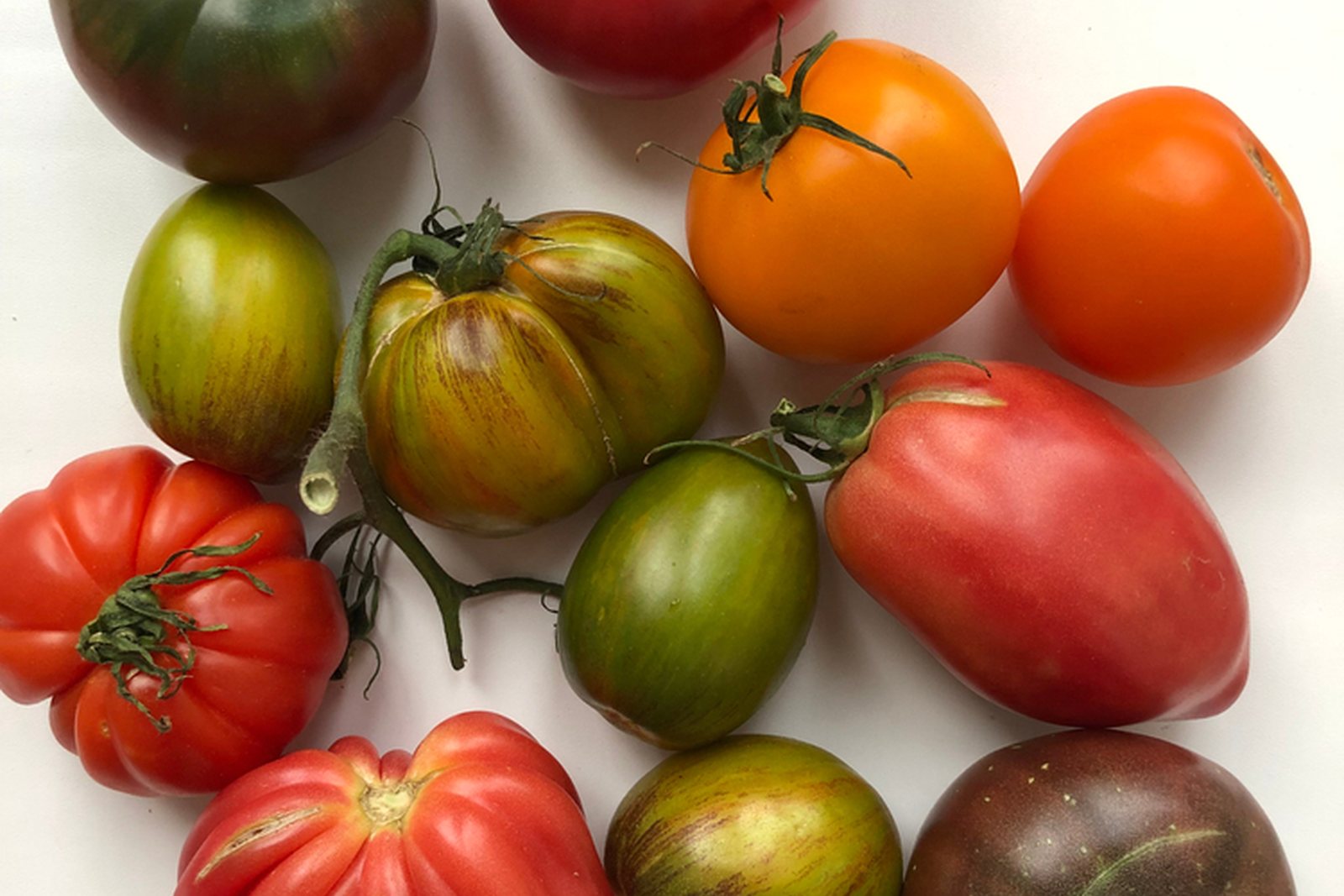
When an heirloom-type hybrid is the practical answer
A gardener with repeated soilborne wilt or regional late blight pressure may choose a hybrid that carries documented resistance while preserving a preferred fruit style.
Penn State trials have evaluated late-blight-resistant determinate and indeterminate tomatoes, including heirloom-type entries. These trials show why performance data matters: resistance, cracking, yield, fruit size, and taste do not always move together.
The ethical approach is clarity. Do not sell a hybrid as an heirloom. Do not imply an heirloom lacks value because it has no code.
Choose resistance from your actual disease history
- Identify the disease rather than guessing from yellow leaves.
- Confirm whether it is soilborne, foliar, viral, bacterial, or abiotic.
- Choose varieties with resistance to the confirmed problem.
- Rotate and improve cultural management.
- Plant more than one variety when risk is high.
- Keep notes on local performance.
Buying every resistance code is less useful than matching the right code to the disease present.
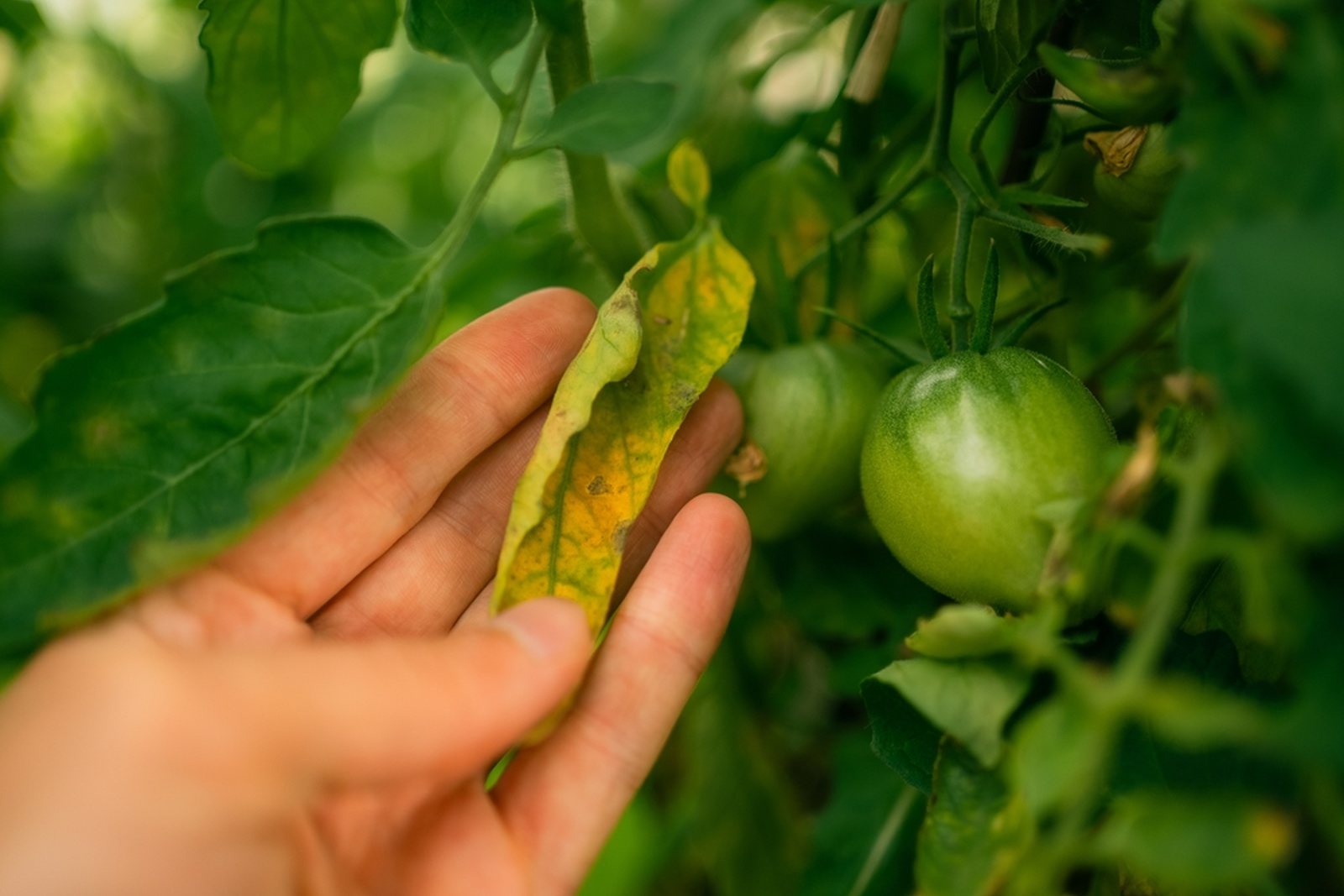
Warm, humid Mid-Atlantic summers can favor leaf diseases, but the same yellow leaf may come from drought, root damage, nutrient imbalance, or normal aging. Confirm the pattern before buying a resistance code as though it were a cure-all.
Resistance still needs a healthy production system
- Rotate away from tomatoes and related crops.
- Use clean transplants and seed.
- Mulch to reduce splash.
- Water at soil level.
- Space and support plants.
- Remove diseased material appropriately.
- Manage insect vectors.
- Avoid working wet foliage.
- Sanitize stakes and tools.
- Monitor regional disease alerts.
Genetics is one layer of prevention.
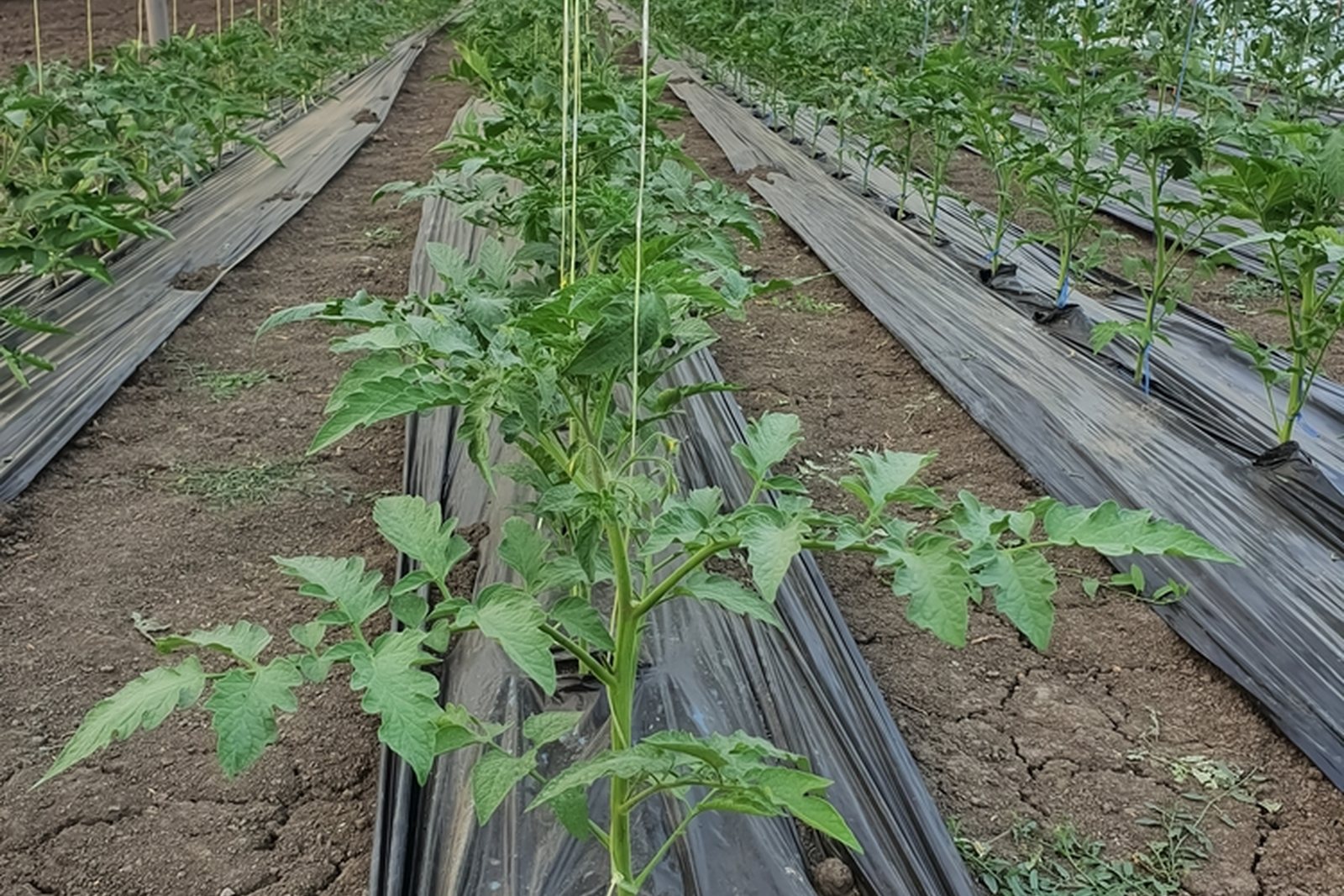
Early blight and late blight resistance are separate
Early blight is common, begins low, and produces target-like lesions. Late blight is outbreak-driven, favors cool wet weather, and can move explosively.
A variety with late blight resistance may not resist early blight. A code for Verticillium does not protect against either. Read the full disease list.
Can seed be saved from resistant tomatoes?
Seed can be saved from open-pollinated resistant varieties if isolation and selection are appropriate. Seed saved from an F1 hybrid will segregate and may not retain the same combination of resistance and fruit traits.
If the crop is diseased, avoid saving seed from infected fruit when the pathogen can be seedborne or when diagnosis is uncertain. Use disease-free plants and trusted seed-saving guidance.
Plant a portfolio, not one promise
A home gardener can spread risk by planting:
- One favorite heirloom.
- One documented resistant hybrid or open-pollinated variety.
- One early variety that may produce before peak disease pressure.
- One cherry or wild-type tomato with strong vigor.
This is not surrendering the heirloom. It is building resilience into the harvest.
Resistance codes are a filter, not a verdict
Catalog abbreviations vary, but common tomato codes may include resistance to Fusarium wilt races, Verticillium wilt, root-knot nematodes, tobacco mosaic virus, tomato spotted wilt virus, and other diseases.
A code does not mean immunity. It usually describes a tested genetic response to a specific pathogen or race under defined conditions. The code also does not predict tolerance to every leaf spot, fruit disorder, or regional strain.
Before buying, ask:
- Which disease and race does the code name?
- Is the trait resistance or intermediate resistance?
- Does the claim apply to the exact cultivar and seed source?
- Is that disease actually confirmed in my garden?
Keep history, reproduction, and resistance in separate columns
Heirloom describes history or continuity, though definitions vary.
Open-pollinated describes how a population can reproduce with reasonable consistency when isolation and selection are maintained.
Disease resistant describes a particular plant-pathogen relationship.
A tomato can be heirloom and susceptible, open-pollinated and resistant, hybrid and resistant, or hybrid and susceptible to a disease not covered by its breeding. Keep the labels separate so the gardener can choose honestly.
Run a small disease-resistance trial in your garden
If disease pressure is reliable, plant a simple comparison:
- Choose one tomato with a documented resistance package.
- Choose one favored heirloom with no formal claim.
- Plant at least three plants of each in comparable positions.
- Use the same support, mulch, water, and pruning.
- Record first symptom date, disease severity, yield, and fruit quality.
- Repeat for more than one season before drawing a strong conclusion.
The trial will not identify the pathogen by itself, but it can show which plants remain useful under your real management and climate.
A disease-aware tomato shopping checklist
Choose varieties using all of these layers:
- Confirmed disease history
- Growth habit and support
- Days to maturity
- Fruit use and flavor
- Heat and humidity performance
- Documented resistance codes
- Seed-saving goal
- Space for rotation and sanitation
A resistant tomato that does not fit the season or kitchen is not automatically the best choice. Build a mixed planting rather than expecting one variety to carry every risk.
How to compare resistance without fooling yourself
A fair resistance trial needs repeated plants, the same management, and a record of disease pressure. One healthy plant beside one sick plant does not prove a genetic difference. The plants may have different soil, splash exposure, root injury, seed health, or transplant history.
Plant at least three of each entry when space permits, randomize their position, and score symptoms weekly. Record the first date of symptoms, the height of the lowest healthy leaf, percent canopy lost, usable yield, and whether the plant continued producing after infection. A resistant plant may still show disease, but disease develops later or more slowly and the crop remains productive.
Keep the exact seed source and strain name in the record. Heirloom names are not always genetically uniform, and selection by gardeners can create meaningful differences over time. Resistance claims should name the pathogen or race when known. General phrases such as disease resistant or tough plant are not substitutes for a specific code, public trial, or documented observation.
The best result is rarely a single miracle variety. It is a portfolio: one or two varieties with documented resistance for the highest-risk diseases, a few open-pollinated favorites worth preserving, clean seed or transplants, mulch, airflow, rotation, and a plan to remove infected tissue. Genetic resistance buys time and reduces risk. It does not eliminate the need to manage the garden around the plant.
Ask four questions before buying a resistant tomato
Resistant to what? At what race or strain level? Was that disease actually confirmed in the garden? What cultural practices are still required? Those questions are more useful than the phrase disease resistant by itself.
| What you observe | Most useful next check | Action that follows the evidence |
|---|---|---|
| A catalog lists VFFN | Read the legend and compare it with the confirmed local disease | Use it for the named wilt and nematode risks, not as a general blight claim. |
| A favorite heirloom has no codes | Review the actual disease history and the value of the crop | Grow a limited number with strong cultural management and plant a resistant backup. |
| An heirloom-type hybrid performs well | Decide whether the priority is harvest or stable seed saving | Buy fresh hybrid seed for predictable performance or maintain separate open-pollinated lines for seed stewardship. |
| A resistant plant becomes diseased | Confirm the pathogen and compare disease severity with susceptible plants | Resistance may have been overcome, misidentified, or never relevant to that disease. |
Disease-resistant heirloom tomatoes: separate four different claims
Disease-resistant heirloom tomatoes must be evaluated one pathogen and one resistance claim at a time. This guide explains tomato disease resistance codes, VFN tomato meaning, the difference between an heirloom type hybrid and open-pollinated seed, tomato tolerance vs resistance, and how to compare disease resistant tomato varieties.
The phrase disease-resistant heirloom tomatoes mixes history, reproduction, appearance, and pathology. Keep them separate.
| Term | Meaning | What it does not mean |
|---|---|---|
| Heirloom | A historical or community description with no single universal age standard | Disease resistant, open-pollinated, or documented provenance |
| Open-pollinated | Can reproduce with reasonable consistency when maintained and isolated | Ancient, immune, or genetically uniform |
| Hybrid | First generation from a controlled cross | Genetically modified or sterile |
| Heirloom-type hybrid | Hybrid bred to resemble heirloom fruit while adding uniformity or resistance | A true historical strain |
| Resistance | Reduced infection or disease development to a named pathogen or race | Immunity or resistance to every disease |
| Tolerance | Plant sustains less damage or maintains yield despite infection or stress | No symptoms |
A seed packet should be read as a set of separate columns. A large pink fruit can be hybrid. An old open-pollinated cultivar can have useful field tolerance without a formal code. A modern hybrid can carry several resistance genes and still develop early blight.
How to read tomato disease-resistance codes
Codes are only useful when they refer to a specific pathogen. Rutgers commonly lists:
| Code | Resistance target | Important limitation |
|---|---|---|
| V | Verticillium wilt | Does not imply Fusarium or blight resistance |
| F, F1, F2, F3 | Fusarium wilt races | Race numbers matter |
| N | Root-knot nematodes | Performance changes with species and soil temperature |
| T or TMV | Tobacco mosaic virus | Not every virus and not always the same code system |
| ToMV | Tomato mosaic virus | Check the source's code legend |
| TSWV | Tomato spotted wilt virus | Resistance may not cover every strain |
| EB | Early blight | Usually partial resistance or tolerance, not immunity |
| LB | Late blight | Must be stated specifically; pathogen populations change |
Always read the legend provided by the breeder or trial source. Codes are not perfectly standardized across every catalog.
Choose resistance from a confirmed disease history
Buying the longest code string is not a strategy. Map the garden's actual problems.
- Photograph symptoms on leaves, stems, fruit, and roots.
- Record where they began and how fast they spread.
- Use Extension or a diagnostic laboratory to confirm the disease.
- Record whether the pathogen is soilborne, seedborne, insect-vectored, or wind-dispersed.
- Choose resistance for the confirmed target.
- Continue the cultural practices that reduce exposure.
| Garden history | Useful selection emphasis | Still required |
|---|---|---|
| Confirmed Verticillium | V-coded varieties and rotation | Sanitation and avoiding contaminated soil movement |
| Confirmed Fusarium race | Matching F race resistance | Soil management and rotation where possible |
| Root-knot nematodes | N-coded varieties | Cover crops, rotation, and soil diagnosis |
| Repeated early blight | EB tolerance or resistance | Mulch, root-zone watering, debris removal, and scouting |
| Late blight regional risk | Named late-blight resistance | Regional alerts, sanitation, and prompt diagnosis |
| Virus pressure | Resistance to the identified virus | Vector management and clean transplants |
Why many famous heirloom tomatoes have few formal resistance codes
Many heirlooms were selected before modern resistance-screening programs or were maintained for flavor, local adaptation, color, and cultural value rather than a standardized disease package. Absence of a code does not prove extreme susceptibility, but it means the gardener should not claim resistance without evidence.
Field tolerance can be real and local. A strain maintained for decades in humid conditions may perform better than expected. To make that useful, record replicated plants, confirmed disease, severity, and usable yield. "It stayed green" is not enough.
When an heirloom-looking hybrid fits the garden
A gardener may want a large, colorful, tender-fleshed tomato and also need Fusarium, Verticillium, nematode, or virus resistance. An heirloom-type hybrid can combine familiar fruit character with a modern resistance package. It should be labeled honestly as a hybrid.
Seed saved from an F1 hybrid will segregate in the next generation. That can be valuable for breeding, but it does not reproduce the purchased hybrid consistently. For seed stewardship, choose a documented open-pollinated line or commit to a multi-generation selection project.
Resistance works best inside a healthy production system
- Use clean seed and transplants.
- Rotate solanaceous crops when space allows.
- Control volunteer tomatoes and nightshades.
- Mulch to reduce splash.
- Water at the root zone.
- Support plants and allow mature-canopy airflow.
- Scout weekly.
- Remove diseased tissue when dry.
- Clean tools and reusable supports.
- Maintain balanced fertility and drainage.
Resistance can slow disease enough to preserve yield. It cannot correct saturated roots, severe herbicide injury, or an unrelated pathogen.
How to run a disease-resistance tomato trial
Do not deliberately spread disease. Use natural field pressure and a fair layout.
- Grow at least three plants per variety, preferably more.
- Alternate or randomize entries in the bed.
- Use the same spacing, support, irrigation, and fertility.
- Confirm the disease rather than calling every spot blight.
- Rate lower, middle, and upper canopy weekly.
- Record usable and diseased fruit weight.
- Record the date each plant reaches 10, 25, 50, and 75 percent defoliation.
- Compare performance across more than one season before making a broad claim.
| Severity score | Canopy description |
|---|---|
| 0 | No visible symptoms |
| 1 | Trace symptoms on lower leaves |
| 2 | Lower canopy affected, little defoliation |
| 3 | Symptoms in lower and middle canopy; noticeable leaf loss |
| 4 | Severe defoliation or stem and fruit involvement |
| 5 | Plant collapse or crop failure |
A resistant variety may show symptoms but progress more slowly and maintain usable yield. That is different from immunity.
Plant a tomato portfolio instead of trusting one resistance claim
A useful planting can include:
- A modern resistant hybrid for dependable volume
- A documented open-pollinated variety for seed saving
- A valued heirloom for flavor and cultural continuity
- An early variety that produces before late-season disease pressure
This spreads risk across genetics and harvest timing. Keep seed lots and fruit separate when identity matters.
A resistance-aware tomato buying checklist
- What exact disease was confirmed in the garden?
- Which pathogen or race does each code address?
- Is the variety open-pollinated, heirloom, hybrid, or heirloom-type hybrid?
- What plant habit and support does it require?
- Does the maturity window fit before peak disease pressure?
- Is resistance supported by the breeder or public trial record?
- What cultural controls will continue?
- Will a susceptible valued heirloom be isolated from the highest-risk bed?
The best disease-resistant tomato is the one carrying the right resistance for a confirmed local problem while still fitting the household's space, flavor, harvest, and seed-saving goals.
How to compare two resistance packages
| Variety | Example code | What the code supports | What remains unknown |
|---|---|---|---|
| Entry A | VFFN | Verticillium, two Fusarium races, and root-knot nematodes | Early blight, late blight, bacterial spot, flavor, heat set |
| Entry B | EB, LB | Named resistance or tolerance to early and late blight | Soilborne wilts, nematodes, virus, race specificity |
| Entry C | No code | No formal code stated | Could still have field tolerance; requires trial evidence |
A longer code is not automatically better. Entry A fits a soilborne-disease site. Entry B fits a foliar-blight history. The garden diagnosis determines value.
Disease resistance can be race-specific and temperature-sensitive
Pathogens contain populations and races. A variety resistant to Fusarium race 1 may be susceptible to race 2 or 3. Nematode resistance can weaken under very high soil temperatures. Late-blight resistance can perform differently as pathogen populations change. Read the breeder's exact statement and current local trial results.
Do not shorten F1, F2, and F3 into one generic F when keeping a seed record or comparing variety labels. The detail is the point.
Can an open-pollinated heirloom be selected for better local resilience?
Yes, but selection must be careful. Save seed from several typical plants that maintain the cultivar's identity while performing under local pressure. Do not select from a plant merely because it escaped disease in a low-exposure corner. Replicate plants and map exposure.
- Confirm the disease.
- Grow a sufficient population.
- Record severity and usable yield on every plant.
- Select several typical plants with lower severity and good fruit.
- Maintain isolation.
- Repeat across seasons.
- Describe the selection honestly as a local selection, not the original strain unchanged.
Selection for resilience is a breeding and seedkeeping project, not proof that one saved fruit created resistance.
What a responsible tomato resistance description should include
- Exact resistance codes and their legend
- Race numbers when relevant
- Resistance versus intermediate resistance or tolerance
- Source of the resistance claim
- Plant habit and maturity
- Fruit type and intended use
- Regional trial limitations
- A statement that resistance does not equal immunity
Do not add a resistance claim because another seller uses it for a similarly named variety. Strain and hybrid identity must match.
A disease-resistance field report template
| Field | Record |
|---|---|
| Variety and lot | Full name, breeder or source, code |
| Confirmed pathogen | Diagnostic report or Extension identification |
| Plant count | Number planted and surviving |
| Exposure pattern | Randomized positions and neighboring crop |
| Symptom onset | Date and canopy location |
| Severity | Weekly 0-to-5 score |
| Usable yield | Sound pounds per plant |
| End condition | Healthy, defoliated, wilted, or dead |
| Seed decision | Saved, held, or rejected |
Detailed questions about disease-resistant tomatoes
What is the most disease-resistant heirloom tomato?
There is no universal answer because diseases differ by garden. First confirm whether the problem is Fusarium, Verticillium, nematodes, early blight, late blight, virus, or another disorder. Then choose the matching resistance and compare local trials.
Does heirloom mean open-pollinated?
Many heirlooms are open-pollinated, but the words are not synonyms. Heirloom describes history or cultural continuity. Open-pollinated describes reproduction and maintenance. Verify both.
Can a hybrid tomato be heirloom?
An F1 hybrid is not a stable historical open-pollinated strain. A breeder may call it heirloom-type when fruit resembles heirloom tomatoes. The product should still be clearly labeled hybrid.
What do V, F, N, and T mean on tomato seeds?
Rutgers uses V for Verticillium wilt, F for Fusarium wilt, N for root-knot nematodes, and T or TMV for tobacco mosaic virus. Race numbers and the source's code legend matter.
Does disease resistance mean the plant will not get sick?
No. Resistance may reduce infection or disease severity. Tolerance may allow a plant to maintain yield while infected. Neither is immunity, and unrelated diseases can still occur.
Can seed be saved from a disease-resistant tomato?
Yes when it is a documented open-pollinated variety and the plant is healthy. F1 hybrid offspring segregate and will not reproduce the same resistance package reliably.
Are early-blight-resistant tomatoes also late-blight resistant?
No. Early blight and late blight are caused by different pathogens. Look for a specific EB or LB statement and continue cultural controls.
How should a resistant variety be tested?
Use multiple plants, equal management, confirmed disease, weekly severity ratings, and usable yield. One healthy plant in a low-exposure corner is not proof.
Can an heirloom be selected for local disease tolerance?
Yes through multi-year selection from several typical plants under comparable exposure. Describe the result as a local selection and maintain population and identity records.
How resistance enters a tomato variety
Breeders identify resistance in cultivated tomatoes or wild relatives, cross it into useful material, then select generations that combine resistance with fruit, maturity, and plant traits. Marker-assisted selection can help track genes, but field and laboratory disease screening still matter. A resistance gene can bring unwanted linked traits that require additional breeding.
An open-pollinated variety can carry resistance after it is stabilized. A hybrid can combine resistance from two parents. Neither method is inherently a flavor verdict.
Deploy resistance to slow pathogen adaptation
Do not plant one genetic resistance across every tomato when a diverse portfolio is possible. Mix resistance packages, rotate crops, remove volunteer hosts, and use sanitation. Large uniform plantings create strong selection pressure on pathogen populations.
For a home garden, diversity also protects the harvest. One resistant hybrid can provide volume while several open-pollinated varieties preserve flavor and seed stewardship.
Rank resistance evidence by source quality
| Evidence | Strength |
|---|---|
| Breeder or university race-specific statement | Strong for the named resistance |
| Replicated public trial with confirmed disease | Strong for that environment |
| Multi-year farm record with diagnosis | Useful regional evidence |
| One garden observation | Preliminary |
| Commercial adjective without code or source | Weak |
| Photo of a green plant | Not resistance evidence |
Seed stewardship and resistance claims
When maintaining an open-pollinated resistant variety, save from enough healthy typical plants to preserve the population. Do not select only symptom-free plants unless exposure was equal and disease confirmed. Keep the original lot as a reference. Record every selection cycle and describe a local selection honestly.
When sharing seed, carry the exact resistance source and code. Do not transfer a resistance package from a hybrid or similarly named strain to another seed lot.
Resistance choices for four garden scenarios
Small garden with repeated soilborne wilt
Prioritize matching V or F race resistance, use containers or clean raised-bed media, and prevent soil movement.
Humid garden with annual early blight
Use EB-tolerant entries, earlier maturity, mulch, root-zone irrigation, and debris removal.
Rare heirloom preservation
Grow the heirloom in the lowest-risk area, maintain population and isolation, and grow a resistant hybrid separately for household volume.
Unknown disease history
Do not buy by code length. Diagnose first, then select. Meanwhile use a diverse portfolio and strong sanitation.
Audit a disease-resistance claim
- Find the original breeder or university source.
- Confirm the exact cultivar and strain.
- Record pathogen and race.
- Check whether the claim is high, intermediate, or tolerance.
- Look for regional trial data.
- Remove claims copied only from unrelated sellers.
This standard protects gardeners and prevents repeated catalog language from becoming horticultural misinformation.
Final checklist before calling a tomato disease resistant
- The exact cultivar and lot are known.
- The disease was confirmed.
- The resistance target and race are named.
- Multiple plants were compared under similar exposure.
- Severity and usable yield were recorded.
- The claim is supported by breeder, university, or replicated trial evidence.
- Resistance is described without promising immunity.
Good resistance copy is specific enough that a gardener can decide whether the trait matches a real problem.
Frequently asked questions
Are heirloom tomatoes always less disease resistant?
Not always, but many lack formal resistance packages. Local tolerance and vigor can still be valuable.
Can a hybrid be an heirloom?
No. An heirloom-type hybrid may resemble an heirloom, but it is a modern hybrid and should be labeled as such.
Does VFN mean the tomato resists blight?
No. VFN usually refers to Verticillium, Fusarium, and root-knot nematodes, not early or late blight.
Can resistant tomatoes still get sick?
Yes. Resistance reduces infection or damage; it does not guarantee immunity.
What tomato is resistant to late blight?
Several modern varieties carry useful resistance, but regional pathogen populations and availability change. Check current Extension trials and catalog codes.
Can I save seed from a disease-resistant hybrid?
You can save it, but the next generation will segregate and may not retain the same resistance or fruit traits.
Is disease resistance genetically engineered?
Conventional resistance breeding often uses crossing and selection. A resistance trait is not evidence by itself that a seed is genetically engineered.
Should I stop growing heirlooms if disease is common?
Not necessarily. Combine heirlooms with resistant varieties and stronger cultural controls.
Editorial note: Resistance claims must match the current seed source and product record. Do not add a disease code to a product without documentation.