Compare tomatoes by space, support, season length, harvest pattern, fruit use, flavor, and how much management the gardener wants to provide. Once those pieces are clear, a large tomato catalog becomes easier rather than more confusing.
A useful tomato label should answer two separate questions: how the plant grows and what kind of fruit it makes. “Indeterminate,” “paste,” “cherry,” “dwarf,” and “slicer” do not belong to one single scale. They describe different parts of the decision.
We did not build a hundred-variety tomato catalog so every gardener could choose the same plant. We built it because gardens, kitchens, seasons, and people are different.
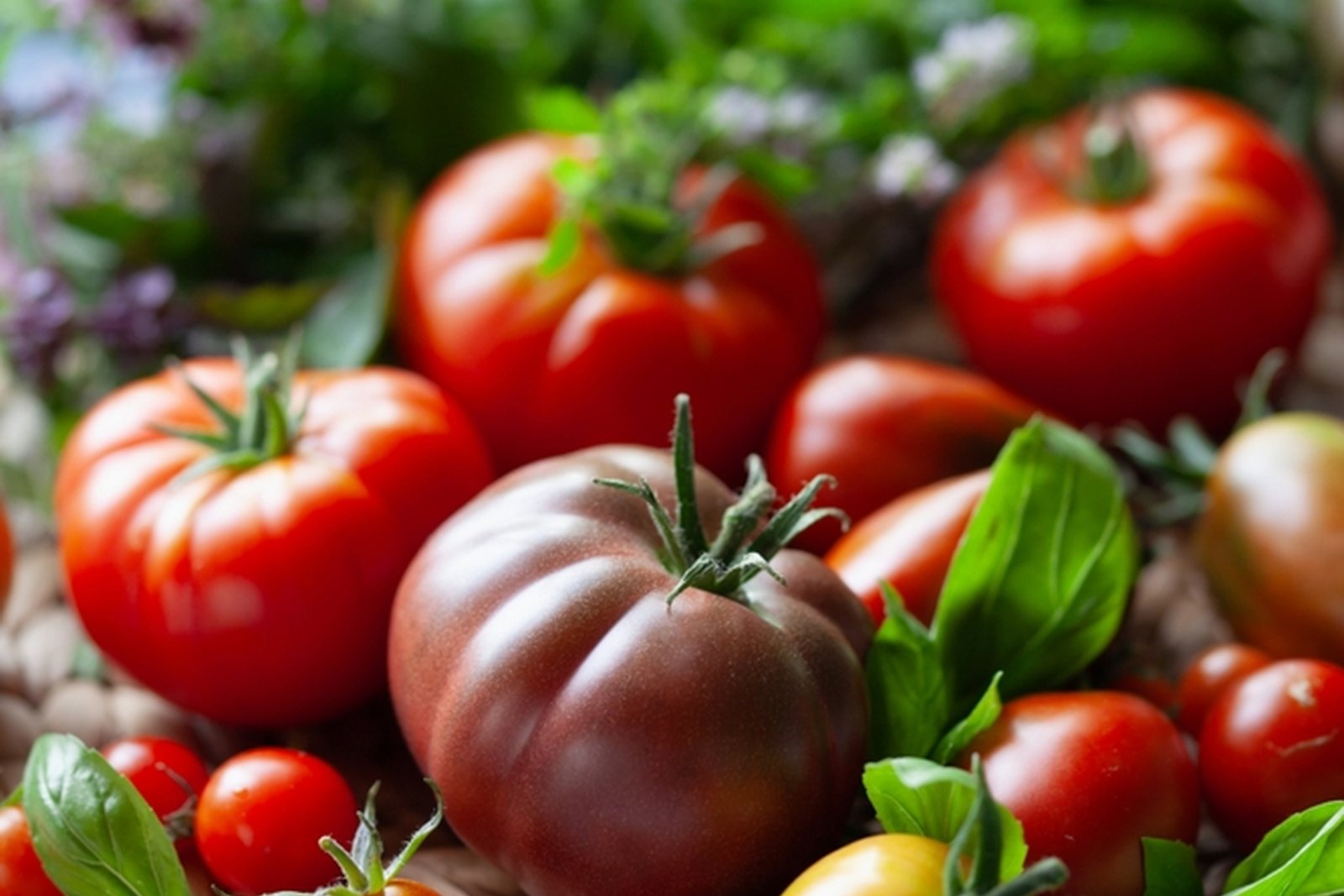
Practical specifications for choosing a tomato type
The ranges below are working starting points, not promises. Variety, weather, soil, root restriction, and training method can move a plant outside the range.
| Field measure | Practical starting point | How to use it |
|---|---|---|
| Seed-starting lead time | 5 to 8 weeks before the intended transplant date | Use the shorter end under strong light and warm conditions. Use the longer end only when growth can be managed without producing root-bound transplants. |
| Germination root-zone temperature | 70 to 85°F | Measure the mix, not the room. Remove bottom heat after emergence if seedlings begin stretching or drying too quickly. |
| Transplant threshold | After frost danger, with soil near 60°F or warmer | A warm afternoon does not compensate for cold soil and cold nights. Harden plants for 7 to 10 days first. |
| Micro tomatoes | About 8 to 12 inches of plant spacing; often 1 to 3 gallons | Best for very small spaces. Check the named cultivar because some micro plants still become broader than a windowsill. |
| Dwarf and compact tomatoes | About 18 to 24 inches; commonly 5 to 10 gallons | Short internodes do not mean a tiny root system. Large-fruited dwarf lines need more water reserve and support than their height suggests. |
| Determinate tomatoes | About 18 to 30 inches, depending on vigor and support | Useful for concentrated harvests, but not every fruit ripens on the same day. Strong cages help keep the crop off the ground. |
| Indeterminate tomatoes | About 24 to 36 inches when supported | Plan for a 6 to 8 foot support and repeated tying or training. Wider spacing is useful where humidity and foliar disease pressure are high. |
| In-ground water target | Roughly 1 to 1.5 inches per week as a starting point | Adjust for rainfall, soil texture, root depth, temperature, and crop load. Consistency matters more than a rigid calendar. |
| Days to maturity | Usually counted from transplant, not from sowing | Read the catalog definition. Add time for cool soil, transplant shock, heat interruptions, and short autumn days. |
Plant habit and fruit type are different variables. A determinate plant can produce cherry, slicer, or paste fruit. An indeterminate plant can do the same. Dwarf describes short internodes and compact architecture, while micro describes an exceptionally small mature plant. None of those words guarantees flavor, disease resistance, or yield.
Container labels deserve special skepticism. A tomato may survive in a small pot and still perform poorly because the root zone overheats, dries between waterings, or accumulates fertilizer salts. For standard indeterminate tomatoes, 10 to 20 gallons provides a much safer water and root-volume buffer than the smallest container in which the plant can technically remain alive.
Build a garden around jobs rather than names. A practical four-role planting is one early or compact tomato, one dependable slicer, one frequent-harvest cherry, and one paste tomato for sauce or roasting. Add unusual heirlooms only after those jobs are covered.
Record these before ordering
- The exact growth habit and expected mature height.
- Whether maturity is counted from transplant or seed.
- The support system and maximum space available.
- The household use: snacking, slicing, sauce, drying, canning, or seed stewardship.
- The local risk that matters most: short season, heat, humidity, foliar disease, cracking, or container drought.
- Whether the variety is open-pollinated or hybrid when seed saving matters.
Important: A harvested fruit photograph cannot reveal the plant habit, disease-resistance package, maturity window, or exact cultivar identity.
The two decisions hidden inside “tomato type”
Tomato labels mix several classification systems together. A tomato can be indeterminate and cherry-fruited, determinate and paste-fruited, dwarf and large-fruited, or micro and salad-sized. Start by separating two questions:
After those, compare maturity, disease resistance, heat response, cracking tendency, flavor, and color.
Determinate, indeterminate, dwarf, and micro tomatoes
| Growth habit | How it behaves | Good fit for | Watch for |
|---|---|---|---|
| Determinate | Plants reach a more defined size and concentrate much of the crop into a shorter period. | Preserving, smaller gardens, planned harvest windows, and many containers. | A concentrated crop can arrive quickly; support is still often useful. |
| Indeterminate | Vines continue growing, flowering, and setting fruit until frost, disease, or severe stress ends the season. | Long harvests, large cages or trellises, and gardeners who can manage tall vines. | Requires space, support, and ongoing tying or pruning decisions. |
| Dwarf | Shorter internodes create sturdy, compact plants; fruit can still be medium or large. | Patios, raised beds, and gardeners wanting full-size tomato character on a shorter plant. | “Dwarf” does not mean tiny roots or no support. |
| Micro | Very compact plants bred for small containers and short spaces. | Windows, balconies, tabletops, small patios, and extremely limited space. | Fruit and total yield are usually smaller than standard plants. |
Determinate does not mean every fruit ripens on one day, and indeterminate does not mean the plant is automatically more productive in every climate. Habit describes growth pattern, not overall quality.
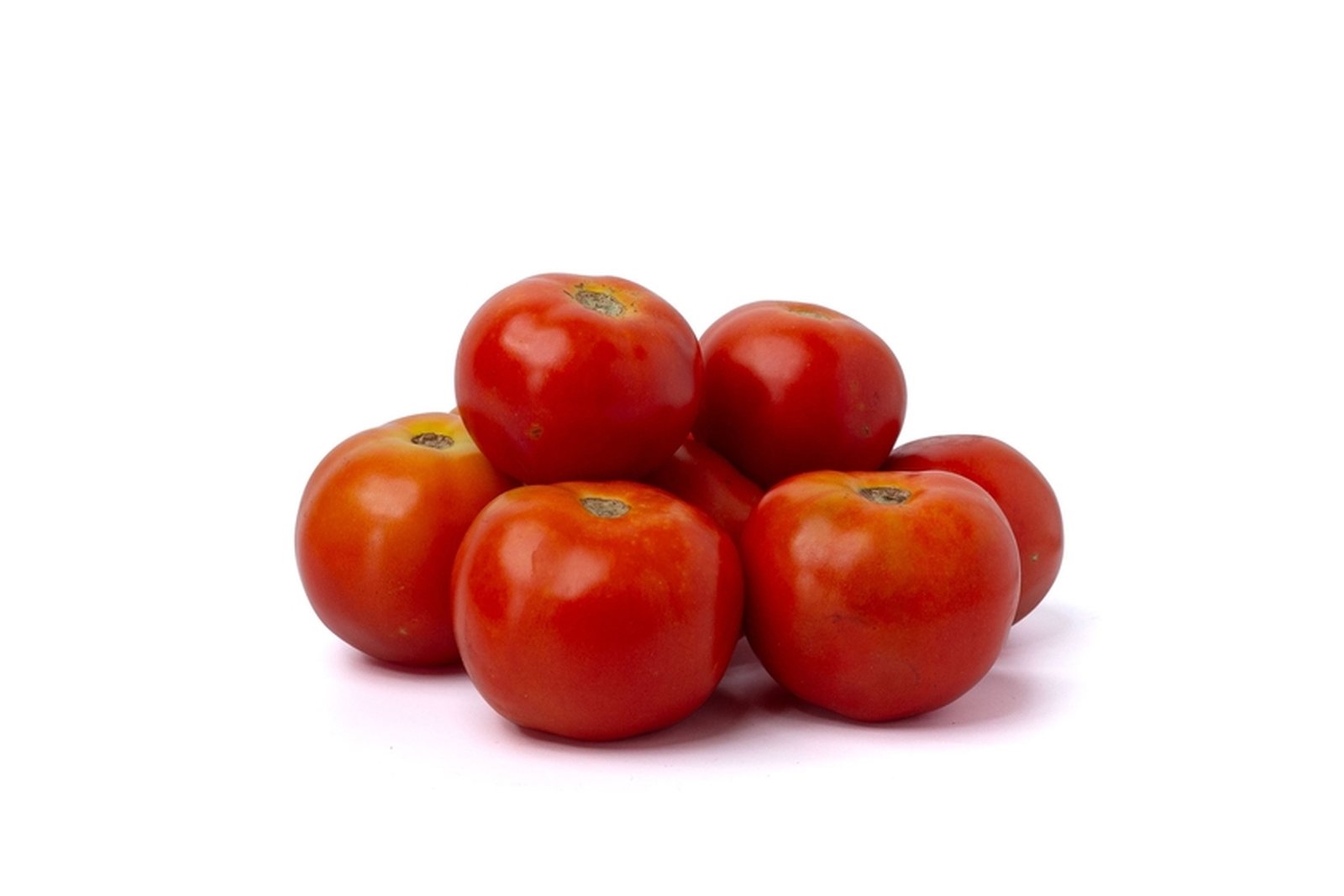
Cherry, slicer, paste, sauce, and specialty fruit
| Fruit type | Typical use | What to look for |
|---|---|---|
| Cherry and currant | Snacking, salads, roasting | Sweetness, crack resistance, cluster size, and harvest frequency |
| Saladette | Salads, fresh eating, small sauces | Fruit larger than cherry but smaller than slicers; often versatile |
| Slicing | Sandwiches, fresh plates, salads | Flavor, slice size, texture, shoulder ripening, and cracking tendency |
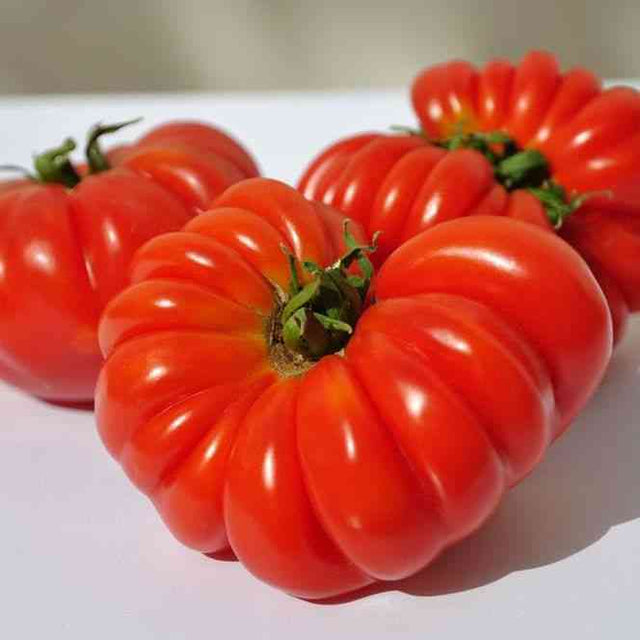
| Beefsteak | Large fresh slices | Heavy support, long season, irregular shapes, and splitting risk |
| Paste or plum | Sauce, canning, roasting, drying | Meaty walls, fewer seed cavities, concentrated harvest, and acidity guidance for preservation |
| Storage or long-keeper | Extending the fresh season | Firm fruit, harvest stage, and storage method |
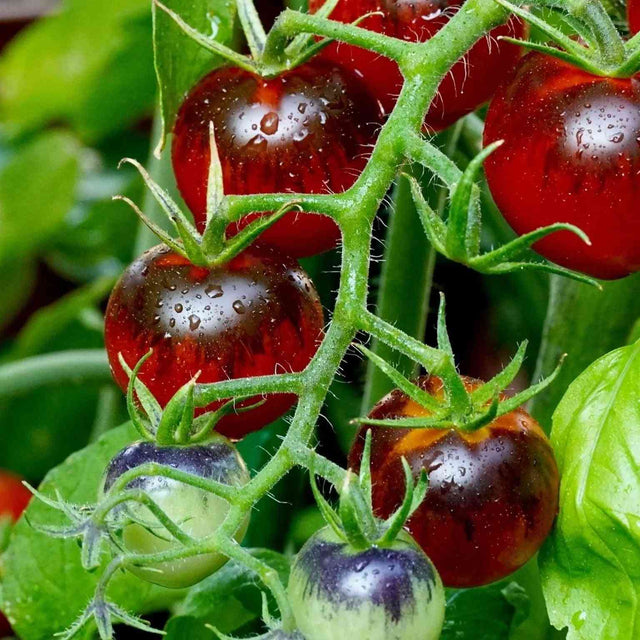
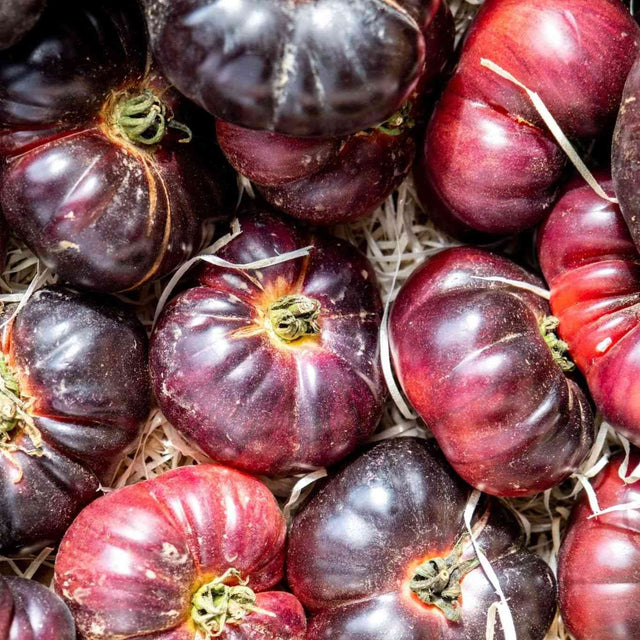
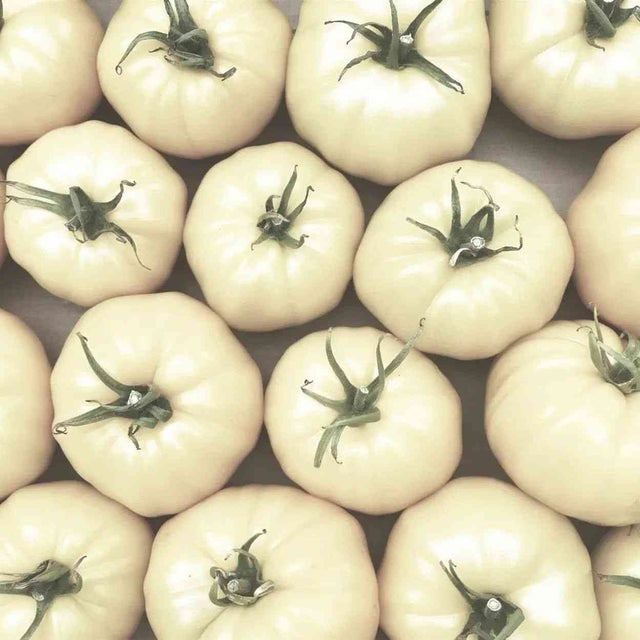
| Specialty | Color, shape, flavor, history, or novelty | Whether the special trait also fits your climate and kitchen use |
Names such as “beefsteak,” “Roma,” “plum,” and “sauce” are useful starting points, but read the individual variety description. Two paste tomatoes can differ greatly in plant habit, season length, disease resistance, and flavor.
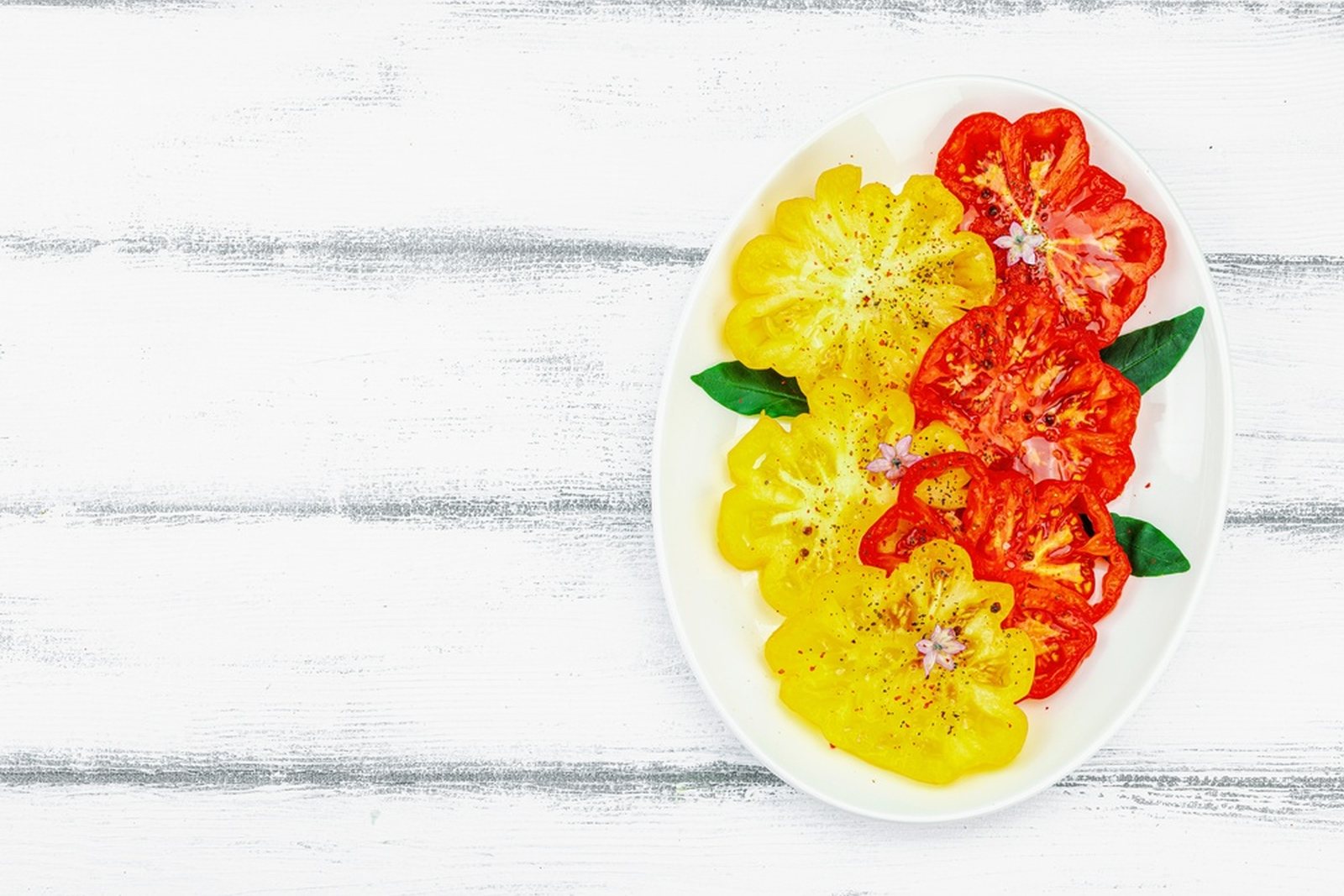
Match tomatoes to space and support
Tomatoes are deep-rooted, thirsty, sun-loving plants. A compact plant can fit a smaller container, but container culture still compresses the root zone and increases the need for consistent water and fertility.
Choose by space
- Tabletop or very small balcony: Look first at micro tomatoes.
- Patio container: Dwarf, compact determinate, and some cherry tomatoes can fit well.
- Raised bed: Determinate, dwarf, and trellised indeterminate plants can all work if spacing is planned.
- Open garden: Large indeterminate slicers and beefsteaks have room to show their full habit.
A standard tomato may survive in a small pot and still underperform. Container volume, sun, support, drainage, and the gardener’s ability to water consistently matter together. When in doubt, choose a larger container than the minimum and use a stable cage or trellis before the plant becomes difficult to manage.
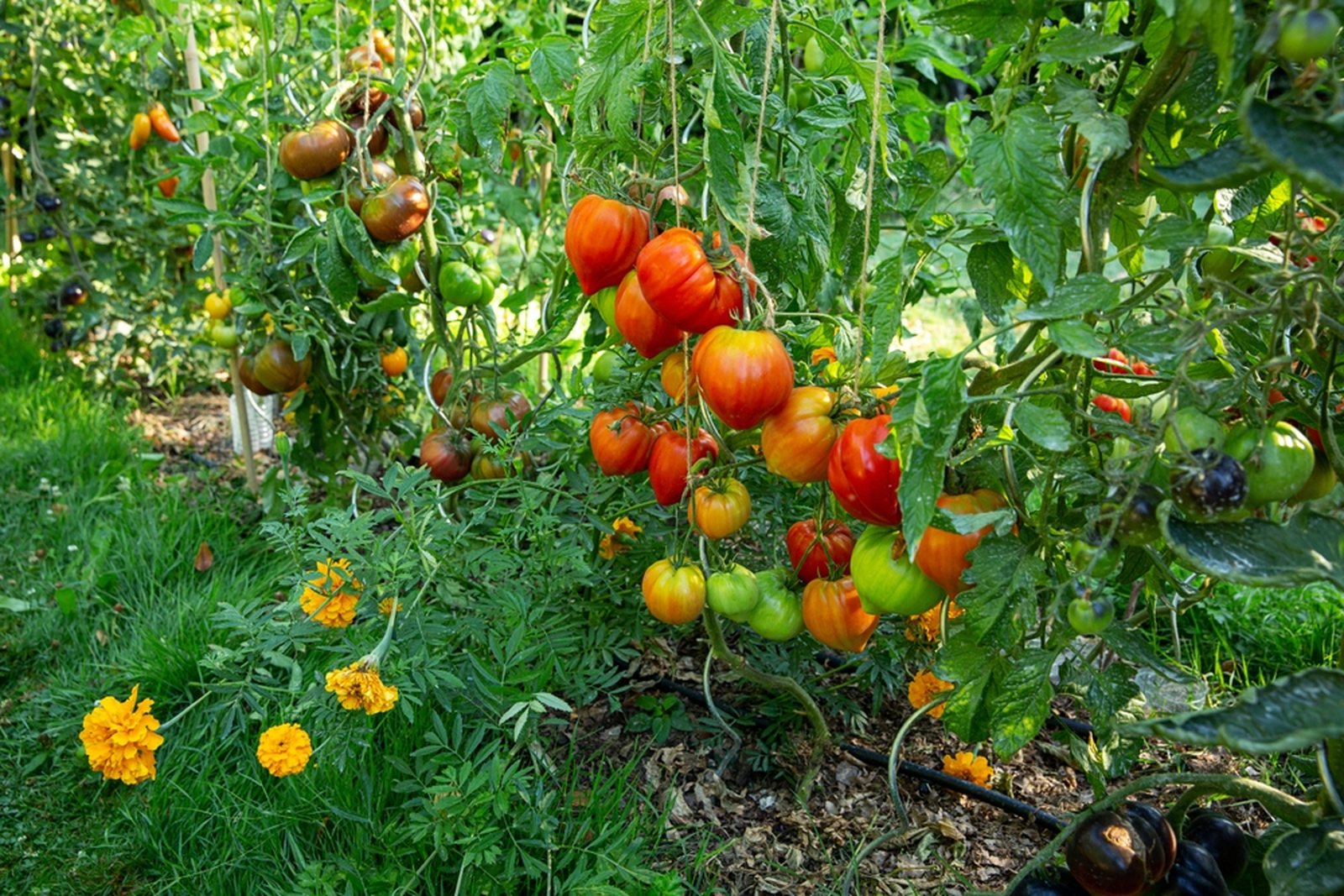
Match maturity to the season - and understand the starting point
Tomato maturity is often listed from transplant, not from the day the seed is sown. A “75-day tomato” may also need five to eight weeks indoors before transplanting, plus time to harden off and establish outside.
- Short seasons: Favor earlier maturity, compact plants, or transplants rather than late direct starts.
- Long hot seasons: Look at heat set, disease pressure, cracking, and whether the plant can continue through summer stress.
- Fall crops in warm regions: Count backward from frost and from the period when night temperatures become too cool for reliable ripening.
- Containers: Roots warm and dry faster, so an “early” variety still needs careful moisture management.
Do not compare maturity numbers without checking whether both companies count from the same stage. The most useful number is the one tied to a clearly explained starting point.
Choose by kitchen use, not only appearance
A tomato garden becomes more useful when it is designed backward from the kitchen.
For home canning, use a tested recipe and follow current acidification instructions regardless of variety. Tomato acidity varies with maturity and growing conditions; a variety name is not a safety method.
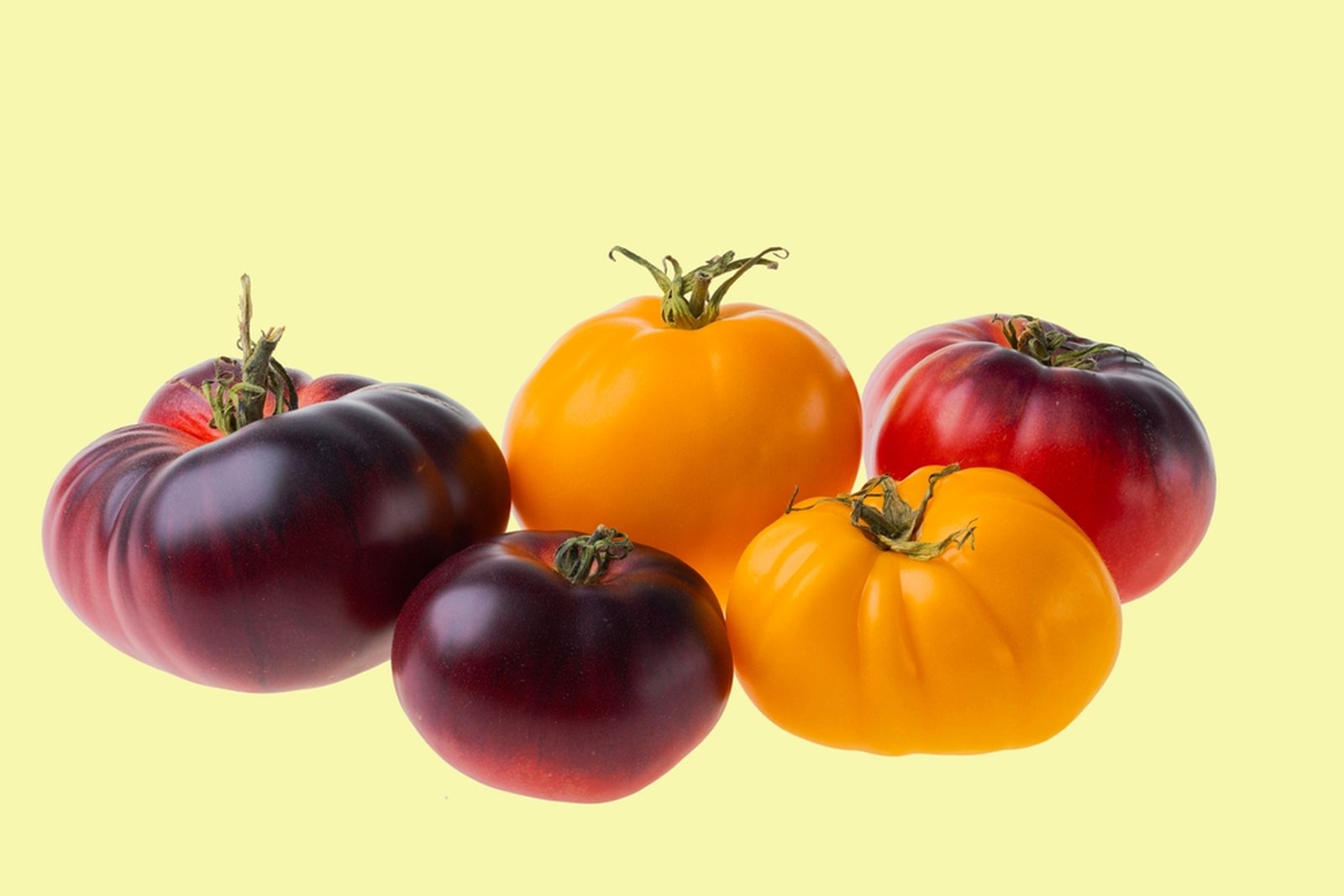
Climate, disease, and care can matter more than color
Heirloom catalogs are full of beautiful color language, but climate and disease pressure decide whether that beauty reaches the kitchen. Compare:
- Resistance or tolerance to diseases common in your region
- Cracking and splitting under irregular rainfall
- Fruit set during high heat or cool nights
- Leaf cover and sunscald risk
- Need for pruning, staking, or trellising
- Whether the plant rebounds after stress or concentrates one crop
Heirloom varieties can offer extraordinary flavor, color, and history, but they may carry less modern disease resistance. That does not make them inferior. It means the gardener should understand the tradeoff and avoid presenting every heirloom as equally easy in every region.
Heirloom, open-pollinated, hybrid, and seed saving
Plant habit and fruit type are separate from reproductive type. A tomato can be determinate or indeterminate and still be open-pollinated, heirloom, or hybrid.
- Open-pollinated: Seed can generally reproduce the variety with reasonable consistency when cross-pollination and selection are managed.
- Heirloom: Usually an open-pollinated variety with a history of preservation and sharing, although definitions vary.
- Hybrid: Produced from a deliberate cross. Seed saved from the fruit may produce variable offspring rather than the same variety.
Tomatoes are mostly self-pollinating, but crossing can occur. Gardeners saving seed should isolate varieties as appropriate, select healthy true-to-type plants, ferment or otherwise clean seed using a reliable method, dry thoroughly, and keep detailed labels.
How to compare a large tomato catalog
By 2025, the AONSK tomato catalog had expanded from roughly 85 varieties to 101, with 25 new tomatoes introduced that year. Cherokee Purple became an anchor tomato, while Tiny Tim and other compact plants showed real interest in micro and container varieties. The lesson was not that gardeners need 101 tomatoes. It was that one word - tomato - contains several different decisions.
Customers were looking for food, beauty, flavor, story, compact plants, unusual colors, preservation crops, and reliable harvests. A good tomato guide should help a gardener identify the tradeoffs instead of pretending one famous variety can serve every garden.
Build a tomato mix instead of choosing one perfect variety
A diverse tomato planting can spread harvest, weather, and kitchen risk. The following examples are planning patterns, not prescriptions.
Two plants
Choose one dependable slicer or cherry for regular eating and one paste or specialty tomato that serves a second purpose. If space is tight, make one of them determinate, dwarf, or micro.
Four plants
Combine a cherry, a slicer, a paste tomato, and a fourth variety chosen for earliness, color, cultural connection, or container fit. Use more than one maturity range when possible.
Six or more plants
Add redundancy. Two plants of the variety most important to your kitchen can protect against one plant being lost. Include disease resistance or regionally proven types when your site has recurring problems.
This approach also makes comparison useful. Record first flowering, first ripe fruit, flavor, cracking, support needs, disease pressure, and yield pattern. Over several seasons, your own garden becomes the best variety guide for your household.
Container tomato reality check
“Can grow in a container” does not mean “will be easy in any pot.” Tomato roots, water demand, support, and summer heat all become more intense in a container.
- Choose a compact determinate, dwarf, or micro variety when container volume is limited.
- Use a container large enough for the mature plant, not the transplant you are buying today.
- Provide drainage and a high-quality potting mix rather than garden soil.
- Install support at planting so roots are not damaged later.
- Expect large containers to dry more slowly than small ones but still check moisture frequently.
- Fertilize according to the product and plant needs; repeated watering can leach nutrients.
- Protect dark containers from reflected heat where summer temperatures are intense.
Micro tomatoes are not simply young ordinary tomatoes. They are genetically compact plants selected to complete their life cycle at a much smaller size. Dwarf tomatoes can still be substantial plants, often with full-sized fruit and a sturdy central stem. Read the mature height, spread, support, and container guidance for the named variety.
Maturity is not the whole harvest timeline
Tomato days to maturity are commonly counted from transplanting, not from the day the seed is sown. A gardener planning from seed must account for indoor starting, germination, seedling growth, hardening, transplant recovery, days to first ripe fruit, and the length of the useful harvest.
Determinate plants often ripen a larger share of their crop within a shorter period. Indeterminate plants may begin around the same time but continue until frost, heat, disease, or declining day length stops them. A “75-day” determinate paste tomato and a “75-day” indeterminate cherry therefore create different work in the kitchen and garden.
When comparing maturity
- Confirm whether the number is from seed or transplant.
- Leave a buffer for transplant shock, cool nights, extreme heat, and shorter autumn days.
- Distinguish first harvest from peak harvest.
- For preservation, choose enough plants and a harvest pattern that can create a usable batch.
- For daily eating, prioritize an extended harvest or staggered planting.
Build a tomato portfolio instead of betting on one name
A practical approach is to plan tomatoes as a portfolio. One early or compact variety provides insurance, one dependable slicer carries the everyday harvest, one paste type supports preservation, one cherry keeps fruit coming through uneven weather, and one or two unusual heirlooms earn their space through flavor or stewardship value. That mix spreads maturity, plant habit, disease risk, and kitchen use.
Write the purpose beside each variety before planting. A label that says fresh slicing, sauce, container, hot-season trial, or seed-saving increase makes later decisions clearer. When two varieties serve the same purpose, compare them directly. Keep the one that fits the garden rather than the one with the best catalog story.
At season end, score each entry for germination, transplant vigor, first bloom, first harvest, total usable fruit, cracking, disease progression, support burden, flavor, and seed-saving priority. The record turns a large tomato catalog into a smaller list of varieties that have earned a return visit.
A five-step tomato selection rule
Start with the constraint that cannot be changed. That may be a 10-gallon container, a short frost-free season, a trellis height, a canning schedule, or a humid garden with repeated leaf disease. Eliminate varieties that do not fit that constraint before comparing flavor descriptions.
Then assign each remaining variety one primary job. A variety may be versatile, but the primary job determines whether a late, soft, crack-prone beefsteak is worth the labor or whether a compact paste tomato is the more useful choice.
| What you observe | Most useful next check | Action that follows the evidence |
|---|---|---|
| Very small patio or indoor space | Confirm mature height and container volume | Choose a true micro or compact dwarf rather than a standard vine sold with a small pot photograph. |
| Sauce or canning is the priority | Compare usable flesh, harvest concentration, cracking, and processing time | Plant a paste type plus a second flavor-focused tomato instead of relying on one name for every batch. |
| Hot, humid summer | Check fruit-set recovery, leaf-disease history, and canopy management | Plant more than one maturity class and preserve enough leaf cover for sun protection. |
| Seed saving is the priority | Verify open-pollinated status and full strain name | Maintain lot labels from seed tray through stored seed. Do not shorten distinct strains to a generic family name. |
Tomato plant types: a working glossary that prevents bad comparisons
This types of tomatoes guide separates the decisions that are often mixed together. A comparison of determinate vs indeterminate tomatoes concerns growth and harvest pattern; tomato plant types also include dwarf and micro architecture; and tomato fruit types include cherry, paste tomatoes, slicers, and beefsteak tomatoes.
The phrase types of tomatoes is used for at least four different classification systems. Gardeners often compare words that do not describe the same trait. Determinate and indeterminate describe the growth of the plant. Cherry, slicer, beefsteak, and paste describe the fruit or its intended use. Dwarf and micro describe plant architecture and size. Heirloom, open-pollinated, and hybrid describe reproduction or history. A useful comparison keeps those columns separate.
| Label | What it actually describes | What it does not guarantee | Question to ask next |
|---|---|---|---|
| Determinate | A terminal growth pattern that concentrates much of the crop into a shorter window | Small fruit, short height, early maturity, or no need for support | How tall is this named variety, and how concentrated is its harvest? |
| Indeterminate | Continued stem growth and repeated flowering until weather, disease, or frost stops the plant | Higher total yield in every climate, better flavor, or disease resistance | How long is the local season, and what support can hold the mature plant? |
| Semi-determinate | A habit between compact determinate and fully vining indeterminate growth | A universal mature height or one predictable harvest pattern | How did the specific variety perform in comparable trials? |
| Dwarf | Short internodes and a stocky plant architecture, often with rugose foliage | A tiny root system or tiny fruit | Does it produce cherry, slicer, or beefsteak fruit, and what container volume is recommended? |
| Micro | An exceptionally compact mature plant bred for very small spaces | A large harvest or full-size slicers | Is the goal a windowsill novelty, a patio snack crop, or meaningful household production? |
| Cherry or currant | Small fruit size | One flavor profile, one plant habit, or crack resistance | How does it handle rain, heat, and frequent picking? |
| Paste or plum | Fruit selected for flesh, shape, processing, or reduced gel | Food-safety acidity, determinate growth, or thick sauce without reduction | What is the usable yield and finished sauce yield from a measured batch? |
| Heirloom | A historical or community term, not one universal scientific standard | Open pollination, disease resistance, superior flavor, or verified provenance | What exact strain, source, and documented history accompany the seed? |
| Open-pollinated | A population that can reproduce with reasonable consistency when maintained and isolated appropriately | Ancient history or zero crossing | How many plants and what isolation standard are needed for the seed-saving goal? |
| F1 hybrid | The first generation from a controlled cross between selected parents | Genetic modification, sterility, or poor flavor | Are uniformity, resistance, earliness, or shipping quality important to this garden? |
These categories answer different garden questions. A comparison of determinate vs. indeterminate tomatoes is mainly about plant management. A comparison of paste tomatoes for sauce is about harvest pattern, flesh, and kitchen yield. A comparison of dwarf tomato varieties is usually about space, support, and container volume. Keep those questions separate so the final choice fits the garden and the kitchen.
Determinate vs. indeterminate tomatoes: compare the production system, not just the height
Determinate tomatoes end major stems in flower clusters. This shifts the plant toward a more concentrated crop. It can be useful when a household wants enough fruit at one time for sauce, salsa, freezing, or canning. The harvest is still spread over days or weeks, and side shoots can continue to contribute, so "all at once" is an exaggeration. The practical advantage is concentration, not perfect synchronization.
Indeterminate tomatoes keep extending stems and forming new flower clusters. In a long season they can supply repeated harvests, but they require a structure capable of carrying wet foliage and a heavy fruit load. They also require a plan for tying, weaving, caging, or limited pruning. In eastern North Carolina, an indeterminate plant can be biologically capable of growing for months while still pausing fruit set during very hot nights. That is why vine length and usable harvest are not the same measure.
Use these five comparisons
- Harvest pattern: Do you need a processing batch or a weekly fresh supply?
- Support labor: Can someone tie or weave vines every week during rapid growth?
- Season length: Will frost arrive before a late variety completes useful harvest?
- Disease pressure: Can the canopy dry after rain, and can lower foliage be inspected?
- Space efficiency: Is the limiting resource bed area, vertical height, container volume, or labor?
A determinate tomato in a strong cage may be the lower-labor choice, but a sprawling determinate plant can still occupy substantial width. An indeterminate plant trained to one or two leaders may use less bed width, but it demands more pruning and tying. The most space-efficient system is the one the gardener can actually maintain through August.
Classify tomato varieties by the job they perform in the kitchen
Fruit size is useful, but household use is more useful. A productive tomato garden usually includes several jobs rather than one supposed perfect variety.
| Garden job | Useful fruit traits | Common plant choices | Field record that matters |
|---|---|---|---|
| Daily snacking | Frequent clusters, easy picking, good crack resistance, pleasant texture | Cherry, currant, grape, and small saladette types | Usable fruit per picking and percentage lost after rain |
| Sandwich slices | Broad slices, balanced texture, acceptable core size, shoulder ripening | Slicers and beefsteaks | Number of sound fruits over 6 or 8 ounces, not just the single largest fruit |
| Fresh salads | Color contrast, firm enough cutting texture, manageable gel | Cherry, saladette, small slicers, green-when-ripe types | Flavor score at equal ripeness and room temperature |
| Roasting and drying | Meaty flesh, manageable seed cavities, consistent size | Paste, plum, elongated, and small dense fruit | Prepared weight after cores and damaged tissue are removed |
| Thin sauce | Good usable yield, balanced cooked flavor, efficient preparation | Paste types or productive slicers | Finished quarts from a known raw weight |
| Thick sauce | High solids and low waste, but also strong total yield | Dense paste and oxheart types | Minutes of reduction and finished volume from equal starting weight |
| Seed stewardship | Open-pollinated identity, healthy typical plants, enough parents | Documented open-pollinated cultivars | Parent count, isolation, plant notes, and lot code |
The National Center for Home Food Preservation estimates about 5 pounds of tomatoes per quart for thin sauce and about 6.5 pounds per quart for thick sauce. Those figures are process-planning averages, not promises for one variety. A household targeting 12 quarts of thick sauce should think in the neighborhood of 78 pounds of sound fruit before accounting for garden losses, trimming, or a recipe that adds other ingredients. That calculation changes the plant-count conversation more than a photograph of one beautiful paste tomato.
How many tomato plants should you grow?
There is no honest universal plants-per-person number. Yield changes with cultivar, plant habit, soil, disease, heat, support, irrigation, and the harvest standard. The better method is to plan by household use, then record actual pounds and losses for the next season.
- List the jobs. Separate fresh snacking, slicing, sauce, preservation, and seed saving.
- Set a quantity. Write the number of fresh meals per week or the number of finished jars desired.
- Convert preserved food to raw weight. Use the tested recipe or preservation authority, not an informal internet yield claim.
- Add a loss allowance. Cracking, pests, disease, sunscald, and missed harvests mean gross fruit is not usable fruit.
- Divide by your own recorded usable yield per plant. Until you have that record, plant a modest trial rather than making a confident prediction from somebody else's climate.
Example: A family wants 7 quarts of thick tomato sauce. At about 6.5 pounds per quart, the processing target is roughly 45.5 pounds of sound fruit. Adding a 20 percent field and trimming allowance raises the garden target to about 57 pounds. If last year's paste row produced 8 usable pounds per plant, eight plants provide a reasonable planning number. If there is no local yield record, split the planting across two paste types and measure the result.
For fresh eating, plant diversity is often more useful than maximizing count. One reliable cherry, one dependable slicer, one processing type, and one experimental heirloom can teach more than four unrecorded plants of the same famous variety.
Match tomato plant types to heat, humidity, frost, and the actual harvest window
Days-to-maturity numbers are usually counted from transplanting, but the number is not a countdown clock. Cold soil can delay establishment. Very hot days and warm nights can interrupt pollen function and fruit set. Heavy disease pressure can shorten the effective season before frost. A variety labeled 75 days may therefore reach the first ripe fruit earlier or later than expected, and first ripe fruit is not the same as peak harvest.
In the Upper South and Mid-Atlantic, use at least four dates in the record:
- Transplant date
- First open flower
- First breaker-stage fruit
- First fully ripe fruit
- Peak seven-day usable harvest
Those dates show where the delay occurred. A long gap between transplant and first flower suggests slow establishment, excess nitrogen, low light, or a late cultivar. Flowers without fruit point toward temperature, humidity, water stress, or pollen failure. Fruit that sets but ripens slowly may be responding to heat, plant load, or the normal characteristics of a large-fruited variety.
For hot and humid gardens, plant a portfolio. Include an earlier variety that can set before the hardest heat, a heat-tolerant line intended to continue through summer, and a later or second planting positioned for the next favorable fruit-set window. This is risk management, not indecision.
Match tomato plant type to container volume and support capacity
| Type | Practical root-zone approach | Support approach | Common failure |
|---|---|---|---|
| Micro | Small containers can work when the named cultivar is genuinely micro, but frequent moisture checks are still required | Short stake or small decorative cage | Assuming every compact-looking transplant is a micro type |
| Dwarf | Often 5 to 10 gallons or more depending on fruit size and climate | Strong short cage or anchored stake | Underestimating root volume because the internodes are short |
| Determinate | At least about 5 gallons for a modest patio type; more volume gives a safer water buffer | Heavy cage, low trellis, or stake-and-weave | Using a light conical cage that collapses under a concentrated crop |
| Indeterminate | About 10 gallons should be treated as a practical minimum for many container systems; larger pots are easier to keep stable | Tall anchored trellis, 6 to 7 foot stake, or structural cage | Trying to hold a mature vine with a support attached only to loose potting mix |
Container recommendations should describe performance, not mere survival. A plant can stay alive in a three-gallon pot while producing a small, stressed crop. Root-zone volume affects the interval between waterings, root temperature, nutrient stability, and the plant's response to a missed irrigation. In an exposed North Carolina summer, a larger container is often the simplest form of insurance.
Run a tomato variety trial that produces evidence you can use
Seed companies and gardeners often describe tomatoes with strong adjectives: productive, rich, early, heat tolerant, disease resistant. Those words are useful only when the comparison is recorded under the same conditions.
A simple home trial
- Grow at least three plants of each entry when space allows.
- Randomize or alternate varieties in the row so one end of the bed does not receive all of one entry.
- Use the same transplant age, spacing, support, mulch, and irrigation method.
- Record every harvest by date and separate sound fruit from cracked, diseased, sunscalded, or animal-damaged fruit.
- Weigh usable fruit rather than counting only the largest examples.
- Taste fruit at comparable ripeness and temperature using coded samples.
- Record labor: tying, pruning, disease removal, and harvest frequency.
| Metric | How to record it | Why it matters |
|---|---|---|
| Days to first ripe fruit | Days from transplant to first fruit that meets the variety-specific ripe standard | Shows earliness, not total season performance |
| Peak harvest | Highest usable pounds in any seven-day period | Helps plan processing labor |
| Total usable yield | Sound fruit after culls | Prevents a crack-prone variety from looking better than it was |
| Loss percentage | Cull weight divided by total harvested weight times 100 | Identifies rain, disease, pest, and handling vulnerability |
| Flavor score | Coded 1-to-5 ratings for sweetness, acidity, aroma, texture, and overall preference | Separates taste from color and reputation |
| Labor minutes | Weekly minutes for tying, pruning, scouting, and harvest | Shows whether the crop fits the household, not just the bed |
At the end of the season, keep the varieties that did a defined job well. A tomato does not need to win every category to earn a place. The best cherry may not make the best sauce. The best processing plant may not produce the most exciting fresh slice. The point of understanding tomato plant types is to build a garden in which every plant has a reason to be there.
Frequently asked questions
What is the difference between determinate and indeterminate tomatoes?
Determinate plants reach a more defined size and concentrate much of the crop into a shorter period. Indeterminate vines continue growing and producing until frost, disease, or severe stress ends the season.
Are dwarf tomatoes the same as micro tomatoes?
No. Dwarf tomatoes have compact, sturdy plants but may still produce medium or large fruit. Micro tomatoes are bred to remain extremely small and are usually the better fit for very small containers.
Which tomato is best for sauce?
Paste and plum tomatoes are often selected for dense flesh and fewer seed cavities, but some slicers also make excellent sauce. Choose by flavor, flesh, harvest pattern, and how much processing you want to do.
Which tomato is best for a container?
Micro, dwarf, and compact determinate tomatoes are usually the easiest fits. Some indeterminate cherry tomatoes can grow in large containers with strong support and very consistent watering.
Are heirloom tomatoes harder to grow?
Some heirlooms lack modern disease resistance or crack more easily, while others are vigorous and reliable. “Heirloom” describes history and reproduction, not one universal difficulty level.
How many tomato varieties should I plant?
Plant enough to cover your actual uses without creating an unmanageable jungle. Many gardeners do well with one snacking tomato, one slicer, and one paste or preserving variety.
Should I plant more than one tomato variety?
Usually. A mix of habits, uses, and maturity ranges spreads risk and gives the household more than one kind of harvest. Even a two-plant garden can combine a slicer with a cherry or paste tomato.
Are micro tomatoes less flavorful than full-size tomatoes?
Plant size does not determine flavor by itself. Micro varieties are selected for compact growth, and flavor varies by cultivar just as it does among larger tomatoes.
Why does the same maturity number perform differently in two gardens?
Days to maturity are estimates under favorable conditions. Transplant size, soil temperature, heat, cool nights, water, disease, fertility, and the maturity-counting method can all change the calendar.
Which tomatoes are best for canning?
Choose sound, high-quality fruit and follow a research-based preservation recipe. Paste tomatoes are efficient for sauce, but safe canning guidance applies regardless of variety, including the required acidification in tested tomato recipes.
Editorial note: Variety performance changes with climate, disease pressure, soil, support, and care. Use comparison categories to narrow the catalog, then read the individual product facts before deciding.