The fastest way to make a bad tomato choice is to reduce the fruit to one color word. A dark tomato is not automatically smoky, a yellow tomato is not automatically low acid, and a pink tomato is not automatically sweeter than a red one. Those descriptions may help us begin a comparison, but the fruit still has to prove itself in the garden and on the table.
Use color as the first column in a field record, not the last word. Beside it I write fruit type, plant habit, days to first ripe fruit, cracking, flesh density, gel, aroma, acidity, sweetness, texture, and the use that suited it best. That record becomes more valuable than a catalog adjective because it reflects the exact strain, weather, soil, and harvest stage the plants actually produced.
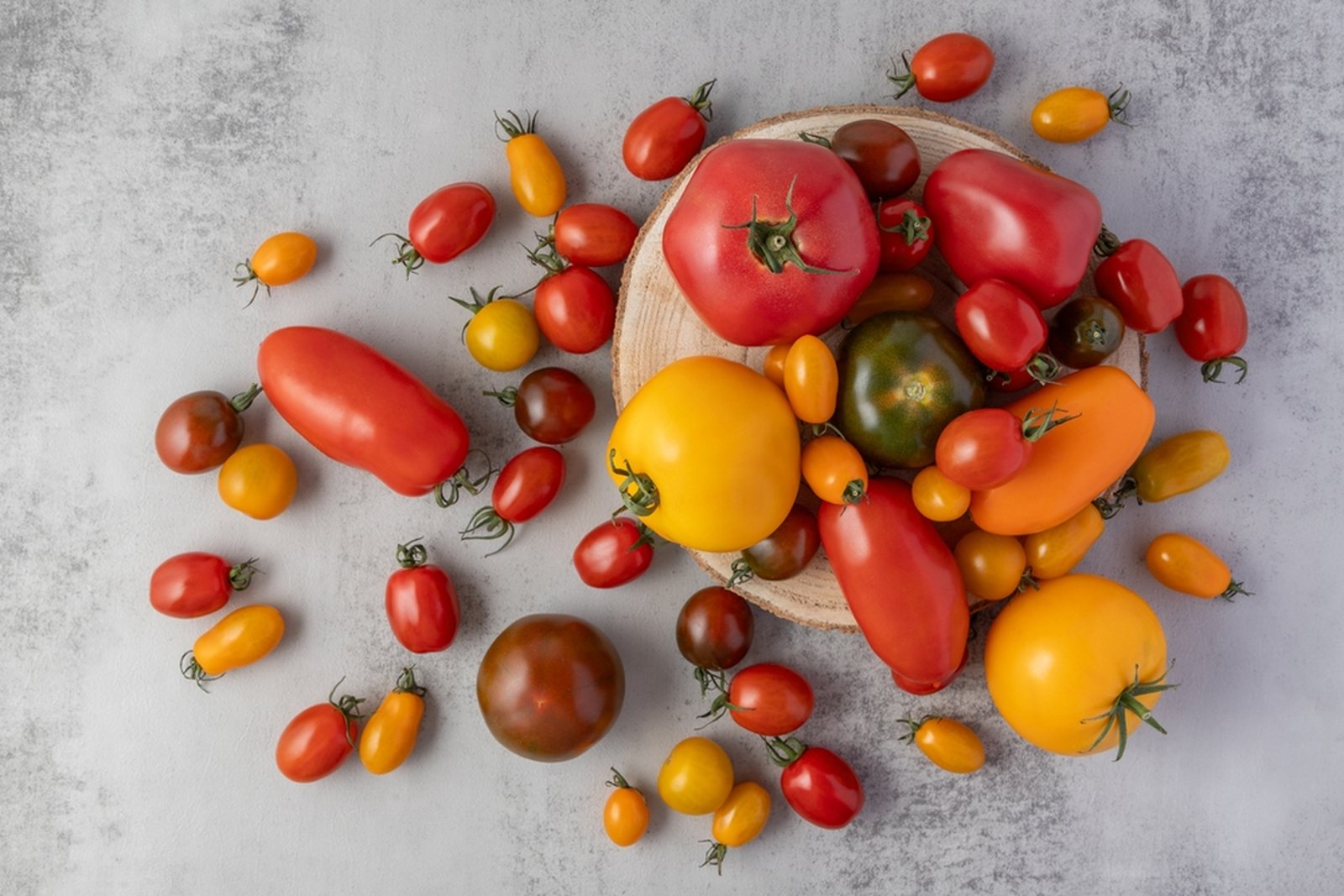
A useful tomato collection should include more than visual novelty. It should spread harvest timing, kitchen use, plant habit, and risk. The guide below explains what color can tell you, what it cannot tell you, and how to build a tasting that produces evidence instead of another list of favorites.
Good tomato records begin with what the plant actually does in your garden, not with a promise copied from somewhere else.
A tasting protocol that produces useful evidence
A fair tasting controls the variables that commonly make one tomato seem better than another. The goal is not laboratory perfection. The goal is a repeatable record that is better than memory.
| Field measure | Practical starting point | How to use it |
|---|---|---|
| Fruit sample | At least 3 sound fruit per cultivar | One fruit can be unusually watery, overripe, sunscalded, or underdeveloped. Sample more than one plant when possible. |
| Harvest dates | At least 2 separate harvests | Rain, heat, irrigation, and crop load can change flavor within the same cultivar. |
| Serving temperature | Room temperature, roughly 65 to 75°F | Compare samples at the same temperature. Cold fruit suppresses aroma and changes texture. |
| Ripeness standard | Fully colored for the cultivar, slightly yielding, no fermentation odor | Use background color and feel. Do not force green-when-ripe or dark tomatoes into a red-tomato standard. |
| Blind coding | Use letters or numbers, not variety names | This reduces the effect of reputation, color preference, and price on the score. |
| Scoring scale | 1 to 5 for sweetness, acidity, aroma, texture, skin, and overall use | Keep each trait separate. A meaty sauce tomato should not lose because it is less juicy than a slicer. |
| Canning safety | Use a tested recipe and acidify as directed | Color and heirloom status do not establish safe acidity. Follow research-based preservation instructions for every tomato color. |
Tomato flavor is built from sugars, organic acids, aroma volatiles, water content, skin, flesh, gel, and ripeness. A tomato with substantial sugars may still taste bright when acidity is also high. A mild tomato may seem rich because its aroma is strong and its flesh is dense. Color pigments do not create a universal flavor rule.
Weather changes perception. Heavy rain or sudden irrigation can dilute soluble solids. High heat can reduce fruit set and alter ripening. A heavy crop can spread the plant's resources across more fruit. Record the week's weather and the plant's crop load beside the tasting score.
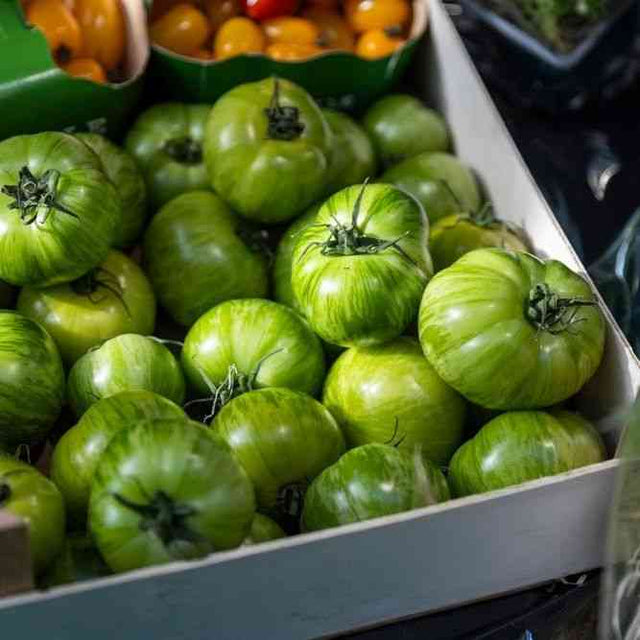
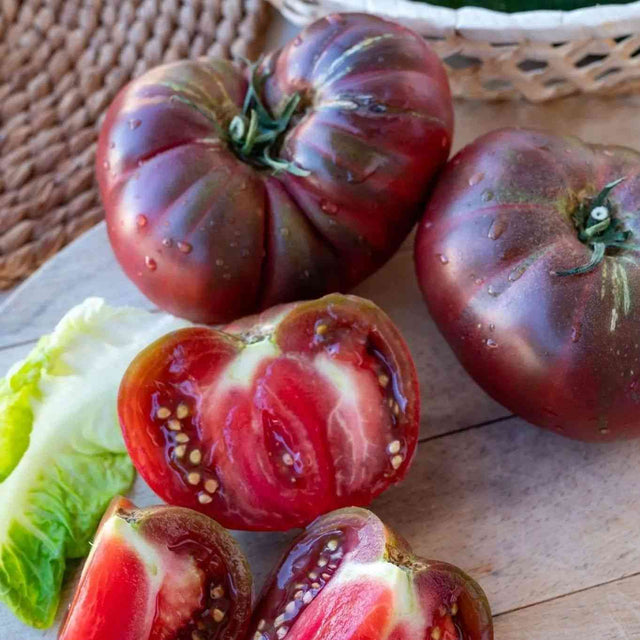
For green-when-ripe tomatoes, learn the mature background color, feel, and aroma from the named cultivar. Many develop amber, yellow, or translucent undertones while remaining green. Dark tomatoes often retain green shoulders. Neither pattern should be judged by red color alone.
Keep the tasting useful
- Use a clean knife and separate plate area for each sample.
- Taste an unseasoned slice before adding salt or oil.
- Record fresh-eating and cooked performance separately.
- Note cracking, shelf life, and usable yield beside flavor.
- Repeat the comparison before declaring a color category superior.
Important: Yellow, white, green, and dark tomatoes are not automatically low acid. Tested canning recipes still require the stated acidification.
Treat color as one trait, not a flavor verdict
Tomato color comes from pigments in the skin and flesh. The visible result may be red, pink, orange, yellow, cream, green, purple-brown, or bicolor, with shoulders that differ from the lower fruit. That appearance is useful for identification, but flavor comes from a much larger system that includes sugars, organic acids, volatile aroma compounds, texture, seed gel, and ripeness.
Two fruits that look alike can taste very different because they are different cultivars. The same cultivar can also taste different from one week to the next when heat, rainfall, irrigation, disease, crop load, or harvest stage changes. This is why a tasting should compare named varieties grown and harvested under similar conditions rather than treating every fruit of one color as interchangeable.
- Record the exact cultivar and seed source.
- Taste fruit at a comparable stage of ripeness.
- Separate fresh flavor from cooked performance.
- Repeat the tasting on more than one harvest date.
- Keep visual appeal in its own column rather than letting it dominate the score.
Flavor is the balance of sweetness, acidity, aroma, and texture
Gardeners often describe a tomato as sweet or acidic, but the strongest impression usually comes from balance. A tomato with substantial sugars can still taste bright when acidity is also present. Another may measure as mild yet seem rich because its aroma is strong and its flesh is dense. A watery fruit can dilute both sweetness and acidity even when the plant is genetically capable of better flavor.
Texture changes the experience as much as chemistry. Thick flesh and small seed cavities can make a paste tomato feel concentrated. A large slicer with abundant gel may feel juicy and complex. A cherry tomato can deliver an intense first bite because its skin, gel, flesh, and aroma are packed into a small fruit. None of those forms is universally better. The question is whether the structure fits the way you plan to eat or preserve it.
| Tasting trait | What to notice | Why it matters |
|---|---|---|
| Sweetness | Immediate sugar impression and finish | Useful for fresh eating, but needs acidity and aroma for balance |
| Acidity | Brightness, tang, and salivation | Supports fresh flavor and can remain noticeable after cooking |
| Aroma | Green, fruity, floral, earthy, or savory notes | A major part of perceived tomato flavor |
| Flesh | Firm, melting, meaty, grainy, or watery | Determines slicing quality and sauce yield |
| Gel and seeds | Amount, flavor, and distribution | Changes juiciness and the balance between flesh and liquid |
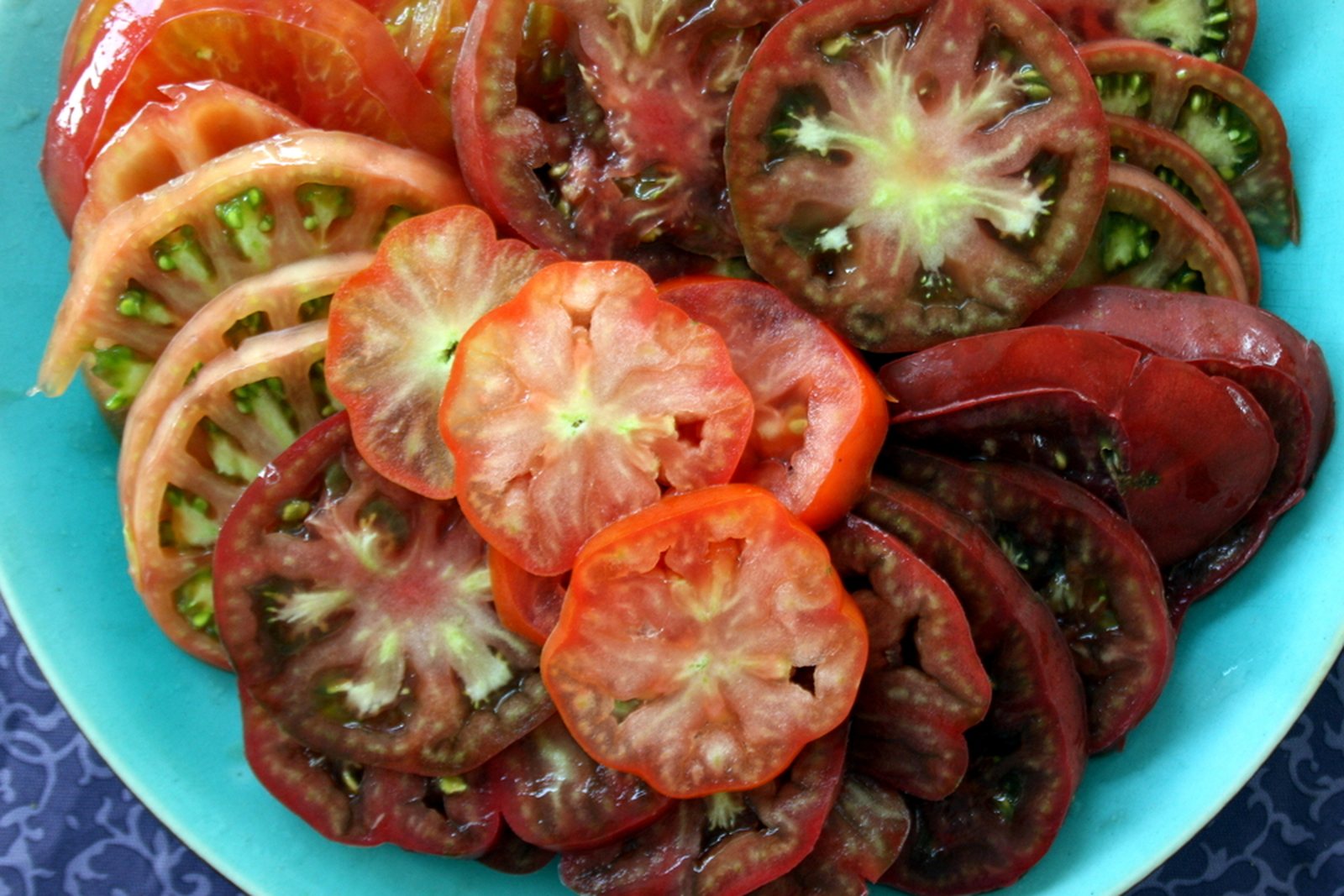
Red and pink tomatoes can look close while eating differently
Many red tomatoes combine red flesh with a yellow skin. Pink tomatoes generally have red-toned flesh beneath clearer skin, producing a softer pink appearance. That visual distinction does not create one fixed flavor profile. Red and pink groups include cherries, globes, paste tomatoes, beefsteaks, early varieties, storage types, modern hybrids, and old open-pollinated lines.
When comparing red and pink slicers, look beyond the cut surface. Record shoulder shape, core size, cracking, skin toughness, gel volume, and how the flavor changes from the first slice to the final bite. Large pink beefsteaks are often praised for rich fresh flavor, but they may set later, crack more, or carry fewer fruit than a dependable red globe. A productive red tomato that performs through heat may be more valuable in one garden than a famous pink variety that sets poorly there.
Use red and pink tomatoes as a baseline in a color trial because most tasters recognize them. Then add other colors without announcing the expected flavor. Blind or partially blind tasting reduces the tendency to taste the story before tasting the fruit.
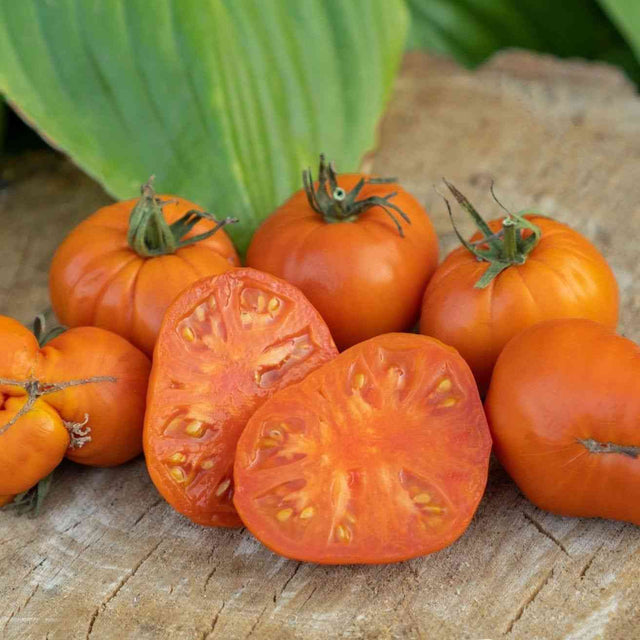
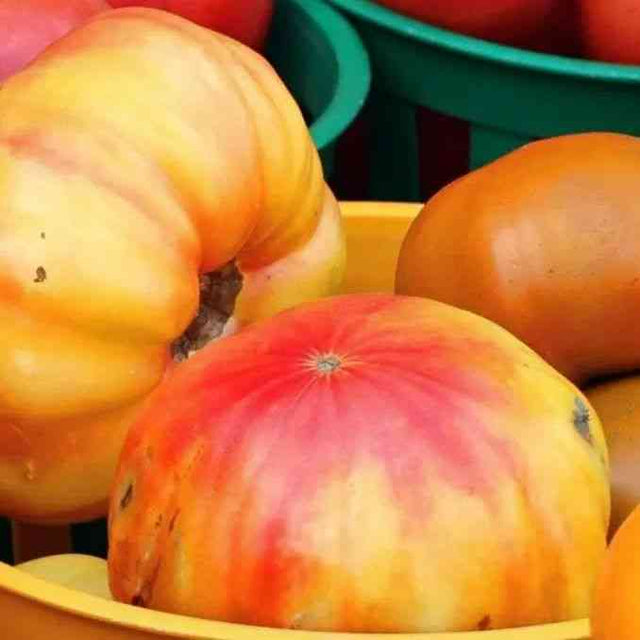
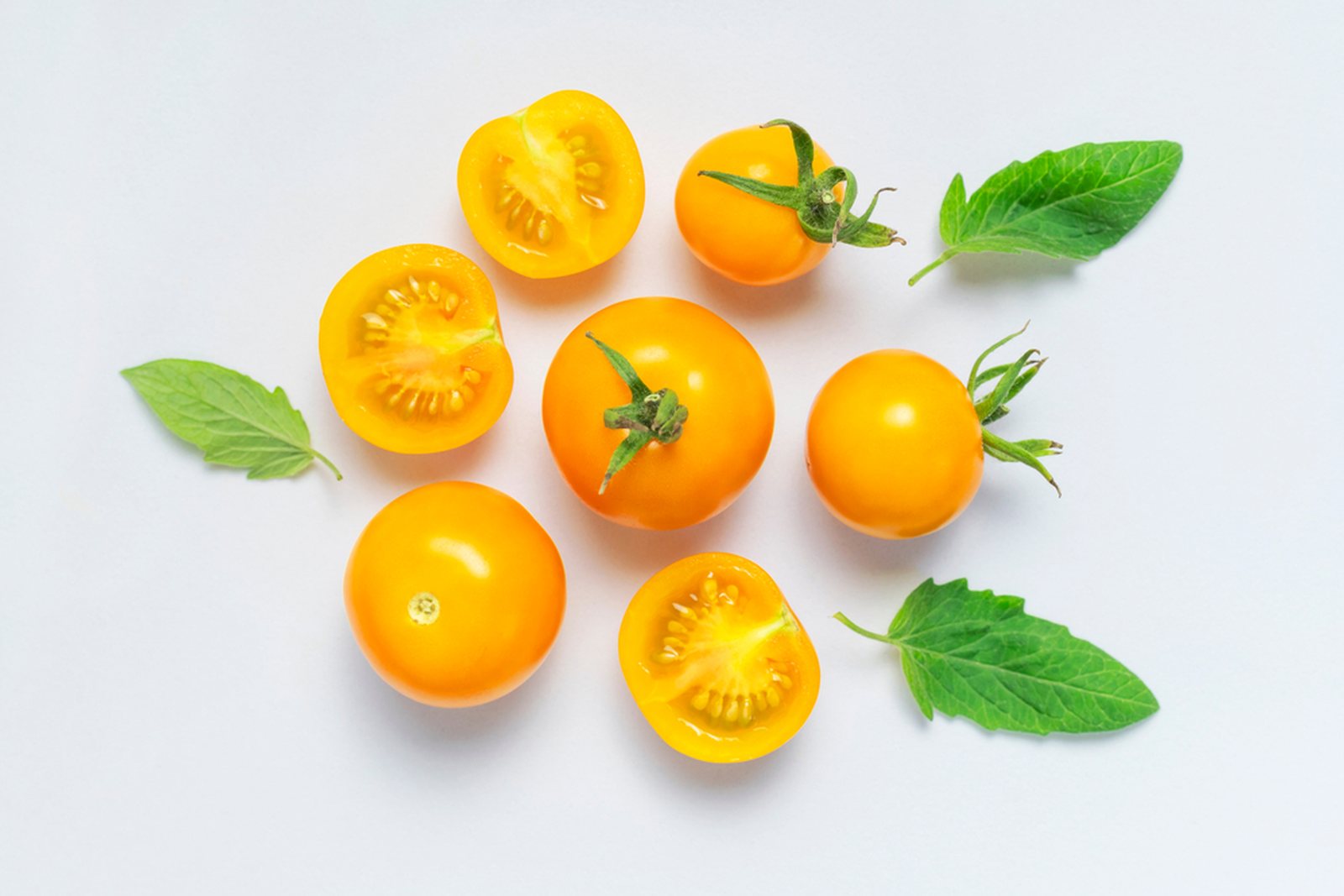
Yellow, orange, and bicolor tomatoes need variety-specific tasting
Yellow and orange tomatoes are often marketed as mild or sweet. Some are, while others have enough acidity to taste bright and complex. Fruit size matters too. A small orange cherry may be intensely sweet and aromatic, while a large orange beefsteak may have a softer texture and a broad, balanced flavor. Bicolors can contain red streaks or marbling inside yellow or orange flesh, but appearance alone does not establish the eating quality.
Harvest stage is especially important with pale fruit. Waiting for a red finish that will never appear can lead to overripe, soft tomatoes. Learn the mature background color of the exact variety and add a gentle feel test. A ripe yellow or orange fruit usually develops fuller color, slight softness, and a stronger tomato aroma while remaining sound at the stem end.
In the kitchen, compare these tomatoes both raw and cooked. Some pale slicers are excellent for fresh platters but produce a sauce that looks lighter than expected. Others concentrate into a golden sauce with strong aroma. Label preserved batches by variety so the kitchen result can be traced back to the garden record.
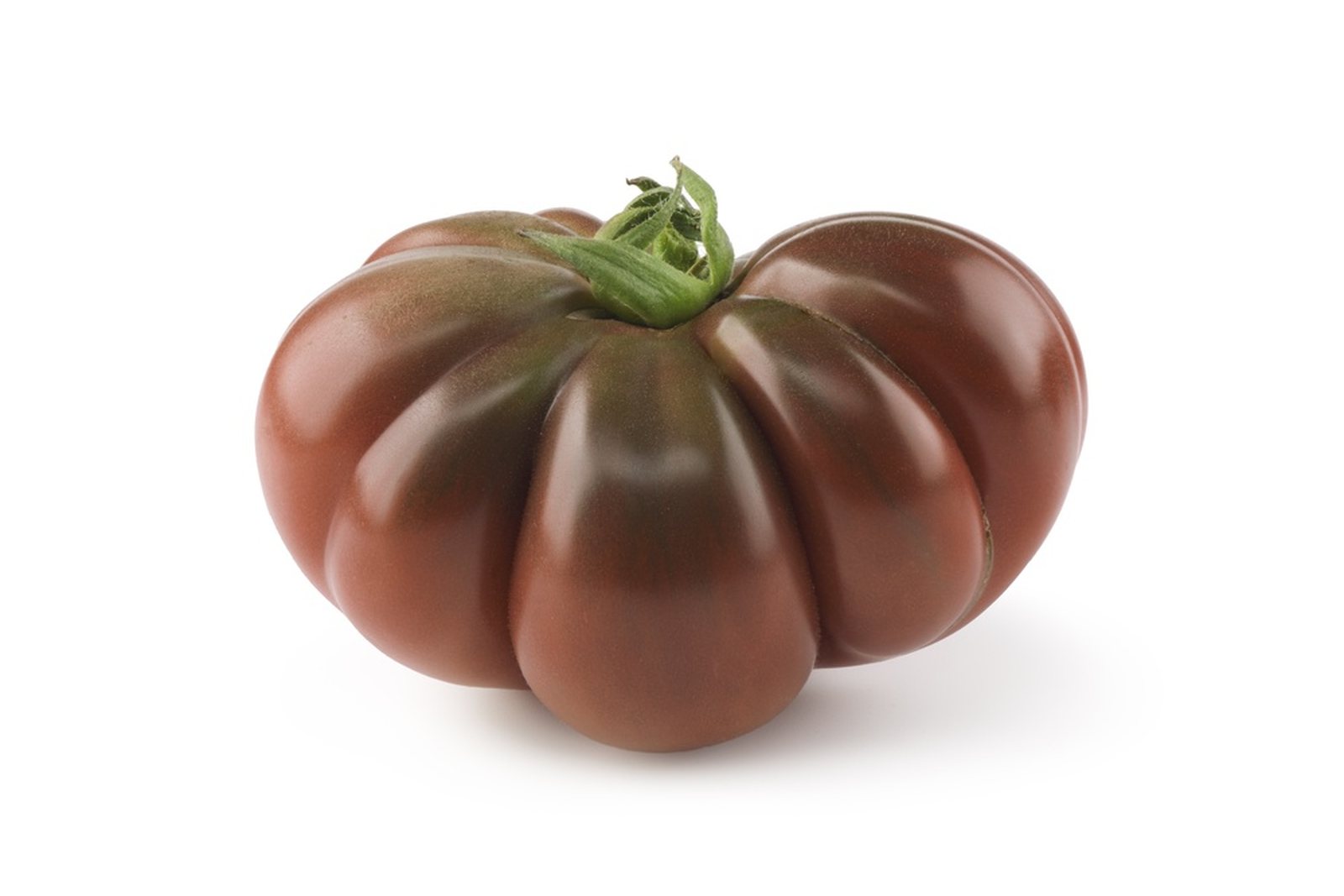
Dark tomatoes are a color family, not one flavor
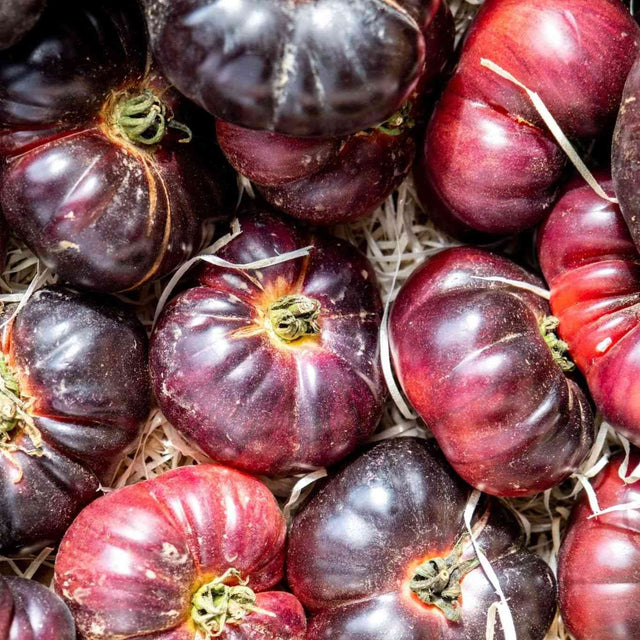
Tomatoes sold as black, purple, brown, or dark usually combine red pigments with green retention or darker shoulders. Sun exposure, temperature, ripeness, and the maintained strain affect the final appearance. Black Krim, Cherokee Purple, Carbon, Black from Tula, and other dark cultivars should not be treated as synonyms. They differ in fruit shape, plant performance, cracking, texture, and flavor.
Dark fruit can be difficult to harvest by color alone. The lower fruit may turn dusky red or brown while shoulders remain green or olive. Use a gentle squeeze, check the background color, and learn the feel of the variety. Waiting for a uniform red finish can leave the fruit overripe. Picking too early can produce a firm tomato whose color looks dramatic but whose aroma has not developed.
Tasters often use words such as smoky, savory, earthy, or rich for dark tomatoes. Treat those as observations to test, not guaranteed traits. Record whether the same words appear across several harvests and several tasters. A reliable pattern is more useful than a single enthusiastic description.
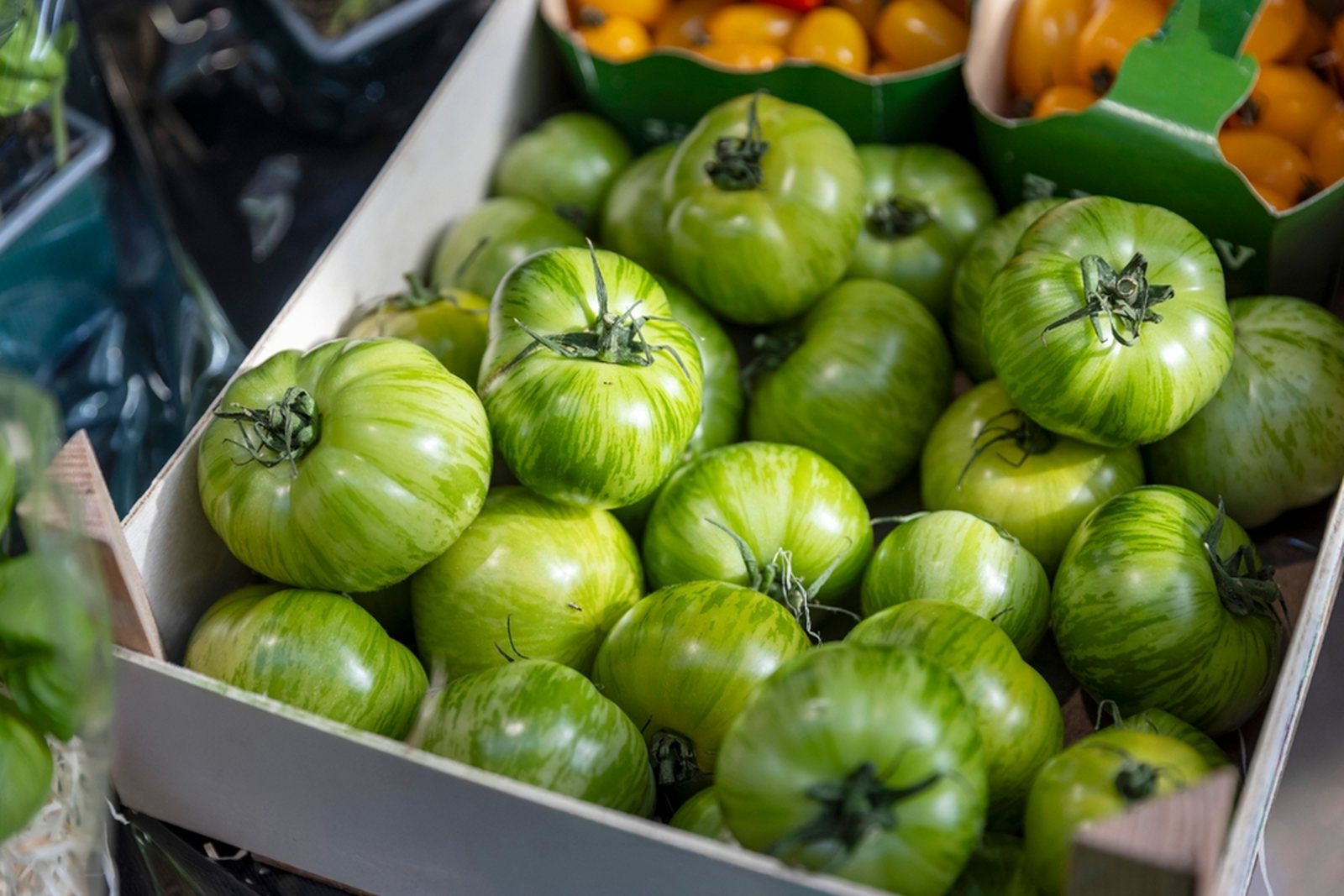
Green-when-ripe and white tomatoes require learned harvest cues
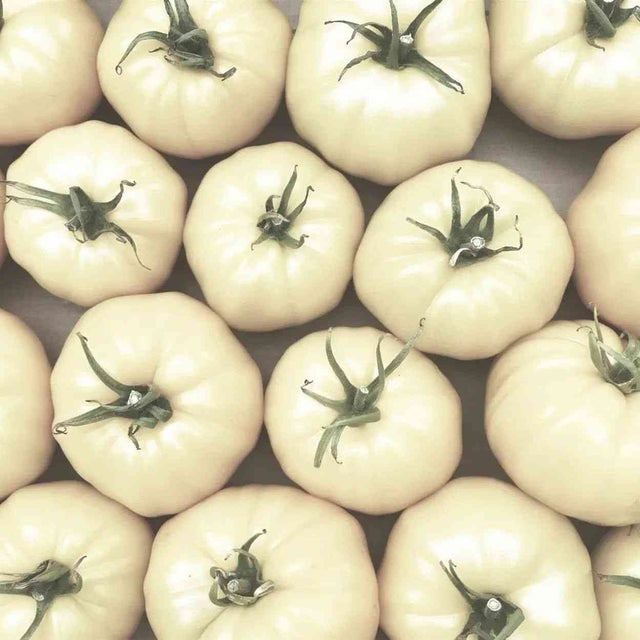
Green-when-ripe tomatoes remain green at maturity, often with amber, yellow, or olive tones that appear as the fruit finishes. White or cream tomatoes may ripen to ivory, pale yellow, or a faint blush. These colors are valuable in a diverse planting, but they demand clear labels because an unfamiliar picker may leave ripe fruit on the vine or harvest it hard and immature.
For Green Zebra and similar striped tomatoes, watch the background color between the stripes and feel for a slight softening. For large green beefsteaks, learn whether the blossom end shifts toward amber. For white or cream fruit, compare the mature color with an immature fruit on the same plant. Aroma and texture usually become better guides than color alone.
Pale tomatoes are sometimes described as low acid. A mild sensory impression does not mean the fruit is safe to can without acidification. Follow a tested home-preservation process and add the required bottled lemon juice or citric acid when the recipe calls for it. Flavor language and food-safety instructions belong in separate columns.
Fruit type often predicts kitchen fit better than color
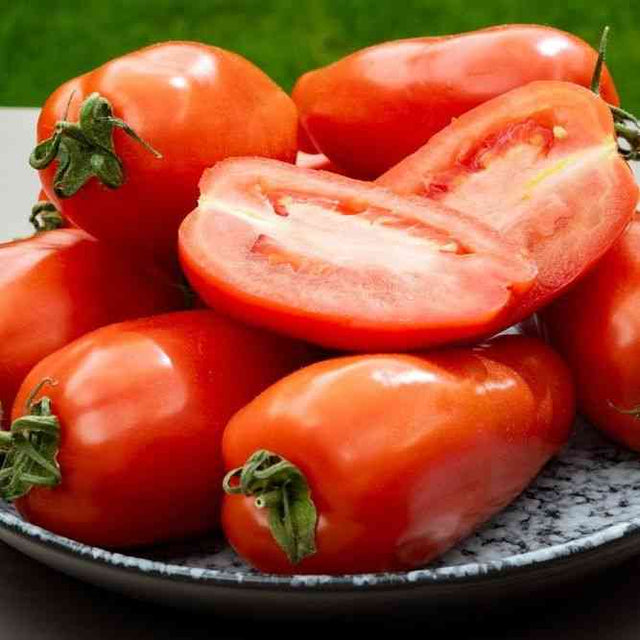
A cherry, slicer, paste tomato, saladette, and storage tomato can share the same color while serving different jobs. Before buying for color, decide how the harvest will be used. A rainbow cherry mix can carry salads and grazing. Large slicers can anchor sandwiches. Paste tomatoes can reduce cooking time when they combine dense flesh with dependable yield. Small firm fruit may dry or roast more evenly than a soft beefsteak.
| Garden goal | Traits to prioritize | Color role |
|---|---|---|
| Fresh slicing | Balanced flavor, sound shoulders, manageable core, good texture | Choose several colors for a tasting, but keep fruit type consistent |
| Sauce and canning | Usable yield, flesh density, harvest concentration, sound fruit | Color changes appearance; tested preservation remains the same |
| Containers | Compact habit, manageable root and support needs, steady set | Color is secondary to plant size and season length |
| Market or gift baskets | Color contrast, durability, variety labels, staggered maturity | A broad palette improves presentation when quality remains high |
| Seed saving | Open-pollinated identity, healthy typical plants, clear labels | Color helps detect off-types but does not replace full records |
A balanced garden often includes one reliable red or pink main crop, a dark slicer, a yellow or orange tomato, a green-when-ripe variety, and several cherries. That is enough diversity to teach the palate without turning the row into an unmanageable collection of one-plant experiments.
Run a fair tomato tasting instead of a color contest
Pick sound fruit at comparable ripeness, let refrigerated fruit return to room temperature, and serve equal portions. Use a neutral code when possible. Taste plain before adding salt or oil. Ask each person to score sweetness, acidity, aroma, texture, skin, aftertaste, and overall use rather than choosing one winner immediately.
Repeat the tasting later in the season. Early fruit may develop under cool nights, while midsummer fruit may ripen through heat and heavy rain. The variety that wins one date may not be the most dependable for the season. Keep notes on yield and plant health beside the tasting score so a beautiful fruit does not erase a poor garden performance.
- Label each fruit with a hidden code.
- Use fruit harvested at similar maturity.
- Taste at room temperature.
- Score individual traits before discussing favorites.
- Reveal names only after scores are recorded.
- Repeat on at least one later harvest.
Harvest color changes with ripeness, rain, heat, and canopy
Tomato color develops during ripening, but the rate and final expression change with temperature and light. Dense foliage can shade shoulders. Severe heat can slow pigment development. Heavy rain can swell mature fruit and increase cracking before full color. A fruit may therefore be better harvested at breaker or turning stage before a storm and finished indoors than left to split on the vine.
Use the ripening standard appropriate to the variety. Red tomatoes move from green through breaker and turning stages toward pink or red. Yellow, orange, black, green, and white cultivars show different final colors, so the seedkeeper must learn the cultivar rather than rely on a generic chart. Record the color and feel at the point when the fruit tasted best.
Do not strip leaves to improve color. Healthy canopy protects fruit from sunscald and supports sugar production. Remove diseased or soil-touching leaves as needed, but preserve enough foliage to carry the crop through the hottest part of the season.
Build a color trial for heat and humidity, not just for photographs
In the Coastal Plain and much of the Upper South, the best tomato must set and ripen through warm nights, humidity, storms, and leaf-disease pressure. A color trial should therefore include transplant date, first fruit set, pause during extreme heat, recovery when nights cool, cracking after rain, and the percentage of fruit that reaches the kitchen sound.
Plant at least two or three plants of a serious candidate when space permits. One plant can be lost to root injury, herbicide drift, a broken stem, or a bad position. Use the same support, mulch, irrigation, and spacing. A trial is only fair when the management is comparable.
At the end of the season, keep the varieties that earned their space. A rare color is not a reason to preserve weak seed. Select healthy, typical fruit from plants that performed well and label the saved seed with the color, cultivar, source, year, and any off-type observations.
A practical five-color tomato plan
For a first color garden, keep the plan simple. Choose one dependable red or pink slicer, one dark tomato, one yellow or orange fruit, one green-when-ripe or white variety, and one cherry with a contrasting color. Match each to the space and support available. This creates a meaningful tasting without sacrificing the main harvest to too many single plants.
- Red or pink: establish a familiar baseline.
- Dark: compare ripeness cues and savory flavor descriptions.
- Yellow or orange: test mildness, sweetness, and cooked color.
- Green or white: learn variety-specific maturity signals.
- Cherry: measure concentrated flavor and season-long productivity.
Write the purpose beside each name before planting. If the orange tomato is intended for sauce, judge sauce. If the green tomato is intended for sandwiches, judge slices. The strongest garden record connects the seed packet, the plant, the harvest, and the meal.
What color can tell you, and what it cannot
Color is strongest as an identification and harvest tool. It is weakest when used as a shortcut for flavor, acidity, disease resistance, or culinary value. A named cultivar and a controlled tasting are more informative than a color category.
Use photographs as visual examples only. Lighting, editing, sun exposure, fruit temperature, and harvest stage can change how the same cultivar appears.
| What you observe | Most useful next check | Action that follows the evidence |
|---|---|---|
| A dark tomato looks green at the shoulder | Check the lower fruit color, slight give, aroma, and the variety description | Harvest when the whole set of cues indicates maturity. Do not wait for every shoulder to become red. |
| A yellow tomato tastes flat | Compare a second fruit from another date and check water history | Do not conclude that all yellow tomatoes are mild from one diluted or underripe sample. |
| A green tomato is offered as ripe | Look for mature striping, amber undertones, softness, and aroma | Use the named variety's cues. Appearance alone cannot separate ripe green fruit from an unripe red cultivar. |
| A colorful tomato is planned for canning | Use a tested recipe and verify the acidification step | Treat all colors under the same research-based safety rules. |
Tomato color is a pigment result, not a complete flavor description
This tomato color and flavor guide compares what color can show with what tasting must prove. It addresses black tomato flavor, common yellow tomato acidity claims, green when ripe tomatoes, pink tomatoes, and a repeatable tomato tasting method.
A ripe tomato's visible color comes from several layers and pigments working together. Lycopene contributes much of the red color in familiar ripe tomatoes. Beta-carotene can contribute orange tones. Chlorophyll can remain visible in green-when-ripe fruit. Dark or so-called black tomatoes may combine red flesh, retained green shoulders, and darker pigments in the skin. A pale yellow epidermis can make underlying flesh look different from fruit with a clear epidermis. These combinations explain why two tomatoes placed in the same color category can look and taste quite different.
Color can help with identification and harvest, but it cannot reliably answer whether a tomato will be sweet, tart, aromatic, firm, meaty, juicy, or productive. Those traits are influenced by cultivar genetics, ripeness, weather, root-zone moisture, crop load, fertility, and handling after harvest.
| Visible color group | Useful observation | Do not assume | Better comparison |
|---|---|---|---|
| Red | Look for uniform background color and shoulder ripening | All red tomatoes have the same acid balance | Compare aroma, texture, gel, and sweetness at equal ripeness |
| Pink | Many pink tomatoes have a clear epidermis over red or pink flesh | Pink always means mild or low acid | Taste beside a red fruit from the same harvest date |
| Yellow and orange | Color can range from pale lemon to deep orange | Yellow tomatoes are automatically low acid or safe to can differently | Use a tested canning process for every color; score flavor separately |
| Green when ripe | Watch the background shift from hard blue-green to warmer green, amber, or yellow-green | Green exterior means unripe | Use feel, aroma, and variety-specific color cues together |
| Dark, purple, or black | Observe the lower fruit color, shoulders, skin, and interior separately | One dark color proves a particular cultivar | Record the named variety and compare cut fruit at the same stage |
| White or very pale | Look for a transition from green to cream, ivory, or pale yellow | Pale color means weak flavor | Evaluate aroma and acid balance blind |
Tomato flavor comes from sweetness, acidity, aroma, texture, and temperature
People often reduce tomato flavor to sweet versus acidic. That misses much of the experience. A tomato can have enough soluble solids to taste sweet yet seem flat when aroma is weak. A highly aromatic tomato can seem rich even when a refractometer reading is not exceptional. Thick flesh, tender skin, firm gel, seed-cavity size, and mealiness change how flavor is released while chewing.
Five components to score separately
- Sweetness: the perceived sweetness of the whole bite, not just the juice.
- Acidity or brightness: the sharpness that keeps sweetness from tasting dull.
- Aroma: the smell released before and during eating.
- Texture: skin toughness, flesh firmness, mealiness, gel, and seed load.
- Aftertaste: whether the flavor remains clean, savory, fruity, metallic, bitter, or watery.
A refractometer can measure soluble solids in juice, usually reported as degrees Brix. It is a useful field measurement, but it is not a direct flavor score and it is not a pure sugar meter in this context. Two tomatoes with the same Brix can taste different because acidity, volatile aroma compounds, texture, and ripeness differ. Use Brix as one column in the record, never as the winner by itself.
How to run a tomato tasting that is more useful than a beauty contest
Color creates expectations. A bright orange tomato may be judged as fruity before anyone tastes it, and a famous dark cultivar may receive credit for a story rather than the sample in the cup. A blind tasting removes some of that bias.
- Harvest all entries at the ripe standard appropriate to that variety.
- Hold them at the same room temperature before tasting. Cold fruit suppresses aroma and changes texture.
- Use fruit from more than one plant and, when possible, more than one harvest date.
- Cut comparable portions from the same region of each fruit.
- Serve samples under random numbers rather than variety names or colors. Opaque cups can reduce visual bias further.
- Taste without salt first. Salt can be used in a second kitchen-use round.
- Score sweetness, acidity, aroma, texture, and overall preference separately.
- Reveal the names only after scores are recorded.
| Score | Sweetness | Acidity | Aroma | Texture |
|---|---|---|---|---|
| 1 | Not perceptibly sweet | Flat or unpleasantly sharp | Very weak | Unpleasantly tough, mealy, or watery |
| 3 | Moderate | Balanced but not distinctive | Recognizable tomato aroma | Acceptable for the intended use |
| 5 | Strong, pleasant sweetness | Bright and well balanced | Complex and persistent | Excellent for the intended use |
Repeat the tasting at least twice. A single fruit can be atypical, watered down after rain, overripe, or damaged by heat. The strongest variety judgment combines blind taste scores with usable yield and plant performance.
Why the same tomato variety tastes different from week to week
Tomato flavor is not fixed at seed purchase. Environment and harvest timing change what reaches the plate.
- Heavy rain or irregular watering: rapid water uptake can dilute flavor and increase cracking near harvest.
- High crop load: many fruits compete for photosynthate; this is one reason to compare entire plants rather than only one perfect fruit.
- Excess nitrogen: lush vegetative growth can delay flowering and change the balance between canopy and fruit.
- Heat: extreme temperatures can interrupt fruit set and slow normal color development.
- Leaf loss: disease or aggressive pruning reduces photosynthetic area and can expose fruit to sunscald.
- Ripeness: breaker-stage fruit can finish ripening indoors, but a fruit harvested before physiological maturity may never develop full texture and aroma.
- Storage temperature: prolonged chilling can reduce flavor and alter texture; allow chilled ripe fruit to return to room temperature before judging it.
For a seed-company field record, I would never write "excellent flavor" without noting the harvest date, ripeness, weather in the preceding week, and whether the taste was fresh or cooked. Those details explain why another gardener may have a different experience without either report being dishonest.
Use variety-specific ripeness cues for dark, green, yellow, and pale tomatoes
Red tomatoes are familiar enough that many gardeners rely on color alone. Unusual colors require a more disciplined approach. Use the lower background color, surface gloss, gentle pressure, aroma, and the ease with which the fruit releases from the stem.
| Color group | Useful ripe cue | Common mistake |
|---|---|---|
| Green when ripe | Hard blue-green shifts toward warmer green, amber, or yellow-green; fruit softens slightly and develops aroma | Waiting for red that will never appear |
| Dark or black | Lower fruit develops its mature brick, mahogany, or red-brown background while shoulders may remain olive or green | Judging only the darkest shoulder color |
| Yellow or orange | Color deepens and becomes more uniform; firmness relaxes without becoming soft | Picking at the first pale blush and calling the flavor mild |
| White or cream | Green fades to ivory, cream, or pale yellow with a slight softening | Leaving fruit until translucent or overripe because the color change is subtle |
| Bicolor | Both background and secondary color develop; cut fruit shows mature interior color | Assuming every fruit will have the same stripe or blush pattern |
Create a small ripeness card for every unfamiliar cultivar. Photograph one fruit at breaker, turning, table ripe, and overripe stages. That visual record is more valuable than a generic color wheel.
Choose tomato colors for kitchen use without turning color into a myth
Color diversity can make a harvest more useful and enjoyable. Green-when-ripe tomatoes can provide bright contrast in salads. Dark tomatoes can add a deep visual tone to mixed platters. Yellow and orange fruit can make a vivid fresh sauce. None of those uses requires a claim that one color is inherently sweeter, lower acid, or more nutritious in every cultivar.
| Use | Selection criteria more important than color | How color can still help |
|---|---|---|
| Sandwiches | Slice size, firmness, core size, skin, and balanced flavor | Layer contrasting slices for presentation |
| Salads | Texture, crack-free skin, and flavor at room temperature | Use multiple colors to make ripeness and variety differences visible |
| Fresh salsa | Firm flesh, manageable gel, and tested recipe when preserving | Mix colors for appearance, but expect the final color to blend |
| Cooked sauce | Usable yield, solids, preparation labor, and cooked flavor | Yellow or orange sauce can be attractive; color does not change canning safety rules |
| Drying | Dense flesh, small seed cavities, and uniform size | Mixed colors can make a visually varied dried product |
All tomatoes intended for shelf-stable home canning should follow a current tested recipe and its acidification instructions. Yellow, orange, pink, white, and dark tomatoes do not earn a different safety rule because of color or perceived taste.
Build a color and flavor trial that produces useful evidence
A useful tomato color comparison should answer practical questions such as "what do black tomatoes taste like," "are yellow tomatoes less acidic," and "how do I know when a green tomato is ripe" without pretending every cultivar in a color family is identical. The best way to answer those questions is a repeatable trial.
- Choose at least two cultivars in each color group rather than treating one variety as the whole category.
- Grow multiple plants of each entry under the same management.
- Record first ripe date, total usable weight, cracking, disease, and sunscald.
- Photograph whole fruit and cross sections under the same light.
- Run blind tastings on at least two dates.
- Repeat one tasting after cooking equal weights without seasoning.
- Save seed only from healthy, typical open-pollinated plants with identity records intact.
The final conclusion may be that color is valuable for diversity and harvest identification, while fruit type and cultivar are more predictive of kitchen use. That is not a disappointing answer. It is the kind of accurate answer that helps a gardener choose well.
Detailed questions about tomato color and flavor
Are yellow tomatoes less acidic than red tomatoes?
Not reliably. Perceived mildness is a balance of sugars, organic acids, aroma, and texture. A yellow cultivar can taste bright and acidic, while a red cultivar can taste mild. Color is not a home-canning acidity test. Use a tested recipe and the required acidification for every tomato color.
Why do black tomatoes sometimes have green shoulders?
Many dark cultivars retain chlorophyll in the shoulder while red or brown pigments develop underneath or lower on the fruit. The mature cue is the whole pattern: lower background color, shoulder change, slight give, aroma, and cut interior. Green shoulders alone do not mean the fruit is unripe.
Does a higher Brix number mean a better tomato?
No. Brix estimates soluble solids in juice and is useful for comparing samples, but it does not measure aroma, acidity, skin, flesh, or aftertaste. Use the same refractometer, temperature, fruit stage, and sampling method, then pair the reading with a blind sensory score.
Why does the first tomato of the season taste watery?
Early fruit may ripen during cool, wet weather or after irregular irrigation. The plant may also carry a different crop load than it will later. Taste several fruit across multiple dates before defining a cultivar's flavor. Record rain and irrigation in the week before harvest.
Do pink tomatoes have clear skin?
Many familiar pink tomatoes have a clear epidermis over pink or red flesh, while many red tomatoes have a yellow epidermis. That distinction helps explain appearance, but it should be verified for the named cultivar rather than applied to every fruit called pink.
Which tomato colors are best for sauce?
Fruit density, usable yield, preparation time, and cooked flavor matter more than color. Yellow and orange tomatoes can produce beautiful sauce, but the result may be pale or golden. Dark tomatoes can create a brown-red sauce. Follow tested preservation directions regardless of color.
How should tomatoes be prepared for a fair tasting?
Bring samples to the same room temperature, use comparable ripe fruit, cut equal portions, assign random numbers, and taste without salt first. Score sweetness, acidity, aroma, texture, and overall preference separately. Repeat on another date so one fruit does not define the variety.
Frequently asked questions
Are yellow tomatoes low acid?
Some taste mild, but sensory mildness does not prove low acidity. Use tested preservation instructions and required acidification for every tomato color.
Do black tomatoes taste smoky?
Some tasters describe dark tomatoes as smoky, earthy, or savory, but the result depends on cultivar, ripeness, growing conditions, and the individual palate.
How do I know when a green tomato is ripe?
Learn the cultivar's mature background color, watch for amber or yellowing where appropriate, feel for slight softness, and compare aroma with an immature fruit.
Which tomato color is sweetest?
No color always wins. Small cherries often taste very sweet, but named cultivars and harvest conditions matter more than the color category.
Can I can a mixture of tomato colors?
Yes when using a tested tomato-preservation recipe and following its acidification, jar size, headspace, processing, and altitude instructions.
Why did the same variety taste different later in summer?
Temperature, rainfall, irrigation, crop load, plant health, and ripeness can change water content and flavor expression across the season.