Brandywine is one of those names that can hide more than it reveals. A gardener may receive Pink Brandywine, Red Brandywine, Yellow Brandywine, Brandywine Black, or another maintained selection, and then discover differences in leaf type, fruit shape, maturity, color, and performance. Calling all of them simply Brandywine erases the very record needed to grow and preserve them honestly.
Treat each packet as a separate accession. The label carries the full name and source from sowing tray to seed jar. In the field I record potato leaf or regular leaf, fruit color, shoulder shape, first ripe date, cracking, plant health, and any off-type. Those observations protect the strain better than repeating a broad story that may belong to another Brandywine line.
The plants are usually large, indeterminate beefsteaks that need serious support and a long enough season. Their reputation is built on flavor, but flavor alone does not hold up a cage, set fruit during hot nights, or keep a soft fruit from splitting after rain. This guide puts the famous name back into a real garden system.
Good tomato records begin with what the plant actually does in your garden, not with a promise copied from somewhere else.
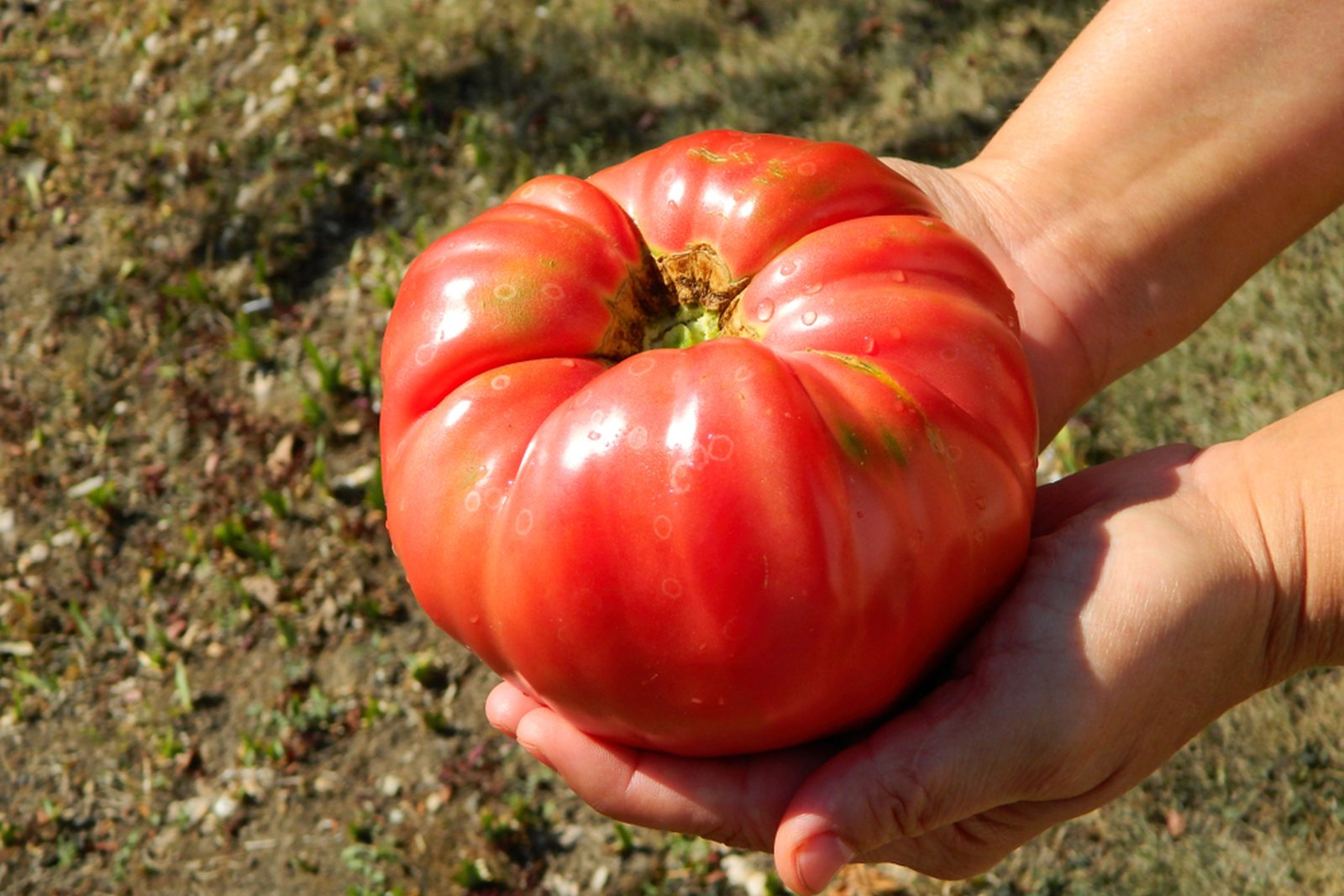
Brandywine field specifications and recordkeeping
Brandywine names cover more than one strain and more than one leaf type or fruit color. The seed label and grow-out record carry the identity. The fruit photograph does not.
| Field measure | Practical starting point | How to use it |
|---|---|---|
| Seed-starting lead time | 6 to 8 weeks before transplant | Strong light and timely potting are more useful than holding oversized plants indoors. |
| Germination root-zone temperature | 75 to 85°F | Measure the mix. After emergence, reduce excess heat and provide strong overhead light. |
| Transplant spacing | About 24 to 36 inches | Use the wider end in humid gardens or when training more than one leader. |
| Support | A sturdy 6 to 8 foot cage, stake, or trellis | Install at transplanting. Large fruit and long vines can overwhelm light cages. |
| Maturity estimate | Often about 80 to 90 days from transplant | Treat this as a planning range, not a deadline. Heat, cool nights, transplant stress, and strain differences change it. |
| In-ground water | About 1 to 1.5 inches per week as a starting point | Maintain even moisture with deep watering and mulch. Avoid repeated dry-to-soaked cycles. |
| Seed-maintenance sample | Save from at least 3 to 5 typical healthy plants for a home line | Use more plants when maintaining broader genetic representation. Keep each strain separate. |
| Harvest cue | Full background color, developed aroma, and slight give | Pink and dark strains need their own color standard. Harvest earlier before severe rain if cracking risk is high. |
Do not collapse Pink Brandywine, Red Brandywine, Yellow Brandywine, Brandywine Black, Sudduth-type lines, potato-leaf lines, and regular-leaf lines into one universal description. Some names reflect genuinely different material. Maintain the exact packet name and source from sowing tray through seed jar.
Large beefsteak fruit demands a stable plant. Install support before the first heavy cluster. Keep enough foliage to power the plant and shade fruit, especially in hot climates. Remove leaves touching soil or clearly diseased tissue, but do not strip the canopy simply because the plant is indeterminate.
The most useful performance record includes first ripe date, usable pounds, fruit size range, cracks, catfacing, sunscald, foliar disease progression, flavor on more than one harvest date, and the labor required to support and harvest the plant.
Preserve strain identity
- Write the complete strain name and seed source on every tray, transplant tag, field map, and seed container.
- Record potato-leaf or regular-leaf expression early in the season.
- Flag off-type plants before fruit is harvested for seed.
- Save seed only from sound, typical fruit on healthy plants.
- Do not use fruit appearance alone to merge two Brandywine lots.
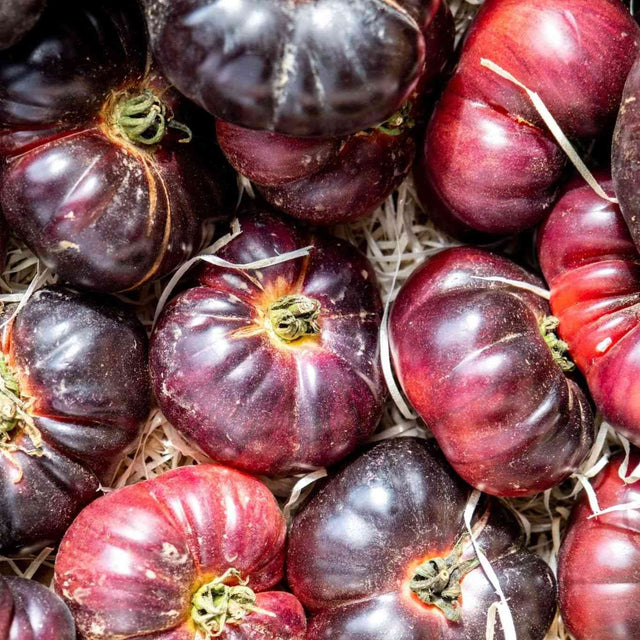
Important: The photographs in this guide illustrate large pink or ribbed beefsteak traits. They do not independently verify the exact Brandywine strain.
Start with the exact Brandywine identity
Write the complete packet name, seed source, purchase or exchange date, and lot or accession note before sowing. Do not shorten Yellow Brandywine to Brandywine or Brandywine Black to Black Brandywine unless that is the name supplied by the documented source. Small wording changes can merge lines that were maintained separately.
Record the expected fruit color and leaf type, but use the field to verify them. Many familiar Brandywine strains are associated with potato-leaf foliage, while some named lines are regular leaf. A mismatch may indicate an off-type, a crossed seed, a mislabeled packet, or a strain whose description was assumed rather than documented. Do not discard the plant immediately; isolate the observation and compare several plants.
| Identity field | What to record | Why it matters |
|---|---|---|
| Full name | Color or strain designation exactly as received | Prevents several Brandywine lines from collapsing into one name |
| Seed source | Company, exchange, seedkeeper, or accession | Lets a later grower trace the maintained line |
| Leaf type | Potato leaf or regular leaf | Useful for detecting unexpected variation |
| Fruit description | Color, shape, size range, shoulders, core | Confirms whether the crop matches the maintained description |
| Off-types | Plant number and exact difference | Keeps selection decisions transparent |
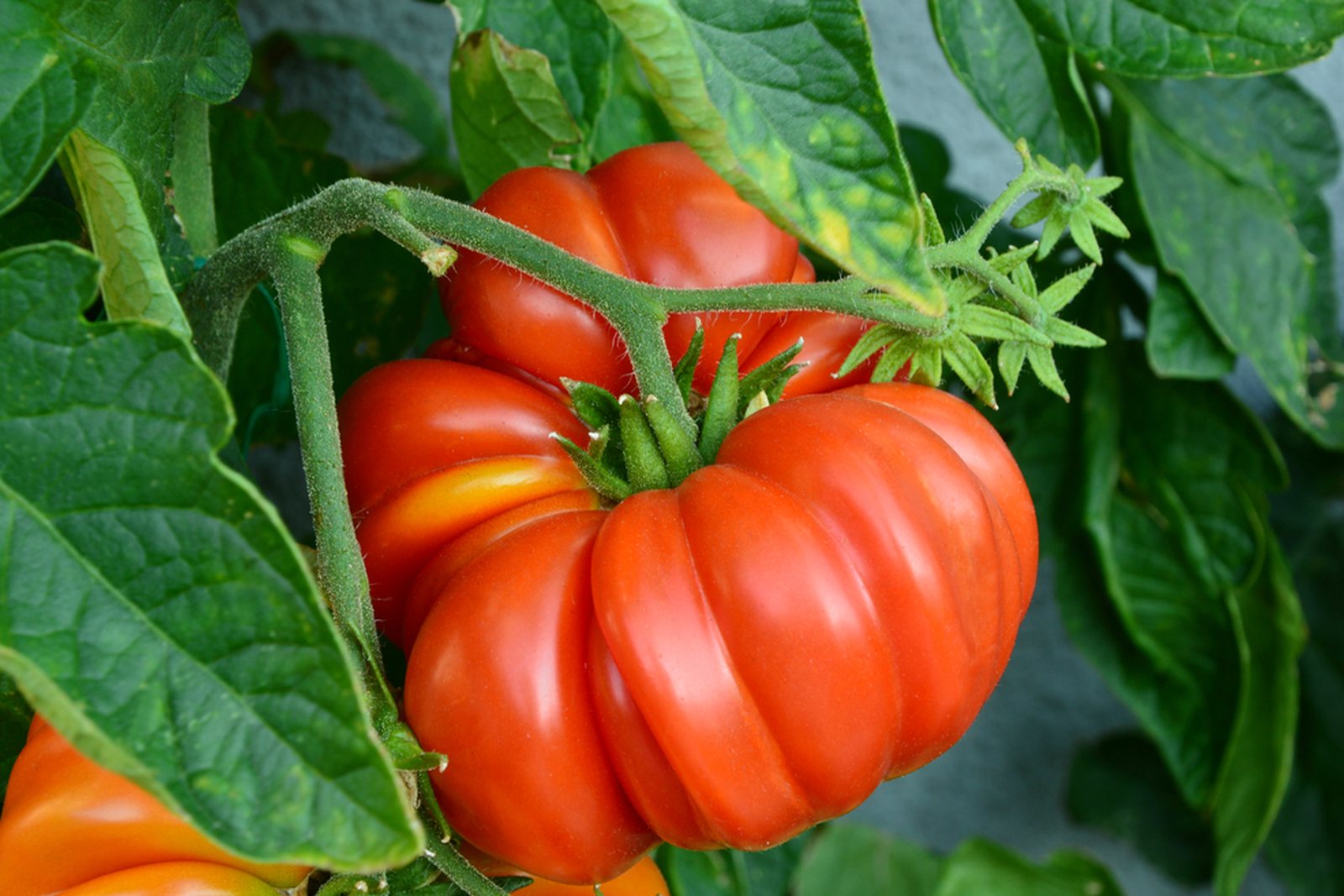
Do not force every Brandywine strain into one description
Pink, red, yellow, and dark Brandywine tomatoes can differ in more than pigment. They may mature at different times, show different leaf forms, carry different fruit shapes, or trace through different modern seed records. Even packets with the same name can represent selections maintained by different growers. That is normal in open-pollinated crop history, but it demands more precise labeling.
When comparing strains, grow them side by side under the same support, spacing, irrigation, and harvest standard. Use at least three plants per line when space permits. One plant is a story; several plants begin to show whether the difference belongs to the line or to one root system, one disease event, or one accidental injury.
Photograph leaves before the canopy becomes tangled and photograph typical fruit from more than one harvest. Keep the photo file name tied to the plant number. This creates an evidence trail that can be shared with another seedkeeper without asking the recipient to trust memory alone.
Start Brandywine seedlings for a long but not overgrown transplant
Sow indoors about six to eight weeks before the expected transplant date, adjusting for the growing space and your ability to provide strong light. Use a clean, fine seed-starting mix, warm the root zone, and cover seed lightly. Once seedlings emerge, move them immediately under bright overhead light and provide airflow.
A famous late-season tomato tempts gardeners to start too early. The result is often a tall, root-bound transplant that flowers in a small cell and suffers a long setback outdoors. A compact transplant with a healthy root ball, sturdy stem, and several true leaves usually establishes faster than a large stressed plant. Pot up once when roots fill the original cell, but do not let container size substitute for good timing.
Label each cell or pot. Brandywine strains can look similar in the seedling stage, and one dropped marker can destroy the comparison before it reaches the garden. Use a tray map as a second record rather than relying on one plastic tag.
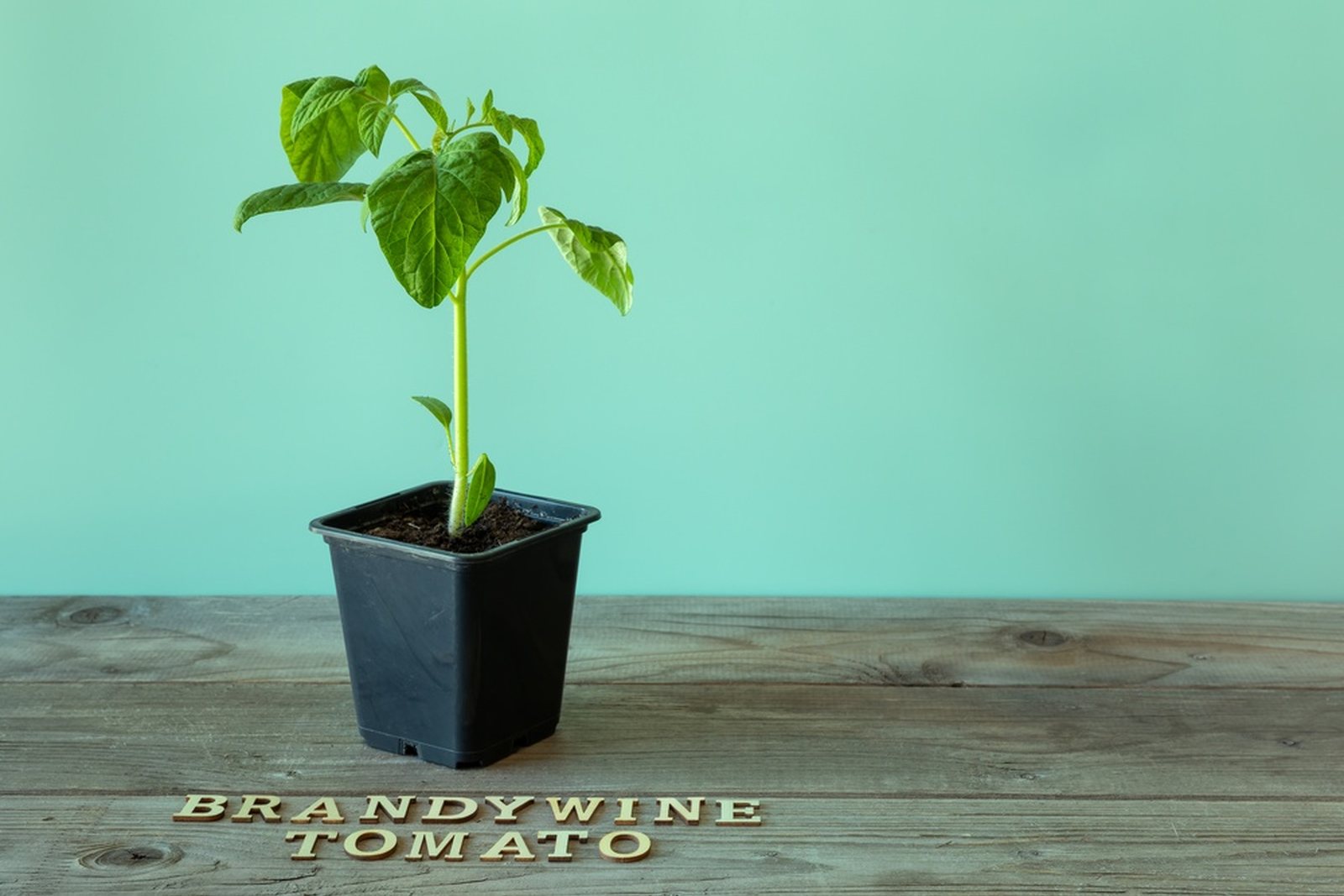
Give the vines space and support before they need it
Treat Brandywine as a vigorous indeterminate tomato unless the exact strain record says otherwise. Install a tall, strong cage, stake system, trellis, or Florida weave before the roots spread. The support must carry wet foliage, large fruit, and wind. Lightweight decorative cages commonly fail just as the first serious harvest develops.
Space plants for airflow and access. In humid gardens, crowding keeps leaves wet, hides disease, and makes it difficult to harvest soft beefsteaks without bruising them. The support should let you reach both sides of the plant, inspect lower stems, and add ties beneath heavy clusters.
- Anchor cages or posts deeply before transplanting.
- Leave enough room to walk and harvest around the plant.
- Use soft ties that allow stems to expand.
- Support fruiting branches before they crease.
- Keep labels visible after the canopy fills the row.
Build even growth with soil preparation, mulch, and steady water
Tomatoes need well-drained soil with organic matter and a pH in the generally suitable tomato range. Use a soil test rather than adding fertilizer by habit. Excess nitrogen can create a large green plant with delayed or reduced fruiting, while a weak root zone cannot support the water demand of large fruit.
Water deeply at the root zone and let the soil guide frequency. Apply mulch after the soil warms to reduce splash and moderate moisture swings. Large Brandywine fruit can crack when dry soil is followed by heavy rain or irrigation, especially near maturity. Mulch cannot stop every weather event, but it reduces the extremes that the gardener can control.
Do not chase every curled leaf with fertilizer. During heat or rapid growth, otherwise healthy tomato leaves may roll. Inspect new growth, insects, moisture, roots, and nearby chemical exposure before adding anything. A disciplined diagnosis protects both the plant and the field record.
Prune for access without stripping the protective canopy
Choose the number of leaders according to the support. A one- or two-leader system may suit stakes or strings, while a large cage can carry a fuller plant. Remove leaves touching the soil and damaged foliage that no longer contributes, but avoid automatic severe pruning in hot climates.
Brandywine fruit is large and can sunscald when exposed suddenly. Healthy leaves shade the fruit and power ripening. The goal is an open, supported canopy with visible stems and accessible clusters, not a bare framework. When disease pressure is high, remove affected leaves on a dry day and clean tools between plants.
Keep pruning consistent across a strain trial. One heavily pruned plant and one full cage are not a fair comparison of genetics. Record the system so yield, cracking, and sunscald can be interpreted later.
Expect fruit set to slow during severe heat
Large heirloom beefsteaks may pause fruit set when daytime heat and warm nights interfere with pollen function and flower retention. A plant can remain vigorous and continue blooming while few flowers become fruit. This is not necessarily a pollinator shortage. Tomatoes are self-fertile, though wind and vibration help release pollen.
Keep the root zone evenly moist, avoid excess nitrogen, preserve healthy foliage, and let the plant survive the unfavorable window. Temporary afternoon shade may help during extreme heat, but tomatoes still need strong light. When nights cool, healthy plants often resume setting fruit.
For the Southeast, use planting time as part of heat management. Set sturdy transplants after frost danger but early enough that the first flower clusters develop before the hottest nights. A later succession can be useful where the fall season is long, but calculate the time needed to establish, flower, set, and ripen before frost.
Manage disease as a system, not as a promise attached to the name
Brandywine is not a universal disease-resistance label. Rotate where space allows, mulch to reduce soil splash, water at the root zone, provide airflow, remove infected debris, and inspect lower leaves before symptoms reach the entire canopy. Confirm the problem before selecting a treatment.
Early blight, Septoria, bacterial diseases, wilt, root injury, herbicide exposure, and nutritional stress can overlap. Photograph the whole plant and both leaf surfaces, note recent weather, and contact Cooperative Extension or a plant disease clinic when symptoms spread rapidly or the cause remains uncertain.
A strain may perform better or worse in one garden without possessing formal resistance. Record first symptom date, severity, usable yield, and whether the plant continued producing. That evidence is more precise than calling a surviving plant resistant after one season.
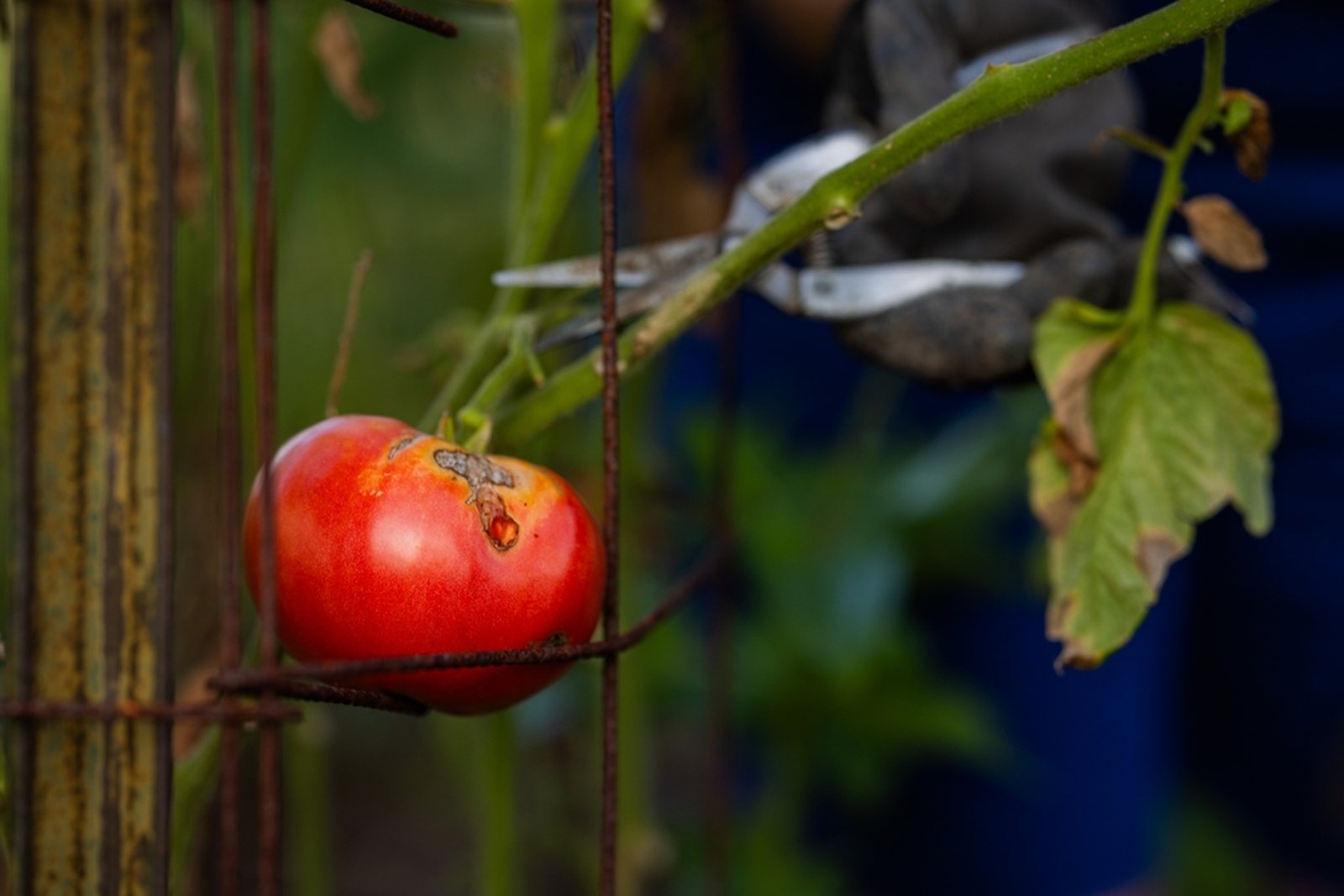
Judge Brandywine ripeness by the strain, not by one color chart
Pink Brandywine, Yellow Brandywine, and dark Brandywine fruit do not finish to the same color. Learn the expected mature background color and use a gentle feel test. A ripe beefsteak usually yields slightly to pressure and develops fuller aroma while remaining sound at the stem end. Do not wait for every shoulder to match the lower fruit.
Harvest at breaker or turning stage before a long rain, hurricane, frost, or severe cracking window. Tomatoes that have begun ripening can finish indoors at room temperature. Keep them out of direct sun and inspect daily. This protects the crop without requiring hard green fruit to develop full flavor.
Use clean hands or pruners and support the fruit while detaching it. Large fruit bruises easily. Sort cracked or damaged fruit for immediate use and keep only sound fruit for storage or seed processing.

Evaluate flavor beside yield, texture, and labor
Brandywine earned its reputation as a fresh slicer, but a fair evaluation includes the whole crop. Record fruit number, usable weight, core size, cracking, skin, texture, flavor, and the time spent supporting and harvesting. A magnificent first sandwich does not erase a plant that produced one sound fruit all season, and a modest yield may still be worth the space when quality is exceptional.
Taste more than one fruit and more than one harvest date. Serve at room temperature. Score sweetness, acidity, aroma, texture, skin, and aftertaste before discussing the name. Compare the Brandywine strain with another large slicer grown under the same conditions.
| Field and kitchen record | Measure |
|---|---|
| First ripe date | Days from transplant and calendar date |
| Usable yield | Weight after discarding damaged portions |
| Fruit quality | Cracking, core, catfacing, sunscald, firmness |
| Flavor | Sweetness, acidity, aroma, texture, finish |
| Labor | Support, pruning, disease removal, harvest handling |
| Decision | Grow again, trial again, or replace |
Save Brandywine seed with strain identity intact
Save seed only from open-pollinated plants that are healthy, typical, and clearly labeled. Tomatoes are primarily self-pollinating, but crossing can occur. Separate varieties when practical, bag flower clusters for stricter control, or grow enough plants that one unexpected cross does not silently redefine the line.
Select fully ripe, sound fruit from more than one representative plant when maintaining a population. Keep off-type plants out of the seed lot unless the goal is a separate selection project. Ferment the seed and gel briefly, wash clean, dry thoroughly in a thin layer, and store only when seed is completely dry.
The storage label should include full strain name, source, year, location, plant numbers, leaf type, fruit color, and any unusual weather or off-types. When sharing, pass the record with the seed. A famous name without the maintained details is not enough.
Keep documented records and popular history in separate columns
Brandywine has accumulated overlapping histories as the name moved through seed catalogs, exchanges, families, and later selections. Some accounts may describe one color or leaf form while being repeated for another. The responsible approach is to identify what can be documented for the exact line and label broader stories as reported rather than proven.
USDA GRIN, university variety records, dated catalogs, seed exchange listings, and the packet or accession received by the grower can help establish a modern record. They may not resolve every earlier family claim. Uncertainty is not a weakness when it is labeled honestly; it is the beginning of better stewardship.
The most useful contribution a home seedkeeper can make is a careful present-day record. Preserve the exact name, describe the plants, retain photographs, and share what happened without improving the story after the fact.
Use a one-season Brandywine plan
- Confirm the exact strain name and source.
- Sow six to eight weeks before the intended transplant date.
- Install heavy support before transplanting.
- Label every plant and record leaf type.
- Mulch after soil warms and water at the root zone.
- Preserve enough canopy for heat and sun protection.
- Record fruit set, first ripe date, cracking, disease, and usable yield.
- Taste several harvests at room temperature.
- Save seed from healthy typical plants and retain the strain record.
At season's end, write a verdict that another grower could understand. State the strain, number of plants, weather, support, first ripe date, usable yield, flavor, problems, and seed-saving decision. That turns Brandywine from a famous name into a repeatable field record.
When Brandywine earns its space
Brandywine is best treated as a flavor and stewardship crop with a known management cost. It may be worth growing when the garden can provide strong support, steady root-zone moisture, disease scouting, and enough season length for a later large-fruited tomato.
Pair it with an earlier or more disease-resilient slicer rather than making one Brandywine strain responsible for the entire fresh-tomato harvest.
| What you observe | Most useful next check | Action that follows the evidence |
|---|---|---|
| Flowers drop during hot weather | Check several clusters and compare the timing with day and night temperatures | Maintain even water and canopy. Expect set to resume when the weather returns to a workable range. |
| Fruit cracks before full table ripeness | Review dry-to-wet cycles and the weather forecast | Mulch, water evenly, and harvest at breaker or turning stage before major rain. |
| The plant does not match the expected leaf type | Verify the packet, tray label, and nearby plants | Treat the plant as a possible off-type or labeling error. Do not save it into the line without investigation. |
| A fruit looks like Brandywine | Check the complete seed record | Do not assign cultivar identity from fruit shape and color alone. |
Brandywine is a family of named strains, not one interchangeable tomato
This Brandywine tomato guide treats every named strain as its own record. It compares Brandywine strains, Pink Brandywine tomato traits, potato leaf Brandywine lines, Brandywine ripeness, growing Brandywine tomatoes, and the records needed to save Brandywine tomato seed without losing identity.
A serious Brandywine tomato guide must begin with the full name. Pink Brandywine, Red Brandywine, Yellow Brandywine, Brandywine Black, and later selections sold with the Brandywine name can differ in leaf type, fruit color, shape, maturity, productivity, and genetic background. A photograph of a large pink beefsteak does not prove Pink Brandywine identity. A potato-leaf seedling is a useful clue for some strains, but it is not a universal rule for everything carrying the name.
Record the packet exactly as received:
- Full cultivar or strain name
- Supplier and seed lot
- Leaf type described by the source
- Expected fruit color and form
- Open-pollinated or hybrid status
- Any documented provenance and the source of that claim
Keep the verified seed record separate from the popular story. Historical narratives can be meaningful, but they should not be used to erase strain differences or to claim a lineage that the seed lot has not documented.
Start Brandywine seedlings for a long season without producing tired transplants
Brandywine strains are often treated as late, slow, or difficult. Some of that reputation comes from starting too early, holding plants in small cells, or transplanting into cold soil. Count backward about five to eight weeks from a realistic outdoor planting date. Under strong light and warm media, the shorter end often produces a sturdier transplant than ten or twelve weeks of indoor holding.
| Stage | Target | Warning sign | Correction |
|---|---|---|---|
| Germination | Warm, evenly moist media, commonly 70 to 85 F | Slow uneven emergence in cool saturated mix | Measure media temperature and improve drainage |
| Emergence | Immediate bright overhead light | Long pale stems leaning toward a window | Move light closer and provide a consistent day length |
| First true leaves | Steady growth without dark brittle foliage | Fast soft growth from excessive warmth or nitrogen | Reduce overfeeding and improve light and air movement |
| Pot-up | Before roots become a dense circling mass | Repeated wilting in a cell despite normal watering | Move to a larger container and inspect roots |
| Hardening | Gradual exposure over 7 to 10 days | Bleached leaves after one full-sun day | Return to shade and restart exposure more gradually |
Do not judge the strain from an overgrown transplant. Root restriction and early stress can delay establishment enough to erase the advantage of starting early.
Give Brandywine support for mature fruit weight, not seedling height
Most Brandywine strains grown as indeterminate beefsteaks need tall, rigid support. A light conical cage may look adequate in May and collapse when wet vines carry several large fruit in July. Install support at transplanting so roots are not damaged later.
- Use 6 to 7 foot stakes driven about a foot into firm soil, or a heavy structural cage.
- Space supported plants roughly 24 to 36 inches apart, widening in humid or poorly ventilated sites.
- Anchor end posts and container supports independently of loose potting mix.
- Use soft ties that allow stem expansion and add ties before the fruit cluster becomes heavy.
- Inspect after wind and rain, when saturated foliage dramatically increases load.
A one-stem system is not automatically superior. It can make tying and harvest easier, but aggressive pruning reduces leaf area and can expose large fruit to sunscald. In hot, humid gardens, keep enough canopy to shade fruit while removing only the shoots necessary to fit the support and maintain access.
Understand why Brandywine flowers do not always become fruit
Large-fruited heirloom tomatoes are often blamed for poor pollination when the real problem is temperature. Tomatoes generally set best under moderate days and nights. Extended days above about 90 F and nights above about 70 F can reduce pollen release and fertilization. Humidity can make pollen sticky, while dry hot wind can desiccate floral tissue. Hand pollination cannot correct pollen that is not viable.
Track fruit set by flower cluster:
- Mark three newly opened clusters on each plant.
- Count open flowers.
- Return 10 to 14 days later and count enlarging fruit.
- Calculate fruit set: enlarging fruit divided by open flowers x 100.
- Record the maximum day and night temperatures during that interval.
This separates a plant that is not flowering from a plant that flowers but fails to set. It also reveals whether fruit set resumes when temperatures moderate. In eastern North Carolina, preserving the plant through the hottest period may be more important than forcing flowers during a bad pollen window.
Manage catfacing, cracking, sunscald, and uneven shoulders
| Problem | Pattern | Likely contributors | Management |
|---|---|---|---|
| Catfacing | Deep scars, folds, and malformed blossom end | Cool conditions during early flower development; large-fruited genetics | Delay planting into severe cold, avoid stressing transplants, and judge later clusters separately |
| Radial cracking | Splits running from stem end downward | Rapid water uptake after dry conditions, ripe fruit, variety susceptibility | Mulch, water consistently, and harvest mature fruit before major rain |
| Concentric cracking | Rings around the shoulder | Moisture swings, heat, fruit exposure, genetics | Preserve canopy and stabilize root-zone moisture |
| Sunscald | White, tan, or papery tissue on the exposed side | Leaf loss or aggressive pruning during hot sun | Protect healthy foliage and use temporary shade during extreme heat |
| Green or hard shoulders | Shoulder remains firm or differently colored as lower fruit ripens | Variety traits, heat, and uneven ripening | Judge the lower background color and feel; do not wait for every shoulder to match a red standard |
Record marketable or usable fruit separately from gross fruit. A plant with several giant tomatoes may produce less usable food than a smaller-fruited variety with fewer cracks and less trimming.
Judge Brandywine ripeness and flavor with a strain-specific record
Pink Brandywine should not be judged by the same exterior color as Red, Yellow, or Black strains. Build a ripeness card for the exact strain. Photograph the fruit at breaker, turning, table ripe, and overripe stages. Note lower background color, shoulder color, surface gloss, gentle firmness, aroma, and how easily the fruit releases.
For flavor evaluation, use several fruit from multiple plants. Taste at room temperature. Score sweetness, acidity, aroma, flesh texture, skin, seed gel, and aftertaste. A famous name can bias a tasting, so use random sample numbers when comparing Brandywine with another beefsteak.
| Record | Why it matters |
|---|---|
| Fruit weight distribution | One record fruit does not describe average kitchen performance |
| Usable weight after trimming | Large cores, scars, and cracks change the food yield |
| Days from breaker to table ripe | Improves harvest timing before rain or wildlife pressure |
| Blind flavor score | Reduces the influence of the Brandywine reputation |
| Cooked score | Fresh and cooked flavor may rank differently |
Grow Brandywine as part of a disease-management system
Do not treat heirloom status as a resistance claim. Many Brandywine strains carry no modern disease-code package. That does not mean failure is inevitable, but it makes prevention and diagnosis more important.
- Start with clean seed and healthy transplants.
- Rotate away from tomatoes, peppers, potatoes, and eggplants where space allows.
- Mulch to reduce soil splash.
- Water the root zone rather than repeatedly wetting foliage.
- Give the canopy enough spacing and support to dry after rain.
- Scout lower leaves at least weekly and photograph the first symptoms.
- Remove diseased tissue only when plants are dry, and do not remove so much foliage that fruit is exposed.
- Sanitize reusable stakes and cages between seasons.
Target-like lesions beginning on older lower leaves point toward early blight, but bacterial spot, Septoria leaf spot, nutrient stress, herbicide injury, and other disorders can look similar from a distance. A correct diagnosis is more valuable than a generic "blight" treatment.
Save Brandywine seed without losing strain identity
Seed saving begins before harvest. Choose healthy plants that match the expected leaf type, fruit color, form, and growth habit. Mark candidate plants early rather than selecting the largest fruit at the end of the season. Organic Seed Alliance recommends maintaining tomato varieties with a population of roughly 10 to 20 plants when genetic maintenance is the goal. Home gardeners preserving a rare strain should save from more than one typical plant whenever possible.
Some heirloom and potato-leaf tomatoes may present a greater crossing risk than modern round types because floral structure can expose the stigma. Use greater isolation or bag blossoms when purity matters. Record which flowers were protected.
- Harvest fully ripe, disease-free fruit from marked plants.
- Extract seed and gel into a labeled container.
- Ferment about 2 to 3 days at roughly 70 to 85 F, stopping when gel has broken down.
- Add water, stir, allow heavy seed to settle, and pour off floating pulp and light seed.
- Repeat until clean, then rinse through a strainer.
- Dry in a thin layer on a screen or nonabsorbent surface with airflow. Avoid paper towel, which can trap seed.
- Label with full strain, parent plants, harvest date, generation or lot, and field notes.
Grow out a portion next season and compare it with the strain description. Seed stewardship is complete only when the next generation is observed.
A Brandywine field record worth keeping
| Date or metric | Record | Decision it supports |
|---|---|---|
| Emergence and transplant dates | Seed lot, cell size, pot-up, hardening notes | Whether the start was too early or too late |
| First flower and first fruit set | Cluster dates and heat conditions | Whether poor yield began with establishment or pollination |
| First breaker and ripe fruit | Photographs and days from transplant | Local maturity and harvest planning |
| Weekly usable and cull weight | Cracks, catfacing, disease, wildlife, sunscald | True productivity |
| Flavor tests | Coded scores on two or more dates | Whether reputation matched the actual crop |
| Seed parents | Plant numbers, typical traits, isolation | Integrity of the saved lot |
Brandywine earns space when the household values its eating quality enough to support the plant, tolerate some irregular fruit, and keep accurate strain records. When the goal is maximum uniform yield with minimal labor, another tomato may be a better tool. That is a garden-fit decision, not a judgment on the variety's history.
Detailed Brandywine tomato questions
Why is my Brandywine tomato plant not setting fruit?
Check day and night temperature first. Warm nights and hot days can reduce viable pollen. Then check root-zone moisture, excessive nitrogen, light, and whether flowers are physically damaged. Mark clusters and compare set after the weather changes.
Are all Brandywine tomatoes potato-leaf?
No. Several famous Brandywine strains are associated with potato-leaf foliage, but everything sold with the Brandywine name should not be forced into one description. Follow the expected traits for the exact strain and seed source.
How tall do Brandywine tomatoes grow?
Most are managed as vigorous indeterminate plants and can exceed six feet with a long season. Mature size changes with strain and climate. Use a 6-to-7-foot stake, tall cage, or trellis installed at transplanting rather than planning from seedling height.
Why are Brandywine tomatoes misshapen?
Large-fruited beefsteaks can show catfacing, especially when flower development occurs in cool weather. Irregular shape can also be a normal cultivar trait. Track whether the defect begins on early clusters and whether later fruit improve.
When is a pink Brandywine ripe?
Look for the mature pink background color, slight give, aroma, and developed interior. Shoulders may not become deep red. Build a ripeness card for the exact strain and harvest before major rain when fruit has reached breaker or later.
Should Brandywine tomatoes be pruned?
Prune to fit the support, not to follow a universal rule. A one- or two-leader stake system needs sucker removal. A heavy cage can carry more stems. Preserve enough foliage to shade large fruit in hot weather.
Can I save Brandywine tomato seeds?
Yes from a documented open-pollinated strain. Save from several healthy typical plants, manage crossing, ferment and clean seed correctly, and keep the full strain name. Verify the next generation in a grow-out.
Frequently asked questions
Is Brandywine one tomato variety?
The name covers several maintained strains and color forms. Record the full name, leaf type, fruit color, source, and field observations.
Are all Brandywine tomatoes potato leaf?
No. Several well-known strains are potato leaf, while other named lines may be regular leaf. Use the exact strain record rather than a universal rule.
Why is my Brandywine not setting fruit?
Warm nights, severe daytime heat, water stress, excess nitrogen, root injury, or poor pollen release can interrupt fruit set even while the plant continues flowering.
How much support does Brandywine need?
Plan for a large indeterminate plant and heavy beefsteak fruit. Use a tall anchored cage, strong stakes, a trellis, or another system designed for peak load.
When is Pink Brandywine ripe?
Look for full pink background color, a slight yield to gentle pressure, and developed aroma. Harvest earlier before severe rain or cracking risk.
Can I save seed from Brandywine?
Yes when the line is open-pollinated. Select healthy typical plants, maintain labels, manage crossing risk, ferment and dry seed, and keep the full strain record.