A tomato can look perfect at sunset and split after a night of rain.
That feels sudden because the crack becomes visible all at once. The pressure was building through the fruit's water balance and growth rate. When roots take up abundant water after a dry period, the inside expands faster than the skin can stretch.
Large heirloom slicers are often especially prone, but cracking is not a verdict on flavor or seed quality. It is the result of variety, ripeness, weather, irrigation, canopy, and harvest timing meeting at the fruit skin.
A crack is often the record of a water swing: the fruit expanded faster than its skin could follow.
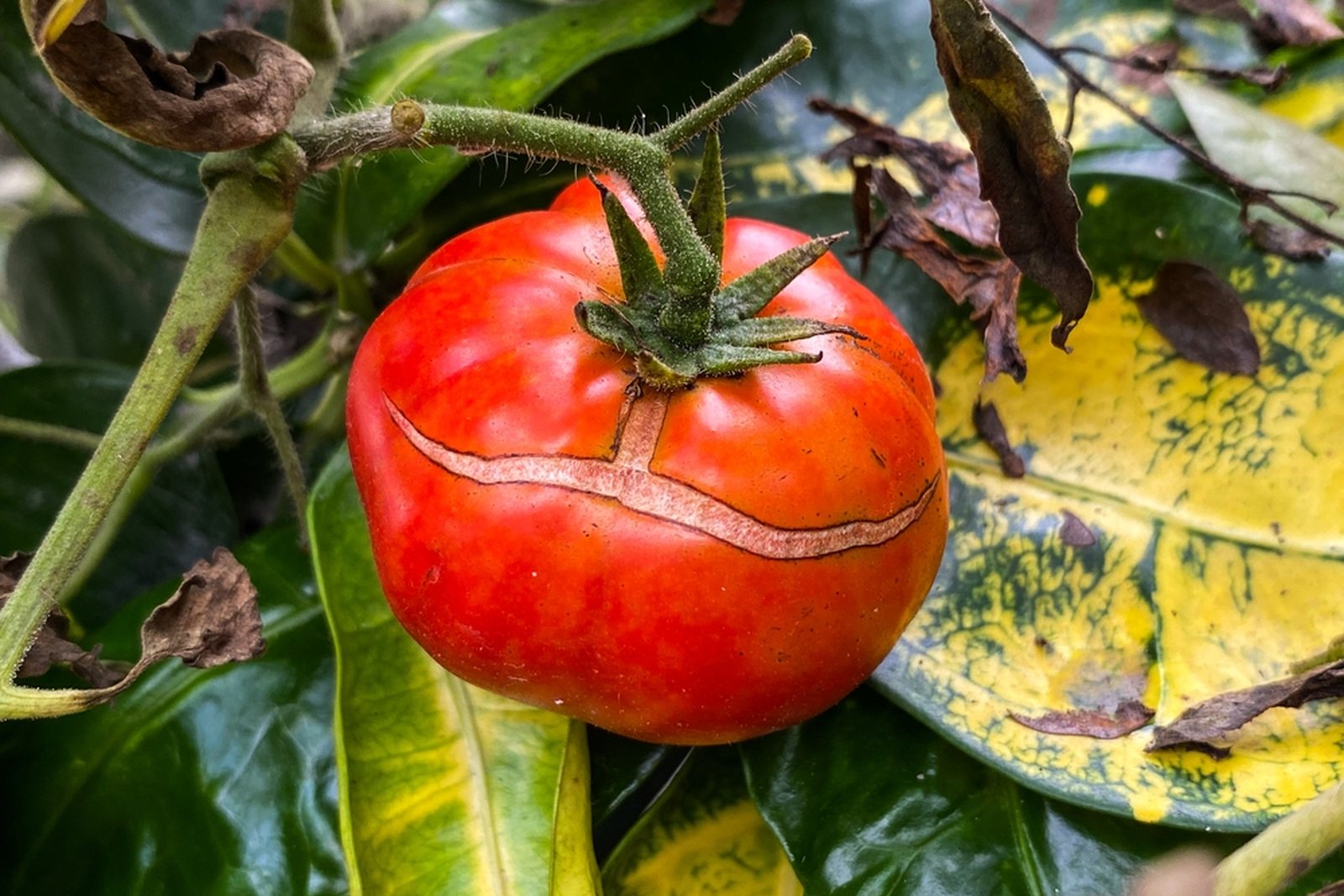
Cracking prevention specifications
Cracking cannot be eliminated in every variety and weather pattern, but the risk can be reduced by managing the root zone and harvest timing.
| Field measure | Practical starting point | How to use it |
|---|---|---|
| Radial crack | Runs from the stem end toward the blossom end | Often opens deeply and provides an entry point for insects and decay. |
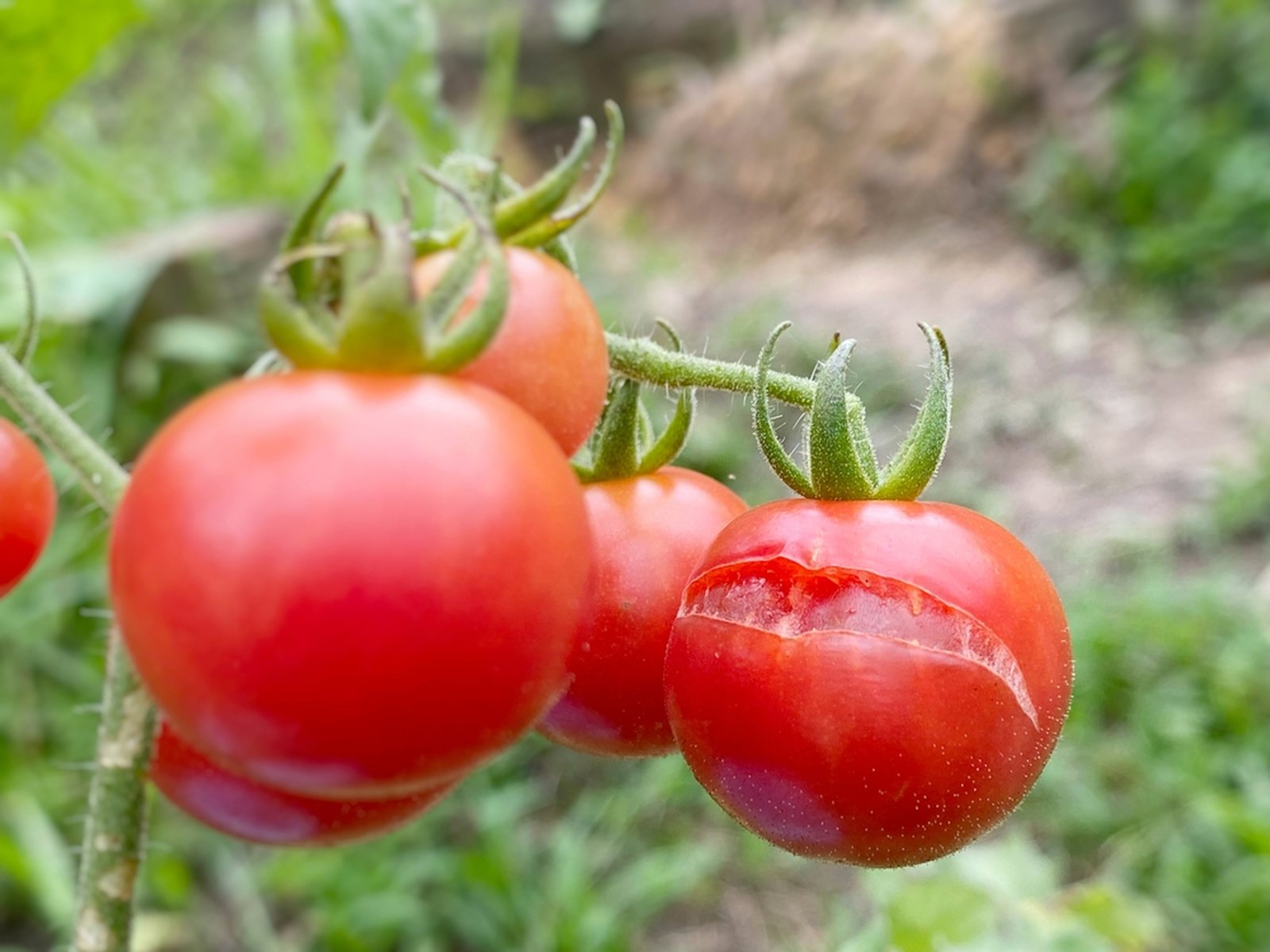
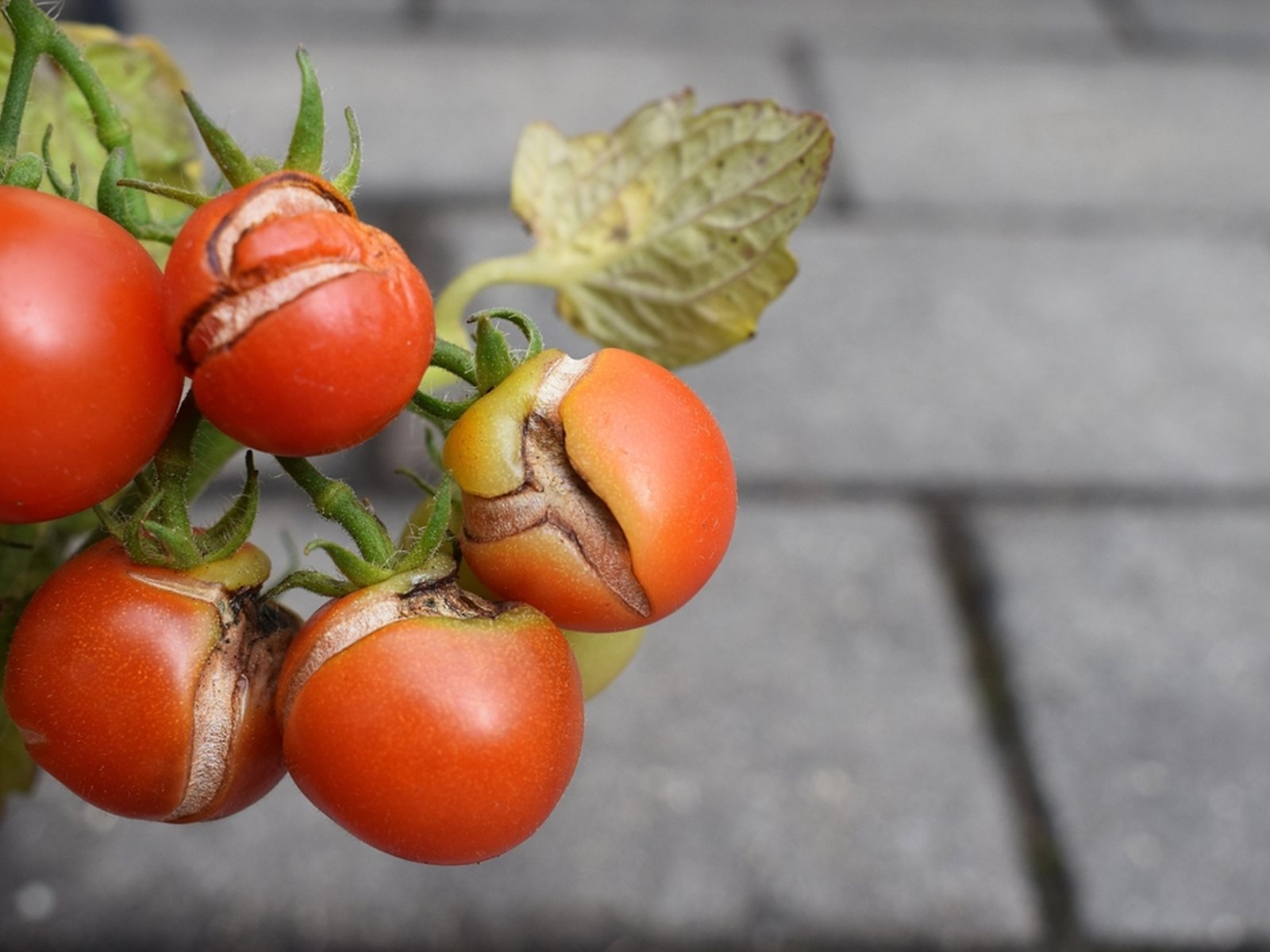
| Concentric crack | Forms rings around the shoulder | May remain shallow and corky or deepen after another wet-dry cycle. |
| In-ground water | Roughly 1 to 1.5 inches per week as a starting point | Split into deep regular irrigation as soil and weather require. Avoid letting the root zone become extremely dry before soaking it. |
| Mulch | About 2 to 3 inches | Moderates soil moisture and temperature. Keep mulch away from direct stem contact. |
| Container check | Daily during hot fruiting weather, sometimes more often | A small pot can move from wet to severely dry in one day, creating the exact swing that promotes splitting. |
| Pre-storm harvest | Pick mature breaker and turning fruit before major rain | Mature fruit can finish indoors and may avoid the sudden water uptake that opens the skin. |
| Canopy | Keep enough healthy foliage to shade fruit | Over-pruning can increase sunscald and fruit temperature while reducing the plant's buffering capacity. |
| Cracked-fruit use | Use promptly only when the crack is fresh, clean, and free of decay | Discard fruit with mold, sour odor, soft rot, insect contamination, or old dirty cracks. |
Cracking happens when the inside of the fruit expands faster than the skin can stretch. A dry root zone followed by heavy rain or a large irrigation is a classic trigger, but cultivar genetics, fruit size, heat, humidity, crop load, maturity, and skin characteristics also matter.
A crack that appears after rain does not prove that the rain alone caused it. The plant may have been water-stressed for days, the fruit may have been overmature, or the variety may be especially susceptible. Record the irrigation and weather sequence rather than only the event when the split became visible.
Harvest timing is part of prevention. When a crack-prone variety has reached breaker stage and a storm is forecast, picking is often the most effective action available. Leaving mature fruit on the vine through the storm in pursuit of the final color can turn a usable crop into split fruit overnight.
What to record after a cracking event
- Variety and fruit size.
- Radial, concentric, fine skin checking, or a combination.
- Fruit stage at the time of cracking.
- Rainfall and irrigation during the previous seven days.
- Container volume or soil type and mulch depth.
- Whether fruit was shaded, exposed, or overripe.
- The percentage of the harvest that remained usable.
Important: Cracking is a physiological disorder. Fungicide does not repair split skin, and extra fertilizer does not solve an uneven water pattern.
Radial cracks and concentric cracks
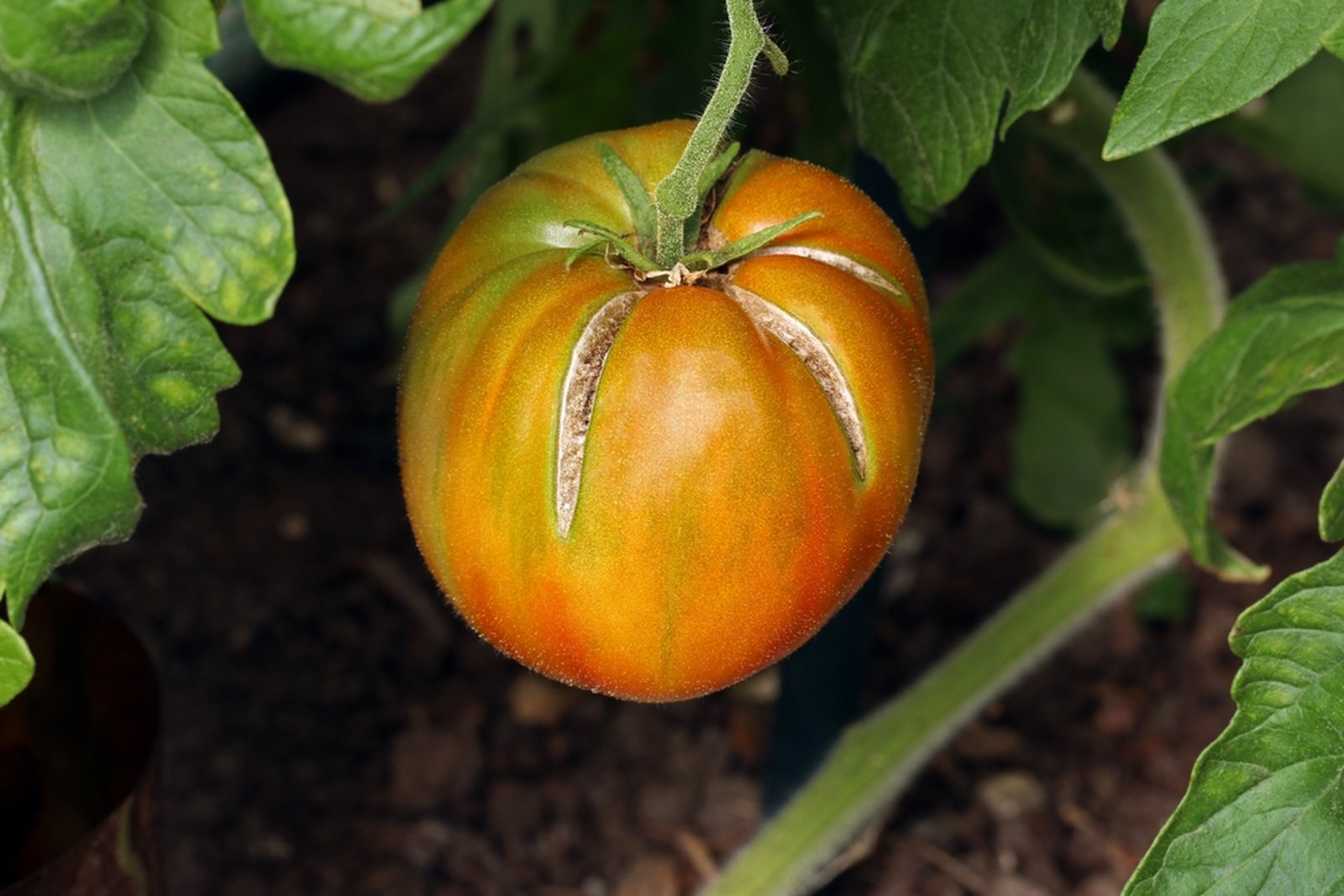
Radial cracks run from the stem end down the side of the fruit. They can open deeply and are vulnerable to insects and rot.
Concentric cracks form rings around the stem end. They may remain corky and superficial or deepen after repeated expansion.
Both are growth cracks, but varieties differ in which pattern they develop and how severe it becomes.
The dry-then-wet cycle
University of Minnesota Extension identifies fluctuating water as a major cause: drought or dry soil followed by rain or irrigation triggers rapid fruit expansion.
Container tomatoes are vulnerable because the pot may dry rapidly, then receive a large watering. Raised beds with light soil can behave similarly.
Water deeply on a regular schedule and adjust for rain rather than alternating neglect and flooding.
Heat, humidity, and rapid fruit growth
Warm temperatures and high humidity can accelerate growth. A rapidly enlarging fruit may crack even where the gardener waters consistently, especially if a storm adds sudden water.
Weather cannot be controlled, but mulch, irrigation scheduling, harvest timing, and variety choice reduce the extremes reaching the fruit.
Why some tomatoes crack more than others
Large, thin-skinned, richly flavored heirlooms may crack more readily than firm commercial varieties selected for shipping. Cherry tomatoes can split after rain because the small fruit fills quickly.
Choose crack-resistant or tolerant varieties when cracking is a chronic problem. Resistance is relative, not absolute.
The same qualities that make a tomato tender and juicy can reduce its ability to sit through a storm without damage.
Mulch and root-zone stability
Apply mulch after the soil warms. Organic mulch reduces evaporation, buffers soil temperature, and slows the swing between dry and saturated conditions.
Do not pile mulch against the stem. Maintain enough depth to shade the soil while allowing water to reach the root zone.
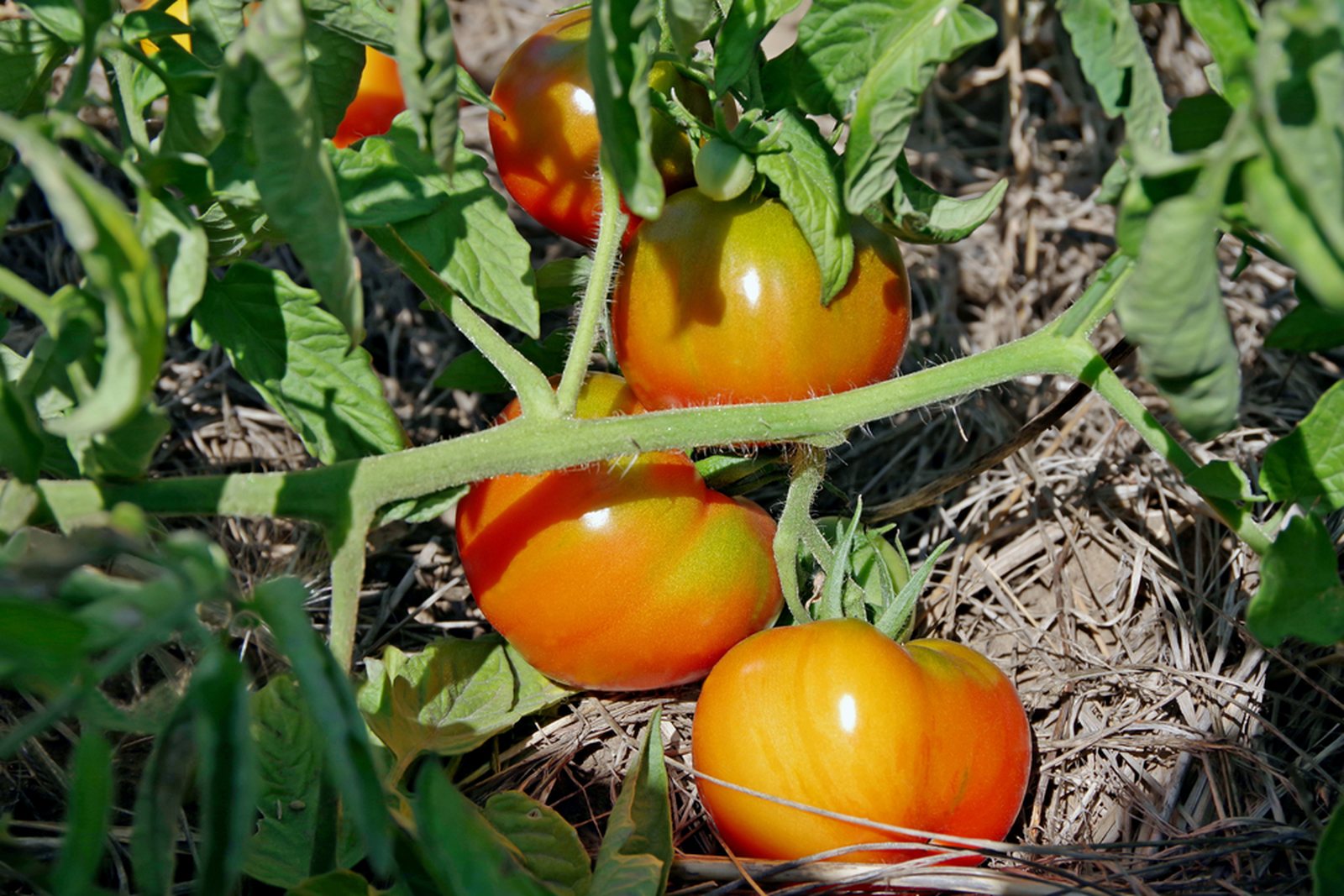
Harvest before the storm when fruit is ready
Tomatoes that have begun changing color can finish ripening indoors. If heavy rain is forecast and crack-prone fruit is at breaker stage, harvesting can prevent losses.
Handle cracked fruit promptly. Small dry cracks may be trimmed from sound fruit for immediate use. Deep, wet, moldy, insect-filled, or foul-smelling cracks are not suitable for storage or preservation.
Pruning, leaf cover, and fruit exposure
Pruning does not directly prevent all cracks. Excessive pruning can increase sunscald and stress the plant. Maintain enough leaf area to shade fruit and support steady growth.
Remove diseased lower leaves and manage airflow without stripping the canopy.
Preventing cracks in containers
- Use a container large enough for the mature plant.
- Use a quality mix that drains but holds moisture.
- Mulch the surface.
- Check moisture daily during heat.
- Water thoroughly rather than giving tiny sips.
- Do not let the pot sit dry for days and then flood it.
- Consider self-watering systems only if they maintain aeration.
Do not confuse cracks with other fruit disorders
- Catfacing creates corky scars and malformed lobes, often linked to cool conditions during flower development.
- Blossom-end rot forms a dark sunken area at the blossom end.
- Sunscald creates pale or white exposed patches.
- Insect feeding makes holes or scars rather than growth cracks.
- Disease lesions may be dark, expanding, or rotten.
The location and shape of the damage matter.
Radial, concentric, and fine skin cracks
| Crack type | Appearance | Common context |
|---|---|---|
| Radial | Runs from the stem end down the side | Rapid water uptake, susceptible fruit, heavy rain |
| Concentric | Rings around the shoulder | Moisture swings and growth around the stem end |
| Fine skin checking | Network of shallow surface lines | Weathering, humidity, cultivar skin traits |
| Growth split near blossom end | Irregular rupture as fruit enlarges | Severe growth fluctuation or fruit damage |
Cracks can occur together. Once the skin opens, harvest promptly because insects and decay organisms can enter the wound.
A watering plan that reduces cracking risk
The goal is not constant wet soil. The goal is to avoid extreme dry-to-saturated swings.
- Water deeply enough to wet the active root zone.
- Check moisture below the mulch rather than using a fixed daily schedule.
- Increase frequency during fruit enlargement and heat.
- Use two to three inches of organic mulch once the soil has warmed.
- Repair clogged drip emitters quickly.
- Avoid a heavy “catch-up” watering after prolonged drought when rain is already forecast.
You cannot control a major storm, but a well-watered, mulched plant often experiences a smaller physiological shock than one that was severely dry beforehand.
What to do before and after heavy rain
If ripe or nearly ripe tomatoes are on the plant before a major rain, harvest them and finish ripening indoors. This is especially useful for crack-prone heirlooms and cherry tomatoes.
After rain:
- Inspect fruit within a day.
- Harvest newly cracked tomatoes.
- Use sound cracked fruit quickly after trimming damaged tissue.
- Discard fruit with sour odor, deep decay, insect infestation, or extensive mold.
- Do not wash fruit until use unless immediate cleaning is necessary; surface moisture shortens storage life.
Keep fruit at room temperature for best flavor unless it is fully ripe and needs short-term refrigeration to prevent loss.
Variety, fruit load, and leaf cover
Large-fruited and thin-skinned tomatoes may crack more readily than firm processing types, but no variety is immune under severe fluctuation.
Healthy leaf cover moderates fruit temperature and reduces sunscald. Excessive pruning can expose shoulders to heat and can change the plant’s water balance. Support the plant without stripping away the canopy that protects the crop.
When cracking repeats every year, compare varieties side by side and record rainfall, harvest stage, and crack type. That record is more useful than assuming all heirlooms behave alike.
Use the weather forecast as part of harvest management
Cracking is often a timing problem as much as a cultivar problem. When mature fruit is hanging after a dry stretch and a soaking rain is forecast, I harvest fruit that has reached the breaker or turning stage. It can finish ripening indoors while avoiding the sudden water uptake that splits fruit on the vine.
Radial cracks run outward from the stem end and can deepen into the flesh. Concentric cracks form rings around the shoulder. Both can worsen as fruit becomes mature, especially on large or thin-skinned varieties. Shallow healed cracks may be cosmetic, while fresh deep cracks invite insects and decay. Harvest and use damaged fruit promptly when it is otherwise sound, and discard fruit with mold, sour odor, or spreading rot.
| Situation | Best immediate response | Longer-term adjustment |
|---|---|---|
| Dry soil followed by heavy rain | Pick mature coloring fruit before the storm | Mulch and irrigate before severe drought develops |
| Frequent shallow watering | Water deeply enough to wet the root zone | Use a consistent schedule guided by soil moisture |
| Overgrown canopy suddenly pruned | Protect newly exposed fruit | Prune gradually and preserve leaf cover |
| Variety cracks every season | Harvest earlier at breaker stage | Trial a more crack-resistant cultivar beside it |
| Cracks at stem end with insects | Harvest and sort immediately | Improve timing and sanitation around fallen fruit |
Do not try to hold the soil at one exact moisture number. The practical goal is to avoid extremes. A deep root zone, organic mulch, adequate container volume, and irrigation that responds before plants wilt create a much steadier water supply. Record the varieties that crack, the stage at which they crack, and the weather that preceded it. That record is more useful than a blanket rule that every split tomato was overwatered.
Use the forecast as part of harvest management
Cracking prevention is strongest before the storm. Once the fruit is split, the priorities become sanitation, rapid harvest, and deciding whether the fruit is still sound enough for immediate kitchen use.
| What you observe | Most useful next check | Action that follows the evidence |
|---|---|---|
| Dry soil and heavy rain are forecast | Check mature fruit at breaker stage or beyond | Harvest vulnerable fruit and irrigate future dry periods more consistently. |
| Cracks form only on one variety | Compare maturity, skin, fruit size, and crop load | Keep the variety if flavor justifies the loss, or replace it with a more crack-resistant line. |
| Container fruit cracks after every deep watering | Measure how dry the mix becomes between irrigations | Increase pot volume, mulch, and water earlier before severe dry-down. |
| A crack is old, dirty, soft, or insect-filled | Check for odor, mold, leakage, and internal breakdown | Discard the fruit rather than trimming around uncertain decay. |
Why tomatoes crack and split
This guide explains why tomatoes crack and split by connecting fruit growth with water and ripeness. It distinguishes radial tomato cracks from concentric tomato cracks, explains tomatoes cracking after rain, and shows how to prevent tomato cracking, water tomatoes evenly, and harvest tomatoes before rain.
Tomato cracking occurs when internal fruit expansion exceeds the skin's ability to stretch. The most familiar trigger is a dry period followed by rapid water uptake from rain or irrigation. Ripeness, temperature, fruit exposure, cultivar genetics, and growth rate all change the risk.
Cracking is not the same as blossom-end rot, catfacing, insect feeding, bacterial fruit spots, or sunscald. Identify the pattern before changing irrigation.
| Damage | Pattern | Primary clue |
|---|---|---|
| Radial cracking | Splits run from stem end down the side | Rapid expansion near ripe stage |
| Concentric cracking | Rings form around the shoulder | Moisture swings, exposure, and variety susceptibility |
| Fine skin checking | Many shallow surface lines | Humidity, surface moisture, and skin traits |
| Catfacing | Deep folds and scars at blossom end | Flower-development injury, often cool weather |
| Growth split after rain | Fresh open crack on otherwise ripe fruit | Recent dry-to-wet transition |
| Insect or bird damage | Puncture, peck, or feeding wound | Irregular wound not following crack pattern |
Radial cracks vs. concentric cracks
Radial cracks begin near the stem and extend downward. They can open deeply, exposing flesh to insects, mold, and bacteria. Concentric cracks circle the shoulder. They may remain shallow and corky or deepen after rain.
Record crack type separately. A variety may resist one pattern better than another. Photograph the fruit before trimming and weigh the usable portion.
The dry-then-wet cycle is the most actionable risk
When soil becomes very dry, fruit growth slows. A heavy rain or large irrigation then restores water rapidly, and near-ripe fruit can expand faster than the skin. Preventing severe dry-down is more effective than trying to stop rain.
- Check soil several inches below mulch.
- Water deeply enough to reach the active root zone.
- Use mulch to slow evaporation after soil warms.
- Avoid repeated severe wilting.
- Do not follow drought with one extreme flooding irrigation.
- Harvest mature fruit before major rain.
Bed-volume calculation: One inch of water over 100 square feet equals about 62 gallons. Measure the wetted bed area and convert irrigation time to gallons. This is more useful than saying the hose ran "a while."
Use breaker-stage harvest to reduce cracking losses
A physiologically mature tomato can finish ripening indoors after breaker stage. Before a forecast of heavy rain, pick breaker, turning, and nearly ripe fruit. Hold them at room temperature away from direct sunlight.
Do not strip immature green fruit solely because rain is possible. Learn the mature-green and breaker cues for each variety. The goal is to move vulnerable mature fruit out of the weather without sacrificing normal ripening.
Variety matters, but test crack resistance under the same weather
Skin thickness, fruit size, shoulder shape, growth rate, and genetics influence cracking. Cherry tomatoes can crack heavily after rain even though they are small. Large beefsteaks can develop radial and concentric cracks. A catalog claim should be verified locally.
| Trial metric | Formula | Why it matters |
|---|---|---|
| Cracked fruit percentage by count | Cracked fruit divided by total fruit x 100 | Useful for uniform small fruit |
| Crack loss by weight | Unusable cracked weight divided by total harvested weight x 100 | Better for mixed sizes and beefsteaks |
| Storm loss | Cracked weight in 72 hours after rain | Links damage with the event |
| Usable recovery | Sound trimmed weight from cracked fruit | Shows kitchen value rather than cosmetic loss alone |
| Harvest-stage effect | Crack loss from vine-ripe vs. breaker harvest | Tests whether earlier picking helps |
Canopy, sun, and pruning change fruit-skin stress
Leaves moderate fruit temperature and direct sun. Disease or aggressive pruning can expose shoulders, increasing sunscald and uneven heating. Keep enough healthy foliage around clusters. Remove only leaves that are diseased, ground-touching, or necessary for the support system.
A dense wet canopy can increase disease, so the answer is not no pruning. Support the plant, clear the base, and maintain a protective upper canopy.
Prevent cracked tomatoes in containers
- Use enough container volume to buffer water demand.
- Check moisture twice daily during hot windy weather.
- Water until the full root ball is wet and drainage occurs.
- Do not allow the center to become hydrophobic and dry.
- Mulch the surface.
- Shade or insulate dark pot walls.
- Use a self-watering reservoir only when overflow and aeration are correct.
Frequent tiny sips create a shallow wet layer and a dry core. A thorough irrigation followed by controlled dry-down is more stable.
Can you eat a cracked tomato?
A fresh shallow crack on otherwise sound fruit can often be trimmed and used immediately. Reject fruit with mold, sour odor, leaking decay, insect infestation, or deep contaminated tissue. Wash hands, tools, and cutting surfaces.
Do not use damaged, diseased, or frost-killed tomatoes for shelf-stable home canning. National Center for Home Food Preservation guidance calls for sound disease-free fruit and a tested acidified process. When damage is questionable, discard or compost according to local disease guidance.
A before-and-after storm plan
| Timing | Action |
|---|---|
| Three days before | Check soil moisture and begin correcting severe dryness gradually |
| One day before | Harvest breaker, turning, and nearly ripe fruit |
| During rain | Ensure containers and beds drain; do not add irrigation |
| First dry period | Inspect fruit, ties, roots, and leaf lesions |
| Next 72 hours | Harvest newly cracked fruit promptly and record loss |
| Next week | Return to steady irrigation rather than withholding water as punishment |
Withholding water after rain can create the next dry-wet cycle. Restore consistency.
Measure usable yield, not photographic perfection
Some shallow shoulder cracks are cosmetic. A garden may still produce excellent kitchen yield. Separate grades:
- Sound fruit
- Shallow crack, usable whole
- Cracked, usable after trimming
- Unusable from decay or contamination
Weigh each category. Compare varieties after the same storms. That produces a useful answer to "which tomatoes do not crack" in your garden without pretending any tomato is crack-proof.
Design irrigation to reduce cracking risk
Measure emitter output. Place shallow containers under several emitters for 30 minutes, measure the volume, and compare uniformity. A row can look watered while end plants receive less.
| System problem | Evidence | Correction |
|---|---|---|
| Clogged emitter | One plant repeatedly wilts and soil remains dry | Flush and replace emitter |
| Short watering | Top inch wet, deeper root zone dry | Increase duration or flow |
| Uneven pressure | Emitter output differs along row | Use pressure regulation and shorter runs |
| Runoff on slope | Water leaves bed before soaking | Use shorter cycles with soak intervals |
| Container channeling | Water exits sides while center stays dry | Rewet slowly in passes |
Record irrigation in gallons or emitter-hours. "Every other day" does not describe the water delivered.
Cracking risk changes as fruit develops
Small green fruit generally tolerate expansion better than nearly ripe fruit. Risk rises as skin matures and internal water pressure changes. A storm during peak ripening deserves a different harvest response than the same storm after transplanting.
- Early fruit development: maintain steady water to prevent blossom-end rot and growth interruptions.
- Full-size green: begin close weather monitoring.
- Breaker and turning: harvest before major rain when practical.
- Table ripe: pick promptly; do not leave fruit through repeated wet-dry cycles.
Distinguish a growth crack from a disease or feeding wound
| Feature | Growth crack | Disease or pest concern |
|---|---|---|
| Location | Often stem shoulder, radial or concentric | May occur anywhere or follow feeding |
| Edge | Clean fresh split that may cork over | Discolored, soft, sunken, or spreading |
| Odor | Normal | Sour or fermented odor suggests decay |
| Interior | Firm surrounding flesh | Watery, moldy, tunneled, or necrotic tissue |
| Timing | After rain or irrigation change | Can progress independent of water event |
Decide whether cracking is cosmetic or a crop failure
A shallow corked shoulder crack may not reduce kitchen value. A deep wet split can make fruit unusable. Grade the harvest and calculate:
- Percentage sold or used whole
- Percentage used after trimming
- Percentage processed immediately
- Percentage discarded
- Labor minutes spent trimming cracks
A variety with 15 percent cosmetic cracking and high flavor may remain worthwhile. A variety with 30 percent deep decay after every storm may not fit the site.
Tomato cracking prevention checklist
- Choose varieties with local crack-resistance evidence.
- Prepare well-drained soil with adequate organic matter.
- Install measured root-zone irrigation.
- Mulch after soil warms.
- Avoid severe dry-down.
- Preserve healthy canopy.
- Scout weather and harvest mature fruit before heavy rain.
- Pick ripe fruit frequently.
- Track cracks by type and weight.
- Adjust plant mix next season from the record.
Detailed questions about cracked and split tomatoes
Why do tomatoes split after rain?
Roots absorb water rapidly after dry soil, and the fruit interior expands faster than the skin. Near-ripe fruit is especially vulnerable. Consistent irrigation, mulch, and pre-storm harvest reduce loss.
What is the difference between radial and concentric cracking?
Radial cracks run downward from the stem end. Concentric cracks form rings around the shoulder. Record them separately because varieties and weather can affect each pattern differently.
Can cracked tomatoes be eaten?
A fresh shallow crack on otherwise clean firm fruit can often be trimmed and used immediately. Reject fruit with mold, insects, sour odor, leaking, or deep decay.
Should watering stop when tomatoes begin to ripen?
No. Withholding water creates drought stress and can set up the next cracking event. Continue steady root-zone moisture and harvest mature fruit before heavy rain.
Does mulch prevent tomato cracking?
Mulch reduces evaporation and helps stabilize moisture, but it cannot prevent every crack. Irrigation, variety, fruit stage, canopy, and storm intensity still matter.
Which tomato varieties do not crack?
No tomato is crack-proof. Compare local crack loss after the same rain events. Cherry, beefsteak, and dark tomatoes can all split. Use cracked weight percentage rather than reputation.
Why do container tomatoes crack?
Small root zones cycle from dry to wet quickly. Use larger containers, thorough irrigation, mulch, and frequent moisture checks during heat.
Can cracked tomatoes be canned?
Use only sound disease-free fruit in tested canning recipes. Do not can fruit with decay, mold, insect contamination, or damage from dead or frost-killed vines. Acidify as the recipe directs.
Does pruning cause cracking?
Pruning can expose fruit to heat and sun and can change water demand. Severe leaf removal may increase sunscald and shoulder stress. Prune only for support, access, or confirmed disease.
When should tomatoes be picked before a storm?
Harvest fruit that has reached breaker stage or later. These tomatoes can finish indoors. Leave clearly immature green fruit unless wind, flood, or frost creates a greater risk.
Run a tomato cracking trial after real rain events
Plant at least three plants per entry and alternate positions. Use the same irrigation and support. Before each forecast rain, record soil moisture and harvest stage. Within 24, 48, and 72 hours after rain, weigh sound, radial-cracked, concentric-cracked, checked, and decayed fruit.
| Trial field | Reason |
|---|---|
| Rainfall amount | Defines event intensity |
| Days since irrigation | Identifies dry-to-wet transition |
| Fruit stage | Near-ripe fruit is more vulnerable |
| Canopy rating | Leaf loss changes exposure |
| Crack type and weight | Separates cosmetic from unusable damage |
| Pre-storm harvest weight | Measures benefit of breaker harvest |
Repeat across at least three storms. One rainfall pattern does not define a variety.
Cracking case studies
Case 1: cherry tomatoes split every morning
The bed receives overhead irrigation at night and ripe fruit remains on clusters. Move irrigation to the root zone in morning, harvest daily, and compare crack loss.
Case 2: beefsteaks crack after a tropical storm
The soil was dry before several inches of rain. Maintain moisture before future storms and harvest breaker fruit ahead of forecast rain.
Case 3: container tomatoes crack despite daily watering
Daily watering may wet only the surface. Check the center of the root ball, emitter output, and pot volume. Rewet hydrophobic mix slowly and use a larger container next season.
Case 4: only exposed shoulders crack
Disease or pruning removed canopy. Preserve healthy leaves and use temporary shade while fruit matures.
Process vulnerable fruit before it becomes waste
Check the row after rain and harvest newly cracked fruit before insects and microbes enter. Sort immediately. Sound shallow-cracked fruit can be eaten or cooked after trimming. Deeply split fruit with contamination should be discarded. Do not hold damaged fruit in a warm pile.
Freezing, roasting, or immediate sauce preparation can recover clean fruit that will not store. Shelf-stable canning still requires sound fruit and a tested acidified recipe.
Monitor soil moisture before cracks appear
Use a soil probe, tensiometer, or consistent hand-feel method at several locations. Check under emitters and between them. In containers, weigh the pot or use a marked wooden skewer inserted into the root zone. Record the condition before and after irrigation.
Do not rely on the top half inch. Mulch can look dry over moist soil, and a wet surface can hide a dry root core. The goal is a stable active root zone.
Calculate bed irrigation in gallons
One inch over one square foot is about 0.623 gallon. Multiply bed square feet by 0.623 for one inch. A 4-by-20-foot bed is 80 square feet and receives about 50 gallons per inch. If drip wets only part of the bed, measure actual emitter output and root-zone coverage.
Subtract effective rainfall and adjust for soil. Sandy soil may need smaller, more frequent applications. Clay soil may require slower cycles to avoid runoff and saturation.
Select for crack resistance without narrowing the seed line too far
When maintaining an open-pollinated variety, save from several typical plants that show lower cracking under equal exposure. Do not save from one uncracked fruit hidden in shade while rejecting the rest of the population. Record plant position, rainfall, and total fruit load. Repeat across seasons before describing a local selection as improved.
Use four quality grades after rain
| Grade | Condition | Use |
|---|---|---|
| A | Sound, uncracked | Fresh or storage |
| B | Shallow dry corked crack | Fresh after inspection |
| C | Fresh deep crack, clean firm tissue | Trim and cook immediately |
| Reject | Mold, insects, leaking, sour odor, or decay | Discard |
Cracking diagnosis in one field walk
Start with the forecast and irrigation history, then examine crack direction, fruit stage, canopy exposure, and root-zone moisture. Compare several plants and cultivars. Harvest mature damaged fruit, grade it, and photograph the pattern before trimming. Mark the event in the field record so the next storm can be compared rather than remembered vaguely.
The prevention goal is not flawless skin on every tomato. It is a stable root zone, timely harvest, and the highest possible amount of clean usable fruit.
Frequently asked questions
Can cracked tomatoes still be eaten?
Superficial clean cracks can be trimmed and the fruit used promptly. Discard fruit with mold, rot, insect contamination, off odors, or deep wet damage.
Should cracked tomatoes be canned?
Use only sound high-quality fruit and follow tested preservation guidance. Deeply cracked or damaged fruit is not appropriate for canning.
Does calcium prevent cracking?
Cracking is mainly a growth and water-balance problem, not the same disorder as blossom-end rot. Do not apply calcium without a soil-test reason.
Why do cherry tomatoes split after rain?
They can take up water quickly as they ripen. Harvesting ripe fruit before storms and maintaining even moisture helps.
Can I stop rain cracking completely?
No. Variety and weather still matter, but irrigation, mulch, harvest timing, and protected culture can reduce it.
Do green tomatoes crack?
Yes, especially during rapid growth, though cracking often becomes most obvious near ripening.
Will a cracked tomato heal?
The plant may form corky scar tissue, but an open crack does not return to intact skin.
Are heirloom tomatoes more likely to crack?
Many large thin-skinned heirlooms are susceptible, but heirloom is not a universal crack rating. Compare the variety description.
Editorial note: Food-safety decisions depend on crack depth, contamination, and intended preservation method. Use tested food-preservation guidance.