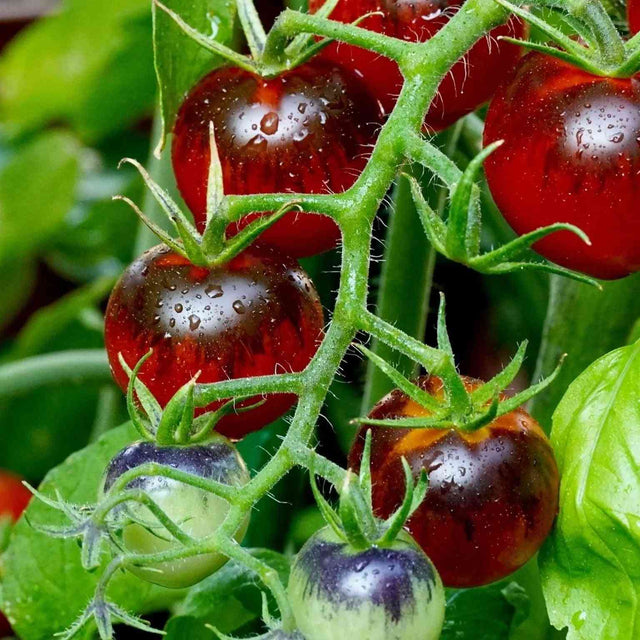
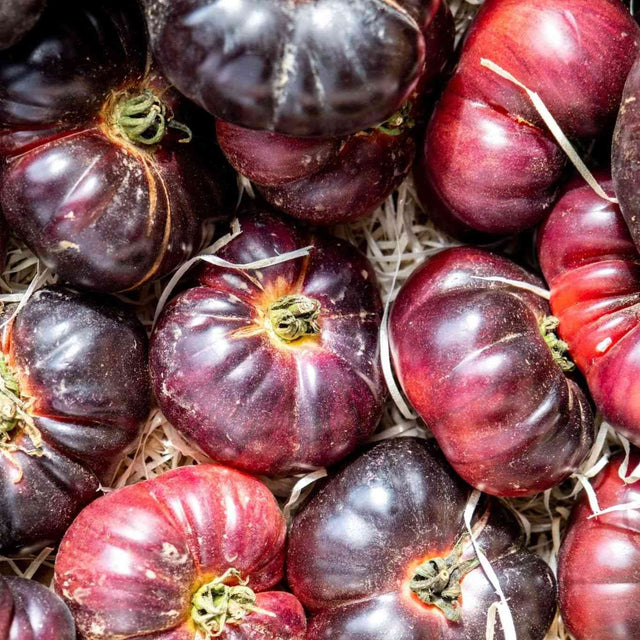
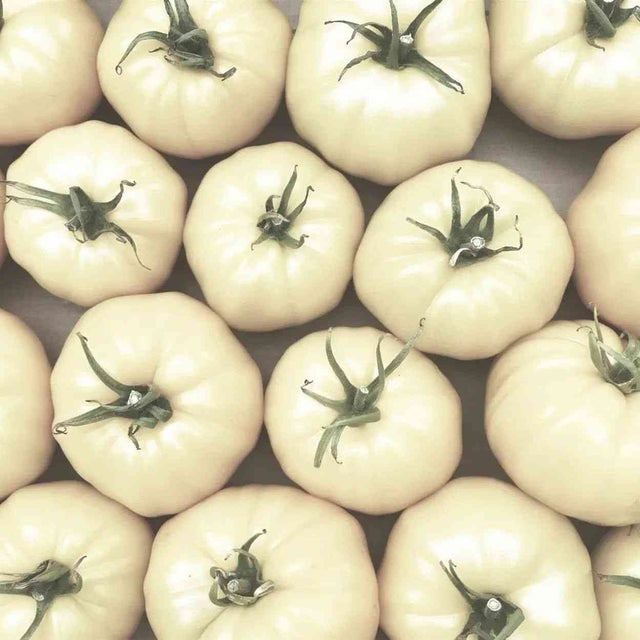
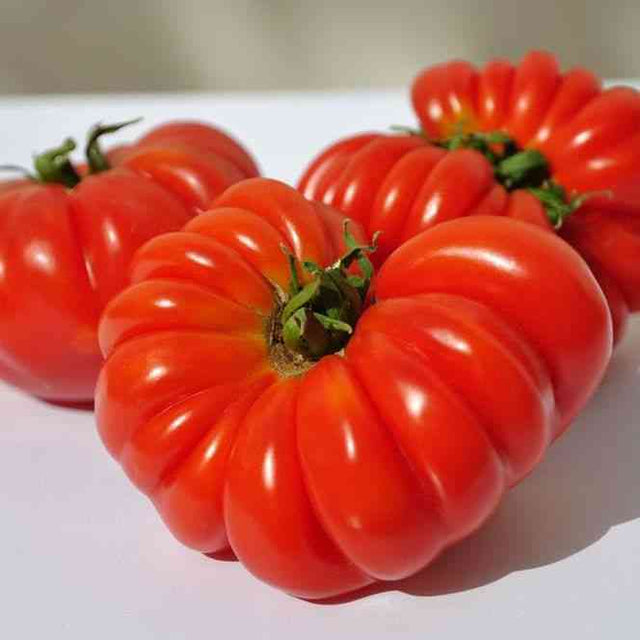
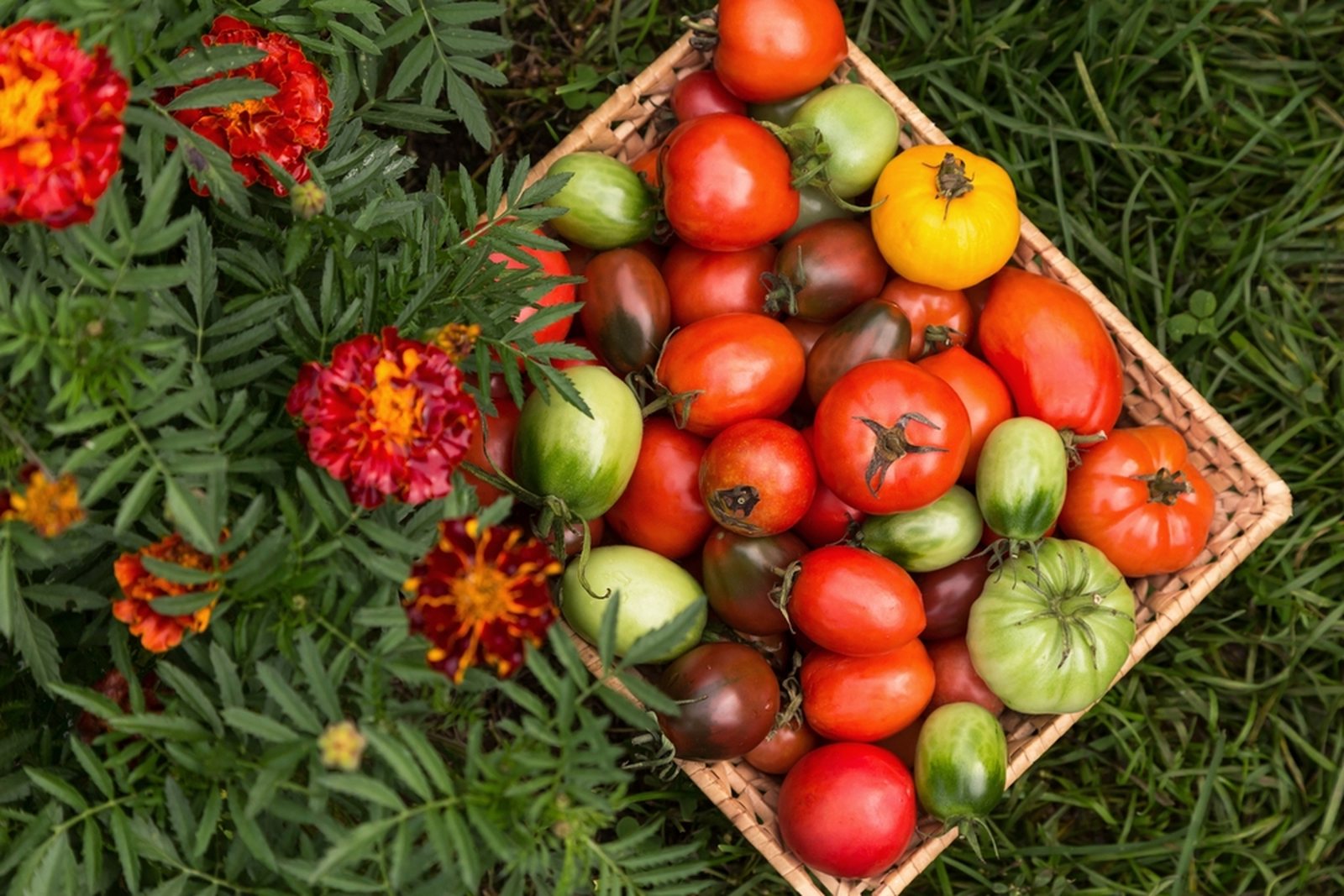
The question is not whether a tomato has turned red. The question is whether that exact variety has completed the color, texture, aroma, and internal development needed for the way you plan to use it. A Green Zebra can be ripe while still green. A Black Krim may hold green shoulders. A yellow beefsteak can become soft and aromatic without ever approaching red.
I use more than one cue because any single cue can mislead. Color is affected by genetics, temperature, sun exposure, and where the fruit sits in the canopy. Softness changes with fruit type and skin. Aroma may be subtle on a firm paste tomato. Weather can also change the correct harvest moment, especially when a nearly mature fruit faces heavy rain, cracking, wildlife, or frost.
A good harvest record describes the stage, not just the date. Write whether the fruit was breaker, turning, nearly full color, or table ripe, then note how many days it took to finish and how it tasted. That record teaches the ripeness language of each variety better than a universal color chart.
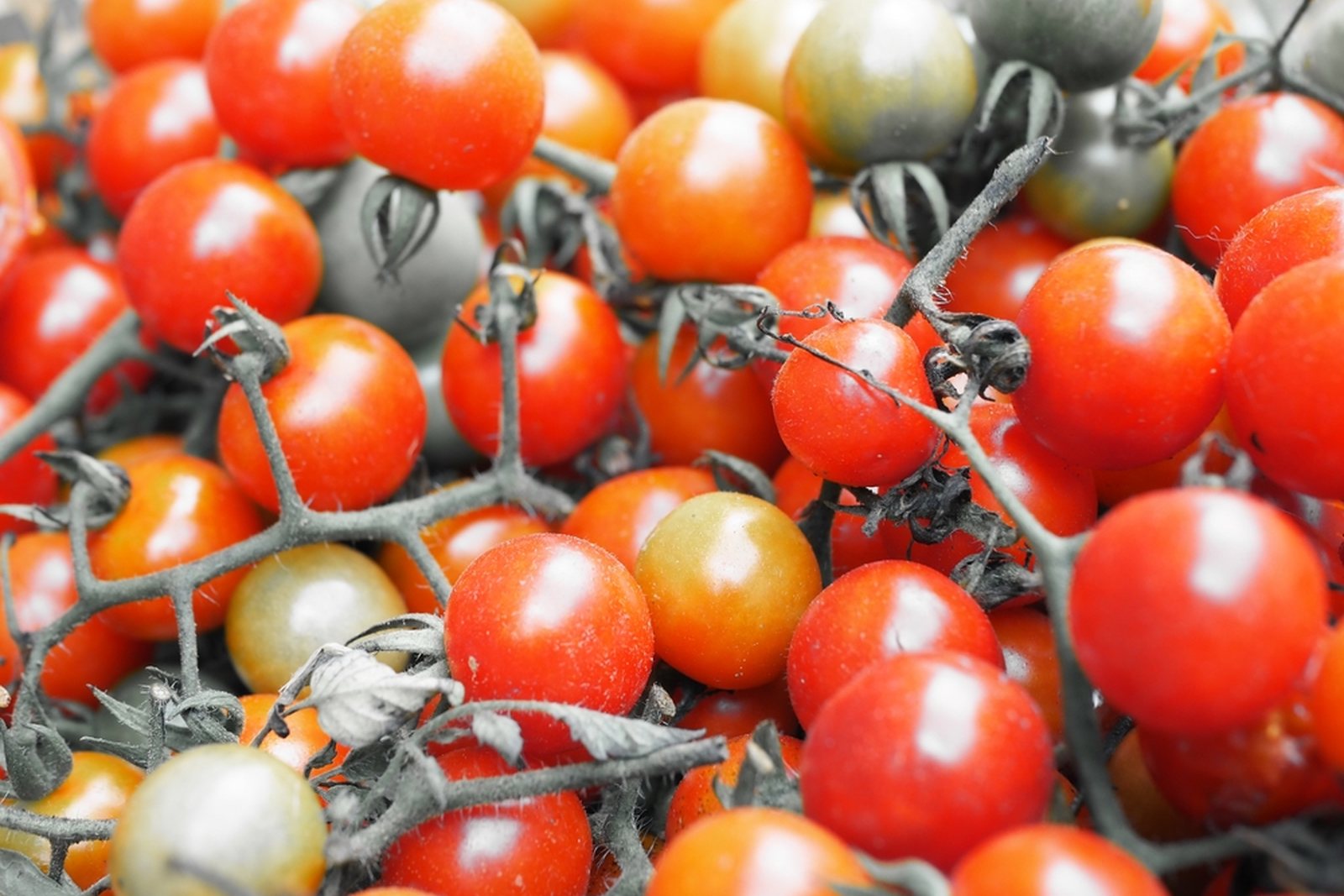
Ripeness stages and how to use them
The familiar color percentages below come from red-tomato grading language. Use them as a stage model, then substitute the mature color of the named cultivar for red, pink, yellow, green, or dark fruit.
| Field measure | Practical starting point | How to use it |
|---|---|---|
| Mature green | Full-sized fruit with mature internal seed and gel but no visible color break | Only physiologically mature fruit can finish normally off the vine. Immature green fruit often shrivels or develops poor texture. |
| Breaker | First definite color change, usually 10 percent or less of the surface | Useful for harvest before storms, frost, cracking, wildlife, or transport. |
| Turning | More than 10 percent but not more than about 30 percent colored | The fruit is well advanced and usually finishes reliably indoors. |
| Pink or intermediate color | About 30 to 60 percent colored | Handle gently. Large soft-fruited heirlooms may already be close to their best eating window. |
| Light red or near-full color | About 60 to 90 percent colored | Good for near-term eating. Crack-prone fruit should not be left through a major rain simply to gain the final color. |
| Full color | More than about 90 percent of the cultivar's mature color | Use feel and aroma too. Some dark tomatoes retain green shoulders, and green-when-ripe fruit may never show red. |
| Indoor finishing | Single layer, room temperature, out of direct sun | Direct sun heats and softens fruit unevenly. Check daily and remove damaged fruit. |
| Seed-saving fruit | Fully ripe, sound, and true to type | Choose from a healthy labeled plant. Do not use cracked, fermented, or diseased fruit for a maintenance lot. |
Color is the first cue, not the only cue. Gently press the side or blossom end rather than squeezing the shoulder. Smell near the stem. Compare the fruit with another of the same named variety if possible. Softness standards differ between firm paste tomatoes, thin-skinned cherries, and large beefsteaks.
Harvesting at breaker stage does not mean picking immature fruit. Mature breaker fruit has already begun the ripening process and can finish indoors. This can prevent losses from rain cracking, birds, mammals, insects, sunscald, and an approaching frost.
Do not ripen tomatoes in a sunny window. The light is unnecessary and the heat can create uneven softening. Keep fruit in a single layer at room temperature with airflow. Refrigerate fully ripe fruit only when necessary to slow spoilage, then let it return toward room temperature before eating.
Make a ripeness card for unfamiliar varieties
- Photograph mature green, breaker, turning, and table-ripe fruit from the same line.
- Record the lower fruit color and shoulder color separately.
- Describe feel with consistent words: hard, firm, slight give, soft, or collapsing.
- Note aroma, cracking, and eating quality at each stage.
- Write the harvest stage that worked best before rain and for kitchen use.
Important: Deep purple or green shoulders alone do not prove that a dark tomato is ripe. Use background color, feel, aroma, and the variety record together.
Learn the difference between mature green, breaker, turning, and table ripe
A tomato can be full size and still physiologically immature. Mature green fruit has completed enough internal development to ripen off the plant, while an immature green fruit may shrivel, color unevenly, or never develop normal flavor. The breaker stage begins when the first visible color change appears from the mature green background. Turning fruit shows more developed color, and table-ripe fruit has reached the eating stage preferred for that variety.
The stage names are useful because harvest does not always occur at full color. A breaker tomato can finish indoors, which is valuable before storms, frost, cracking, or transport. Fruit allowed to mature on a healthy plant in good weather may remain until a later stage. The decision should protect both quality and the likelihood that the fruit reaches the kitchen.
| Stage | What you may see | Typical use |
|---|---|---|
| Immature green | Hard, undeveloped surface and interior | Leave on the plant when conditions allow |
| Mature green | Full size with subtle background change | May ripen indoors if harvested carefully |
| Breaker | First distinct color break | Useful before rain, frost, wildlife, or transport |
| Turning | More of the surface developing mature color | Good balance of protection and near-term use |
| Table ripe | Expected mature color, slight give, developed aroma | Fresh eating or immediate processing |
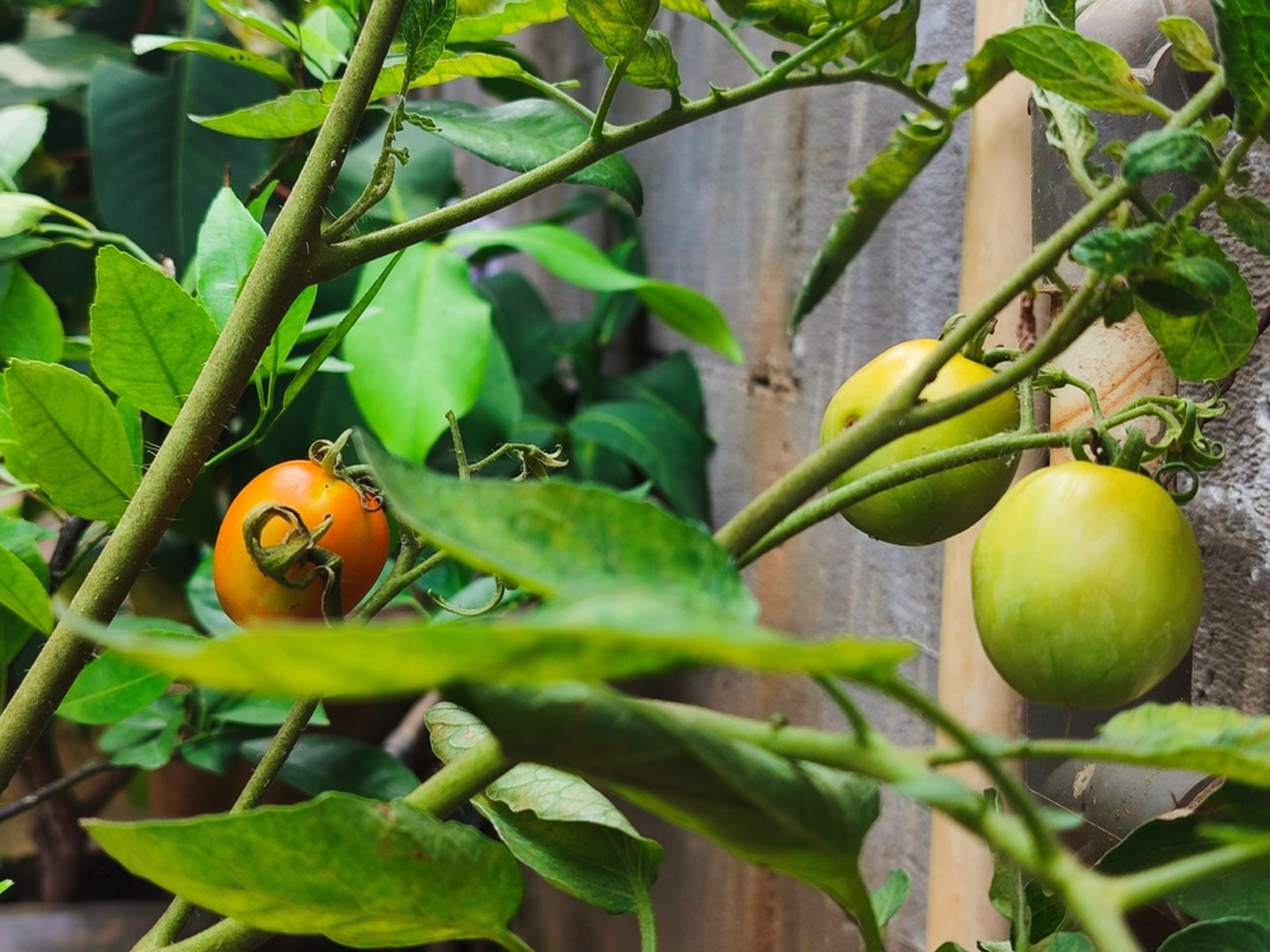
Use the variety's mature background color, not a red standard
Red and pink tomatoes are familiar, but even they differ. A pink tomato may have clear skin over red-toned flesh, while a red tomato often carries yellow skin. Yellow and orange tomatoes develop richer versions of their own background color. White or cream tomatoes may become ivory or pale yellow. Bicolors can show blushes, streaks, or marbling that increase with maturity.
Green-when-ripe tomatoes require attention to the background color. Many shift from a hard cool green toward a softer green with amber or yellow undertones. Dark tomatoes may deepen to brick, mahogany, purple-brown, or dusky red while shoulders remain green. The exact pattern depends on the cultivar and conditions.
Photograph one correctly ripe fruit beside the plant label each season. That image becomes a practical standard for later harvests and helps prevent workers from leaving ripe non-red fruit on the vine until it softens too far.
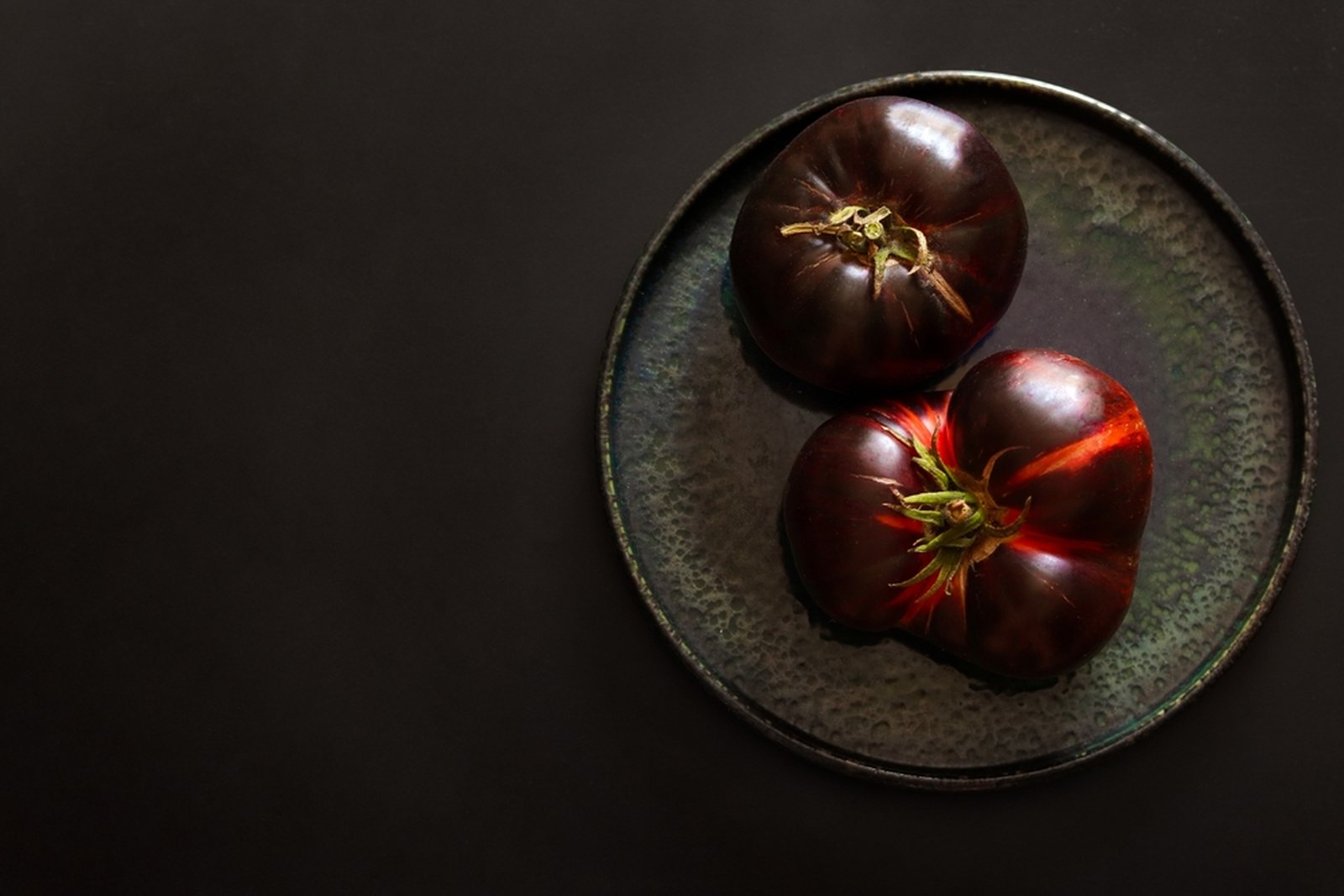
Use gentle feel without bruising the fruit
A ripe tomato usually gives slightly under gentle pressure, but the amount depends on fruit type. A soft-skinned beefsteak may feel ready sooner than a firm paste tomato. Cherry tomatoes can become fully colored while still resilient, then split or detach if left too long. Press with the flat of a finger or cradle the fruit rather than squeezing one spot.
Compare fruit on the same plant. A hard fruit with dull undeveloped color is less mature than one that has a fuller color and a slight elastic give. Excessive softness, leaking, wrinkling, or a sour odor indicates deterioration rather than ideal ripeness.
Heat can soften fruit quickly, and rain can swell it before the flavor is fully developed. Feel should confirm the other cues, not replace them.
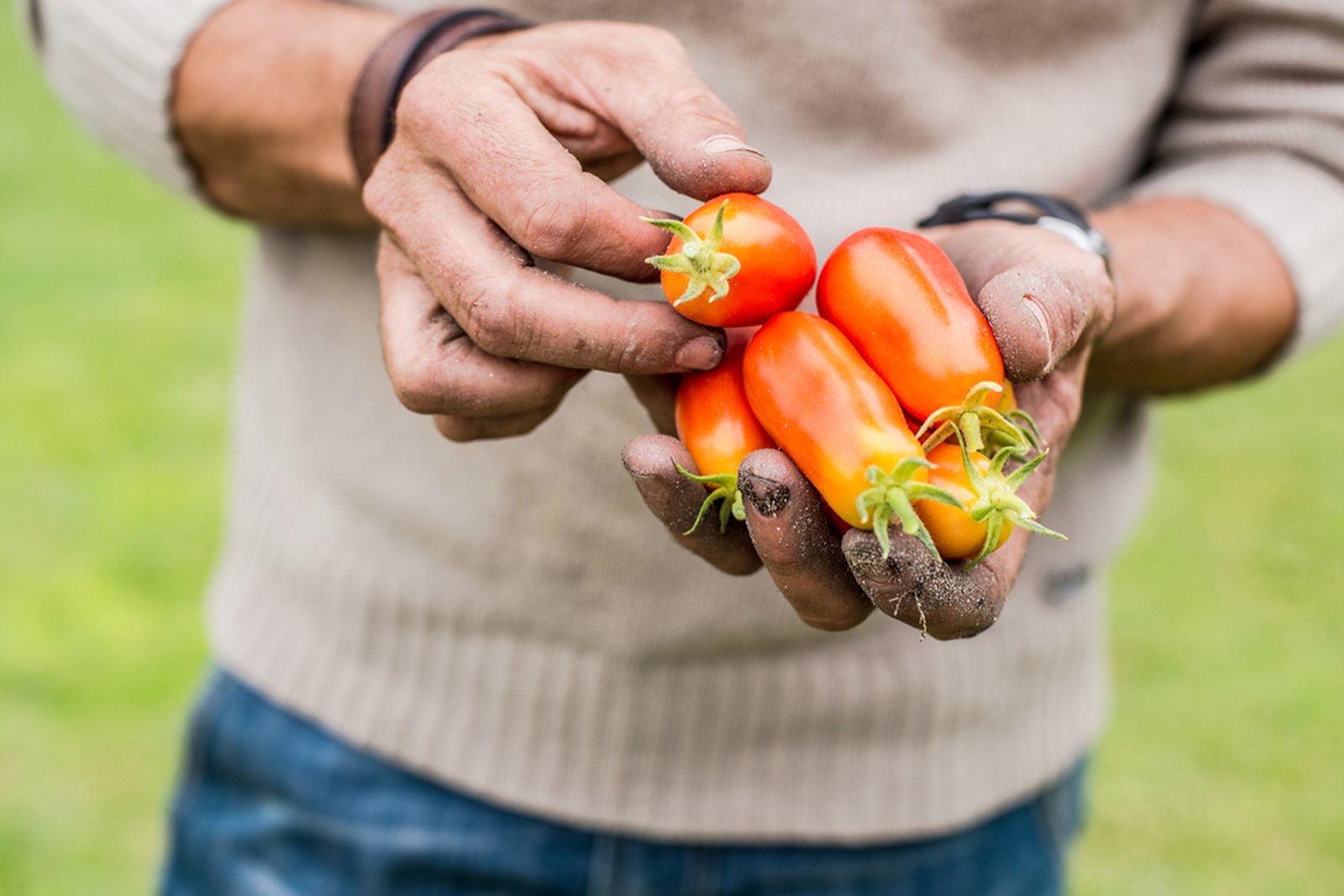
Let aroma confirm color and feel
A developed tomato aroma near the blossom end or stem end is another sign that the fruit is approaching eating quality. Aroma varies widely among cultivars and may be subtle on firm paste types, but a completely odorless hard fruit often needs more time.
Smell is most useful when comparing the same variety at different stages. Do not expect every tomato to smell equally strong. Temperature also changes aroma perception. A cold fruit releases fewer volatile compounds than one allowed to warm toward room temperature.
Off odors, fermentation, or leaking around a crack call for immediate sorting. A cracked tomato may still be usable when the damage is fresh, shallow, clean, and the fruit is otherwise sound, but do not preserve decayed or moldy fruit.
Adjust the harvest standard for cherry, paste, and beefsteak fruit
Cherry tomatoes often color quickly and can split after rain. Harvest full-colored fruit regularly and include turning fruit before a major storm. Some varieties detach cleanly when ready, while others hold tightly. Use scissors when pulling would tear the cluster.
Paste tomatoes are judged for both maturity and processing condition. They may remain firmer at table-ripe color because of dense flesh and smaller gel cavities. Harvest sound fruit in batches for sauce, then sort by ripeness so firm fruit can finish while fully ripe fruit is processed first.
Large beefsteaks need careful support and handling. The blossom end may soften before shoulders finish coloring, especially in dark or green-shouldered varieties. Heavy fruit is vulnerable to cracking, bruising, and branch damage, so harvesting at breaker or turning stage can be the better decision when weather is unstable.
Change the harvest decision when rain, heat, or frost raises the risk
A nearly ripe tomato left through heavy rain may crack as the plant takes up water and the fruit expands. Before a major storm, harvest breaker and turning fruit from crack-prone varieties and let them finish indoors. Maintain even soil moisture during the rest of the season so the change is less abrupt.
Severe heat can reduce color development, soften fruit, and increase sunscald on exposed shoulders. Harvest during the cooler part of the day and move fruit into shade promptly. Do not leave a harvest container in direct sun or a hot vehicle.
Before frost, gather mature green, breaker, and turning fruit that are sound. Very immature green tomatoes may not finish normally, so sort them separately. A freeze-damaged fruit should not be treated as a sound storage or preservation tomato.
Use harvest timing to reduce cracking losses
Radial cracks run outward from the stem, while concentric cracks circle the shoulders. Genetics, maturity, moisture swings, heat, and skin characteristics all influence risk. Once a fruit reaches breaker stage, harvesting before a forecast deluge can protect it without sacrificing the entire ripening process.
Inspect cracked fruit immediately. Clean, recent cracks may be trimmed for prompt fresh use or cooking when the fruit is otherwise sound. Deep cracks that collect insects, mold, decay, or foul liquid should be discarded. Do not place damaged fruit into a storage batch where deterioration can spread unnoticed.
Record cracking by variety and weather. The same cultivar may look reliable in a dry year and fail after repeated storms. A fair comparison requires the moisture history.
Finish mature tomatoes indoors without trying to ripen them in sunlight
Mature green, breaker, and turning tomatoes do not need direct sun to finish. Place sound fruit in a single layer or shallow arrangement at a moderate indoor temperature, with air movement and daily inspection. Direct sun through a window can overheat the fruit and create uneven softening.
Separate fruit with cracks or bruises and use it first. Do not seal a wet harvest into a container. Some gardeners use a paper bag or box to concentrate ethylene, but daily inspection matters more than the container. One decaying tomato can damage the group.
Label the variety and harvest stage. Then record the number of days to full color and the final texture. This helps distinguish a fruit harvested too early from one that simply needs a longer indoor finish.
Judge eating quality after the fruit reaches a useful temperature
Flavor comes from sugar, acidity, aroma, texture, gel, and ripeness. A tomato eaten cold from storage may seem muted because aroma compounds are less noticeable. When safe and practical, allow the fruit to warm toward room temperature before tasting.
Taste more than one fruit and more than one harvest date. The first fruit on a stressed plant may not represent the season. Heavy rain can dilute flavor, while later dry weather can concentrate it. A fair variety record includes the conditions around the harvest.
Keep fresh eating and cooking scores separate. A dense paste tomato may be less juicy on a sandwich and excellent in sauce. A delicate beefsteak may be outstanding fresh and inefficient to reduce.
Store according to stage and intended use
Keep unripe mature fruit at a moderate indoor temperature and inspect it daily. Store ripe tomatoes in a single layer when possible and use the softest first. Avoid pressure from deep baskets that bruise lower fruit.
Refrigeration can slow deterioration once a tomato is fully ripe and would otherwise be lost, but cold storage can reduce aroma and alter texture. Use it as a quality-preservation decision, not as the default for every newly harvested tomato. Allow refrigerated fruit to warm before eating when possible.
For longer preservation, use current tested recipes for canning, freezing, drying, or other methods. Ripeness and variety do not replace acidification and processing requirements in a tested canning process.
Choose fully ripe, typical fruit for seed saving
Seed-saving fruit should be fully mature, sound, and typical of the selected plant and variety. A tomato picked at breaker stage can finish indoors and still produce mature seed when it reaches full ripeness, but do not save from an immature fruit that never develops normally.
Choose the plant before opening the fruit. Record health, plant habit, earliness, fruit shape, color, and any traits you are maintaining. A beautiful fruit from an off-type or severely diseased plant may not be the right seed parent.
Keep eating-quality records separate from seed-lot identity. The fruit can be tasted after seed is removed, but the seed label must follow the variety through fermentation, cleaning, drying, storage, and germination testing.
Create a ripeness card for every unfamiliar variety
- Variety and seed source
- Expected mature color
- Shoulder color at maturity
- First breaker date
- Days from breaker to table ripe
- Feel at ideal harvest
- Aroma strength
- Cracking and splitting
- Best stage for fresh eating
- Best stage for sauce, transport, or storage
Include photographs of the whole fruit, stem end, blossom end, and a cut surface. That record is especially useful for dark, bicolor, white, and green-when-ripe varieties. It prevents the mature appearance from being reinvented by memory every season.
Harvest for the risk in front of you
Leaving a fruit on the vine longer is useful only when the extra time improves quality more than it increases loss. The correct harvest stage changes when a storm, frost, heat wave, wildlife, or a split is imminent.
| What you observe | Most useful next check | Action that follows the evidence |
|---|---|---|
| Heavy rain is forecast after a dry period | Check for mature green, breaker, or turning fruit on crack-prone plants | Harvest mature fruit before the soil is suddenly saturated. |
| A dark tomato remains green at the shoulder | Check the lower color, aroma, and slight give | Harvest when the whole set of cues is mature. Do not wait for uniform red. |
| A green tomato will not color indoors | Ask whether it was physiologically mature when picked | Use immature fruit as green tomatoes rather than expecting normal ripe texture. |
| Ripe fruit tastes dull | Bring it to room temperature and compare another harvest date | Record recent rain, irrigation, and crop load before blaming the variety. |
Tomato ripening stages: mature green, breaker, turning, pink, and ripe
The question “when are tomatoes ripe?” has a different answer for each cultivar and weather risk. This guide explains tomato breaker stage, mature green tomato identification, how to ripen tomatoes indoors, Black Krim ripeness, green tomato ripeness, and when to harvest tomatoes before rain.
Knowing when tomatoes are ripe begins before full color. Commercial and Extension harvest language divides ripening into stages. The exact percentage of color can vary by standard, but the progression is useful for home gardeners.
| Stage | Visible cue | What is happening | Harvest use |
|---|---|---|---|
| Immature green | Fruit has not reached full size; interior seed and gel are undeveloped | Fruit may not ripen normally if removed | Leave on plant unless damaged |
| Mature green | Full size, pale internal tissue around seed, hard exterior | Fruit is physiologically capable of ripening | Frost or emergency harvest |
| Breaker | First definite color appears on a small portion of surface | Ripening has begun and can continue off the plant | Before rain, pests, transport, or heat risk |
| Turning or pink | Color spreads across a larger portion; firmness begins to relax | Aroma and texture continue developing | Short holding or protected indoor finish |
| Table ripe | Variety-specific mature color, slight give, developed aroma | Best fresh-eating window for many varieties | Eat, process, or select sound seed fruit |
| Overripe | Soft spots, leaking, skin failure, fermented odor | Quality and storage life decline | Use immediately if sound; reject for seed or canning when spoiled |
Breaker-stage harvest is not the same as picking an immature green fruit. A fruit that has reached physiological maturity can finish normal ripening indoors. A small hard green fruit may soften without developing full flavor or texture.
How to identify a mature green tomato
Exterior size is not enough. Cut one representative fruit when a frost harvest is approaching. Mature green fruit usually show developed seed coats and gel beginning around the seeds; the interior is less white and hard than an immature fruit. Once one fruit on a cluster shows breaker color, similar full-size fruit on that cluster are more likely to be mature.
- Look for full expected size and a subtle lightening of green.
- Check for a pale star or color change at the blossom end.
- Observe whether the surface shifts from dull hard green toward a slight gloss.
- Use a cut test on one fruit rather than assuming the whole plant is ready.
For an unfamiliar variety, record the days from mature green to breaker and from breaker to table ripe at room temperature.
Use variety-specific color cues
| Tomato color | Ripeness cue | Common error |
|---|---|---|
| Red | Uniform pink-to-red background with slight give and aroma | Waiting until fruit is soft |
| Pink | Green background fades and clear skin reveals pink-red flesh | Comparing it with a deep-red cultivar |
| Yellow or orange | Color deepens and spreads; fruit relaxes slightly | Picking at the first pale yellow blush |
| Green when ripe | Hard blue-green shifts to warmer green, amber, or yellow-green | Waiting for red or harvesting every green fruit immature |
| Dark or black | Lower fruit develops brick, red-brown, or mahogany color while shoulders may remain green or olive | Judging only the dark shoulder |
| White or cream | Green fades toward ivory, cream, or pale yellow with slight softening | Leaving fruit until translucent and overripe |
| Bicolor | Base color matures and secondary blush or striping develops | Expecting identical pattern on every fruit |
Photograph one fruit from each stage in natural light. A farm or garden ripeness card is especially valuable for dark, green-when-ripe, white, and bicolor tomatoes.
Combine color with gentle feel, aroma, and stem release
Use the pad of a finger over a broad area, not a hard squeeze. Ripe fruit should yield slightly relative to an unripe fruit of the same variety. Large beefsteaks may remain firmer than cherries. Paste tomatoes often feel dense even when ready.
Aroma usually strengthens near the stem as ripening develops. The fruit may release with a gentle lift or twist, but some varieties cling even when ripe. Stem release is supporting evidence, not a universal test.
Never compare firmness between unrelated varieties without context. A ripe firm storage tomato can feel harder than an overripe thin-skinned heirloom.
Will breaker-stage tomatoes taste as good?
Research and Extension guidance generally support harvesting physiologically mature tomatoes at breaker or later and allowing them to finish indoors. This can reduce cracking, bird damage, insect feeding, and storm loss. Fruit should be held at room temperature away from direct sun.
Harvesting before maturity is different. Immature green fruit may fail to develop normal color, gel, texture, and aroma. The gardener's job is to learn the breaker cue, not to wait for full softness on the vine or to strip the plant at any green stage.
A simple comparison
- Harvest matched fruit from the same variety at breaker and table ripe.
- Ripen the breaker fruit indoors at room temperature.
- Serve both at the same temperature under random numbers.
- Score sweetness, acidity, aroma, texture, and overall preference.
- Repeat after a rain-risk event to see whether vine-ripened fruit suffered cracking.
Heat can slow normal tomato color development
High temperatures can interfere with pigment development. Illinois Extension notes that enzymes involved in ripening slow above about 85 F and lycopene production can stop above about 90 F. Fruit may remain yellow-orange or develop uneven color even while softening.
When fruit is mature and a heat wave is forecast, harvest at breaker or turning stage and finish indoors. Do not place fruit in direct sun. Sun heats the fruit and can damage tissue; light is not required for ripening.
Harvest before rain when the fruit is physiologically ready
Ripe and near-ripe tomatoes can crack when dry soil is followed by rapid water uptake. Before a major storm, harvest breaker, turning, and nearly ripe fruit. Leave small immature fruit unless wind, flood, or frost creates a greater risk.
| Forecast risk | Harvest decision | Follow-up |
|---|---|---|
| Heavy rain after drought | Pick mature fruit at breaker or later | Maintain steady irrigation before the storm when soil is dry |
| Hail or tropical storm | Harvest all mature fruit and secure supports | Inspect stems and fruit for wounds |
| First light frost | Harvest mature green and colored fruit | Sort by stage and ripen indoors |
| Extended heat above 90 F | Pick breaker and turning fruit | Ripen at room temperature out of sun |
| Bird or animal pressure | Pick at breaker when losses begin | Use exclusion or protected ripening |
How to ripen tomatoes indoors
- Sort out cracked, diseased, frost-injured, or leaking fruit.
- Wipe away soil without soaking sound fruit for storage.
- Arrange in a single layer or shallow tray with airflow.
- Hold at room temperature away from direct sunlight.
- Check daily and remove decaying fruit.
- Use a paper bag to concentrate ethylene when faster ripening is desired, checking every day.
Do not wrap large numbers of damp fruit and forget them. Trapped moisture and one decaying tomato can spoil the batch. Store by stage so ripe fruit is not buried under hard fruit.
Store tomatoes according to stage and intended use
Ripe tomatoes generally keep best for a short period in a cool room, not in prolonged cold storage. University Extension guidance warns that flavor and texture decline under refrigeration, especially below the mid-50s F. Very ripe fruit that would otherwise spoil can be refrigerated briefly, then returned to room temperature before eating raw.
| Fruit stage | Storage approach | Priority |
|---|---|---|
| Mature green | Room temperature, single layer, daily inspection | Allow normal ripening |
| Breaker or turning | Room temperature away from sun | Protect from bruising |
| Table ripe | Use within a few days | Flavor and texture |
| Very ripe | Process immediately or refrigerate briefly | Prevent waste |
| Cracked | Use immediately if clean and sound; discard if moldy, leaking, or insect-damaged | Food safety |
Create a tomato ripeness record for every unfamiliar variety
Record fruit number, date, exterior color, firmness, aroma, cut interior, and flavor. Photograph under the same light. Note whether it was vine-finished or harvested at breaker.
| Record | Why it matters |
|---|---|
| Days from breaker to table ripe | Plans storm and transport harvest |
| Crack loss by harvest stage | Shows whether earlier picking reduces waste |
| Flavor score by stage | Identifies the best eating window |
| Storage days | Helps schedule household use |
| Seed fruit stage | Ensures seed came from fully ripe, typical fruit |
The answer to "when is a tomato ripe" should become specific: ripe for transport, ripe for slicing, ripe for sauce, or ripe for seed. Those uses may call for slightly different harvest stages.
Ripeness cues differ by cherry, paste, slicer, and beefsteak fruit
| Fruit type | Ripeness cue | Harvest frequency | Risk |
|---|---|---|---|
| Cherry | Full variety color and easy release | Daily or every other day at peak | Cracking and overripe drop |
| Grape or saladette | Uniform color and slight relaxation | Several times weekly | Cluster fruit ripens unevenly |
| Paste | Full color with firm dense flesh | At least two to three times weekly | Hidden blossom-end rot and shoulder cracks |
| Slicer | Background color, aroma, and slight give | Frequent during warm weather | Bruising and wildlife |
| Beefsteak | Variety-specific shoulder and lower color | Inspect daily near maturity | Catfacing, radial cracks, and sunscald |
| Long keeper | Harvest stage specified for the cultivar | Planned batch | Confusing storage maturity with table ripeness |
Do not wait for every fruit in a cluster to reach the same stage. Remove ripe fruit without tearing immature fruit or the cluster stem.
What continues after a tomato leaves the vine
After physiological maturity, tomato fruit continues respiration, ethylene production, pigment change, softening, and aroma development. Temperature controls the rate. Direct sunlight is not necessary and can overheat fruit. A room-temperature shelf with airflow is better than a sunny windowsill.
Fruit harvested at breaker can ripen with good quality because the developmental program has already begun. Immature green fruit may lack developed seed gel and normal internal structure. It may turn color unevenly or remain rubbery.
Set a harvest cadence before the crop peaks
- Inspect cherry tomatoes daily during hot or rainy periods.
- Pick large fruit before it becomes soft enough to split under its own weight.
- Harvest in the cool part of the day when possible.
- Use shallow containers so lower fruit is not crushed.
- Keep field heat out of fruit by moving harvest into shade.
- Sort by ripeness stage immediately.
- Do not wash fruit for storage until use unless soil or contamination requires cleaning.
A missed three-day harvest can erase the benefit of a productive variety through cracks, wildlife, and decay.
Select seed fruit at full biological and varietal maturity
For seed saving, choose fully ripe, sound fruit from marked healthy open-pollinated parents. Breaker-stage fruit can finish indoors, but do not save seed from immature green fruit, rotten fruit, or plants with uncertain identity or systemic disease. Record whether the fruit ripened on the vine or indoors.
Some early fruit can contain fewer seeds under cool conditions. If an early fruit has little seed, later fruit may provide a better sample. Save from multiple plants and more than one fruit when maintaining a line.
Detailed questions about tomato ripeness
Can tomatoes ripen after they are picked?
Yes, when they have reached physiological maturity. Breaker-stage fruit can finish normal ripening indoors. Small immature green fruit may change color poorly and never develop full flavor or texture.
Should tomatoes be ripened on a sunny windowsill?
No. Light is not required and direct sun can overheat fruit. Ripen tomatoes at room temperature in a shaded place with airflow, checking daily.
Why will my tomatoes not turn red during hot weather?
High temperatures slow normal pigment development. Ripening enzymes slow above about 85 F and lycopene formation can stop around 90 F. Harvest mature fruit at breaker and finish indoors.
How do I know when a green-when-ripe tomato is ready?
Look for a warmer green or amber background, slight give, aroma, and mature interior. Compare with an immature hard blue-green fruit from the same variety.
Should tomatoes be picked before rain?
Pick mature fruit at breaker or later before a heavy storm, especially after dry weather. This reduces cracking and wildlife loss. Leave clearly immature fruit when the plant is safe.
Do vine-ripened tomatoes always taste better?
Not necessarily. Breaker-stage fruit can develop good quality indoors, and vine-ripe fruit may crack, overheat, or become damaged. Compare matched samples at room temperature.
Can ripe tomatoes be refrigerated?
Refrigeration can reduce aroma and alter texture. Use it briefly for fruit that would otherwise spoil, then return tomatoes to room temperature before serving raw.
When should tomatoes be harvested for seed?
Use fully ripe, sound fruit from marked healthy open-pollinated parents. Do not save from immature, rotten, diseased, or uncertain fruit.
Measure losses by harvest stage
For one variety, harvest half of matched fruit at breaker and leave half to table ripe when weather is safe. Record cracking, wildlife damage, days to eating quality, firmness, and blind flavor. Repeat after rain risk. This turns the vine-ripened debate into evidence from your garden.
Use shallow labeled trays for each stage. Weigh fruit that reaches the kitchen and fruit lost before use. A harvest stage that produces slightly different texture but prevents major cracking may be the better household standard.
A one-minute ripe-tomato check
Look at the lower background color, touch with broad gentle pressure, smell near the stem, and compare with the variety's ripeness card. Then check the forecast. Those four steps are more reliable than color alone.
Frequently asked questions
Do tomatoes have to turn red before picking?
No. Many varieties mature to pink, yellow, orange, cream, green, bicolor, or dark colors. Judge against the expected mature appearance of the exact variety.
Can tomatoes ripen after they are picked?
Mature green, breaker, and turning tomatoes can finish indoors. Very immature green fruit may not develop normal color, texture, or flavor.
Should I pick tomatoes before heavy rain?
Harvest breaker and turning fruit from crack-prone plants when a major rain is forecast. They can finish indoors and may avoid splitting.
How soft should a ripe tomato be?
It should usually give slightly under gentle pressure, but the amount varies. Firm paste tomatoes, cherries, and soft beefsteaks do not share one texture standard.
Why is my Black Krim still green on top?
Dark tomatoes can retain green shoulders at maturity. Check the lower fruit color, slight give, aroma, and the known appearance of the maintained strain.
Should tomatoes ripen in a sunny window?
Direct sun is unnecessary and can overheat fruit. Use a moderate indoor location with airflow and inspect the harvest daily.