A tomato plant can remain green through a heat wave and still fail where it matters most. Flowers may drop, pollen may not release well, fruit can sunscald or crack, and warm humid foliage can carry disease long before the plant looks dead. That is why I judge summer performance by fruit set, usable harvest, recovery, and plant health, not by whether the vine simply survived July.
In eastern North Carolina and much of the Mid-Atlantic and Upper South, the season can move from cool spring soil to hot days, warm nights, heavy humidity, sudden downpours, and drying wind in a short span. The most reliable tomato system starts early enough to establish roots before severe heat, includes more than one fruit type and plant habit, and protects the root zone while keeping the canopy open enough to dry.
No single technique can make pollen fertile during every weather window. The practical goal is to remove avoidable stress, choose cultivars with useful regional performance, and keep the plant capable of setting the next flower cluster when temperature and humidity return to a workable range.
Good tomato records begin with what the plant actually does in your garden, not with a promise copied from somewhere else.
Heat and humidity thresholds that change management
Cultivars differ, but the plant still responds to the same physical stresses. Use the ranges as scouting triggers rather than absolute limits.
| Field measure | Practical starting point | How to use it |
|---|---|---|
| Daytime fruit-set risk | Repeated highs near 90°F or above | Pollen function and flower retention can decline. Some cultivars tolerate more heat than others. |
| Warm-night risk | Nights remaining above about 70 to 75°F | Warm nights reduce the plant's recovery period and can interrupt fruit set even when mornings look normal. |
| Cool-night risk | Nights near or below 55°F | Cold can also reduce pollen function and delay growth. Heat is not the only weather cause of blossom drop. |
| Mulch | About 2 to 3 inches over warmed soil | Moderate root-zone temperature and moisture swings without piling material against the stem. |
| Shade cloth | Start around 20 to 30 percent for temporary overhead relief | Use during the hottest part of the day. Heavy shade can reduce flowering, photosynthesis, and drying. |
| In-ground water | Roughly 1 to 1.5 inches per week as a starting point | Adjust for rainfall, soil, crop load, and heat. Water deeply and evenly at the root zone. |
| Airflow | Enough spacing and support for leaves to dry after dew or rain | Do not create airflow by stripping the canopy bare. Fruit still needs shade. |
| Scouting frequency | At least twice each week during warm humid disease weather | Inspect lower leaves, new growth, stems, flower clusters, and fruit. Photograph change over time. |
Heat tolerance is not one trait. A plant may survive, flower, set a few fruit, resist sunscald, avoid cracking, or recover strongly after the heat breaks. Record those outcomes separately. A vine that stays green but produces no usable fruit is not a successful heat performer for a food garden.
Plant timing is often more effective than searching for a mythical heat-proof variety. Set transplants early enough to establish roots and set the first clusters before the worst heat, while still protecting them from frost and cold soil. A second planting can target the late-summer recovery window in long-season regions.
Humidity adds disease pressure and can keep pollen sticky. Use root-zone irrigation in the morning, support plants, maintain reasonable spacing, and remove confirmed diseased tissue. Avoid routine overhead watering late in the day and avoid excess nitrogen that produces dense, tender foliage.
Build a heat-season record
- First flowering date and first fruit-set date.
- Daily high and nighttime low during blossom drop.
- Irrigation and rainfall before cracking or wilt.
- Shade duration and shade percentage.
- Disease symptoms, insect pressure, and whole-plant photographs.
- The date fruit set resumes after weather improves.
Important: Shade and pruning can both solve one problem while creating another. Use the lightest intervention that protects flowers and fruit without starving the canopy of light.
Define heat tolerance by the result you need
Heat tolerance can describe several different traits. One variety may germinate and establish well in warm soil. Another may hold foliage through hot weather. Another may continue setting fruit during higher temperatures than a sensitive beefsteak. A variety can also perform well because it matures early enough to avoid the worst stress rather than because every flower remains fertile in midsummer.
Write the performance question before choosing seed. Are you trying to harvest before summer heat, maintain cherry tomato production through August, reduce cracking after thunderstorms, or keep a second crop alive for fall? Those goals may lead to different varieties and planting dates.
- Record first bloom and first ripe fruit, not only days to maturity from a catalog.
- Count flower clusters that set fruit during heat, not simply flowers produced.
- Separate plant survival from marketable or usable yield.
- Note recovery after a severe weather period.
- Compare varieties in the same bed and management system whenever possible.
Understand why hot days and warm nights interrupt fruit set
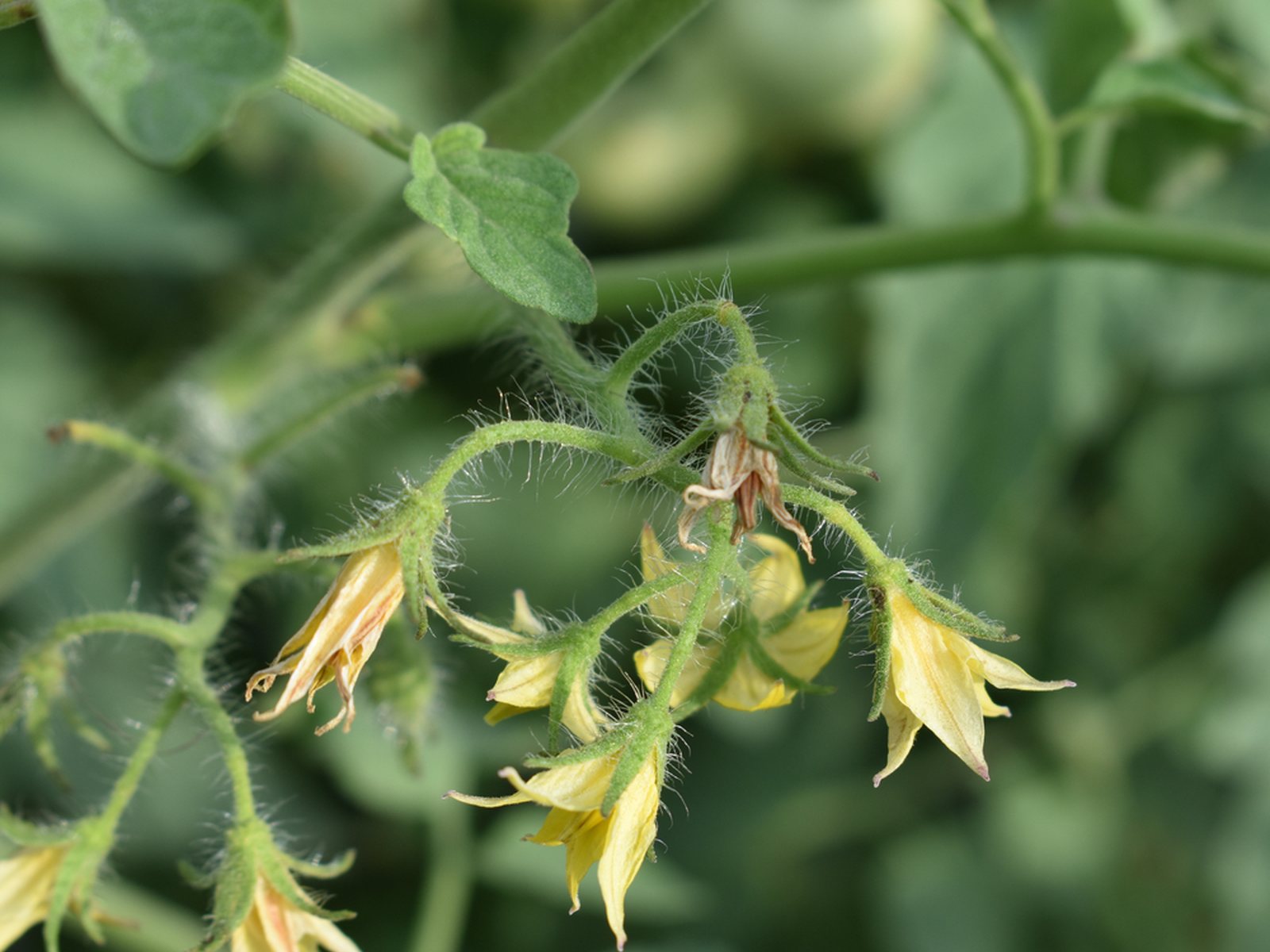
Tomato flowers are self-fertile, but the pollen still has to develop, release, reach the stigma, and support young fruit. Prolonged high daytime temperatures, warm nights, or a difficult combination can reduce pollen quality and flower retention. High humidity can make pollen clump and release poorly, while very dry air and water stress can also interfere with the flower.
A dropped cluster does not mean the plant is permanently barren. Indeterminate tomatoes continue producing new flowers. Determinate plants have a more concentrated flowering period, so a bad heat window can affect a larger share of the crop. Keep roots stable, avoid a heavy nitrogen push, and protect healthy foliage so later clusters have a chance.
Hand vibration can help release viable pollen in still conditions, but it cannot repair pollen already damaged by extreme temperature or severe stress. Treat pollination as one part of the system rather than the only explanation for blossom drop.
Plant a portfolio instead of trusting one famous variety
A resilient tomato planting spreads risk across fruit size, maturity, plant habit, and genetic background. Early or medium-season tomatoes can produce before the hottest nights. Small-fruited types often set more consistently than very large beefsteaks. Regionally used varieties such as Floradade, Floradel, Arkansas Traveler, Rutgers, and other adapted lines can be valuable comparisons, but they still need to be tested in the exact garden.
Include at least one dependable standard, one small-fruited producer, and any large heirloom you especially value. That way a heat-sensitive slicer does not represent the whole tomato season. Keep the seed source and maintained strain in the record because the same name can circulate through different lines.
| Planting role | Why include it | What to record |
|---|---|---|
| Early producer | Sets before severe midsummer heat | Transplant date, first bloom, first ripe fruit |
| Small-fruited producer | Often carries repeated clusters through variable weather | Clusters set during hot periods and cracking |
| Regional standard | Provides a locally relevant performance baseline | Disease, yield, fruit quality, and recovery |
| Large heirloom | Supplies distinctive eating quality | Set percentage, support, sunscald, and usable yield |
Establish roots before the most severe summer weather
A transplant placed into cold soil may stall, while one planted very late may reach its first heavy flowering during the hottest nights. Use local frost history, current soil temperature, and the short-range forecast together. Harden plants gradually, transplant during a moderate weather window, and water the full root ball into the surrounding soil.
Large overgrown transplants are not always an advantage. Root-bound plants carrying flowers in small pots may suffer a hard reset when moved into heat. A compact, actively growing transplant with a healthy root system often establishes faster.
In long-season areas, a later planting can support a fall crop, but count backward from the realistic cooling and frost window. A plant installed during extreme heat needs extra protection while roots establish and may not catch up before shorter autumn days.
Protect the root zone from heat and moisture swings
Tomatoes need oxygen as well as water. Deep, even moisture supports growth, but saturated soil after repeated storms can damage roots and limit nutrient uptake. Improve drainage before planting, avoid low pockets, and use raised beds or containers only when they truly improve the site rather than creating a hotter, smaller root zone.
After the soil has warmed, apply clean mulch to reduce evaporation, limit splash, and buffer surface temperature. Keep it away from the stem. Water at the root zone and wet a meaningful depth rather than sprinkling the surface every day. Check the soil before adding water after rain.
The most damaging pattern is often a repeated swing from very dry to flooded. It stresses roots, contributes to blossom-end rot and cracking, and makes the canopy harder to interpret. A drip line or soaker system can help when it is checked for even delivery and adjusted for rainfall.
Keep a protective canopy without creating a wet wall of foliage
Leaves shade fruit, power growth, and cool the plant through transpiration. In hot climates, aggressive pruning can expose fruit to sunscald and reduce the plant's ability to recover. At the same time, a dense canopy that stays wet favors foliar disease and makes scouting difficult.
Use spacing and support as the first airflow tools. Remove soil-touching leaves and badly diseased tissue, then prune only enough to maintain access and the leader structure your support can carry. Tie vines before they fall together and avoid working wet plants when bacterial disease is a concern.
The correct canopy is not an abstract number of leaves or suckers. It is a plant with enough foliage to shade fruit and feed the crop, while air can move and leaves can dry. Reassess after storms, rapid growth, and each major pruning session.
Use shade as temporary heat management, not permanent low light
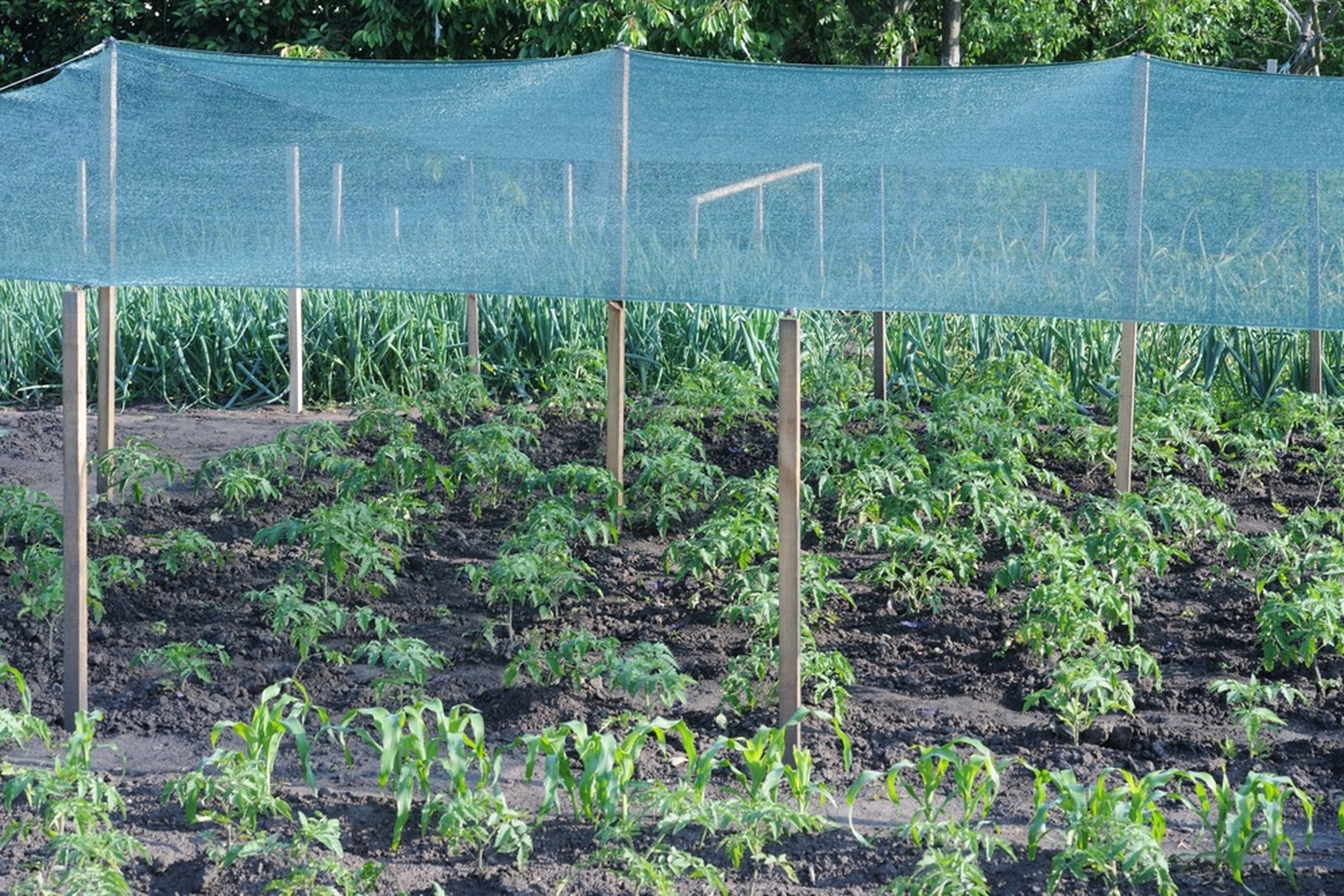
Tomatoes remain full-sun crops, but severe afternoon heat and reflected radiation can exceed what a plant or fruit can handle. Temporary shade cloth above the canopy, especially during the hottest part of the day, can reduce heat load. It is most useful when plants still receive strong morning light and the covering does not block airflow.
Do not wrap shade material tightly around foliage. That can trap humidity and reduce ventilation. Place it high enough to allow air movement and remove or adjust it when the severe heat period passes. In containers, shading the pot itself may be as important as shading the leaves because exposed roots heat quickly.
Observe the response. Excess shade can reduce flowering and create soft growth. The objective is to shave the peak stress from an extreme period, not to move the crop into permanent shade.
Avoid feeding for leaves when the plant needs balance
A large dose of nitrogen during hot weather can encourage lush vegetative growth without solving poor pollen, warm nights, damaged roots, or low light inside the canopy. Begin with soil testing when practical, use a complete fertility plan, and apply only what the soil and crop need.
Yellowing after heavy rain may reflect leaching, but it can also reflect saturated roots that cannot function. Wait until drainage and root conditions are understood before adding more soluble fertilizer. Container tomatoes need regular nutrition because the root volume is limited and watering leaches nutrients, but they also accumulate salts when fertilized repeatedly without thorough drainage.
Keep a record of fertilizer product, rate, and date. That prevents several people from responding to the same pale leaf with overlapping applications.
Scout early because humidity favors several diseases
Warm, humid weather and leaf wetness can favor early blight, Septoria leaf spot, bacterial diseases, and other problems. Late blight has its own weather pattern and should not be diagnosed from the word blight alone. Start with the location of symptoms, lesion shape, speed of spread, weather, and whether fruit or stems are affected.
Inspect lower leaves at least weekly, more often during prolonged wet periods. Remove confirmed diseased tissue carefully when useful, clean tools, control weeds and volunteer tomatoes, and keep irrigation off the foliage when possible. Rotate plant families and dispose of infected debris according to the diagnosed disease.
Do not remove half the canopy at the first spot. Environmental scorch, nutrient stress, mite injury, and herbicide exposure can imitate disease. Use Extension diagnostic images or a plant clinic when the pattern is unclear.
Separate heat stress from mite, whitefly, and virus symptoms
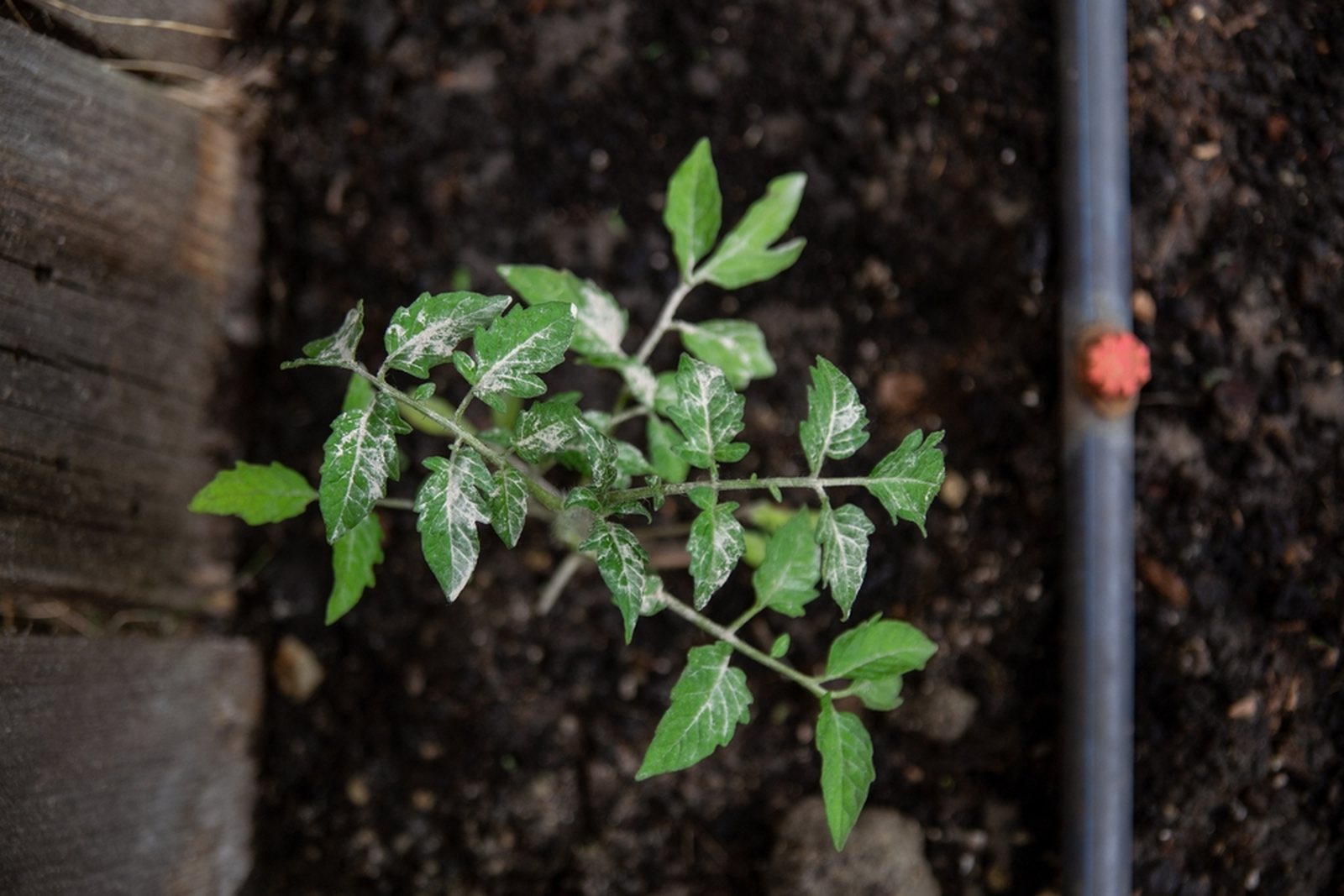
Hot dry intervals can favor spider mites, while whiteflies and aphids can build on tender growth and may vector viruses. Curling, stippling, yellowing, and reduced vigor should trigger an inspection of leaf undersides and new growth. Use a hand lens and look for insects, cast skins, webbing, honeydew, and the distribution of damage.
A plant that rolls green older leaves during heat but continues normal new growth may be showing physiological leaf roll. A plant with twisted new growth, mosaic, strong stunting, or similar injury across several species needs a different investigation. Avoid broad treatment until the cause is reasonably supported.
Support beneficial insects, control nearby weeds that host pests, and remove a severely virus-suspect plant when Extension guidance supports that action. One mislabeled heat symptom can lead to unnecessary sprays and a missed real problem.
Harvest around rain, cracking, sun, and wildlife pressure
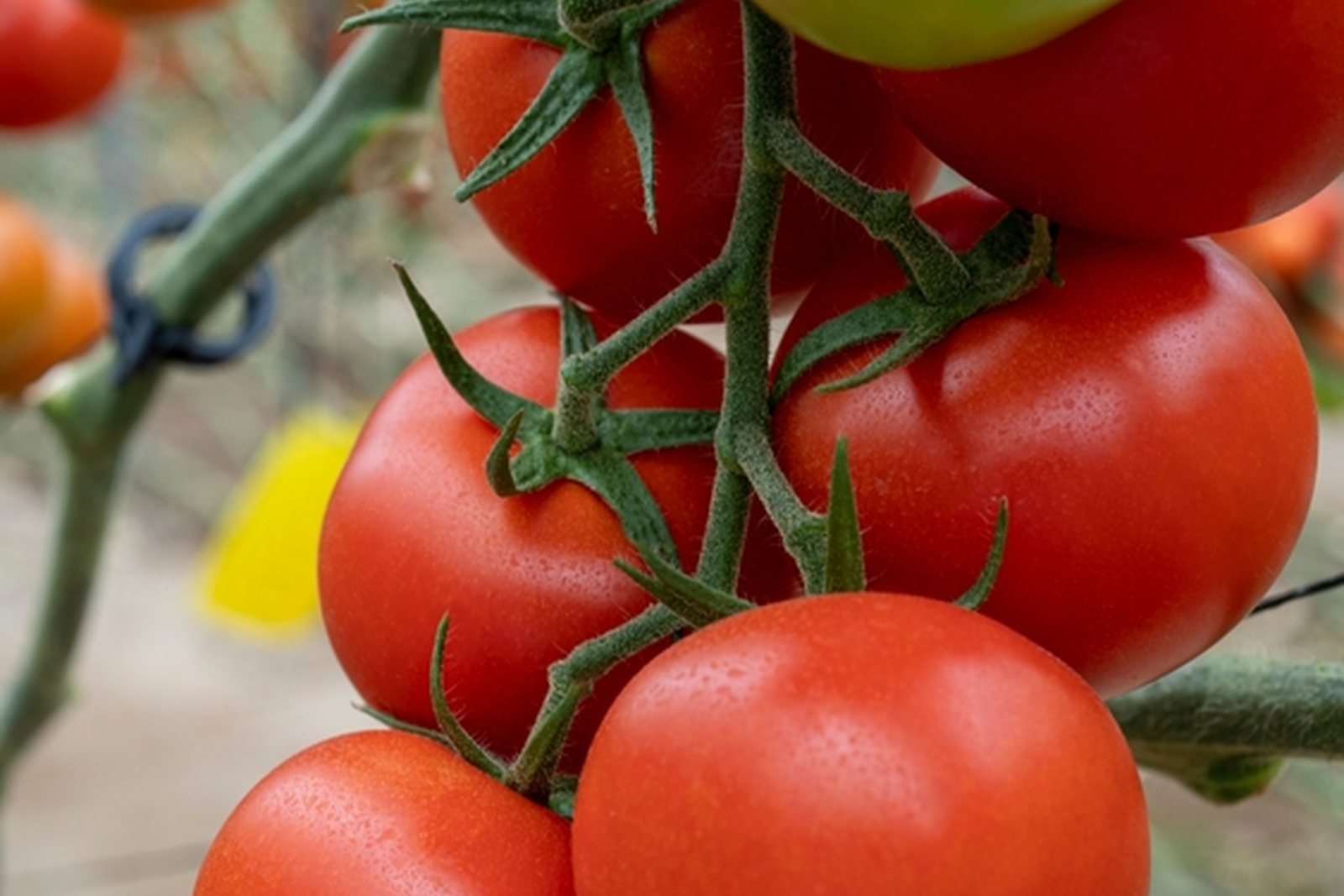
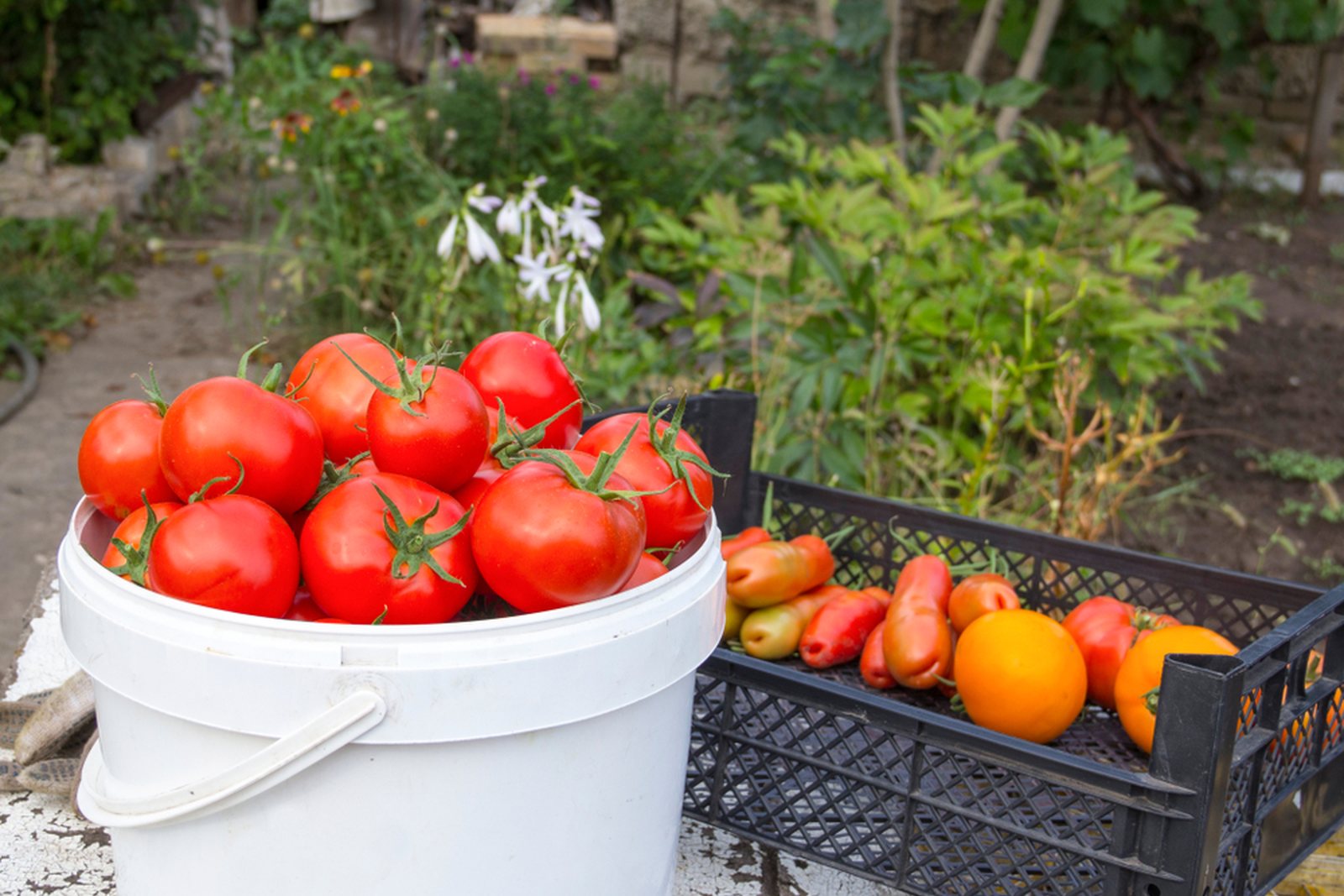
Fruit can be harvested at breaker or turning stage and finish indoors when a major rain, storm, cracking event, wildlife loss, or severe heat threatens it. A tomato does not need to remain on the vine until fully soft to develop good color and flavor. The best stage depends on the cultivar, weather, transport, and kitchen plan.
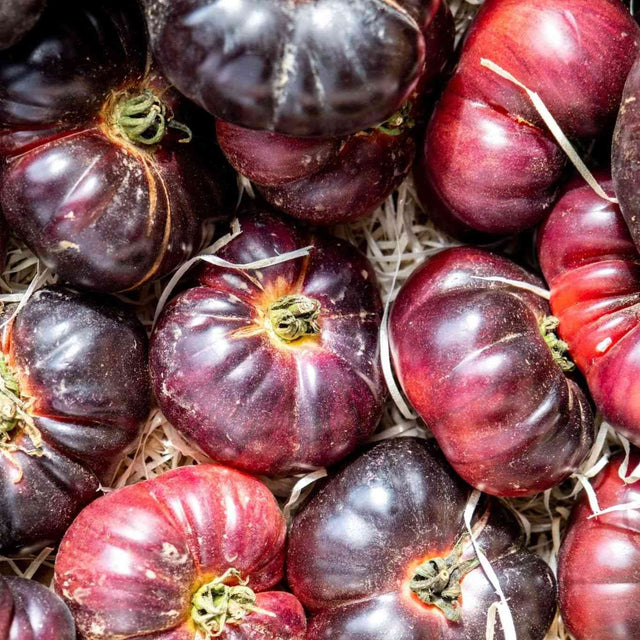
Dark, green-when-ripe, yellow, orange, and bicolor tomatoes need variety-specific color cues. Combine background color, slight give, aroma, and the appearance of the stem end. Harvest in the cooler part of the day and handle soft heirlooms in shallow containers.
Do not refrigerate sound tomatoes merely because the day is hot. Keep them shaded after harvest and move them into a protected indoor environment promptly. Refrigeration may be useful to slow deterioration once a tomato is fully ripe and would otherwise be lost, but allow it to return toward room temperature before eating for better flavor perception.
Plan for the next fruit-set window
When a heat wave stops fruit set, the correct response is usually patience plus stable care. Keep the root zone even, preserve healthy leaves, avoid excessive nitrogen, and continue scouting. New flower clusters may set when nights cool or humidity changes.
Indeterminate tomatoes have more time to recover because they continue extending. Determinate varieties concentrate growth, so planting more than one maturity group can spread risk. In very long seasons, an early spring crop and a planned later crop may perform better than forcing one exhausted plant to carry every month.
Record the dates of failed and successful clusters against actual weather. Over several seasons, that record identifies which varieties set through your difficult windows and which merely survive them.
Build a regional heat and humidity record
- Variety, strain, and seed source
- Plant habit and fruit type
- Sowing and transplant dates
- First flower and first ripe fruit
- Days with severe heat or unusually warm nights
- Rainfall or irrigation pattern
- Flower clusters set and dropped
- Disease and pest observations
- Cracking, sunscald, and blossom-end rot
- Usable harvest before, during, and after heat
A strong heat-tolerance claim should be tied to that record. One season can identify promising behavior, but repeated comparisons in the same garden build much better evidence. Share the conditions along with the conclusion so another gardener understands what the variety actually endured.
Read the timing of the failure
When early clusters set fruit and later clusters drop during a heat wave, temperature is a stronger suspect than a permanent pollination problem. When only one plant is distorted while neighbors remain normal, inspect roots, insects, chemical exposure, and variety-specific disease instead of blaming regional weather.
| What you observe | Most useful next check | Action that follows the evidence |
|---|---|---|
| Flowers drop across several varieties during hot nights | Compare the event with temperature and humidity records | Maintain water and canopy; expect set to improve when nights cool. |
| Leaves curl but growth and fruit remain normal | Inspect whether older leaves roll upward without yellow distorted new growth | Treat physiological leaf roll as a stress signal, not automatically as virus. |
| The canopy is dense and wet each morning | Check spacing, tie-up, irrigation timing, and lower diseased leaves | Open access gradually without exposing fruit to full afternoon sun. |
| Fruit cracks after a storm | Review the dry period before rain and fruit maturity | Harvest breaker fruit before future storms and stabilize irrigation between rains. |
Measure tomato heat tolerance by fruit set, recovery, and usable yield
Tomatoes for heat and humidity should be evaluated by fruit set, usable harvest, recovery, and disease pressure. This guide connects tomato fruit set temperature, tomato blossom drop heat, shade cloth for tomatoes, tomatoes in humid climate conditions, tomato heat stress, and practical summer tomato care.
A tomato can remain green and alive during summer while setting little fruit. That is survival, not productive heat tolerance. When comparing tomatoes for heat and humidity, separate at least four traits: pollen function during warm nights, resistance to sunscald, ability to maintain roots through hot soil, and recovery when temperatures moderate.
| Claim | What it should mean | How to verify |
|---|---|---|
| Heat tolerant | Maintains useful fruit set or plant function at higher temperatures than comparison varieties | Marked-cluster fruit-set percentage with day and night temperature records |
| Humidity tolerant | Performs under prolonged moisture and disease pressure | Weekly disease ratings and usable yield, not leaf appearance on one date |
| Sunscald resistant | Maintains protective canopy or fruit characteristics that reduce injury | Percentage of fruit lost after hot clear weather |
| Crack resistant | Loses less fruit after moisture changes | Cracked weight divided by total harvested weight after rain events |
| Disease resistant | Carries named resistance to a specific pathogen or race | Published resistance codes and local disease diagnosis |
Do not turn one summer observation into a universal claim. Compare plants in the same bed, record the weather, and repeat the trial.
Why hot days and warm nights interrupt tomato fruit set
Tomato flowers are self-fertile, but viable pollen must be produced, released from the anther cone, and reach a receptive stigma. Moderate conditions support that sequence. Repeated days above about 90 F and nights above about 70 F commonly reduce pollen performance and increase blossom drop. Missouri Extension notes that some heat-tolerant varieties may continue setting around 95 F days and 75 F nights, but even those plants have limits.
Humidity adds another problem. Very humid air can make pollen clump instead of releasing cleanly. Extremely dry, hot wind can desiccate floral tissue. Hand vibration cannot repair nonviable pollen.
Measure fruit set instead of guessing
- Mark three clusters as their flowers open.
- Count open flowers.
- Return 10 to 14 days later and count enlarging fruit.
- Calculate fruit set: enlarging fruit divided by flowers x 100.
- Record maximum day and minimum night temperatures for the interval.
If flowers are present but set collapses only during warm nights, the plant may recover when weather changes. If flowers are absent, investigate light, nitrogen, pruning, root stress, and plant age.
Use multiple planting windows in the Upper South
One transplant date asks one crop to survive every risk. A portfolio spreads risk across the season.
| Planting role | Purpose | Management emphasis |
|---|---|---|
| Early planting | Set fruit before the hardest summer heat | Cold protection, warm soil, early support |
| Main-season planting | Carry the largest crop through normal summer | Root-zone moisture, mulch, disease scouting |
| Heat-set variety | Maintain some production during warmer pollen conditions | Do not assume immunity to extreme nights |
| Second or fall planting | Use the next favorable fruit-set window | Calculate days to frost and protect young roots from midsummer heat |
For a second planting, count backward from the first likely frost and include time for transplant establishment, flowering, fruit development, and ripening. A 70-day maturity number counted from transplant is not enough by itself. Add a buffer for shortened autumn days and weather.
Protect the root zone before shading the whole plant
Hot foliage can cool through transpiration only when roots can supply water. Mulch and deep irrigation protect that system.
- Water early at the root zone.
- Apply enough water to wet the active root depth rather than giving shallow daily sips.
- Check several inches below mulch before irrigating again.
- Use 2 to 3 inches of clean organic mulch after the soil has warmed, keeping it away from the stem.
- Avoid cultivating deeply around established roots.
- In containers, shade or insulate the pot wall because root temperature can exceed air temperature.
NC State guidance uses roughly 1 to 1.5 inches of water per week as a starting point during fruiting, adjusted for soil, rain, heat, and crop load. Convert that to a measured irrigation volume for the bed rather than an unmeasured hose time.
Useful conversion: One inch of water over 100 square feet is about 62 gallons. A 4-by-25-foot bed therefore receives about 62 gallons when one inch is applied evenly. Subtract effective rainfall and adjust for the wetted area of drip lines.
Use shade cloth as temporary heat management
Temporary 30 to 40 percent shade can reduce extreme afternoon stress, especially over newly transplanted plants, exposed fruit, or containers. Shade should be above the canopy with airflow, not wrapped around foliage. Permanent deep shade reduces photosynthesis and can worsen weak growth.
- Install the structure before an extreme heat event.
- Place cloth high enough for air movement and garden access.
- Prioritize afternoon sun in the hottest exposure.
- Monitor soil moisture because shaded soil may dry more slowly.
- Remove or reduce shade when the extreme period ends.
Shade cannot correct saturated roots, excessive nitrogen, a virus, or nonviable pollen. Use it as one part of a system.
Manage humidity by shortening leaf-wetness time
Humidity itself is not a disease. Disease develops when a susceptible plant, a pathogen, and favorable conditions overlap. Free moisture, leaf wetness, splash, and slow drying are often more actionable than the afternoon humidity number.
- Space plants so air can move between mature canopies.
- Support vines off soil and pathways.
- Water at the root zone instead of overhead when possible.
- Mulch to reduce splash.
- Remove lower leaves touching soil after plants are established.
- Scout after rain, especially lower and interior foliage.
- Handle and prune when foliage is dry.
- Sanitize stakes, clips, and tools between crops.
| Weather pattern | Risk to watch | Field action |
|---|---|---|
| Hot, humid, and wet | Bacterial spot, leaf spots, root oxygen stress | Inspect splash zone, drainage, and wounds |
| Cool, wet, and humid | Late blight risk when inoculum is present | Look for rapidly enlarging water-soaked lesions and seek diagnosis |
| Warm rain after drought | Cracking and rapid fruit expansion | Harvest mature fruit before storm and stabilize irrigation |
| Hot dry wind | Temporary wilt, flower loss, sunscald | Deep water, wind protection, temporary shade |
| Warm nights with open flowers | Reduced fruit set | Mark clusters and wait for a better pollen window |
Preserve enough canopy to protect fruit
Aggressive pruning can improve access while increasing sunscald. In hot climates, train plants to fit the support but keep leaves above and around fruit clusters. Remove ground-touching, diseased, broken, and structurally unnecessary growth first.
If disease has removed most foliage, adding more pruning does not create airflow; it exposes fruit. Temporary shade may protect remaining crop while the diagnosis and harvest decision are made.
Do not feed for leaves when flowers are failing
Excess nitrogen can drive soft vegetative growth while delaying flowering and making the canopy harder to manage. Follow a soil test or container-fertilizer plan. When blossom drop begins, do not automatically add phosphorus, calcium, or a bloom booster. First check temperature, night heat, root moisture, and light.
| Plant pattern | Possible cause | Best first check |
|---|---|---|
| Dark lush foliage, few flowers | Excess nitrogen or low light | Fertilizer history and hours of direct sun |
| Many flowers, little set during heat | Pollen failure | Day and night temperatures |
| Flowers and small fruit abort | Root stress, heat, water swing, or disease | Root-zone moisture and plant-wide symptoms |
| Distorted new growth | Herbicide injury, virus, mites, or severe stress | Pattern across plants and exposure history |
Run a heat and humidity tomato trial with measurable results
Plant at least three plants per entry when possible. Alternate varieties in the row so one drainage or shade zone does not receive all of one cultivar. Record:
- First flower and first fruit set
- Fruit-set percentage on marked clusters
- Days above 90 F and nights above 70 F
- Weekly disease severity in lower, middle, and upper canopy
- Cracked, sunscalded, diseased, and usable fruit weight
- Date fruit set resumes after heat
- Total usable yield and labor
A variety that sets fewer fruit during peak heat but remains healthy and rebounds strongly may be more useful than one that sets briefly and collapses to disease. Define the desired result before naming a winner.
A seven-day tomato heat-wave plan
| Timing | Action |
|---|---|
| Three days before | Check irrigation, repair support, harvest breaker fruit, install shade frame |
| One day before | Deeply water dry root zones and mulch exposed soil |
| Each morning | Check soil depth, container weight, wilt recovery, and new flower loss |
| Afternoon | Observe heat wilt without immediately adding water to wet soil |
| After storm | Inspect cracks, broken ties, saturated roots, and leaf lesions |
| After heat breaks | Remove unnecessary shade, resume normal irrigation, and mark new clusters |
The goal is not to make the garden look unstressed at 3 p.m. The goal is to protect roots, canopy, and future fruit set without creating saturated soil or a permanently shaded crop.
Detailed questions about tomatoes in heat and humidity
What temperature is too hot for tomatoes to set fruit?
Fruit set often declines when days repeatedly exceed about 90 F and nights remain above about 70 F. Some heat-tolerant varieties continue higher, but none is unlimited. Measure set on marked clusters rather than judging vine growth.
Should tomatoes be shaded in summer?
Temporary 30-to-40-percent shade can reduce exceptional afternoon heat and sunscald. Keep cloth above the canopy with airflow and remove it when the extreme period passes. Permanent deep shade reduces flowering.
Why do tomato flowers fall off during humid weather?
Warm nights can reduce pollen viability, and high humidity can make pollen clump instead of releasing. Root stress and excessive nitrogen can add to the problem. Hand vibration helps only when viable pollen exists.
How much water do tomatoes need in hot weather?
NC State uses roughly 1 to 1.5 inches weekly during fruiting as a starting point, adjusted for soil, rain, heat, and crop load. Measure the root zone and actual gallons. Containers may need much more frequent irrigation.
Does leaf curl mean heat is killing the plant?
Older leaves may roll physiologically during heat, pruning, or moisture stress without major yield loss. Check new growth, roots, and overall plant vigor. Severe distortion or stunting requires a different diagnosis.
Should I fertilize when tomato blossoms drop?
Not automatically. Check temperature, night heat, root-zone moisture, and light first. Extra nitrogen can produce more foliage while flowers continue to abort.
Can tomatoes set fruit again after a heat wave?
Yes. Healthy plants often resume setting on new clusters when nights cool. Preserve roots, foliage, and support through the bad pollen window, then mark new clusters and measure recovery.
Which tomatoes are best for humid climates?
Choose a portfolio: an early variety, a heat-set variety, and entries with resistance to locally confirmed diseases. Verify with local trials and usable yield rather than relying on one generic "southern" label.
A heat-and-humidity data sheet
For each variety, record transplant date, first flower, marked-cluster set, maximum and minimum temperature, rainfall, irrigation, disease severity, crack loss, sunscald, and date set resumes. Add usable pounds before, during, and after the hottest four-week period. This distinguishes an early crop from true mid-summer performance.
A variety that produces 20 pounds before heat and nothing after should not be described the same way as a variety that produces 12 pounds before heat, 6 during heat, and 10 after. The season total is similar, but the harvest pattern and resilience are different.
Frequently asked questions
What temperature is too hot for tomato fruit set?
Risk rises when high days, warm nights, or both persist, but the exact response varies by cultivar, humidity, water status, and plant condition. Use the weather pattern and actual flower-set record together.
Do tomatoes need bees to set fruit?
Tomatoes are self-fertile. Wind, handling, and buzz-pollinating insects can vibrate flowers and improve pollen release, but viable pollen and suitable weather are still required.
Will shade cloth help tomatoes in summer?
Temporary overhead afternoon shade can reduce extreme heat load when it preserves morning light and airflow. Too much permanent shade can reduce flowering.
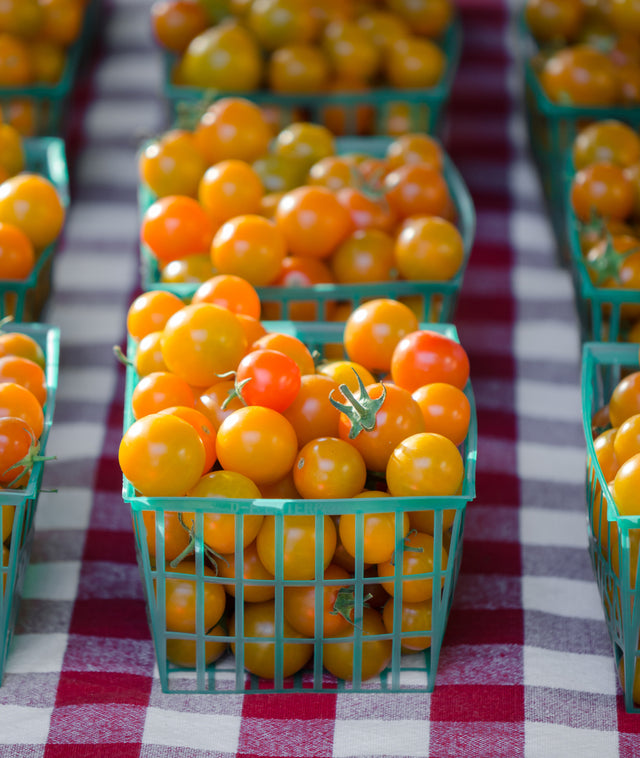
Are cherry tomatoes more heat tolerant?
Many small-fruited tomatoes set more consistently than large beefsteaks in difficult weather, but plant and cultivar differences remain. Test named varieties rather than relying on fruit size alone.
Why are my plants healthy but flowers keep dropping?
Heat, warm nights, humidity, drought, root stress, excessive nitrogen, and poor pollen release can all cause blossom drop before obvious leaf injury appears.
Can tomatoes recover after a heat wave?
Yes. Healthy indeterminate plants often produce new clusters and resume setting when conditions improve. Keep the root zone stable and avoid creating additional stress.