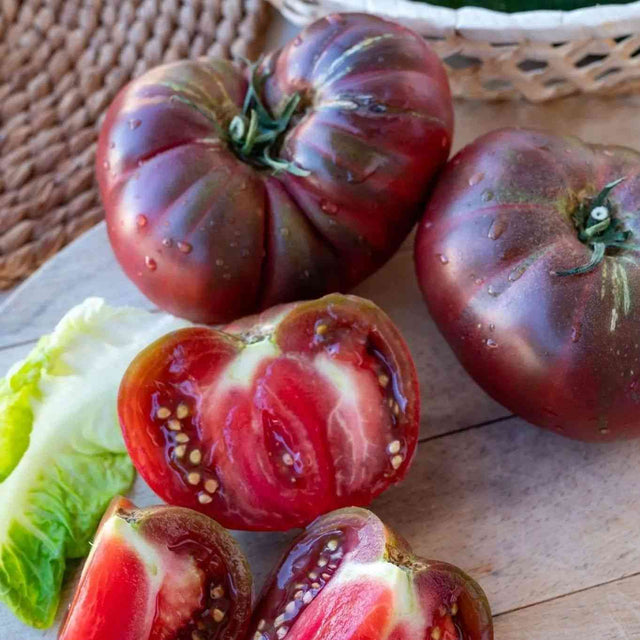
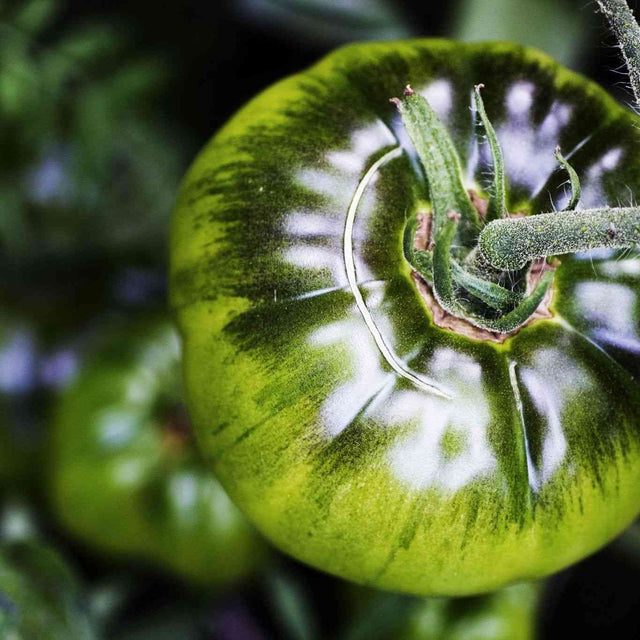
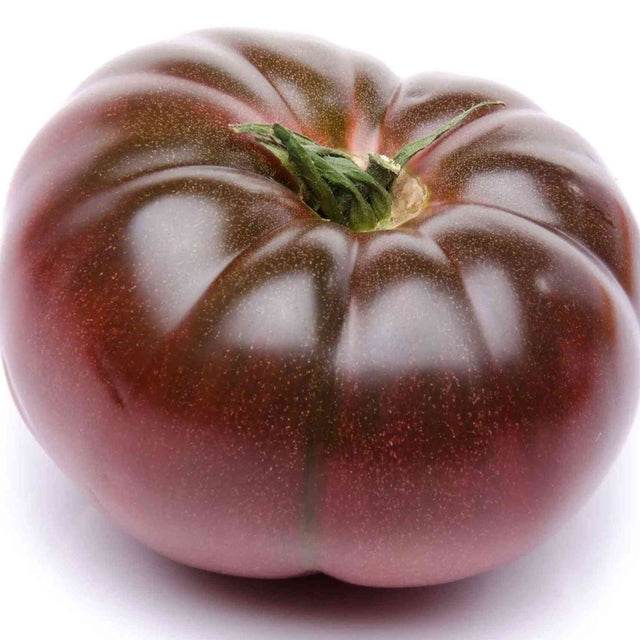
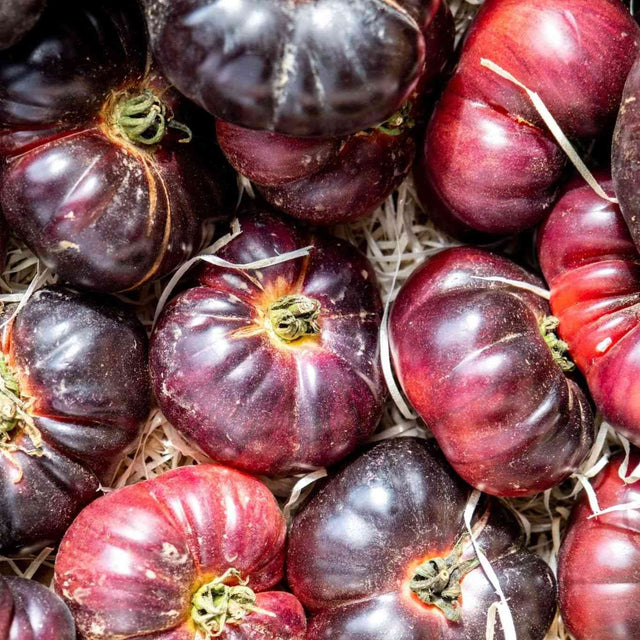
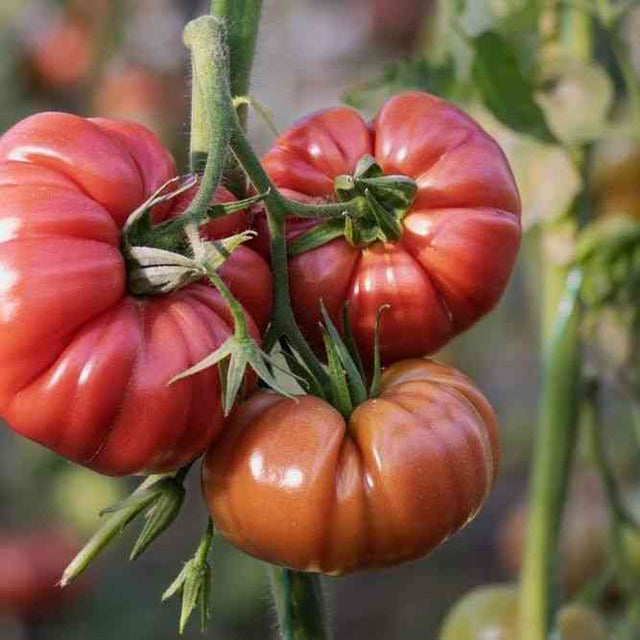
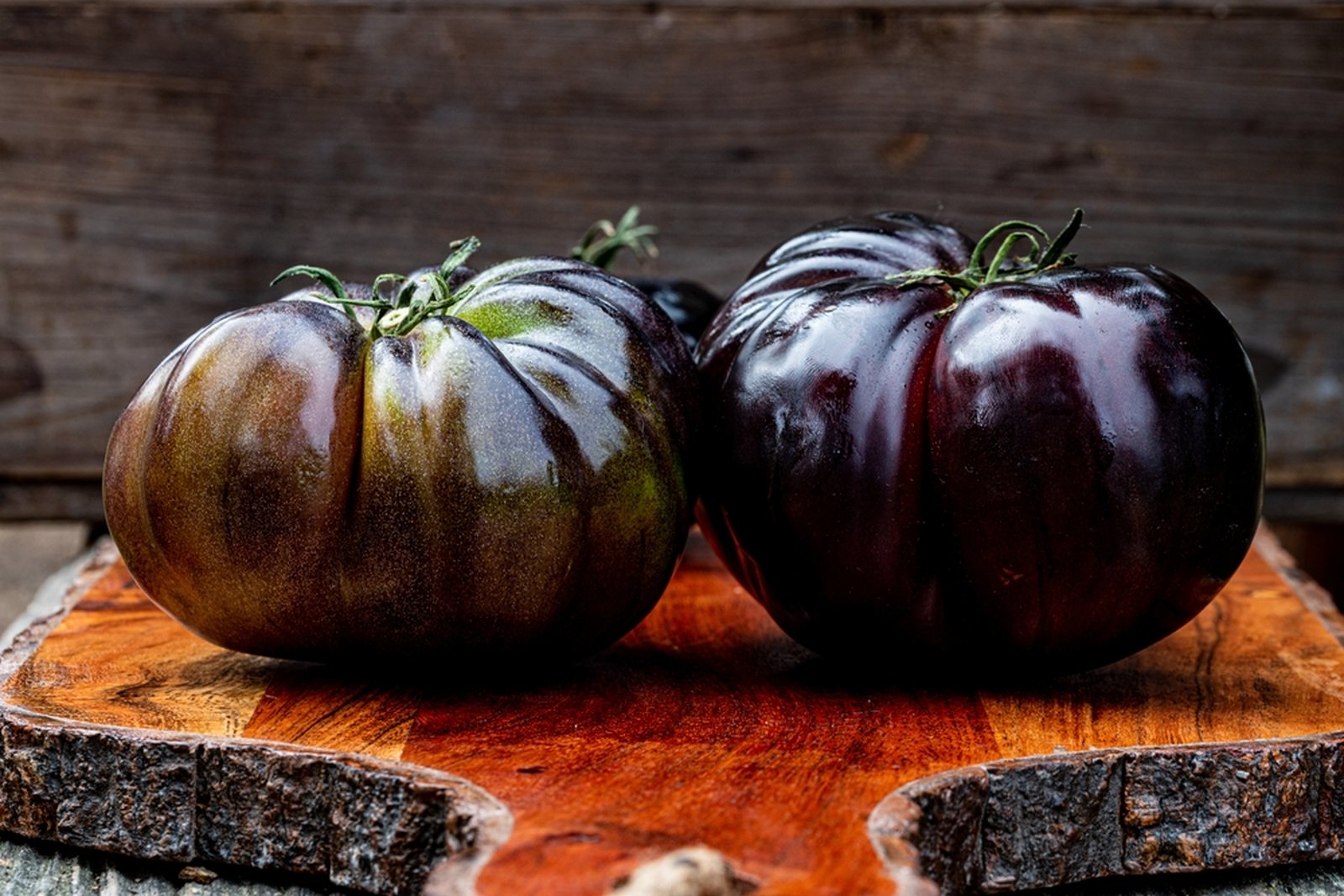
Black Krim is easy to recognize in a photograph and surprisingly easy to misread on the vine. The fruit may ripen through dusky red, brown, olive, and green shoulder tones rather than reaching a uniform dark color. Sun, temperature, maturity, and the maintained seed line all influence the finish. A gardener who waits for every shoulder to turn red can lose the fruit to softness or splitting.
Grow Black Krim as a large indeterminate slicer. That means the support is installed before planting, the root zone is managed for steady moisture, and the canopy is protected rather than stripped. The fruit can be tender and crack after a dry period followed by heavy water, so harvest timing becomes part of crop protection.
The name also deserves a clean record. Keep the packet source, plant number, leaf and fruit description, and any off-types. The popular story about origin should not replace the evidence carried by the actual seed line in hand.
Good tomato records begin with what the plant actually does in your garden, not with a promise copied from somewhere else.
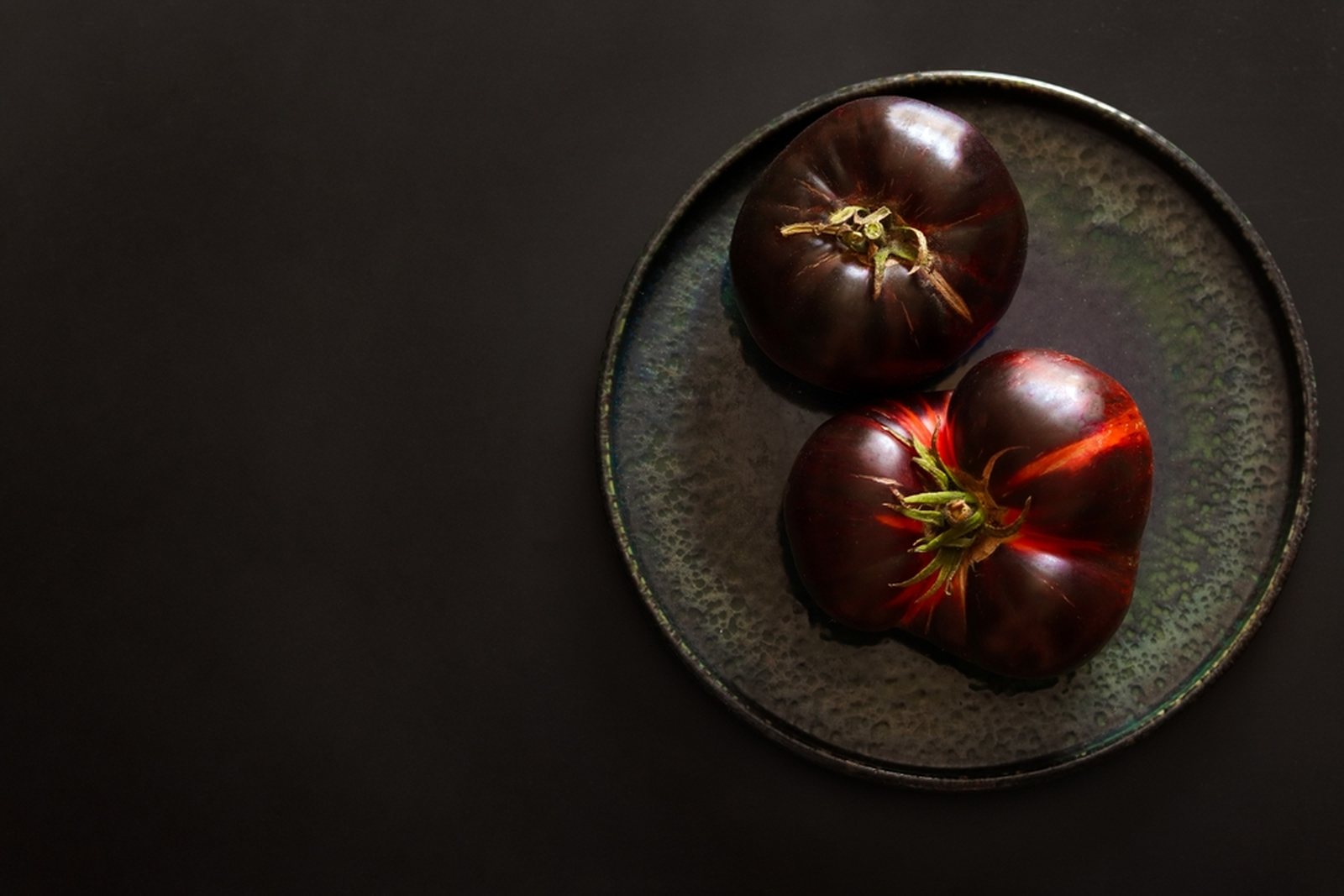
Black Krim field specifications and ripeness cues
Dark tomatoes are especially easy to misread because shoulder chlorophyll, sun exposure, temperature, and ripeness all affect color. Use the named seed lot and several harvest cues together.
| Field measure | Practical starting point | How to use it |
|---|---|---|
| Seed-starting lead time | 6 to 8 weeks before transplant | Avoid holding oversized plants. Strong light and timely potting matter more than extra indoor age. |
| Germination root-zone temperature | 75 to 85°F | Provide warmth for emergence, then strong light and moderate air temperature. |
| Transplant spacing | About 24 to 36 inches | Black Krim is indeterminate and needs a support system plus room for airflow. |
| Support | A sturdy 6 to 8 foot cage, stake, or trellis | Install early. Fruit weight and long vines can pull weak cages over. |
| Maturity estimate | Often about 75 to 85 days from transplant | Use the seed source's estimate and add weather buffer. |
| Water pattern | Deep, even irrigation with 2 to 3 inches of mulch | Reduce dry-to-soaked cycles that contribute to splitting. |
| Ripeness cue | Red-brown lower fruit, developed aroma, and slight give | Green shoulders can remain. Do not wait for the entire fruit to become uniformly red. |
| Storm harvest | Pick breaker or turning fruit before a major rain when cracking risk is high | Mature fruit can finish indoors at room temperature. |
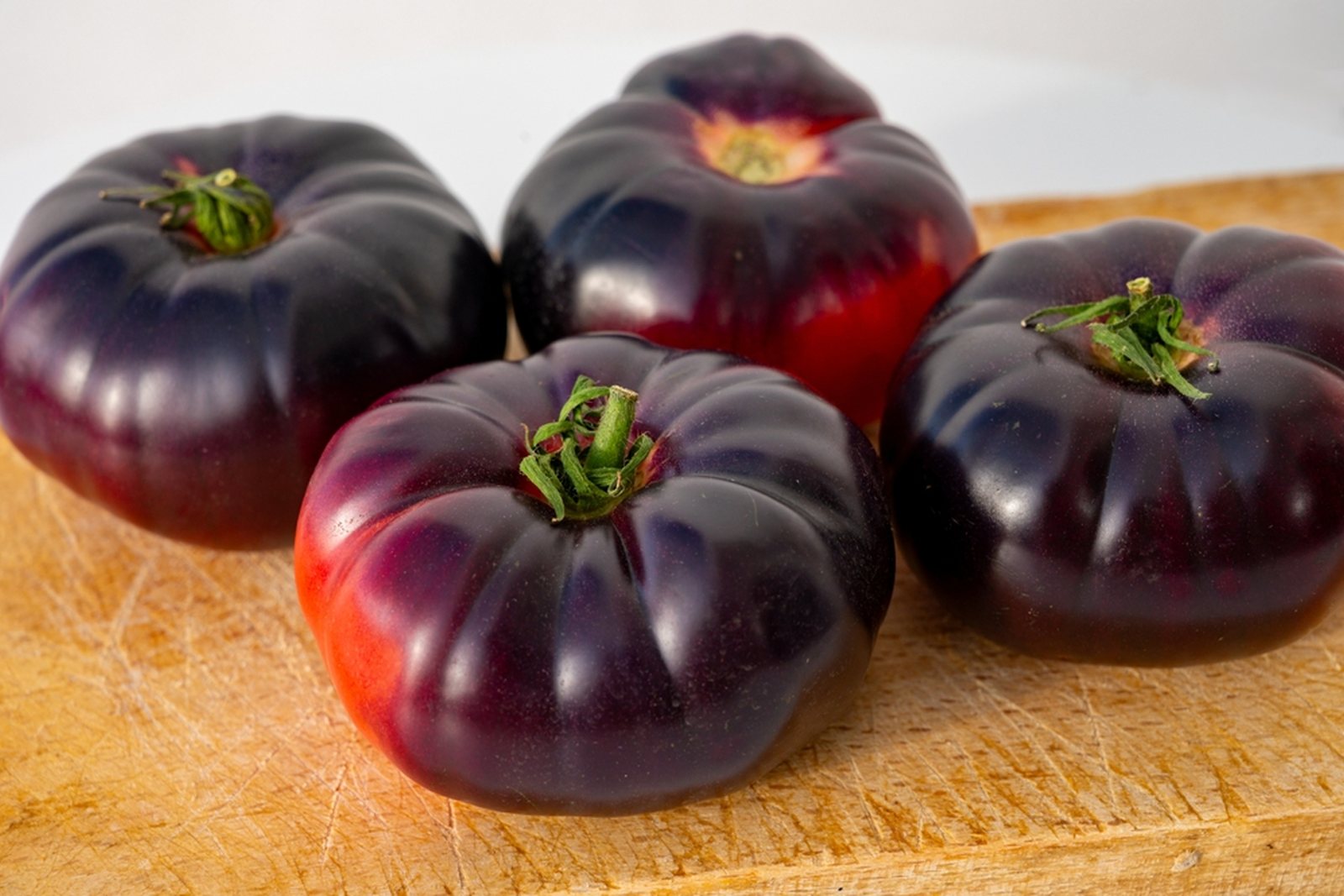
The dark appearance comes from the interaction of red flesh, skin, and retained chlorophyll. Sun-exposed shoulders may look darker than shaded fruit on the same plant. Cool or hot weather can also change pigment development. This is why a single color photograph is a poor identity test.
Evaluate Black Krim over several fruit and more than one harvest date. Record cracks, radial splits, concentric shoulder checking, catfacing, sunscald, flavor, and usable pounds. A spectacular first fruit should not erase a season of losses, and one cracked fruit should not erase a productive plant.
When saving seed, maintain the full name and seed source. Select healthy plants that match the expected indeterminate habit, fruit size, dark ripe color, and internal character. Manage crossing risk with distance, blossom bagging, or controlled pollination when high purity matters.
Read the fruit before it becomes overripe
- Check the bottom and side of the fruit, not only the green shoulder.
- Use a gentle touch. The fruit should yield slightly without feeling watery or collapsed.
- Smell near the stem for developed tomato aroma.
- Harvest ahead of heavy rain when the fruit is mature enough to finish indoors.
- Cut several fruit during the season and record flesh color, gel, seed cavities, and defects.
Important: The photographs show dark red-brown tomatoes with green or purple shoulders. Appearance alone cannot confirm that every pictured fruit is Black Krim.
Record Black Krim as a specific open-pollinated cultivar
Label every plant with the full cultivar name and seed source. Black Krim belongs to the broad group often called black or dark tomatoes, but it is not interchangeable with Cherokee Purple, Carbon, Black from Tula, Paul Robeson, or every other dusky slicer. Those varieties differ in fruit shape, shoulder color, leaf form, maturity, texture, and field performance.
The plant is generally grown as an indeterminate tomato, continuing to extend and flower through the season until weather, disease, or management stops it. Fruit is commonly medium to large and somewhat flattened, with shoulders that may remain green or dark. Record the actual range from several plants rather than forcing every fruit to match one catalog photograph.
| Record | Black Krim field observation |
|---|---|
| Seed source | Keep the company, exchange, or seedkeeper name |
| Plant habit | Confirm indeterminate growth in the field |
| Leaf and stem | Photograph typical foliage before disease or pruning changes it |
| Fruit color | Record lower fruit color and shoulder color separately |
| Fruit shape and size | Use a range from several sound fruit |
| Off-types | Label and exclude from the seed lot unless making a separate selection |
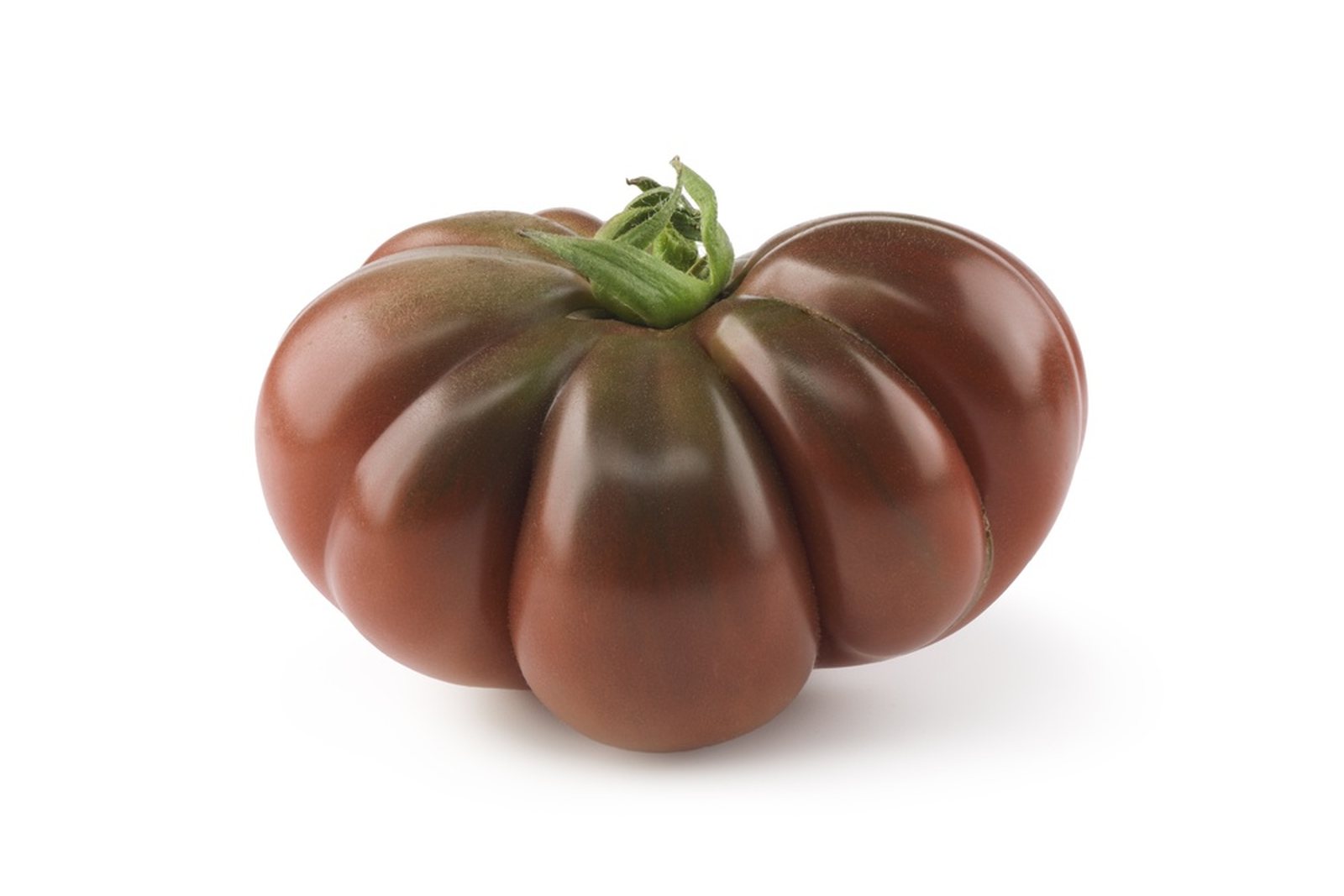
Keep the modern seed record separate from the origin story
Black Krim is widely described as connected to Crimea, sometimes through the island or peninsula region that gave rise to the English name Krim. That broad association is part of the modern cultivar story, but the exact path from local tomato populations to today's commercial and exchange lines is not always documented with the precision a seedkeeper would want.
Use public germplasm records, dated catalogs, exchange listings, and the packet source to document the current line. State earlier stories as reported rather than proven when the chain of custody is incomplete. A careful modern record does not diminish the variety. It protects it from a history that becomes more certain each time it is retold.
When seed is shared, include the year grown, location, number of plants, fruit description, and any selection. The next grower should know whether the seed represents a broad population, a single-plant selection, or seed combined from several typical plants.
Start seedlings warm, bright, and on schedule
Sow indoors roughly six to eight weeks before the expected transplant date. Use clean seed-starting mix, cover seed lightly, and provide a warm root zone. After emergence, remove excess bottom heat if the room is already warm, place seedlings under strong overhead light, and add gentle airflow. The objective is a compact transplant, not the tallest one.
Pot up when roots fill the starting cell and the plant can be moved without the root ball collapsing. Do not let seedlings remain saturated or crowded. Purple stems alone are not a reliable diagnosis of phosphorus shortage; cool roots, genetics, and light can affect color. Diagnose the whole plant before fertilizing.
Harden seedlings gradually over a week or more. Begin with sheltered outdoor exposure, increase sun and wind step by step, and bring plants in during cold nights. Transplant after frost danger when soil and nights are warm enough for active tomato growth.
Support the indeterminate vines before the first heavy cluster
Install a tall anchored cage, strong stakes, a trellis, or a Florida weave at planting. Black Krim can become a substantial vine, and large fruit adds leverage to branches. A cage that appears adequate in spring may fold when foliage is wet and the plant is carrying mature fruit.
Leave airflow and harvesting access around the plant. In humid regions, dense overlapping canopies stay wet longer and hide lower-leaf disease. Support should let you reach clusters without twisting the vine and should provide a place to tie branches beneath heavy fruit.
- Anchor the support before roots spread.
- Keep ties loose enough for stem expansion.
- Add support beneath fruiting branches early.
- Maintain a clear inspection zone near the soil.
- Preserve a visible plant label after the canopy fills.
Manage moisture swings to reduce cracking
Black Krim is often valued for tender flesh and rich fresh-eating quality, but soft-skinned large fruit can crack when water supply changes abruptly. The common pattern is dry soil followed by heavy rain or irrigation while fruit is near maturity. Rapid expansion exceeds what the skin can accommodate.
Water deeply at the root zone and use mulch after the soil warms. Let soil moisture, plant size, temperature, wind, and container or bed conditions determine frequency. A fixed shallow daily splash can leave the deeper root zone dry. Conversely, saturated soil restricts roots and can create its own stress.
Watch the forecast as fruit begins coloring. Harvest breaker or turning fruit before prolonged rain and finish it indoors. Remove badly split fruit promptly, since exposed flesh attracts insects and decays. Minor surface cracks may be trimmed for immediate kitchen use when the fruit is otherwise sound, but do not store damaged fruit or use spoiled fruit for seed.
Preserve canopy through heat and intense sun
Dark fruit can absorb significant heat in direct sun. Preserve enough healthy foliage to shade the fruit, especially in the Southeast and other hot regions. Remove leaves touching the soil and foliage that is clearly diseased, but do not strip the plant into an exposed skeleton.
High daytime temperatures and warm nights can reduce pollen function and flower retention. The plant may continue blooming while fruit set pauses. Keep moisture steady, avoid excess nitrogen, and let a healthy plant wait for better nights. Temporary afternoon shade during extreme heat may reduce stress, but tomatoes still require strong light for productive growth.
If a plant suddenly wilts during heat, check soil moisture at root depth and inspect stems and roots before assuming disease. A wilt that recovers each evening differs from a progressive vascular or root problem. Record the pattern and seek Extension diagnosis when symptoms do not fit simple heat stress.
Prune to fit the support and preserve fruit quality
Choose a pruning system that the support can carry. One or two leaders may suit stakes or strings; a strong cage can hold a fuller plant. Remove soil-contact leaves and clearly damaged foliage, then maintain consistent access to the center of the plant. Random severe pruning after the canopy becomes tangled causes more injury than planning early.
Large fruit clusters may need slings or ties beneath the branch. Place support below a strong junction and check it as stems expand. Avoid tight wire or string that cuts into the vine. After storms, inspect for creases and broken leaders before they wilt beyond repair.
Keep pruning comparable in a dark-tomato trial. A fully caged Black Krim and a single-stem Carbon cannot be fairly compared for yield, sunscald, or disease unless the different system is part of the question being tested.
Read Black Krim ripeness from background color, feel, and aroma
Do not wait for Black Krim to become uniformly black or red. The lower fruit often develops a dusky red, brown, or purple tone while shoulders remain green to olive. Sun-exposed shoulders may be darker than shaded fruit. Learn the expected finish of the exact seed line and compare a mature fruit with an immature one on the same plant.
A ripe fruit usually yields slightly to gentle pressure and develops a stronger tomato aroma. The stem end should remain sound. If the fruit is soft enough to dent easily, it may be beyond the best slicing stage even though the shoulders still look green.
| Cue | Use it this way |
|---|---|
| Lower fruit color | Look for the mature dusky red or brown background |
| Shoulders | Green or olive shoulders may persist at ripeness |
| Feel | Seek slight give without collapse or leakage |
| Aroma | Compare with a hard immature fruit |
| Weather | Pick earlier before heavy rain, frost, wildlife pressure, or cracking |
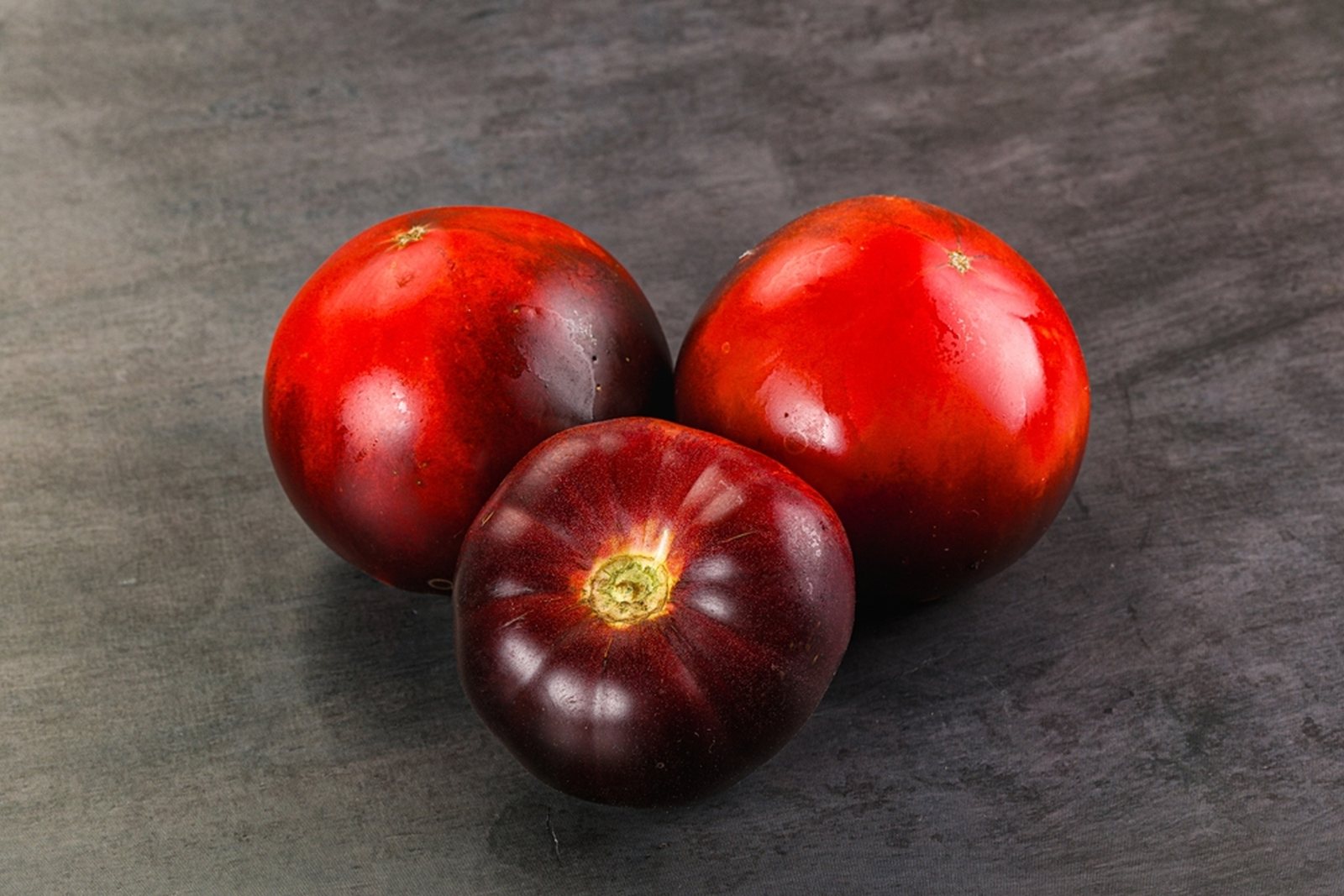
Taste several fruit before defining the flavor
Black Krim is commonly praised as rich, savory, smoky, or balanced, but those words should be tested against the actual harvest. Taste fruit at room temperature from more than one plant and date. Record sweetness, acidity, aroma, texture, skin, core, and aftertaste before discussing the expected reputation.
Use sound fruit for fresh slices, sandwiches, salads, roasting, or sauces where its darker color is welcome. Large juicy slicers may require more reduction than paste tomatoes. Measure the finished kitchen result rather than assuming a dark beefsteak will behave like a paste tomato because its flavor seems concentrated.
Sort by ripeness. Use the softest sound fruit first, keep firmer turning fruit at room temperature, and refrigerate only when necessary to slow deterioration. Let chilled fruit return toward room temperature before tasting so aroma is easier to perceive.
Diagnose leaf problems before treating the plant
Black Krim does not carry a universal disease-resistance promise. Use mulch, root-zone irrigation, generous spacing, rotation where practical, sanitation, and regular inspection. Start with lower foliage, since splash-dispersed leaf spots often appear there first.
Early blight, Septoria, bacterial spot, late blight, nutrient stress, herbicide injury, root damage, and normal aging can overlap. Photograph the whole plant and the upper and lower leaf surfaces. Note recent rain, irrigation, temperature, nearby chemical use, and whether several species show similar injury.
Remove severely affected foliage on a dry day only when removal will not strip the canopy. Clean tools between plants. Escalate rapid, uncertain, or stem-involving symptoms to Cooperative Extension or a plant disease clinic rather than applying several products to an unidentified problem.
Compare Black Krim fairly with other dark tomatoes
A useful trial might include Black Krim, Cherokee Purple, Carbon, and Black from Tula, but keep the number manageable. Plant several individuals per variety, use the same transplant date, spacing, support, mulch, and irrigation, and record the exact seed source.
| Comparison | Record |
|---|---|
| Maturity | First ripe date and harvest curve |
| Set in heat | Flowers versus fruit during warm nights |
| Cracking | Sound fruit percentage after rain |
| Disease | First symptom date and severity |
| Flavor | Blind tasting across several dates |
| Usable yield | Weight of sound kitchen-ready fruit |
| Seed integrity | Off-types and plants selected for seed |
The winner may change by goal. One dark tomato may have the best single fruit, another the highest sound yield, and another the strongest heat recovery. Keep those outcomes separate instead of forcing the trial into one ranking.
Save seed from healthy, typical Black Krim plants
Black Krim is open-pollinated, so seed can be saved when the cultivar is correctly identified. Tomatoes primarily self-pollinate, but crossing is possible. Use separation, flower bagging, or other isolation practices according to the purity needed and the number of nearby varieties.
Choose fully ripe, sound fruit from healthy plants that match the expected habit and fruit description. Save from more than one plant when maintaining a population. Keep off-types separate. Ferment the seed and gel briefly, wash until clean, dry in a thin labeled layer, and store only when completely dry.
The final label should include cultivar, source, year, garden location, plant numbers, selection notes, and any unusual crossing risk. A later germination test confirms viability but does not confirm varietal purity; the field record does that work.
A one-season Black Krim plan
- Label the exact seed source and tray position.
- Start seedlings six to eight weeks before transplanting.
- Install heavy support at planting.
- Mulch after soil warms and irrigate at the root zone.
- Preserve healthy canopy through heat.
- Monitor flowers, fruit set, cracking, and lower-leaf symptoms.
- Harvest by background color, feel, aroma, and forecast.
- Taste several harvests and compare with another dark cultivar.
- Save seed from healthy typical plants and retain the full record.
The season record should state what Black Krim did, not what it was expected to do. That is the information worth carrying forward.
Separate identity, ripeness, and performance
Identity comes from the seed lot and grow-out record. Ripeness comes from background color, feel, aroma, and experience with that line. Performance comes from the full-season record. Keeping those three questions separate prevents a dark tomato photograph from doing work it cannot do.
| What you observe | Most useful next check | Action that follows the evidence |
|---|---|---|
| The shoulders remain green | Check lower fruit color, slight give, and aroma | Harvest when the full set of cues indicates maturity. Do not wait for uniform red color. |
| The fruit repeatedly splits | Review irrigation swings, rain timing, mulch, and harvest stage | Stabilize moisture and harvest mature fruit before storms. |
| A dark tomato is labeled Black Krim | Trace the packet, plant tag, and lot record | Do not accept color as the only proof of identity. |
| The first fruit tastes flat | Retest another fruit at room temperature on a later date | Record weather and water history before judging the cultivar. |
Black Krim tomato identity begins with a seed record, not a dark fruit photograph
This Black Krim tomato guide separates variety identity from dark fruit color. It covers Black Krim ripeness, Black Krim green shoulders, growing Black Krim tomatoes, Black Krim cracking, comparisons with dark heirloom tomatoes, and the steps used to save Black Krim seeds responsibly.
Black Krim tomato is generally maintained as an indeterminate, open-pollinated, dark-fruited beefsteak. The ripe fruit may combine a red-brown or mahogany lower surface with olive, green, or darker shoulders. Color varies with ripeness, light exposure, temperature, strain, and photography. A dark tomato in a bowl is not enough to prove Black Krim identity.
Record the full packet information before sowing: supplier, seed lot, year, expected habit, leaf type, fruit description, maturity, and any provenance claim. Keep that record with the tray, transplant, field plant, harvest, and saved seed. If the grow-out produces fruit with a clearly different size, form, color, or plant habit, flag the plant instead of rewriting the variety description to fit it.
| Identity clue | Useful observation | What it cannot prove alone |
|---|---|---|
| Indeterminate growth | Continued stem extension and flowering through the season | Black Krim rather than another vining tomato |
| Dark shoulders | Olive, green, brown, or dark tones near the stem | Exact cultivar or full ripeness |
| Beefsteak form | Broad, often somewhat flattened fruit with multiple seed cavities | Strain purity |
| Red-brown interior | Cut fruit can show deep red, mahogany, or green gel tones | Flavor quality or disease resistance |
| Open-pollinated label | Seed can be maintained when parent selection and isolation are adequate | Zero crossing in an unprotected garden |
Build a season plan around an indeterminate, large-fruited plant
Black Krim needs the same fundamentals as other indeterminate beefsteaks: strong transplants, warm soil, tall support, steady root-zone moisture, enough canopy, and a long enough season. Start indoors about five to eight weeks before a realistic transplant date. Starting earlier is not an advantage when plants become root-bound or flower in small cells.
- Germinate in warm media, commonly 70 to 85 F.
- Move seedlings under strong overhead light immediately after emergence.
- Pot up before roots form a tight circling mass.
- Harden gradually over 7 to 10 days.
- Transplant after frost danger when soil has warmed, with support already installed.
- Mulch after the root zone has warmed and the plant is established.
- Begin a weekly record of ties, lower-leaf condition, flowers, set fruit, rain, and harvest.
Do not plant every Black Krim at the same time if summer heat commonly interrupts fruit set. An earlier plant may set before the hottest nights. A second planting can be positioned for a later favorable window. This spreads risk without changing the cultivar.
How to tell when a Black Krim tomato is ripe
Dark tomatoes are frequently picked too early because gardeners wait for the shoulders to turn a uniform red. Black Krim shoulders may retain green or olive color even when the lower fruit is ready. Use at least four signals together:
- Lower background color: the lower and side surface shifts from hard green toward brick red, red-brown, or mahogany.
- Shoulder change: shoulders may darken or soften in tone without losing every trace of green.
- Gentle feel: the fruit yields slightly to broad finger pressure but is not soft or leaking.
- Aroma and release: ripe fruit develops tomato aroma and usually releases more readily from the stem.
| Stage | Typical Black Krim cue | Best use |
|---|---|---|
| Mature green | Full size but hard; no warm background color | Harvest only for frost, damage risk, or deliberate indoor ripening |
| Breaker | First visible warm color on less than about one-tenth of the surface | Harvest before heavy rain or animal pressure; finish indoors |
| Turning | Warm color expands; fruit begins to relax slightly | Transport, short holding, or rain-risk harvest |
| Table ripe | Developed lower color, slight give, aroma, mature interior | Fresh tasting and seed selection |
| Overripe | Soft spots, leaking, skin failure, or fermented odor | Not suitable for seed maintenance or storage |
Create a ripeness card from your own strain and garden. Photograph the same fruit color under natural light, record the cut interior, and taste at room temperature. This is more reliable than comparing the crop with an edited online photograph.
Why Black Krim cracks and how to reduce losses
Large, thin-skinned, dark tomatoes can be vulnerable to cracking, especially when dry soil is followed by rain or heavy irrigation. Fruit already near ripe stage is at highest risk because the skin may not expand as quickly as the interior.
| Crack type | Pattern | Practical response |
|---|---|---|
| Radial | Splits extending downward from the stem end | Stabilize moisture and harvest breaker or turning fruit before heavy rain |
| Concentric | Rings around the shoulder | Preserve canopy, avoid moisture swings, and monitor exposed fruit |
| Fine skin checking | Many shallow surface lines | Record humidity and ripeness; harvest before damage deepens |
A water-management protocol
- Check moisture several inches below the mulch, not only the surface.
- Water deeply enough to wet the active root zone.
- Do not allow repeated severe wilting between irrigations.
- Use mulch to reduce evaporation after the soil has warmed.
- After prolonged drought, avoid flooding the root zone with one extreme irrigation.
- Use the forecast as part of harvest management. Pick mature fruit ahead of a major storm when appropriate.
Record crack loss by weight. If Black Krim produces 40 pounds but 12 pounds split beyond use, its usable yield is 28 pounds. That is the number to compare with another dark tomato.
Grow Black Krim through heat and humidity without stripping the canopy
Black Krim may remain alive and vigorous during heat while fruit set slows. Survival is not the same as productive heat tolerance. Tomato pollen function can decline when days repeatedly exceed about 90 F and nights remain above about 70 F. During that window, preserve roots and foliage so the plant can set again when conditions improve.
- Water early at the root zone and avoid shallow daily sips.
- Maintain mulch to moderate soil temperature and moisture swings.
- Use temporary 30 to 40 percent shade during exceptional heat rather than permanent deep shade.
- Keep enough foliage to protect dark fruit from sunscald.
- Space and support plants so leaves can dry after rain.
- Avoid high-nitrogen feeding that drives soft foliage while flowers are aborting.
- Scout lower leaves weekly because early disease removal is easier than late defoliation.
A dark tomato can absorb substantial solar energy. Fruit exposure after pruning or disease can create heat injury. If the canopy must be thinned, remove the minimum foliage needed for access and drying.
Support and prune Black Krim for fruit quality
Use a tall rigid support installed at transplanting. Penn State guidance for staked indeterminate tomatoes uses 6 to 7 foot stakes driven about a foot into the ground, with plants commonly spaced 18 to 24 inches in a closely trained system. In a humid home garden, 24 to 36 inches may make scouting and drying easier.
Choose a training goal:
| System | Advantages | Risks |
|---|---|---|
| Heavy cage | Less pruning, good leaf cover, many fruiting stems | Needs strong material and more bed width |
| One leader on a stake | Easy access and narrow footprint | High tying labor and greater sunscald risk if overpruned |
| Two leaders | Balances access and canopy | Requires early leader selection and regular tying |
| Florida weave | Efficient for a row and distributes load | Needs strong end posts and repeated stringing |
Remove suckers only when they conflict with the chosen structure. Do not remove productive stems just because a generic pruning rule says every sucker is waste. Preserve the leaves shading developing fruit.
Evaluate Black Krim flavor without letting the name decide the score
Black Krim is often described with words such as rich, smoky, salty, or complex. Those are sensory impressions, not guaranteed chemical specifications. Run a coded tasting with fruit at equal ripeness and temperature.
- Use fruit from at least three plants when possible.
- Taste on two or more harvest dates.
- Serve random-numbered samples at room temperature.
- Score sweetness, acidity, aroma, flesh, gel, skin, and aftertaste separately.
- Repeat one comparison after cooking equal weights without seasoning.
- Record weather and irrigation during the week before harvest.
A dark tomato that wins fresh tasting may not be the best sauce tomato. A fruit with exceptional flavor may still crack too heavily for a particular garden. Keep flavor, usable yield, and labor in separate columns, then decide which tradeoff matters to the household.
Save Black Krim tomato seed as a maintained population
Select parent plants before the first harvest. Mark healthy plants that match the expected indeterminate habit, fruit form, color pattern, and ripeness cues. Save from multiple typical plants rather than one unusually large fruit. For variety maintenance, Organic Seed Alliance recommends roughly 10 to 20 plants when possible.
Black Krim flowers are mostly self-pollinating, but crossing is still possible. Use distance, blossom bags, or another isolation method when purity matters. Record protected clusters.
- Harvest fully ripe, disease-free fruit from marked parents.
- Extract seed and gel into a labeled container.
- Ferment for about 2 to 3 days at roughly 70 to 85 F.
- Add water, settle sound seed, and decant floating pulp and light seed.
- Rinse clean and spread thinly on screen or a nonabsorbent surface.
- Dry with airflow below damaging temperatures; avoid paper towel.
- Label the lot with full variety, parent count, isolation method, harvest date, and field notes.
The following grow-out is part of seed saving. Compare leaf type, plant habit, fruit shape, color, and maturity. Rogue clear off-types before saving the next generation.
A Black Krim field record that answers the real questions
| Question | Record | Decision |
|---|---|---|
| Was it early enough? | Transplant, first flower, first breaker, first ripe dates | Adjust sowing or planting window |
| Did heat stop fruit set? | Marked-cluster fruit-set percentage and temperature | Add an earlier planting or heat-set companion variety |
| How serious was cracking? | Usable and cracked fruit weight by harvest | Change watering, harvest stage, or variety mix |
| Was flavor consistent? | Blind scores on multiple dates | Separate one excellent fruit from reliable eating quality |
| Did it fit the support? | Height, tie count, storm damage, labor minutes | Change cage, spacing, or pruning system |
| Is the seed lot true? | Parent plants, fruit photographs, isolation, next grow-out | Maintain or reject the saved lot |
Black Krim earns its place when its flavor and dark-fruit character justify the support, harvest attention, and cracking management required in your garden. A recorded result is more useful than either praise or disappointment without context.
Detailed Black Krim tomato questions
How dark should Black Krim be when ripe?
There is no single black exterior. Look for a mature red-brown or mahogany lower background, changing olive or green shoulders, slight give, and aroma. Light, temperature, and strain affect darkness. Use a cut fruit and taste record from your seed line.
Why does Black Krim have green shoulders?
Retained chlorophyll near the stem is common in dark tomatoes. Green shoulders can remain at table ripeness. Judge the lower fruit and overall feel instead of waiting for the shoulder to become uniform red.
Why do Black Krim tomatoes split?
Near-ripe fruit can expand rapidly after rain or heavy irrigation following dry soil. Stabilize moisture, mulch, preserve canopy, and harvest breaker or turning fruit before a major storm. Record cracked weight to evaluate the variety fairly.
Is Black Krim determinate or indeterminate?
Black Krim is generally grown as an indeterminate tomato. It needs tall support and continues flowering through the season. Heat may interrupt fruit set even while vines keep growing.
Does Black Krim need full sun?
Tomatoes need strong light, but extreme afternoon sun can overheat exposed dark fruit. Preserve foliage and use temporary shade during exceptional heat. Permanent deep shade can reduce flowering and yield.
What does Black Krim taste like?
It is often described as rich or complex, but flavor changes with ripeness, weather, and the seed line. Taste several room-temperature fruit under random numbers and score sweetness, acidity, aroma, texture, and aftertaste.
Can Black Krim seed be saved?
Yes, when the lot is open-pollinated and identity is clear. Select several healthy typical plants, manage crossing, ferment seed for about two to three days, dry thoroughly, and verify the next grow-out.
Frequently asked questions
What color is a ripe Black Krim tomato?
Ripe fruit may be dusky red, brown, purple-toned, or olive at the shoulders. Use background color, slight softness, aroma, and the exact strain record.
Why does Black Krim crack?
Large mature fruit may expand faster than the skin after dry soil is followed by heavy rain or irrigation. Steady moisture, mulch, and timely harvest reduce risk.
Is Black Krim determinate or indeterminate?
It is generally grown as an indeterminate tomato and needs tall, durable support.
Does Black Krim need full sun?
Tomatoes need strong light, but healthy foliage should shield fruit. Temporary afternoon shade can help during exceptional heat without turning the crop into a shade plant.
Can Black Krim finish ripening indoors?
Yes. Fruit that has entered breaker or turning stage can finish at room temperature, which is useful before rain, frost, or cracking weather.
Can I save Black Krim seed?
Yes. It is open-pollinated. Select healthy typical plants, manage crossing risk, ferment and dry seed, and keep detailed labels.