Free U.S. seed shipping $25+. Seeds ship free at the threshold. Storefront goods, pantry finds, books & local goods are being added.

New seeds, Main Street specials, and storefront finds update as the market grows.

← Back to Growing Guides & Planting Advice

Seed Saving & Varieties

Growing Tomatoes in Containers: Pot Size, Soil, Support, Water, and Variety Choice

Grow productive tomatoes in containers by matching variety and support to the pot, protecting the root zone, and managing water and fertility without extremes.

Tall tomato plants growing in large wooden barrel containers
In this story

    Seedkeeper's field record

    Know the crop before you trust the story

    Names sell quickly. Good records travel slower, but they last.

    Scientific name
    Solanum lycopersicum
    Crop identity
    A container-production guide for micro, dwarf, determinate, and indeterminate tomatoes grown in pots, planters, grow bags, and patio systems
    Botanical family
    Solanaceae
    Life cycle
    Tender perennial grown as an annual in most North American gardens
    Primary garden and kitchen use
    Matching tomato habit to container volume, building a stable support system, managing root-zone heat and moisture, and producing fruit where in-ground space is limited
    Seed-saving system
    Primarily self-pollinating. Save from healthy open-pollinated plants, label each selection, ferment ripe seed, dry completely, and store cool and dry.
    Provenance status
    Container suitability is a management and plant-habit judgment, not a guarantee attached to one marketing label. The maintained variety, mature habit, pot volume, climate, and care system must be recorded together.
    Regional fit
    Warm-season crop with strong relevance to humid southeastern gardens. Adjust sowing and transplanting to local frost dates, night temperatures, summer heat, and disease pressure.

    A tomato can survive in a surprisingly small pot, but survival is not the same as a productive container crop. The plant still needs room for roots, a reliable reservoir of water and nutrients, enough weight to resist wind, and a support system that remains stable after the canopy is full of fruit.

    Choose the plant and the container as one system. A micro tomato can be useful in a modest pot because its mature frame stays compact. A vigorous cherry or beefsteak can also be grown in a container, but the pot, support, irrigation, and feeding plan must expand with it. Calling every tomato a patio tomato hides the most important decision, which is how large the plant will actually become.

    Container growing also magnifies weather. Roots warm and dry faster above ground, heavy rain can leach fertility, and one missed watering can affect flowers and fruit. The advantage is control. We can choose the mix, improve drainage, move some containers, protect the root zone, and observe each plant closely enough to correct problems early.

    Good tomato records begin with what the plant actually does in your garden, not with a promise copied from somewhere else.

    Tall tomato plants growing in large wooden barrel containers
    Large containers provide a deeper water and root buffer for vigorous tomatoes, but the support still needs secure anchoring.

    Container specifications that prevent the common failures

    The container, plant habit, support, potting mix, water reserve, and fertilizer plan form one system. A large vine in a small pot cannot be corrected by watering more often forever.

    Field measure Practical starting point How to use it
    Micro tomato Often 1 to 3 gallons Confirm the mature width and root demand of the named cultivar.
    Compact dwarf or small determinate Usually 5 to 10 gallons Use more volume for large fruit, hot sites, or gardeners who cannot water several times a day.
    Standard determinate Often 7 to 15 gallons The concentrated fruit load still needs a stable cage and water reserve.
    Standard indeterminate Prefer 10 to 20 gallons or more Large containers reduce root heat, drought swings, and fertilizer concentration.
    Drainage Several unobstructed holes with the pot raised off a sealed surface Do not add a gravel layer as a substitute for a drained mix and open holes.
    Potting mix Container mix with air-filled pore space and water-holding capacity Garden soil alone compacts, drains poorly, and becomes extremely heavy.
    Watering Water until drainage appears, then recheck by root-zone condition Hot, fruiting plants may need daily or twice-daily checks. A fixed schedule is less reliable than pot weight and moisture.
    Surface mulch About 1 to 2 inches after the mix has warmed Reduce evaporation without burying the stem or sealing a saturated mix.
    Support Anchor the cage or trellis to the container or a separate structure A fruit-loaded canopy can tip the entire pot in wind.

    Container roots heat and cool faster than garden soil. Dark pots in full afternoon sun can overheat even when the leaves still look acceptable. Shade the container wall, group pots, use a light-colored outer sleeve, or move the pot so the canopy receives sun while the root zone avoids the harshest reflected heat.

    Fertilizer salts accumulate because the root system cannot explore beyond the pot. Use a complete fertilizer according to label directions, split applications when appropriate, and occasionally water deeply enough to leach excess salts through open drainage holes. Do not keep adding nitrogen when flowers are dropping or foliage is already lush.

    A saucer is useful for protecting a surface, but the pot should not remain submerged after watering. Empty standing water unless the specific self-watering container is designed with a managed reservoir and aeration zone.

    Container check before planting

    • Confirm mature plant habit and fruit size.
    • Choose the final container before the seedling becomes root-bound.
    • Test drainage with the potting mix in place.
    • Install the final support at planting.
    • Plan who will water during heat, travel, and peak fruit load.
    • Keep one record of water frequency, fertilizer, cracking, blossom-end rot, and usable harvest.

    Important: A plant can remain alive in a small pot and still be a poor container system. Judge success by fruit set, usable harvest, root-zone stability, and labor, not survival alone.

    Match the tomato habit to the space and the job

    Begin with mature habit, not with fruit size. Micro tomatoes remain very compact and can fit railings, tables, or small patios. Dwarf tomatoes combine shorter internodes and a sturdy frame with fruit that may be much larger than the plant suggests. Determinate tomatoes make most of their growth and harvest in a more concentrated period. Indeterminate tomatoes continue extending vines and setting new clusters until weather or disease stops them.

    A small-fruited indeterminate tomato is not automatically a small plant. Many cherry tomatoes are vigorous and can outgrow a weak cage quickly. Likewise, a compact dwarf may carry large fruit and need a stake because the crop becomes top-heavy. Read the maintained variety record and plan for the mature frame rather than choosing by the photograph of one fruit.

    Plant type Container advantage Main planning need
    Micro Small footprint and early close observation Do not let the small pot dry or overheat
    Dwarf Compact frame with full-size tomato possibilities Support the fruit load and use adequate root volume
    Determinate Concentrated growth and harvest Provide enough water during flowering and fruit fill
    Indeterminate Long harvest and repeated clusters Use a large pot, tall support, and season-long pruning plan
    A compact yellow-fruited tomato plant growing in a small pot
    A true compact cultivar can fruit in a modest pot. Standard vines require much more root volume and support.

    Choose enough container volume before the roots are crowded

    Container recommendations are often presented as one magic gallon number. A better approach is to consider the plant habit, climate, container material, watering system, and length of season. The larger and longer-lived the plant, the more root volume and water reserve it needs. A tiny pot may work for a true micro variety, but a standard determinate or indeterminate tomato should not be expected to perform like an in-ground plant when its roots are confined to a decorative cachepot.

    Use a container that is wider and deeper than the original transplant pot, with enough base area to support a cage or stake. Larger containers change moisture more slowly, buffer fertilizer salts, and resist tipping. They are also heavy when wet, so place them before planting and confirm that the deck, balcony, bench, or wheeled base can carry the load.

    • Favor more volume in hot, windy, or long-season sites.
    • Use only containers with dependable drainage openings.
    • Do not allow an outer decorative pot to trap standing water around the root ball.
    • Consider how the mature plant and support will be moved before filling the pot.
    • Leave a watering space below the rim instead of filling media to the very top.
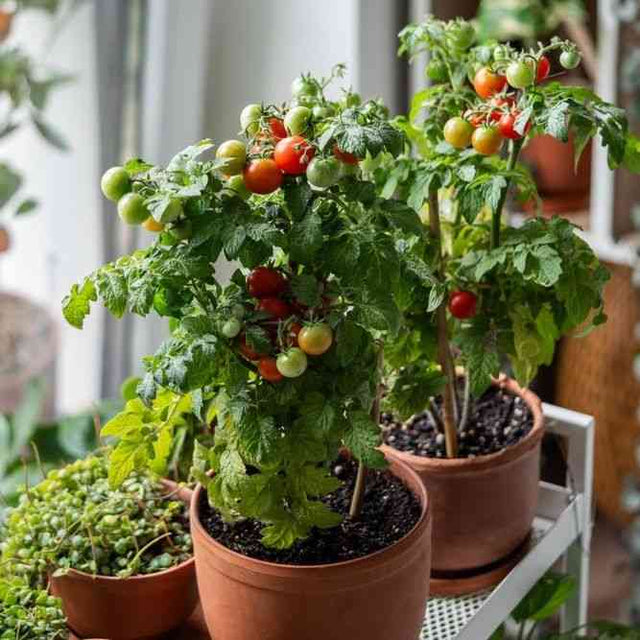
    Several compact tomato plants carrying clusters of fruit in containers
    Container performance should be judged by plant habit, fruit load, pot volume, water demand, and support, not by a patio label alone.

    Understand how container material changes the root zone

    Dark plastic can absorb substantial heat in direct sun. Fabric grow bags exchange more air and can shed excess water well, but their sides dry rapidly in wind. Glazed ceramic changes slowly but can be heavy and vulnerable to freeze damage. Unglazed clay loses moisture through the walls. Self-watering planters can reduce daily swings when their reservoir and overflow are designed and managed correctly.

    No material replaces drainage. Water must be able to leave the root zone after irrigation or heavy rain. Raising a flat-bottomed pot slightly may keep drain holes from sealing against a hard surface. Screens can keep mix from washing out, but a thick gravel layer does not create a better-drained root zone and can reduce useful media volume.

    During extreme summer heat, shade the container itself while keeping the foliage in adequate light. A light-colored outer sleeve, neighboring pot, temporary board, or strategic afternoon protection can reduce direct solar heating of the roots without turning the tomato into a shade crop.

    Use a potting mix that holds water and still contains air

    Garden soil alone is usually too dense for a container. A quality potting mix uses coarse and fine components to hold moisture while preserving pore space after repeated watering. The mix should accept water again after the surface dries, drain without staying swampy, and support roots through a full season.

    Before planting, moisten a dry mix thoroughly and break up hydrophobic pockets. Fill evenly without compressing the media into a hard block. If compost is included, keep the blend structurally open. A heavy mix that remains saturated can cause root stress even when the container has drain holes.

    Reuse of old potting mix requires judgment. Remove roots and diseased debris, assess structure, and avoid carrying a serious soilborne problem directly into the next tomato crop. Fresh mix is especially valuable when the previous plant suffered unexplained wilt, root rot, bacterial disease, or a severe pest infestation.

    Plant deeply enough for stability and root development

    Water the transplant before removing it from the nursery pot. Loosen tightly circling roots gently and set the plant so the root ball makes full contact with the new mix. Tomatoes can form roots along healthy buried stems, so a tall transplant may be planted deeper than it grew in the cell, provided leaves that would be below the media are removed.

    Install the final stake, cage, trellis, or support at planting. Driving a large stake through an established container later can tear roots and destabilize the whole system. Position the plant and support so the harvest side remains accessible and the container does not block a walkway when the canopy expands.

    Water slowly until the entire profile is moistened and excess water drains. A quick splash that wets only the surface encourages shallow roots and creates false confidence. After the first watering, add mix if settling exposes roots, but keep the stem crown and drainage space clear.

    Support the wet, fruit-loaded plant, not the transplant

    A container support must carry the plant and remain connected to a stable base. Small cone cages often look adequate in spring and fail when an indeterminate vine reaches the top. Use a heavy cage anchored into the pot, a strong central stake, a trellis attached to a wall or railing where permitted, or a freestanding frame that cannot topple with the container.

    Tie stems with a broad, flexible material and leave room for growth. Add ties before branches crease under the fruit. Wind can move a container-grown canopy like a sail, so keep the center of gravity in mind. A tall support in a narrow lightweight pot is an invitation to tip.

    Pruning should match the support. A one- or two-leader indeterminate system needs regular sucker decisions. A caged determinate or dwarf usually keeps more foliage. In hot climates, removing too much canopy can expose fruit to sunscald and increase heat stress.

    Tomato plants growing inside tall red metal cages
    A cage used with a container must be anchored to the pot or a separate structure so the fruit-loaded canopy cannot tip it.

    Water by root-zone condition, not by a fixed daily promise

    Container tomatoes may need frequent watering in summer, but a rule such as one watering every morning cannot account for pot size, plant size, weather, media, or recent rain. Feel the mix below the surface, lift smaller pots when possible, and learn the weight of a thoroughly watered container. Water deeply, then allow excess to drain.

    The goal is a steady supply, not constant saturation. Repeated severe drying followed by flooding stresses roots and fruit and can contribute to cracking and blossom-end rot. A small pot may require more than one careful watering on a hot windy day, while a large shaded container after rain may not need water at all.

    Drip emitters or a timed system can help, but they must be tested. Confirm that each emitter is flowing, that water spreads through the full root ball, and that a timer has not continued through a wet weather period. Automation reduces labor only when someone still observes the plant.

    Young tomato transplants being watered directly at the root zone
    This photograph shows root-zone watering in a bed rather than a container. The same principle applies, but container moisture changes much faster.

    Mulch the surface after the root zone has warmed

    A modest layer of clean mulch slows evaporation, buffers the surface, and reduces soil splash onto lower leaves. Straw, shredded leaves, or another clean organic material can work when kept away from the stem. Do not pack a wet collar around the crown.

    Mulch does not make a small container large, and it does not correct poor drainage. Use it as one part of a moisture plan. In cool spring weather, delay a thick mulch layer if the mix needs warmth. In midsummer, protect the container walls as well as the surface when direct sun is overheating the root zone.

    Feed steadily without turning the pot into a salt reservoir

    Container media contains a limited nutrient reserve, and frequent watering can leach soluble nutrients. Some potting mixes include a starter or controlled-release fertilizer, while others contain little. Read the mix label and begin with a plan rather than stacking several products at planting.

    Use a complete fertilizer according to its label and the plant response. Excess nitrogen can produce a large leafy canopy with weak flowering, while too little fertility can limit growth and fruit fill. Yellowing can also come from root saturation, cold media, high salts, or disease, so inspect the whole system before adding more fertilizer.

    Water thoroughly enough at intervals to prevent salt concentration, provided the container drains. Record product, rate, and date. A container that receives small unrecorded doses from several people can become overfed quickly.

    Protect roots, flowers, and fruit during severe weather

    Containers warm faster than garden soil and cool faster after sunset. During heat waves, move portable pots away from a reflected wall, shield the container, increase observation, and use temporary afternoon shade when needed. Maintain air movement around foliage without exposing the whole plant to constant drying wind.

    Heavy rain creates a different problem. Confirm drainage, empty saucers, and avoid fertilizing a saturated pot. A mature plant may require bracing before a storm. Harvest nearly ripe fruit when cracking, wind damage, or wildlife pressure is likely, then allow it to finish indoors.

    At the end of the season, a container may be moved to brief protection from a light cold event, but do not rely on mobility as the only frost plan. Large pots are heavy, vines break when dragged, and repeated indoor movement can bring pests into protected spaces.

    Diagnose container problems from the whole system

    Symptom Check first Common correction
    Plant wilts every afternoon Root-zone moisture, heat, pot volume, wind Water deeply if dry, shade the pot, and reassess container size
    Leaves yellow from below Saturation, root crowding, fertility, salts Inspect drainage and roots before feeding
    Flowers fall without fruit Heat, warm nights, humidity, drought, nitrogen Stabilize the root zone and wait for a better set window
    Fruit cracks Wet-dry swings, rain, maturity, cultivar Maintain even moisture and harvest ahead of major rain
    Pot tips Base width, support height, canopy weight, wind Anchor or move the system before the next storm
    One side stays weak Light direction, emitter placement, wall heat Rotate only when useful and correct the environmental imbalance

    Remove leaves only after considering whether the symptom is environmental, nutritional, infectious, or pest-related. Photograph the plant, pot, media surface, and pattern of injury. The location of a symptom often reveals more than a close-up of one leaf.

    Keep a container record that can be repeated

    • Variety and plant habit
    • Container volume and material
    • Potting mix and amendments
    • Support system
    • Planting date
    • Water method and frequency during key weather
    • Fertilizer product and dates
    • First bloom and first ripe fruit
    • Cracking, blossom-end rot, sunscald, or disease
    • Total usable harvest and final date

    At the end of the season, compare harvest with the space, water, and labor the plant required. A smaller tomato that produced reliably may be the better patio variety even when a larger vine gave a few spectacular fruit. Keep the pot and management details with the variety name, because container performance cannot be separated from the system that produced it.

    Read the pot before treating the leaves

    When a container tomato wilts, curls, drops flowers, or develops blossom-end rot, inspect the root system first. Ask whether the mix is dry, saturated, hot, compacted, salt-loaded, or too small for the crop.

    Water stress can exist in a wet pot when roots lack oxygen or have been damaged. More water is not always the answer.

    What you observe Most useful next check Action that follows the evidence
    The plant wilts every afternoon but recovers by evening Check root-zone temperature, pot volume, and morning moisture Increase root volume or shade the container wall before assuming disease.
    The plant stays wilted in wet mix Check drainage, odor, root color, and stem base Stop automatic watering and correct oxygen or root problems.
    Fruit cracks after watering Review dry-down depth and the interval between irrigations Water earlier and more evenly; add mulch and harvest mature fruit before storms.
    The cage leans as fruit develops Inspect anchor points and pot stability Brace the support to a railing, post, or heavier independent frame.

    Choose a tomato container for performance, not mere survival

    Growing tomatoes in containers is a root-zone management problem before it is a patio design problem. A useful tomato container size must fit the plant habit and weather; the same system must also support watering container tomatoes, dwarf tomatoes in pots, and larger plants that need a 10 gallon tomato container or more.

    A tomato can remain alive in a small pot while producing a stressed, low-quality crop. Container volume affects the interval between waterings, root temperature, nutrient stability, anchoring, and the amount of fruit the plant can support. University Extension recommendations vary, but a useful starting point is at least about 5 gallons for a determinate patio tomato and about 10 gallons for an indeterminate tomato. Larger containers, including pots around 20 inches wide or 15 to 25 gallons, are easier to manage in heat.

    Tomato habit Practical container starting point Why more volume helps Support need
    Micro 1 to 3 gallons depending on cultivar Reduces rapid drying and provides stability Short stake or small cage
    Dwarf 5 to 10 gallons; more for large fruit Short plants can still carry a heavy crop and substantial roots Strong short cage
    Determinate At least about 5 gallons; 10 gallons is easier in hot weather Buffers a concentrated fruit load and missed watering Heavy cage or anchored stake
    Indeterminate At least about 10 gallons; 15 to 25 gallons is safer for full-season growth Supports sustained roots, water reserve, and a tall vine Structural trellis or anchored cage

    Do not count the water reservoir or decorative outer shell as root volume unless roots can occupy it. A narrow tall pot may hold the same gallons as a wider pot but be less stable in wind.

    Container material changes heat, evaporation, and root oxygen

    • Black plastic: light and inexpensive, but can become hot in direct sun.
    • Light-colored plastic: reduces solar heating but still needs excellent drainage.
    • Unglazed clay: allows evaporation through the wall and may require more frequent watering.
    • Fabric grow bags: provide air pruning but can dry rapidly around the perimeter.
    • Wood: buffers temperature but must be structurally sound and made from appropriate material.
    • Self-watering containers: can stabilize moisture when the reservoir and overflow are correctly designed.

    Every container needs drainage. Water should move through the root zone and leave the pot. A layer of rocks does not repair a container without adequate holes and can reduce the volume of usable mix. Raise pots slightly if holes are sealed against a flat surface.

    Use potting mix, not compacted garden soil

    Container roots need water retention and air at the same time. Garden soil in a pot can compact, drain slowly, and contain pathogens or weed seeds. Use a quality soilless mix formulated for containers. It should wet evenly, drain freely, and resist collapsing into a dense mass over the season.

    Evaluate the mix after watering

    • Water should enter rather than run immediately down a gap at the pot edge.
    • Excess water should drain within minutes, not remain ponded for hours.
    • The mix should stay evenly moist through the root ball rather than becoming a wet lower layer and dry upper core.
    • Roots should be pale and branching when inspected, not black or sour-smelling.

    Leave enough space at the top for thorough watering and mulch. Do not fill a deep container halfway with trash or gravel to save mix; that removes the root and water reserve you purchased the container to provide.

    Water container tomatoes by root-zone condition

    Container tomatoes may need daily watering during hot, windy, fruiting weather, but "water every day" is not a diagnosis. Check the mix. Insert a finger or probe several inches deep, lift smaller containers, or use a moisture record. Water until the entire root ball is wet and drainage appears, then allow excess water to leave.

    Observation Possible cause Verification Response
    Plant wilts in afternoon but mix is moist Heat-driven transpiration exceeds temporary root uptake Plant recovers after evening without more water Provide temporary shade and wind protection; do not flood automatically
    Plant wilts and pot is light Dry root ball Probe shows dry mix through depth Water slowly in passes until the root ball rewets
    Plant wilts and pot is heavy Low oxygen, root disease, or saturated reservoir Drainage is poor or roots are brown Restore drainage and inspect roots before watering again
    Water exits immediately but center remains dry Hydrophobic mix or edge channeling Core inspection is dry Water slowly in repeated passes or bottom-soak briefly, then drain
    Blossom-end rot appears Moisture swings disrupting calcium movement Review dry-wet cycles rather than only fertilizer Stabilize irrigation and avoid root injury

    Morning is usually the easiest time to restore the root zone before daytime demand. Water at the mix surface and avoid repeatedly soaking foliage. During heat waves, inspect twice daily even if only one irrigation is needed.

    Feed container tomatoes without building a salt problem

    Frequent watering leaches nutrients, but repeated high-strength fertilizer can leave soluble salts when evaporation removes water. Use a complete fertilizer labeled for container vegetables and follow its rate. A controlled-release product, dilute liquid feeding, or a combination can work when monitored.

    • Do not add concentrated fertilizer to a dry root ball.
    • Watch leaf edges and root tips for salt injury.
    • If white crust forms on the mix or pot, review water quality and fertilizer rate.
    • Occasionally irrigate thoroughly enough for drainage when the product label and setup allow, carrying accumulated salts out of the root zone.
    • Reduce high-nitrogen feeding when plants are producing lush foliage but few flowers.

    Yellow leaves do not automatically mean more fertilizer. Saturated roots, low light, disease, root restriction, and old lower foliage can produce similar symptoms. Inspect the whole system.

    Anchor support for a wet, fruit-loaded tomato plant

    A cage pushed a few inches into loose potting mix may topple with the entire plant. Plan support before planting.

    Support Best use Anchoring method
    Heavy cage Determinate or dwarf plants with several stems Attach to the container, external stakes, or a stable wall system
    Tall stake One- or two-leader indeterminate training Drive into ground beside pot or fasten to a rigid frame
    Wall trellis Balcony or patio with secure structure Use hardware rated for mature load and wind
    Overhead string Protected patio, greenhouse, or high tunnel Attach to a structural beam, never a decorative hook
    Rolling platform Moving pots for weather protection Use a wide rated base and lock wheels before wind

    Think about August after rain, not May at transplanting. Wet foliage and fruit can multiply the load. Place the container where the support will not become a trip or fall hazard.

    Protect container roots from summer heat

    Roots in above-ground pots experience larger temperature swings than roots in the garden. Dark containers in afternoon sun can become much hotter than the air. Root heat increases water demand and can reduce nutrient and root function.

    • Use light-colored containers or shade the pot while keeping foliage in adequate sun.
    • Double-pot with an air gap when practical.
    • Group containers so pot walls shade one another without blocking airflow.
    • Add surface mulch after the mix is warm.
    • Move mobile containers to morning sun and afternoon shade during extreme heat.
    • Do not set a hot pot on heat-reflecting metal or concrete without insulation.

    Temporary shade cloth in the 30 to 40 percent range can reduce severe heat stress. Remove or reposition it when the extreme period passes so the plant still receives enough light.

    Choose container tomato varieties by habit, fruit, and water demand

    A patio label is a starting point, not a complete plan. Ask whether the variety is micro, dwarf, determinate, or indeterminate; what fruit size it carries; and how tall the support must be.

    Goal Useful type Tradeoff
    Very small balcony Micro tomato Small total harvest
    Full-size flavor on a short plant Dwarf tomato Still needs root volume and support
    Concentrated crop Determinate patio or processing type High water and support demand during peak fruit load
    Long harvest Indeterminate cherry or saladette Tall support and frequent tying
    Large slicers Dwarf large-fruited or carefully trained indeterminate Higher risk of water stress and branch breakage

    For a first container season, one dwarf or determinate plant in a large pot is easier to interpret than several standard indeterminate plants in undersized containers.

    Keep a container tomato log that explains failure before leaves become a mystery

    Containers change quickly. A weekly record should include container volume and material, mix, fertilizer, irrigation volume, drainage, maximum heat, plant height, flower clusters, fruit set, and symptoms.

    Weekly record How to measure Why it matters
    Irrigation volume Measure water added and note drainage Shows whether "frequent" watering is actually shallow
    Dry-down interval Hours or days from thorough watering to target dryness Reveals increasing root and weather demand
    Fertilizer input Product, concentration, and date Prevents accidental stacking of products
    Flower and fruit count Mark three clusters Separates flowering from fruit-set problems
    Usable harvest Weigh sound fruit Compares container systems fairly
    Root-zone problem Pot weight, drainage, odor, visible roots Prevents treating leaves while roots are failing

    At season end, remove the root ball and inspect it. Dense circling roots, an unused saturated lower layer, or dry pockets explain much of what happened above ground. Use that evidence to choose the next pot size and mix.

    Detailed questions about growing tomatoes in containers

    What size pot does a tomato plant need?

    Use at least about 5 gallons for many determinate patio tomatoes and about 10 gallons for indeterminate plants. Larger containers are easier to keep evenly moist and cool. Large-fruited or full-season plants often perform better in 15 to 25 gallons.

    Can two tomato plants grow in one pot?

    Only when the container is large enough to provide the combined root volume and the support is designed for both plants. Two plants in a ten-gallon pot do not each receive a ten-gallon root zone. One plant per container is easier to water and diagnose.

    Why does my container tomato wilt every afternoon?

    Check the root zone before adding water. A light dry pot needs irrigation. A heavy wet pot may have low oxygen. Heat alone can cause temporary wilt in moist soil. Root-zone temperature and wind are important clues.

    How often should container tomatoes be watered?

    As often as needed to wet the full root ball before damaging dry-down. During hot fruiting weather that may be daily or twice-daily inspection. Watering frequency is a result of pot size, mix, weather, and plant load, not a fixed promise.

    Can garden soil be used in tomato containers?

    Garden soil often compacts and drains poorly in a pot. Use a soilless container mix designed to hold moisture and air. A small amount of tested compost can be part of a formulated mix, but it should not replace drainage structure.

    Why do container tomatoes get blossom-end rot?

    Small root zones dry rapidly, disrupting calcium movement into developing fruit. Stabilize moisture, use enough pot volume, avoid root damage and excess fertilizer, and confirm that drainage is working.

    How do I support an indeterminate tomato in a pot?

    Use a tall trellis or stake anchored to a wall, overhead frame, ground stake, or the container structure. A cage pushed only into loose potting mix can topple. Plan for wet foliage, wind, and fruit weight.

    Can a tomato container be moved into shade during heat?

    Yes. Morning sun and afternoon shade can protect roots and flowers during extreme heat. Return the plant to strong light when conditions moderate. Use temporary shade rather than permanent low light.

    Frequently asked questions

    What size container does a tomato need?

    Use enough volume for the mature habit and climate. True micro tomatoes can use modest pots, while standard determinate, dwarf, and especially indeterminate plants perform better with substantially more root volume and water reserve.

    Can I use garden soil in a tomato pot?

    Garden soil alone is usually too dense. Use a quality container mix that holds moisture while maintaining pore space and drainage.

    How often should I water container tomatoes?

    Check the root zone rather than following one schedule. Water deeply when the mix needs it and allow excess water to drain; hot weather may require frequent checks.

    Are cherry tomatoes best for containers?

    Fruit size does not determine plant size. Many cherry tomatoes are vigorous indeterminate vines. Choose by mature habit and provide the support and pot volume that habit requires.

    Should I prune a container tomato?

    Prune only to fit the support, improve access or airflow, and manage leaders. Keep enough foliage to power the crop and protect fruit from sun.

    Why does my potted tomato wilt even when the soil is wet?

    Wet wilt can indicate poor drainage, damaged roots, heat, disease, or a root ball that is not accepting water evenly. Inspect the media and roots before adding more water.

    Seeds connected to this guide

    Tomato Seeds - Determinate - Tiny Tim Micro/Mini - Alliance of Native Seedkeepers - Vegetable SeedsTiny Tim Tomato Seeds$2.00 Tomato Seeds - Determinate - Geranium Kiss (Dwarf) - Alliance of Native Seedkeepers - Vegetable SeedsGeranium Kiss (Dwarf) Tomato Seeds$2.00 Tomato Seeds - Determinate - Glacier - Alliance of Native Seedkeepers - Vegetable SeedsGlacier Tomato Seeds$2.00 Tomato Seeds - Determinate - Oregon Spring Standard - Alliance of Native Seedkeepers - Vegetable SeedsOregon Spring Tomato Seeds$2.00 Tomato Seeds - Indeterminate - Manitoba Heirloom Standard - Alliance of Native Seedkeepers - Vegetable SeedsManitoba Tomato Seeds$2.00 Tomato Seeds - Indeterminate - Sungold HybridSungold Hybrid Tomato Seeds$2.00

    Put the guide to work

    Container Garden Container Garden591 options Indeterminate Cherokee Purple Tomato Standard featured in the Tomato Seeds for Garden and Kitchen collection. Heirloom Tomato Seeds for Garden and Kitchen90 options Geranium Kiss dwarf tomato representing the Dwarf Tomato Seeds collection. Dwarf Tomato Seeds1 options Micro Tomato Seeds Micro Tomato Seeds1 options San Marzano determinate tomato representing the Determinate Tomato Seeds collection. Determinate Tomato Seeds16 options Garden Supplies129 options

    Sources and further reading

    For more information and guidance

    1. NC State Extension Gardener Handbook: Plants Grown in Containers
    2. NC State Extension: Growing Tomatoes in the Home Garden
    3. University of Minnesota Extension: Growing Tomatoes
    4. University of Maryland Extension: Growing Tomatoes in a Home Garden
    5. University of Georgia Extension: Container Gardening