Variety field guide
What to expect from Peach Melba Nasturtium
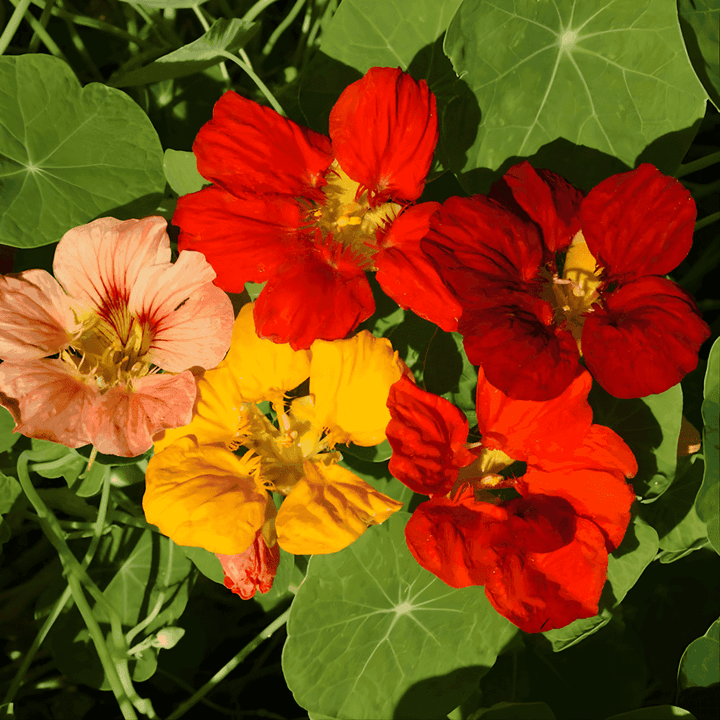
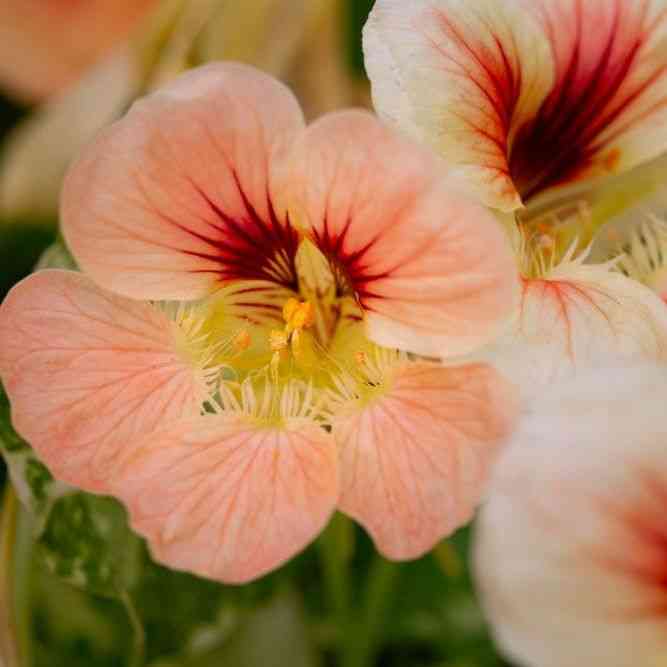
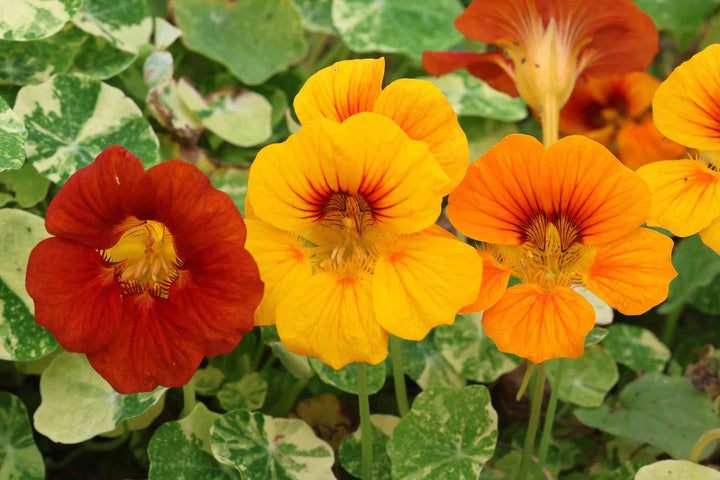
Peach Melba carries soft cream and yellow flowers marked with warm orange blotches near the center.
Open the complete descriptionHide the complete descriptionVariety traits, flavor, garden use, and the complete description
Peach Melba carries soft cream and yellow flowers marked with warm orange blotches near the center. Rounded green leaves frame the blooms on dwarf, non-trailing plants that fit a border edge or container. The flowers have a tangy, peppery flavor for salads and colorful garnishes, and bumble bees visit them in the garden. Grow it for a long display of gentle color, with edible blossoms close enough to gather for the summer table.
Minimum seeds per packet: 25 seeds.
Creamy flowers with warm centers and a peppery bite.
Variety and background
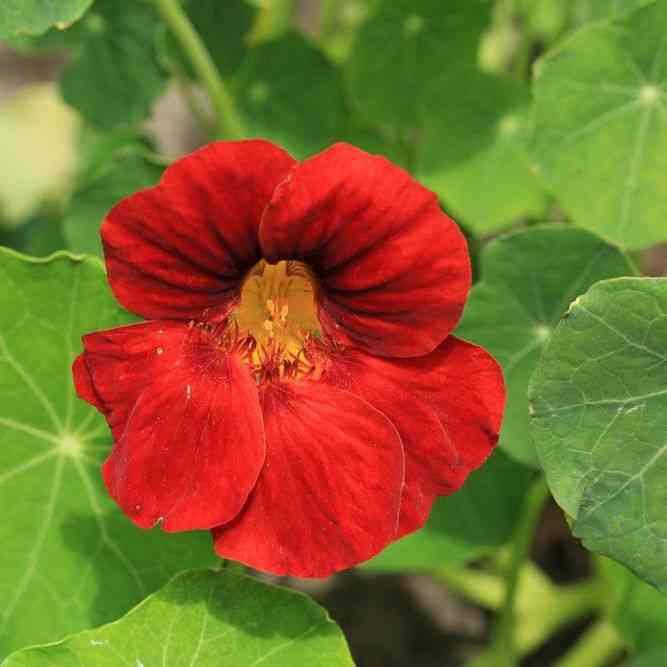
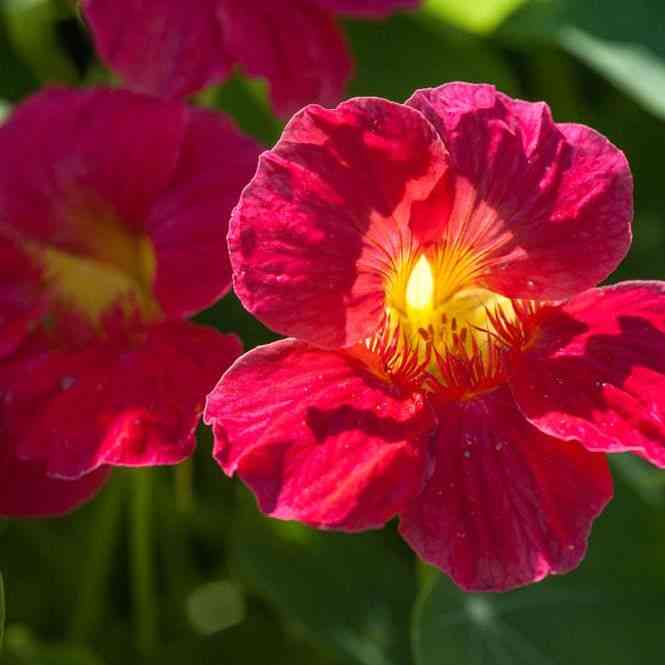
Peach Melba has cream to pale yellow flowers with dark orange center markings, not pink flowers. It is dwarf and non-trailing.
Growing facts
| Scientific name | Tropaeolum majus var. majus |
|---|---|
| Life cycle | Annual |
| Maturity / harvest basis | 60-69 Days |
| Seed depth | 1 in |
| Germination | 7-14 days |
| Germination temperature | 60-75 F |
| Plant height / spread | 8-14 in |
| Habit | Dwarf, non-trailing |
| Plant spacing | 10 in |
| Row spacing | 18 in |
| Sunlight | Full sun |
| Pollination type | Open-Pollinated (OP) |
Starting from seed
Direct sow after frost, 1 in. deep, or start in individual pots 3-4 weeks earlier. At 60-75 F allow 7-14 days. Space 10 in. apart, rows 18 in. apart. Give sun and draining soil; too much nitrogen favors leaves over flowers.
Planting and care
Direct sow after frost, 1 in. deep, or start in individual pots 3-4 weeks earlier. At 60-75 F allow 7-14 days. Space 10 in. apart, rows 18 in. apart. Give sun and draining soil; too much nitrogen favors leaves over flowers. Peach Melba has cream to pale yellow flowers with dark orange center markings, not pink flowers. It is dwarf and non-trailing.
Harvest and use
Pick fresh flowers and tender leaves from plants grown with food-safe care. Rinse and use promptly; remove faded blooms. For seed, separate varieties and gather mature seeds as they loosen, then dry well for cool, dry storage.
Saving seed
Choose several healthy, true-to-type plants rather than saving from one unusually early or large individual. Allow seed structures to mature fully beyond the ornamental stage, harvest in dry weather, and finish drying under cover. Clean out chaff and damaged seed, keep the lot labeled through every step, record isolation and selection, and store fully dry seed in a cool, dark, low-humidity place. Confirm the species pollination system before promising varietal purity.
Common problems
Common concerns: damping-off from saturated media; poor emergence from wrong temperature or depth; leggy seedlings from weak light; crowding and weak airflow; lodging in wind or rain; feeding damage from slugs, caterpillars, beetles, or mammals; foliar disease under prolonged leaf wetness. Management: use clean media, the sowing depth and temperature, strong light, appropriate thinning, and morning irrigation at soil level. Match support to plant height before wind becomes a problem. Inspect regularly and use the least disruptive control appropriate to the pest, plant, and pollinator setting. Remove diseased debris and rotate annual flower beds where recurring disease is severe.
Frequently asked questions
What distinguishes this selection?
Peach Melba has cream to pale yellow flowers with dark orange center markings, not pink flowers. It is dwarf and non-trailing.
How should I start it?
Direct sow after frost, 1 in. deep, or start in individual pots 3-4 weeks earlier. At 60-75 F allow 7-14 days. Space 10 in. apart, rows 18 in. apart. Give sun and draining soil; too much nitrogen favors leaves over flowers.
When and how should I harvest?
Pick fresh flowers and tender leaves from plants grown with food-safe care. Rinse and use promptly; remove faded blooms. For seed, separate varieties and gather mature seeds as they loosen, then dry well for cool, dry storage.
Can I save seed?
Choose several healthy, true-to-type plants rather than saving from one unusually early or large individual. Allow seed structures to mature fully beyond the ornamental stage, harvest in dry weather, and finish drying under cover. Clean out chaff and damaged seed, keep the lot labeled through every step, record isolation and selection, and store fully dry seed in a cool, dark, low-humidity place. Confirm the species pollination system before promising varietal purity.