Variety field guide
What to expect from Cal Sweet Watermelon
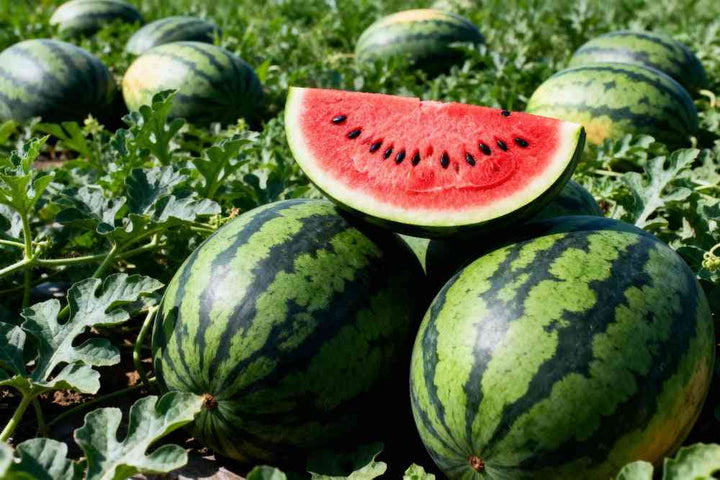
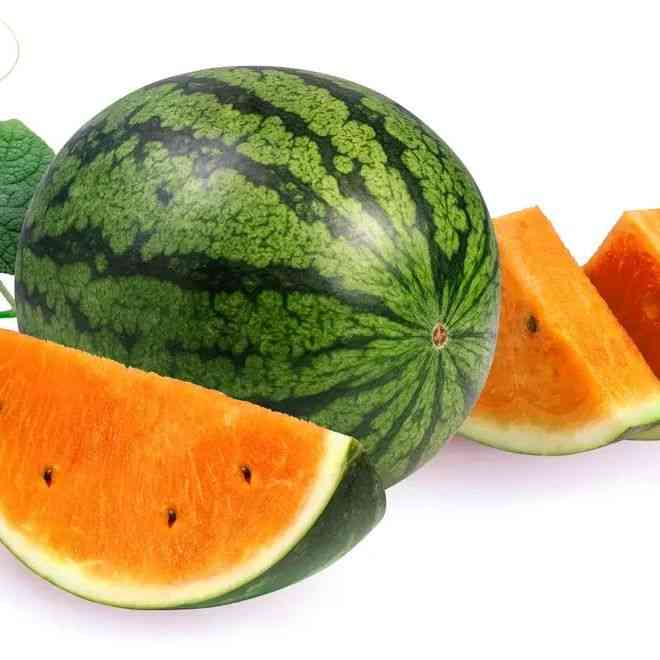
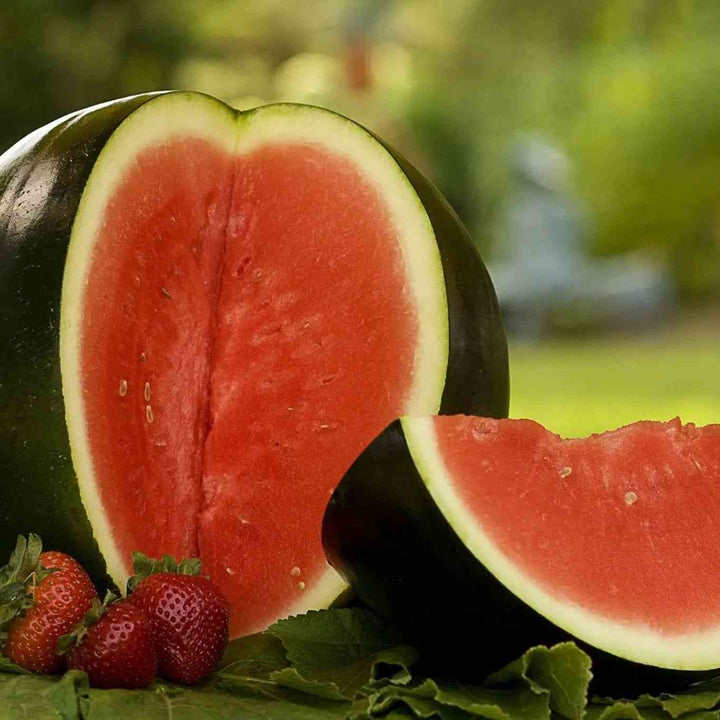
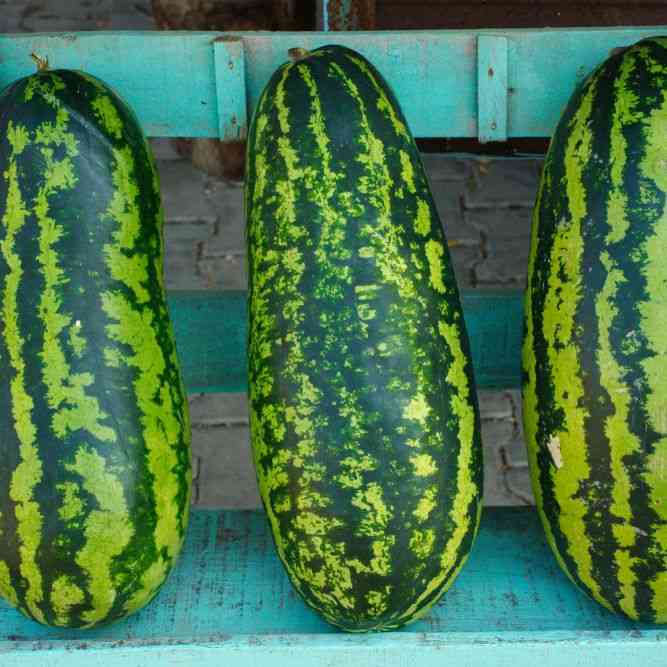
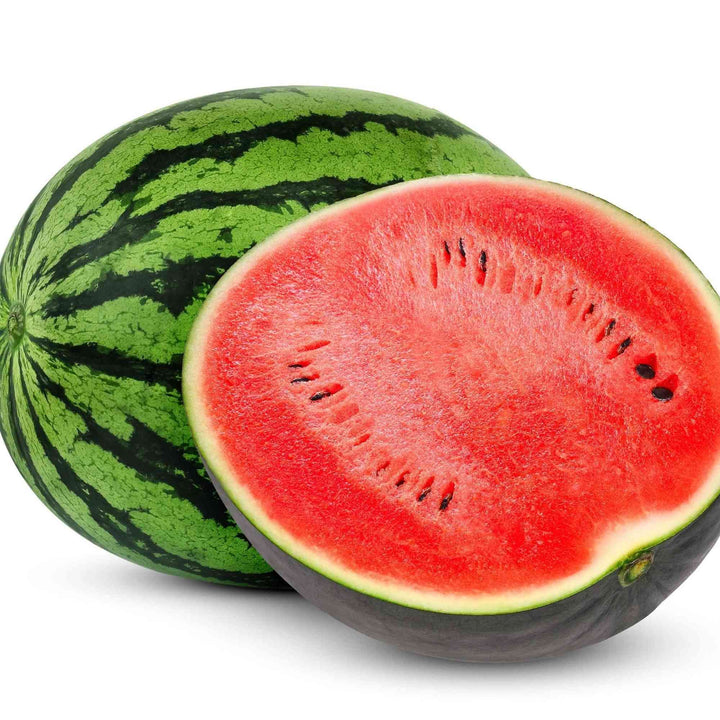
Cal Sweet produces large, oblong watermelons with light and dark green stripes and sweet red flesh.
Open the complete descriptionHide the complete descriptionVariety traits, flavor, garden use, and the complete description
Cal Sweet produces large, oblong watermelons with light and dark green stripes and sweet red flesh. Fruit commonly reaches twenty to twenty-five pounds, giving plenty of juicy slices for a family gathering. The firm flesh is useful in fruit salads or served chilled in wedges. This is the full-sized vining Cal Sweet: give it generous garden space, warm soil and a long summer to develop its fruit.
Minimum seeds per packet: 30 seeds.
Big striped melons for generous slices of summer.
Variety and background
Cal Sweet is the full-size vining watermelon, distinct from the compact 2019 AAS winner Cal Sweet Bush.
Growing facts
| Scientific name | Citrullus lanatus (Thunb.) Matsum. & Nakai |
|---|---|
| Life cycle | Annual |
| Maturity / harvest basis | About 90 days from sowing; weather dependent |
| Seed depth | 1 in |
| Germination | 5-10 days |
| Germination temperature | 75-90 F |
| Plant height / spread | 97–120 in |
| Habit | Vining/Climbing |
| Plant spacing | 36 in |
| Row spacing | 72 in |
| Sunlight | Full sun |
| Pollination type | Open-Pollinated (OP) |
Starting from seed
Direct sow after frost, 1 in. deep in warm soil, or start indoors 3 weeks before setting out. At 75-90 F allow 5-10 days. Set 3 ft. apart, rows 6 ft. apart. Give sun, fertile soil, room for vines and even water; allow bees access to flowers.
Planting and care
Direct sow after frost, 1 in. deep in warm soil, or start indoors 3 weeks before setting out. At 75-90 F allow 5-10 days. Set 3 ft. apart, rows 6 ft. apart. Give sun, fertile soil, room for vines and even water; allow bees access to flowers. Cal Sweet is the full-size vining watermelon, distinct from the compact 2019 AAS winner Cal Sweet Bush.
Harvest and use
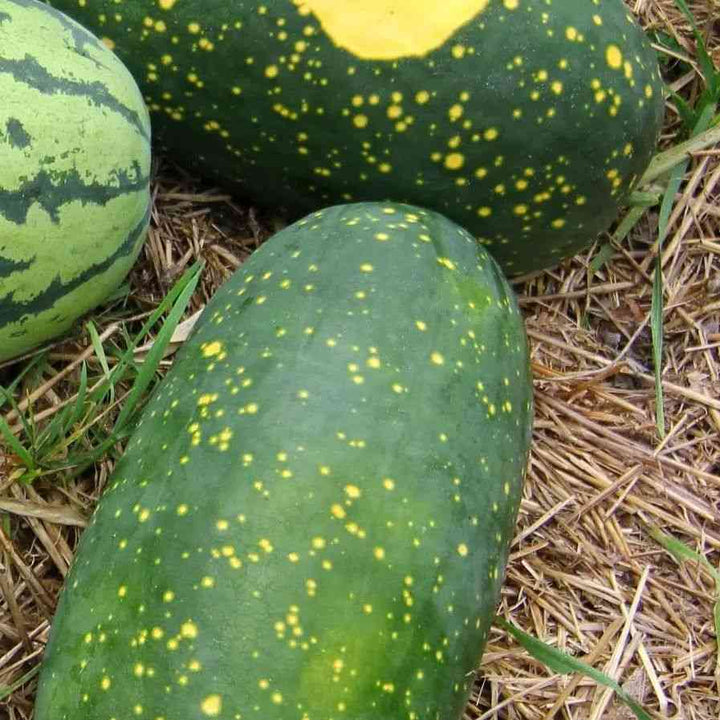
Begin checking fruit around 90 days from sowing. Look for a creamy yellow ground spot and drying tendril beside the fruit; cut the stem. Refrigerate cut melon. For seed, isolate other watermelons; rinse ripe seeds and dry.
Saving seed
Seed saving for Cal Sweet Select several healthy, true-to-type plants so the saved lot represents the variety rather than one unusually early or large individual. Melons are insect-pollinated and varieties of the same species can cross. Isolate compatible varieties or use controlled pollination, and mark fruit from healthy true-to-type plants. Allow seed fruit to become fully ripe; eating ripeness and seed maturity should both be reached. Remove seed, separate pulp by washing or short fermentation as appropriate, rinse until clean, and dry in a thin layer with good airflow. Keep records of species, variety, plant count, isolation, ripeness test, fruit traits, and year.
Common problems
Watch Cal Sweet for cucumber beetles, squash bugs where applicable, aphids, powdery or downy mildew, bacterial wilt, crown rot, poor pollination, and fruit damage on wet soil. Rotate cucurbit crops, provide airflow, water at the root zone, protect young plants before flowering, and remove covers when blossoms need pollinators. Do not work wet vines.
Frequently asked questions
What distinguishes this selection?
Cal Sweet is the full-size vining watermelon, distinct from the compact 2019 AAS winner Cal Sweet Bush.
How should I start it?
Direct sow after frost, 1 in. deep in warm soil, or start indoors 3 weeks before setting out. At 75-90 F allow 5-10 days. Set 3 ft. apart, rows 6 ft. apart. Give sun, fertile soil, room for vines and even water; allow bees access to flowers.
When and how should I harvest?
Begin checking fruit around 90 days from sowing. Look for a creamy yellow ground spot and drying tendril beside the fruit; cut the stem. Refrigerate cut melon. For seed, isolate other watermelons; rinse ripe seeds and dry.
Can I save seed?
Seed saving for Cal Sweet Select several healthy, true-to-type plants so the saved lot represents the variety rather than one unusually early or large individual. Melons are insect-pollinated and varieties of the same species can cross. Isolate compatible varieties or use controlled pollination, and mark fruit from healthy true-to-type plants. Allow seed fruit to become fully ripe; eating ripeness and seed maturity should both be reached. Remove seed, separate pulp by washing or short fermentation as appropriate, rinse until clean, and dry in a thin layer with good airflow. Keep records of species, variety, plant count, isolation, ripeness test, fruit traits, and year.