
Aphids can cover a stem so quickly that the plant appears lost before the gardener has taken a breath. Yet the size of the colony and the seriousness of the damage are not always the same thing. A vigorous plant can carry a surprising number while lady beetles, lacewings, hoverfly larvae, and tiny parasitoid wasps begin doing the work that sprays often interrupt.
The useful question is not simply, “Are aphids present?” It is, “Is the plant losing ground, and are its natural enemies already responding?” That distinction keeps a small outbreak from becoming an unnecessary chemical campaign.
Confirm the insect, look for active plant injury, count the predators, then choose the least disruptive action that can protect new growth. The quiet solution is often the durable one.
Confirm aphids before treating
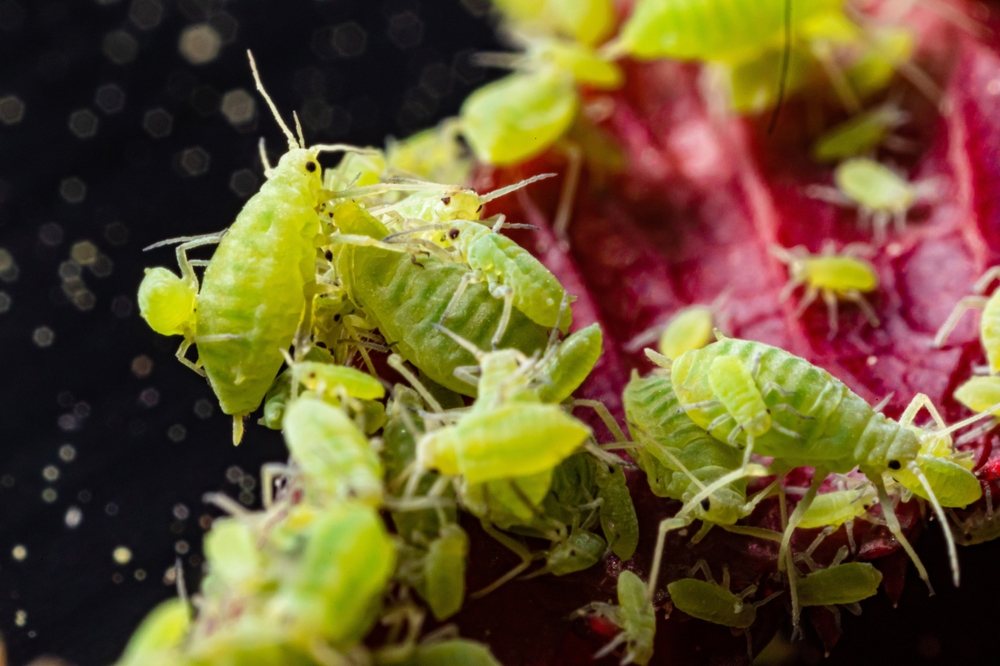
Aphids are small, pear-shaped insects with two short tube-like structures, called cornicles, near the rear of the abdomen. Colonies favor growing tips, unopened buds, young stems, and leaf undersides where tissue is tender.
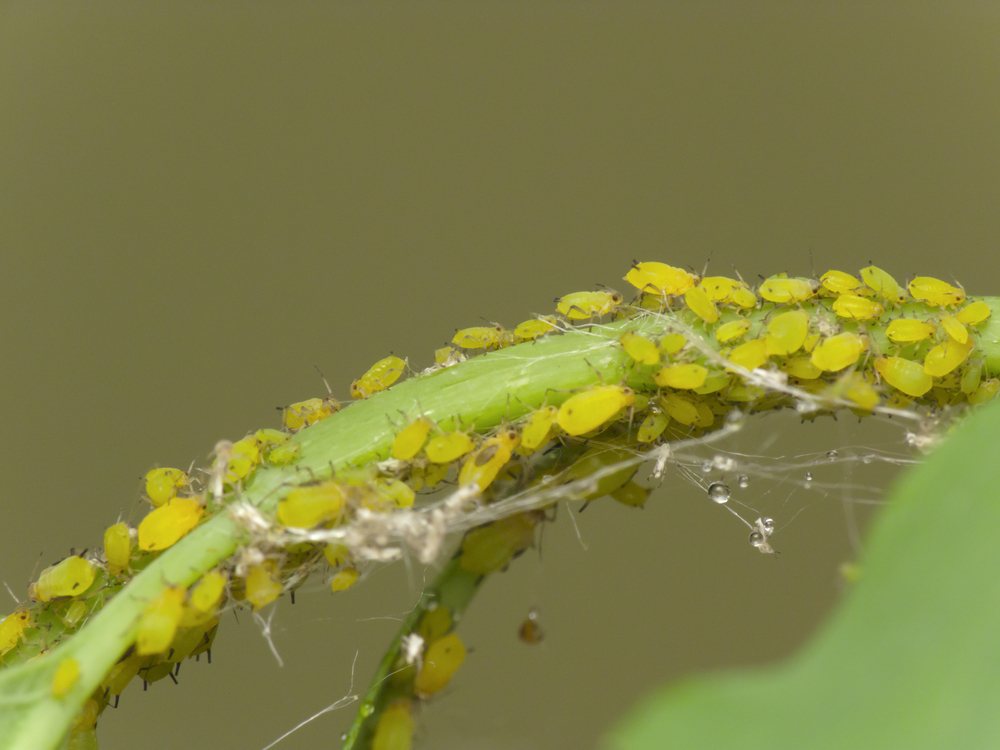
Color is unreliable by itself. Aphids may be green, yellow, black, gray, pink, or orange depending on species and host. Honeydew, curled new growth, white shed skins, and ants tending the colony are stronger clues.
- Look for clusters rather than isolated insects.
- Check whether leaves are merely occupied or actually distorted, yellowing, and stunted.
- Search for swollen tan aphid mummies, lady beetle larvae, lacewing larvae, and hoverfly larvae before treating.
Read the pattern, not one damaged leaf
Aphids reproduce rapidly in mild weather and on plants pushed into soft growth by excess nitrogen. Crowded greenhouse seedlings and drought-stressed outdoor plants can both show heavy colonies, though for different reasons.
Honeydew and sooty mold make infestations look worse than they are. Judge the plant by fresh growth, vigor, and whether feeding is spreading to new shoots.
| What you see | What it suggests | What to check next |
|---|---|---|
| Tightly curled new leaves with colonies inside | Active aphid feeding | Open one curl and look for aphids, cast skins, and predators |
| Sticky leaves with ants | Honeydew-producing sap feeders | Follow ants to the colony and look for sooty mold |
| Aphids plus many mummies or predator larvae | Natural control is underway | Recheck in three to five days before spraying |
| Yellow stippling without aphids | Mites or another sap feeder | Inspect with a hand lens for mites and webbing |
Start with the least disruptive correction
Begin by pinching out a badly infested tip or using a firm stream of water on a sturdy plant. Repeat inspection after two or three days rather than assuming one treatment settled the matter.
- Isolate heavily infested transplants from clean trays.
- Reduce unnecessary high-nitrogen feeding.
- Wash colonies from leaf undersides without shredding tender tissue.
- Use insecticidal soap or horticultural oil only when the label includes the plant and aphids, and coat the insects directly.
Protect the crop while the garden recovers
Aphid management fails when a gardener treats the entire garden for a colony on one growing tip. Broad sprays can remove the insects that would have ended the outbreak.
Protect the crop first, but do not confuse speed with precision.
- Do not fertilize a stressed plant simply because its leaves are pale.
- Do not spray open flowers while pollinators are active.
- Do not use dish detergent as a homemade substitute for a labeled insecticidal soap.
Use weather and season as part of the diagnosis
In the humid Mid-Atlantic, spring and fall flushes often create the soft growth aphids prefer. Summer heat may slow some species while drought stress makes plants less tolerant of feeding.
On milkweed, vegetables, herbs, and flowers, inspect weekly from the growing tip downward. Coastal gardens may see longer activity into fall; mountain gardens may see a sharper spring peak.
Know when the problem needs a different answer
If colonies return despite repeated washing, confirm that ants are not protecting them and that the plant is not continually producing lush, overfed growth.
Seek local help when the host is a valuable tree, a virus is suspected, or a treatment must be chosen around bees, water, pets, or food harvests.
Any pesticide used on an edible crop must list that crop and pest on the label, including harvest intervals and application limits.
Put this guide to work in a real garden
Put this guide beside the plant, not just beside the computer. Begin with one affected specimen and compare it with a healthy plant of the same kind. Record where the symptoms begin, whether the newest growth is changing, and what insects or fungal signs are actually present. With aphids, the pattern is usually more useful than the most dramatic leaf.
Work in a fixed order: identify, measure, correct the growing condition, then decide whether direct control is justified. That order matters because a stressed plant can carry several secondary symptoms at once. A treatment chosen from one photograph may remove a visible insect while leaving the irrigation, crowding, fertility, or seasonal problem untouched.
Recheck the same plant after two or three days and again after a week. Photograph the same leaf or stem from the same angle. The point is not to make the garden look perfect overnight. It is to know whether the crop is recovering, holding steady, or continuing to lose ground.
- Mark the affected plant and the date.
- Inspect the upper and lower leaf surfaces, stems, crown, and nearby soil.
- Note recent rain, irrigation, heat, fertilizer, transplanting, or pruning.
- Choose the least disruptive correction that addresses the confirmed cause.
- Return on a scheduled date instead of treating repeatedly from anxiety.
Use a 30-day checkpoint instead of guesswork
Day 0: establish the baseline
Photograph the whole plant and the closest clear symptom. Count how many plants are affected and mark the edge of the problem.
Day 3: look for direction
Check new growth rather than staring only at old damage. Note whether pests, spores, wilting, or discoloration are expanding.
Day 7: judge the correction
Compare treated and untreated areas when practical. A successful correction slows new injury even though damaged tissue may remain.
Day 14: decide the next level
Continue, stop, or escalate based on evidence. Do not repeat a pesticide simply because the calendar says another application is possible.
This guide cannot identify every disease, insect, nutrient disorder, or herbicide injury from a photograph. When symptoms are severe, unusual, rapidly spreading, or tied to a valuable perennial crop, use a local extension diagnostic service or qualified laboratory.
Keep a one-season record
The record does not need to be elaborate. A notebook page, spreadsheet row, or labeled photograph is enough when it captures the variables that matter.
- Host plant and cultivar
- First symptom and plant part affected
- Weather and watering during the previous week
- Natural enemies, eggs, larvae, spores, or residue observed
- Action taken and what changed afterward
Write enough that another grower—or you, one year later—could understand what was planted, what happened, and why the next decision changed.
Questions gardeners ask
Will aphids kill a mature plant?
They can weaken plants and transmit viruses, but many established plants tolerate moderate colonies. Tender seedlings and new growth deserve the fastest protection.
What are the white flakes around an aphid colony?
They are often shed skins left as aphids grow. They can make a colony look larger than the number of living insects.
Should I remove ants?
Ants may protect honeydew-producing aphids from predators. Reducing ant access can help natural enemies work, but first confirm the ants are actually tending the colony.
Are all aphids harmful?
All aphids feed on plant sap, but injury varies by species, host, colony size, and plant condition. Presence alone does not always justify treatment.
How often should I spray aphids with water?
Recheck after two or three days and repeat only if colonies remain and the plant can tolerate the water pressure.
Aphids reward observation. The gardener who looks closely enough to see the predators often discovers that the garden has already begun its own correction.


