Broccoli rabe and rapini are usually two names for the same crop. Broccolini is not. Rapini is a fast, leafy Brassica rapa grown for tender stems, leaves, buds, and the first yellow flowers. Broccolini® is a marketed broccoli–gai lan hybrid in Brassica oleracea. Heading broccoli belongs to that same species, but it was selected to build a large central crown.
The names are close enough to cause bad seed orders, bad harvest timing, and bad expectations. A gardener buys rapini expecting a supermarket broccoli crown, waits for a head that will never come, and calls the seed a failure. The seed did exactly what it was bred to do. The label did not do enough work.

Broccoli rabe, rapini, broccolini, and broccoli are different crops
Broccoli rabe, broccoli raab, and rapini usually refer to the same general crop: leafy, branching selections of Brassica rapa, often placed in the Ruvo Group. Other names include cima di rapa, turnip broccoli, Italian broccoli, and broccoletti di rape. The plant is closer botanically to turnips, bok choy, mizuna, tatsoi, and Chinese cabbage than it is to heading broccoli.
Broccolini® is a trademarked market name for a hybrid developed from broccoli and Chinese broccoli, also called gai lan. Both parents belong to Brassica oleracea. The result produces long edible stems, small florets, and a milder flavor. Garden catalogs also use terms such as baby broccoli, tenderstem broccoli, or stem broccoli for related long-stemmed crops, but those names do not always mean the proprietary Broccolini® product.
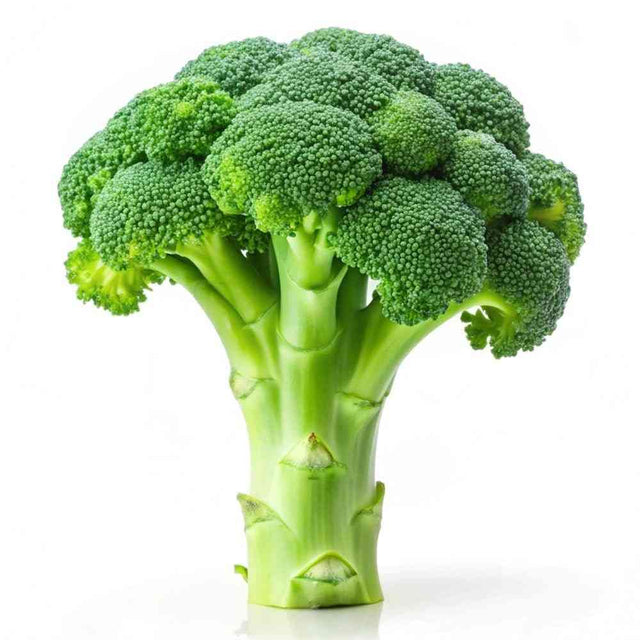
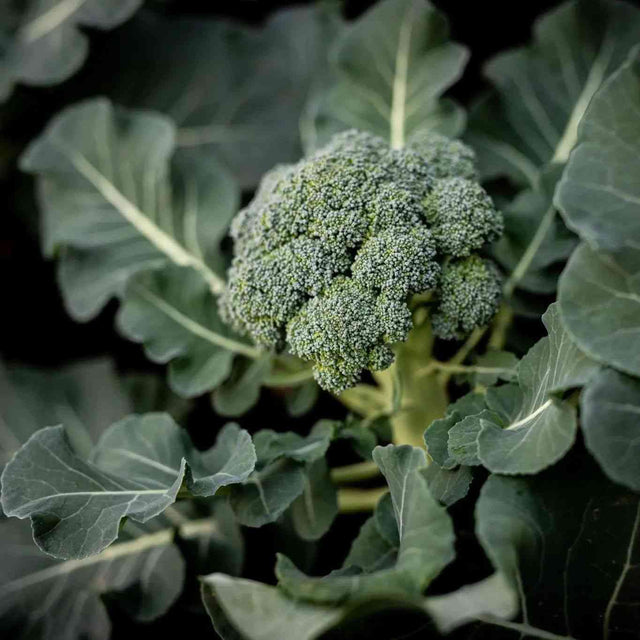
Heading broccoli is Brassica oleracea Italica Group, selected to make a central crown of tightly packed flower buds. Many varieties produce side shoots after the main head is cut. Chinese broccoli or gai lan is another B. oleracea crop, selected mainly for thick, tender stems and leaves rather than a large crown.
| Name on the packet or menu | Botanical identity | What you harvest | Typical flavor |
|---|---|---|---|
| Broccoli rabe, rapini, broccoli raab, cima di rapa | Brassica rapa, commonly Ruvo Group | Leaves, branching stems, buds, and early flowers | Brisk, mustard-like, pleasantly bitter |
| Broccolini® | Brassica oleracea hybrid of broccoli and gai lan | Long stems, small florets, leaves | Mild, sweet, lightly peppery |
| Heading broccoli | Brassica oleracea Italica Group | Large central head and later side shoots | Mild, cabbage-like, sweeter in cool weather |
| Chinese broccoli, gai lan, kailaan | Brassica oleracea Alboglabra Group | Thick stems, leaves, small flower buds | Rich green flavor with mild bitterness |
Rapini is not a patient crop. Its tenderness lives inside a narrow window, and the gardener must arrive before the yellow flowers take the field.
What Spring Rapini looks like in the garden
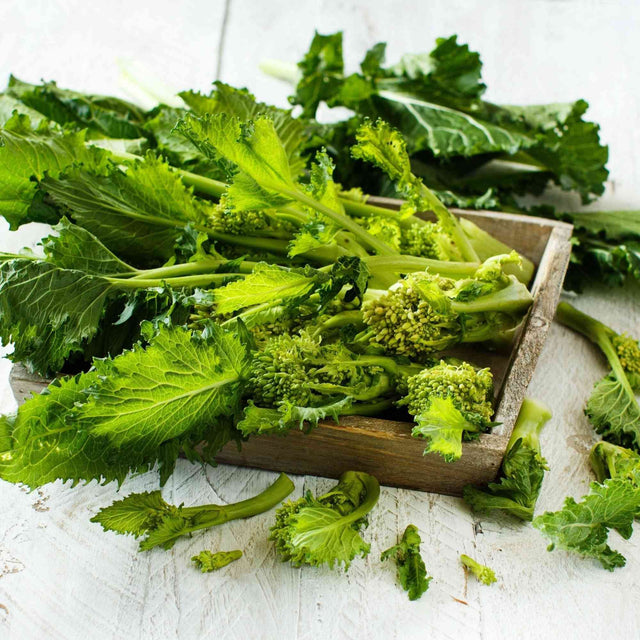
A Spring Rapini planting begins as a low rosette of green leaves, then lifts into branching stems topped by clusters of small green buds. The leaves can be smooth, wavy, or lightly toothed. Bud clusters resemble miniature broccoli heads, but the crop does not gather itself into one dense crown. It keeps branching.
That branching habit is the point. Cut the upper 6 to 10 inches while stems are tender and buds remain tight. Younger side shoots may continue developing after the first harvest. The entire young shoot is useful: stem, leaf, bud, and the first few yellow flowers.
Crop identity
Fast-growing leafy and flowering-shoot brassica, usually Brassica rapa Ruvo Group.
Best season
Cool spring and fall weather. Fall crops are often steadier in the Mid-Atlantic because days shorten as plants mature.
Harvest signal
Branching stems remain tender and the green bud clusters are tight. A few open flowers are edible; a field of open flowers means quality is moving fast.
Kitchen character
Pleasant bitterness, mustard heat, tender leaves, and stems that take well to blanching, sautéing, pasta, beans, and strong olive oil.
Choose the crop by the meal, not by the familiar word “broccoli”
Choose rapini when you want a quick, cool-season crop with assertive flavor and an edible bundle of stems and leaves. Choose heading broccoli when you want a large central crown. Choose Chinese broccoli when thick stems and glossy leaves are the priority. Choose a baby-broccoli or Broccolini®-type crop when you want long mild stems and small florets.
This distinction matters in small gardens. A 40-day rapini planting can fit between slower crops, follow early peas, or fill a fall bed after summer vegetables come out. Heading broccoli occupies more space for longer. Broccolini-type plants may produce over a longer harvest period but still need the spacing and fertility of B. oleracea.


Plant rapini for cool growth and a quick finish
Rapini grows quickly enough to be direct sown in most gardens. Sow as soon as the soil can be prepared in spring, then again in late summer for fall harvest. In eastern North Carolina and coastal Virginia, fall is often the cleaner season. The seed germinates in warm late-summer soil, while the edible crop develops as nights cool. In the Piedmont and mountains, spring can remain favorable longer, but fall sowing needs to begin early enough for plants to size before short days slow growth.
Heat does not always kill the plant. It shortens the distance between germination and flowering. A crop can look vigorous and still move past tender harvest faster than expected. The answer is not heavier fertilizer. It is better timing, succession sowing, and prompt harvest.
A practical succession plan
- Sow a short row every 7 to 14 days during favorable weather instead of one oversized planting.
- Use the earliest sowing for full bunches and later sowings for smaller, faster harvests.
- Stop sowing when forecast heat will push the crop through its tender stage too quickly.
- Resume in late summer, counting backward from the first hard freeze and allowing extra time for shortening days.
- Keep row cover ready before seedlings emerge; flea beetles do not wait for the gardener to become organized.
How to sow broccoli rabe and rapini
Sow seed about 1/4 inch deep in a fine, firm seedbed. Keep the surface evenly moist until emergence. Seedlings usually appear quickly under moderate temperatures. Thin for the harvest style you want: close spacing for small leaves and tender shoots, wider spacing for larger branching plants.
For full bunches, space plants roughly 4 to 8 inches apart in rows 12 to 18 inches apart. Gardeners growing for baby greens can sow more densely and cut young. Exact spacing varies with variety and how many side shoots you intend to harvest. Crowding is not automatically wrong, but dense leaves stay wet longer and become harder to inspect for caterpillars and disease.
When starting indoors, use small cells and transplant while seedlings are young, usually with 3 to 5 true leaves. Harden them gradually. Older, root-bound rapini often bolts soon after transplanting because the plant has already endured the kind of stress that tells a fast brassica to hurry toward seed.

Soil, fertility, and water: fast growth without soft growth
Rapini prefers fertile, well-drained soil with consistent moisture. Work compost into poor ground and follow a soil test rather than feeding blindly. Nitrogen supports leaf and stem growth, but excess soluble fertilizer can produce lush tissue that is more attractive to aphids, slower to harden, and no more capable of resisting heat.
Water deeply enough to keep the root zone steady. Shallow daily sprinkling encourages surface roots, wets leaves, and increases disease spread. A light mulch can moderate moisture once seedlings are established, but do not bury young stems or keep cold spring soil wet beneath a heavy layer.
Rapini is often described as easy, and it is. Easy does not mean careless. The crop has little time to recover from a dry seedbed, flea-beetle attack, root damage, or a week of heat. A slow crop may forgive a missed inspection. Rapini simply changes stages.
Harvest before the buds become a bouquet
Begin cutting when bud clusters are formed but still tight. Use a clean knife or shears and take the tender upper stem with attached leaves. If a stem bends and snaps cleanly, it is usually tender. If it has become fibrous and resists the knife, harvest quality has passed even if the flowers are still attractive.
Do not discard a planting because the first yellow flower opened. A few flowers are edible and visually useful. The warning is a rapid wave of flowering across the bed, accompanied by elongating stems and stronger bitterness. Cut promptly, cool the harvest, and inspect the plants several times each week.
| Plant stage | What it looks like | Best use | Decision |
|---|---|---|---|
| Baby leaf | Low rosette, no branching buds | Salads, quick sautés, mixed greens | Cut above the crown for possible regrowth |
| Prime bunch stage | Tender stems with tight green buds | Pasta, beans, braising, blanch-and-sauté dishes | Harvest the upper shoot now |
| Early flower | A few yellow flowers open | Still edible; stronger flavor | Harvest immediately |
| Full flower | Long stems, many open flowers | Pollinators or seed production | Leave selected plants; replace eating crop |
| Seed-pod stage | Tan drying siliques | Seed saving | Protect from shattering and finish drying |
How to cook rapini without erasing its character
Rapini is supposed to have bitterness. The goal is not to punish it until it tastes like nothing. Blanching briefly in salted water softens the strongest edge, after which the shoots can be sautéed with olive oil, garlic, chile, sausage, beans, or anchovy. Younger harvests can go directly into the pan.
Trim only the tough base of the stem. Leaves, buds, small flowers, and tender stems belong in the dish. Serve with pasta, fold into frittatas, add to white beans, or cook as a sharp green beside rich foods. The bitterness gives the plate structure. It is the dark line that keeps the rest of the flavors honest.
Flea beetles, caterpillars, aphids, and brassica diseases
Small seedlings are vulnerable to flea beetles, which pepper the leaves with shot holes. Imported cabbageworm, cabbage looper, and diamondback moth larvae feed between veins and hide near bud clusters. Aphids gather in folded leaves and flowering tips. Slugs and snails work under wet mulch and row edges.
Install insect netting or floating row cover immediately after sowing, sealing the edges. This is especially effective where the bed has been rotated away from overwintering brassica pests. Inspect the undersides of leaves and the growing point. Handpick larger caterpillars and remove heavily infested material before the problem enters every bunch.
Alternaria leaf spot can produce round brown lesions with concentric rings. Black rot often begins as yellow V-shaped areas from the leaf margin and moves through veins. Clubroot causes swollen roots, stunting, and wilting. These problems are not cured by renaming the symptom. Buy clean seed, improve drainage and airflow, avoid working wet leaves, remove crop debris, and rotate away from all brassicas for several years where disease pressure is established.

Rotate by botanical family, not by the name on the dinner plate
Rapini, turnips, bok choy, tatsoi, mizuna, mustard greens, cabbage, kale, cauliflower, and broccoli all belong to the brassica family. Some are different species, but many pests and diseases do not respect the difference. Moving rapini into last year's mustard bed is not meaningful rotation.
Where black rot, Alternaria, or clubroot has been a problem, keep the next brassica crop out of that soil for at least three years and often longer. Remove volunteer brassicas and related weeds that can carry disease. Clean trays and tools. In a small garden, rotation may require containers, a new bed, or a season without the family. That is inconvenient. So is losing every brassica at once.
Saving rapini seed requires knowing its species
Rapini is insect-pollinated and belongs to Brassica rapa. Other flowering B. rapa crops can cross with it, including many turnips, bok choy, pak choy, tatsoi, mizuna, Chinese cabbage, and related Asian greens. Heading broccoli and most kale are B. oleracea and are a different crossing group, although they share pests and diseases.
Choose healthy, true-to-type plants before harvest begins. Stop cutting those plants and allow them to flower. Save from several plants rather than one exceptional survivor. For simple viable seed, five plants are better than one; for maintaining a variety over time, a population of 20 to 50 is far more responsible. Isolate the flowering crop from other compatible varieties, or use controlled pollination.
Long seed pods, called siliques, mature from green to tan. They shatter readily when fully dry. Cut branches or whole plants when most pods are mature but before the oldest spill. Finish drying over cloth or inside large paper bags, thresh gently, screen and winnow, then store only when the seed is fully dry.
Compare rapini with broccoli and Chinese broccoli varieties
| Seed choice | Crop form | Garden reason to choose it |
|---|---|---|
| Spring Rapini broccoli rabe seeds | Fast Brassica rapa leafy flowering shoots | Quick spring and fall bunches with mustard-like bitterness |
| Green Sprouting Calabrese broccoli | Central head followed by side shoots | Classic broccoli harvest with continued production after the main crown |
| Di Cicco broccoli | Open-pollinated Italian sprouting broccoli | Variable head sizes and repeated tender side shoots |
| Chinese broccoli, Kailaan | Thick stems, leaves, and small buds | For gai-lan-style harvests and stir-fry cooking |
| Early Purple Sprouting broccoli | Cold-season branching B. oleracea | For gardeners planning a longer season and many purple side shoots |
Browse the complete broccoli seed collection or compare fast leafy brassicas in the mustard seed collection.
Mid-Atlantic and Upper South field note
For eastern North Carolina, fall rapini is often the best wager: sow from late summer into early autumn, protect seedlings from insects, and harvest as nights cool. Spring crops should go in early enough to finish before heat arrives. In Virginia and mountain gardens, spring lasts longer but late-fall sizing slows sooner. Use row cover for insects and cold, then vent it on warm sunny days.
Frequently asked questions about broccoli rabe and rapini
Are broccoli rabe and rapini the same thing?
Usually, yes. Both names commonly refer to leafy flowering-shoot crops in Brassica rapa, often Ruvo Group. A particular catalog should still provide the variety and botanical name.
Is broccolini the same as broccoli rabe?
No. Broccolini® is a trademarked broccoli–gai lan hybrid in Brassica oleracea. Rapini is generally Brassica rapa and has a sharper, more mustard-like flavor.
Why did my rapini flower so quickly?
Rapini is selected to produce flowering shoots, and warmth, long days, drought, crowding, or root stress can accelerate that stage. Sow for cool weather and harvest tight buds promptly.
Can I eat the yellow flowers?
Yes. The first flowers are tender and edible. Quality declines as stems lengthen, toughen, and most buds open.
Will rapini regrow after cutting?
Many plants make smaller side shoots after the first cut when the base and lower leaves remain healthy. Regrowth depends on variety, weather, and how late the first harvest occurs.
Can rapini grow in a container?
Yes. Use a broad container at least 8 to 10 inches deep with open drainage. Keep moisture steady and harvest on time. Dense containers are especially useful for baby leaves.
What will rapini cross with when I save seed?
It can cross with other flowering Brassica rapa crops such as turnips, bok choy, tatsoi, mizuna, and Chinese cabbage. Confirm botanical names and isolate compatible flowering crops.