Caterpillar identification guide
Every caterpillar is the larval stage of a moth or butterfly. That does not make every caterpillar harmless, and it does not make every caterpillar a pest. Some can strip brassicas, bore into fruit, or defoliate young plants. Others are the reason milkweed, parsley, native shrubs, and pollinator beds were planted.
Identification requires more than color. Caterpillars change appearance as they grow. Light, camera exposure, and molt stage can mislead. The host plant, feeding pattern, body shape, hairs or spines, movement, and season often narrow the answer faster than a single photograph.
The decision comes after identification. Protect a desired species on its host, tolerate modest feeding where the plant can carry it, or manage a crop pest while it is still small.
A chewed leaf is evidence, not a verdict. The gardener still has to identify who is eating, what plant they are on, and whether the loss matters.
Collect the evidence before reaching for a treatment
- Photograph the caterpillar from above and the side.
- Record the host plant and exact plant part being eaten.
- Estimate length and note hairs, spines, horns, stripes, spots, and head color.
- Look for eggs, webbing, frass, rolled leaves, mines, or bore holes.
- Record whether one larva or many are present.
- Note the date, location, and crop damage.
Do not handle hairy or spiny caterpillars with bare skin. Some can irritate or sting. Use a leaf, container, or tool while identification is uncertain.
Use the host plant as a primary clue
| Host | Possible caterpillars | What to inspect |
|---|---|---|
| Milkweed | Monarch and other milkweed specialists | Striping, paired filaments, feeding on milkweed |
| Brassicas | Imported cabbageworm, cabbage looper, diamondback moth | Green larvae, holes between veins, frass |
| Tomato | Hornworms, fruitworms, loopers | Large horned larvae, leaf loss, fruit feeding |
| Parsley, dill, fennel | Black swallowtail larvae | Changing black, white, green, and banded stages |
| Trees and shrubs | Many native moth larvae | Species-specific host and seasonal pattern |
Host plants are not perfect proof, but they are powerful. A monarch caterpillar on milkweed belongs there. A cabbageworm on kale is feeding on a crop the gardener intended to harvest.
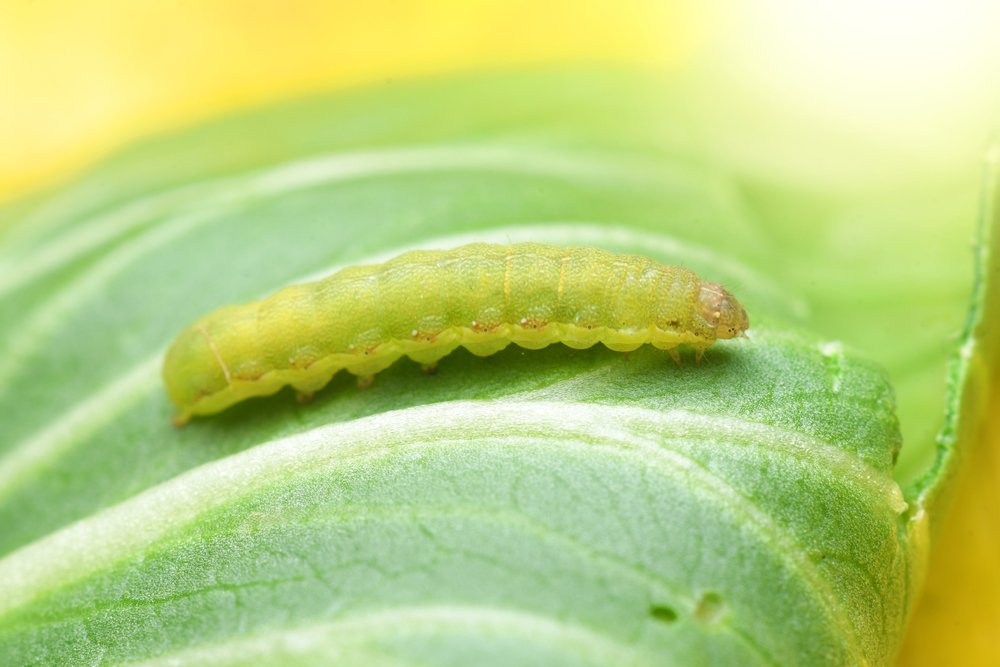
Separate caterpillar feeding from other damage
Caterpillars leave chewing damage and often frass. Slugs leave rasped holes and slime. Beetles may make shot holes or skeletonize leaves. Leaf miners feed inside the leaf. Disease lesions expand without a chewing edge.
Look under leaves, inside rolled foliage, around buds, and on stems. Many caterpillars feed at night or rest along veins where color and shape conceal them.
Decide whether action is necessary
A mature plant can often tolerate limited leaf loss. A new transplant, seedling, flower bud, or developing fruit may not. Management thresholds depend on crop stage, caterpillar number, plant vigor, and the value of the harvest.
On a habitat plant, feeding may be the intended ecological result. On a food crop, hand removal, row cover before egg laying, sanitation, or a selective treatment may be justified.
Avoid broad-spectrum insecticides on blooming plants. They can harm pollinators and beneficial insects while failing to solve the underlying identification problem.
Manage crop pests while they are small
- Handpick visible larvae and inspect daily during an outbreak.
- Use floating row cover before pests arrive, then remove it when pollination is needed.
- Remove badly infested crop residue after harvest.
- Encourage birds, wasps, and other natural enemies.
- Use Bacillus thuringiensis var. kurstaki only for susceptible caterpillars and according to the label.
Bt works best when larvae are small and actively feeding. It is not a general insecticide for beetles, slugs, or mature larvae that have stopped eating.
A caterpillar-specific product can still kill monarchs, swallowtails, and other desired larvae. Do not treat their host plants or areas where they are feeding.
Recognize a few common patterns without overconfidence
| Pattern | Likely direction | Next step |
|---|---|---|
| Velvety green on cabbage | Imported cabbageworm | Check for white butterflies and yellow eggs |
| Large green larva with rear horn on tomato | Hornworm group | Inspect markings and remove if crop damage is severe |
| Banded larva on parsley family plant | Black swallowtail | Confirm host and protect if desired |
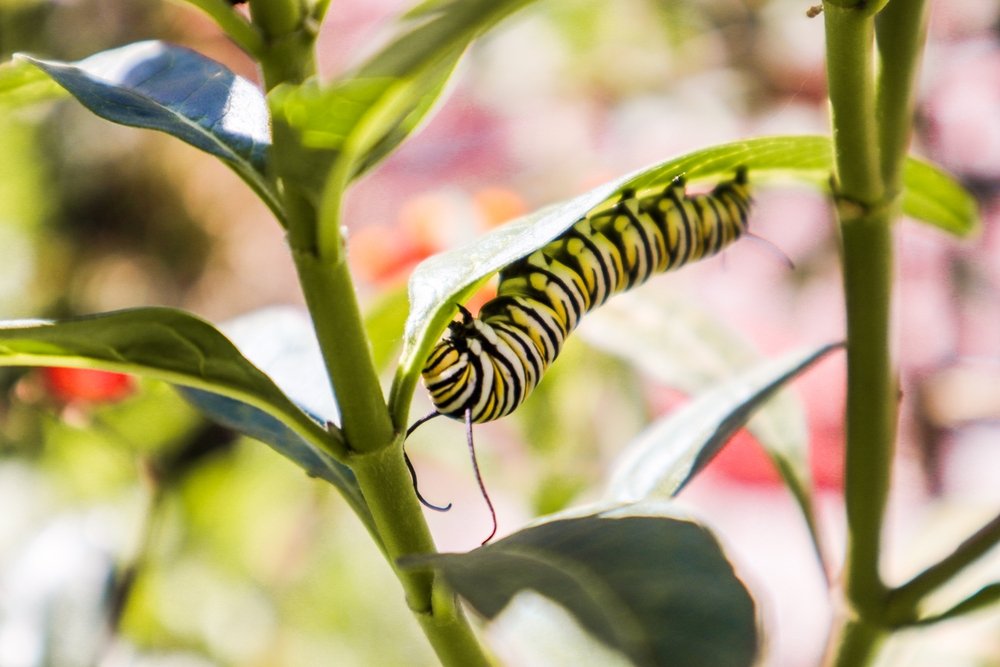
| Black, white, and yellow on milkweed | Monarch | Leave on host and avoid insecticide |
| Hairy tussock-like larva | Many moth families | Avoid bare-hand contact and identify carefully |
Record the adult when possible
A caterpillar identification can be confirmed by rearing it safely in a ventilated container with fresh host foliage, but this requires daily care, sanitation, and protection from overheating. Do not collect protected species or move larvae far from their host.
Photograph the pupa and adult, then add the record to the garden notebook. Over time, the garden becomes easier to read because the gardener recognizes which damage belongs to which season.
Use regional timing and habitat
The long growing season in the coastal plain can support multiple generations of crop pests. Mountain gardens may see later emergence but intense short windows. Native host plants increase moth and butterfly diversity, which is a benefit, not an error in management.
The goal is not a leaf without a bite. It is a garden where the crop survives, the desired insects complete their cycles, and intervention is precise rather than automatic.
Questions gardeners ask
How can I tell a caterpillar from a sawfly larva?
Sawfly larvae often have more abdominal prolegs and may feed in groups. Close identification may require clear photos and an extension resource.
Should I move a caterpillar to another plant?
Only to the same confirmed host species when necessary. Many caterpillars cannot eat unrelated plants.
Are hairy caterpillars dangerous?
Some hairs irritate skin or sting. Avoid bare-hand contact until the species is known.
Will Bt kill monarch caterpillars?
Caterpillar-active Bt can harm desired butterfly and moth larvae if they consume treated foliage.
How much leaf damage can a plant tolerate?
It depends on plant size, crop stage, vigor, and where feeding occurs. Seedlings and fruiting structures are less forgiving than mature foliage.
Control hierarchy
- Confirm the affected plant, growth stage, and damaged tissue.
- Remove the immediate stress when possible: water correctly, improve airflow, exclude the pest, or remove badly infected material.
- Use physical and cultural controls before broad treatments.
- Protect beneficial insects and follow every pesticide label exactly when a labeled treatment is justified.
- Record the outcome and change next season’s timing, rotation, sanitation, or variety choice.