
A tomatillo can grow into a broad flowering plant and still set almost no fruit when it stands alone. The crop is built around pollination between compatible plants, not merely a single plant covered in blossoms.
The branches sprawl, the husks hide the fruit, and fallen tomatillos seed the next generation with enthusiasm. Plant at least two, support them early, and harvest by the husk rather than waiting for tomato color.
For reliable fruit, grow at least two genetically distinct tomatillo plants close enough for pollinators to move between them. Two cuttings from the same plant are not the same genetic solution.
Know what kind of tomatillo you are growing
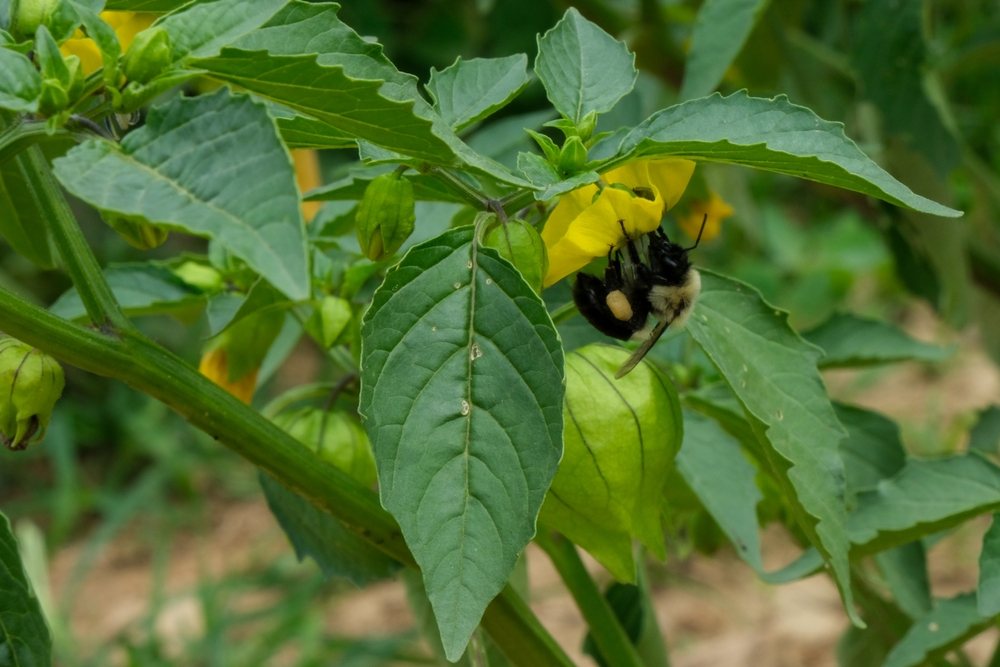
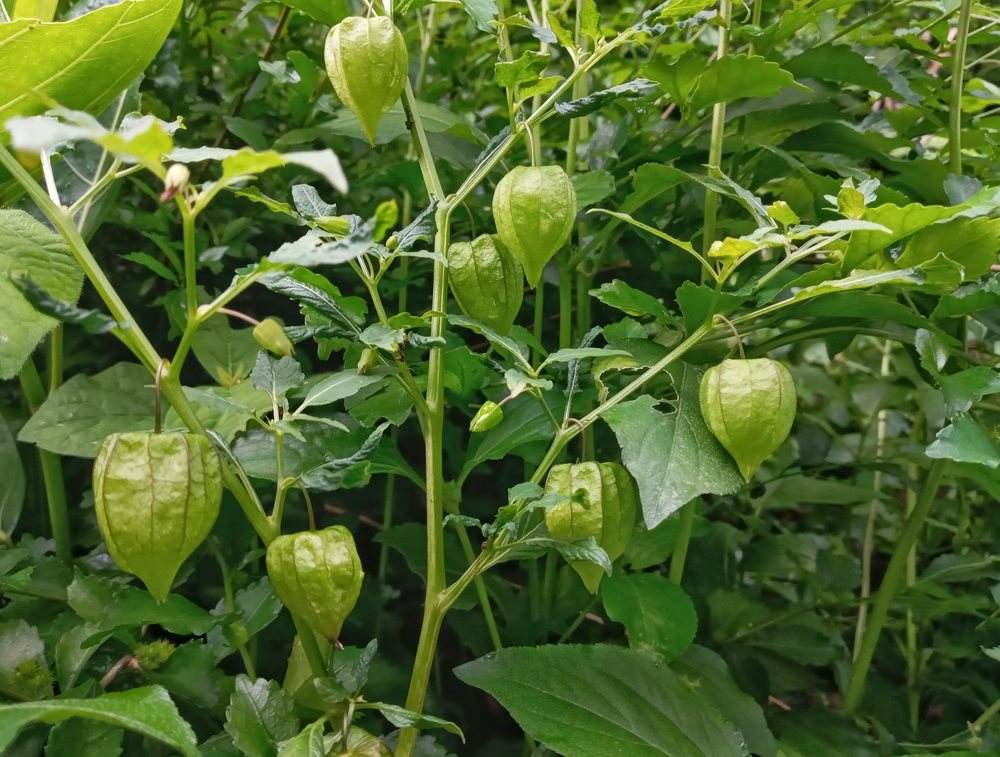
Tomatillos are warm-season annuals in the nightshade family, usually Physalis philadelphica or P. ixocarpa. Yellow flowers develop into fruit enclosed by papery husks.
Plants branch widely and may fall outward under wind and fruit weight. Many cultivars are self-incompatible or set poorly alone.
- Grow multiple plants.
- Expect bee activity to matter.
- Fruit color may be green, yellow, or purple by cultivar.
Choose the form or variety for the job
Choose a cultivar by fruit size, color, days to maturity, and kitchen use. Plant more than one seed-grown individual.
A tomato cage may be too narrow unless modified; broad staking or a row support often works better.
| Garden goal | Best fit | What to watch |
|---|---|---|
| Salsa verde | Green-fruited cultivar | Harvest when husk is filled |
| Purple fruit | Purple cultivar with strong sun exposure | Color may deepen after maturity |
| Small garden | Two compactly supported plants | Do not plant a single specimen |
| Long harvest | Early and main-season cultivars | Pick fallen fruit promptly |
Start seed at the right time and depth
Start indoors six to eight weeks before transplanting or direct sow only where the season is long and warm.
Treat seedlings like tomatoes but do not hold them rootbound.
- Sow 1/4 inch deep.
- Provide strong light.
- Pot up before roots circle.
- Set out after frost danger and warm nights.
Build the site before the plant asks for rescue
Use full sun, fertile drained soil, and enough width for branching. Install support at planting.
Place plants within pollinator travel distance but not crowded.
- Mulch after warming.
- Avoid excess nitrogen.
- Include nearby flowers and avoid spraying open bloom.
Manage water, fertility, and growth
Water consistently through flowering and fruit fill. Uneven moisture can reduce growth and fruit quality.
Guide branches into support and remove only what is damaged or obstructive.
- Inspect for flea beetles and hornworms.
- Keep fallen fruit collected.
- Do not strip the plant bare trying to expose fruit.
Harvest at the stage that matches the use
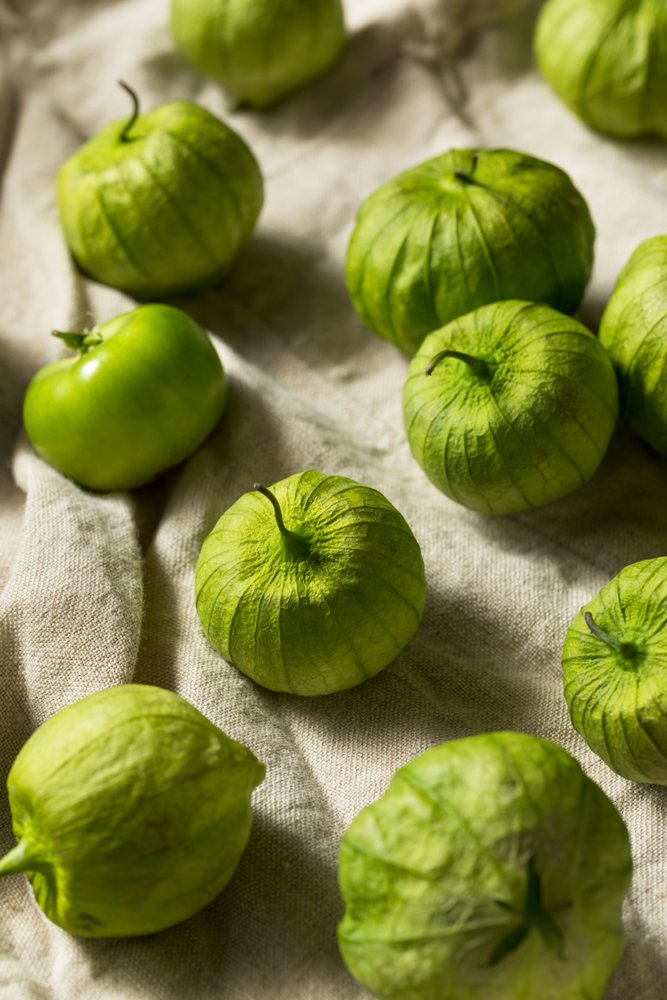
Harvest when the fruit fills the husk and the husk begins splitting or drying. Some ripe fruit drops.
Remove husks and wash the sticky coating before use. Use tested recipes for canning and preservation.
Troubleshoot the common failures
Poor fruit set, sprawling stems, flea beetles, hornworms, and volunteers are common.
A flowering plant alone is the first diagnosis when fruit is absent.
| Symptom | Likely cause | First correction |
|---|---|---|
| Many flowers, no fruit | Only one plant or weak pollination | Grow genetically distinct plants and support bees |
| Fruit small inside husk | Immature fruit or stress | Wait and stabilize water |
| Leaves riddled with small holes | Flea beetles | Protect young plants and reduce stress |
| Seedlings everywhere next year | Fallen ripe fruit | Harvest and clean up promptly |
Adjust the plan across the Mid-Atlantic
Tomatillos perform well in long Mid-Atlantic summers. Coastal heat is usually less limiting than poor pollination or storm damage.
Mountain gardens benefit from early starts and short-season cultivars.
The husk tells the truth before the color does. Learn to read it.
Put this guide to work in a real garden
Put How to Grow Tomatillos from Seed: Pollination, Support, and Ripe Husks into a one-season plan before buying more inputs. Choose the variety or material, mark the bed or container, write the sowing or planting date, and decide what success will look like: first harvest, stem length, fruit set, bloom, survival, or control of spread.
Inspect on a schedule. Early problems are usually easier to correct because the crop has more season left and the cause has not been buried under secondary damage. Water, fertility, airflow, support, and harvest timing should be adjusted from the plant’s response rather than from a rigid weekly ritual.
At the end of the crop, keep the record honest. Note what performed, what merely survived, what required too much labor, and what deserves a larger planting next year. Experience becomes expertise only when it is remembered accurately.
- Choose the variety and define the intended use.
- Prepare soil, container, support, or irrigation before planting.
- Set a weekly inspection date.
- Harvest or prune at the stage described in the guide.
- Write a short end-of-season verdict.
Use a 30-day checkpoint instead of guesswork
Before planting
Choose the variety, site, support, soil preparation, and irrigation method while the bed is still easy to change.
First two weeks
Protect establishment. Watch moisture, light, wind, transplant shock, and early pest pressure.
At rapid growth
Adjust spacing, support, pruning, and fertility before the plant becomes difficult to handle.
At first harvest or bloom
Record quality, timing, labor, and the plant’s response. Use that evidence to guide the rest of the season.
A guide provides a sound starting system, not a guarantee. Cultivar, weather, soil history, and management interact, and the correct response may change as the plant moves from establishment to harvest.
Keep a one-season record
The record does not need to be elaborate. A notebook page, spreadsheet row, or labeled photograph is enough when it captures the variables that matter.
- Variety and source
- Planting date and location
- Water, fertility, and major weather events
- First harvest or bloom and total season length
- Problems, corrections, and next-year decision
Write enough that another grower—or you, one year later—could understand what was planted, what happened, and why the next decision changed.
Questions gardeners ask
Do tomatillos need two plants?
For reliable fruit set, grow at least two genetically distinct plants because many tomatillos are self-incompatible or set poorly alone.
How do I know a tomatillo is ripe?
The fruit fills the husk, which may split, dry, or loosen; ripe fruit may also fall.
Can tomatillos cross with ground cherries?
Crossing depends on species compatibility. Keep seed-saving goals separate and identify the species.
Why is tomatillo fruit sticky?
A natural sticky coating remains under the husk and washes off before use.
Do tomatillos need cages?
They benefit from broad support because branches sprawl and break in storms.
Tomatillos do not hide the rule. One plant flowers; a small colony fruits. Grow them in company, hold the branches up, and pick when the husk has no more room to lie.


