
Blossom-end rot guide
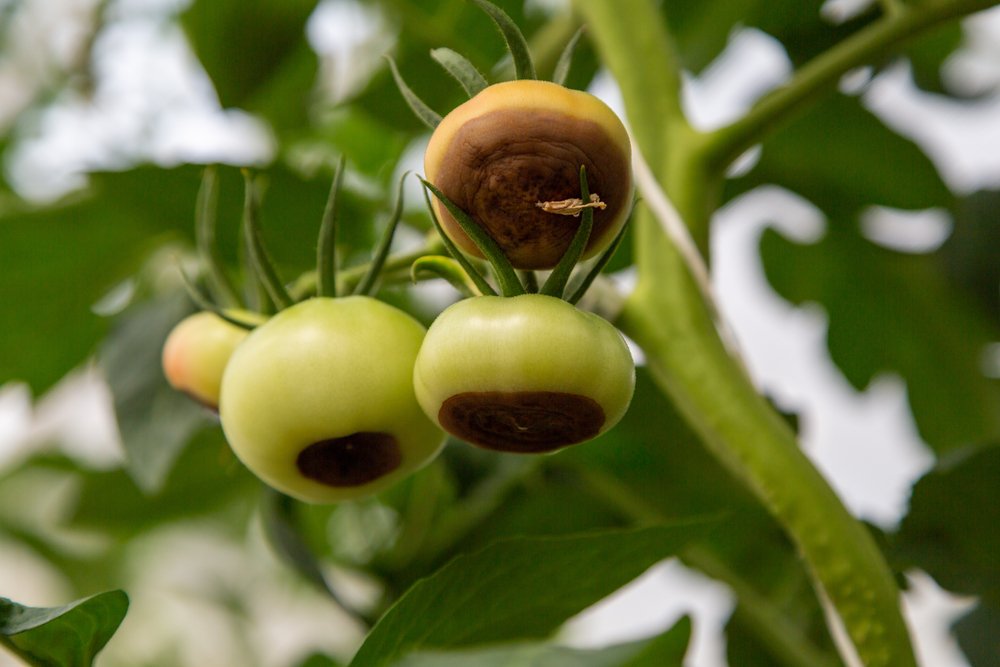
Blossom-end rot begins as a water-soaked or tan area at the blossom end of tomato, pepper, squash, or other susceptible fruit. The tissue darkens, becomes leathery or sunken, and may invite secondary decay.
The affected fruit is low in calcium where it is growing, but the soil is not necessarily low in calcium. Calcium moves with water through roots and plant tissues. Rapid growth, uneven moisture, root injury, cold soil, high salts, and excessive nitrogen can interrupt delivery even when a soil test shows adequate calcium.
Prevention therefore focuses on root-zone stability. Calcium products are useful only when a real deficiency or pH problem is documented.
The black end of the fruit invites a simple story: add calcium. The plant is telling a harder truth about water, roots, growth, and timing.
Recognize the disorder before treating it
- Lesion begins at or near the blossom end.
- Tissue becomes tan, brown, or black and may sink.
- Several early fruits may be affected while later fruit improves.
- Leaves can look healthy because the problem is local to developing fruit.
- Secondary fungi may colonize damaged tissue later.
Sunscald usually appears on exposed sides of fruit, not specifically the blossom end. Insect feeding and diseases can also darken fruit, so location and progression matter.
Understand why calcium can be present but unavailable
Calcium moves mainly with the transpiration stream. Developing leaves often compete strongly for that supply. Young fruit at the blossom end can be deprived during rapid growth or irregular water movement.
Dry soil, then flooding, damages fine roots and interrupts flow. Cold wet soil slows root function. Excess ammonium nitrogen, potassium, magnesium, or salts can complicate nutrient uptake. Root pruning from cultivation creates another break.
The disorder is physiological. It is not contagious from fruit to fruit.
Stabilize moisture from planting onward
- Water deeply enough to wet the active root zone.
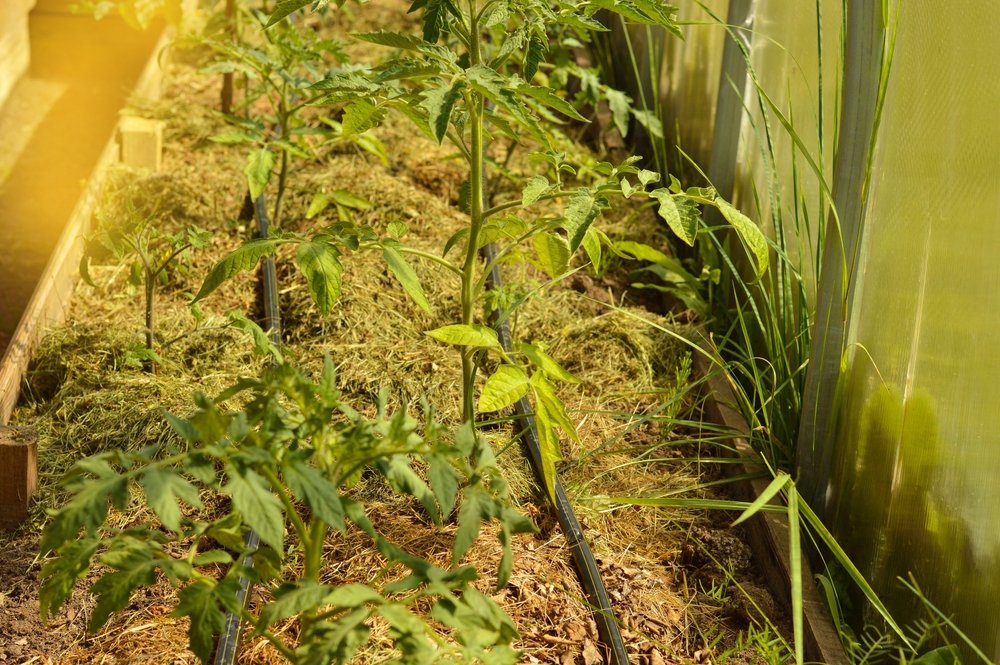
- Use mulch after soil warms to reduce evaporation swings.
- Check emitters and containers frequently during heat.
- Avoid repeated shallow watering that leaves deeper roots dry.
- Do not let young fruiting plants wilt hard before irrigation.
Containers and raised beds can shift from wet to dry quickly. Their smaller soil volume makes consistent irrigation more important, not less.
Remove badly affected fruit so the plant can redirect resources. Management protects later fruit; it does not rebuild tissue already dead.
Protect roots and avoid unnecessary fertilizer
Keep cultivation shallow. Avoid digging near the main root zone once plants are established. Do not pile fresh manure or concentrated fertilizer around roots.
Use a soil test before adding lime, gypsum, or calcium nitrate. If pH is low, lime may be appropriate according to the recommendation. Gypsum adds calcium without raising pH but should still be used for a documented reason.
Excess nitrogen drives rapid soft growth and can worsen the imbalance. Feed according to plant stage and test results.
Reject remedies that do not reach the cause
Foliar calcium sprays do not reliably deliver calcium to developing fruit where blossom-end rot occurs. Eggshells break down too slowly to correct an active problem. Epsom salt contains magnesium sulfate, not calcium, and excess magnesium can interfere with balance.
A calcium product may appear to work because irrigation also changed or later fruit developed under milder conditions. Improvement after treatment is not proof that the treatment caused it.
Use the pattern to improve the next crop
| Pattern | Likely clue | Adjustment |
|---|---|---|
| First fruit affected, later fruit clean | Rapid early growth and unstable roots | Stabilize water earlier next season |
| Only containers affected | Small volume drying or salt buildup | Increase volume and irrigation consistency |
| One emitter row affected | Uneven delivery | Repair irrigation and verify output |
| Whole garden affected after cultivation | Root injury | Avoid deep hoeing near plants |
| Repeated every year despite steady water | pH, salts, cultivar, or soil issue | Test soil and review fertilizer history |
Choose varieties and harvest strategies wisely
Some tomato shapes and pepper types are more prone than others. Plant more than one variety if blossom-end rot has been severe. Maintain leaf cover and root health rather than trying to force rapid fruit size.
Affected fruit can sometimes be trimmed for immediate use if the remaining tissue is sound and no decay is present, but quality is reduced. Do not preserve compromised fruit in a canning batch.
Account for Mid-Atlantic weather
Spring cold, summer heat, thunderstorm cycles, and humid container conditions all create moisture swings. Mulch, measured irrigation, and a deep root zone buffer those changes.
In the coastal plain, heat and rapid drying can be severe. In clay soils, the opposite problem may follow heavy rain. The same symptom can emerge from different water patterns, so inspect before changing the system.
Questions gardeners ask
Does blossom-end rot mean the soil lacks calcium?
Not necessarily. Many affected soils contain adequate calcium, but water and root conditions prevent delivery to young fruit.
Should I spray calcium on the leaves?
Foliar calcium is not a dependable correction for blossom-end rot in fruit.
Does Epsom salt prevent blossom-end rot?
No. Epsom salt contains magnesium sulfate, not calcium, and unnecessary use can worsen nutrient imbalance.
Will affected tomatoes recover?
The damaged tissue will not heal. Later fruit may be normal once root-zone conditions stabilize.
Should I add eggshells?
Eggshells decompose slowly and cannot correct an active crop quickly. Use a soil test to guide lime or calcium decisions.


