Bare soil is not resting. It is losing structure to rain, offering weeds an empty seat, and allowing nutrients to move where roots cannot catch them. A cover crop puts a living root back into that space.
But a cover crop can also become a stubborn crop of its own. The choice must begin with the next planting date and the method you will use to terminate it.
The best cover crop is not the one with the longest list of benefits. It is the one that can establish now, perform the needed job, and be ended early enough for the bed that follows.
Understand what a small-garden cover crop can and cannot do
Cover crops are planted primarily to protect and improve the soil rather than for harvest. When incorporated or left as residue, they may also be called green manure.
Grasses produce fibrous roots and carbon-rich residue. Legumes can fix nitrogen with compatible rhizobia. Broadleaf species may grow rapidly, scavenge nutrients, or break up surface compaction.
- Mixes can spread risk but complicate termination.
- Winter-killed species simplify spring bed preparation.
- Overwintering species provide longer cover but need a clear end date.
Choose the method by the constraint that actually matters
Begin with the empty window: weeks available, expected frost, and the planting date of the next vegetable. Then choose the main job—erosion control, weed suppression, nitrogen contribution, biomass, or beneficial-insect habitat.
A small garden has less room for delayed termination. One missed week can turn tender residue into rope and seed heads.
| Situation | Best starting choice | Why |
|---|---|---|
| Short late-summer gap | Buckwheat or another fast warm-season cover | Rapid cover before frost; easy to kill |
| Fall to early spring | Oats, peas, or winter-killed mix where climate allows | Residue without aggressive spring regrowth |
| Long winter window | Rye, wheat, clover, or vetch selected for local climate | Strong soil cover but deliberate spring termination needed |
| Nitrogen goal | Adapted legume with correct inoculation | Nitrogen fixation depends on healthy nodulation and biomass |
Set the system up in the right order
Prepare a reasonably clean, firm seedbed and sow at the crop-specific rate.
- Ensure seed-to-soil contact by raking or rolling.
- Water for establishment if rainfall is unreliable.
- Scout for winter injury, weeds, and flowering.
- Terminate before seed set and allow residue time to break down.
Watch for the failure points
Cover crops fail when planted too late to establish or allowed to seed before termination. Dense rye residue can also delay soil warming and tie up available nitrogen near the surface.
In tiny beds, “more biomass” is not automatically better. The gardener still has to cut, incorporate, compost, or plant through it.
- Do not sow an unknown mix into a bed needed in a few weeks.
- Do not let a cover crop host the same disease or pest as the next cash crop without considering rotation.
- Do not till wet soil simply to bury residue.
Adjust for North Carolina, Virginia, and the Mid-Atlantic
In the Coastal Plain, warm falls may allow later growth but also more winter weed pressure. Piedmont and mountain gardens need earlier fall seeding for reliable establishment.
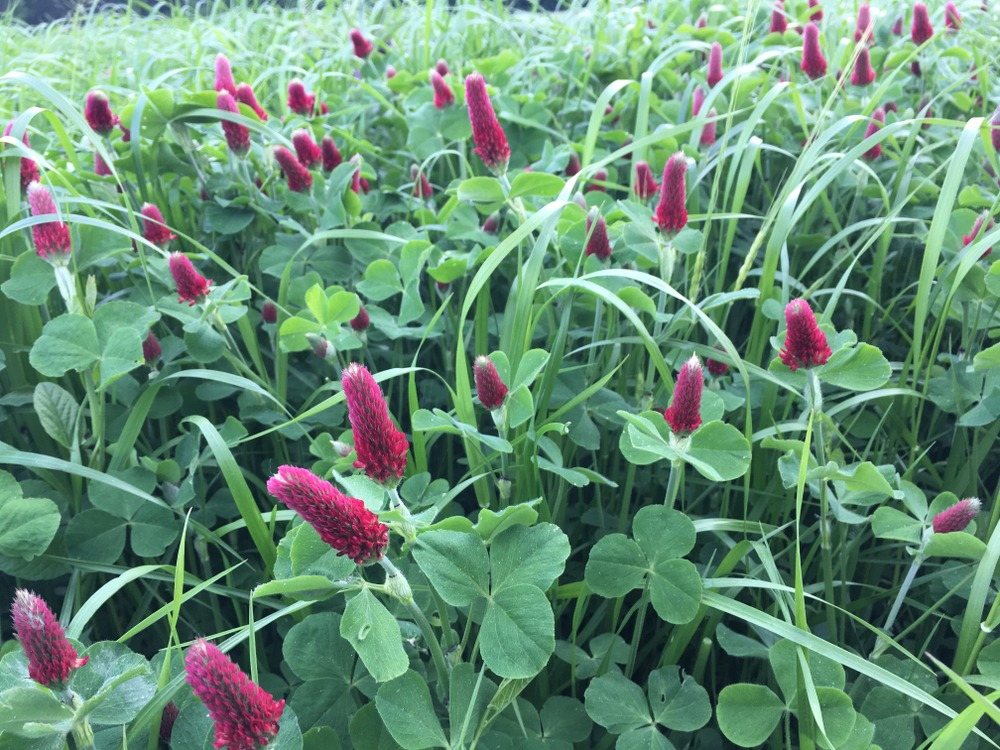
Crimson clover, cereal rye, oats, winter peas, buckwheat, and other species each have a place, but local winter survival and planting windows matter.
Keep records that make the next season easier
Record seeding date, rate, germination, winter survival, flowering date, termination method, and the condition of the next crop. That is how a cover crop becomes a system rather than an experiment repeated from memory.
Photographs at establishment and termination help compare biomass and bare spots.
The cover crop should leave the next crop stronger, not waiting at the gate.
Put this guide to work in a real garden
Put Cover Crops and Green Manure for Small Gardens: Species, Timing, and Termination into a one-season plan before buying more inputs. Choose the variety or material, mark the bed or container, write the sowing or planting date, and decide what success will look like: first harvest, stem length, fruit set, bloom, survival, or control of spread.
Inspect on a schedule. Early problems are usually easier to correct because the crop has more season left and the cause has not been buried under secondary damage. Water, fertility, airflow, support, and harvest timing should be adjusted from the plant’s response rather than from a rigid weekly ritual.
At the end of the crop, keep the record honest. Note what performed, what merely survived, what required too much labor, and what deserves a larger planting next year. Experience becomes expertise only when it is remembered accurately.
- Choose the variety and define the intended use.
- Prepare soil, container, support, or irrigation before planting.
- Set a weekly inspection date.
- Harvest or prune at the stage described in the guide.
- Write a short end-of-season verdict.
Use a 30-day checkpoint instead of guesswork
Before planting
Choose the variety, site, support, soil preparation, and irrigation method while the bed is still easy to change.
First two weeks
Protect establishment. Watch moisture, light, wind, transplant shock, and early pest pressure.
At rapid growth
Adjust spacing, support, pruning, and fertility before the plant becomes difficult to handle.
At first harvest or bloom
Record quality, timing, labor, and the plant’s response. Use that evidence to guide the rest of the season.
A guide provides a sound starting system, not a guarantee. Cultivar, weather, soil history, and management interact, and the correct response may change as the plant moves from establishment to harvest.
Keep a one-season record
The record does not need to be elaborate. A notebook page, spreadsheet row, or labeled photograph is enough when it captures the variables that matter.
- Variety and source
- Planting date and location
- Water, fertility, and major weather events
- First harvest or bloom and total season length
- Problems, corrections, and next-year decision
Write enough that another grower—or you, one year later—could understand what was planted, what happened, and why the next decision changed.
Questions gardeners ask
Can I use grass clippings as a cover crop?
No. Clippings are mulch. A cover crop is a living crop grown to protect and improve soil.
Do legumes add nitrogen immediately?
They fix nitrogen while growing, but much becomes available only as roots and residue decompose. Timing and biomass matter.
Can I plant vegetables directly into terminated cover crop?
Sometimes, especially in larger no-till systems. In small gardens, residue thickness, soil temperature, pests, and the transplanting method determine whether it is practical.
Will cover crops eliminate weeds?
Dense, timely cover can suppress many weeds, but poor stands and late termination may create new weed problems.
When should I terminate rye?
Before it becomes too mature for your equipment and far enough ahead of the next crop to manage residue and nitrogen tie-up. The exact timing depends on system and climate.
A cover crop is a promise made to the next crop. Keep the promise by choosing the species, the date, and the ending before the seed ever leaves your hand.